








Crypto Exchange Binance.com: Leading the Future of Digital Finance
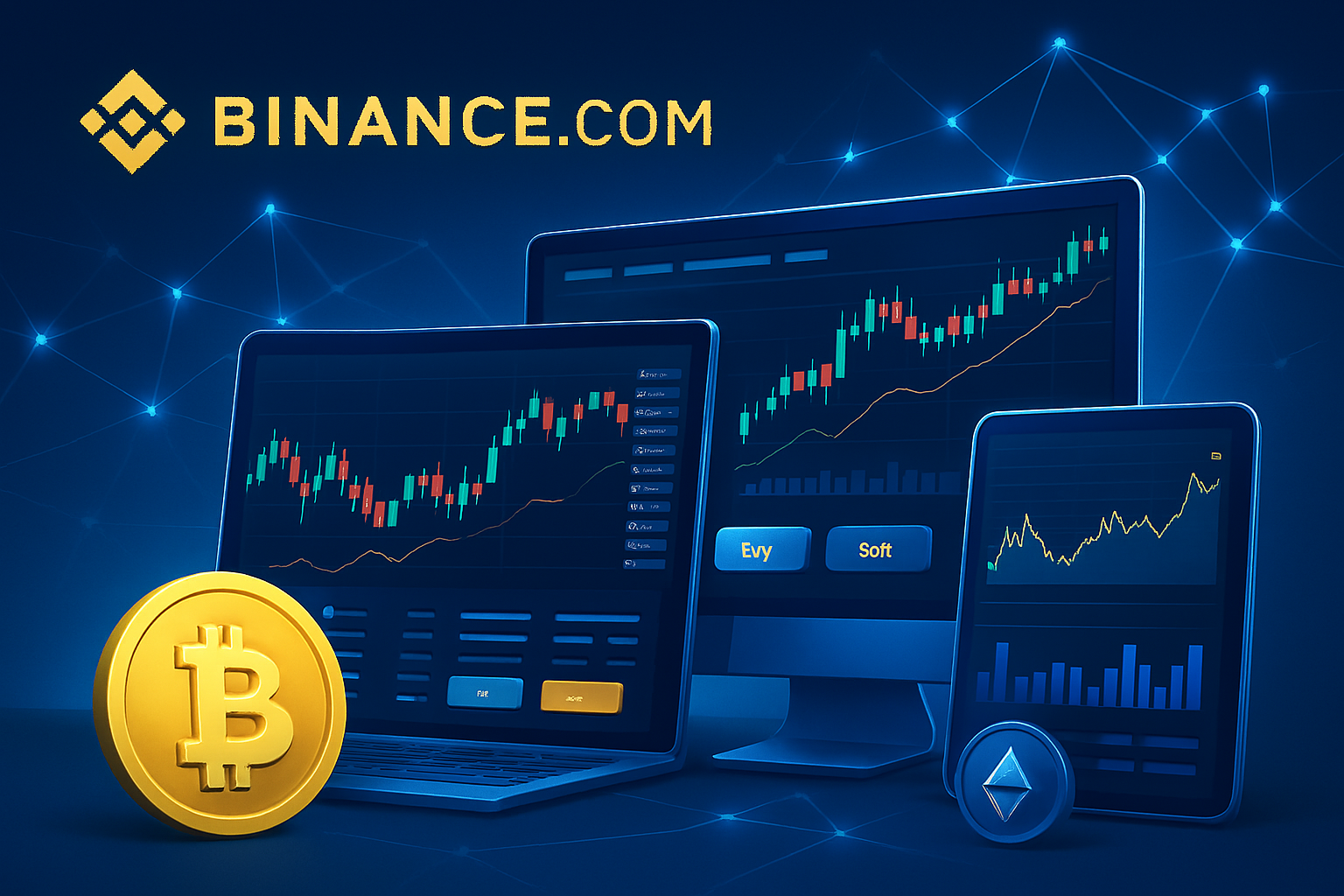
Binance.com, the world’s largest cryptocurrency exchange, continues to expand its services and innovation in the fast-changing digital asset industry.
Table of Contents
Published: August 12, 2025
Last Updated: August 12, 2025
Overview of Binance as a Cryptocurrency Trading Platform
Binance is a cryptocurrency exchange platform that was established in 2017. The platform operates globally and provides services for trading digital assets. According to publicly available data, Binance serves users across multiple countries and offers access to various cryptocurrencies and trading instruments.
The exchange operates as a centralized platform where users can buy, sell, and trade digital assets. The platform has developed various services beyond basic trading functionality, including derivatives trading, staking services, and peer-to-peer transactions. Market data indicates that Binance processes significant daily trading volumes across multiple cryptocurrency pairs.
This analysis examines Binance’s platform features, service offerings, market position, and operational characteristics based on publicly available information. The content provides factual information about the exchange’s operations and does not constitute investment advice or recommendations.
Platform Development and Market Entry
Establishment and Initial Operations
Binance was founded in 2017 by Changpeng Zhao, commonly known as CZ, who previously worked in blockchain-related ventures. The platform launched through an initial coin offering (ICO) that raised funds for development. The exchange began operations in July 2017 and quickly expanded its cryptocurrency listing and user base.
The platform’s initial strategy focused on providing access to multiple cryptocurrency trading pairs with competitive fee structures. Early operations targeted cryptocurrency traders seeking alternatives to existing exchanges. The company established its initial headquarters in China before relocating operations due to regulatory considerations.
Geographic Expansion Strategy
Following regulatory changes in various jurisdictions, Binance adjusted its operational structure across different markets. The company established separate entities for specific regions to comply with local financial regulations. These regional platforms operate under different regulatory frameworks depending on jurisdiction requirements.
The exchange developed localized versions of its platform supporting multiple languages and regional payment methods. Geographic expansion included establishing offices and compliance teams in various countries. Market entry strategies varied based on regulatory environments and local market conditions.
Operational Structure Evolution
Binance’s operational structure has evolved to address regulatory requirements across different markets. The company operates through various legal entities in different jurisdictions. Corporate structure includes separate entities for derivatives trading, spot trading, and other services.
Regulatory compliance efforts have increased over time as cryptocurrency regulations developed globally. The platform has implemented know-your-customer (KYC) and anti-money laundering (AML) procedures in response to regulatory requirements. Compliance frameworks differ across jurisdictions where Binance operates.
Core Trading Services and Features
Spot Trading Functionality
Binance’s spot trading platform allows users to trade cryptocurrencies directly. The platform supports hundreds of trading pairs across major and minor cryptocurrencies. Users can execute market orders, limit orders, and stop-limit orders based on their trading strategies.
The trading interface includes order book displays, price charts, and trading history. Order types accommodate different trading approaches from immediate execution to conditional orders. The platform processes orders through its matching engine that handles transaction requests.
Trading Fee Structure
Binance operates a tiered fee structure based on trading volume and token holdings. The base trading fee is 0.1% for both makers and takers. Users holding Binance Coin (BNB) can receive fee discounts when using BNB to pay trading fees.
VIP tier programs offer reduced fees for users with higher 30-day trading volumes. Fee reductions can reach as low as 0.02% for the highest volume tiers. The maker-taker fee model provides different rates depending on whether orders add or remove liquidity from order books.
| Trading Volume (30-day) | Maker Fee | Taker Fee |
|---|---|---|
| < 250 BTC | 0.1000% | 0.1000% |
| ≥ 250 BTC | 0.0900% | 0.1000% |
| ≥ 2,500 BTC | 0.0800% | 0.1000% |
| ≥ 7,500 BTC | 0.0700% | 0.1000% |
| VIP 9 | 0.0200% | 0.0400% |
Note: Fee structure subject to change. Refer to official Binance documentation for current rates.
Derivatives and Futures Trading
Binance offers derivatives trading through a separate platform section. Futures contracts include USDT-margined perpetual contracts and coin-margined futures. Leverage options range from 1x to 125x depending on the trading pair and user verification level.
Derivatives trading involves higher risk due to leverage amplification. The platform provides risk management tools including stop-loss orders and position limits. Futures contracts settle based on underlying cryptocurrency price movements and contract specifications.
Cryptocurrency Asset Support
Digital Asset Listings
Binance lists numerous cryptocurrencies for trading, including major assets like Bitcoin (BTC) and Ethereum (ETH), along with various altcoins and tokens. The platform conducts listing reviews before adding new cryptocurrencies. Listing criteria consider project fundamentals, technology, team credentials, and legal compliance.
The number of supported cryptocurrencies fluctuates as the exchange adds new listings and delists assets that no longer meet listing standards. Trading pairs include crypto-to-crypto pairs and fiat-to-crypto pairs where available. Liquidity varies significantly across different trading pairs.
Fiat Currency Integration
Binance supports fiat currency transactions through various methods depending on regional availability. Users can deposit and withdraw fiat currencies through bank transfers, credit cards, and third-party payment processors. Supported fiat currencies include USD, EUR, GBP, and others based on jurisdiction.
Fiat on-ramps allow users to purchase cryptocurrencies directly with traditional currencies. Conversion rates include exchange fees and payment processing charges. Fiat services availability depends on regulatory approvals and payment infrastructure in each region.
Passive Income and Staking Services
Staking Program Structure
Binance offers staking services for proof-of-stake cryptocurrencies and other yield-generating mechanisms. Users can stake supported cryptocurrencies to earn rewards based on network validation participation. Staking options include flexible staking with no lock-up period and locked staking with fixed durations.
Annual percentage yields (APY) vary by cryptocurrency and staking duration. Flexible staking typically offers lower returns compared to locked staking due to commitment differences. Staking rewards are distributed according to the underlying blockchain protocol rules.
Savings and Earn Products
The platform provides savings products where users can deposit cryptocurrencies to earn interest. Flexible savings allow withdrawals at any time while locked savings require commitment periods. Interest rates fluctuate based on market conditions and available lending demand.
Binance Earn aggregates various yield-generating opportunities including DeFi staking, liquidity mining, and dual investment products. Each product carries different risk profiles and return characteristics. Users should understand the mechanisms and risks before participating in yield programs.
Launchpad Token Sales
Binance Launchpad hosts token sales for selected blockchain projects. Participation typically requires holding BNB tokens and completing verification requirements. Token allocation methods vary by project and may include lottery systems or proportional distribution based on BNB holdings.
Historical Launchpad projects have shown varying performance post-launch. Initial token prices do not guarantee future value appreciation. Investors should conduct independent research on projects before participating in token sales.
Peer-to-Peer Trading Platform
P2P Trading Mechanics
Binance’s peer-to-peer (P2P) platform enables direct transactions between users without going through the exchange’s order book. Buyers and sellers create advertisements specifying prices, payment methods, and transaction terms. The platform matches counterparties based on preferences and requirements.
P2P trading supports various local payment methods including bank transfers, mobile wallets, and online payment systems. Users negotiate directly within platform-provided communication channels. Escrow mechanisms hold cryptocurrency until payment confirmation occurs.
Payment Methods and Verification
The P2P platform supports over 300 payment methods across different regions. Available payment options depend on geographic location and seller preferences. Common methods include bank transfers, PayPal, and mobile payment applications.
P2P trading requires identity verification for most markets. Verification levels affect trading limits and available features. The platform implements dispute resolution processes for transaction conflicts between parties.
Payment Services and Binance Pay
Digital Payment Functionality
Binance Pay is a payment service allowing cryptocurrency transactions between users and merchants. The service supports multiple cryptocurrencies for payments and transfers. Transactions occur within Binance’s internal network without blockchain transaction fees.
Users can send cryptocurrency payments using QR codes or recipient identifiers. Merchants can integrate Binance Pay for accepting cryptocurrency payments. The service aims to facilitate cryptocurrency adoption for everyday transactions.
Merchant Integration Options
Binance provides APIs and integration tools for merchants to accept cryptocurrency payments. Point-of-sale systems can incorporate Binance Pay functionality. Settlement options allow merchants to receive payments in cryptocurrency or convert to fiat currency.
Transaction processing occurs in real-time with confirmation notifications. Merchant tools include reporting dashboards for tracking transactions and settlements. Integration requirements and availability vary by jurisdiction and business type.
Security Infrastructure and Asset Protection
Platform Security Measures
Binance implements multiple security layers to protect user accounts and assets. Security features include two-factor authentication (2FA), anti-phishing codes, and withdrawal whitelist addresses. The platform monitors account activity for suspicious behavior patterns.
Cold storage holds the majority of user funds offline to reduce exposure to online threats. Hot wallets maintain sufficient liquidity for normal withdrawal operations. Security architecture includes distributed systems and redundant infrastructure.
Secure Asset Fund for Users (SAFU)
Binance established the Secure Asset Fund for Users (SAFU) as an emergency insurance fund. The fund receives allocations from trading fees to build reserves. SAFU is intended to cover losses in extreme cases of security breaches or system failures.
The fund holds reserves in cryptocurrency that can be used to reimburse affected users if necessary. SAFU represents one approach to protecting users, though it does not guarantee full coverage in all scenarios. The fund’s size and management details are disclosed through official channels.
Security Incident History
Like many cryptocurrency exchanges, Binance has experienced security incidents. In May 2019, the exchange reported a security breach affecting its hot wallet, resulting in the loss of 7,000 Bitcoin. The incident was covered by SAFU, and affected users were reimbursed.
The platform has enhanced security measures following incidents. Regular security audits are conducted by third-party firms. Users are encouraged to enable all available security features on their accounts.
Regulatory Compliance and Legal Considerations
Global Regulatory Landscape
Cryptocurrency regulation varies significantly across jurisdictions. Binance operates in a complex regulatory environment with different requirements in each market. Some countries have clear cryptocurrency frameworks while others maintain ambiguous positions.
Regulatory challenges have affected Binance’s operations in certain markets. The exchange has adjusted services, restricted access, or established separate entities to address regulatory concerns. Compliance efforts include licensing applications and partnerships with regulated entities.
KYC and AML Procedures
Binance has implemented identity verification requirements in most markets. Know Your Customer (KYC) procedures require users to submit identification documents and personal information. Verification levels affect withdrawal limits and access to certain features.
Anti-Money Laundering (AML) monitoring systems track transactions for suspicious activity patterns. The platform cooperates with law enforcement investigations when legally required. Compliance measures aim to prevent illicit use of the platform.
Regional Restrictions and Limitations
Binance restricts or limits services in certain jurisdictions based on regulatory requirements. Some countries face complete service restrictions due to local regulations. Users are responsible for ensuring compliance with local laws regarding cryptocurrency trading.
The platform may terminate accounts or freeze assets if users violate terms of service or regulatory requirements. Changes in regulatory status can affect service availability. Users should monitor announcements regarding regional regulatory developments.
Educational Resources and User Support
Binance Academy Content
Binance Academy provides educational content about blockchain technology and cryptocurrency trading. The resource library includes articles, videos, and tutorials covering various topics. Content ranges from beginner explanations to advanced trading strategies.
Educational materials cover blockchain fundamentals, cryptocurrency concepts, security practices, and trading techniques. The academy updates content to reflect industry developments and user feedback. All educational content is available free of charge.
Customer Support Services
Binance provides customer support through multiple channels including live chat, email ticketing, and help center documentation. Support availability varies by region and verification level. Response times depend on inquiry volume and complexity.
The help center contains articles addressing common questions and issues. Community forums allow users to share information and troubleshoot problems. VIP users typically receive priority support services.
Market Position and Trading Volume Analysis
Trading Volume Metrics
Binance consistently reports high daily trading volumes across spot and derivatives markets. Trading volume data is publicly available through the platform and third-party market data aggregators. Volume figures fluctuate based on market conditions and cryptocurrency price volatility.
High trading volumes generally correlate with better liquidity and tighter bid-ask spreads. Volume leadership does not guarantee platform reliability or security. Trading volume should be considered alongside other factors when evaluating exchanges.
Market Share Assessment
Based on publicly available data, Binance holds significant market share in cryptocurrency trading volume. Market share varies across different segments including spot trading, derivatives, and specific cryptocurrency pairs. Competition includes both centralized and decentralized exchanges.
Market position can change based on regulatory developments, security incidents, or competitive offerings. User counts and trading volumes provide indicators of market position but don’t capture complete platform assessment.
Competitive Comparison
| Exchange | Spot Trading Fee | Futures Available | Fiat Support | KYC Required |
|---|---|---|---|---|
| Binance | 0.1% (base) | Yes | Yes (varies) | Yes |
| Coinbase | 0.5% (taker) | Yes | Yes | Yes |
| Kraken | 0.16%-0.26% | Yes | Yes | Yes |
| KuCoin | 0.1% | Yes | Limited | Varies |
Note: Fee structures and features subject to change. Verify current information on official platforms.
Technology Infrastructure and Performance
Trading Engine Capabilities
Binance’s matching engine processes trade orders through a centralized system. The platform reports capacity to handle high transaction throughput during peak trading periods. System performance affects order execution speed and price fill quality.
Technical infrastructure includes load balancing, database management, and API services for automated trading. System upgrades and maintenance periods occasionally affect platform availability. Performance metrics are not independently verified by external auditors.
API and Automated Trading
Binance provides API access for programmatic trading and data retrieval. APIs support REST and WebSocket protocols for different use cases. Developers can build trading bots, portfolio management tools, and market data applications using Binance APIs.
API rate limits prevent system overload and ensure fair access. Documentation covers authentication, endpoints, and data formats. Automated trading carries risks including technical failures and market volatility.
Binance Coin (BNB) and Platform Token
BNB Token Utility
Binance Coin (BNB) is the native cryptocurrency of the Binance ecosystem. BNB serves multiple functions including trading fee discounts, payment for services, and participation in token sales. Token utility extends to Binance Smart Chain (BSC) network operations.
BNB’s value fluctuates based on market supply and demand dynamics. Token burns reduce total supply according to scheduled programs. BNB holdings may be required for accessing certain platform features or benefits.
Token Economics
BNB was initially created on Ethereum blockchain before migrating to Binance Chain. Total supply was capped at 200 million tokens with periodic burn mechanisms reducing circulating supply. Token burns occur quarterly based on Binance trading volume.
BNB price performance reflects both platform activity and broader cryptocurrency market trends. Token holders face volatility risk similar to other cryptocurrencies. BNB’s use cases within the Binance ecosystem create demand drivers separate from speculative trading.
Risk Considerations for Platform Users
Counterparty and Platform Risk
Using centralized exchanges like Binance involves counterparty risk where users trust the platform to custody assets and execute trades. Exchange insolvency, mismanagement, or fraud could result in user losses. Centralized platforms represent single points of failure unlike decentralized alternatives.
Platform risk includes technical failures, security breaches, and operational disruptions. Users should consider these risks when deciding how much capital to keep on exchanges. The cryptocurrency industry lacks deposit insurance comparable to traditional banking systems.
Regulatory and Legal Risks
Regulatory uncertainty creates risks for cryptocurrency exchanges and users. Changes in regulations could restrict platform operations, freeze accounts, or require asset forfeiture. Different jurisdictions have varying legal frameworks affecting cryptocurrency trading legality.
Users may face tax obligations and reporting requirements for cryptocurrency transactions. Failure to comply with local laws can result in legal consequences. Regulatory risk affects both the platform’s ability to operate and users’ ability to access funds.
Market and Liquidity Risks
Cryptocurrency markets exhibit high volatility with potential for rapid price changes. Liquidity can deteriorate quickly during market stress, affecting order execution quality. Trading during volatile periods may result in slippage and unexpected price fills.
Leverage trading amplifies both potential gains and losses. Margin calls and liquidations can occur rapidly in volatile markets. Users should understand risks before engaging in derivatives trading or using leverage.
Comparison with Decentralized Alternatives
Centralized vs. Decentralized Exchanges
Centralized exchanges like Binance offer user-friendly interfaces, high liquidity, and customer support services. However, they require trusting a third party with asset custody. Decentralized exchanges (DEXs) allow users to maintain control of private keys but typically have lower liquidity and higher complexity.
Trade-offs between centralized and decentralized platforms include convenience versus control, liquidity versus custody risk, and ease of use versus transaction costs. Neither model is universally superior as each serves different user needs and preferences.
Custody Considerations
Centralized exchanges control users’ private keys and maintain custody of deposited assets. This arrangement simplifies user experience but concentrates risk. Self-custody through personal wallets eliminates counterparty risk but requires users to manage private key security.
The cryptocurrency principle of “not your keys, not your coins” emphasizes custody risks of leaving funds on exchanges. Users must balance convenience of active trading against security benefits of self-custody for long-term holdings.
Recent Developments and Industry Trends
Platform Updates and New Features
Binance regularly introduces new features, trading pairs, and services. Recent developments include expanded staking options, new token listings, and platform interface improvements. Service additions aim to attract users and maintain competitive positioning.
Platform changes may alter existing features or fee structures. Users should monitor official announcements for updates affecting their usage. New features undergo testing periods and may experience technical issues initially.
Regulatory Developments Impact
Regulatory actions across various jurisdictions have affected Binance’s operations. The exchange has faced regulatory scrutiny in multiple countries leading to service modifications. Compliance efforts include obtaining licenses, restricting services, and implementing enhanced verification procedures.
Regulatory landscape continues evolving with potential for additional requirements or restrictions. Platform operations may change significantly based on future regulatory developments. Users should stay informed about regulatory status in their jurisdiction.
Industry Competition Dynamics
The cryptocurrency exchange industry remains competitive with new entrants and evolving business models. Competition includes other centralized exchanges, decentralized platforms, and emerging financial products. Market dynamics affect fee structures, service offerings, and technological innovation.
Binance adapts strategies to maintain market position amid competition. Competitive pressures benefit users through improved services and lower costs. Industry consolidation trends may affect long-term market structure.
Frequently Asked Questions (FAQs)
What is Binance and how does it operate?
Binance is a centralized cryptocurrency exchange platform that facilitates trading of digital assets. The platform operates by matching buy and sell orders through its trading engine while maintaining custody of user funds. Users deposit cryptocurrencies or fiat currency, place orders on the platform, and withdraw assets after trades execute. Binance generates revenue primarily through trading fees charged on transactions. The exchange operates globally with regional entities addressing local regulatory requirements.
What are the fees for trading on Binance?
Binance charges a base trading fee of 0.1% for both makers and takers on spot trades. Users holding BNB tokens can receive up to 25% fee discount when using BNB for fee payment. VIP tiers offer reduced fees ranging from 0.09% down to 0.02% for users with higher 30-day trading volumes. Futures trading fees start at 0.02% for makers and 0.04% for takers. Additional fees apply for deposits, withdrawals, and other services depending on payment methods and currencies involved.
How secure is Binance for storing cryptocurrency?
Binance implements security measures including two-factor authentication, cold storage for majority of funds, and withdrawal whitelist addresses. The platform maintains the Secure Asset Fund for Users (SAFU) as an emergency reserve. However, centralized exchanges inherently carry counterparty risk as they control user funds. The platform experienced a security breach in 2019 resulting in 7,000 Bitcoin loss, though users were reimbursed through SAFU. Users should enable all security features and consider moving large holdings to personal wallets for long-term storage.
What regulatory challenges has Binance faced?
Binance has encountered regulatory scrutiny in multiple jurisdictions including the United States, United Kingdom, Japan, and European Union countries. Challenges include restrictions on derivatives trading, requirements for enhanced KYC procedures, and prohibition of certain services in specific markets. The exchange has responded by obtaining licenses, restricting user access in some regions, and establishing separate compliant entities. Regulatory landscape continues evolving with ongoing discussions between Binance and financial authorities worldwide.
Can users in all countries access Binance services?
Binance availability varies by country due to regulatory requirements and platform policies. Some jurisdictions face complete service restrictions while others have limited access to specific features. United States users are directed to Binance.US, a separate entity with different offerings. China, Singapore, and several other countries face restrictions on Binance services. Users must comply with local laws regarding cryptocurrency trading. Service availability can change based on regulatory developments in each jurisdiction.
What is Binance Coin (BNB) and why is it important?
Binance Coin (BNB) is the native cryptocurrency of the Binance ecosystem, originally created to provide trading fee discounts. BNB serves multiple purposes including payment for platform services, participation in token sales, and transaction fees on Binance Smart Chain. Users holding BNB receive fee discounts up to 25% when paying trading fees with BNB. The token undergoes quarterly burns reducing total supply based on trading volume. BNB’s value derives from utility within the Binance ecosystem and broader market speculation.
How does Binance compare to other cryptocurrency exchanges?
Binance typically reports higher trading volumes compared to most competitors, indicating strong liquidity across many trading pairs. The platform supports more cryptocurrency listings than many alternatives. Fee structures are competitive though not always the lowest. Regulatory standing varies with some competitors holding more comprehensive licenses in certain jurisdictions. User interface complexity may challenge beginners compared to simplified alternatives like Coinbase. Feature set is extensive including spot trading, futures, staking, and P2P services, though this complexity may not suit all users.
What risks should users consider before using Binance?
Primary risks include counterparty risk from relying on Binance to custody funds and execute trades, regulatory risk from uncertain legal status in various jurisdictions, security risk from potential platform breaches despite protective measures, market risk from cryptocurrency price volatility, and liquidity risk during stressed market conditions. Leverage trading carries additional risks of amplified losses and margin liquidation. Users should understand these risks, enable security features, comply with local regulations, and avoid storing large amounts on exchanges long-term.
About the Author
Nueplanet
Nueplanet is a cryptocurrency and financial technology analyst with the years of experience covering digital asset markets and blockchain platforms. Specializing in exchange operations, regulatory developments, and market infrastructure, Nueplanet provides objective analysis based on publicly available data and official sources.
Nueplanet is committed to factual reporting on cryptocurrency platforms without promotional bias or investment recommendations. All content is researched using official platform documentation, regulatory filings, industry reports, and verified public data sources. The goal is to help readers understand cryptocurrency platforms and make informed decisions.
Specialization: Cryptocurrency exchanges, blockchain technology, regulatory analysis
Disclaimer: Nueplanet does not hold positions in Binance-related securities or tokens at the time of writing. This analysis is for informational purposes only and should not be considered investment, financial, tax, or legal advice. Cryptocurrency trading involves substantial risk of loss.
About This Publication
This website provides factual analysis and information about cryptocurrency platforms, blockchain technology, and digital asset markets. Our editorial standards include:
- Verified Information: Content based on official platform documentation, regulatory filings, and publicly available data
- Objective Analysis: Clear distinction between factual information and analytical commentary
- No Promotional Content: Independent coverage without advertising relationships or affiliate arrangements
- Regular Updates: Content reviewed and updated to reflect current information
- Risk Disclosure: Transparent discussion of risks and limitations
Legal Disclaimer: This article is for informational and educational purposes only. It does not constitute investment advice, financial advice, trading recommendations, or endorsement of any platform or service. Cryptocurrency trading involves substantial risk of loss including complete loss of capital. Centralized exchanges carry counterparty risk and regulatory uncertainty. Information presented is based on publicly available data at time of writing and may become outdated. Platform features, fees, and availability subject to change. Users must conduct their own research, understand all risks, comply with local regulations, and consult qualified professionals before engaging in cryptocurrency activities. Past performance does not indicate future results. The author and publisher assume no responsibility for trading losses or decisions made based on this information.
Helpful Resources
Latest Posts
- Astral Share Price: Q1 FY26 Results Trigger Market Reaction
- Škoda Slavia Limited Edition: Style Meets Exclusivity
- Income Tax Bill Lok Sabha: What You Need to Know
- León vs Monterrey: Rayados Secure 3-1 Victory in Liga MX Clash
- Taylor Swift: The Life of a Showgirl and the Continuing Reign of a Global Icon
Tag
Crypto Exchange
Related Posts











Post Comment