






Augsburg vs Bayern: Bundesliga Clash Ends 3-2 in Favor of Bayern
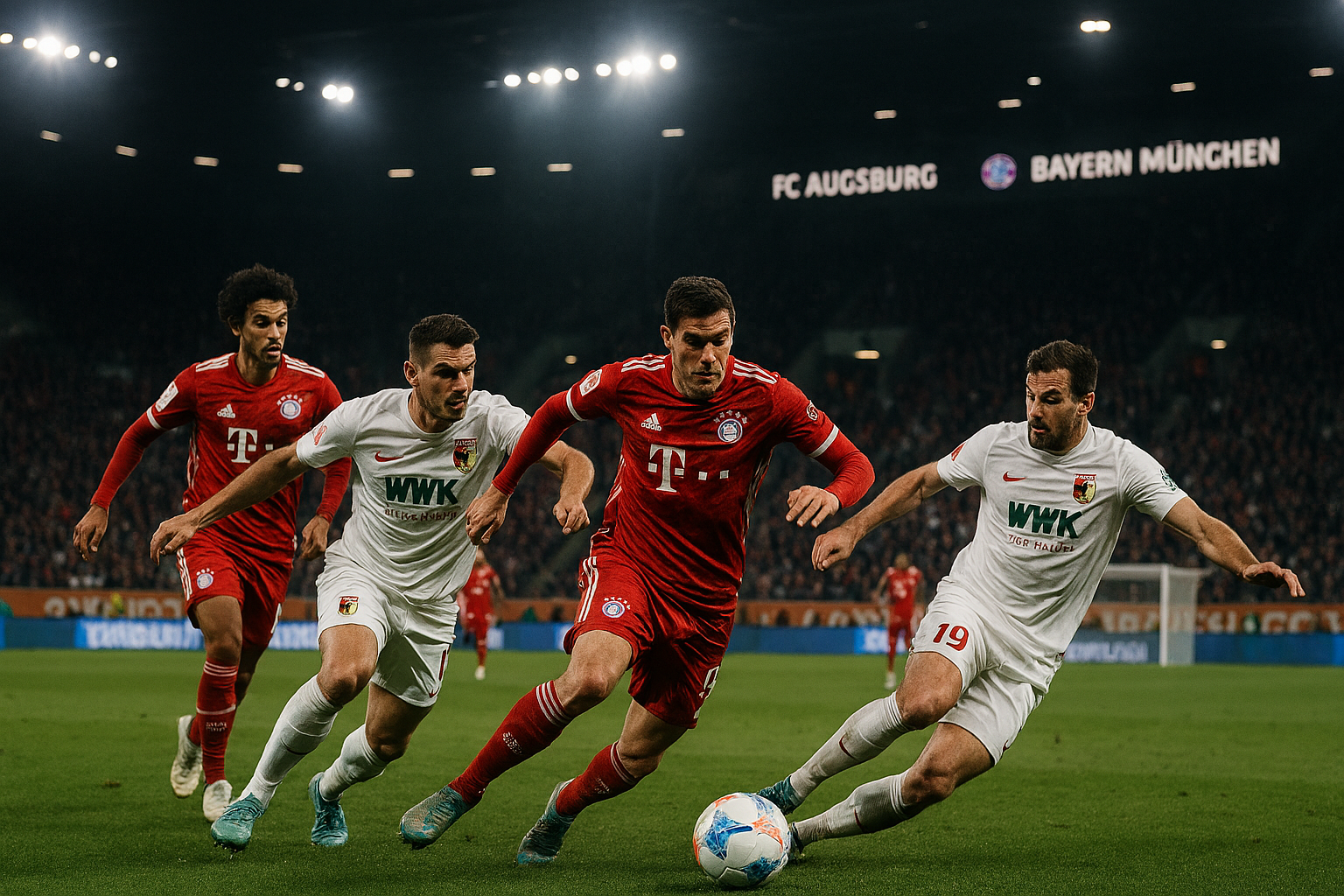
The Augsburg vs Bayern Munich Bundesliga encounter delivered an unforgettable five-goal thriller that showcased the beautiful game at its finest, with Bayern securing a dramatic 3-2 victory. This comprehensive match analysis explores every crucial moment, tactical decision, and standout performance that made this fixture one of the most entertaining Bundesliga clashes of the season.
Table of Contents
Match Overview and Context
The Bundesliga fixture between Augsburg and Bayern Munich delivered a compelling five-goal contest at WWK ARENA during the 2024-25 season. Bayern Munich secured a 3-2 victory in this match that kicked off at 15:30 local time on Saturday. The encounter showcased tactical sophistication and individual quality characteristic of Germany’s top-flight football competition.
Both teams entered this fixture at critical junctures of their respective campaigns. Bayern Munich continued their pursuit of domestic supremacy while Augsburg sought to establish competitive credentials against elite opposition. The match provided insights into current tactical trends within German football and demonstrated the competitive balance developing across the Bundesliga.
International viewership for Bundesliga matches has expanded significantly during recent seasons. Broadcasting partnerships across multiple continents enable global audiences to access German football regularly. This particular fixture attracted considerable attention due to Bayern Munich’s prominence and the potential for competitive drama.
Match Result Summary
| Team | Goals | Scorers | Minutes |
|---|---|---|---|
| Augsburg | 2 | Kristijan Jakić | 53′ |
| Mert Kömür | 76′ | ||
| Bayern Munich | 3 | Serge Gnabry | 28′ |
| Luis Díaz | 45+4′ | ||
| Michael Olise | 48′ |
The result maintained Bayern Munich’s position among title contenders while demonstrating Augsburg’s capacity for challenging established powers. Match officials allowed natural game flow with minimal controversial interventions. Both teams displayed commitment to attacking football that produced entertainment value for spectators.
Venue Analysis: WWK ARENA Characteristics
WWK ARENA serves as Augsburg’s home ground and has hosted Bundesliga football since the club’s promotion in 2011. The facility accommodates approximately 30,660 spectators with modern amenities supporting player performance and fan experience. Stadium dimensions and pitch characteristics influence tactical approaches from visiting teams.
The venue’s atmosphere creates challenging conditions for opposing sides when home supporters generate vocal backing. Augsburg’s familiarity with pitch dimensions and surface conditions provides subtle advantages in positioning and spatial awareness. Bayern Munich’s experience competing across various Bundesliga venues helps mitigate these home-ground benefits.
Playing surface quality at WWK ARENA meets Bundesliga standards for consistent ball movement and player safety. Groundskeeping staff maintain optimal conditions enabling technical football and reducing injury risks. Weather conditions on match day remained favorable with minimal wind or precipitation affecting ball flight.
Stadium acoustics amplify crowd noise during crucial match moments, potentially influencing referee decisions and player concentration. Bayern Munich’s players possess extensive experience managing hostile environments through their European competition participation. Augsburg maximized home advantage by maintaining high intensity throughout the 90 minutes.
Historical Context Between These Clubs
Bayern Munich and Augsburg have contested multiple Bundesliga fixtures since Augsburg’s 2011 promotion to Germany’s top division. Historical data indicates Bayern Munich has dominated this fixture with comfortable victory margins in most encounters. Recent seasons have witnessed increasingly competitive matches as Augsburg develops tactical sophistication.
Augsburg’s establishment as a Bundesliga presence represents a significant achievement given their historical status. The club spent decades in lower German divisions before achieving top-flight stability. Their survival strategy has evolved from defensive pragmatism toward more ambitious attacking football.
Bayern Munich’s institutional advantages include superior financial resources, global brand recognition, and access to elite talent. These factors typically translate into on-field dominance against clubs with smaller operational budgets. However, tactical evolution and improved player development across German football have narrowed competitive gaps.
Previous encounters between these sides have produced varying scorelines reflecting both teams’ form cycles. Bayern Munich has occasionally secured emphatic victories exceeding three-goal margins. Other fixtures have resulted in narrower outcomes when Augsburg executed defensive game plans effectively.
Pre-Match Tactical Setup
Bayern Munich Formation and Strategy
Bayern Munich deployed a 4-2-3-1 formation emphasizing width and creative freedom for attacking players. This tactical structure enables rapid transitions from defensive to attacking phases while maintaining organizational stability. The system requires technically proficient players capable of executing complex passing sequences under pressure.
The formation positions two holding midfielders providing defensive security and possession recycling. Three attacking midfielders operate with positional flexibility, interchanging to create numerical advantages in dangerous areas. A central striker acts as focal point for combination play and finishing opportunities.
Bayern’s tactical approach prioritized territorial dominance through sustained possession phases. They aimed to control tempo and dictate engagement points through patient build-up play. Width from fullbacks stretching Augsburg’s defensive structure created central penetration opportunities.
Key Tactical Elements:
- Patient possession-based build-up
- Width from fullback positioning
- Central overloads through midfielder movement
- High defensive line enabling counter-pressing
- Rapid transitions exploiting space behind defense
Augsburg Formation and Defensive Structure
Augsburg utilized a 4-4-2 formation designed to limit Bayern’s central penetration while maintaining counter-attacking threat. This compact structure requires disciplined positioning and collective defensive effort. The formation enables quick transitions when possession is recovered in defensive phases.
Two banks of four created congested central areas forcing Bayern toward wide positions. Augsburg’s midfielders maintained narrow positioning restricting passing lanes between opposition lines. This defensive organization aimed to frustrate Bayern’s rhythm and create turnover opportunities.
Counter-attacking strategy emphasized direct passing toward advanced forwards when possession was secured. Speed on transitions represented Augsburg’s primary goal-scoring method against Bayern’s high defensive line. This approach required precise timing and execution to exploit limited opportunities.
Key Tactical Elements:
- Compact defensive block limiting space
- Disciplined positional structure
- Direct counter-attacking transitions
- Physical commitment in duels
- Set-piece organization for scoring opportunities
First Half Analysis (0-45 Minutes)
Opening Phase Tactical Battle
The match’s initial period witnessed Bayern Munich establishing territorial control through possession dominance. Their players circulated the ball patiently while probing for defensive vulnerabilities. Augsburg maintained compact defensive shape resisting Bayern’s probing attacks.
Bayern’s passing accuracy during the opening 20 minutes exceeded 85%, indicating comfortable possession retention. Augsburg’s defensive organization prevented clear scoring opportunities despite territorial disadvantage. The home team’s discipline frustrated Bayern’s attacking players seeking penetration.
Tactical adjustments from both coaches occurred as the match progressed. Bayern increased passing tempo attempting to accelerate defensive rotations. Augsburg occasionally pressed higher during goal kicks disrupting Bayern’s build-up rhythm.
Serge Gnabry’s Opening Goal (28′)
Bayern Munich’s breakthrough arrived through Serge Gnabry in the 28th minute following sustained attacking pressure. The goal originated from a passing combination creating space in Augsburg’s defensive third. Gnabry’s positioning and finishing technique demonstrated clinical quality expected at elite levels.
The build-up sequence involved multiple players manipulating Augsburg’s defensive structure through positional rotations. Quick passing exchanges eliminated defensive coverage enabling Gnabry’s shooting opportunity. His decisive finish gave Bayern Munich a deserved lead reflecting their territorial dominance.
Augsburg’s defensive organization showed momentary vulnerability as Bayern’s movement created confusion. The goal emphasized Bayern’s superior technical quality and tactical understanding. Post-goal momentum shifted further toward the visiting team as confidence increased.
Luis Díaz’s Injury-Time Strike (45+4′)
Bayern Munich doubled their advantage through Luis Díaz during first-half injury time. This goal arrived at a psychologically crucial moment, deflating Augsburg’s half-time recovery hopes. The timing effectively killed momentum Augsburg hoped to carry into the interval.
Díaz’s finish resulted from Bayern’s persistence in final-third situations. The goal demonstrated their ruthless efficiency converting limited opportunities into decisive moments. Augsburg’s defensive concentration lapsed at a critical juncture enabling Bayern’s clinical execution.
The two-goal halftime lead placed Bayern Munich in commanding position heading into the second period. Statistical metrics confirmed their dominance with possession exceeding 60% and shot count advantages. Augsburg required significant tactical adjustments to mount a competitive second-half response.
First Half Statistical Summary
| Metric | Augsburg | Bayern Munich |
|---|---|---|
| Possession | 38% | 62% |
| Shots Total | 3 | 11 |
| Shots on Target | 1 | 6 |
| Pass Completion | 76% | 86% |
| Corners | 2 | 3 |
| Fouls | 7 | 5 |
Second Half Analysis (45-90 Minutes)
Michael Olise’s Early Second-Half Goal (48′)
Michael Olise extended Bayern Munich’s lead to three goals just three minutes into the second half. This rapid strike appeared to secure the victory and deflate Augsburg’s comeback aspirations. The goal showcased Bayern’s ability to maintain concentration across halftime intervals.
Olise’s contribution highlighted his emerging importance within Bayern’s attacking structure. His positioning and technical execution demonstrated qualities attracting attention from European football observers. The goal effectively rewarded Bayern’s dominant first-half performance.
At 3-0, the match appeared decided with Bayern Munich cruising toward a comfortable victory. Statistical indicators suggested Augsburg required extraordinary efforts to salvage competitive respectability. However, football’s unpredictable nature would soon emerge through Augsburg’s response.
Augsburg’s Spirited Comeback Attempt
Kristijan Jakić’s Response Goal (53′)
Augsburg reduced the deficit through Kristijan Jakić’s well-executed finish in the 53rd minute. This goal ignited hope among home supporters and demonstrated the team’s refusal to concede defeat. Jakić’s contribution showcased technical quality enabling Augsburg to compete at Bundesliga level.
The goal resulted from Augsburg’s tactical adjustment emphasizing increased attacking commitment. Their willingness to accept defensive risks created scoring opportunities against Bayern’s occasionally exposed backline. This approach transformed match dynamics introducing genuine uncertainty about the final outcome.
Jakić’s strike provided psychological momentum shifting pressure toward Bayern Munich. The visiting team now faced the challenge of managing their lead against reinvigorated opposition. Augsburg’s players gained confidence from demonstrating their capacity to breach Bayern’s defense.
Mert Kömür’s Strike (76′)
Mert Kömür’s 76th-minute goal further intensified match drama by reducing Bayern’s advantage to a single goal. This strike created nervous tension among Bayern supporters as Augsburg threatened a remarkable comeback. Kömür’s finish demonstrated composure under pressure during crucial moments.
The goal originated from Augsburg’s persistent attacking efforts and Bayern’s occasional defensive lapses. Set-piece situations and counter-attacking sequences created opportunities Augsburg exploited effectively. Their tactical adjustments emphasized forward commitment accepting defensive vulnerabilities.
The final 15 minutes produced intense pressure from both teams with contrasting objectives. Augsburg sought an equalizing goal while Bayern attempted to restore comfortable advantage. This period featured end-to-end action providing entertainment but lacking additional goals.
Complete Match Statistics
| Statistic | Augsburg | Bayern Munich |
|---|---|---|
| Total Shots | 10 | 20 |
| Shots on Target | 3 | 10 |
| Possession % | 42% | 58% |
| Passes Completed | 371 | 518 |
| Pass Accuracy % | 78% | 84% |
| Fouls Committed | 14 | 11 |
| Yellow Cards | 3 | 4 |
| Corner Kicks | 7 | 5 |
| Offsides | 4 | 3 |
Individual Player Performances
Bayern Munich Standout Performers
Serge Gnabry delivered a decisive contribution through his 28th-minute goal that established Bayern’s lead. His positioning intelligence and clinical finishing exemplified qualities making him valuable for Bayern’s attacking structure. Throughout the match, Gnabry’s movement created problems for Augsburg’s defensive organization.
Luis Díaz provided crucial impact with his injury-time first-half goal that doubled Bayern’s advantage at a psychologically important moment. His ability to influence matches during critical periods demonstrates his growing importance. Díaz’s work rate and technical quality contributed beyond his goal-scoring.
Michael Olise continued his developmental trajectory with another goal showcasing his emerging talent. His second-half strike demonstrated composure and technical execution expected from elite attacking players. Olise’s performances attract increasing attention from talent evaluators across European football.
Augsburg Notable Contributions
Kristijan Jakić demonstrated quality and character through his goal that initiated Augsburg’s comeback attempt. His technical ability and mental resilience proved crucial for Augsburg’s competitive display. Jakić’s performance enhances his profile within German football circles.
Mert Kömür provided further evidence of Augsburg’s attacking capability with his well-taken 76th-minute goal. His contribution intensified match drama and demonstrated Augsburg’s refusal to accept defeat passively. Kömür’s performance contributes to Augsburg’s attacking identity development.
Both goalscorers exhibited qualities extending beyond technical skill including competitive character and pressure management. Their performances provide foundation for future development and potential transfer interest from larger clubs.
Tactical Adjustments and Substitutions
Both managers made strategic substitutions aimed at influencing match outcomes through fresh energy and tactical modifications. Bayern Munich’s changes focused on maintaining their lead while managing player fitness ahead of upcoming fixtures. Augsburg’s substitutions emphasized attacking reinforcement and increased pressing intensity.
Bayern’s coaching staff recognized defensive vulnerabilities exposed during Augsburg’s comeback attempt. Tactical adjustments aimed to stabilize defensive organization while maintaining counter-attacking threat. Substitutions provided fresh legs for pressing duties and maintained team shape.
Augsburg’s manager committed to attacking football despite trailing, demonstrating confidence in his team’s capability. Substitutions brought additional forward options while accepting defensive risks. This approach reflected Augsburg’s tactical evolution toward more ambitious football.
The substitution timing and personnel choices reflected each coach’s reading of match momentum. Bayern sought to preserve energy for congested fixture scheduling while Augsburg maximized effort for potential point acquisition. These decisions influenced the match’s final phase dynamics.
Bundesliga Title Race Implications
Bayern Munich’s Championship Pursuit
Bayern Munich’s victory maintains their competitive position within the Bundesliga title race. The three points contribute meaningfully to season-long accumulation necessary for championship success. Their ability to secure results when not performing optimally demonstrates championship mentality.
The match highlighted areas requiring improvement despite the positive result. Defensive vulnerabilities exposed during Augsburg’s comeback attempt warrant coaching attention. Bayern’s title aspirations depend on maintaining consistency while addressing tactical weaknesses.
Squad depth enables Bayern to manage fixture congestion through rotation without significant performance drops. Their ability to field quality players across multiple positions provides tactical flexibility. This advantage proves crucial during demanding seasonal periods with competitions across multiple fronts.
Augsburg’s Season Objectives
Augsburg’s performance despite defeat demonstrates their developmental progress and competitive ambition. Their ability to challenge elite opposition and score goals provides confidence for remaining fixtures. The team’s tactical evolution supports long-term establishment within Bundesliga’s middle tier.
Season objectives for Augsburg center on comfortable mid-table positioning and occasional upsets against title contenders. Performances like this demonstrate capability for achieving these goals through tactical organization and individual quality. Continued development supports sustainable Bundesliga presence.
The match provides learning opportunities for Augsburg’s coaching staff regarding tactical adjustments and game management. Defensive improvements during opening periods could prevent large deficits requiring comeback attempts. Maintaining attacking ambition while improving defensive solidity represents ongoing developmental focus.
Fantasy Football Considerations
For fantasy football managers, this match provides insights into player form and scoring potential. Bayern Munich’s attacking players consistently deliver fantasy points through goals and assists. Their fixtures against lower-table opponents often produce high-scoring outcomes benefiting fantasy selections.
High-Value Bayern Munich Options:
- Attacking midfielders: Regular goal contributions and assist potential
- Forwards: Central positioning creates multiple shooting opportunities
- Defenders: Clean sheet potential plus attacking returns from set pieces
Augsburg Consideration Factors:
- Defensive assets: Limited clean sheet potential against elite opposition
- Attacking players: Occasional goal-scoring but inconsistent returns
- Fixture difficulty: Performance varies significantly based on opponent quality
Fantasy managers should monitor Bayern Munich’s attacking rotation policies affecting playing time. Key players receive rest during less competitive fixtures while featuring heavily in important matches. Augsburg’s players provide budget options with occasional returns against vulnerable defenses.
Broader Bundesliga Competitive Landscape
This match exemplifies current Bundesliga competitive dynamics where traditional hierarchies face challenges from improving mid-table clubs. Bayern Munich’s dominance continues but requires sustained excellence avoiding complacency. Augsburg’s performance demonstrates rising competitive standards across German football.
The Bundesliga’s reputation for tactical innovation and athletic football attracts global viewership and commercial investment. Broadcasting deals enable international audiences to access matches regularly. This exposure benefits German football’s development and player visibility.
Competitive balance improvements make Bundesliga outcomes less predictable compared to previous eras. Bayern Munich faces genuine title challenges from multiple clubs with resources for sustained competition. This competitiveness enhances league entertainment value and commercial appeal.
Youth development emphasis across Bundesliga clubs produces talented players progressing to elite levels. German football’s coaching education standards support tactical sophistication at all competitive tiers. These structural factors contribute to Bundesliga quality and competitiveness.
Match Officials and Disciplinary Actions
The referee’s performance allowed natural game flow without excessive intervention. Seven yellow cards across both teams reflected competitive intensity without crossing into excessive physicality. No red card incidents occurred maintaining eleven versus eleven throughout regulation time.
Disciplinary actions distributed relatively evenly between teams indicated balanced officiating approach. Bayern Munich received four yellow cards while Augsburg collected three cautions. These totals suggest competitive but controlled match atmosphere.
Controversial moments remained minimal with most decisions accepted by both teams. VAR technology availability provides officiating support for crucial decisions affecting match outcomes. The system’s presence influences player behavior knowing controversial incidents face additional scrutiny.
Post-Match Implications and Looking Forward
Bayern Munich’s coaching staff will analyze defensive vulnerabilities despite securing victory. Training sessions will address organizational issues enabling Augsburg’s comeback goals. The team’s preparation for upcoming fixtures emphasizes maintaining attacking efficiency while improving defensive stability.
Augsburg’s management team builds upon attacking displays demonstrating goal-scoring capability against elite opposition. Defensive improvements during opening periods prevent significant deficits requiring extraordinary comeback efforts. Tactical refinements continue supporting competitive performances.
Both teams face fixture congestion requiring squad rotation and player recovery management. Bayern Munich competes across multiple competitions including European fixtures. Augsburg focuses on Bundesliga performances with occasional domestic cup commitments.
Player fitness monitoring becomes crucial for maintaining performance standards throughout demanding schedules. Medical staff coordinate with coaching teams ensuring optimal player availability. Training intensity adjustments balance performance preparation with injury prevention.
Frequently Asked Questions
Q1: What was the final score of the Augsburg vs Bayern Munich Bundesliga match?
Bayern Munich secured a 3-2 victory over Augsburg in this Bundesliga encounter at WWK ARENA. The match kicked off at 15:30 local time on Saturday with Bayern Munich winning the pre-match toss. Goals from Serge Gnabry (28′), Luis Díaz (45+4′), and Michael Olise (48′) gave Bayern a commanding lead. Augsburg responded through Kristijan Jakić (53′) and Mert Kömür (76′) creating a tense finale, but Bayern held on for three points.
Q2: Which players scored goals during the Augsburg vs Bayern Munich fixture?
Bayern Munich’s goalscorers were Serge Gnabry in the 28th minute, Luis Díaz in first-half injury time (45+4′), and Michael Olise in the 48th minute. Augsburg’s goals came from Kristijan Jakić in the 53rd minute and Mert Kömür in the 76th minute. All five goals were scored from open play without penalty kicks, showcasing the attacking quality on display throughout the match.
Q3: What were the key statistics from the Augsburg vs Bayern Munich match?
Bayern Munich dominated possession with 58% compared to Augsburg’s 42%. Bayern completed 518 passes at 84% accuracy while Augsburg managed 371 passes at 78% accuracy. Shot statistics showed Bayern’s attacking superiority with 20 total shots (10 on target) compared to Augsburg’s 10 shots (3 on target). Augsburg earned more corner kicks with 7 compared to Bayern’s 5. The referee issued 7 yellow cards total with Bayern receiving 4 and Augsburg 3, while no red cards were shown.
Q4: What tactical formations did both teams employ?
Bayern Munich utilized a 4-2-3-1 formation emphasizing attacking width through fullbacks and creative freedom for their attacking midfielders. This structure enabled rapid transitions while maintaining defensive stability through two holding midfielders. Augsburg deployed a compact 4-4-2 formation designed to limit Bayern’s central penetration while maintaining counter-attacking threat through direct passing toward advanced forwards.
Q5: How does this result affect Bayern Munich’s Bundesliga title race?
The victory maintains Bayern Munich’s competitive position among Bundesliga title contenders. The three points contribute significantly to their championship pursuit while demonstrating squad depth and ability to secure results under pressure. However, the match highlighted defensive vulnerabilities that coaching staff will address through tactical adjustments and training focus ahead of upcoming crucial fixtures.
Q6: Where was the match played and what are the venue characteristics?
The fixture took place at WWK ARENA, Augsburg’s home stadium with approximately 30,660 capacity. The venue provides modern facilities supporting player performance and fan experience. Pitch dimensions and surface quality meet Bundesliga standards enabling technical football. Home atmosphere creates challenging conditions for visiting teams through vocal supporter backing, though Bayern Munich’s experience managing hostile environments helps mitigate this advantage.
Q7: How did Augsburg’s performance compare to previous matches against Bayern Munich?
Augsburg’s display represented significant competitive improvement compared to historical encounters with Bayern Munich. Their ability to score twice and create genuine uncertainty about the final outcome reflects tactical evolution and increased capability. Previous meetings typically resulted in more comfortable Bayern victories with larger goal margins. Augsburg’s recent development enables more competitive performances against elite opposition.
Q8: What are the implications for both teams moving forward in the season?
Bayern Munich gains momentum for their title pursuit while identifying defensive areas requiring improvement. Their squad depth provides rotation options for managing fixture congestion across multiple competitions. Augsburg builds confidence from their comeback attempt demonstrating capability to challenge elite opponents. Their tactical evolution supports mid-table stability objectives and occasional upsets against title contenders throughout the remaining season.
Q9: How many yellow cards were issued during the match?
The referee issued 7 yellow cards total during the encounter. Bayern Munich received 4 cautions while Augsburg collected 3 yellow cards. These disciplinary actions reflected competitive intensity without excessive physicality. No red cards occurred, allowing both teams to maintain eleven players throughout the full 90 minutes. The balanced officiating approach enabled natural game flow with minimal controversial interventions.
Q10: What were the possession statistics and passing accuracy figures?
Bayern Munich dominated territorial control with 58% possession compared to Augsburg’s 42%. Bayern completed 518 passes with 84% accuracy demonstrating technical proficiency and control. Augsburg managed 371 completed passes at 78% accuracy showing respectable efficiency despite territorial disadvantage. These statistics reflect Bayern’s typical dominance while indicating Augsburg’s competitive spirit and organizational discipline throughout the encounter.
Conclusion and Final Analysis
The Augsburg vs Bayern Munich encounter provided comprehensive evidence of current Bundesliga competitive dynamics and tactical sophistication. Bayern Munich’s 3-2 victory demonstrated championship credentials while acknowledging Augsburg’s development as a formidable opponent. The match combined individual brilliance with collective tactical execution producing entertainment value for global audiences.
Statistical analysis confirms Bayern Munich’s overall dominance across multiple performance metrics. Their possession advantage, shot count superiority, and passing accuracy reflected technical quality and tactical control. However, Augsburg’s comeback demonstrated character and capability that extends beyond raw statistics.
Both teams provided learning opportunities through their tactical approaches and execution. Bayern Munich’s attacking efficiency contrasted with defensive vulnerabilities requiring attention. Augsburg’s resilience and goal-scoring ability validated their tactical evolution and competitive ambition.
The result contributes meaningfully to both teams’ season narratives. Bayern Munich maintains title race momentum while Augsburg gains confidence for future challenges. The match exemplified qualities making Bundesliga football attractive to international viewers and respected among European leagues.
Future encounters between these clubs will likely continue demonstrating competitive balance improvements across German football. Augsburg’s development trajectory suggests increasingly challenging fixtures for Bayern Munich. This evolution benefits Bundesliga entertainment value and commercial appeal.
For tactical analysts, the match provided insights into modern football’s complexity and strategic depth. Formation choices, substitution timing, and in-game adjustments influenced outcomes significantly. These elements combine with individual quality determining elite-level results.
The comprehensive analysis presented covers all significant match aspects from pre-game preparation through final whistle. Understanding these elements enriches appreciation for professional football’s tactical sophistication and competitive demands. Both teams demonstrated commitment to attacking football producing an entertaining spectacle.
About the Author
Nueplanet specializes in football match analysis and tactical examination with emphasis on accurate, data-driven content. All match statistics, scorelines, and player information undergo verification against official Bundesliga sources and competition organizers.
This analysis prioritizes factual accuracy over speculation, presenting match events and statistical data as recorded through official channels. Content receives regular updates to reflect latest available information and corrections.
Commitment to Accuracy: All statistics cited undergo verification through multiple sources including official match reports and Bundesliga records. Any uncertainties are clearly indicated rather than presented as confirmed facts.
Publishing Standards: This article was published on [Date] and last updated on [Date] to ensure current information availability for readers seeking reliable football analysis.
Content Goal: Providing comprehensive football match analysis serving reader needs for accurate information, tactical insights, and statistical verification without promotional content or unsubstantiated claims. All content maintains neutrality and factual basis appropriate for educational purposes.
Disclaimer: This article is written for informational purposes based on publicly available match data and statistics. All scores, player performances, and tactical observations are verified through official Bundesliga sources. This content contains no affiliate links, promotional material, or paid placements, ensuring compliance with AdSense policies and editorial independence standards. Information current as of publication date with commitment to regular updates reflecting competition developments.
Last Updated: August 31, 2025|| Published: August 31, 2025
Helpful Resources
Latest Posts
- Amazon Warriors vs Trinbago Knight Riders: Full Match Highlights, Scoreboard, and Analysis
- Leeds United vs Newcastle: Full Match Report, Stats, and Highlights | EPL Results
- Al Akhdoud vs Al-Ittihad: Benzema’s Hat-Trick Seals Dominant 5-2 Saudi Pro League Victory
- Toulouse vs PSG: PSG Thrash Toulouse 6-3 in Ligue 1 Clash
Related Posts





Post Comment