









Anlon Healthcare IPO GMP: A Complete Investor’s Guide
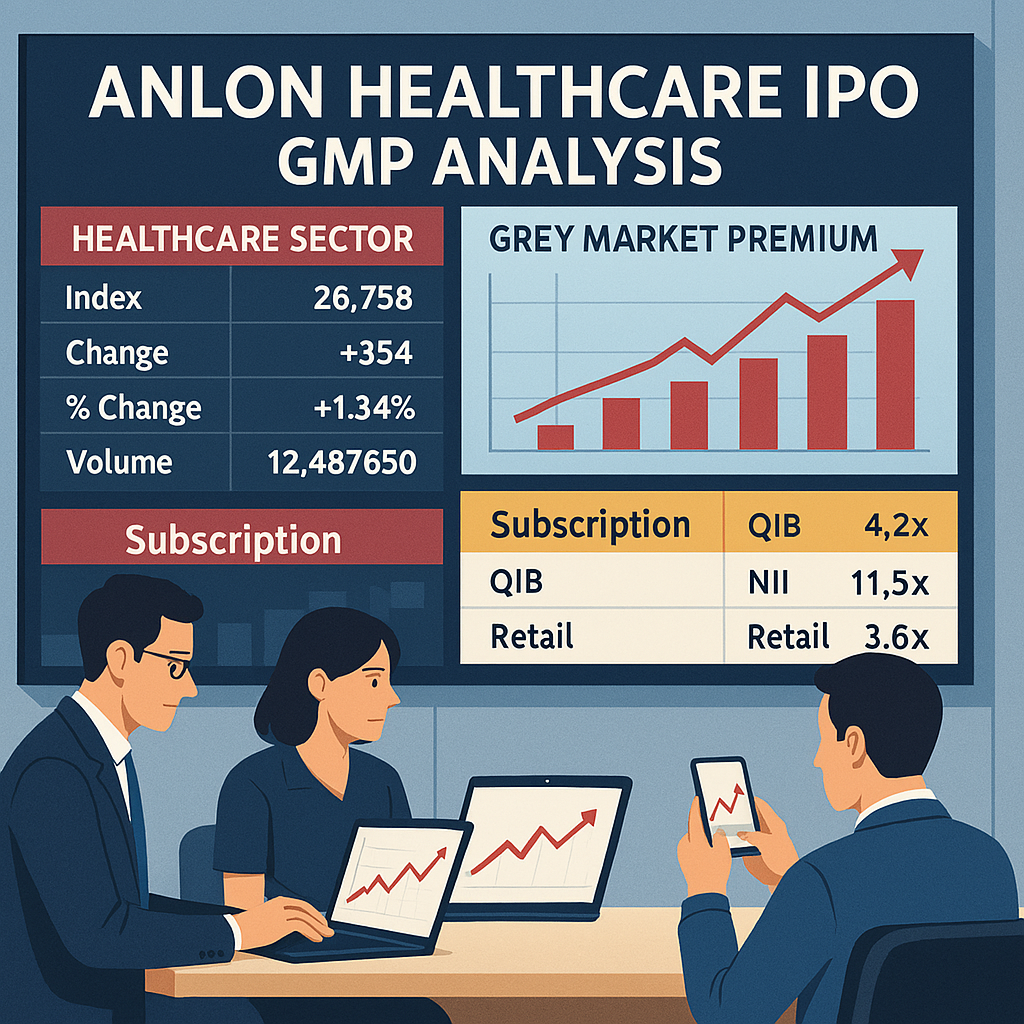
Anlon Healthcare IPO GMP is gaining attention among investors with discussions on premium trends, subscription status, and overall demand. This detailed analysis explores the IPO, its GMP, and what it means for retail and institutional investors.
Table of Contents
Introduction to Anlon Healthcare’s Public Offering
Anlon Healthcare has announced plans for an Initial Public Offering (IPO) in the Indian equity market, attracting attention from various investor categories. The company operates in the healthcare services sector, which has experienced significant growth in recent years due to demographic changes and increasing healthcare awareness.
Grey Market Premium (GMP) activity surrounding the Anlon Healthcare IPO provides early indicators of market sentiment before official listing. However, investors should note that GMP represents unofficial trading activity and does not guarantee listing performance or investment returns.
This comprehensive analysis examines Anlon Healthcare’s business operations, IPO structure, financial metrics, and sector positioning. The article provides factual information based on available disclosures to assist investors in making informed decisions about participation in the offering.
Company Profile and Business Operations
Healthcare Services Portfolio
Anlon Healthcare operates multiple healthcare service verticals across different geographic markets in India. The company’s business model includes primary healthcare facilities, specialized medical centers, and supporting healthcare infrastructure.
Primary healthcare operations focus on outpatient services, diagnostic testing, and preventive care programs. These services form the foundation of the company’s revenue generation and patient engagement strategies.
Specialized medical centers concentrate on specific therapeutic areas requiring advanced equipment and trained medical professionals. The company has established facilities in areas including cardiology, orthopedics, and emergency medical services.
Technology Integration in Healthcare Delivery
The company has invested in digital health solutions to complement traditional healthcare delivery methods. Technology platforms include electronic health records systems, telemedicine capabilities, and patient management software.
Digital health initiatives aim to improve operational efficiency and enhance patient experience across service touchpoints. The integration of technology represents a response to changing healthcare consumer preferences and regulatory requirements.
Telemedicine services expanded significantly during recent years, enabling remote consultations and follow-up care. This service line addresses accessibility challenges in underserved geographic markets while reducing operational costs.
Market Positioning and Geographic Presence
Anlon Healthcare operates facilities in select Indian cities with varying levels of healthcare infrastructure development. The geographic distribution strategy focuses on markets with favorable demographic profiles and healthcare demand growth potential.
Facility locations consider factors including population density, income levels, existing healthcare infrastructure, and regulatory environment. The company competes with established hospital chains, standalone specialty centers, and diagnostic service providers.
Market positioning emphasizes service quality, clinical outcomes, and patient satisfaction metrics. These operational parameters influence patient acquisition, retention, and average revenue per patient metrics.
IPO Structure and Offering Details
Issue Composition and Size
The Anlon Healthcare IPO comprises both fresh issue and offer-for-sale (OFS) components, subject to final prospectus details. Fresh issue proceeds will provide capital for company operations, while OFS allows existing shareholders partial exit opportunities.
The total issue size reflects consideration of capital requirements, market conditions, and valuation expectations. Issue sizing affects factors including listing liquidity, shareholder base expansion, and price discovery mechanisms.
Regulatory requirements mandate specific disclosures regarding fund utilization, promoter shareholding patterns, and investor allocation categories. These disclosures appear in the Draft Red Herring Prospectus (DRHP) filed with market regulator SEBI.
Price Band Determination
The IPO price band will be determined based on valuation methodologies including comparable company analysis and discounted cash flow models. Price band selection considers current market conditions, recent IPO performance, and sector-specific valuation multiples.
Pricing discussions involve lead managers, company management, and anchor investors during the book-building process. The final price band aims to balance company capital raising objectives with investor demand and valuation reasonableness.
Historical healthcare sector IPO pricing provides context for valuation assessment. Recent listings have demonstrated varied performance based on company fundamentals, market timing, and investor sentiment factors.
Allocation Framework
SEBI regulations specify mandatory allocation percentages across investor categories including retail individual investors (RIIs), non-institutional investors (NIIs), and qualified institutional buyers (QIBs). Retail investors receive minimum 35% reservation, while QIBs get up to 50% allocation.
Allocation methodology within categories follows proportionate allotment for oversubscribed portions. Retail investors applying for up to ₹2 lakhs receive priority allocation before proportionate distribution to larger applications.
Anchor investor allocation, if utilized, occurs one day before the public issue opening. Anchor investors typically include domestic and foreign institutional investors who provide pricing and demand signals to the broader market.
Understanding Grey Market Premium Mechanics
Grey Market Trading Overview
Grey Market Premium represents unofficial trading of IPO shares before official stock exchange listing. This parallel market operates through informal networks of brokers and traders who facilitate pre-listing transactions.
GMP transactions involve commitments to transfer shares post-listing at agreed prices. These transactions carry execution risks since they depend on share allotment and successful listing completion.
Market participants use GMP as an indicator of expected listing performance and market demand. However, GMP lacks regulatory oversight and transparent price discovery mechanisms present in official exchanges.
Factors Affecting GMP Levels
Multiple factors influence GMP dynamics for any IPO including company fundamentals, market conditions, and subscription patterns. Strong financial performance, growth prospects, and competitive positioning typically support higher GMP levels.
Broader market sentiment affects GMP across all IPOs regardless of individual company merits. Bull markets generally exhibit higher GMP levels while bear markets see suppressed or negative premiums.
Subscription rate data emerging during the bidding period influences GMP trends. Oversubscription across investor categories, particularly QIBs and HNIs, often correlates with rising GMP levels.
GMP Interpretation and Limitations
Investors should understand that GMP represents market expectations rather than guaranteed outcomes. Actual listing prices may diverge significantly from GMP-implied levels based on opening session supply-demand dynamics.
GMP accuracy varies across different IPOs based on factors including issue size, market conditions, and information asymmetry. Historical data shows inconsistent correlation between GMP levels and long-term stock performance.
Regulatory authorities do not recognize or regulate grey market activities. Participants in grey market transactions assume counterparty risks and lack formal recourse mechanisms for dispute resolution.
Financial Performance Analysis
Revenue Growth Trajectory
Anlon Healthcare’s revenue growth over recent fiscal years reflects expansion in patient volumes, service line additions, and pricing optimization. Financial disclosures in the IPO prospectus provide historical revenue data for investor assessment.
Revenue composition across service verticals indicates business diversification and dependence on specific revenue streams. Analysis of revenue mix helps assess sustainability and growth potential of different business segments.
Geographic revenue distribution shows market concentration and expansion progress. Companies with diversified geographic revenue bases typically demonstrate lower volatility during regional economic fluctuations.
Profitability Metrics Assessment
Profitability analysis includes evaluation of gross margins, operating margins, and net profit margins across reporting periods. Healthcare service providers typically operate with varying margin profiles based on service mix and operational efficiency.
Operating leverage analysis examines how revenue growth translates into profit expansion. Companies achieving operating leverage demonstrate improving margins as fixed costs spread across larger revenue bases.
Return on equity (ROE) and return on capital employed (ROCE) metrics indicate capital efficiency. These ratios compare profit generation to invested capital, providing insights into management’s capital allocation effectiveness.
Balance Sheet Strength Indicators
Asset composition analysis reveals capital intensity and investment requirements for business operations. Healthcare companies typically maintain significant fixed assets including medical equipment, facilities, and technology infrastructure.
Debt levels and leverage ratios indicate financial risk profile. Debt-to-equity ratio and interest coverage ratios help assess debt servicing capacity and financial flexibility for growth investments.
Working capital management affects operational liquidity and cash conversion cycles. Healthcare providers manage receivables from insurance companies, government programs, and direct patients with varying collection timelines.
Healthcare Sector Analysis and Trends
Demographic and Economic Drivers
India’s healthcare sector benefits from demographic trends including population aging, rising life expectancy, and increasing prevalence of lifestyle diseases. These factors create sustained demand growth for healthcare services across therapeutic areas.
Economic development and rising per capita income enable greater healthcare spending capacity. Middle-class expansion increases the population with ability to afford quality healthcare services beyond basic government provisions.
Urbanization concentrates population in cities with better healthcare infrastructure. Urban areas typically demonstrate higher healthcare utilization rates and willingness to pay for quality services.
Policy and Regulatory Environment
Government healthcare policies significantly influence sector operations through initiatives like Ayushman Bharat and National Health Mission. These programs expand healthcare access and insurance coverage, affecting demand patterns for private providers.
Regulatory framework includes standards for hospital accreditation, medical professional licensing, and quality control. National Accreditation Board for Hospitals & Healthcare Providers (NABH) certification affects hospital credibility and patient preferences.
Insurance penetration growth through government schemes and private policies impacts revenue streams. Increased insurance coverage improves affordability but introduces reimbursement negotiations and payment cycle considerations.
Competitive Landscape Assessment
The Indian healthcare services sector includes established hospital chains, regional players, and standalone specialty centers. Competition varies by geography, service line, and target patient demographic.
Large hospital chains benefit from brand recognition, standardized processes, and purchasing power advantages. Regional players leverage local market knowledge and community relationships for competitive positioning.
Entry barriers include capital requirements, regulatory approvals, and recruitment of qualified medical professionals. These barriers provide some protection to established players but do not eliminate competitive pressures.
Investment Considerations and Risk Factors
Business and Operational Risks
Healthcare service providers face operational risks including medical liability, quality control challenges, and dependence on qualified medical staff. Patient safety incidents can affect reputation and attract regulatory scrutiny.
Capacity utilization rates significantly impact profitability given high fixed cost structures. Maintaining optimal occupancy rates requires effective marketing, service quality, and competitive pricing strategies.
Technology obsolescence risks require continuous investment in medical equipment and IT systems. Failure to maintain current technology standards can affect competitive positioning and clinical outcomes.
Market and Economic Risks
Economic downturns affect discretionary healthcare spending, particularly for non-emergency procedures and elective treatments. Revenue mix between essential and discretionary services influences recession sensitivity.
Healthcare spending patterns vary with employment levels and income stability. Economic slowdowns typically reduce patient volumes for non-critical services while essential care demand remains stable.
Currency fluctuations affect companies with imported medical equipment or international operations. Import-dependent capital expenditure becomes more expensive during domestic currency depreciation.
Regulatory and Compliance Risks
Healthcare sector operates under extensive regulatory oversight including licensing requirements, quality standards, and pricing regulations. Regulatory changes can affect operational costs and business models.
Potential government intervention in pricing, particularly for critical care services, represents ongoing regulatory risk. Some states implement pricing controls on specific procedures or services.
Changes in insurance reimbursement policies affect revenue realization. Government insurance schemes periodically revise reimbursement rates based on budgetary considerations and policy objectives.
IPO Subscription Analysis Framework
Retail Investor Category Assessment
Retail investors form an important constituency in Indian IPOs with dedicated allocation quota. Participation levels indicate broad market interest and price acceptance among individual investors.
Retail subscription multiples show demand intensity relative to available shares. High retail oversubscription suggests strong brand recognition and positive sentiment among individual investors.
Application data analysis includes assessment of application amounts, multiple applications per PAN (within regulatory limits through family members), and geographic distribution. These patterns indicate investor sophistication and participation breadth.
Qualified Institutional Buyer Participation
QIB subscription levels provide professional investor validation of IPO fundamentals and pricing. Institutional participation includes mutual funds, insurance companies, pension funds, and foreign institutional investors.
Category-wise QIB subscription data reveals participation patterns across different institutional investor types. Mutual fund participation particularly signals domestic institutional confidence in the offering.
Anchor investor allocation, when utilized, demonstrates pre-IPO institutional commitment. Anchor investor quality and pricing acceptance provide signals to broader market participants.
Non-Institutional Investor Dynamics
The NII category includes high net worth individuals (HNIs) applying for amounts exceeding ₹2 lakhs. NII subscription levels indicate affluent investor interest and willingness to accept higher risk allocations.
NII oversubscription multiples often exceed other categories as HNIs compete for limited allocation through multiple applications. High NII demand typically correlates with anticipated listing gains.
Application financing patterns in NII category affect subscription metrics. Some HNIs use margin funding to increase application sizes, creating leveraged positions dependent on listing performance.
Valuation Methodologies and Peer Comparison
Comparable Company Analysis
Peer comparison involves analyzing valuation multiples of listed healthcare companies with similar business characteristics. Common metrics include Price-to-Earnings (P/E), Price-to-Sales (P/S), and Enterprise Value-to-EBITDA (EV/EBITDA) ratios.
Peer selection criteria consider factors including business model similarity, geographic presence, size, and growth stage. Appropriate peer selection critically affects valuation reasonableness assessment.
Adjustments for differences in growth rates, profitability, and market positioning modify base peer multiples. Premium or discount valuations require justification based on competitive advantages or disadvantages.
Growth and Profitability Trade-offs
High-growth healthcare companies often trade at premium valuations despite lower current profitability. Market participants value future earnings potential and market share capture opportunities.
Mature, profitable companies with stable cash flows typically command lower growth premiums but higher absolute valuations. Investment preference depends on investor time horizons and risk tolerance.
Valuation assessment should consider sustainability of current growth rates as companies scale. Mathematical constraints limit indefinite high percentage growth as revenue bases expand.
Post-Listing Performance Considerations
Listing Day Price Discovery
Initial listing price depends on opening session order flow and demand-supply balance. High demand relative to available float typically produces listing gains above issue price.
Listing day volatility can be substantial as price discovery occurs without historical trading references. Circuit limits may apply based on exchange regulations for newly listed securities.
Early investors face decisions regarding profit realization versus continued holding. Individual circumstances including tax considerations, portfolio allocation, and fundamental conviction affect these decisions.
Medium-Term Performance Factors
Post-listing performance over weeks and months depends on quarterly results, management commentary, and sector trends. Meeting or exceeding market expectations typically supports continued positive performance.
Institutional investor interest in secondary market affects liquidity and price stability. Research coverage from brokerage houses typically commences post-listing, providing additional market information.
Lock-in expiry timelines for promoters and pre-IPO investors can affect supply-demand dynamics. Large lock-in releases occasionally create temporary price pressure requiring absorption by market demand.
Long-Term Investment Perspective
Fundamental business performance ultimately drives long-term stock returns more than listing day gains. Revenue growth, profitability improvement, and market share gains create sustained shareholder value.
Sector tailwinds or headwinds affect all companies in healthcare regardless of individual merit. Long-term investors should assess multi-year sector outlook beyond current market sentiment.
Management execution capability, capital allocation discipline, and corporate governance influence long-term investment outcomes. These qualitative factors require ongoing monitoring beyond initial IPO participation decision.
Application Strategy and Process
Bidding Process Mechanics
IPO applications occur through online and offline channels including ASBA (Application Supported by Blocked Amount), internet banking, and UPI for retail investors. ASBA mechanism blocks application funds in investor accounts without immediate debit.
Bid submission includes price selection within the announced price band. Investors choose specific prices or “cut-off” option accepting final discovered price.
Application timing within the bidding period does not affect allocation outcomes. Early applications and last-hour applications receive equal treatment in allocation processes.
Optimal Application Strategy
Retail investors maximizing allocation probability should consider applying for maximum 14 lots totaling ₹2 lakhs to receive priority allocation benefit. Applications exceeding ₹2 lakhs fall into proportionate allotment category.
Cut-off price selection ensures participation at final IPO price regardless of specific bid level. This approach prevents non-allocation due to bidding below final price in oversubscribed issues.
Multiple applications through family member accounts (within regulatory guidelines) increase overall allocation probability. Each unique PAN can submit one application per issue.
Financial Planning and Portfolio Integration
Investment Allocation Decisions
IPO allocation within overall portfolio should reflect individual risk tolerance, investment horizon, and sector exposure preferences. New issues carry higher uncertainty than established stocks with trading history.
Position sizing should account for IPO-specific risks including listing volatility, information asymmetry, and potential lock-in periods for certain investors. Conservative position sizing helps manage these risk factors.
Opportunity cost considerations compare IPO investment against alternative uses of capital including existing holdings, other new issues, or maintaining cash reserves.
Risk Management Principles
Diversification across multiple IPOs reduces single-issue concentration risk. However, excessive IPO participation can create portfolio volatility and capital commitment challenges.
Stop-loss strategies post-listing help limit downside risk if fundamentals deteriorate or market conditions change unfavorably. Predetermined exit points encourage disciplined decision-making.
Regular portfolio review and rebalancing ensure IPO holdings remain appropriate relative to overall investment objectives. Some IPO investments may require position adjustment as companies mature and growth characteristics evolve.
Regulatory Framework and Investor Protection
SEBI Guidelines for IPO Process
Securities and Exchange Board of India (SEBI) regulates public offerings through comprehensive guidelines covering disclosure requirements, process timelines, and investor allocation. These regulations protect investor interests and ensure market integrity.
Mandatory disclosures in offer documents include financial statements, risk factors, management discussion, and fund utilization plans. These disclosures enable informed investment decisions based on complete information.
Book-building process regulations ensure transparent price discovery and fair allocation across investor categories. Minimum retail reservation and maximum promoter holding norms promote broad-based share ownership.
Investor Grievance Redressal
Investors can register complaints regarding IPO process through SEBI’s SCORES (SEBI Complaints Redress System) platform. This mechanism provides formal channels for dispute resolution and regulatory intervention.
Registrar and Transfer Agents (RTAs) handle allotment processes and address investor queries regarding application status and refunds. RTAs operate under SEBI oversight with defined service standards.
Stock exchanges monitor post-listing trading and investigate irregularities. Surveillance mechanisms detect unusual price movements or trading patterns requiring regulatory attention.
Frequently Asked Questions (FAQs)
What is Grey Market Premium and how reliable is it for investment decisions?
Grey Market Premium (GMP) represents unofficial pre-listing trading activity indicating market expectations for IPO listing performance. GMP transactions occur through informal broker networks outside regulated exchanges.
GMP provides one signal of market sentiment but should not solely determine investment decisions. Factors including company fundamentals, sector outlook, valuation metrics, and individual investment objectives require equal consideration.
Historical data shows inconsistent GMP correlation with long-term stock performance. Some IPOs with strong GMP experience poor post-listing results while others with modest GMP deliver substantial returns over time.
What are the key risks associated with investing in healthcare sector IPOs?
Healthcare IPOs involve sector-specific risks including regulatory changes, reimbursement policy modifications, and medical liability exposure. Operational risks encompass quality control challenges, staff retention, and capacity utilization variations.
Market risks include economic sensitivity affecting discretionary healthcare spending and competition from established players. Financial risks involve capital intensity, working capital management, and debt servicing for leveraged companies.
Individual company risks depend on business model, geographic concentration, management quality, and growth execution capability. Thorough due diligence of company-specific factors helps assess these risks appropriately.
How should retail investors approach IPO applications to maximize allocation probability?
Retail investors should apply through ASBA mechanism using bank accounts or UPI to streamline the application process. Bidding at cut-off price ensures participation at final discovered price without risk of missing allocation due to low bid.
Applying for maximum retail allocation amount (₹2 lakhs for priority allocation) increases allocation probability in oversubscribed issues. Multiple applications through eligible family members’ PAN cards provide additional allocation opportunities within regulatory guidelines.
Early submission during bidding period avoids last-minute technical issues though timing does not affect allocation. Ensuring sufficient bank balance for application blocking prevents rejection due to insufficient funds.
What factors should investors monitor after receiving IPO allotment?
Post-allotment monitoring includes tracking listing date announcement, demat account credit of shares, and refund processing for unalloted applications. Ensuring demat accounts are active and properly linked prevents delays in share credit.
Listing day preparation involves deciding whether to sell immediately, hold for medium term, or maintain as long-term investment. This decision should reflect individual investment objectives and pre-planned strategy rather than emotional reactions to price movements.
Post-listing monitoring includes quarterly financial results, management commentary, analyst coverage, and sector developments. Regular performance review against initial investment thesis helps determine appropriate ongoing position management.
How does Anlon Healthcare compare to other healthcare companies in terms of business model?
Anlon Healthcare operates an integrated healthcare services model spanning primary care, specialty services, and digital health solutions. This diversification differs from pure-play diagnostic chains, single-specialty centers, or hospital-only operators.
Comparative analysis requires evaluating factors including revenue mix, geographic presence, asset intensity, margin profiles, and growth strategies. Each business model carries distinct characteristics affecting valuation, risk profile, and growth potential.
Investors should assess which healthcare business model aligns with their investment preferences considering factors like growth visibility, capital requirements, competitive dynamics, and regulatory exposure.
What role does anchor investor participation play in IPO success?
Anchor investors are qualified institutional buyers who receive allocation one day before public issue opening at discovered price. Their participation provides demand signals and price validation to broader market participants.
Quality anchor investors including reputed mutual funds, insurance companies, and foreign institutions enhance IPO credibility. Strong anchor subscription indicates institutional due diligence validation and confidence in offering fundamentals.
However, anchor participation alone does not guarantee IPO success. Retail and institutional subscription during main bidding period ultimately determines overall demand and influences listing performance.
What are the typical timelines for IPO process from announcement to listing?
IPO process timelines span several months from initial filing to final listing. SEBI review of Draft Red Herring Prospectus (DRHP) typically requires 30-45 days before observations are issued.
Post-SEBI approval, companies finalize price band, bidding dates, and marketing roadshows. Public bidding period lasts 3-5 working days followed by allocation, refund processing, and credit of shares to investor demat accounts.
Listing typically occurs within 6-7 working days after bidding closure, though timelines vary based on issue size and technical processes. Regulatory timelines continue evolving with efforts to streamline IPO processes.
How should investors evaluate whether to sell immediately on listing or hold long-term?
Listing day decisions depend on individual investment objectives established before IPO application. Investors seeking listing gains should have predetermined profit targets and exit strategies regardless of actual listing premium.
Long-term investors should evaluate whether initial investment thesis remains valid based on listing price discovery and early trading patterns. Significant listing premiums may suggest reassessing valuation comfort for continued holding.
Partial profit booking strategies allow capturing listing gains while maintaining exposure to long-term potential. This balanced approach accommodates both short-term opportunity realization and long-term conviction in company fundamentals.
Conclusion: Balanced Perspective on IPO Participation
Anlon Healthcare’s IPO represents an opportunity for investors to participate in India’s healthcare sector growth through a company operating across multiple service verticals. The offering requires careful evaluation of business fundamentals, financial performance, sector dynamics, and individual investment suitability.
Grey Market Premium activity provides one indicator of market sentiment but should complement rather than replace comprehensive due diligence. Investors must assess company disclosures, regulatory filings, and independent research to form balanced investment opinions.
Healthcare sector demographics and policy trends support long-term growth prospects, though individual company success depends on execution capabilities, competitive positioning, and capital allocation discipline. Sector tailwinds do not guarantee individual stock performance.
IPO investing carries inherent risks including information asymmetry, listing volatility, and uncertainty regarding post-listing performance. Appropriate position sizing, diversification, and alignment with personal investment objectives help manage these risks effectively.
About the Author
Nueplanet
Financial markets analyst with expertise in Indian equity markets, IPO analysis, and healthcare sector coverage. Specialization includes fundamental analysis, valuation assessment, and regulatory framework interpretation for capital market transactions.
This analysis utilizes publicly available information from regulatory filings, stock exchange data, SEBI guidelines, company disclosures, and official announcements. Content is based on verifiable sources and factual information available at publication time.
Disclaimer: This article provides factual analysis for educational and informational purposes only. It does not constitute investment advice, stock recommendations, or solicitation to buy or sell securities. IPO investments involve substantial risks including potential loss of invested capital. Investors should conduct independent research, carefully review offer documents, assess their risk tolerance and investment objectives, and consult qualified financial advisors before making investment decisions. Grey Market Premium represents unofficial activity without regulatory recognition. Past performance of IPOs or sector trends does not guarantee future results.
Published: August 28, 2025
Last Updated: August 28, 2025
Category: IPO Analysis | Healthcare Sector | Primary Market
Data Sources: SEBI, NSE, BSE, Company Filings, Ministry of Health and Family Welfare
Helpful Resources
Latest Posts
Related Posts












Post Comment