









Amazon launches home diagnostic services in 6 cities through app
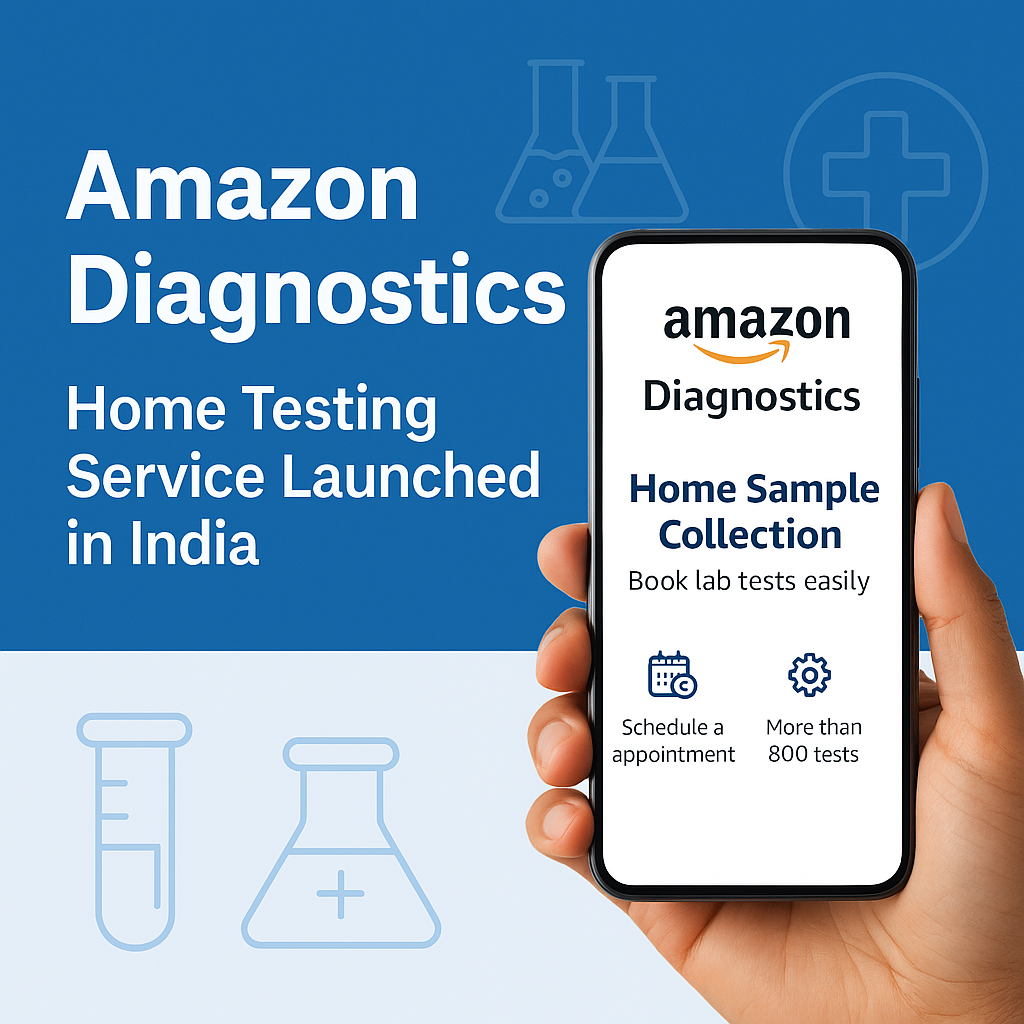
Table of Contents
Amazon India announced the launch of Amazon Diagnostics in June 2025, marking the company’s entry into India’s diagnostic testing sector. This development represents an expansion of Amazon’s healthcare service portfolio in the Indian market, following its earlier initiatives in pharmacy and medical consultation services.
The diagnostic service commenced operations in six metropolitan regions, offering at-home sample collection and laboratory testing services. This article provides a factual analysis of Amazon’s diagnostic service launch, examines the Indian diagnostic testing market, and evaluates the potential implications for the healthcare industry.
Market Context: India’s Diagnostic Testing Industry
The diagnostic testing sector in India represents a significant component of the country’s healthcare infrastructure. According to industry data from fiscal year 2024, the diagnostic testing market was valued at approximately USD 12 billion. The sector has experienced growth patterns consistent with broader healthcare industry trends.
The organized diagnostic sector, which includes accredited laboratories and chain service providers, accounts for a portion of total diagnostic services. Market research indicates that diagnostic testing represents approximately six percent of total healthcare expenditure in India. This proportion remains lower than diagnostic spending in some developed healthcare markets.
Several factors influence demand for diagnostic services in India. These include increasing awareness of preventive healthcare, growing prevalence of chronic diseases requiring regular monitoring, expanding health insurance coverage, and rising urban populations with access to organized healthcare facilities. Additionally, government health programs requiring diagnostic testing contribute to market demand.
The diagnostic testing market exhibits geographic concentration in urban areas, where organized laboratories maintain stronger presence. Rural and semi-urban regions often rely on smaller testing facilities or require patients to travel to urban centers for diagnostic services. This geographic distribution pattern influences market dynamics and service accessibility.
Amazon’s Healthcare Services Timeline in India
Amazon’s entry into diagnostic services builds upon previous healthcare initiatives in the Indian market. The company launched Amazon Pharmacy in select Indian cities in 2020, providing online medicine ordering and delivery services. This service expanded to additional cities over subsequent years.
In 2022, Amazon introduced telemedicine consultation services, allowing customers to access medical professionals through digital platforms. These consultations could be scheduled through the Amazon application, integrating with the company’s existing digital infrastructure.
The diagnostic services launch in June 2025 represents the third major healthcare service category offered by Amazon in India. The company positions these services as complementary offerings within a broader healthcare ecosystem accessible through its digital platforms.
This sequential expansion pattern reflects Amazon’s strategy of gradually building comprehensive healthcare service portfolios in markets where it operates. Similar approaches have been observed in other geographic markets where Amazon has introduced healthcare services.
Service Specifications and Operational Details
Amazon Diagnostics commenced operations with defined service parameters. The initial launch covered six metropolitan areas: Bengaluru, Delhi, Gurgaon, Noida, Mumbai, and Hyderabad. The service area encompasses over 450 postal code zones within these regions.
The service catalog includes over 800 diagnostic tests across multiple categories. Blood testing services comprise a substantial portion of available tests, including complete blood counts, metabolic panels, lipid profiles, and specialized biomarker assessments. Urine analysis services include various chemical and microscopic examinations. The catalog also includes specialized pathology tests for disease screening and health monitoring.
Sample collection procedures involve home visits by trained technicians. Customers schedule appointments through the Amazon mobile application or website. The booking system displays available time slots based on location and service capacity. Sample collection is scheduled to occur within specified timeframes following appointment confirmation.
Laboratory processing is conducted through partnership arrangements with existing diagnostic service providers. Amazon has engaged Orange Health Labs as a primary laboratory partner for processing collected samples. This operational model allows Amazon to offer diagnostic services without establishing proprietary laboratory facilities.
Report delivery occurs through digital channels. Test results are uploaded to customer accounts within the Amazon platform. Standard turnaround time for routine tests is reported as six hours from sample collection, though actual timeframes may vary based on test complexity and processing requirements.
Partnership Structure: Orange Health Labs Collaboration
The operational model for Amazon Diagnostics relies on collaboration with Orange Health Labs, an existing diagnostic service provider. Orange Health Labs operates laboratory facilities and maintains relevant certifications for diagnostic testing services.
This partnership structure assigns specific responsibilities to each organization. Amazon provides the customer interface, booking platform, logistics coordination, and digital infrastructure. Orange Health Labs conducts laboratory testing, quality control procedures, and result generation.
The partnership allows Amazon to enter the diagnostic services market without capital investments in laboratory infrastructure, equipment, or specialized personnel. This asset-light approach aligns with Amazon’s operational strategies in other service categories.
Orange Health Labs benefits from access to Amazon’s customer base, technology platforms, and logistics capabilities. The partnership enables Orange Health to expand service reach beyond its existing direct customer channels.
Similar partnership models exist in other markets where technology platforms collaborate with healthcare service providers. These arrangements allow rapid market entry while leveraging existing specialized capabilities.
Competitive Landscape Analysis
India’s organized diagnostic testing sector includes several established participants. Dr. Lal PathLabs, founded in 1949, operates a network of laboratories and collection centers across multiple states. The company reported revenue of approximately INR 1,900 crores in fiscal year 2024.
Metropolis Healthcare, established in 1980, maintains laboratory facilities in various Indian cities and international locations. The company’s fiscal year 2024 revenue was approximately INR 1,200 crores. Thyrocare Technologies, founded in 1995, focuses on automation and centralized processing. The company reported revenue of approximately INR 550 crores in fiscal year 2024.
These established diagnostic service providers maintain physical infrastructure including laboratories, collection centers, and logistics networks developed over decades of operation. They possess regulatory certifications, quality accreditations, and established relationships with healthcare providers.
Amazon’s entry introduces a technology-platform model to the diagnostic services sector. This approach emphasizes digital customer interfaces, logistics optimization, and integration with broader e-commerce ecosystems. The model differs from traditional diagnostic service operations that developed around physical infrastructure and walk-in customer models.
Market participants responded to Amazon’s announcement with varied reactions. Stock prices of listed diagnostic companies experienced some volatility following the news. Dr. Lal PathLabs, Metropolis Healthcare, and Thyrocare Technologies saw share price movements in the days following Amazon’s announcement, though multiple factors influence equity market valuations.
Technology Infrastructure and Digital Integration
Amazon Diagnostics operates through the company’s existing mobile application and website infrastructure. Customers access diagnostic services through the same platforms used for e-commerce shopping, entertainment services, and other Amazon offerings.
The booking interface allows users to search for specific tests or browse available categories. The system displays test descriptions, preparation requirements, and pricing information. Customers can select tests, schedule appointments, and complete payment transactions through the application.
Appointment scheduling employs algorithmic optimization to match customer locations with available technician capacity. The system considers factors including geographic proximity, traffic patterns, and existing appointment schedules. This optimization aims to minimize travel time for technicians while meeting customer appointment preferences.
The platform includes real-time tracking functionality allowing customers to monitor technician location during scheduled appointment windows. This feature employs GPS technology similar to tracking systems used for product deliveries.
Digital report delivery integrates results into customer health records within the Amazon platform. Users can access reports through mobile applications or web browsers. The system allows report sharing with healthcare providers through digital transmission.
Data security measures include encryption protocols for information transmission and storage. Amazon states compliance with applicable data protection regulations governing health information. The company’s existing security infrastructure for e-commerce operations extends to healthcare services.
Pricing Strategy and Market Positioning
Amazon Diagnostics employs pricing aligned with established market rates for comparable diagnostic tests. The company has not positioned the service as a discount offering relative to existing diagnostic service providers.
This pricing approach differs from strategies Amazon has employed in some other product categories, where competitive pricing served as a market entry tactic. In diagnostic services, the company emphasizes service convenience, technology features, and integration with existing Amazon services rather than price competition.
Several factors may influence this pricing strategy. Regulatory requirements and quality standards in diagnostic testing create baseline cost structures. Laboratory processing, quality control procedures, and certified personnel represent fixed costs that limit pricing flexibility.
Additionally, aggressive price competition in healthcare services may raise quality perception concerns among consumers. Diagnostic test accuracy and reliability represent critical factors in healthcare decision-making. Price positioning at market rates may communicate quality equivalence with established providers.
The strategy also reflects partnership economics with Orange Health Labs, which conducts laboratory testing. Pricing must account for costs incurred by the laboratory partner while providing margin for Amazon’s platform and logistics services.
Regulatory Framework for Diagnostic Services in India
Diagnostic laboratories in India operate under regulatory frameworks established at national and state levels. The Clinical Establishments (Registration and Regulation) Act, 2010, provides a national framework for healthcare facility regulation, though implementation occurs through state-level legislation.
Diagnostic laboratories require registration with state health authorities. Registration processes verify infrastructure standards, equipment specifications, and personnel qualifications. Laboratories must demonstrate compliance with defined technical standards for test procedures and quality control.
The National Accreditation Board for Testing and Calibration Laboratories (NABL) provides voluntary accreditation for diagnostic facilities. NABL accreditation requires laboratories to meet ISO 15189 standards for medical laboratories. Many healthcare institutions and insurance providers prefer or require NABL-accredited laboratory reports.
Data protection regulations also apply to diagnostic services. The Information Technology Act, 2000, and its amendments establish requirements for electronic health information. The Digital Personal Data Protection Act, 2023, creates additional obligations for organizations processing personal data, including health information.
These regulatory frameworks establish baseline standards for diagnostic service operations. Compliance requirements apply to all market participants, including new entrants like Amazon Diagnostics. The partnership model with accredited laboratories like Orange Health Labs allows Amazon to operate within existing regulatory frameworks.
Market Entry Timing and Strategic Considerations
Amazon’s entry into diagnostic services in mid-2025 reflects several market timing considerations. The COVID-19 pandemic from 2020-2022 significantly increased awareness of diagnostic testing among Indian consumers. At-home sample collection gained acceptance during periods when individuals sought to minimize facility visits.
Digital health adoption accelerated during this period. Telemedicine consultations, online pharmacy services, and health monitoring applications experienced increased usage. This behavioral shift created receptiveness to technology-enabled healthcare services.
The diagnostic testing market demonstrated resilience during economic uncertainties. Healthcare spending, particularly for necessary medical services, exhibits less sensitivity to economic cycles than discretionary spending categories. This characteristic makes healthcare services attractive for business expansion.
Amazon’s existing infrastructure in India provided foundational capabilities for diagnostic service delivery. Logistics networks developed for e-commerce operations could be adapted for sample collection and transportation. Customer relationships established through shopping services offered cross-selling opportunities for healthcare services.
The timing also coincides with increased regulatory attention to digital health services. Clearer regulatory frameworks provide more certainty for companies entering healthcare markets. This regulatory development may have influenced timing decisions for service launches.
Logistics and Operations Management
Sample collection logistics represent a critical operational component for at-home diagnostic services. Amazon employs technicians trained in proper sample collection procedures, specimen handling, and infection control protocols.
The logistics model adapts principles from Amazon’s product delivery operations. Route optimization algorithms coordinate multiple appointments to minimize travel time and maximize technician productivity. Geographic clustering of appointments improves operational efficiency.
Sample transportation from collection points to laboratory facilities requires temperature control and time management. Blood samples and other biological specimens have specific storage requirements to maintain sample integrity. Transportation protocols must meet standards for specimen handling.
Laboratory capacity planning balances processing volumes with turnaround time commitments. The six-hour target for routine test results requires efficient laboratory workflows and adequate processing capacity. Peak demand periods may strain capacity if volumes exceed planning assumptions.
Quality control procedures occur at multiple points in the service delivery chain. Technician training and certification ensure proper collection techniques. Sample tracking systems monitor specimen handling throughout transportation. Laboratory quality control verifies testing accuracy and result validity.
Customer service functions address appointment scheduling issues, sample collection problems, and result interpretation questions. Support systems must handle inquiries about test preparation requirements, result timelines, and report access. These customer service requirements differ from traditional e-commerce support functions.
Economic Impact on Healthcare Accessibility
At-home diagnostic services may influence healthcare accessibility in specific dimensions. For individuals with mobility limitations or transportation constraints, home collection services reduce barriers to obtaining diagnostic tests. This accessibility improvement particularly benefits elderly populations or those with chronic conditions limiting travel ability.
Time efficiency represents another accessibility factor. Traditional diagnostic testing often requires travel to collection centers, waiting periods at facilities, and return visits for report collection. Home collection services eliminate travel time and facility waiting periods, reducing total time investment for diagnostic testing.
However, service availability remains concentrated in urban areas where Amazon initially launched operations. Rural and semi-urban populations without service coverage continue to face traditional accessibility challenges. The geographic scope of service expansion will determine broader accessibility impacts.
Pricing at market parity means that cost barriers to diagnostic testing remain unchanged for price-sensitive populations. Economic accessibility depends more on absolute pricing levels and insurance coverage than on service delivery models. If home collection services command premium pricing in the future, economic accessibility might decrease for some population segments.
Digital literacy requirements for platform-based booking may create accessibility barriers for populations less comfortable with smartphone applications. While family members can assist with booking, this requirement differs from walk-in diagnostic centers requiring no digital interaction.
Data Analytics and Personalized Health Insights
Digital platforms for healthcare services enable data aggregation and analysis capabilities. Amazon’s diagnostic service generates data about test ordering patterns, health screening behaviors, and result trends across customer populations.
This data could inform several applications. Population health analytics might identify disease prevalence patterns or screening compliance rates. Individuals’ historical test results could enable trend analysis showing changes in health markers over time.
Personalized health recommendations based on diagnostic results represent potential platform features. Algorithms could identify out-of-range test values and suggest follow-up actions or lifestyle modifications. Integration with other Amazon health services might enable coordinated recommendations across pharmacy, consultation, and diagnostic services.
However, health data analytics raises privacy and ethical considerations. Customers must understand how their health information will be used and provide informed consent for data applications beyond immediate test result delivery. Regulations governing health data use establish requirements for data handling and customer notification.
Algorithmic health recommendations must be carefully designed to avoid providing medical advice beyond platform capabilities. Distinguishing between information provision and medical guidance requires clear communication and appropriate limitations on recommendation scope.
Implications for Traditional Diagnostic Service Providers
Amazon’s market entry creates competitive pressures for established diagnostic service providers. Technology-enabled customer experiences may shift consumer expectations for diagnostic services. Traditional providers may need to enhance digital capabilities to remain competitive.
Investment in mobile applications, online booking systems, and digital report delivery may become necessary for established players. These technology investments require capital allocation and organizational capability development. Companies with limited technology resources may face challenges in matching platform-based competitors’ digital experiences.
Home collection services offered by traditional providers may require expansion to compete with Amazon’s service model. This expansion necessitates investment in logistics capabilities, technician networks, and route optimization systems. The economics of home collection services differ from facility-based operations, requiring operational model adjustments.
However, established diagnostic companies possess assets that new entrants cannot quickly replicate. Laboratory infrastructure, quality certifications, and technical expertise represent substantial investments accumulated over years or decades. Relationships with hospitals, clinics, and physicians provide referral channels independent of direct consumer bookings.
Brand recognition and trust in healthcare services may favor established providers, particularly for complex or specialized testing. Consumers may perceive traditional diagnostic companies as more credible for serious health concerns, while viewing platform-based services as suitable for routine testing.
Financial Performance Indicators and Metrics
Evaluating Amazon Diagnostics’ performance will involve multiple metrics. Customer acquisition rates indicate market acceptance and service adoption. Metrics include new customers using diagnostic services, repeat usage rates, and cross-selling success from Amazon’s existing customer base.
Geographic penetration measures service availability expansion. Metrics include additional cities launched, postal code coverage expansion, and service area population reach. These indicators reflect Amazon’s expansion pace and market coverage strategy.
Operational efficiency metrics assess service delivery performance. Key indicators include appointment fulfillment rates, sample collection punctuality, result turnaround times, and customer complaint rates. These metrics determine whether service quality meets stated commitments.
Financial metrics including revenue per test, customer acquisition costs, and contribution margins indicate economic viability. Diagnostic services involve different economics than e-commerce retail, requiring separate financial evaluation.
Market share metrics compare Amazon’s diagnostic service volumes to total market volumes in served geographies. Market share gains indicate competitive success in capturing customer preference from established providers.
However, as a private company, Amazon does not publicly report detailed financial results for individual service lines. External analysts must rely on company statements, industry estimates, and indirect indicators to assess business performance.
Technology Roadmap and Future Capabilities
Amazon has indicated plans for technology enhancements to diagnostic services. Artificial intelligence applications could analyze test results to identify patterns or anomalies requiring attention. Machine learning algorithms might predict health risks based on diagnostic trends and demographic factors.
Integration with wearable devices represents another potential enhancement. Combining continuous monitoring data from fitness trackers or smartwatches with periodic diagnostic testing could provide more comprehensive health assessments. This integration would require technical protocols for data exchange between device platforms and diagnostic systems.
Expanded test menus may include genetic testing services, advanced cancer screening markers, or specialized panels for specific conditions. These additions would depend on laboratory partnerships capable of performing complex testing procedures.
Telemedicine integration could connect diagnostic results with physician consultations. Customers receiving abnormal test results might immediately schedule virtual consultations to discuss findings and treatment options. This integration would create coordinated service pathways across Amazon’s healthcare offerings.
Predictive health recommendations based on diagnostic patterns represent advanced capabilities. Algorithms analyzing historical trends might suggest preventive interventions or screening recommendations. However, such features require careful design to avoid inappropriate medical guidance.
Comparative Analysis: Global Diagnostic Service Models
Examining diagnostic service approaches in other markets provides context for India’s evolving landscape. In the United States, laboratory services operate through diverse models including hospital-based laboratories, independent reference laboratories, and retail clinic partnerships.
Quest Diagnostics and Laboratory Corporation of America (LabCorp) represent major independent laboratory networks in the US market. These companies operate thousands of patient service centers and process hundreds of millions of tests annually. Both companies offer home collection services for certain test types, though facility-based collection remains predominant.
European markets exhibit variations in diagnostic service organization. Some countries emphasize hospital-based laboratory systems, while others have significant private laboratory sectors. Home collection services exist in various European markets but represent smaller portions of total diagnostic volumes than facility-based testing.
China’s diagnostic market has seen significant digital health integration. Technology platforms partner with laboratory networks to offer online ordering and home collection services. Mobile health applications frequently include diagnostic testing as components of broader health management services.
These international examples demonstrate multiple viable models for diagnostic service delivery. The optimal approach depends on factors including healthcare system structure, population density, insurance frameworks, and technology adoption patterns.
Healthcare Policy Implications
Amazon’s entry into diagnostic services raises policy questions about healthcare market structure and regulation. Platform-based healthcare service delivery creates new organizational models that may not fit traditional regulatory frameworks designed for facility-based providers.
Data governance policies must address how health information collected by technology platforms is protected, used, and shared. Regulations must balance innovation benefits against privacy protection and data security requirements. Policy frameworks need clarity about platform responsibilities for health information security.
Quality oversight mechanisms should ensure that technology-enabled services meet the same standards as traditional healthcare delivery. Regulatory approaches must verify that operational partnerships, such as Amazon’s arrangement with Orange Health Labs, maintain clear accountability for quality and safety.
Market competition policies may need to consider whether large technology platforms entering healthcare markets affect competitive dynamics differently than traditional healthcare industry consolidation. Platform effects, network advantages, and ecosystem integration raise distinct analytical considerations.
Healthcare accessibility goals interact with private sector service delivery models. Policymakers must consider whether platform-based services improve or worsen healthcare access disparities. Geographic coverage, pricing structures, and digital divide factors influence accessibility outcomes.
Consumer Behavior and Healthcare Service Selection
Understanding factors influencing consumer choices about diagnostic services provides insight into market dynamics. Convenience represents a significant factor for many consumers, particularly those balancing work schedules, family responsibilities, or transportation limitations.
Price sensitivity varies across consumer segments. Some populations prioritize cost minimization and may compare prices across diagnostic service providers. Others prioritize service quality, provider reputation, or physician recommendations over price considerations.
Technology comfort levels influence platform service adoption. Digitally native younger consumers may readily adopt app-based healthcare services, while older populations might prefer familiar facility-based models. However, generational patterns show variation, and many older adults actively use digital health services.
Trust and credibility in healthcare represent critical decision factors. Brand recognition, professional accreditation, and physician recommendations substantially influence provider selection. New entrants must establish credibility to compete effectively with established healthcare brands.
Service quality perceptions encompass multiple dimensions including result accuracy, report clarity, customer service responsiveness, and problem resolution. Consumers may weigh these factors differently based on testing purposes and health situations.
Investment Considerations and Capital Allocation
Amazon’s investment in diagnostic services reflects strategic capital allocation decisions. Healthcare represents a large and growing market globally, with defensive characteristics during economic cycles. These market features make healthcare attractive for long-term investment.
The asset-light partnership model limits capital requirements compared to building proprietary laboratory infrastructure. This approach allows market testing with controlled investment levels. If the service proves successful, Amazon could adjust the business model or make additional investments.
Cross-selling opportunities across Amazon’s service portfolio may enhance investment returns. Customers using diagnostic services might increase engagement with pharmacy services, health consultations, or wellness products. These ecosystem effects improve overall return on healthcare investments.
However, healthcare services involve regulatory compliance costs, quality assurance expenses, and specialized operational requirements differing from e-commerce retail. Profitability timelines may extend longer than in Amazon’s core businesses. The company must allocate sufficient resources for sustained market development.
Competitive responses from established diagnostic providers or other technology companies may require ongoing investment to maintain service differentiation. Market leadership in healthcare services requires continuous innovation and service enhancement.
Risk Factors and Operational Challenges
Several risk factors and challenges affect diagnostic service operations. Quality control failures could result in inaccurate test results, creating patient safety concerns and legal liabilities. Maintaining consistent quality across distributed sample collection and multiple processing facilities requires robust systems.
Regulatory compliance failures could result in operational restrictions, financial penalties, or reputational damage. Healthcare regulations involve complex requirements that evolve over time. Compliance systems must monitor regulatory changes and implement necessary adjustments.
Data security breaches involving health information would create significant problems. Health data represents particularly sensitive personal information, and breaches could cause customer harm and regulatory consequences. Cybersecurity investments and protocols require continuous attention.
Operational scalability challenges may emerge as service volumes grow. Laboratory processing capacity, technician networks, and logistics infrastructure must scale proportionally with demand. Capacity constraints could compromise service quality or limit growth.
Partnership dependencies create operational risks. The arrangement with Orange Health Labs means Amazon relies on the partner’s operational performance, quality standards, and continued collaboration. Partnership disruptions would require alternative arrangements or operational model changes.
Market competition may intensify as established providers enhance digital capabilities or other technology companies enter healthcare services. Maintaining competitive advantages requires ongoing innovation and service differentiation.
Expert Perspectives on Digital Health Evolution
Healthcare industry analysts offer varied perspectives on technology platforms entering medical services. Some experts view platform integration as inevitable evolution that will improve healthcare accessibility and efficiency. These observers emphasize potential benefits from applying technology and logistics expertise to healthcare delivery.
Other analysts express caution about technology companies lacking traditional healthcare expertise. These experts emphasize the importance of clinical knowledge, quality assurance capabilities, and patient safety considerations that require specialized healthcare experience.
Digital health researchers study how technology affects healthcare utilization patterns and outcomes. Some research indicates that convenient access to services increases preventive care utilization. Other studies examine whether ease of access leads to unnecessary testing or healthcare cost increases.
Healthcare policy experts debate appropriate regulatory frameworks for platform-based healthcare services. Some advocate for principles-based regulations that accommodate innovation while ensuring safety and quality. Others prefer prescriptive rules establishing clear requirements for new service models.
Consumer health advocates emphasize the importance of health literacy, informed consent, and patient empowerment in digital health services. These stakeholders call for clear communication about service capabilities, limitations, and appropriate use of platform-based healthcare.
Market Projections and Growth Scenarios
Industry analysts project continued growth in India’s diagnostic testing market driven by demographic trends, disease prevalence patterns, and healthcare awareness. Market research firms estimate annual growth rates in the range of 8-12 percent for organized diagnostic services over coming years.
Digital health services represent a growing segment within overall healthcare markets. Platform-based service delivery may capture increasing market share as consumer comfort with digital health increases. However, projections involve substantial uncertainty given the early stage of many digital health services.
Amazon’s market share trajectory will depend on service quality, geographic expansion pace, competitive responses, and consumer acceptance. Established diagnostic providers maintain substantial advantages in infrastructure and market relationships that may limit new entrant growth rates.
Regulatory developments could significantly impact market dynamics. Stricter quality requirements, data protection regulations, or market structure policies might affect different competitors in varying ways. Policy changes represent important variables in market evolution scenarios.
Technology advancement rates influence service capability development. Artificial intelligence, genetic testing, and continuous monitoring technologies could transform diagnostic services substantially. Companies effectively incorporating new technologies may gain competitive advantages.
Stakeholder Impact Analysis
Multiple stakeholder groups experience impacts from Amazon’s entry into diagnostic services. Consumers in served geographic areas gain additional options for diagnostic testing with different service characteristics than existing providers. Increased competition may drive service improvements across the market.
Healthcare providers, including physicians and hospitals, observe changes in diagnostic service delivery affecting their patients. Some providers may appreciate improved access and convenience for patients requiring testing. Others might have concerns about quality oversight or patient management coordination.
Established diagnostic service companies face intensified competition requiring strategic responses. These companies must assess whether to invest in digital capability enhancement, pursue partnerships, or focus on service differentiation through specialized testing capabilities.
Healthcare investors monitor market developments affecting diagnostic service company valuations and investment opportunities. Amazon’s entry may influence private and public market valuations for healthcare service companies.
Technology sector observers view healthcare as an important expansion area for major technology platforms. Amazon’s diagnostic service launch provides data points about platform strategies, operational models, and market reception for technology-enabled healthcare.
Healthcare policy makers consider implications for market structure, quality oversight, and healthcare accessibility. Platform service delivery models may require policy framework adjustments to address new organizational forms in healthcare.
Long-Term Industry Transformation Potential
Amazon’s diagnostic service entry represents one component of broader digital transformation in healthcare delivery. Multiple technology companies, healthcare organizations, and startups pursue innovations in healthcare access, service delivery, and patient experience.
Long-term transformation scenarios range from incremental enhancements to traditional healthcare models to fundamental restructuring of healthcare delivery systems. Platform-based coordination of services, data-driven health management, and consumerized healthcare experiences could substantially alter industry organization.
However, healthcare transformation faces significant barriers. Regulatory requirements protect patient safety and service quality. Clinical complexity requires specialized expertise not easily replicated by technology alone. Reimbursement systems and insurance structures influence financially viable service models.
The pace and extent of transformation remain uncertain. Healthcare has historically demonstrated slower technology adoption than many industries due to safety considerations, regulatory oversight, and system complexity. Projecting transformation timelines involves substantial uncertainty.
Integration between digital health services and traditional healthcare delivery will likely characterize transitional periods. Hybrid models combining technology-enabled convenience with traditional clinical expertise may prove more successful than pure-play digital approaches for many healthcare services.
Conclusion: Assessing Market Entry Significance
Amazon India’s launch of diagnostic services represents a significant development in the country’s healthcare service landscape. The entry of a major technology platform into diagnostic testing introduces new competitive dynamics and service delivery models to the market.
The partnership-based operational approach allows Amazon to offer diagnostic services without establishing proprietary laboratory infrastructure. This model emphasizes technology integration, logistics optimization, and customer experience while leveraging existing laboratory capabilities through Orange Health Labs.
Initial service availability in six metropolitan regions covering over 450 postal codes provides access to substantial urban populations. Plans for geographic expansion could extend service availability, though rural and semi-urban market penetration presents distinct challenges.
Competitive impacts on established diagnostic service providers depend on multiple factors including Amazon’s service quality, expansion pace, and competitive responses from traditional market participants. Established companies possess assets including laboratory infrastructure, quality certifications, and healthcare provider relationships that new entrants cannot quickly replicate.
Healthcare policy implications center on questions about platform service regulation, data governance, and healthcare accessibility. Policymakers must ensure that evolving service delivery models maintain quality standards while potentially expanding access to healthcare services.
Long-term market impacts will become clearer as service operations mature and market responses emerge. The diagnostic services launch provides an important case study in technology platform entry into healthcare markets.
Frequently Asked Questions
What diagnostic services does Amazon offer in India?
Amazon Diagnostics provides at-home sample collection and laboratory testing services for over 800 diagnostic tests. The service catalog includes blood tests such as complete blood counts, lipid profiles, and metabolic panels. Urine analysis services and specialized pathology tests for various health screenings are also available. Customers book appointments through the Amazon mobile application, and trained technicians collect samples at customer locations. Laboratory processing occurs through partnership arrangements with Orange Health Labs.
Which cities currently have Amazon Diagnostics services?
Amazon Diagnostics operates in six metropolitan areas: Bengaluru, Delhi, Gurgaon, Noida, Mumbai, and Hyderabad. The service covers over 450 postal codes within these regions. Amazon has indicated plans for geographic expansion but has not announced specific timelines for additional city launches. Service availability can be verified through the Amazon application by entering a specific postal code or address.
How does Amazon Diagnostics pricing compare to traditional diagnostic laboratories?
Amazon Diagnostics employs pricing aligned with established market rates for comparable diagnostic tests. The company has not positioned the service as a discount offering relative to existing diagnostic service providers. Pricing strategy emphasizes service convenience, technology features, and integration with Amazon’s platform rather than price competition. Specific test prices vary based on test complexity and can be viewed through the Amazon application before booking appointments.
What is the typical turnaround time for test results?
Amazon states that routine diagnostic tests receive results within six hours from sample collection. This turnaround time applies to standard tests such as complete blood counts, basic metabolic panels, and common screening tests. More complex or specialized tests may require longer processing times depending on testing methodology. Test results are delivered digitally through customer accounts in the Amazon application, allowing access from mobile devices or computers.
How does Amazon ensure diagnostic test quality and accuracy?
Amazon Diagnostics operates through partnership with Orange Health Labs, which maintains laboratory certifications and quality accreditations. Laboratory partners must meet regulatory requirements established by state health authorities and may hold voluntary accreditations such as NABL certification. Quality control procedures include technician training for proper sample collection, temperature-controlled sample transportation, and laboratory testing protocols following standard methodologies. Digital systems track samples throughout the process to maintain chain of custody.
Is health information secure with Amazon Diagnostics?
Amazon states that diagnostic service operations comply with applicable data protection regulations governing health information in India. This includes the Information Technology Act, 2000, and the Digital Personal Data Protection Act, 2023. Security measures include encryption protocols for data transmission and storage. Customer health information access is restricted to authorized personnel. Customers control report sharing permissions through the Amazon platform. The company’s existing security infrastructure for e-commerce operations extends to healthcare services.
Can physicians access Amazon Diagnostics test results for their patients?
Test results delivered through Amazon Diagnostics can be shared with healthcare providers through digital transmission. The platform allows customers to share reports with physicians electronically or download reports for in-person consultations. However, the extent of direct integration between Amazon Diagnostics and electronic health record systems used by hospitals and clinics remains limited in the initial launch phase. Customers maintain control over report sharing and can selectively provide access to healthcare providers as needed.
What are the requirements for booking a diagnostic test through Amazon?
Customers require an Amazon account and the Amazon mobile application or website access to book diagnostic tests. The booking process involves selecting desired tests from the service catalog, choosing an appointment time from available slots, providing a service address, and completing payment through available payment methods. Some tests may have specific preparation requirements such as fasting before sample collection. These requirements are displayed during the booking process and in confirmation communications.
About the Author
Nueplanet is a healthcare industry analyst specializing in digital health services, diagnostic market trends, and healthcare technology integration. With the years of experience covering healthcare sector developments in Indian and international markets, Nueplanet provides factual analysis of industry trends, regulatory changes, and market dynamics.
This article draws from official company announcements, industry data from verified market research sources, regulatory frameworks from government authorities, and financial information from public disclosures. The analysis aims to provide balanced, factual information about Amazon’s diagnostic service launch and its market context.
Expertise Areas: Healthcare industry analysis, digital health services, diagnostic market trends, healthcare technology, regulatory frameworks
Methodology: All content is based on verified information from official company statements, government regulatory sources, industry research from recognized firms, and financial data from public disclosures. Analysis represents objective assessment of available information rather than promotional content or investment advice.
Last Updated: June 26, 2025
Published : June 26, 2025
Helpful Resources
Latest Posts
- SBI PO Notification 2025 Released : Apply Online at sbi.co.in
- Ceasefire Between Iran and Israel: A Fragile Truce in the Midst of a Tense Geopolitical Climate
- SSC Stenographer 2025 Application Window Closes Today – Last Chance to Apply for 1,590 Posts
- Maharashtra FYJC Admission 2025: Complete Guide to CAP Round 1, Merit List, and Admission Process
Tag
amazon diagnostic
Related Posts













Post Comment