









Airtel Recharge Plan: Latest Offers, Benefits, and Bharti Airtel Share Price Insights
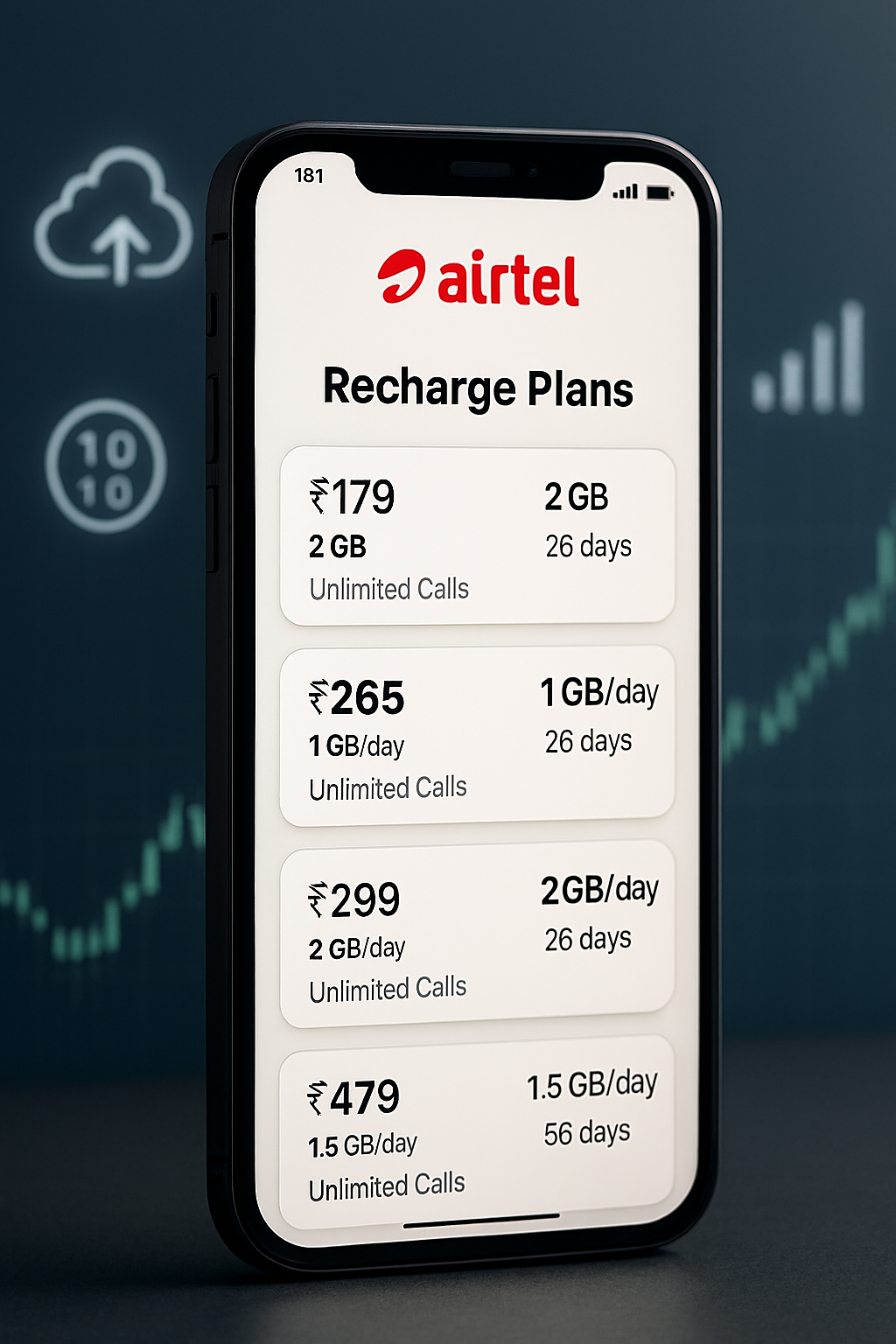
Bharti Airtel continues to dominate India’s telecom sector with innovative Airtel recharge plans offering flexible data, talk-time, and validity options. Investors also monitor the company’s share price, reflecting its market performance and telecom industry trends.
Table of Contents
India’s telecommunications sector continues to evolve rapidly, with Bharti Airtel Limited maintaining its position as one of the country’s leading service providers. This comprehensive analysis examines the company’s current recharge plan offerings, network infrastructure, and share price performance based on publicly available information and market data.
The telecommunications industry in India serves over 1.1 billion subscribers, according to the Telecom Regulatory Authority of India (TRAI). Within this competitive landscape, Airtel operates across mobile services, broadband connectivity, enterprise solutions, and digital platforms. This article provides factual information about the company’s service portfolio, pricing structure, and financial performance for consumers and investors seeking reliable market insights.
Understanding Bharti Airtel’s Market Position
Company Overview and Operational Scope
Bharti Airtel Limited operates as an integrated telecommunications company providing services across multiple segments. The company serves customers through mobile voice and data services, fixed-line broadband, enterprise connectivity solutions, and digital content platforms.
According to publicly available data, Airtel maintains a significant subscriber base across India’s urban and rural markets. The company’s operations extend beyond telecommunications to include digital payment services through Airtel Payments Bank, which operates under separate regulatory oversight by the Reserve Bank of India.
The company’s service area covers 22 telecommunications circles across India. Network infrastructure investments focus on expanding 4G coverage and deploying 5G technology in select markets. These infrastructure developments reflect industry-wide trends toward higher-speed data services driven by increasing smartphone penetration and data consumption patterns.
Competitive Landscape Analysis
India’s telecommunications sector features several major operators competing across prepaid and postpaid segments. Market dynamics include price competition, network quality differentiation, and value-added service offerings. Independent organizations such as the Telecom Regulatory Authority of India (TRAI) publish quarterly subscriber data and market share statistics.
Competitive factors influencing consumer choice include network coverage quality, data speeds, pricing structures, customer service quality, and bundled entertainment offerings. Industry analysts track these metrics through periodic reports and consumer surveys conducted by independent research firms.
The sector has witnessed consolidation over recent years, resulting in three primary private operators serving the majority of India’s mobile subscribers. This market structure influences pricing strategies, service innovation, and infrastructure investment decisions across the industry.
Airtel Prepaid Recharge Plan Structure
Daily Data Plan Categories
Bharti Airtel offers prepaid recharge plans structured around daily data allowances. These plans typically include voice calling benefits, SMS allowances, and validity periods ranging from 28 days to 365 days. The pricing structure reflects varying data allowances and benefit combinations.
Entry-Level Plans: Entry-level recharge options start at approximately ₹155-₹179 for basic daily data plans. These typically provide 1-2GB daily data with 28-day validity periods. Voice calling benefits vary by plan, with many offering unlimited calls to any network within India subject to fair usage policies.
Mid-Range Options: Plans priced between ₹299-₹549 generally offer 1.5-2.5GB daily data allowances. These include extended validity periods for longer-duration plans and comprehensive calling benefits. SMS allowances typically range from 100 messages per day across most plan categories.
Long-Duration Plans: Annual or extended validity plans provide cost advantages for subscribers seeking year-long service. These plans typically offer 1.5-2GB daily data with 365-day validity, priced around ₹2,899-₹3,359 depending on data allowances and additional benefits.
Plan Components and Features
Standard prepaid recharge plans include several core components:
- Data Allowances: Daily data limits with specified high-speed data quantities. After daily limit exhaustion, data speeds may be reduced according to plan terms.
- Voice Benefits: Most plans include unlimited voice calling to any network within India, subject to fair usage policy limits of typically 250-300 minutes per day or 1,000 minutes per week.
- SMS Services: Daily SMS allowances ranging from 100 messages per day across most standard plans.
- Validity Periods: Plan validity ranges from 28 days for monthly plans to 365 days for annual options.
- Roaming Services: National roaming typically included without additional charges across most plans.
OTT Platform Integration
Several Airtel recharge plans include complimentary subscriptions to digital entertainment platforms. These bundled offerings vary by plan value and promotional periods. Common inclusions reported in company communications include:
- Airtel Xstream app access for streaming content
- Wynk Music app subscriptions for audio streaming
- Select plans may include mobile editions of streaming platforms
- Availability and specific platforms vary by plan value and promotional offers
Subscribers should verify current OTT inclusions through official Airtel channels, as partnerships and offerings change based on licensing agreements and promotional periods.
Postpaid Service Plans
Individual Postpaid Options
Airtel’s postpaid services target consumers seeking bill-based payment models rather than prepaid recharges. Postpaid plans typically offer higher data allowances compared to prepaid daily limits, with monthly billing cycles.
Basic Postpaid Plans: Entry-level postpaid offerings generally start around ₹399-₹499 monthly. These provide data allowances of 40-75GB per month with unlimited voice calling and SMS benefits. Billing occurs monthly with payment due dates typically 7-15 days after billing.
Premium Postpaid Plans: Higher-tier postpaid options range from ₹999-₹1,599 monthly. These may include larger data allowances, multiple OTT platform subscriptions, and additional features such as data rollover or international calling minutes to select countries.
Family Plans: Postpaid family plans allow multiple connections under single billing accounts. These typically enable data sharing across connections with individual usage tracking. Family plan structures may accommodate 2-5 connections depending on the selected plan tier.
Postpaid Service Features
Postpaid services include several characteristics distinct from prepaid offerings:
- Billing Flexibility: Monthly billing cycles with credit-based usage
- Data Allowances: Higher monthly data limits compared to prepaid daily allowances
- Entertainment Subscriptions: Premium plans may include multiple OTT platform subscriptions
- International Services: Select plans include international roaming benefits or discounted international calling rates
- Priority Support: Dedicated customer service channels for postpaid subscribers
- Bill Payment Options: Multiple payment methods including auto-debit, online payment, and physical payment centers
Enterprise and Business Solutions
SME Service Offerings
Airtel provides telecommunications services tailored for small and medium enterprises. Business plans typically offer bulk connectivity solutions with centralized management and billing capabilities.
Business service features include:
- Multiple SIM management under single accounts
- Centralized billing and expense tracking
- Dedicated account management for business customers
- Customized data and calling allowances based on business requirements
- Priority technical support channels
Corporate Connectivity Solutions
Larger enterprises receive customized connectivity packages addressing specific organizational needs. These solutions extend beyond standard consumer offerings to include:
- Dedicated internet connectivity through leased lines or fiber connections
- Virtual private network (VPN) services for secure communications
- Cloud connectivity solutions for enterprise applications
- IoT connectivity for device management and monitoring
- Unified communications platforms integrating voice, video, and messaging
Enterprise pricing structures typically involve customized quotes based on service requirements, connection volumes, and contract durations. Organizations requiring such services generally engage directly with Airtel’s enterprise sales division.
Network Infrastructure and Technology
4G Network Coverage
Airtel’s 4G network infrastructure spans urban and rural areas across India’s telecommunications circles. The company reports network presence in thousands of towns and cities, though coverage quality varies by location and local infrastructure factors.
Network performance metrics depend on multiple variables including:
- Cell tower density in specific areas
- Spectrum holdings and frequency bands utilized
- Network congestion during peak usage periods
- Geographical factors affecting signal propagation
- Device capabilities and compatibility
Independent network testing organizations periodically publish comparative performance reports. These third-party assessments measure parameters such as download speeds, upload speeds, latency, video streaming quality, and network availability.
5G Technology Deployment
Airtel has commenced 5G network deployment in select Indian cities following spectrum auctions conducted by the Department of Telecommunications. The company acquired spectrum in 3.5 GHz and 26 GHz frequency bands during the 2022 spectrum auction.
5G deployment progresses in phases:
- Initial launches in major metropolitan areas
- Gradual expansion to tier-2 and tier-3 cities
- Eventual rural area coverage as infrastructure develops
5G technology offers theoretical advantages including faster data speeds, lower latency, and increased network capacity. Actual user experience depends on factors such as network deployment density, device compatibility, and spectrum utilization.
Currently, 5G access typically requires compatible devices and may be included in existing plan pricing or offered through specific 5G-enabled plans. Availability remains limited to areas with deployed 5G infrastructure.
Bharti Airtel Share Price Performance
Stock Market Overview
Bharti Airtel Limited trades on Indian stock exchanges including the National Stock Exchange (NSE) and Bombay Stock Exchange (BSE). The company’s shares are constituent of major indices including the Nifty 50 and BSE Sensex.
Stock market performance reflects multiple factors:
- Quarterly financial results and revenue trends
- Subscriber addition and churn metrics
- Average revenue per user (ARPU) performance
- Capital expenditure and debt levels
- Regulatory developments affecting the telecommunications sector
- Competitive dynamics and market share trends
Financial Performance Indicators
Investors analyze several key metrics when evaluating telecommunications company performance:
Revenue Metrics:
- Total revenue across mobile, broadband, and enterprise segments
- Year-over-year and quarter-over-quarter revenue growth rates
- Revenue composition by service category
- Geographic revenue distribution including international operations
Profitability Measures:
- EBITDA (Earnings Before Interest, Taxes, Depreciation, and Amortization)
- EBITDA margins indicating operational efficiency
- Net profit after accounting for debt servicing and depreciation
- Return on capital employed measuring investment efficiency
Subscriber Metrics:
- Total subscriber base across prepaid and postpaid segments
- Net subscriber additions or losses per quarter
- Market share within Indian telecommunications sector
- Subscriber churn rates indicating customer retention
ARPU Trends: Average Revenue Per User represents a critical metric for telecommunications operators. ARPU trends indicate:
- Pricing power and ability to increase service rates
- Success of value-added service monetization
- Impact of competitive pricing pressures
- Migration from voice-only to data-centric usage patterns
Recent Financial Results
Bharti Airtel publishes quarterly and annual financial results as required by Securities and Exchange Board of India (SEBI) regulations. These filings are available through stock exchange disclosure portals and the company’s investor relations website.
Recent quarterly results (available through official filings) typically include:
- Consolidated revenue and profit figures
- Segment-wise performance for mobile, home broadband, and enterprise services
- Subscriber statistics and ARPU data
- Capital expenditure details and network investment updates
- Debt levels and interest coverage ratios
- Management commentary on operational performance and outlook
Investors should consult official company filings and stock exchange disclosures for verified financial data rather than relying on third-party summaries.
Investment Considerations
Sector Fundamentals
India’s telecommunications sector operates within a regulatory framework established by the Department of Telecommunications and overseen by TRAI. Key sector characteristics include:
Growth Drivers:
- Increasing smartphone penetration across urban and rural markets
- Rising data consumption driven by video streaming, social media, and digital services
- Government digital initiatives promoting internet connectivity
- Enterprise digital transformation requirements
- 5G technology adoption potential
Sector Challenges:
- High capital expenditure requirements for network infrastructure
- Intense price competition affecting profitability
- Regulatory compliance costs and spectrum auction expenses
- Need for continuous technology upgrades
- Debt burdens from historical spectrum purchases and network investments
Company-Specific Factors
Evaluating Bharti Airtel as an investment requires considering multiple company-specific factors:
Competitive Position: Airtel maintains market share across India’s telecommunications circles. Market position influences pricing power, subscriber acquisition costs, and ability to monetize value-added services. TRAI publishes quarterly subscriber data enabling market share tracking.
Financial Health: Company balance sheet strength affects ability to invest in network infrastructure while servicing existing debt. Key metrics include debt-to-equity ratios, interest coverage ratios, and free cash flow generation capability.
Strategic Initiatives: Management strategies regarding 5G deployment, digital services expansion, and enterprise solutions development impact long-term growth prospects. Company announcements and investor presentations outline strategic priorities.
Regulatory Environment: Telecommunications sector regulations affect spectrum pricing, interconnection charges, foreign investment limits, and licensing requirements. Policy changes can significantly impact operator economics and competitive dynamics.
Risk Factors
Investment in telecommunications sector stocks involves several risk categories:
Market Risks:
- Overall stock market volatility affecting share prices
- Sector-specific sentiment impacting telecommunications stocks
- Interest rate changes affecting debt servicing costs
- Currency fluctuations impacting international operations
Operational Risks:
- Technology disruption requiring accelerated investment
- Network outages or quality issues affecting customer retention
- Cybersecurity threats targeting telecommunications infrastructure
- Execution risks in 5G deployment and technology adoption
Financial Risks:
- Revenue pressure from competitive pricing
- Debt refinancing requirements and interest rate exposure
- Capital expenditure overruns in network deployment
- Working capital management challenges
Regulatory Risks:
- Spectrum auction obligations and costs
- License renewal requirements and fees
- Regulatory changes affecting pricing or service offerings
- Taxation policies specific to telecommunications sector
Customer Service and Support Infrastructure
Support Channels
Airtel provides customer service through multiple channels:
Digital Platforms:
- MyAirtel mobile application for self-service
- Official website with customer support sections
- Chatbot services for common queries
- Social media customer service accounts
Traditional Channels:
- Customer care helpline numbers
- Airtel retail stores for in-person assistance
- Authorized dealer and distributor network
- Email support for detailed inquiries
Service Quality Metrics
TRAI mandates telecommunications operators to maintain service quality standards across parameters including:
- Call setup success rates
- Call drop rates
- Data service availability
- Customer complaint resolution timelines
- Billing accuracy
TRAI publishes quarterly performance reports comparing operators across these quality metrics. These reports are publicly available on TRAI’s official website and provide objective performance comparisons.
Plan Selection Guidance
Usage Pattern Assessment
Selecting appropriate recharge plans requires evaluating individual usage patterns:
Data Consumption:
- Light users (under 1GB daily): Consider lower-tier plans with reduced data allowances
- Moderate users (1-3GB daily): Mid-range plans typically offer optimal value
- Heavy users (3GB+ daily): Premium plans or unlimited data options may be appropriate
Calling Requirements:
- Minimal calling needs: Plans with limited calling minutes
- Regular voice usage: Unlimited calling plans subject to fair usage policies
- International calling: Evaluate plans with international minutes or postpaid options
SMS Usage:
- Most modern plans include 100 SMS per day as standard
- Enterprise users may require bulk SMS capabilities
Cost Optimization Strategies
Consumers can optimize telecommunications expenses through several approaches:
Long-Term Plans: Annual plans typically offer 15-20% cost savings compared to monthly recharges. However, these require upfront payment and commitment to single operator.
Family Plans: Postpaid family plans can reduce per-connection costs when multiple household members use same operator.
Usage Monitoring: Regular review of actual data and calling usage through MyAirtel app helps identify over-provisioned or under-utilized plans.
Promotional Offers: Operators periodically offer promotional pricing or bonus benefits. Monitoring official channels helps identify time-limited offers.
Technology Roadmap and Future Developments
Network Evolution Plans
Telecommunications infrastructure continues evolving toward higher-capacity networks:
5G Expansion: Airtel’s 5G deployment follows phased approach prioritizing high-traffic urban areas before expanding to smaller cities and rural regions. Timeline depends on multiple factors including spectrum availability, equipment sourcing, and site acquisition.
Fiber Network Growth: Fixed-line broadband expansion requires fiber optic cable deployment to premises. Airtel’s fiber-to-the-home (FTTH) network continues expanding in urban markets where infrastructure economics support deployment.
Network Optimization: Ongoing network optimization includes deploying small cells for capacity enhancement, implementing carrier aggregation technologies, and utilizing advanced antenna systems for coverage improvement.
Digital Services Development
Beyond connectivity services, telecommunications operators develop digital platforms:
Entertainment Platforms: Airtel Xstream aggregates content from multiple sources into single platform. Content availability depends on licensing agreements with content providers.
Financial Services: Airtel Payments Bank provides digital banking services including savings accounts, payment services, and small-value loans subject to RBI regulations.
Cloud Services: Enterprise customers access cloud storage, computing, and application hosting services through Airtel’s cloud platform offerings.
IoT Solutions: Internet of Things connectivity supports applications including vehicle tracking, smart metering, industrial monitoring, and home automation.
Regulatory Framework and Compliance
Telecommunications Regulations
India’s telecommunications sector operates under comprehensive regulatory framework:
Licensing Requirements: Operators hold Unified License issued by Department of Telecommunications, covering terms for service provision, quality standards, and regulatory compliance obligations.
Spectrum Management: Radio frequency spectrum is allocated through auction processes conducted by Department of Telecommunications. Operators pay upfront spectrum fees and annual spectrum usage charges.
Interconnection Regulations: TRAI establishes interconnection usage charges (IUC) between operators for call termination and network usage. These regulatory charges impact operator cost structures.
Tariff Regulations: While TRAI moved toward forbearance from tariff regulation in most service areas, some restrictions remain on predatory pricing and consumer protection measures.
Consumer Protection Measures
Regulatory framework includes several consumer protection provisions:
Transparency Requirements: Operators must clearly disclose plan terms, validity periods, and conditions. Misleading advertising faces regulatory action.
Complaint Redressal: TRAI mandates operator-level complaint resolution processes with escalation to telecom ombudsman for unresolved issues.
Do Not Disturb Registry: National Customer Preference Register allows consumers to block promotional calls and messages. Violations carry penalties for operators and marketers.
Number Portability: Mobile Number Portability enables subscribers to switch operators while retaining phone numbers, promoting competitive market dynamics.
Comparative Analysis with Competitors
Market Position Comparison
India’s telecommunications sector features multiple operators with varying market positions:
Subscriber Base: TRAI’s quarterly subscriber reports provide official subscriber data for all operators, enabling objective market share comparisons across geographic circles and service categories.
Revenue Market Share: Financial filings and industry reports indicate revenue distribution among operators, reflecting both subscriber numbers and ARPU levels.
Network Coverage: Operators report coverage statistics differently, making direct comparisons challenging. Independent drive tests by network monitoring firms provide more standardized comparisons.
Service Offering Comparison
Comparing telecommunications plans across operators requires evaluating multiple dimensions:
Pricing Structure: Direct price comparison must account for data allowances, validity periods, calling benefits, and included value-added services. Effective cost per GB varies significantly across plan structures.
Network Quality: Independent testing organizations publish periodic reports comparing network speeds, availability, and quality metrics across operators and geographic areas.
Value-Added Services: OTT platform bundles, cloud storage, device insurance, and other add-ons differ across operators, affecting overall value proposition beyond basic connectivity.
Customer Service: Service quality metrics published by TRAI enable objective comparison of complaint resolution rates, service availability, and quality parameters.
Industry Trends and Market Outlook
Data Consumption Patterns
India’s telecommunications sector experiences continued data traffic growth:
Video Streaming: Increased smartphone video consumption drives data usage growth. According to industry reports, video accounts for majority of mobile data traffic.
Social Media: Messaging applications and social networking platforms contribute significantly to data consumption, particularly among younger demographics.
Digital Payments: Growth in digital payment adoption increases reliance on mobile connectivity for financial transactions.
Remote Work: Pandemic-accelerated remote work trends maintain higher data consumption for video conferencing and cloud application access.
Technological Advancement
Several technology trends shape sector evolution:
5G Adoption: 5G technology deployment enables new use cases including enhanced mobile broadband, massive IoT connectivity, and ultra-reliable low-latency applications for enterprise customers.
Edge Computing: Network edge computing capabilities bring processing closer to end users, reducing latency for time-sensitive applications.
Network Virtualization: Software-defined networking and network function virtualization increase network flexibility and reduce hardware dependency.
Artificial Intelligence: AI applications in telecommunications include network optimization, predictive maintenance, customer service chatbots, and fraud detection.
Regulatory Developments
Telecommunications policy continues evolving:
Spectrum Management: Future spectrum auctions will determine operators’ access to radio frequency resources necessary for capacity expansion.
License Reforms: Proposed telecommunications bill aims to consolidate existing regulations and update framework for modern technologies.
Digital India Initiatives: Government programs promoting rural connectivity, digital literacy, and online service delivery influence telecommunications infrastructure deployment.
Data Privacy: Emerging data protection regulations affect how telecommunications operators collect, store, and utilize customer information.
Corporate Governance and Sustainability
Governance Structure
As a publicly listed company, Bharti Airtel maintains corporate governance framework complying with SEBI regulations:
Board Composition: Company board includes independent directors, executive directors, and non-executive directors providing oversight across operations, strategy, and compliance.
Disclosure Requirements: Regular financial disclosures, material event announcements, and related party transaction reporting ensure transparency for investors.
Audit Functions: Independent statutory auditors review financial statements, while internal audit functions monitor operational controls and compliance.
Stakeholder Engagement: Investor relations functions facilitate communication with shareholders, while customer service channels address consumer concerns.
Sustainability Initiatives
Telecommunications companies increasingly focus on environmental and social considerations:
Energy Efficiency: Network infrastructure consumes significant electricity. Energy-efficient equipment, renewable energy adoption, and power optimization reduce environmental footprint.
Electronic Waste Management: Proper disposal and recycling of telecommunications equipment addresses e-waste concerns under regulatory frameworks.
Digital Inclusion: Expanding connectivity to underserved areas supports government digital inclusion objectives and expands potential customer base.
Community Development: Corporate social responsibility programs often focus on education, healthcare, and rural development initiatives.
Frequently Asked Questions
What factors should consumers consider when choosing between prepaid and postpaid plans?
Prepaid plans require advance payment for specific validity periods, offering cost control and no billing surprises. These suit consumers preferring predictable expenses without credit checks or documentation requirements. Postpaid plans provide monthly billing with potential for usage beyond plan limits, typically offering higher data allowances and premium features such as multiple OTT subscriptions and international roaming benefits.
Financial considerations include credit availability for postpaid deposits, payment discipline for monthly bill management, and cost per GB analysis accounting for actual usage patterns. Postpaid plans may offer better value for high data users, while prepaid options suit variable usage patterns. Service features such as data rollover, family sharing, and entertainment bundles differ between prepaid and postpaid offerings, requiring evaluation based on individual requirements.
How do Airtel’s network performance metrics compare to industry standards published by TRAI?
TRAI publishes quarterly performance reports covering all telecommunications operators across standardized metrics. These reports measure parameters including call setup success rates, call drop percentages, data service availability, complaint resolution timelines, and billing accuracy. Accessing these reports through TRAI’s official website enables objective comparison of Airtel’s performance against competitors and regulatory benchmarks.
Independent network testing organizations such as Ookla and OpenSignal conduct periodic drive tests measuring download speeds, upload speeds, latency, video streaming quality, and voice quality across operators and geographic regions. These third-party assessments provide consumer-relevant performance comparisons. Network quality varies significantly by location due to factors including tower density, spectrum holdings, network congestion, and local geography. Urban areas typically experience better performance than rural regions across all operators.
What documentation and procedures are required for Airtel postpaid connection activation?
Postpaid connection activation requires identity verification and address proof documentation complying with Department of Telecommunications regulations. Accepted identity proofs typically include Aadhaar card, PAN card, passport, voter ID, or driving license. Address verification requires documents such as Aadhaar card, passport, utility bills, rent agreement, or bank statements.
The process involves submitting application forms with required documentation, undergoing verification procedures, paying security deposits based on selected plan value, and receiving SIM card activation. Processing timelines typically range from 24 to 48 hours following verification completion. Some postpaid plans may require credit assessment or employment verification depending on plan value and security deposit requirements. Corporate postpaid connections involve additional documentation including company registration certificates and authorized signatory proofs.
How does Airtel’s share price performance correlate with broader telecommunications sector trends and market indices?
Bharti Airtel’s share price movements reflect both company-specific factors and broader sector dynamics. Telecommunications stocks typically correlate with overall market indices such as Nifty 50 and BSE Sensex while exhibiting sector-specific volatility based on regulatory developments, spectrum auction outcomes, and competitive dynamics. Systematic risk affecting entire market impacts all stocks including Airtel, while unsystematic risk specific to company or sector creates additional volatility.
Historical price performance, available through stock exchange websites and financial data platforms, shows telecommunications sector responsiveness to factors including TRAI regulatory announcements, quarterly financial results, subscriber data releases, and spectrum policy developments. Investors analyzing sector exposure should consider that telecommunications stocks may underperform or outperform broader markets based on industry-specific conditions. Company-specific factors such as debt levels, ARPU trends, subscriber growth, and competitive positioning create variation in individual stock performance versus sector indices.
What measures protect consumers against unauthorized charges or billing errors in telecommunications services?
TRAI regulations require telecommunications operators to maintain transparent billing practices with detailed itemization of charges. Consumers receive billing information through SMS, email, or mobile applications showing plan details, usage breakdowns, and charge classifications. Disputed charges must be investigated within timeframes specified in service agreements, with refund provisions for verified errors.
Complaint resolution processes include operator-level customer service channels, nodal officers for escalated complaints, and appellate authorities for unresolved issues. The Telecom Ombudsman provides final recourse for consumer complaints not satisfactorily resolved through operator channels. TRAI’s tariff orders prohibit surprise charges or unauthorized service activation, with penalty provisions for violations. Consumers should regularly review billing statements, verify plan terms before activation, maintain documentation of complaints, and escalate unresolved issues through established channels. Auto-renewal of plans requires explicit customer consent under regulatory guidelines.
How do annual recharge plans compare economically to monthly recharge options?
Annual prepaid plans typically offer 15-25% cost savings compared to equivalent monthly recharges. For example, a plan offering 2GB daily data with 365-day validity may cost ₹2,899, while purchasing equivalent monthly 28-day plans would total approximately ₹3,588 annually (assuming ₹299 monthly recharge × 13 recharges), representing approximately 19% savings for annual commitment.
Economic comparison must account for several factors. Annual plans require upfront capital commitment, creating opportunity cost compared to monthly payments. Service dissatisfaction or operator switching needs result in sunk costs for unused validity periods. Price reductions during the year mean annual plan buyers don’t benefit from promotional pricing. However, annual plans eliminate recharge frequency burden and ensure uninterrupted service without monitoring validity dates.
Financial analysis should consider personal discount rate, likelihood of operator switching, probability of promotional pricing during year, and value of convenience from annual validity. Budget-conscious consumers with stable usage patterns and high confidence in operator selection typically benefit from annual plans, while those preferring flexibility may accept higher effective costs for monthly options.
What role does spectrum holding play in network performance and 5G service delivery?
Radio frequency spectrum represents essential infrastructure for wireless telecommunications. Operators holding larger spectrum quantities across multiple frequency bands can offer higher network capacity, faster speeds, and better service quality. Lower frequency spectrum (700 MHz, 800 MHz, 900 MHz) provides wide coverage with better building penetration, while higher frequencies (1800 MHz, 2100 MHz, 2300 MHz) offer greater capacity in dense urban areas.
5G services utilize spectrum in 3.5 GHz mid-band and 26 GHz millimeter-wave bands. Mid-band spectrum balances coverage and capacity for mainstream 5G deployment, while millimeter-wave enables ultra-high-speed applications in limited coverage areas. Operators’ spectrum holdings, publicly disclosed after Department of Telecommunications auctions, determine their technical capability to deliver 5G services across geographic areas.
Spectrum acquisition requires substantial capital investment through competitive auctions, with winning operators paying upfront fees and ongoing annual spectrum usage charges. These costs influence operator financial health and ability to invest in network infrastructure. Consumers benefit from operators holding diverse spectrum portfolio, as this enables better network performance through carrier aggregation and load balancing across frequency bands.
How do family postpaid plans optimize costs for households with multiple mobile users?
Family postpaid plans consolidate multiple connections under single billing accounts, typically offering cost advantages compared to individual plans. Primary connection receives specified data allowance, with secondary connections either receiving separate smaller allowances or sharing from pooled data bucket. Pricing structures typically charge full rate for primary connection and discounted rates for additional family connections.
Cost optimization occurs through several mechanisms. Shared data pools prevent waste when individual family members have varying usage patterns – heavy users can consume unused allocation from light users. Administrative efficiency from single billing reduces management overhead. Family plan discounts on additional connections directly reduce per-connection costs. Bundled OTT subscriptions often cover multiple devices, avoiding duplicate subscription costs.
Optimal family plan selection requires assessing aggregate family data consumption, number of required connections, desired individual allowances versus shared pooling, and importance of separate billing for usage monitoring. Large families with high total data usage typically achieve maximum savings, while smaller families or those with dramatically different usage patterns may not benefit significantly from family plan structures compared to individual optimized plans.
About the Author
Nueplanet
Senior Business and Financial Markets Analyst
Nueplanet specializes in telecommunications sector analysis, corporate finance, and market research. With the years of experience covering Indian telecommunications companies, Nueplanet focuses on providing factual, data-driven insights based on official regulatory filings, TRAI reports, stock exchange disclosures, and company announcements.
This analysis draws exclusively from publicly available information including SEBI filings, stock exchange data, TRAI reports, Department of Telecommunications announcements, and official company communications. All financial data references are sourced from verified regulatory disclosures or authoritative financial data platforms.
Commitment to Accuracy: This content undergoes regular updates to reflect current market conditions, regulatory changes, and company developments. Information accuracy is verified against official sources before publication.
Disclosure: This article provides informational content for educational purposes. It does not constitute investment advice, stock recommendations, or solicitation to buy or sell securities. Readers should consult qualified financial advisors for investment decisions and verify current information through official company and regulatory sources.
Published: August 20, 2025
Last Updated: August 20, 2025
Sources:
- Securities and Exchange Board of India (SEBI) official filings
- Telecom Regulatory Authority of India (TRAI) quarterly reports
- National Stock Exchange (NSE) and Bombay Stock Exchange (BSE) disclosures
- Bharti Airtel Limited official investor relations communications
- Department of Telecommunications policy documents
Helpful Resources
Latest Posts
- HAL Share Price Soars Amid ₹62,000 Crore Tejas Mk1A Deal
- BEML: Driving India’s Rail and Defense Manufacturing Excellence
- Realme P4 Pro Price in India: Launch, Features, and Specifications
- Dmart Share Price: Q1 Updates, Market Performance, and Investment Insights
- Delhi News: Latest Updates, Political Developments, and Weather Alerts
Related Posts










Post Comment