









MRF Share Price Analysis: Latest Trends, Q1 Results & Market Outlook
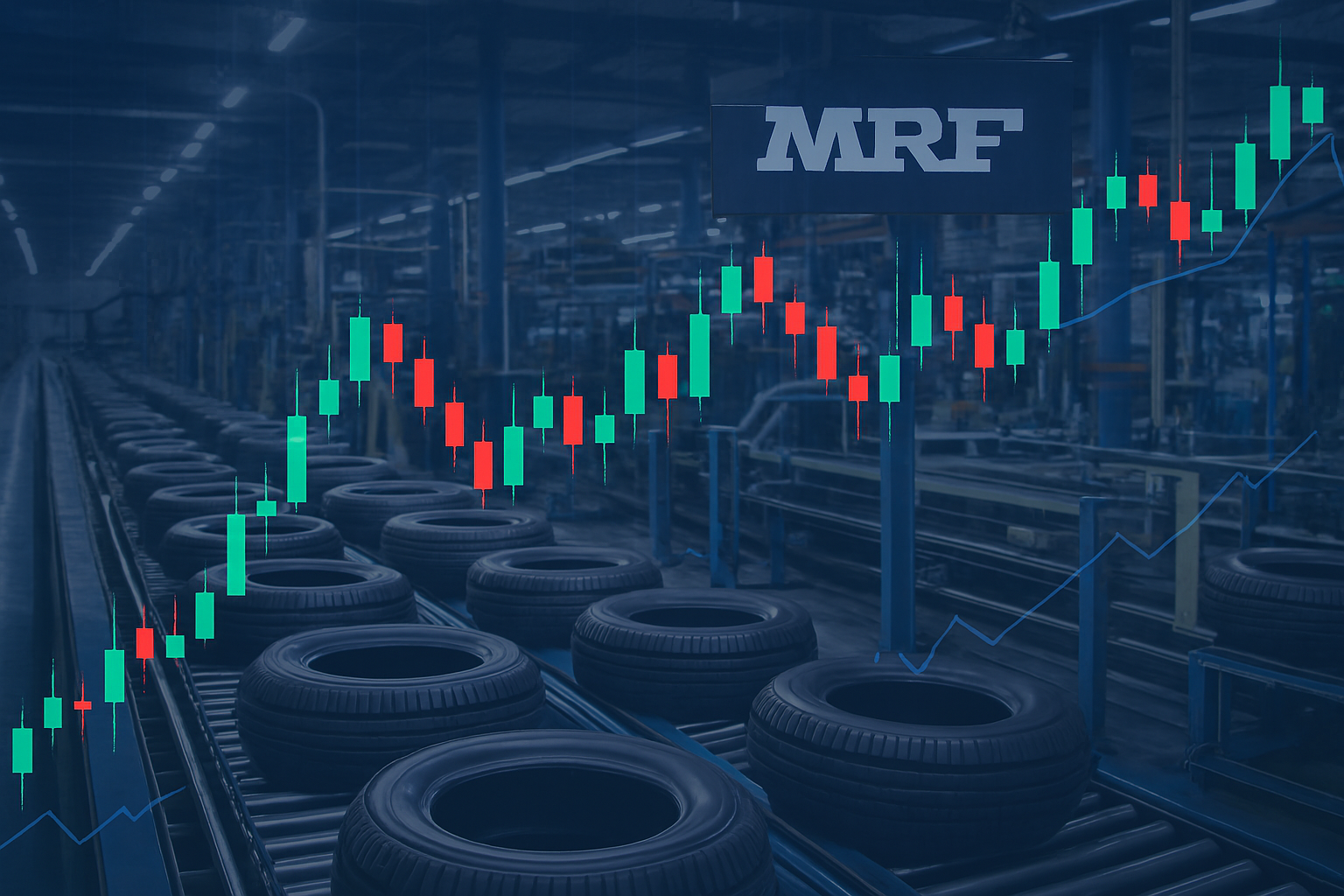
MRF, one of India’s leading tire manufacturers, remains a key stock watched closely by investors and market analysts. The company’s share price reflects not only the overall demand in the automobile sector but also the global raw material price fluctuations and economic cycles. This article provides an in-depth analysis of the latest MRF share price movement, backed by its recent quarterly performance and future outlook.
Table of Contents
Published: August 12, 2025
Last Updated: August 12, 2025
Overview of MRF Limited’s Recent Market Performance
MRF Limited, one of India’s leading tire manufacturing companies, has experienced notable share price movements following the release of its Q1 FY26 financial results in August 2025. The company reported mixed financial performance, with revenue growth offset by declining profitability metrics. This analysis examines the factors influencing MRF’s stock price trajectory based on official company filings and market data.
The tire manufacturing sector in India continues to face headwinds from volatile raw material prices and shifting demand patterns across automotive segments. MRF’s performance provides insight into broader industry trends affecting tire manufacturers. Investors tracking the stock have observed price fluctuations reflecting market sentiment about the company’s ability to manage cost pressures while maintaining market position.
Understanding MRF’s financial performance requires examining multiple factors including operational metrics, industry dynamics, and macroeconomic conditions. This report provides a comprehensive assessment based on publicly available financial data and market information.
Q1 FY26 Financial Results Analysis
Revenue Performance
MRF Limited reported consolidated total income of ₹7,802 crore for Q1 FY26 (quarter ended June 30, 2025), representing a 7% increase from the corresponding quarter in the previous fiscal year. Standalone revenue from operations reached ₹7,560.28 crore, marking a 6.8% year-over-year growth from ₹7,077.84 crore in Q1 FY25.
The revenue increase reflects continued demand across various tire categories despite challenging market conditions. The growth rate demonstrates the company’s ability to expand sales volumes and implement price adjustments. However, the single-digit growth indicates that market conditions remain constrained compared to previous high-growth periods.
Profitability Metrics
The company’s consolidated net profit declined 12.35% to ₹500.47 crore in Q1 FY26, compared to ₹571.02 crore in Q1 FY25. This decline in profitability occurred despite revenue growth, indicating margin compression. The earnings per share (EPS) stood at ₹1,180 for the quarter, maintaining MRF’s position among high EPS stocks in the Indian market.
EBITDA (earnings before interest, tax, depreciation and amortisation) decreased 7.62% year-over-year to ₹1,071 crore from ₹1,160 crore in the corresponding previous period. The EBITDA margin contraction reflects increased operational costs that outpaced revenue growth. This metric indicates pressure on the company’s operational efficiency during the quarter.
Key Financial Indicators
According to available financial data, MRF Limited maintains a market capitalization of approximately ₹63,000 crore. The company reported annual revenue of ₹28,632 crore and profit of ₹1,799 crore for the full fiscal year. The stock trades at 3.41 times its book value, reflecting the market’s assessment of the company’s asset quality and future earnings potential.
Promoter holding in MRF Limited stands at 27.8%, indicating management’s continued investment in the company. The remaining shareholding is distributed among institutional investors, foreign portfolio investors, and retail shareholders. This ownership structure provides adequate free float for market liquidity while maintaining management control.
Current Share Price Dynamics
Trading Range and Price Levels
MRF shares are currently trading at ₹150,395.80, according to recent market data. The stock has recorded a 52-week high of ₹156,400 and a 52-week low of ₹102,124.05, representing a price range of over 53%. This volatility reflects changing market sentiment regarding the company’s near-term prospects and broader market conditions.
The stock has delivered a 5.37% return over the past year, underperforming broader market indices. This performance reflects investor concerns about margin pressures and uncertain demand outlook. The high absolute share price continues to position MRF among India’s most expensive stocks on a per-share basis.
Technical Indicators and Support Levels
Market participants monitor several key price levels for MRF shares. Historical trading patterns suggest support zones around ₹85,000-90,000, where institutional buying typically emerges during market corrections. Resistance levels have been observed near ₹95,000-100,000, though recent price action indicates these levels may be shifting higher.
Trading volume analysis reveals consistent institutional participation in MRF shares. The stock’s inclusion in major market indices ensures regular demand from passive investment vehicles. This index inclusion provides price support during market downturns while contributing to overall liquidity.
Raw Material Cost Impact on Margins
Natural Rubber Price Volatility
Natural rubber represents approximately 40-45% of tire manufacturing costs, making it the single largest input for MRF’s operations. Rubber prices have experienced significant fluctuations due to weather conditions in major producing regions including Thailand, Indonesia, and India’s northeastern states. These price movements directly impact the company’s cost structure and profitability.
The global natural rubber market faces supply-demand imbalances influenced by plantation yields, tapping patterns, and consumption trends. MRF’s procurement strategy involves managing inventory levels and implementing forward contracts to mitigate price volatility. However, sharp price movements can still affect quarterly results before pricing adjustments are fully implemented.
Petrochemical Derivatives and Other Inputs
Synthetic rubber, carbon black, and chemical additives constitute approximately 25-30% of production costs. These materials are linked to crude oil prices, creating exposure to energy commodity cycles. Recent increases in petrochemical prices have contributed to margin pressure across the tire manufacturing industry.
Steel cord and fabric, representing 10-15% of manufacturing costs, have also experienced price increases due to global steel market dynamics. MRF employs strategic procurement practices including long-term contracts to manage these costs. Despite these measures, rapid price escalations can impact quarterly profitability before pricing adjustments take effect in the market.
Cost Management Strategies
MRF has implemented vertical integration initiatives to reduce dependence on external raw material suppliers. These include investments in natural rubber plantations and partnerships with material suppliers. While these strategies provide some cost stability, the magnitude of recent price increases has challenged margin protection efforts.
The company regularly adjusts product pricing across different market segments to offset rising input costs. However, competitive pressures and demand sensitivity limit pricing power in certain categories. The ability to pass through cost increases while maintaining volume growth remains a key challenge for management.
Automotive Industry Demand Trends
Two-Wheeler Segment Performance
The two-wheeler segment accounts for approximately 40% of MRF’s sales volumes. This segment has shown resilience with demand driven by rural markets and entry-level motorcycle sales. Urban markets are experiencing premiumization trends, with consumers increasingly selecting higher-performance tires that offer better margins for manufacturers.
Rural demand benefits from agricultural income trends and monsoon patterns affecting farm productivity. Government initiatives supporting rural employment and infrastructure development also influence two-wheeler sales. These factors create variable demand patterns that affect tire replacement cycles and original equipment manufacturer (OEM) requirements.
Passenger Vehicle Market Dynamics
The passenger vehicle segment has experienced growth, particularly in the SUV category where MRF maintains a strong market presence. SUV tire sales typically command premium pricing due to specialized requirements and higher performance standards. This segment’s growth contributes positively to the company’s product mix and margin profile.
Electric vehicle adoption, while still representing a small portion of total vehicle sales, is creating new product development opportunities. MRF is developing specialized tires for electric vehicles, which have different performance requirements compared to internal combustion engine vehicles. This emerging segment may provide future growth opportunities as EV penetration increases.
Commercial Vehicle Sector
Commercial vehicle demand has strengthened due to infrastructure development activities and e-commerce logistics growth. The truck and bus segment benefits from increased freight movement and public transportation expansion. Government spending on highway construction and logistics infrastructure continues to support demand in this segment.
MRF’s market position in commercial vehicle tires provides exposure to industrial activity and economic growth. Fleet operators represent a significant customer base for replacement tires in this segment. The replacement market typically offers better margins compared to OEM sales due to brand preferences and service quality considerations.
Agricultural and Tractor Segment
Agricultural mechanization trends support demand for tractor and farm equipment tires. MRF’s distribution network in rural markets positions the company to serve this growing segment. Tractor sales correlate with agricultural income levels, monsoon performance, and government support schemes for farmers.
The agricultural tire segment experiences seasonal demand patterns aligned with farming cycles. Replacement demand depends on equipment utilization rates and field conditions. This segment provides diversification benefits to MRF’s overall business model while contributing to rural market penetration.
Export Market Performance and Opportunities
International Market Presence
MRF exports products to over 65 countries across Middle Eastern, African, and Southeast Asian markets. Export revenues provide margin enhancement opportunities due to premium positioning in international markets. The company’s quality reputation enables competitive pricing in export markets compared to domestic sales.
International markets offer both OEM and replacement tire opportunities. The replacement segment typically provides higher margins and less price sensitivity compared to OEM sales. MRF’s brand recognition in key export markets supports customer retention and market share expansion.
Currency Impact on Export Realizations
Exchange rate movements between the Indian rupee and foreign currencies affect export revenue realizations. A weaker rupee generally benefits export earnings by increasing rupee value of foreign currency receipts. However, currency depreciation also raises costs for imported raw materials, creating offsetting effects on profitability.
MRF maintains a natural hedge through balanced exposure to exports and imports. The company’s treasury operations manage currency risk through hedging strategies when appropriate. Significant rupee movements can still impact quarterly results depending on the timing of exports and raw material procurement.
Trade Policy and Market Access
Free trade agreements and export incentive schemes influence India’s tire export competitiveness. MRF utilizes available trade benefits while maintaining quality certifications required for international market access. Compliance with international standards and specifications remains essential for maintaining export market presence.
Changes in trade policies or tariff structures in key export destinations can affect market dynamics. The company monitors regulatory developments in major markets to adapt strategies accordingly. Market diversification across multiple countries reduces concentration risk from any single export destination.
Research and Development Initiatives
Product Innovation Focus
MRF invests in research and development to maintain technological competitiveness. R&D activities focus on advanced tire compounds, improved fuel efficiency characteristics, and enhanced durability performance. These innovations enable premium pricing and support market differentiation from competitors.
The company operates technical facilities for product testing and development. Collaboration with vehicle manufacturers for OEM applications requires ongoing innovation to meet evolving performance specifications. Technical partnerships provide access to industry trends and customer requirements.
Technology Collaboration
MRF maintains technical relationships with international tire manufacturers for knowledge sharing and joint development projects. These collaborations facilitate access to global best practices and emerging technologies. Specialized applications including high-performance tires benefit from international technical expertise.
Digital transformation initiatives are being implemented across manufacturing and distribution operations. Smart manufacturing technologies and predictive maintenance systems aim to improve operational efficiency. Supply chain optimization through digital tools enhances customer service and inventory management.
Sustainability Programs
Environmental sustainability initiatives address evolving customer preferences and regulatory requirements. Programs include sustainable rubber sourcing, carbon footprint reduction, and waste management improvements. These initiatives also create operational efficiency opportunities through resource optimization.
The tire industry faces increasing scrutiny regarding environmental impact from production processes and end-of-life tire disposal. MRF’s sustainability programs aim to address these concerns while meeting regulatory compliance requirements. Long-term competitiveness may depend partly on environmental performance metrics.
Financial Health Assessment
Profitability Ratios
Return on equity (ROE) and return on capital employed (ROCE) metrics indicate how efficiently MRF utilizes shareholder capital and total capital respectively. While recent quarters have shown margin pressure, these metrics remain competitive relative to industry peers. Management focus on operational efficiency aims to maintain strong returns across business cycles.
Operating margins reflect the company’s ability to manage production costs and pricing strategies. Industry-leading margins demonstrate MRF’s competitive positioning and brand strength. Sustaining margins during raw material cost inflation periods requires effective pricing actions and operational improvements.
Working Capital Management
Inventory management has shown improvement through better turnover ratios, indicating efficient stock management. Receivables collection efficiency affects cash conversion cycles and working capital requirements. The company’s dealer network and financing programs balance market share objectives with working capital optimization.
MRF’s distribution strength and dealer relationships support efficient working capital management. Credit terms and collection practices affect cash flow generation and capital requirements. Optimizing working capital while maintaining market presence remains an ongoing operational focus.
Balance Sheet Strength
The company maintains conservative debt levels, providing financial flexibility for growth investments and shareholder distributions. Low leverage ratios indicate balance sheet strength and capacity to withstand cyclical downturns. Financial stability supports strategic investments in capacity expansion and technology upgrades.
Cash generation capabilities enable regular dividend payments while funding capital expenditures. The balance sheet position allows the company to pursue growth opportunities during market downturns. Financial strength provides competitive advantages during periods of industry stress when weaker competitors face constraints.
Dividend Policy and Shareholder Returns
Dividend Payment History
MRF’s board announced a second interim dividend of ₹3 per equity share (30%) for the financial year ending March 31, 2025. This payment reflects the company’s policy of returning cash to shareholders through regular dividends. Interim dividend announcements provide income to shareholders during the fiscal year rather than waiting for annual results.
The dividend yield appears modest due to the high absolute share price, but represents substantial income on a per-share basis. The company’s dividend policy balances shareholder distributions with retained earnings for business investments. Management evaluates dividend levels based on cash generation, capital requirements, and growth opportunities.
Total Shareholder Returns
Long-term shareholders have benefited from capital appreciation and dividend income over multiple market cycles. The combination of price gains and dividend yields contributes to total return calculations. However, returns vary significantly depending on entry timing due to share price volatility.
Special dividends paid during exceptional performance years have provided additional returns to investors. The management approach to capital allocation considers both regular dividends and special distributions when cash generation exceeds operational requirements. Balancing shareholder returns with growth investments remains a key capital allocation decision.
Risk Factors and Considerations
Commodity Price Exposure
Raw material cost volatility represents the primary risk factor affecting MRF’s profitability. Natural rubber, synthetic rubber, and petrochemical prices fluctuate based on global supply-demand dynamics. The company’s ability to implement timely price increases across market segments partially mitigates but does not eliminate this risk.
Commodity price movements can significantly impact quarterly results before pricing adjustments are fully implemented. Long-term contracts and strategic procurement provide some stability but cannot fully insulate the company from major price swings. Investors should monitor commodity price trends when assessing near-term earnings potential.
Competitive Market Pressures
The Indian tire market includes both domestic manufacturers and international brands. Competition affects pricing power and market share across different product categories. MRF’s established distribution network and brand recognition provide competitive advantages, though maintaining market position requires ongoing investment.
International tire manufacturers may increase their India presence, potentially intensifying competition. New production capacity additions by competitors could affect industry supply-demand balances. Price competition in commodity tire segments can pressure margins across the industry.
Economic Cycle Sensitivity
Tire demand correlates with vehicle sales and economic activity levels. Economic slowdowns affect both OEM demand and replacement tire purchases. Consumer spending patterns, industrial activity, and transportation sector performance all influence tire market conditions.
Interest rate changes affect vehicle financing costs and consumer purchasing decisions. Infrastructure spending and commercial activity levels impact commercial vehicle demand. Broader economic conditions remain important contextual factors for MRF’s business performance.
Regulatory Environment
Automotive industry regulations including emission standards and safety requirements affect vehicle design and tire specifications. New regulations can create compliance requirements but also opportunities for specialized products. MRF’s technical capabilities position the company to adapt to evolving regulatory standards.
Environmental regulations affecting manufacturing processes may require capital investments or operational changes. Compliance with evolving standards remains necessary for maintaining operating licenses and market access. Regulatory developments require ongoing monitoring and adaptation.
Analyst Perspectives and Market Outlook
Revenue Growth Projections
Market analysts project FY25 revenue growth of approximately 12% based on expected performance across truck, bus, and two-wheeler segments. This growth estimate reflects anticipated recovery in vehicle demand and market share expansion. Export market improvements are expected to contribute to revenue growth through product innovation and market development.
Growth projections depend on multiple assumptions including economic conditions, raw material costs, and competitive dynamics. Actual results may vary from forecasts based on how these factors evolve. Investors should consider the uncertainty inherent in forward-looking projections.
Margin Outlook
Near-term margin outlook depends heavily on raw material price trends and the company’s ability to implement pricing adjustments. Stable or declining input costs would support margin recovery from current levels. However, continued cost inflation would maintain pressure on profitability metrics.
Operational efficiency improvements and product mix optimization provide potential margin enhancement opportunities. Premium product segments and export markets typically offer better margins than commodity tire sales. The company’s strategic focus on these higher-margin segments aims to improve overall profitability.
Long-Term Growth Drivers
Electric vehicle market expansion creates opportunities for specialized tire development. MRF’s investments in EV-specific technologies position the company for this emerging market segment. Growth will depend on EV adoption rates and the company’s ability to capture market share.
Infrastructure development initiatives including highway construction and urban projects support commercial vehicle demand. Government capital expenditure programs provide sustained support for this market segment. Rural market penetration offers additional growth potential as mechanization increases.
Investment Considerations
Valuation Metrics
MRF’s current valuation of 3.41 times book value reflects market assessment of the company’s earnings power and growth prospects. Price-to-earnings and other valuation ratios should be compared with historical ranges and peer companies. Valuation levels factor in both near-term challenges and long-term growth potential.
The stock’s high absolute price per share does not itself indicate overvaluation, as this reflects the share capital structure rather than intrinsic value. Investors should focus on valuation multiples and fundamental metrics rather than absolute price levels. Comparative valuation against industry peers provides additional perspective.
Investment Time Horizon
Long-term investors may view current price levels as opportunities if they believe in the company’s fundamental strengths. Market leadership, brand equity, and distribution network represent durable competitive advantages. However, near-term volatility from raw material costs and demand uncertainty should be expected.
Short-term traders face challenges from share price volatility driven by quarterly results and market sentiment shifts. The stock’s liquidity supports active trading, though wide price swings create both opportunities and risks. Investment approach should align with individual risk tolerance and return objectives.
Portfolio Allocation Considerations
MRF provides exposure to India’s automotive and industrial sectors through the tire manufacturing business. The stock may suit investors seeking exposure to vehicle demand trends and economic growth. Correlation with automotive sector performance should be considered in portfolio construction.
The company’s dividend policy provides income component alongside capital appreciation potential. Income-focused investors can benefit from regular dividend payments, though yield varies with share price levels. Balancing growth potential and income generation depends on individual portfolio objectives.
Industry Comparison and Competitive Position
Market Share Position
MRF maintains a leading position in the Indian tire market across multiple product categories. Market leadership provides advantages in distribution, brand recognition, and economies of scale. However, market share must be defended through ongoing investment in product quality, innovation, and customer service.
Competitors include both domestic tire manufacturers and international brands present in India. Market share trends across different tire segments indicate competitive dynamics and customer preferences. Maintaining leadership requires adapting to changing market conditions and customer requirements.
Peer Performance Comparison
Comparing MRF’s financial metrics with other tire manufacturers provides context for performance assessment. Revenue growth rates, profitability margins, and return ratios can be evaluated relative to industry peers. Peer comparison should account for differences in business mix, geographic focus, and company size.
Other tire manufacturers face similar raw material cost pressures and demand dynamics. Industry-wide challenges affect all participants, though companies with stronger competitive positions may navigate challenges more effectively. Relative performance versus peers indicates competitive strength and management effectiveness.
Future Business Strategy
Capacity Expansion Plans
Capital expenditure plans indicate management’s confidence in future demand growth. Capacity additions require evaluating market conditions, competitive dynamics, and return on investment potential. The company’s approach to capacity expansion balances growth objectives with financial discipline.
Geographic expansion within India targets underpenetrated markets and growing demand centers. Distribution network enhancement supports market share gains in existing and new markets. Capacity and distribution investments aim to support long-term revenue growth.
Product Portfolio Development
Premium product development focuses on higher-margin segments including performance tires and specialized applications. Product innovation supports differentiation from competitors and premium pricing. Investment in R&D enables new product introductions aligned with market trends.
Electric vehicle tire development represents a strategic priority given EV market growth potential. Specialized requirements for EV applications create opportunities for innovative products. Success in this segment depends on technical capabilities and relationships with EV manufacturers.
Digital Transformation
Technology investments in manufacturing, supply chain, and customer engagement aim to improve efficiency and service quality. Digital capabilities can enhance operational performance and reduce costs. Customer-facing digital tools support distribution partners and end customers.
Data analytics and predictive tools enable better inventory management and demand forecasting. Digital transformation represents an ongoing initiative requiring sustained investment. Benefits from technology adoption may materialize gradually over time.
Macroeconomic Factors
GDP Growth Impact
India’s economic growth rate influences vehicle sales and tire demand across all segments. GDP growth affects consumer purchasing power, industrial activity, and transportation sector performance. Economic expansion creates favorable conditions for tire manufacturers while slowdowns pressure demand.
Government economic policies and reform initiatives affect business conditions and market sentiment. Infrastructure spending, tax policies, and industrial regulations influence the operating environment. Macroeconomic conditions provide important context for company-specific performance drivers.
Monsoon and Agricultural Impact
Monsoon performance affects agricultural income levels and rural purchasing power. Normal monsoon conditions support farm income and rural vehicle demand. Agricultural sector performance influences tractor and two-wheeler segments where MRF has significant exposure.
Rural market demand patterns correlate with agricultural cycles and farm productivity. Government support schemes for agriculture also affect rural income and spending capacity. Weather conditions and agricultural trends should be monitored for their impact on specific market segments.
Interest Rate Environment
Interest rate levels affect vehicle financing costs and consumer purchasing decisions. Lower interest rates generally support vehicle demand by reducing borrowing costs. Central bank monetary policy influences interest rate trends and credit availability.
Commercial vehicle financing similarly depends on interest rate levels and credit conditions. Transportation companies’ ability to finance fleet expansion affects tire demand in this segment. Monitoring monetary policy provides insight into potential demand drivers.
Conclusion
MRF Limited’s Q1 FY26 results reflect the complex dynamics facing India’s tire manufacturing industry. Revenue growth of 7% demonstrates market demand resilience, while the 12.35% decline in net profit highlights margin pressures from rising input costs. The company’s market leadership position and strong brand equity provide competitive advantages, though near-term challenges from raw material cost volatility remain significant.
The stock’s current trading level of ₹150,395.80 reflects market assessment of both opportunities and risks. The 52-week trading range illustrates price volatility driven by quarterly results, commodity prices, and market sentiment. Investors should evaluate the company’s performance considering both cyclical challenges and long-term competitive strengths.
Future performance will depend on multiple factors including raw material price trends, automotive demand recovery, and the company’s ability to implement pricing strategies effectively. Growth opportunities exist in electric vehicle tires, export markets, and premium product segments. However, competition and economic conditions create ongoing uncertainties.
MRF’s financial strength, established market position, and technical capabilities support its long-term business prospects. The dividend policy provides regular income to shareholders while maintaining capital for growth investments. Investors should assess the stock based on their individual investment objectives, risk tolerance, and market outlook.
Frequently Asked Questions (FAQs)
What were MRF Limited’s key financial results for Q1 FY26?
MRF Limited reported consolidated total income of ₹7,802 crore for Q1 FY26, representing 7% year-over-year growth. However, consolidated net profit declined 12.35% to ₹500.47 crore compared to ₹571.02 crore in Q1 FY25. The company’s standalone revenue from operations reached ₹7,560.28 crore, a 6.8% increase from the prior year period. EBITDA decreased 7.62% to ₹1,071 crore, indicating margin compression from rising input costs. The earnings per share stood at ₹1,180 for the quarter.
What factors are currently affecting MRF’s share price movements?
MRF’s share price is influenced by several key factors. Raw material costs, particularly natural rubber and petrochemical prices, significantly impact profitability margins and investor sentiment. Automotive industry demand trends across two-wheeler, passenger vehicle, and commercial vehicle segments affect revenue growth prospects. Quarterly financial results and management guidance shape market expectations. Broader market conditions, including macroeconomic indicators and investor risk appetite, also contribute to price movements. The stock currently trades at ₹150,395.80 with a 52-week range between ₹102,124.05 and ₹156,400.
How is raw material cost inflation affecting MRF’s profitability?
Raw material costs represent approximately 65-70% of MRF’s total production costs, with natural rubber alone accounting for 40-45%. The Q1 FY26 results showed profit decline despite revenue growth, primarily due to input cost inflation. Petrochemical derivatives including synthetic rubber and carbon black constitute 25-30% of costs and are linked to crude oil prices. Steel cord and fabric account for 10-15% of costs. The company manages this risk through strategic procurement and pricing adjustments, though sharp commodity price movements can affect quarterly profitability before pricing actions take full effect.
What is MRF’s current market position in India’s tire industry?
MRF maintains a leading position in India’s tire market with a market capitalization of approximately ₹63,000 crore. The company reported annual revenue of ₹28,632 crore and holds strong market presence across multiple tire categories including two-wheelers, passenger vehicles, commercial vehicles, and agricultural segments. Promoter holding stands at 27.8%, indicating management confidence. The company’s brand recognition, distribution network spanning urban and rural markets, and technical capabilities provide competitive advantages. MRF exports to over 65 countries, demonstrating international market presence beyond domestic operations.
What are the growth prospects for MRF in the automotive sector?
Market analysts project approximately 12% revenue growth for FY25 driven by truck, bus, and two-wheeler segment performance. The passenger vehicle market, particularly SUV sales, offers opportunities in premium tire segments with higher margins. Electric vehicle adoption creates demand for specialized EV tires, representing a future growth area. Infrastructure development initiatives support commercial vehicle demand, benefiting MRF’s strong position in this segment. Rural market mechanization increases agricultural and tractor tire demand. Export market expansion through product innovation and geographic diversification provides additional growth opportunities.
How does MRF’s dividend policy benefit investors?
MRF announced a second interim dividend of ₹3 per equity share (30%) for the financial year ending March 31, 2025. The dividend policy reflects the company’s cash generation capabilities and commitment to shareholder returns. While the dividend yield appears modest due to the high absolute share price, it represents substantial income on a per-share basis. The company’s approach balances regular dividend payments with retained earnings for growth investments. Special dividends during exceptional performance years have historically provided additional returns. The consistent dividend policy appeals to income-focused investors seeking regular distributions.
What are the main risks investors should consider with MRF stock?
Key risks include raw material price volatility, particularly natural rubber and petrochemical costs, which significantly impact profitability margins. Competitive pressures from domestic and international tire manufacturers may affect market share and pricing power. Economic cycle sensitivity influences vehicle demand across all segments, with slowdowns reducing both OEM and replacement tire sales. Regulatory changes in the automotive sector create compliance requirements and adaptation challenges. Currency fluctuations affect export realizations and imported raw material costs. Share price volatility, as evidenced by the wide 52-week trading range, creates risks for short-term investors.
How do analysts view MRF’s long-term investment potential?
Analysts recognize MRF’s market leadership, established brand equity, and extensive distribution network as durable competitive advantages. Revenue growth projections of 12% for FY25 reflect positive demand outlook across key segments. The company’s technical capabilities and R&D investments support product innovation and premium market positioning. Electric vehicle tire development and export market expansion provide future growth drivers. However, analysts also note near-term challenges from margin pressure and raw material cost volatility. Long-term investment appeal depends on the company’s ability to navigate cyclical challenges while capitalizing on structural growth opportunities in India’s automotive market.
About the Author
Nueplanet
Nueplanet is a financial analyst and content writer specializing in equity markets, corporate financial analysis, and investor education. With the years of experience covering Indian stock markets, Nueplanet focuses on providing factual, data-driven analysis based on official company filings, stock exchange announcements, and regulatory disclosures.
Nueplanet is committed to maintaining accuracy and transparency in financial reporting. All analyses are based on verified sources including SEBI filings, stock exchange data, company announcements, and official financial statements. The goal is to provide readers with objective information to support informed investment decisions.
Specialization: Equity research, financial statement analysis, automotive sector coverage
Disclaimer: Nueplanet does not hold any positions in MRF Limited stock at the time of writing. This analysis is for informational purposes only and should not be considered investment advice. Readers should conduct their own research and consult qualified financial advisors before making investment decisions.
About This Publication
This website is dedicated to providing accurate, transparent, and well-researched financial news and analysis for Indian equity market investors. Our commitment to journalistic integrity includes:
- Verified Sources: All information is sourced from official channels including stock exchanges (BSE, NSE), SEBI filings, company announcements, and government releases
- Fact-Based Reporting: We prioritize factual accuracy over speculation, clearly distinguishing between verified data and market analysis
- Regular Updates: Content is reviewed and updated to reflect the latest available information
- No Conflicts of Interest: We maintain editorial independence and disclose any potential conflicts
- Educational Focus: Our goal is to help investors make informed decisions through comprehensive, objective analysis
Legal Disclaimer: This article is for informational and educational purposes only. It does not constitute investment advice, financial advice, trading advice, or any other type of advice. The content represents analysis based on publicly available information and should not be relied upon for investment decisions. Past performance is not indicative of future results. All investments carry risk, including the possible loss of principal. Readers should conduct thorough research and consult with qualified financial advisors before making any investment decisions.
Helpful Resources
Latest Posts
- 8th Pay Commission: What Government Employees Need to Know About Salary Hike and TOR Impact
- South Africa vs Guinea: Maema and Kutumela Fire Bafana Bafana to Vital Win
- UPPRPB UP Police SI Recruitment 2025: Notification for 4,543 Posts Released, OTR Now Mandatory
- Vivo V60 Price in India 2025: Expected Cost, Specs & Launch Details
- Porto vs Vitória SC: Porto Start Liga Portugal With a Dominant 3-0 Victory
Tag
MRF Share
Related Posts












Post Comment