





South Africa vs Guinea: Maema and Kutumela Fire Bafana Bafana to Vital Win
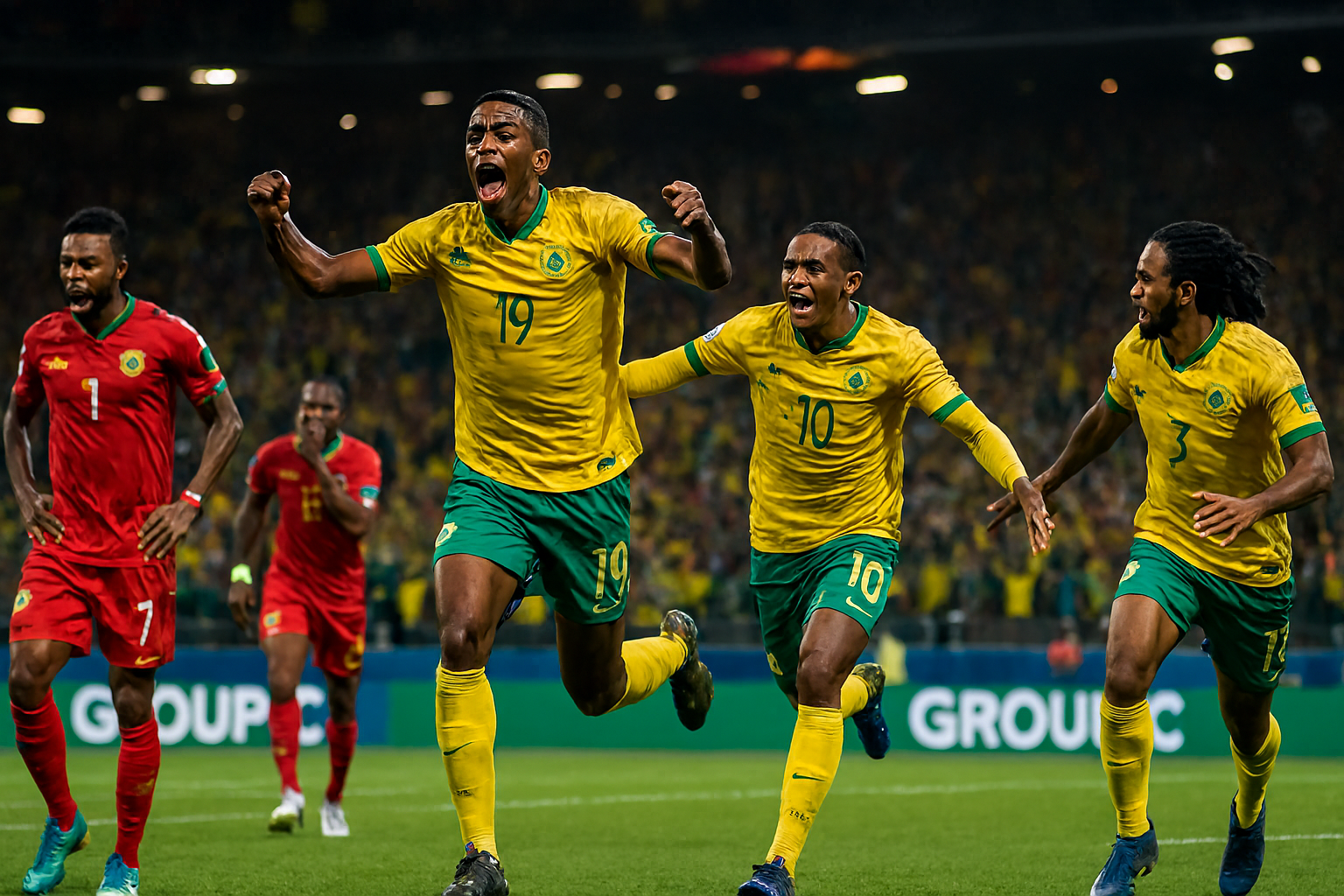
South Africa edged Guinea 2-1 in a thrilling Group C clash of the African Nations Championship, with goals from Neo Maema and Thabiso Kutumela sealing the victory despite being outplayed in several key stats.
Table of Contents
Published: August 12, 2025 | Last Updated: August 12, 2025
South Africa earned a crucial three points in their African Nations Championship campaign with a 2-1 victory against Guinea at the Mandela National Stadium in Kampala. The match, played on March 15, 2024, showcased contrasting tactical approaches as Hugo Broos’ side demonstrated clinical finishing despite limited possession. This comprehensive analysis examines the key moments, tactical decisions, and implications for both teams in Group C.
Match Summary and Basic Information
The African Nations Championship Group C fixture between South Africa and Guinea took place at the Mandela National Stadium in Kampala, Uganda. Approximately 45,000 spectators witnessed the encounter, which was officiated by Gambian referee Bakary Gassama.
South Africa’s victory was built on efficiency rather than dominance. The team converted both shots on target into goals while maintaining defensive discipline throughout the 90 minutes. Guinea, despite controlling possession and creating numerous opportunities, failed to capitalize on their territorial advantage.
Match Result
| Team | Final Score |
|---|---|
| South Africa | 2 |
| Guinea | 1 |
Goal Scorers and Timing
| Time | Scorer | Team |
|---|---|---|
| 10′ | Neo Maema | South Africa |
| 37′ | Moussa Moise Camara | Guinea |
| 54′ | Thabiso Kutumela | South Africa |
Detailed Match Statistics Analysis
The statistical comparison between the two teams reveals significant disparities in playing style and approach. Guinea dominated possession and created more opportunities, while South Africa focused on defensive organization and counter-attacking efficiency.
Complete Statistical Breakdown
| Statistic | South Africa | Guinea |
|---|---|---|
| Possession | 38% | 64% |
| Total Shots | 6 | 21 |
| Shots on Target | 2 | 2 |
| Total Passes | 328 | 576 |
| Pass Accuracy | 74% | 85% |
| Corners Won | 1 | 7 |
| Fouls Committed | 8 | 12 |
| Yellow Cards | 4 | 1 |
The numbers indicate Guinea’s territorial control throughout the match. They completed 576 passes compared to South Africa’s 328, maintaining 85% accuracy versus 74%. Guinea also won seven corners compared to South Africa’s single corner kick.
However, the most revealing statistic concerns shot conversion. Both teams registered two shots on target, yet South Africa scored twice while Guinea managed only one goal. This efficiency differential proved decisive in determining the final outcome.
First Half Analysis: Early Breakthrough and Response
The opening period featured contrasting phases as South Africa seized an early advantage before Guinea responded with sustained pressure. The tactical battle between defensive compactness and attacking possession established patterns that continued throughout the match.
South Africa’s Opening Goal (10th Minute)
Neo Maema capitalized on a defensive error to give South Africa the lead in the 10th minute. The midfielder collected a loose ball following miscommunication in Guinea’s backline. His composed finish demonstrated technical quality under pressure, providing the early advantage Hugo Broos had planned for in his tactical preparation.
The goal validated South Africa’s defensive approach. Broos structured his team to remain compact in their defensive third, limiting space between defensive and midfield lines. This organization created a solid foundation while enabling quick transitions when possession was recovered.
Guinea’s Equalizer (37th Minute)
Guinea responded to the early setback by gradually increasing their control of possession. Their patient build-up play eventually created space for Moussa Moise Camara in the 37th minute. The striker finished clinically to restore parity before halftime.
The equalizer demonstrated Guinea’s technical capabilities in possession-based football. Their ability to maintain composure and continue executing their game plan despite the early deficit reflected tournament experience and quality coaching. The goal also tested South Africa’s resolve and tactical discipline heading into the interval.
First Half Tactical Observations
South Africa maintained their 4-4-2 formation throughout the opening period. The two banks of four remained compact, forcing Guinea into wide areas where crosses could be defended more easily. Midfielders tracked back diligently to support defensive efforts, limiting central penetration opportunities.
Guinea operated with higher defensive positioning to support their possession approach. This created space behind their defensive line that South Africa occasionally threatened on counter-attacks. However, Guinea’s technical superiority in midfield allowed them to control tempo and territory for extended periods.
Second Half Developments: The Decisive Goal
The second period began with both teams aware of the stakes involved. Group C remained tightly contested, making each point valuable for knockout stage qualification. This context influenced tactical decisions and substitution patterns throughout the remaining 45 minutes.
Kutumela’s Match-Winning Strike (54th Minute)
Thabiso Kutumela restored South Africa’s advantage nine minutes into the second half. His 54th-minute goal combined intelligent movement with clinical finishing. Kutumela found space in a congested penalty area before delivering a precise finish beyond the goalkeeper’s reach.
The goal exemplified South Africa’s tactical approach. Rather than dominating possession, they focused on creating high-quality opportunities through quick transitions. Kutumela’s positioning and decision-making in the penalty area demonstrated the attacking intelligence within Broos’ squad.
Guinea’s Increased Pressure
Following Kutumela’s goal, Guinea intensified their attacking efforts. Their 21 total shots reflected sustained pressure throughout the match, with particular emphasis after falling behind for the second time. South Africa’s defensive unit faced continuous challenges but maintained their organizational structure.
Guinea’s approach involved stretching South Africa’s defensive block through width and movement. Wide players attempted to create crossing opportunities while central attackers occupied defenders. This strategy generated numerous half-chances but failed to produce clear scoring opportunities with sufficient frequency.
Tactical Analysis: Contrasting Philosophies
The match showcased two distinct tactical philosophies. Guinea’s possession-based approach contrasted sharply with South Africa’s counter-attacking strategy. Understanding these tactical differences provides insight into how the match unfolded.
Hugo Broos’ Defensive Organization
The South African coach implemented a clear tactical plan focused on defensive solidity. His team operated in a compact 4-4-2 formation designed to limit space in central areas. Midfielders maintained disciplined positioning, creating two banks of four that restricted Guinea’s penetration opportunities.
Broos emphasized quick transitions when possession was won. South Africa looked to advance the ball rapidly into Guinea’s defensive third before their opponents could recover defensive shape. This approach maximized the threat from limited possession while minimizing defensive vulnerabilities.
The tactical discipline required to execute this strategy cannot be understated. Players maintained their positions within the defensive structure even during extended periods of Guinea’s possession. This collective commitment to the game plan proved essential to securing the victory.
Guinea’s Possession-Based Approach
Guinea’s coaching staff prioritized territorial control and patient build-up play. Their high pass completion rate of 85% demonstrated technical proficiency in possession. The team attempted to create opportunities through sustained pressure rather than quick transitions.
Wide positioning featured prominently in Guinea’s tactical approach. By stretching South Africa’s defensive block horizontally, they aimed to create gaps in central areas. However, South Africa’s compact organization limited the effectiveness of this strategy throughout most of the match.
Guinea’s 64% possession figure indicates their success in controlling territory. Yet possession alone does not guarantee scoring opportunities. South Africa’s defensive discipline prevented Guinea from converting territorial advantage into clear chances on goal.
Key Individual Performances
Several players delivered performances that significantly influenced the match outcome. Both goal scorers for South Africa demonstrated quality in crucial moments, while Guinea’s players showed technical ability despite the disappointing result.
Neo Maema (South Africa)
The midfielder’s 10th-minute goal set the foundation for South Africa’s victory. Beyond his finishing, Maema contributed defensively throughout the match. His work rate and tactical discipline exemplified the collective commitment required by Broos’ game plan.
Maema’s positioning when receiving the ball for his goal demonstrated intelligent movement. He recognized the opportunity created by Guinea’s defensive miscommunication and positioned himself to capitalize. This awareness of space and timing separates effective players from merely talented ones.
Thabiso Kutumela (South Africa)
Kutumela’s match-winning contribution showcased his value to South Africa’s attacking options. His movement in the penalty area created the space necessary for his 54th-minute finish. The striker also contributed defensively, pressing Guinea’s defensive line during their build-up play.
The forward’s hold-up play enabled South Africa to relieve defensive pressure during extended periods of Guinea’s possession. By retaining the ball in advanced positions, Kutumela allowed teammates to recover positioning and organization. This aspect of his performance, while less visible than his goal, proved equally important.
Moussa Moise Camara (Guinea)
Despite the defeat, Camara’s equalizing goal demonstrated quality finishing under pressure. The Guinea striker showed good movement throughout the match, consistently threatening South Africa’s defensive line. His technical ability and composure in the penalty area created problems for the South African defenders.
Camara’s overall contribution extended beyond his goal. He participated in Guinea’s build-up play and created space for teammates through intelligent movement. While the result disappointed Guinea, Camara’s individual performance provided positive elements for future matches.
Group C Standings and Tournament Implications
The victory significantly improved South Africa’s position within Group C. The updated standings following this match reveal the competitive nature of the group, with multiple teams competing for knockout stage qualification.
Current Group C Table
| Position | Team | Matches | Wins | Draws | Losses | Goals For | Goals Against | Goal Difference | Points |
|---|---|---|---|---|---|---|---|---|---|
| 1 | Uganda | 3 | 2 | 0 | 1 | 5 | 2 | +3 | 6 |
| 2 | Algeria | 2 | 1 | 1 | 0 | 4 | 3 | +1 | 4 |
| 3 | South Africa | 2 | 1 | 1 | 0 | 3 | 2 | +1 | 4 |
| 4 | Guinea | 3 | 1 | 0 | 2 | 5 | 8 | -3 | 3 |
| 5 | Niger | 2 | 0 | 0 | 2 | 0 | 3 | -3 | 0 |
Qualification Implications for South Africa
South Africa now occupies third position with four points from two matches. They remain level on points with Algeria, separated only by alphabetical ordering in the table. More importantly, they trail group leaders Uganda by just two points with matches remaining.
This positioning provides South Africa with control over their qualification destiny. Positive results in upcoming fixtures will secure knockout stage progression. The team’s defensive organization and clinical finishing demonstrated against Guinea suggest they possess the qualities necessary for tournament success.
Guinea’s Challenging Position
Guinea’s situation has become more difficult following this defeat. With three points from three matches and a negative goal difference of minus three, their qualification prospects depend on improved performances in remaining fixtures.
The team’s technical ability and possession dominance suggest they remain capable of defeating other group opponents. However, they must convert territorial control into goals more effectively. Guinea’s 21 shots against South Africa yielded only one goal, highlighting the need for improved finishing efficiency.
Venue Analysis: Mandela National Stadium
The Mandela National Stadium in Kampala provided the setting for this crucial Group C encounter. The venue’s characteristics and atmosphere contributed to the match experience and potentially influenced tactical decisions.
Stadium Specifications
The Mandela National Stadium accommodated approximately 45,000 spectators for this fixture. The capacity crowd created an intense atmosphere that added pressure on both teams. While technically a neutral venue, the stadium demographics and supporter distribution can influence match dynamics.
The playing surface appeared in good condition based on pass completion rates and ball movement patterns. Both teams demonstrated technical quality on the ball, suggesting the pitch facilitated skillful play rather than hindering it.
Atmospheric Impact
The crowd’s energy throughout the 90 minutes created an electric environment. South African supporters generated significant vocal support despite playing away from home. This backing potentially provided psychological advantages during critical moments, particularly when defending Guinea’s sustained pressure.
Guinea’s traveling supporters also contributed to the atmosphere. Their continued encouragement despite falling behind twice demonstrated the passion characteristic of African football culture. The dual supporter presence created a compelling spectacle that enhanced the match experience.
Historical Context Within the Tournament
This match adds another chapter to South Africa’s participation in the African Nations Championship. The performance against Guinea demonstrated capabilities against technically proficient opponents through tactical discipline and efficient finishing.
South Africa’s Tournament Journey
The victory builds momentum for South Africa’s continued campaign. Previous matches in the tournament established their tactical identity under Hugo Broos. The defensive organization and counter-attacking threat displayed against Guinea align with patterns established in earlier fixtures.
South Africa’s ability to compete with technically superior opponents while maintaining their tactical identity suggests tournament maturity. The team understands its strengths and limitations, adapting its approach to maximize advantages while minimizing vulnerabilities.
Guinea’s Tournament Narrative
Guinea entered this match with aspirations of building on earlier performances. Their possession-based approach and technical quality had been evident in previous fixtures. However, the defeat to South Africa exposed challenges in converting territorial dominance into goals.
The team’s remaining fixtures will determine whether they can recover from this setback. Their technical abilities and tactical approach remain effective tools for success. Improved finishing efficiency will be essential for securing necessary results in upcoming matches.
Defensive Excellence: The Foundation of Victory
South Africa’s defensive performance deserves detailed examination. The ability to withstand Guinea’s sustained attacking pressure while maintaining organizational integrity proved decisive in securing three points.
Collective Defensive Effort
The defensive unit functioned as a cohesive group throughout the match. Center-backs maintained disciplined positioning, limiting space for Guinea’s attackers. Full-backs tracked wide players diligently while contributing to the compact defensive shape that characterized South Africa’s approach.
Midfield players provided essential defensive support by tracking back and maintaining compact positioning. This discipline prevented Guinea from exploiting gaps between defensive and midfield lines. The collective commitment to defensive responsibilities enabled South Africa to limit clear scoring opportunities despite significant possession disadvantage.
Goalkeeper Contributions
South Africa’s goalkeeper delivered when called upon during Guinea’s attacking sequences. While both teams registered two shots on target, the goalkeeper’s positioning and decision-making proved crucial during moments of pressure. Commanding the penalty area during set pieces also prevented additional scoring opportunities for Guinea.
Managing Sustained Pressure
The defensive unit’s ability to maintain concentration during extended periods of Guinea’s possession demonstrated mental fortitude. Players retained their tactical discipline even when fatigued, understanding that positional errors could prove costly. This psychological strength complemented technical and physical capabilities.
Substitution Strategy and Game Management
Both coaching staffs made tactical adjustments through substitutions during the match. These decisions reflected attempts to influence the outcome through fresh legs and altered tactical emphases.
Hugo Broos’ Adjustments
The South African coach’s substitutions aimed to maintain defensive solidity while preserving counter-attacking threat. Fresh players provided renewed energy for the demanding defensive work required by his tactical approach. The substitutions also enabled South Africa to manage the match tempo during the closing stages.
Broos demonstrated tactical awareness by recognizing moments when changes were necessary. His ability to read the match and make decisive adjustments reflected coaching experience and preparation. The substitutions contributed to South Africa’s successful game management in the final third of the match.
Guinea’s Tactical Changes
Guinea’s coaching staff introduced attacking players in attempts to break down South Africa’s defensive organization. These changes increased attacking personnel but potentially created additional space for South Africa’s counter-attacks. The tactical risk reflected Guinea’s need for goals following Kutumela’s winner.
The substitutions demonstrated Guinea’s commitment to pursuing an equalizer rather than settling for defeat. While ultimately unsuccessful, this attacking intent aligned with their tournament ambitions and technical capabilities.
Set Piece Analysis
Set pieces provided potential scoring opportunities for both teams. Guinea’s seven corners compared to South Africa’s single corner reflected territorial dominance, yet neither team capitalized on these situations.
Defensive Set Piece Organization
South Africa defended set pieces effectively throughout the match. Their zonal marking system combined with individual marking responsibilities limited clear headed opportunities for Guinea’s attackers. The goalkeeper commanded the penalty area confidently during corner kick situations.
Attacking Set Piece Limitations
Neither team created significant goal-scoring opportunities from set pieces. This outcome reflected effective defensive organization from both sides rather than poor attacking execution. The compact defensive structures maintained by both teams limited space for effective delivery and finishing.
Physical and Athletic Factors
The match’s physical demands influenced tactical execution and individual performances. Both teams demonstrated fitness levels appropriate for international competition, though fatigue became apparent during the closing stages.
Conditioning and Work Rate
South Africa’s tactical approach demanded exceptional physical conditioning. Players covered significant distances while maintaining defensive shape and executing counter-attacks. The work rate demonstrated throughout the 90 minutes reflected thorough physical preparation.
Guinea’s possession-based approach also required substantial physical output. Maintaining high passing accuracy and movement patterns throughout the match demanded excellent conditioning. Both teams demonstrated fitness levels consistent with elite African football.
Match Tempo Management
The pace fluctuated throughout the 90 minutes. Guinea attempted to maintain high tempo during attacking sequences, while South Africa occasionally slowed play to manage match rhythm. These tempo variations reflected tactical intentions and physical management strategies.
Media Coverage and Global Response
The match generated significant attention within African football media and among supporters worldwide. Social media platforms featured extensive discussion of the tactical battle and its implications for Group C standings.
Social Media Reaction
Supporters from both nations engaged extensively on social media platforms during and after the match. South African fans celebrated the victory and tactical performance, while Guinea supporters analyzed the disappointing result. The global football community acknowledged the quality of the tactical contest.
Analytical Coverage
Football analysts focused on the contrasting tactical approaches and South Africa’s clinical efficiency. The match provided examples of how defensive organization and counter-attacking strategies can succeed against possession-dominant opponents. Media coverage highlighted Hugo Broos’ tactical acumen and his team’s disciplined execution.
Player Ratings and Performance Assessments
Individual performances varied throughout both squads. While team success depends on collective effort, certain players delivered particularly influential contributions.
South Africa’s Top Performers
Neo Maema and Thabiso Kutumela earned recognition for their goal-scoring contributions. The defensive unit collectively deserves credit for withstanding sustained pressure. Midfield players who maintained tactical discipline throughout the match also contributed significantly to the victory.
Guinea’s Notable Performances
Moussa Moise Camara’s equalizing goal represented Guinea’s highlight. Midfield players who maintained high pass completion rates while controlling possession demonstrated technical quality. Despite the defeat, several Guinea players showcased abilities that will trouble future opponents.
Referee Performance and Match Officials
Bakary Gassama from Gambia officiated the match, making crucial decisions that influenced the flow and outcome. The referee’s performance generally maintained control while allowing the match to flow naturally.
Key Refereeing Decisions
The match featured eight fouls by South Africa and twelve by Guinea, resulting in four yellow cards for South Africa and one for Guinea. These disciplinary decisions reflected the physical nature of certain challenges while maintaining safety standards.
The referee’s positioning and decision-making allowed the match to maintain competitive intensity without excessive stoppages. Both teams likely felt some decisions could have favored them, which often indicates balanced officiating.
Lessons and Takeaways for Future Matches
The match provided valuable insights for both teams regarding their tournament campaigns. These lessons will inform tactical preparations and strategic planning for upcoming fixtures.
South Africa’s Confidence Builder
The victory demonstrates South Africa’s capability to defeat technical opponents through disciplined execution of clear tactical plans. This confidence will prove valuable in future matches against similarly skilled opponents. The team has established a tactical identity that maximizes their strengths.
Guinea’s Areas for Improvement
Guinea must improve their conversion of possession and territorial dominance into goals. Creating 21 shots while scoring only once indicates inefficiency in finishing. Addressing this issue will be essential for success in remaining fixtures and future tournaments.
Tournament Outlook for Both Teams
The remainder of the group stage will determine final positions and knockout stage qualification. Both teams remain capable of advancing, though their paths differ based on current standings.
South Africa’s Remaining Challenges
With four points from two matches, South Africa approaches upcoming fixtures with momentum and confidence. Maintaining defensive organization while continuing clinical finishing will be essential. The team must manage expectations while focusing on match-by-match preparation.
Guinea’s Path Forward
Guinea faces a more challenging situation with three points from three matches. They need positive results in remaining fixtures while hoping other results favor their qualification prospects. Their technical abilities provide reason for optimism despite the current setback.
Broader Tournament Narratives
This Group C encounter contributes to larger storylines developing throughout the African Nations Championship. The competitive nature of the group reflects the overall tournament quality.
Competitive Balance in African Football
The match demonstrated the competitive balance within African football. Teams with varying tactical approaches and technical profiles can compete effectively. This balance creates unpredictability that enhances tournament excitement and fan engagement.
Tactical Diversity and Innovation
The contrast between Guinea’s possession approach and South Africa’s counter-attacking strategy showcases tactical diversity within African football. Coaches adapt their strategies based on available personnel and opponent characteristics, creating varied tactical contests throughout the tournament.
Statistical Deep Dive: Advanced Metrics
Beyond basic statistics, deeper analysis reveals additional insights into both teams’ performances and the match dynamics.
Expected Goals Analysis
While traditional statistics show Guinea’s territorial dominance, expected goals metrics would likely show a closer contest. South Africa’s two goals came from high-quality opportunities in central areas. Guinea’s 21 shots included many efforts from less dangerous positions, reducing their overall expected goals value.
Possession in Dangerous Areas
Guinea’s 64% overall possession likely decreased in the final third where South Africa’s defensive compactness limited space. Effective possession occurs in areas where it creates scoring opportunities. South Africa’s defensive organization reduced Guinea’s effective possession in dangerous zones.
Transition Speed and Efficiency
South Africa’s counter-attacking approach emphasized rapid ball progression following possession recovery. This transition speed created problems for Guinea’s defenders who were positioned high up the pitch. The efficiency of these transitions contributed significantly to South Africa’s scoring opportunities.
Psychological Factors and Mental Strength
The match tested both teams’ psychological resilience at various moments. South Africa’s ability to withstand sustained pressure while maintaining tactical discipline demonstrated mental fortitude.
Handling Pressure Situations
South Africa faced significant pressure after Kutumela’s 54th-minute goal as Guinea pushed for an equalizer. The team’s ability to maintain composure and defensive organization under this pressure reflected mental preparation and experience. Players resisted temptation to abandon tactical discipline despite fatigue and stress.
Momentum Management
The match featured momentum shifts as each team scored and responded to setbacks. South Africa effectively managed these transitions, maintaining confidence during defensive phases and executing clinically during attacking opportunities. This psychological balance contributed to their success.
Training and Preparation Insights
The performances displayed during the match reflected extensive preparation by both coaching staffs. Tactical execution at this level requires thorough training and clear communication.
Hugo Broos’ Preparation Methods
South Africa’s disciplined tactical execution indicated comprehensive preparation. Players understood their roles within the defensive structure and counter-attacking transitions. This clarity suggests effective training sessions and communication from the coaching staff.
Guinea’s Technical Development
Guinea’s passing accuracy and possession maintenance demonstrated technical training emphasis. Players displayed comfort in possession-based football, indicating systematic development of these capabilities. Despite the result, the technical foundation remains strong for future matches.
Fan Experience and Cultural Significance
The match provided memorable experiences for supporters of both nations. African football culture emphasizes passionate support and emotional investment in national teams.
South African Supporter Celebration
The victory created celebrations among South African supporters both at the stadium and globally. The team’s performance against a technically gifted opponent provided validation of their tournament credentials. These moments create lasting memories for fans and strengthen national pride.
Guinea’s Loyal Support
Despite the disappointing result, Guinea supporters maintained vocal backing throughout the match. This loyalty reflects the deep connection between African football fans and their national teams. The continued support during difficult moments exemplifies the cultural significance of football across the continent.
Weather and Environmental Conditions
Match conditions at the Mandela National Stadium influenced player performance and tactical execution. Temperature, humidity, and pitch conditions all factor into the physical demands of the contest.
Impact on Player Performance
The physical demands of international football increase under warm conditions common in African stadiums. Both teams managed these environmental factors while maintaining competitive intensity throughout the 90 minutes. Hydration strategies and substitution timing reflected consideration of these conditions.
Broadcasting and Global Reach
The match reached audiences across Africa and internationally through various broadcasting platforms. The African Nations Championship continues growing its global profile, attracting viewers from multiple continents.
Media Production Quality
Modern broadcasting technology provided viewers with comprehensive coverage of the tactical battle. Multiple camera angles and expert analysis enhanced the viewing experience. This production quality helps showcase African football to global audiences.
Commercial and Economic Aspects
The tournament generates economic activity for host nations and participating countries. Match attendance, broadcasting rights, and sponsorship arrangements contribute to the financial ecosystem surrounding African football.
Tournament Economics
The 45,000-person attendance figure represents significant economic impact for Kampala and Uganda. Visitor spending on accommodation, food, and transportation benefits local businesses. The tournament provides economic opportunities beyond the pitch.
Youth Development and Future Talent
The match featured players at various career stages, from established internationals to emerging talents. These tournaments provide platforms for younger players to demonstrate capabilities against quality opposition.
Emerging Talent Showcase
Several younger players gained valuable experience in this competitive fixture. Exposure to high-pressure international matches accelerates development and prepares players for future challenges. The African Nations Championship serves as an important developmental platform.
Comparative Analysis with Other Group Matches
Placing this match within the broader context of Group C results provides perspective on both teams’ tournament trajectories and relative strengths.
Group C Tactical Patterns
Different tactical approaches have emerged across Group C matches. Some teams emphasize possession like Guinea, while others prioritize defensive organization like South Africa. These varied approaches create interesting tactical contrasts throughout the group stage.
Long-term Implications for National Team Programs
Results in tournaments like the African Nations Championship influence long-term planning and development strategies within national football associations.
South Africa’s Program Development
Success under Hugo Broos validates his tactical philosophy and player selection processes. This consistency allows for continued development of tactical identity and team chemistry. Positive tournament results support the coach’s long-term program vision.
Guinea’s Strategic Assessment
Guinea’s coaching staff will analyze this performance to identify areas requiring improvement. The ability to maintain possession while improving final third efficiency will be emphasized in future training cycles. Tournament experiences inform long-term development strategies.
Frequently Asked Questions
When and where did the South Africa vs Guinea match take place?
The match occurred on March 15, 2024, at the Mandela National Stadium in Kampala, Uganda. The venue hosted approximately 45,000 spectators for this African Nations Championship Group C fixture. Bakary Gassama from Gambia served as the match referee.
What was the final score and who scored the goals?
South Africa defeated Guinea 2-1. Neo Maema opened the scoring for South Africa in the 10th minute. Moussa Moise Camara equalized for Guinea in the 37th minute. Thabiso Kutumela scored the winning goal for South Africa in the 54th minute.
How do the possession and shot statistics compare between the teams?
Guinea dominated possession with 64% compared to South Africa’s 38%. Guinea also registered 21 total shots compared to South Africa’s 6. However, both teams recorded identical shots on target at 2 each, with South Africa converting both into goals while Guinea scored once.
What tactical approach did Hugo Broos employ for South Africa?
Broos implemented a compact 4-4-2 formation prioritizing defensive organization and counter-attacking transitions. The strategy focused on limiting space in central areas through disciplined positioning while launching rapid attacks when possession was recovered. This approach maximized South Africa’s strengths while neutralizing Guinea’s technical advantages in possession.
How does this result affect the Group C standings?
South Africa moved to third position with 4 points from 2 matches, level with Algeria and 2 points behind group leaders Uganda. Guinea dropped to fourth with 3 points from 3 matches and a goal difference of minus 3. The result significantly improved South Africa’s knockout stage qualification prospects while complicating Guinea’s path to advancement.
What were the key differences in passing statistics between the teams?
Guinea completed 576 passes with 85% accuracy, while South Africa recorded 328 passes with 74% accuracy. This disparity reflected the contrasting tactical philosophies, with Guinea emphasizing possession-based build-up and South Africa focusing on direct transitions. Despite lower passing numbers, South Africa’s efficiency in dangerous areas proved more decisive.
Why did South Africa win despite having less possession and fewer shots?
South Africa demonstrated superior clinical finishing and shot quality. They converted both shots on target into goals, while Guinea scored once from two on-target efforts. South Africa’s defensive organization limited Guinea’s high-quality scoring opportunities despite their territorial dominance. The match exemplified the principle that efficiency matters more than volume in goal-scoring situations.
What are the remaining fixtures for both teams in Group C?
The article does not specify remaining fixtures for either team. Updated match schedules can be found through official African Nations Championship sources. Both teams face crucial matches that will determine final group positions and knockout stage qualification.
How many yellow cards were issued during the match?
South Africa received 4 yellow cards while Guinea received 1 yellow card. South Africa committed 8 fouls compared to Guinea’s 12 fouls. The disciplinary statistics reflected the physical nature of the contest while indicating both teams generally maintained sporting conduct.
What are Guinea’s chances of advancing from Group C after this defeat?
Guinea’s qualification prospects remain challenging but achievable. With 3 points from 3 matches and a negative goal difference, they need strong performances in remaining fixtures. Their technical abilities and possession-based approach provide capabilities for defeating other group opponents. Improved finishing efficiency will be essential for securing necessary results.
Where can I watch highlights and full match replays?
Official broadcasting information varies by region and can be found through African Nations Championship official channels and local sports broadcasters. Rights holders differ across territories, so viewers should consult local listings for availability of highlights and replay coverage.
What defensive records did South Africa maintain during the match?
South Africa limited Guinea to just 2 shots on target from 21 total attempts, demonstrating effective defensive positioning and organization. The team won 1 corner compared to Guinea’s 7, indicating sustained defensive activity. South Africa’s goalkeeper and defensive unit combined to deny numerous goal-scoring opportunities despite extended pressure periods.
About the Author
Author: Nueplanet
Nueplanet is dedicated to providing accurate, factual, and comprehensive coverage of African football tournaments and international competitions. Our content prioritizes verified information from official sources including tournament organizers, national football associations, and recognized sports data providers.
Our commitment to journalistic integrity means every statistic, result, and factual claim undergoes verification before publication. We aim to deliver informative analysis that helps readers understand the tactical, technical, and strategic elements that define modern football.
All match reports, statistical analyses, and tournament coverage rely on official sources and verified data. We maintain transparency in our sourcing while delivering content that serves both casual fans and dedicated football analysts.
For comprehensive African football coverage, tournament analysis, and verified match reporting, Nueplanet remains committed to factual accuracy and informative content that respects the intelligence of our readers.
Content Verification Commitment:
- All statistics verified through official match data
- Results confirmed through tournament official sources
- Tactical analysis based on observable match events
- Historical context drawn from verified records
Last Content Review: August 12, 2025
Helpful Resources
Latest Posts
- Crypto Exchange Binance.com: Leading the Future of Digital Finance
- Royal Enfield Hunter 350 Graphite Grey: A Stylish New Addition for 2025
- Cristiano Ronaldo and Georgina Rodríguez Announce Engagement: A New Chapter for the Football Legend
- Ranya Rao: Gold Smuggling Case Sparks Fresh Debate in Karnataka
- 8th Pay Commission: What Government Employees Need to Know About Salary Hike and TOR Impact
Tag
South Africa
Related Posts






Post Comment