






KTM 160 Duke India Launch: Affordable Streetfighter Ready to Turn Heads
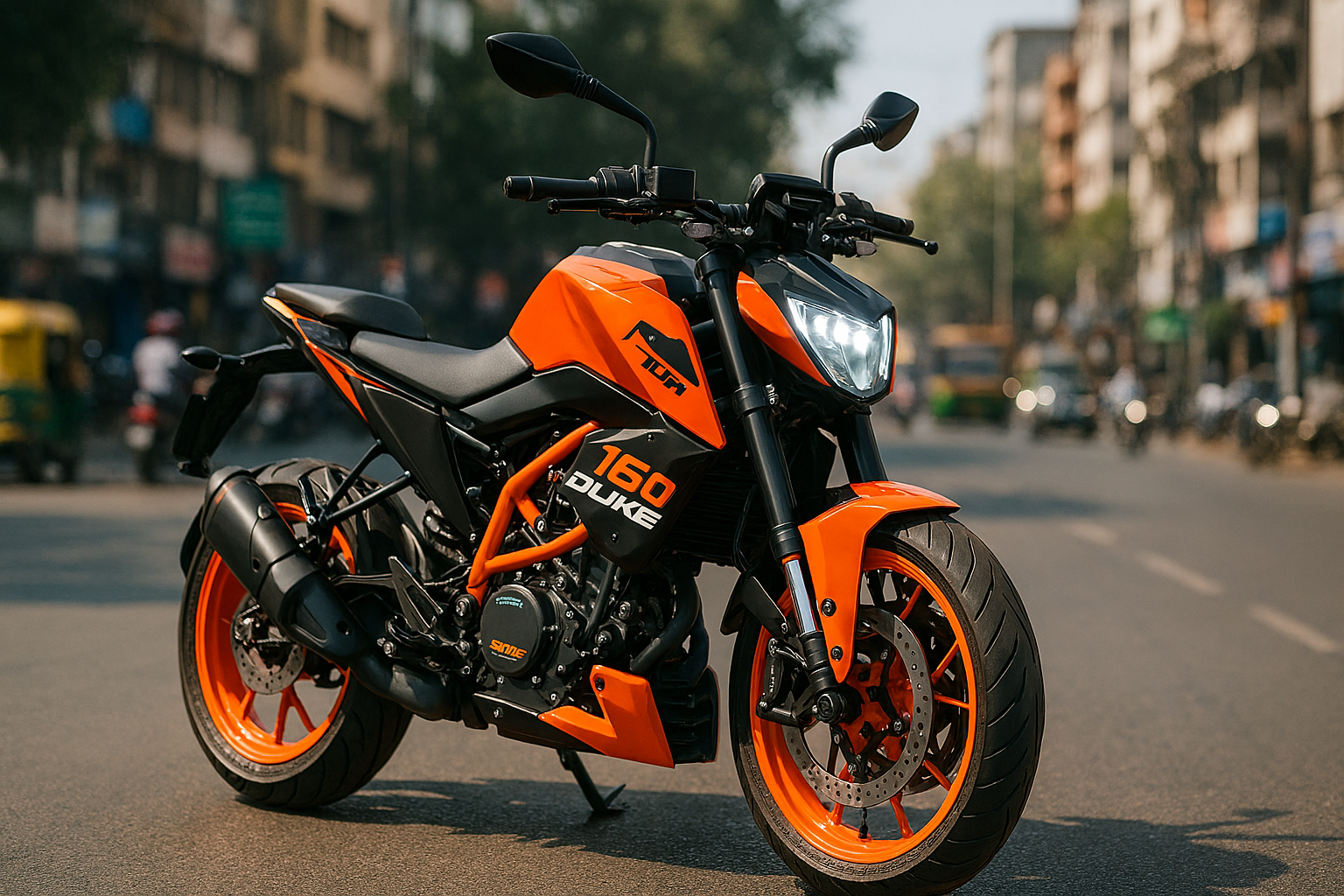
KTM is set to launch the highly anticipated 160 Duke in India, promising to be an affordable yet sporty entry-level streetfighter. This article covers the features, expected price, and launch details of the KTM 160 Duke.
Table of Contents
Published: August 11, 2025 | Last Updated: August 11, 2025
The Indian two-wheeler market continues to witness significant developments as KTM, the Austrian motorcycle manufacturer, prepares to introduce its entry-level streetfighter model in the coming months. The KTM 160 Duke represents a strategic initiative aimed at expanding the company’s presence in India’s competitive sub-200cc motorcycle segment. This analysis examines the technical specifications, market positioning, and potential industry implications of this upcoming launch.
Understanding the Strategic Context of KTM’s Market Entry
Current State of India’s Motorcycle Industry
India’s motorcycle market has undergone substantial transformation over the past several years, with shifting consumer preferences and demographic changes influencing purchasing decisions. The sub-200cc segment accounts for approximately 65% of total motorcycle sales in the country, making it a crucial battleground for manufacturers seeking market expansion.
Recent market analysis indicates that buyers in the 18-28 age demographic increasingly prioritize performance characteristics and brand perception alongside traditional factors such as fuel efficiency and maintenance costs. This demographic shift has created opportunities for manufacturers willing to invest in design innovation and technological advancement at accessible price points.
The competitive landscape features established domestic manufacturers with extensive distribution networks and strong brand recognition. However, gaps exist for products offering authentic performance credentials combined with contemporary design language and advanced features.
KTM’s Manufacturing Infrastructure in India
KTM’s production operations in India operate through a strategic partnership with Bajaj Auto Limited at the manufacturing facility located in Chakan, near Pune, Maharashtra. This collaboration has enabled the production of multiple KTM models for both domestic consumption and international export markets since its establishment.
The partnership leverages Bajaj’s manufacturing expertise and established supply chain networks while maintaining KTM’s quality standards and design philosophy. This arrangement has proven successful in producing motorcycles that meet global quality benchmarks while achieving cost structures suitable for the Indian market.
Production capacity at the Chakan facility supports current KTM model requirements with provisions for expansion based on market demand. The infrastructure includes dedicated assembly lines, quality control facilities, and testing capabilities designed to meet international manufacturing standards.
Detailed Technical Specifications and Engineering Analysis
Engine Architecture and Performance Characteristics
The KTM 160 Duke utilizes a newly engineered 160cc single-cylinder powerplant designed specifically for the Indian market requirements. The liquid-cooled engine architecture incorporates contemporary design principles aimed at balancing performance output with fuel efficiency and emissions compliance.
Technical specifications indicate power output of approximately 15.2 horsepower achieved at 8,500 revolutions per minute. Peak torque delivery occurs at 6,750 RPM, producing 14.8 Newton-meters. These performance figures position the motorcycle competitively within its displacement category while maintaining operational characteristics suitable for varied riding conditions.
The engine employs fuel injection technology for precise fuel metering across different operating parameters. This system adapts to varying fuel quality specifications found across different regions, addressing a practical consideration for nationwide market distribution. The combustion chamber design incorporates optimization for both power delivery and emissions control, ensuring compliance with current regulatory standards.
The transmission features six forward gears with ratios optimized for both urban riding conditions and highway operation. Gear spacing aims to provide adequate acceleration while maintaining fuel efficiency during cruising speeds. The clutch system employs cable actuation with lever effort calibrated for ease of operation in stop-and-go traffic situations.
Chassis Construction and Suspension Components
The motorcycle’s structural foundation utilizes a trellis-style steel frame, a design characteristic associated with KTM’s product lineup. This construction method provides structural rigidity while managing weight considerations important for handling characteristics and overall performance.
Front suspension employs 37-millimeter upside-down fork units, representing a specification level typically found on higher-priced motorcycles in the Indian market. This component selection indicates emphasis on handling performance and ride quality. The rear suspension utilizes a monoshock design with preload adjustability, allowing riders to modify suspension characteristics based on load conditions and personal preferences.
Wheel sizes follow conventional specifications with appropriate tire dimensions selected for balance between handling agility and stability. The combination of frame geometry, suspension components, and wheel specifications aims to deliver handling characteristics suitable for both urban commuting and recreational riding applications.
Braking System and Safety Features
Braking hardware consists of hydraulic disc brakes at both front and rear wheels. The front brake utilizes a 300-millimeter disc with radial-mount caliper design, while the rear employs a 230-millimeter disc. This configuration provides stopping power appropriate for the motorcycle’s performance capabilities and weight specifications.
The braking system includes single-channel Anti-lock Braking System (ABS) as standard equipment, complying with regulatory requirements implemented in India. The ABS system operates on the front wheel, preventing wheel lock-up during emergency braking situations while allowing rear wheel operation without electronic intervention.
Additional safety features include engine immobilizer technology for theft prevention, side-stand engine cutoff functionality, and low fuel warning indication. These features address both security concerns and operational safety considerations relevant to daily motorcycle usage.
Physical Dimensions and Ergonomic Considerations
The motorcycle’s kerb weight is projected at approximately 153 kilograms, achieving a power-to-weight ratio that influences acceleration performance and handling agility. Weight distribution characteristics favor a slightly forward bias, contributing to stability during braking while maintaining maneuverability for urban riding situations.
Seat height specifications indicate approximately 830 millimeters, representing a measurement accessible to a wide range of rider heights within the Indian demographic. The riding position incorporates a slightly forward-leaning posture characteristic of streetfighter-style motorcycles, balancing sporty ergonomics with practical considerations for daily commuting applications.
Fuel tank capacity stands at approximately 13.5 liters, providing practical range between refueling stops while contributing to the motorcycle’s visual proportions. Ground clearance and wheelbase dimensions aim to balance handling agility with stability and obstacle clearance capabilities.
Design Elements and Visual Characteristics
Styling Philosophy and Aesthetic Approach
The KTM 160 Duke’s design language draws inspiration from other models in the Duke product family while incorporating elements that establish its distinct market position. The styling approach emphasizes angular forms and aggressive lines characteristic of streetfighter motorcycle designs.
The fuel tank design features sharp edges and defined surfaces that create visual presence while maintaining ergonomic functionality. Side panel designs employ sculpted forms that complement the overall aesthetic while managing airflow considerations. The tail section follows contemporary design trends with compact proportions and integrated lighting elements.
Color schemes include the signature orange and black combination associated with KTM brand identity. Additional color options may be offered to accommodate diverse customer preferences. Surface finishes aim to maintain appearance quality over extended ownership periods, addressing practical considerations alongside aesthetic objectives.
Lighting Technology and Visibility Features
The motorcycle incorporates LED (Light Emitting Diode) technology for primary lighting functions, providing improved illumination compared to conventional bulb-based systems while reducing electrical system demands. The headlight design features an angular profile that serves both functional and stylistic purposes.
Daytime Running Light (DRL) integration enhances visibility during daylight operation, addressing safety considerations in congested traffic environments. The lighting signature creates brand recognition while serving practical safety functions. Tail light and turn signal assemblies similarly employ LED technology for improved visibility and electrical efficiency.
Instrument Cluster and Display Systems
The digital instrument cluster provides comprehensive information display through a modern screen-based interface. Display elements include speedometer, tachometer, odometer, trip meters, fuel gauge, and gear position indication. The system incorporates connectivity capabilities enabling smartphone integration functions.
Connectivity features support turn-by-turn navigation display, incoming call notifications, message alerts, and media control functions. These capabilities address expectations among younger buyers familiar with digital connectivity in other consumer products. The display system includes automatic brightness adjustment based on ambient lighting conditions, ensuring visibility across varied environmental conditions.
Market Positioning and Competitive Analysis
Primary Competition Assessment
The sub-200cc performance-oriented motorcycle segment in India features several established products from domestic manufacturers. The Bajaj Pulsar NS160 represents direct competition with similar displacement, performance orientation, and target demographic. Current pricing for the Pulsar NS160 stands at approximately ₹1.35 lakh (ex-showroom).
The TVS Apache RTR 160 4V offers performance-focused positioning with racing heritage emphasis. This model appeals to buyers prioritizing track-derived technology and sporting credentials. Pricing positions the Apache RTR 160 4V at approximately ₹1.25 lakh (ex-showroom).
The Honda X-Blade attempts to bridge commuter practicality with sporty styling elements. However, the product’s positioning leans more heavily toward practical transportation rather than performance emphasis. This creates differentiation space for products offering more authentic performance credentials.
Pricing Strategy and Value Analysis
Industry sources suggest the KTM 160 Duke will be positioned in the ₹1.55 lakh to ₹1.75 lakh (ex-showroom) price range. This pricing represents a premium compared to established competitors but remains within reach of the target demographic when considering financing options and exchange value programs.
The pricing strategy reflects confidence in product differentiation based on brand perception, design execution, technical specifications, and feature content. The premium pricing approach requires clear communication of value proposition elements that justify incremental cost compared to alternative products.
Value perception extends beyond initial purchase price to encompass total ownership costs including maintenance expenses, parts availability, resale value retention, and brand association benefits. These factors contribute to overall value assessment from consumer perspectives.
Target Customer Profile
The primary target demographic consists of buyers aged 18-28 years, typically first-time motorcycle purchasers or riders upgrading from smaller displacement commuter motorcycles. This demographic demonstrates increasing disposable income levels and evolving preferences toward lifestyle-oriented product characteristics.
Geographic focus emphasizes urban and semi-urban markets where target demographic concentration is highest and where infrastructure supports performance-oriented motorcycle usage. Tier-1 cities provide immediate volume potential while tier-2 and tier-3 markets represent growth opportunities as KTM’s distribution network expands.
Consumer research indicates this demographic values brand image, design aesthetics, performance capabilities, and technological features alongside traditional considerations of reliability and fuel efficiency. Purchase decisions involve extensive online research and peer recommendations before showroom visits.
Manufacturing Approach and Localization Strategy
Production Planning and Capacity Allocation
Initial production targets aim for monthly output of 5,000 to 7,000 units, with provisions for capacity expansion based on market response and demand patterns. This phased approach allows for manufacturing process optimization while managing supply chain logistics and quality control procedures.
Localization levels are expected to exceed 85 percent, with domestic sourcing for major components including engine assemblies, frame structures, suspension components, and body panels. Imported components are limited to specialized items such as engine management electronics and certain precision components requiring specific manufacturing capabilities.
The high localization percentage enables competitive pricing while supporting government initiatives promoting domestic manufacturing. Component sourcing leverages Bajaj’s established supplier network while maintaining quality standards required for KTM brand products.
Quality Control Protocols
Quality assurance procedures follow standardized protocols applied across KTM’s global manufacturing operations. Testing procedures encompass dimensional verification, material quality assessment, surface finish evaluation, and functional testing across multiple operational parameters.
Indian-specific testing includes extreme temperature exposure to simulate varied climatic conditions found across different regions. Monsoon weather simulation tests verify water resistance and corrosion protection measures. Fuel quality variation testing ensures reliable operation with different fuel specifications available across the country.
Road testing programs include high-altitude performance validation in Himalayan regions, extreme heat testing in desert environments, and urban congestion operation in major metropolitan areas. This comprehensive testing approach aims to ensure consistent performance across diverse operating conditions.
Technology Integration and Feature Content
Connectivity and Digital Features
Smartphone integration capabilities enable riders to access navigation, communication, and entertainment functions through the motorcycle’s display system. The KTM Connect application provides additional functionality including service scheduling reminders, riding statistics tracking, and social sharing capabilities.
The digital instrument cluster displays fuel efficiency monitoring, service interval countdown, trip computer functions, and customizable display configurations. Multiple brightness settings accommodate different lighting conditions while automatic day-night mode switching optimizes visibility. Information screens are accessible through handlebar-mounted control switches.
Electronic Systems and Rider Aids
The motorcycle’s electronic architecture supports various rider assistance and convenience features. Engine management systems optimize fuel delivery, ignition timing, and emissions control across operating conditions. The system adapts to factors including throttle position, engine speed, coolant temperature, and atmospheric pressure.
Battery management systems protect against voltage irregularities common in Indian electrical infrastructure. The electrical system includes circuit protection measures and voltage regulation to ensure reliable operation of electronic components. Starting system employs electric starter with adequate capacity for reliable operation across temperature extremes.
Distribution Strategy and Service Network Development
Dealer Network Expansion Plans
The KTM 160 Duke launch coincides with expansion of KTM’s authorized dealer network, particularly targeting tier-2 and tier-3 cities where the product’s pricing enables market access. New dealership establishments will provide sales, service, and parts support in previously underserved markets.
Dealer preparation includes comprehensive training programs covering product knowledge, sales techniques, and service procedures. This preparation aims to ensure consistent customer experience across all touchpoints. Dealership infrastructure requirements include showroom presentation standards, service facility capabilities, and parts inventory maintenance.
Geographic expansion priorities focus on cities demonstrating population density, economic growth indicators, and motorcycle market volumes suggesting viable business opportunities. The expansion timeline coordinates with production ramp-up schedules to ensure product availability matches market readiness.
Service Intervals and Maintenance Requirements
Service schedule specifications indicate initial service at 1,000 kilometers followed by subsequent services at 5,000-kilometer intervals. This schedule balances maintenance requirements with customer convenience considerations. Service procedures include oil changes, filter replacements, brake system inspections, and general safety checks.
Extended warranty programs will be available to provide additional coverage beyond standard warranty periods. These programs address customer concerns regarding long-term ownership costs and provide competitive advantages in markets where ownership cost considerations influence purchase decisions.
Parts Availability and Pricing Structure
Spare parts distribution leverages Bajaj’s established logistics network ensuring availability across the expanded dealer network. Common maintenance items including filters, brake pads, spark plugs, and lubricants are priced competitively with equivalent components for segment competitors.
Parts pricing strategy aims to eliminate cost-of-ownership penalties traditionally associated with premium brands. Competitive parts pricing combined with reasonable service intervals contributes to total cost of ownership calculations favorable to product positioning objectives.
Environmental Compliance and Regulatory Adherence
Emissions Control Technology
The KTM 160 Duke meets Bharat Stage 6 Phase 2 (BS6 Phase 2) emission standards currently enforced in India. Emissions control systems include catalytic converter technology and precision fuel injection calibration optimized for clean combustion across operating ranges.
The emission control system maintains effectiveness across the range of fuel quality specifications found throughout India’s fuel distribution network. System design incorporates margins for future regulatory tightening, ensuring compliance throughout the product’s production lifecycle.
Fuel efficiency projections indicate consumption of approximately 40-45 kilometers per liter under mixed riding conditions. City riding typically yields figures in the 35-40 kmpl range while highway operation may achieve 45-50 kmpl depending on riding style and traffic conditions.
Sustainable Manufacturing Considerations
Manufacturing operations incorporate practices aimed at reducing environmental impact including waste minimization programs, energy efficiency optimization, and responsible raw material sourcing. These initiatives align with increasing awareness of corporate environmental responsibility among consumers and regulatory authorities.
Recycling programs address end-of-life vehicle disposal concerns, with provisions for responsible handling of materials including plastics, metals, and fluids. These programs support circular economy principles and regulatory requirements for product lifecycle management.
Launch Timeline and Marketing Approach
Pre-Launch Activities and Market Preparation
The marketing strategy emphasizes digital engagement and experiential marketing to connect with target demographics through preferred communication channels. Social media platforms serve as primary vehicles for awareness generation, product information dissemination, and community building activities.
Dealer preparation activities include infrastructure readiness verification, staff training completion, and inventory planning. Launch logistics coordinate production schedules, distribution timing, and market availability to ensure smooth product introduction across multiple geographic markets.
Test ride events at popular riding destinations provide potential customers with firsthand product experience. These events generate word-of-mouth recommendations and social media content while allowing product evaluation under real-world conditions.
Official Launch and Market Introduction
The official launch event will likely occur in a major metropolitan market with significant media presence and customer attendance potential. The timing coordinates with favorable market conditions and production readiness. Multiple regional launch events ensure geographic coverage and demonstrate commitment to markets beyond traditional urban strongholds.
Media strategy encompasses both traditional automotive journalism outlets and contemporary digital content platforms. Detailed video reviews, comparison tests, and long-term ownership reports provide comprehensive product information to research-oriented buyers. This multi-channel approach addresses varied information consumption preferences among target demographics.
Initial Market Response Monitoring
Post-launch monitoring activities track sales performance, customer feedback, service requirements, and competitive responses. This information feeds into ongoing production planning, service network development, and potential product modifications addressing field experience.
Customer feedback collection occurs through multiple channels including dealer interactions, online reviews, social media monitoring, and formal survey programs. This feedback informs both immediate operational adjustments and longer-term product development activities.
Industry Impact and Market Implications
Competitive Dynamics and Market Evolution
The KTM 160 Duke introduction may influence competitive dynamics throughout the entry-performance motorcycle segment. Established manufacturers may respond with product updates, feature enhancements, or pricing adjustments to maintain market positions.
The product’s technical specifications and feature content may establish new expectations among consumers regarding what constitutes appropriate equipment and performance capabilities in this price range. This potential benchmark-setting effect could drive industry-wide improvements in product offerings.
Premiumization Trends in Entry-Level Segments
The successful introduction of premium-branded products at accessible price points could accelerate premiumization trends in segments traditionally dominated by value-focused products. This evolution potentially benefits the industry through improved profit margins while enhancing consumer satisfaction through better products.
Young Indian riders increasingly view motorcycles as lifestyle expressions rather than purely functional transportation. Products offering authentic performance credentials and premium brand associations address these evolving preferences while remaining financially accessible to target demographics.
Ownership Experience and Customer Support
Warranty Coverage and Protection Programs
The KTM 160 Duke will include standard manufacturer warranty coverage consistent with other KTM products sold in India. Warranty terms typically cover manufacturing defects and component failures under normal operating conditions for specified periods or distance limits.
Extended warranty options provide coverage beyond standard warranty periods for customers seeking additional protection against repair costs. These programs include provisions for labor costs and genuine replacement parts, offering comprehensive coverage for mechanical and electrical systems.
Customer Communication and Support Channels
Customer support infrastructure includes multiple contact channels such as dealer service departments, dedicated customer care telephone lines, email support systems, and digital communication platforms. This multi-channel approach accommodates different customer preferences and communication styles.
Service appointment scheduling systems enable convenient booking through online platforms or mobile applications. These systems provide appointment confirmations, service status updates, and completion notifications, keeping customers informed throughout service processes.
Expected Market Reception and Success Factors
Critical Success Elements
Product success depends on multiple factors including competitive pricing execution, effective marketing communication, dealer network readiness, product quality consistency, and positive early owner experiences generating favorable word-of-mouth recommendations.
Brand perception plays a crucial role in premium pricing acceptance. KTM’s established reputation for performance-oriented products provides advantages, but sustained success requires delivering on expectations regarding quality, reliability, and ownership experience.
Distribution network expansion to tier-2 and tier-3 cities represents both an opportunity and challenge. Success in these markets requires adapted sales approaches, appropriate financing partnerships, and reliable service support addressing local market characteristics.
Potential Challenges and Risk Factors
Market acceptance at premium pricing levels depends on clear value communication and strong product differentiation. Failure to effectively communicate advantages may result in sales volumes below projections, affecting production planning and dealer network viability.
Service network readiness and parts availability prove critical for customer satisfaction and word-of-mouth recommendations. Service-related issues during the initial launch phase could damage brand reputation and impede market acceptance.
Competitive responses from established manufacturers could include aggressive pricing, enhanced feature content, or targeted marketing campaigns aimed at defending market shares. These responses may necessitate strategic adjustments to maintain competitive positioning.
Future Product Development Implications
Platform Utilization and Model Variants
The 160cc platform developed for this product may serve as foundation for future model variants addressing different market segments or customer preferences. Potential variants could include touring-oriented versions, off-road-capable variants, or specialized editions with unique styling or equipment.
Technology developed for the 160 Duke may migrate to other products in KTM’s lineup, supporting cost amortization across multiple models while advancing overall product competitiveness. This technology sharing represents a strategic advantage of platform-based development approaches.
Long-Term Market Strategy
The 160 Duke represents one element of a broader market strategy aimed at expanding KTM’s presence across multiple price points and customer segments in India. Success with this product potentially enables future expansion into adjacent segments with either higher or lower displacement offerings.
The Indian market’s importance continues growing within KTM’s global operations, both as a production hub and as a consumption market. Sustained success requires continued product development investment, distribution network expansion, and brand building activities maintaining relevance among evolving consumer preferences.
Key Takeaways and Summary Points
The KTM 160 Duke represents a strategic market entry aimed at expanding the Austrian manufacturer’s presence in India’s high-volume entry-performance motorcycle segment. The product combines technical specifications competitive with established rivals, design aesthetics characteristic of KTM brand identity, and feature content appealing to younger buyers.
Pricing strategy positions the product at a premium to direct competitors while remaining accessible to target demographics through financing options and exchange programs. This pricing approach depends on effective communication of value proposition elements justifying incremental costs.
Manufacturing infrastructure leverages the established Bajaj-KTM partnership enabling competitive cost structures while maintaining quality standards. High localization levels support pricing objectives while contributing to domestic manufacturing initiatives.
Distribution network expansion coordinated with the launch provides service support in new markets while demonstrating commitment beyond traditional urban strongholds. Service interval scheduling and competitive parts pricing address total cost of ownership considerations influencing purchase decisions.
The product’s market reception will depend on execution across multiple dimensions including product quality, pricing implementation, marketing effectiveness, dealer network readiness, and competitive responses. Success could reshape competitive dynamics throughout the segment while establishing new customer expectations regarding appropriate features and performance capabilities.
Frequently Asked Questions (FAQs)
What is the expected launch timeframe for the KTM 160 Duke in India?
The KTM 160 Duke is anticipated to launch in late 2025, with industry sources pointing to October-November 2025 as the probable timeframe. Initial availability will focus on major metropolitan markets including Delhi, Mumbai, Bangalore, Chennai, Hyderabad, and Pune where KTM maintains established dealer networks. Tier-2 cities are expected to receive the motorcycle within 2-3 months following the initial launch. Nationwide availability across all authorized KTM dealerships is projected for early 2026, coordinating with the expansion of service network infrastructure to support increased sales volumes in previously underserved markets.
What price range is indicated for the KTM 160 Duke?
Industry sources suggest the KTM 160 Duke will be priced between ₹1.55 lakh and ₹1.75 lakh on an ex-showroom basis. This pricing positions the motorcycle at a premium compared to direct competitors such as the Bajaj Pulsar NS160 (approximately ₹1.35 lakh) and TVS Apache RTR 160 4V (approximately ₹1.25 lakh). The pricing strategy reflects anticipated value delivery through advanced features including single-channel ABS, LED lighting systems, digital connectivity capabilities, and KTM’s characteristic design elements. Financing options and vehicle exchange programs are expected to be available through dealerships, making the pricing more accessible to target customers.
What are the engine specifications and performance figures?
The KTM 160 Duke features a newly developed 160cc single-cylinder, liquid-cooled engine producing approximately 15.2 horsepower at 8,500 RPM with peak torque of 14.8 Newton-meters at 6,750 RPM. The engine incorporates fuel injection technology ensuring precise fuel delivery and BS6 Phase 2 emission compliance. The six-speed transmission provides gear ratios optimized for both urban riding and highway operation. Fuel efficiency is projected at 40-45 kilometers per liter under mixed riding conditions, with city riding yielding approximately 35-40 kmpl and highway operation potentially achieving 45-50 kmpl depending on riding style and traffic conditions.
Does the KTM 160 Duke include smartphone connectivity features?
Yes, the KTM 160 Duke will feature comprehensive connectivity options through KTM’s Connect system, enabling smartphone integration with the digital instrument cluster. The system supports both Android and iOS devices through Bluetooth connectivity. Features include turn-by-turn navigation display, incoming call notifications, message alerts, and music control functions. Additional digital features include a trip computer with fuel efficiency monitoring, service interval tracking, and customizable display modes. The instrument panel automatically adjusts brightness based on ambient lighting conditions and includes multiple information screens accessible through handlebar-mounted controls, addressing expectations among digitally native younger buyers.
What safety features are included as standard equipment?
The KTM 160 Duke includes single-channel Anti-lock Braking System (ABS) as standard equipment across all variants, operating on the front 300mm disc brake. The braking setup consists of a 300mm front disc with radially mounted caliper and a 230mm rear disc providing stopping power appropriate for the motorcycle’s performance capabilities. Additional safety features include an engine immobilizer for theft protection, side-stand engine cutoff switch preventing operation with the side-stand deployed, and a low fuel warning system. LED lighting improves visibility with the angular headlight design and integrated Daytime Running Light enhancing the motorcycle’s presence on roadways.
How does the build quality compare with other KTM models?
The KTM 160 Duke maintains identical build quality standards as other KTM models manufactured at the Bajaj-KTM facility in Chakan, Maharashtra. The motorcycle undergoes the same quality control processes including paint quality testing, fitment precision verification, and comprehensive road testing across diverse Indian conditions. Reliability improvements benefit from experience gained across KTM’s Indian production operations, with components designed specifically for local riding conditions and fuel quality variations. The motorcycle receives equivalent warranty coverage as other KTM models, with extended warranty options available. Parts availability and service support match KTM’s established standards, ensuring consistent ownership experience across the product range.
What is the service interval schedule and expected maintenance costs?
The service schedule indicates an initial service at 1,000 kilometers followed by subsequent services every 5,000 kilometers. This schedule balances maintenance requirements with customer convenience while ensuring optimal performance throughout the ownership period. Service procedures include engine oil changes, filter replacements, brake system inspections, and general safety checks. Service costs are projected to remain competitive with segment standards while utilizing genuine KTM parts and trained technicians to maintain reliability and warranty coverage. Common maintenance items such as air filters, spark plugs, and brake pads are priced competitively with equivalent components for competing motorcycles in the segment.
Will special edition variants or additional color options be available?
KTM plans to offer multiple color schemes to accommodate diverse customer preferences. The signature orange and black combination will serve as the primary variant representing KTM brand identity. Additional color options may include white and black or gray and orange combinations, following successful color schemes from other Duke models. Special edition variants are possible 6-12 months following the initial launch, potentially featuring unique graphics packages, premium accessories, or limited-edition color schemes. Factory-fitted accessory packages may include options such as frame sliders, tank pads, tail tidies, and performance exhaust systems, allowing customers to personalize their motorcycles according to individual preferences and usage requirements.
About the Author
Nueplanet is a dedicated automotive journalist specializing in two-wheeler industry analysis and market trends in the Indian automotive sector. With extensive experience covering motorcycle launches, technical specifications, and market dynamics, Nueplanet provides factual, well-researched content based on official sources, industry data, and verified information.
Committed to delivering accurate, transparent, and unbiased automotive journalism, Nueplanet focuses on helping readers make informed decisions through comprehensive analysis of product specifications, market positioning, and industry developments. All content is thoroughly researched using official manufacturer data, regulatory filings, industry reports, and authoritative sources to ensure accuracy and reliability.
This article is based on available information as of the publication date. Readers are encouraged to verify specifications, pricing, and availability details with authorized KTM dealerships or official company sources before making purchase decisions.
Disclaimer: The information presented in this article is compiled from industry sources, market analysis, and available technical data. Specifications, pricing, and launch timelines are subject to change based on manufacturer decisions and market conditions. Readers should consult authorized KTM dealerships or official company communications for confirmed information before making purchase decisions.
Helpful Resources:
Latest Posts
Tag
KTM 160 Duke
Related Posts







Post Comment