









Medistep Healthcare IPO GMP: Latest Grey Market Trends and Key Details
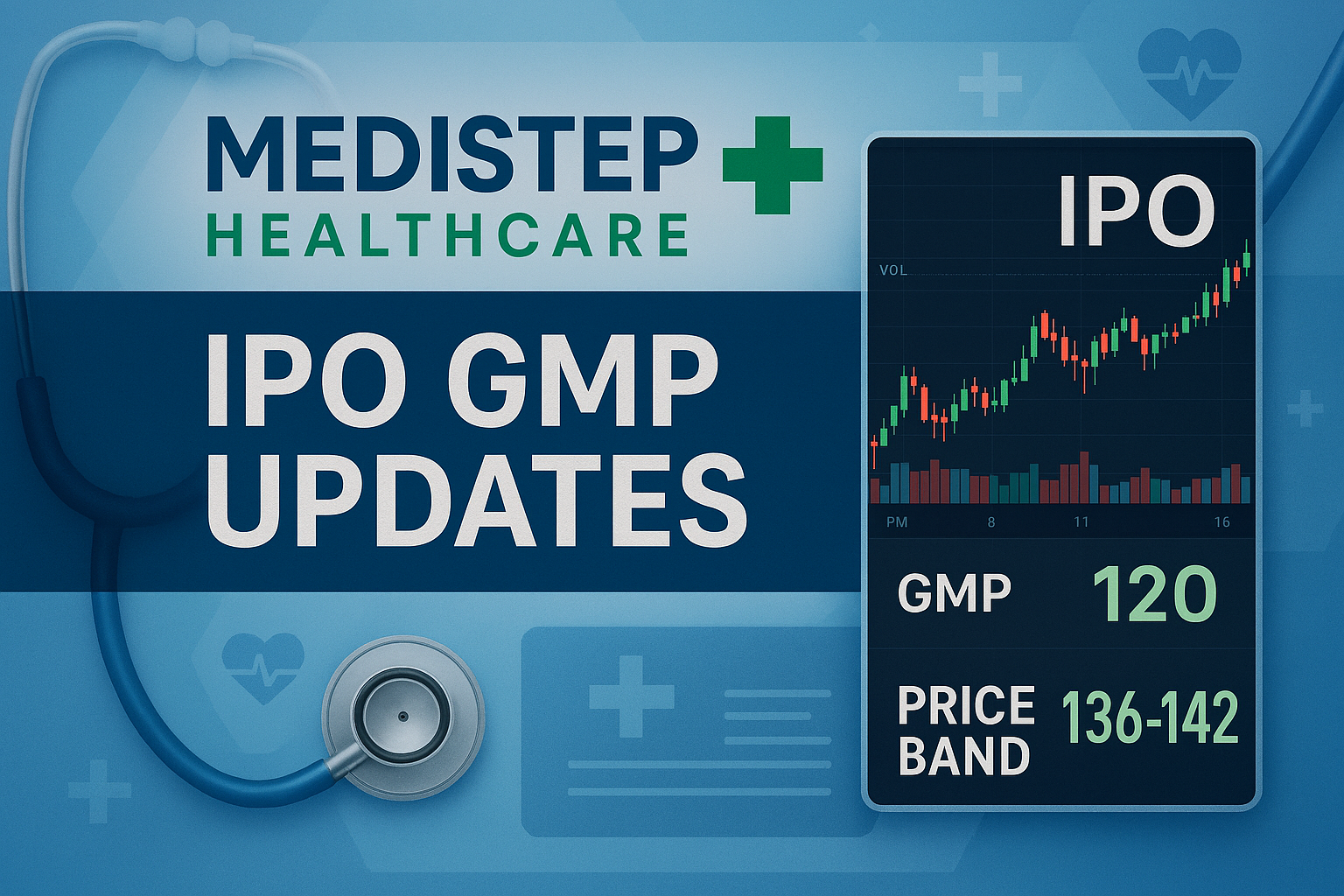
Medistep Healthcare IPO GMP trends are generating buzz among investors ahead of its listing. Here’s a detailed look at the IPO price band, subscription status, and expected debut performance.
Table of Contents
Medistep Healthcare Limited completed its initial public offering during August 2025, with the subscription period running from August 8 to August 12, 2025. The company, operating in the pharmaceutical trading and distribution segment, raised ₹16.10 crores through a fresh equity issue on the NSE SME platform.
The offering received significant investor attention, with subscription levels reaching 49 times the available shares. This response reflects market interest in small and mid-cap pharmaceutical companies listing on specialized exchange platforms. The expected listing date is August 18, 2025.
This analysis examines the IPO structure, company financials, subscription patterns, and relevant market considerations based on publicly available information from the Red Herring Prospectus and exchange filings.
Company Background and Business Operations
Medistep Healthcare Limited was incorporated in June 2023. The company operates in the pharmaceutical trading and distribution sector, serving as an intermediary between pharmaceutical manufacturers and healthcare providers including hospitals, pharmacies, and medical institutions.
Business Model and Operations
The company’s business model focuses on pharmaceutical product trading. This involves procurement from manufacturers, inventory management, and distribution to end customers through established sales networks. The pharmaceutical trading sector requires working capital management, supplier relationships, and distribution infrastructure.
Trading businesses differ from pharmaceutical manufacturing companies in capital requirements, operational complexity, and regulatory oversight. Trading operations typically require lower capital expenditure compared to manufacturing but depend heavily on working capital for inventory and receivables management.
Financial Year Performance Data
According to the Draft Red Herring Prospectus, the company reported financial performance for recent fiscal periods. Revenue increased by 27% between the fiscal year ending March 31, 2024, and March 31, 2025. Profit After Tax (PAT) showed a 25% increase during the same period.
These growth rates indicate business expansion during the initial operational years. However, investors should note that young companies often show high percentage growth rates from low base figures. Absolute revenue and profit numbers provide additional context for evaluating business scale.
The company’s short operational history (since June 2023) means limited financial track record is available for long-term trend analysis. Financial statements covering only two fiscal years provide baseline information but may not fully represent performance through different economic cycles.
IPO Structure and Offering Details
The initial public offering comprised entirely of a fresh issue with no offer for sale component. This structure means all proceeds go to the company rather than providing exits for existing shareholders.
Issue Specifications
The following table summarizes key offering parameters:
| Parameter | Details |
|---|---|
| Issue Size | ₹16.10 Crores |
| Issue Type | Fresh Issue (100%) |
| Share Price | ₹43 per share (Fixed Price) |
| Shares Offered | 37,00,000 shares |
| Minimum Lot Size | 6,000 shares |
| Minimum Investment | ₹2,58,000 (6,000 shares × ₹43) |
| Subscription Period | August 8-12, 2025 |
| Listing Platform | NSE SME |
| Expected Listing | August 18, 2025 |
Fresh Issue Implications
A fresh issue means the company receives all capital raised rather than existing shareholders selling stakes. This structure can indicate:
- Capital is needed for business expansion, working capital, or other corporate purposes
- Existing promoters retain their shareholding percentage (adjusting for dilution)
- Use of proceeds as stated in the prospectus determines how capital deploys in the business
The relatively small issue size of ₹16.10 crores positions this as a typical SME platform IPO. Small and Medium Enterprise platforms on stock exchanges cater to companies raising limited capital amounts with streamlined listing requirements compared to main board listings.
Minimum Investment Requirements
The minimum application requires 6,000 shares at ₹43 per share, totaling ₹2,58,000. This investment threshold is higher than many main board IPOs where retail investors can apply for smaller amounts.
SME platform regulations allow different minimum lot sizes compared to main board offerings. The higher minimum investment naturally limits participation to investors with available capital at this level, potentially reducing retail participation compared to offerings with lower entry thresholds.
Subscription Pattern Analysis
The IPO received applications for 17.25 crore shares against 35.55 lakh shares available, resulting in overall oversubscription of approximately 49 times.
Subscription Metrics
Oversubscription occurs when applications exceed available shares. A 49x oversubscription means applications were received for 49 times the number of shares on offer. This indicates demand exceeded supply substantially.
High oversubscription levels can result from several factors:
- Strong company fundamentals attracting investor interest
- Limited share supply creating scarcity perception
- Favorable sector sentiment toward pharmaceutical companies
- Attractive pricing relative to perceived value
- Market momentum in SME segment listings
However, investors should recognize that oversubscription levels alone do not guarantee post-listing performance. Many highly oversubscribed IPOs have experienced varied listing day outcomes based on broader market conditions and post-listing supply-demand dynamics.
Category-Wise Allocation Considerations
While specific category-wise subscription data is not provided in the available information, IPOs typically divide shares among retail investors, high net worth individuals (HNI), and qualified institutional buyers (QIB) according to regulatory guidelines.
For SME platform IPOs, allocation patterns may differ from main board offerings. Retail investor allocation, institutional participation levels, and anchor investor involvement (if any) affect post-listing liquidity and price discovery.
Grey Market Premium Context
Grey market activity involves unofficial trading of IPO shares before official listing. Grey market premium (GMP) represents the premium or discount at which shares trade in this unofficial market.
GMP Fluctuation Patterns
According to market sources, grey market premium for Medistep Healthcare showed the following pattern:
- Peak level: ₹20 premium (reported on August 11, 2025)
- Subsequent level: ₹13 (reported on August 13, 2025)
- Lower level: ₹8 (reported on August 18, 2025)
These fluctuations reflect changing grey market participant sentiment as the listing date approached. GMP typically varies based on factors including overall market conditions, subscription levels announced during the bidding period, and supply-demand dynamics among grey market traders.
Understanding Grey Market Limitations
Grey market trading is not regulated by SEBI or stock exchanges. Several important limitations apply:
Not an official indicator: GMP represents sentiment among a limited group of unofficial market participants, not broad market consensus or guaranteed listing price.
No regulatory oversight: Transactions occur outside formal exchange mechanisms without regulatory protections or transparency requirements.
Highly speculative: Grey market prices can change rapidly based on rumors, speculation, or manipulation without connection to fundamental valuations.
No guarantee of listing price: Actual listing prices frequently differ from grey market expectations, sometimes substantially.
Investors should not rely on grey market premium as a primary decision-making factor. Official company disclosures, financial analysis, and fundamental valuation provide more reliable evaluation frameworks.
Financial Performance Evaluation
The company reported revenue growth of 27% and PAT growth of 25% between fiscal years ending March 2024 and March 2025. Evaluating these metrics requires appropriate context.
Growth Rate Context
Young companies often achieve high percentage growth rates when expanding from low initial base figures. For example, revenue growing from ₹10 crores to ₹12.7 crores represents 27% growth but only ₹2.7 crores absolute increase.
Without absolute financial figures (which should be available in the complete RHP document), investors cannot fully assess:
- Actual business scale and market position
- Profit margins and operational efficiency metrics
- Return on equity and return on capital employed
- Working capital requirements and cash generation
- Debt levels and financial leverage
Investors should review complete financial statements in the prospectus including balance sheet, profit and loss statement, cash flow statement, and notes to accounts.
Pharmaceutical Trading Sector Characteristics
Pharmaceutical trading businesses have specific financial characteristics:
Working capital intensive: Inventory of medicines and accounts receivable from customers require substantial working capital. Companies must manage inventory turnover, receivables collection, and payables to suppliers effectively.
Margin profiles: Trading businesses typically operate on lower margins compared to manufacturing companies. Volume growth and operational efficiency drive profitability.
Regulatory requirements: Pharmaceutical trading requires licenses, quality certifications, and compliance with drug control regulations. Regulatory changes can impact operations and costs.
Competition intensity: The sector includes numerous participants ranging from small regional distributors to large national chains. Competitive dynamics affect pricing power and market share.
NSE SME Platform Characteristics
The NSE SME (Small and Medium Enterprises) platform provides a listing venue for smaller companies with specific eligibility criteria and operational features.
SME Platform Framework
Key characteristics of the NSE SME platform include:
Lower listing requirements: Reduced minimum track record and capital requirements compared to main board listings enable smaller companies to access public markets.
Simplified compliance: Regulatory filing and corporate governance requirements are streamlined relative to main board listed companies.
Trading lot sizes: SME platform securities may have different lot sizes and tick sizes affecting trading patterns.
Liquidity considerations: Trading volumes on SME platforms are typically lower than main board securities, affecting liquidity for investors seeking to buy or sell shares.
Migration potential: Companies can migrate to main board listing after meeting specific criteria including market capitalization thresholds and operating track record.
Investor Considerations for SME Platform Securities
Investing in SME platform listed companies involves specific considerations:
Higher risk profile: Smaller companies with limited operating history generally carry higher business risk compared to established large-cap companies.
Liquidity constraints: Lower trading volumes can make it difficult to execute large orders without price impact or to exit positions quickly.
Information availability: Research coverage from analysts and institutional investors may be limited compared to main board companies.
Volatility patterns: Smaller market capitalizations and lower liquidity often result in higher price volatility during trading.
Due diligence importance: Limited information availability makes thorough review of prospectus documents and financial statements critical.
Regulatory Framework and Compliance
IPO processes in India follow regulatory frameworks established by SEBI and administered by stock exchanges.
SEBI Regulations for Public Offerings
The Securities and Exchange Board of India (SEBI) establishes regulations governing public offerings including:
Disclosure requirements: Companies must provide comprehensive information about business operations, financial performance, risk factors, use of proceeds, and promoter backgrounds in prospectus documents.
Pricing mechanisms: IPOs can use fixed price or book building methods. This offering uses a fixed price of ₹43 per share.
Allocation guidelines: Shares must be allocated according to prescribed categories and procedures. In case of oversubscription, proportionate allocation or lottery systems determine final allotments.
Listing timelines: Companies must list shares within specified timeframes after issue closure. The expected listing date of August 18, 2025, follows standard timelines.
Investor Protection Measures
Regulatory framework includes various investor protection provisions:
ASBA mechanism: Application Supported by Blocked Amount ensures investor funds remain in their bank accounts until allotment, with only allocated amounts debited.
Refund timelines: Unallocated or partially allocated amounts must be refunded within specified timeframes.
Listing requirements: Companies must meet ongoing disclosure, corporate governance, and financial reporting standards post-listing.
Market Context and Sector Dynamics
The pharmaceutical sector in India encompasses manufacturing, trading, and distribution segments with distinct characteristics.
Pharmaceutical Industry Overview
India’s pharmaceutical industry includes:
Manufacturing segment: Companies producing active pharmaceutical ingredients (APIs), formulations, and finished dosage forms for domestic and export markets.
Trading and distribution: Companies distributing pharmaceutical products through established networks without manufacturing operations.
Healthcare services: Hospitals, diagnostic centers, and healthcare providers constitute end customers for pharmaceutical products.
The pharmaceutical trading segment serves as a distribution channel connecting manufacturers to end consumers through various intermediaries.
Sector Growth Drivers and Challenges
Factors affecting the pharmaceutical trading sector include:
Demand growth: Increasing healthcare awareness, aging demographics, and expanding insurance coverage drive pharmaceutical consumption.
Government policies: National Health Mission, Ayushman Bharat, and drug price control policies affect market dynamics and profitability.
Competition intensity: Numerous participants create competitive pricing pressure and market share challenges.
Regulatory environment: Drug licensing, quality standards, and distribution regulations affect operational requirements and costs.
Technology adoption: Digital platforms, inventory management systems, and data analytics increasingly influence distribution efficiency.
Valuation Considerations
Assessing IPO valuation requires examining pricing relative to financial metrics and comparable companies.
Valuation Metrics Analysis
Without complete financial data including earnings per share, book value, and market capitalization post-issue, comprehensive valuation analysis is limited. The prospectus should contain financial statements enabling calculation of:
Price-to-Earnings (P/E) ratio: Share price divided by earnings per share indicates valuation relative to profitability.
Price-to-Book (P/B) ratio: Share price divided by book value per share shows valuation relative to net asset value.
Return ratios: Return on equity (ROE) and return on assets (ROA) measure profitability relative to capital employed.
Working capital metrics: Current ratio, quick ratio, and working capital turnover indicate financial health and operational efficiency.
Investors should calculate these metrics using prospectus data and compare them to industry benchmarks and peer companies.
Peer Comparison Framework
Evaluating valuation requires comparison with similar companies. Relevant comparisons include:
Listed pharmaceutical trading companies: Companies in similar business segments provide direct comparisons.
SME platform pharmaceutical companies: Other pharmaceutical companies listed on NSE SME offer platform-specific comparisons.
Main board pharmaceutical distributors: Larger listed distributors provide context though may not be directly comparable due to scale differences.
The prospectus typically includes peer comparison sections that companies are required to disclose, offering management’s perspective on competitive positioning.
Risk Factors and Considerations
All investments carry risks that investors should evaluate before committing capital. SME platform investments typically involve higher risk profiles than large-cap main board stocks.
Company-Specific Risk Factors
The prospectus document contains detailed risk factor disclosures including:
Limited operating history: Founded in June 2023, the company has limited track record through different economic and market conditions.
Working capital requirements: Trading businesses require substantial working capital for inventory and receivables, creating funding needs and cash flow management challenges.
Key personnel dependency: Smaller companies often depend heavily on promoters or key management personnel.
Customer and supplier concentration: Heavy reliance on limited customers or suppliers creates vulnerability to relationship changes.
Regulatory compliance: Pharmaceutical trading requires various licenses and approvals. Regulatory changes or compliance failures could impact operations.
Market and Sector Risks
Broader risks affecting pharmaceutical trading companies include:
Competition intensity: Numerous competitors create pricing pressure and market share challenges.
Economic sensitivity: Economic downturns can affect healthcare spending and pharmaceutical consumption patterns.
Policy changes: Government drug pricing policies, healthcare regulations, and distribution requirements affect profitability.
Technology disruption: Direct-to-consumer models and digital health platforms may alter traditional distribution channels.
Investment-Specific Risks
Risks specifically related to this investment include:
Liquidity constraints: SME platform stocks typically have lower trading volumes, making it difficult to execute large transactions or exit positions quickly.
Price volatility: Smaller market capitalizations and lower liquidity often result in higher price volatility.
Information asymmetry: Limited research coverage and analyst following create information gaps for investors.
Lock-in considerations: Promoters and pre-IPO investors may have lock-in periods, but post-listing selling pressure could occur once restrictions expire.
Post-Listing Outlook and Considerations
Expected listing date of August 18, 2025, marks the transition from IPO phase to regular trading on the NSE SME platform.
Listing Day Dynamics
First-day trading often exhibits distinct patterns:
Price discovery process: Opening prices reflect accumulated demand and supply from all market participants, not just IPO applicants.
Volatility patterns: First-day trading frequently shows higher volatility as buyers and sellers establish price equilibrium.
Volume considerations: Trading volumes on listing day typically exceed subsequent session volumes as IPO participants adjust positions.
Circuit breaker limits: Exchanges impose price bands limiting maximum price movement in a single session to prevent extreme volatility.
Factors Affecting Post-Listing Performance
Multiple factors influence stock performance after listing:
Overall market conditions: Broader market trends and sentiment affect individual stock performance.
Sector performance: Pharmaceutical sector trends influence investor appetite for sector companies.
Company execution: Quarterly results, business updates, and operational performance drive long-term stock performance.
Liquidity development: Trading volume growth and institutional participation affect price discovery and stability.
Peer comparisons: Performance relative to comparable companies influences investor perception and valuation.
Investment Framework and Considerations
Investors evaluating this opportunity should apply systematic analytical frameworks rather than relying on speculation or market sentiment.
Due Diligence Checklist
Comprehensive due diligence should include:
Document review: Read complete prospectus including risk factors, financial statements, management discussion and analysis, and use of proceeds.
Financial analysis: Calculate key ratios, analyze cash flows, evaluate working capital management, and assess profitability trends.
Business understanding: Understand the business model, revenue sources, customer base, supplier relationships, and competitive positioning.
Management assessment: Evaluate promoter backgrounds, management experience, corporate governance practices, and related party transactions.
Valuation comparison: Compare metrics to peer companies and assess whether pricing appears reasonable relative to fundamentals.
Portfolio Allocation Considerations
Investment decisions should align with overall portfolio strategy:
Risk tolerance: SME platform stocks suit investors with higher risk tolerance and longer investment horizons.
Portfolio diversification: Concentration in single small-cap stocks creates significant risk. Appropriate position sizing limits downside exposure.
Liquidity needs: Investors requiring near-term liquidity should carefully consider SME platform stocks given lower trading volumes.
Investment horizon: Small-cap investments typically require longer holding periods for value realization compared to large-cap stocks.
Alternative Approaches
Investors interested in pharmaceutical sector exposure have various options:
Large-cap pharmaceutical stocks: Established companies offer lower risk profiles with proven track records and higher liquidity.
Pharmaceutical mutual funds: Diversified funds provide sector exposure while reducing single-company risk.
Healthcare sector funds: Broader healthcare exposure includes pharmaceuticals, hospitals, diagnostics, and medical devices.
Index funds: Broad market exposure eliminates single-stock and sector-specific risks.
Frequently Asked Questions
What is the minimum investment required for Medistep Healthcare IPO?
The minimum application requires 6,000 shares at the fixed price of ₹43 per share, totaling ₹2,58,000. This represents one market lot as specified in the offering documents. Retail investors must invest at least this amount to participate in the IPO. The minimum investment threshold is higher than many main board IPOs due to NSE SME platform requirements and the fixed lot size structure.
How does a 49x oversubscription affect allotment chances?
A 49x oversubscription means applications were received for 49 times the available shares. In oversubscribed issues, not all applicants receive full allotment. Regulatory guidelines determine allocation procedures, which may involve proportionate allotment or lottery systems depending on category. Higher oversubscription generally reduces individual allotment chances, particularly for retail and HNI categories. Applicants who applied early do not receive preference—allotment depends entirely on the prescribed allocation methodology.
What are the risks of investing in SME platform listed companies?
SME platform investments carry several specific risks. Lower liquidity compared to main board stocks can make entering or exiting positions difficult without price impact. Smaller companies often have limited operating histories and may lack proven track records through different economic cycles. Information availability is typically less comprehensive than for large-cap companies. Higher volatility is common due to lower market capitalizations and trading volumes. Investors should carefully review all risk factors disclosed in the prospectus and assess whether these risks align with their investment objectives and risk tolerance.
How reliable is grey market premium as an indicator of listing performance?
Grey market premium is not a regulated indicator and should not be considered reliable for predicting listing performance. Grey market trading occurs outside official exchange mechanisms without regulatory oversight or transparency. Prices represent sentiment among limited unofficial participants and can fluctuate significantly based on speculation or manipulation. Actual listing prices frequently differ substantially from grey market expectations. Many factors affect listing performance including overall market conditions, subscription patterns, institutional investor participation, and post-listing supply-demand dynamics. Investors should focus on fundamental analysis rather than grey market speculation.
What happens to the funds raised through this fresh issue?
Fresh issue proceeds go directly to the company rather than existing shareholders. The prospectus document contains a “Objects of the Issue” section detailing proposed use of funds. Common uses include working capital augmentation, capital expenditure on infrastructure or equipment, debt repayment, general corporate purposes, and issue expenses. Investors should review the stated use of proceeds to understand how capital will be deployed in the business. Companies must utilize funds according to stated purposes and disclose any material deviations in subsequent regulatory filings.
How does the pharmaceutical trading business model differ from pharmaceutical manufacturing?
Pharmaceutical trading companies purchase finished products from manufacturers and distribute them to customers through established networks. They do not manufacture drugs themselves. This business model requires lower capital expenditure than manufacturing but demands substantial working capital for inventory and receivables. Trading businesses typically operate on lower margins than manufacturers but can scale more quickly. Regulatory requirements differ—trading requires distribution licenses rather than manufacturing approvals. Competitive dynamics also vary, with trading facing potentially more competition from numerous distributors compared to patent-protected or specialized manufacturing operations.
What corporate governance and compliance requirements apply post-listing?
Post-listing, companies must comply with SEBI regulations and stock exchange listing agreements. Requirements include quarterly financial reporting, prompt disclosure of material information, board composition and independence requirements, related party transaction approvals, and audit committee functions. NSE SME platform has somewhat streamlined requirements compared to main board listings but maintains core governance standards. Companies must file financial results, shareholding patterns, corporate announcements, and other prescribed disclosures within specified timelines. Non-compliance can result in penalties, trading suspensions, or delisting proceedings.
How can investors evaluate whether the IPO pricing is reasonable?
Investors should calculate valuation metrics using financial data from the prospectus. Key metrics include price-to-earnings ratio, price-to-book value, return on equity, and profit margins. These should be compared to peer companies in similar business segments and companies listed on the SME platform. Consider growth rates, business quality, competitive positioning, and management track record. Assess whether the pricing adequately compensates for risks including limited operating history, working capital requirements, and SME platform liquidity constraints. Consult financial advisors or conduct independent research rather than relying solely on grey market premiums or oversubscription levels.
Summary and Investment Perspective
Medistep Healthcare Limited completed its IPO in August 2025, raising ₹16.10 crores through a fresh issue at ₹43 per share on the NSE SME platform. The offering received significant subscription response with applications for 49 times the available shares.
The company operates in pharmaceutical trading and distribution, reporting revenue growth of 27% and PAT growth of 25% between recent fiscal years. However, the company was incorporated in June 2023, providing limited historical operating data for comprehensive trend analysis.
Investors considering this opportunity should conduct thorough due diligence including complete prospectus review, financial statement analysis, valuation assessment, and risk factor evaluation. SME platform investments carry specific considerations regarding liquidity, volatility, and information availability that differ from main board stocks.
Grey market premium fluctuations should not be the primary decision-making factor. Fundamental analysis, business understanding, and alignment with individual investment objectives provide more appropriate evaluation frameworks.
Disclaimer: This article provides informational analysis based on publicly available data and does not constitute investment advice, recommendation to buy or sell securities, or personalized financial guidance. IPO investments carry market risks including potential loss of capital. Investors should read all scheme-related documents carefully, conduct independent research, and consult SEBI-registered investment advisors before making investment decisions. The author has no financial interest in the company discussed and receives no compensation for this analysis.
About the Author
Nueplanet
Financial Markets Analyst
Nueplanet is a financial markets analyst specializing in IPO analysis, small and mid-cap equity research, and capital markets operations. With the years of experience covering primary market offerings and regulatory frameworks, Nueplanet provides fact-based analysis to help investors understand investment opportunities and associated risks.
Nueplanet’s analytical approach emphasizes official document review, financial statement analysis, and regulatory compliance verification. All content is based on publicly available information from prospectuses, exchange filings, and regulatory authorities including SEBI, NSE, and BSE.
Research Methodology: Analysis is conducted using data from Red Herring Prospectuses, Draft Red Herring Prospectuses, company financial statements, stock exchange announcements, and SEBI regulations. Information is cross-verified across multiple official sources to ensure accuracy.
Professional Standards: Nueplanet maintains independence and objectivity in all analysis. No compensation or consideration is accepted from companies, promoters, or intermediaries involved in offerings discussed. Material conflicts of interest, if any, are disclosed in article disclaimers.
Commitment to Accuracy: Content is updated when material new information becomes available through regulatory filings or official announcements. Corrections are made promptly if errors are identified. Readers are encouraged to verify critical information through official sources and consult professional advisors.
Transparency: Nueplanet has no undisclosed financial interests in securities discussed and does not provide personalized investment recommendations. Content serves educational and informational purposes, not as specific investment advice for individual circumstances.
Published: August 11, 2025
Last Updated: August 11, 2025
Sources Verified: NSE, SEBI, Company RHP
Note: This article includes placeholders for internal links to related content on topics such as IPO investment strategies, SME platform analysis, pharmaceutical sector reports, grey market premium explanations, valuation methodology guides, and risk management frameworks. These links can be inserted during website publication to enhance user navigation and provide additional context.
Verification Sources:
- NSE SME Platform: www.nseindia.com
- SEBI Official Website: www.sebi.gov.in
- Company RHP: Available on exchange and SEBI websites
- Exchange Circulars and Announcements
Content Advisory: All financial figures, dates, and company-specific information should be verified through the official Red Herring Prospectus and exchange filings before making investment decisions. Market conditions and grey market premiums are highly variable and subject to rapid change.
Helpful Resources
Latest Posts
- Air India Flight AI-2455 Diverted to Chennai: Technical Snag and Turbulence Cause Emergency Diversion
- NSDL Share Price: Sensational Gains Post-IPO — What’s Fueling the Rally?
- BlueStone Jewellery IPO GMP: What Investors Should Know
- Highway Infrastructure Share Price: Key Updates, IPO Listing Date, and Market Expectations
- Voltas Share Price Today: Plummets Nearly 8% After Q1 Profit Slump
Related Posts












Post Comment