









Voltas Share Price Today: Plummets Nearly 8% After Q1 Profit Slump
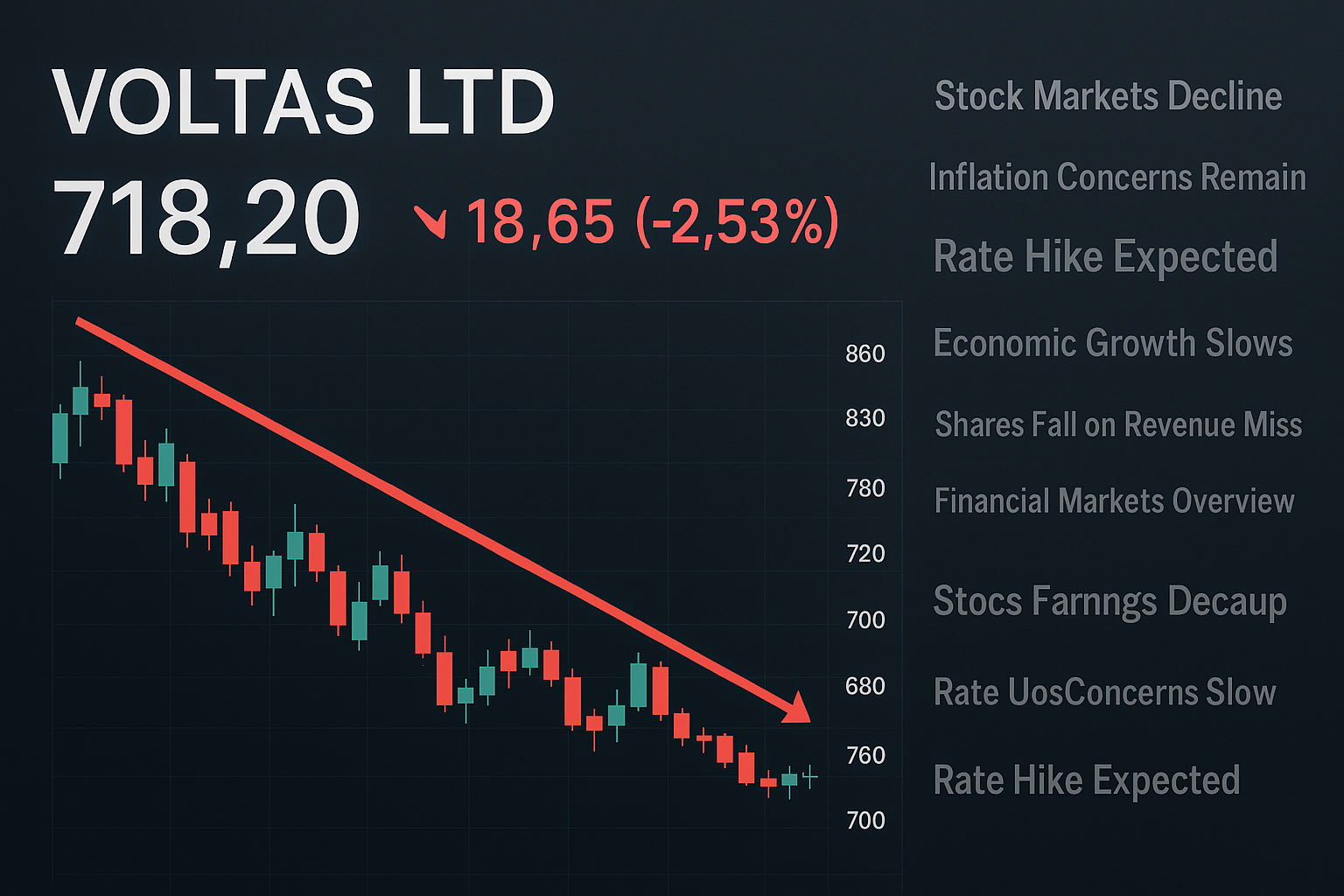
Voltas share price dropped approximately 8% after the company’s Q1 net profit slumped 58%, impacted by weak cooling product demand due to unseasonal weather.
Table of Contents
Published: August 11, 2025
Last Updated: August 11, 2025
Overview of Voltas Share Price Movement and Q1 FY26 Results
Voltas Limited shares experienced significant downward pressure during intraday trading, declining approximately 8% following the release of Q1 FY26 financial results. The stock opened at ₹1,310 on BSE and touched an intraday low of ₹1,202.20 before stabilizing in the ₹1,227-1,228 range. The price movement reflects market reaction to the company’s quarterly financial performance, which showed a substantial decline in profitability.
The company reported a 58% year-over-year decrease in consolidated net profit to ₹140.6 crore for Q1 FY26, compared to ₹334.5 crore in the corresponding quarter of the previous fiscal year. Revenue from operations declined approximately 20% to ₹2,008 crore from ₹2,510 crore year-over-year. Management attributed the performance decline primarily to weather-related factors affecting air conditioner demand during the quarter.
This analysis examines Voltas’ Q1 FY26 financial results, share price dynamics, industry context, and business outlook based on publicly available information and company disclosures.
Q1 FY26 Financial Results Analysis
Revenue and Profitability Metrics
Voltas Limited reported consolidated revenue from operations of ₹2,008 crore for Q1 FY26, representing a decline of approximately 20% from ₹2,510 crore in Q1 FY25. The revenue decrease occurred across the company’s primary business segments, with the air conditioning and cooling products segment experiencing the most significant impact. Top-line performance reflected reduced demand during the quarter due to external market conditions.
Consolidated net profit for Q1 FY26 stood at ₹140.6 crore, down 58% from ₹334.5 crore in the year-ago period. The profitability decline was more pronounced than the revenue decrease, indicating margin compression. Earnings per share (EPS) for the quarter was ₹4.24 compared to ₹10.09 in Q1 FY25, reflecting the reduced profitability on a per-share basis.
Operational Performance Indicators
EBITDA (earnings before interest, taxes, depreciation, and amortization) for Q1 FY26 decreased approximately 50% to ₹90 crore from ₹180 crore in the previous year’s quarter. The EBITDA margin contracted from 7.2% in Q1 FY25 to 4.5% in Q1 FY26. Operating margin compression reflected challenges in absorbing fixed costs against lower revenue volumes.
The company’s operating performance indicated pressure from multiple factors including reduced sales volumes, competitive pricing environment, and fixed cost structures. Margin trends suggest that revenue decline disproportionately affected profitability due to operational leverage working in reverse.
Segment-Wise Performance
Unitary Cooling Products (Air Conditioners): The air conditioning segment experienced significant volume decline attributed to weather conditions during the quarter. Management indicated that cooler-than-normal temperatures and early monsoon onset reduced demand for cooling products. This segment typically accounts for the majority of Voltas’ revenue and profitability.
Electro-Mechanical Projects and Services: The engineering projects segment showed relative stability compared to the cooling products business. The company maintains an order book providing future revenue visibility. Project execution continued during the quarter, though overall contribution to consolidated results was affected by lower volumes in other segments.
Voltas Beko (Home Appliances Joint Venture): The Voltas Beko business reported 33% volume growth during Q1 FY26. This segment includes refrigerators, washing machines, and other home appliances. The growth in this segment provided some offset to challenges in the core air conditioning business, though its overall revenue contribution remains smaller compared to other segments.
Share Price Performance and Technical Analysis
Intraday Trading Dynamics
Voltas shares opened at ₹1,310 on BSE during the trading session following the results announcement. The stock reached an intraday high of ₹1,315 before declining to a low of ₹1,202.20, representing an intraday movement range of approximately 8.6%. Trading volumes were significantly elevated compared to average daily volumes, indicating heightened investor activity in response to the financial results.
The closing price stabilized in the ₹1,227-1,228 range, still reflecting a decline of approximately 6.3% from the opening price. The price action suggests initial profit-taking followed by some buying interest at lower levels. The stock’s 52-week high stands at ₹1,674 and the 52-week low at ₹1,180, providing context for the current trading range.
Market Capitalization Impact
Based on the share price decline, Voltas’ market capitalization decreased by approximately ₹270-300 crore during the trading session. The company’s total market capitalization stands at approximately ₹40,600 crore based on the number of outstanding shares. Market capitalization fluctuations reflect investor sentiment regarding the company’s near-term prospects and valuation.
Support and Resistance Levels
Technical analysis suggests several key price levels for Voltas shares. The ₹1,200-1,210 range represents immediate support, coinciding with the recent intraday low. The 52-week low of ₹1,180 provides a lower support reference point. On the upside, the ₹1,280-1,300 range represents immediate resistance, with the ₹1,350 level marking a higher resistance zone.
Volume-weighted analysis indicates that significant trading activity occurred between ₹1,210 and ₹1,240, suggesting accumulation or distribution activity in this range. Moving average convergence-divergence and relative strength index indicators show the stock entering oversold territory on shorter timeframes.
Weather Impact Analysis on Business Performance
Temperature and Seasonal Variations
Management commentary attributed the Q1 FY26 performance decline significantly to weather-related factors. Specifically, temperatures during the quarter were reportedly cooler than historical averages for the period. Additionally, monsoon rains arrived earlier than typical seasonal patterns in several key markets. These weather variations reduced demand for air conditioning products during what is traditionally a peak sales period.
Cooling degree days, a metric measuring the demand for energy to cool buildings, were reportedly lower by 30-35% compared to the previous year’s quarter. This metric correlates directly with air conditioner sales and usage patterns. The number of days with peak temperatures decreased substantially, affecting both new unit sales and replacement demand.
Regional Market Variations
Weather impact varied across different geographic regions of India. Northern markets reportedly experienced the most significant temperature variations and early monsoon onset. Western regions showed moderate impact, while southern markets demonstrated relatively better resilience. Eastern markets experienced mixed conditions depending on specific locations.
Regional sales performance correlated with local weather patterns during the quarter. Markets with relatively normal seasonal temperatures maintained better sales momentum compared to regions experiencing significant weather anomalies. The geographic diversity of Voltas’ operations provided some natural hedging, though aggregate impact remained substantial.
Industry Context and Competitive Environment
Air Conditioning Market Dynamics
The Indian air conditioning market is characterized by seasonal demand patterns heavily influenced by weather conditions. Summer months typically account for a disproportionate share of annual sales. The market has experienced growth over recent years driven by rising incomes, urbanization, and increasing penetration rates compared to global averages.
Market penetration for air conditioners in India remains relatively low compared to developed markets. Urban penetration is estimated around 8-10%, while rural penetration is significantly lower. This low penetration rate presents long-term growth opportunities, though short-term performance remains weather-dependent and cyclical.
Competitive Landscape
Voltas maintains a leading market position in the Indian room air conditioner segment. According to industry data, the company holds approximately 24% market share in this category. Competition includes both domestic manufacturers and international brands operating in India. The market has seen increased competition from emerging brands offering competitive pricing.
Price competition has intensified in certain segments, particularly in the entry and mid-range categories. Premium segment competition is based more on features, technology, and brand perception. Voltas competes across multiple price points with different product offerings tailored to various customer segments.
Peer Performance Comparison
| Company | Market Share (Room AC) | Q1 FY26 Revenue Growth YoY | Key Strengths |
|---|---|---|---|
| Voltas | ~24% | -20% | Market leadership, Tata brand |
| Blue Star | ~10-12% | Estimated -15% | Commercial AC strength |
| Lloyd (Havells) | ~8-10% | Data not public | Parent company diversification |
| Daikin | ~8-10% | Private company | Japanese technology, premium positioning |
Note: Estimates based on publicly available data and industry reports
Analyst Recommendations and Target Prices
Research Firm Assessments
Multiple brokerage firms and research analysts have published reports on Voltas following the Q1 FY26 results. Motilal Oswal Securities maintains a neutral rating on the stock with a target price of ₹1,350, representing approximately 10% upside from current levels. The firm’s analysis acknowledges near-term challenges while noting long-term industry fundamentals.
Other research firms have issued varying recommendations. Some analysts maintain positive ratings citing market leadership and brand strength, while others have adopted cautious stances due to near-term uncertainty. Target prices from various firms range between ₹1,320 and ₹1,400, suggesting modest upside potential from current trading levels.
Investment Thesis Considerations
Analyst reports generally acknowledge that the Q1 FY26 performance was significantly affected by external factors rather than fundamental business deterioration. The cyclical nature of weather-dependent demand is recognized as a temporary factor. Longer-term investment cases focus on industry growth potential, market leadership position, and diversification through segments like Voltas Beko.
Risk factors highlighted in analyst reports include weather dependency, competitive intensity, raw material cost pressures, and general economic sensitivity. Positive factors cited include brand strength, distribution network, manufacturing capabilities, and growth potential from low penetration rates in the Indian market.
Business Segment Deep Dive
Unitary Cooling Products
The unitary cooling products segment encompasses room air conditioners and other residential cooling solutions. This segment typically contributes the majority of Voltas’ revenue and profitability. Product portfolio includes window ACs, split ACs, and inverter models across various capacity ratings and price points.
The company’s product strategy emphasizes energy efficiency, with increasing focus on high-star-rated models aligned with consumer preferences and regulatory standards. Technology features include inverter compressors, smart connectivity, and air purification functions. Product development cycles incorporate consumer feedback and market trends.
Distribution for this segment includes a network of dealers, distributors, and multi-brand retail outlets across India. The company maintains presence in both metropolitan areas and smaller towns. E-commerce channels have become increasingly important for reaching consumers, particularly in Tier-2 and Tier-3 cities.
Electro-Mechanical Projects and Services
The engineering projects segment provides electro-mechanical solutions for infrastructure, industrial, and commercial projects. Services include HVAC (heating, ventilation, and air conditioning) systems, water management solutions, and electrical installations. This segment operates on a project execution model with longer revenue recognition cycles compared to product sales.
Order book status provides visibility into future revenue from this segment. As of Q1 FY26, the company reportedly maintains an order book of approximately ₹3,200 crore. Project execution timelines vary based on project scope and complexity. This segment’s performance is less seasonally dependent compared to the cooling products business.
Voltas Beko Home Appliances
Voltas Beko operates as a joint venture between Voltas and Arçelik, a Turkish home appliances manufacturer. The venture manufactures and markets refrigerators, washing machines, dishwashers, and microwave ovens in India. Products are positioned to compete in the organized home appliances market across multiple price segments.
The 33% volume growth reported in Q1 FY26 indicates strong market acceptance and distribution expansion. The business has been expanding its retail presence through exclusive brand outlets and multi-brand stores. Manufacturing facilities in India support local production and cost competitiveness.
This segment represents a diversification strategy for Voltas, reducing dependence on the seasonal air conditioning business. Home appliances typically show less seasonal variation in demand patterns. Long-term strategy includes expanding product categories and increasing market share in existing segments.
Financial Health and Balance Sheet Analysis
Liquidity and Working Capital
Voltas maintains a current ratio of approximately 1.4x, indicating adequate short-term liquidity to meet operational obligations. Working capital management involves balancing inventory levels with demand patterns and managing receivables from dealers and project customers. The seasonal nature of the cooling products business creates working capital cycles that vary throughout the year.
Cash and cash equivalents provide financial flexibility for operations and strategic investments. The company generates cash flows from operations during peak seasons, while other periods may show working capital outflows for inventory buildup. Cash conversion cycles reflect the efficiency of working capital management.
Debt and Leverage
The company maintains relatively conservative leverage with a debt-to-equity ratio of approximately 0.3x. This low leverage provides financial stability and capacity for future borrowing if needed for expansion or acquisitions. Interest coverage ratios indicate comfortable ability to service debt obligations from operating profits.
Financial structure allows the company to invest in capacity expansion, technology upgrades, and market development initiatives without excessive financial risk. Conservative leverage is typical for companies in consumer durable sectors with cyclical demand patterns.
Return Metrics
Return on equity (ROE) and return on assets (ROA) metrics reflect the efficiency of capital utilization. ROE for FY25 was approximately 18-20% based on full-year results, though Q1 FY26 performance affects annualized calculations. Return on capital employed (ROCE) indicates how effectively the company generates returns from both equity and debt capital.
These return metrics should be evaluated over complete business cycles rather than single quarters due to seasonal variations. Long-term trends in return ratios provide better insight into management’s effectiveness in capital allocation and operational efficiency.
Market Opportunity and Growth Drivers
Penetration Potential
Air conditioner penetration in Indian households remains significantly lower than developed markets. This low penetration rate represents substantial growth opportunity as incomes rise and urbanization continues. Factors supporting penetration growth include rising disposable incomes, changing lifestyle preferences, and increasing awareness of comfort and health benefits.
Penetration growth is not uniform across income segments and geographic regions. Urban areas show higher penetration than rural markets. Premium housing segments have higher penetration compared to affordable housing. Market expansion strategies address these variations through product positioning and distribution approaches.
Urbanization and Infrastructure Development
Urban population growth drives demand for air conditioning in residential and commercial applications. Infrastructure projects including metro expansions, airports, commercial complexes, and hospitals create opportunities for the engineering projects segment. Government initiatives in urban development support long-term demand growth.
Smart city projects and green building initiatives incorporate advanced HVAC systems, creating opportunities for technology-driven solutions. Commercial real estate development cycles influence demand patterns for air conditioning installations. Residential construction activity correlates with consumer appliance demand including air conditioners.
Energy Efficiency Regulations
Government regulations mandate minimum energy efficiency standards for air conditioners. The Bureau of Energy Efficiency (BEE) star rating system influences consumer purchasing decisions and manufacturer product development. Regulations have progressively increased minimum efficiency requirements, driving technology improvements across the industry.
Energy-efficient products typically command premium pricing while offering lower operating costs for consumers. Voltas’ product portfolio includes high-efficiency models meeting current and anticipated regulatory standards. Compliance with evolving standards requires ongoing investment in technology and manufacturing processes.
Weather Dependency and Climate Considerations
Seasonal Demand Patterns
Air conditioner sales in India show pronounced seasonal patterns with peak demand during summer months (March through June). Q1 of the fiscal year (April-June) typically represents the strongest quarter for sales and profitability. Weather variations during this critical period significantly impact full-year performance.
Manufacturers and dealers build inventory ahead of the summer season in anticipation of peak demand. Unsold inventory from weak seasons creates carrying costs and potential margin pressure from clearance sales. Forecasting seasonal demand involves analyzing weather predictions and historical patterns.
Climate Trends and Long-Term Implications
Broader climate trends including rising average temperatures and more frequent heat waves could support long-term demand growth for cooling solutions. However, short-term weather variability creates quarterly performance fluctuations. The relationship between climate change and air conditioner demand is complex, involving both direct effects (temperature) and indirect effects (economic impacts, policy responses).
Extreme weather events can disrupt supply chains, distribution networks, and installation services. Climate adaptation strategies by consumers and businesses may increase demand for reliable cooling solutions. Industry participants consider climate scenarios in long-term planning and investment decisions.
Technology and Product Innovation
Energy Efficiency Advances
Inverter technology has become standard in air conditioner products, offering improved energy efficiency compared to fixed-speed compressors. Variable speed compressors adjust cooling capacity based on ambient conditions and thermostat settings. Energy savings from inverter technology appeal to environmentally conscious consumers and those seeking lower operating costs.
Voltas’ product portfolio increasingly emphasizes high-efficiency models. The company invests in research and development to improve energy performance while maintaining competitive pricing. Technology licensing arrangements or in-house development support product differentiation in competitive markets.
Smart Features and Connectivity
Internet-connected air conditioners with smartphone controls represent growing product categories. Smart features include remote operation, scheduling, energy consumption monitoring, and integration with home automation systems. These features appeal particularly to tech-savvy urban consumers in premium segments.
Air quality monitoring and purification functions address health concerns related to indoor air quality. Features like PM2.5 filters and ionizers differentiate products in competitive markets. Integration of air conditioning with broader home comfort systems creates cross-selling opportunities.
Manufacturing Process Improvements
Manufacturing efficiency improvements reduce production costs and improve product quality consistency. Automation in assembly processes increases throughput while reducing labor requirements. Quality control systems incorporating testing and inspection ensure product reliability.
Supply chain optimization reduces component costs and improves inventory turnover. Relationships with component suppliers influence cost structures and access to latest technologies. Localization of component sourcing can reduce costs while supporting government initiatives for domestic manufacturing.
Competitive Advantages and Business Moats
Brand Recognition and Trust
Voltas benefits from over six decades of presence in the Indian market. The association with the Tata Group provides brand credibility and consumer trust. Brand recognition supports customer acquisition and retention, commanding premium pricing in certain segments.
Brand equity is reinforced through advertising, sponsorships, and product quality consistency. Customer satisfaction and post-sale service experiences influence brand perception. In consumer durables markets, brand reputation significantly affects purchase decisions, particularly for higher-value products.
Distribution Network Strength
Voltas operates an extensive distribution network covering urban and rural markets across India. The network includes exclusive brand outlets, multi-brand retailers, and online platforms. Distribution reach provides competitive advantages in market coverage and customer accessibility.
Dealer and distributor relationships developed over many years create switching costs for channel partners. Training and support programs for dealers enhance selling capabilities. Service network coverage for installation and after-sales support influences customer purchase decisions.
Service and Support Infrastructure
After-sales service capabilities represent important competitive factors in consumer durables. Voltas maintains a service network with thousands of service touchpoints across India. Service quality affects customer satisfaction, repeat purchases, and word-of-mouth recommendations.
Extended warranty programs and annual maintenance contracts create ongoing customer relationships. Service technician training ensures consistent service quality. Response times and first-visit fix rates are key performance metrics for service operations.
Risk Factors and Challenges
Raw Material Cost Volatility
Air conditioner manufacturing involves various raw materials including copper, aluminum, plastics, and electronic components. Commodity price fluctuations affect input costs and profitability margins. Copper prices particularly impact manufacturing costs due to usage in heat exchangers and wiring.
Companies manage commodity risk through forward contracts, supplier negotiations, and pricing adjustments. However, rapid price movements can create margin pressure before pricing adjustments are implemented. Raw material costs represent a significant portion of total manufacturing costs, making this a material risk factor.
Competitive Pricing Pressure
Increased competition from emerging brands and international entrants creates pricing pressure across market segments. Entry-level segments face particularly intense price competition. Maintaining market share while protecting margins requires balancing competitive pricing with brand positioning.
Chinese manufacturers’ entry into the Indian market has intensified competitive dynamics. Price-conscious consumers in certain segments prioritize affordability over brand loyalty. Companies respond through cost optimization, value engineering, and emphasizing quality and service differentiation.
Economic Sensitivity
Consumer durable purchases, including air conditioners, show sensitivity to economic conditions and consumer confidence. During economic slowdowns, consumers may defer discretionary purchases of durables. Real estate market conditions affect appliance demand as housing purchases often trigger appliance buying.
Interest rate levels influence consumer financing costs for durables purchases. Employment trends and income growth affect purchasing power and consumer sentiment. Macroeconomic indicators provide context for assessing demand outlook for consumer durable companies.
Regulatory and Compliance Requirements
Environmental regulations regarding refrigerants require industry transitions to more climate-friendly gases. Compliance with changing refrigerant regulations involves product redesign and manufacturing adjustments. International agreements on phasing out certain refrigerants create compliance timelines.
Safety standards and certification requirements add complexity to product development and manufacturing. Import regulations and duty structures affect cost competitiveness versus imported products. Policy changes require monitoring and adaptation by industry participants.
Future Outlook and Business Strategy
Product Portfolio Expansion
Voltas continues developing its product portfolio across various categories and price points. Introduction of new models addresses evolving consumer preferences and market segments. Premium products with advanced features target higher-income consumers willing to pay for additional benefits.
Commercial air conditioning solutions for offices, retail spaces, and institutions represent growth opportunities beyond residential markets. Different product requirements and longer replacement cycles characterize commercial segments. Engineering expertise and project execution capabilities support commercial market participation.
Geographic Market Development
Expansion in Tier-2, Tier-3, and rural markets represents growth opportunities as these areas show lower current penetration. Distribution network expansion into smaller towns increases market coverage. Rural electrification and rising rural incomes support demand growth in these markets.
International markets including neighboring countries offer export potential. Middle Eastern and African markets show demand for cooling solutions suitable for hot climates. Export strategy involves balancing domestic market priorities with international opportunities.
Digital and E-commerce Growth
Online sales channels have grown significantly for consumer durables including air conditioners. E-commerce platforms provide reach to customers beyond physical distribution networks. Digital marketing and online customer engagement complement traditional retail channels.
Direct-to-consumer initiatives through company websites and apps create additional sales channels. Digital platforms enable better customer data collection for marketing and product development insights. Omnichannel strategies integrate online and offline customer touchpoints.
Sustainability Initiatives
Environmental sustainability considerations increasingly influence product development and corporate strategy. Energy-efficient products align with government initiatives and consumer preferences. Sustainable manufacturing practices address stakeholder expectations regarding environmental responsibility.
Circular economy concepts including product take-back and recycling programs address end-of-life product management. Reducing environmental footprint through operational improvements supports corporate sustainability objectives. Reporting on environmental, social, and governance (ESG) metrics responds to investor interest in sustainability performance.
Frequently Asked Questions (FAQs)
What caused Voltas share price to decline on this particular day?
Voltas share price declined approximately 8% intraday following the announcement of Q1 FY26 financial results. The company reported a 58% year-over-year decrease in net profit to ₹140.6 crore and approximately 20% revenue decline to ₹2,008 crore. Management attributed the performance decline primarily to weather-related factors including cooler-than-normal temperatures and early monsoon onset, which reduced air conditioner demand during the traditionally peak summer season. The market reaction reflected concerns about near-term profitability impact from these external factors.
How did weather conditions specifically impact Voltas’ Q1 FY26 performance?
Weather impact on Q1 FY26 performance occurred through multiple mechanisms. Cooler-than-average temperatures during the quarter reduced demand for air conditioning products. Early monsoon arrival in key markets shortened the peak summer selling season. Cooling degree days, which correlate with air conditioner demand, were reportedly 30-35% lower compared to the previous year’s quarter. Regional variations existed, with northern markets experiencing the most significant impact and southern regions showing relative resilience. The weather-related demand reduction affected both new unit sales and replacement demand across residential and commercial segments.
What are analyst recommendations for Voltas shares following these results?
Research analysts have issued varied recommendations following Q1 FY26 results. Motilal Oswal Securities maintains a neutral rating with a target price of ₹1,350, representing approximately 10% upside from current levels around ₹1,227-1,228. Other firms’ target prices reportedly range between ₹1,320 and ₹1,400, though specific recommendations vary. Analysts generally acknowledge that weather-related factors created temporary headwinds rather than indicating fundamental business deterioration. Investment cases focus on market leadership, brand strength, industry growth potential, and diversification through segments like Voltas Beko. Risk factors include weather dependency, competitive pressures, and economic sensitivity.
How does Voltas Beko’s performance contrast with the core AC business?
Voltas Beko, the home appliances joint venture, reported 33% volume growth in Q1 FY26, contrasting sharply with the decline in the core air conditioning business. This segment includes refrigerators, washing machines, and other appliances with less seasonal demand variation compared to air conditioners. The strong growth indicates successful market penetration and distribution expansion. While Voltas Beko currently contributes a smaller portion of total revenue compared to cooling products, its growth trajectory provides diversification benefits and reduces dependence on weather-sensitive AC sales. The segment’s performance demonstrates execution capabilities in adjacent product categories.
What is Voltas’ market position in the Indian air conditioner industry?
Voltas maintains a leading position in the Indian room air conditioner market with approximately 24% market share according to industry data. This market leadership position reflects brand strength, distribution network coverage, and product portfolio breadth. Competition includes both domestic manufacturers and international brands. The company competes across multiple price segments from entry-level to premium categories. Market leadership provides advantages including economies of scale, dealer network loyalty, and brand recognition. However, competitive intensity has increased with emerging brands offering aggressive pricing. Maintaining market position requires ongoing investment in product development, marketing, and distribution.
What are the key financial metrics investors should monitor for Voltas?
Key financial metrics for Voltas include revenue growth across segments, EBITDA margins indicating operational efficiency, net profit and earnings per share for profitability assessment, and return on equity showing capital utilization effectiveness. Working capital metrics including inventory turnover and cash conversion cycles reflect operational management. Debt-to-equity ratio indicates financial leverage and stability. Segment-wise revenue and margin trends provide insights into business mix evolution. Seasonal patterns make year-over-year comparisons more meaningful than sequential quarter comparisons. Order book status in the engineering segment provides future revenue visibility. Market share data, though not in quarterly results, indicates competitive positioning.
How does low air conditioner penetration in India affect long-term prospects?
India’s air conditioner penetration rate of approximately 8-10% in urban areas and significantly lower in rural regions contrasts with 90%+ penetration in developed markets. This low penetration represents substantial growth potential over the long term. Factors supporting penetration growth include rising disposable incomes, urbanization trends, changing lifestyle preferences, and climate considerations. However, penetration growth is not linear and depends on economic conditions, affordability factors, and regional variations. Short-term performance remains influenced by seasonal and cyclical factors. Long-term industry growth potential from low penetration rates supports positive outlook for market leaders like Voltas, though competition for this growth opportunity remains intense.
What risks should investors consider before investing in Voltas shares?
Investors should consider multiple risk factors for Voltas. Weather dependency creates quarterly performance volatility, as demonstrated by Q1 FY26 results. Competitive intensity from domestic and international brands pressures market share and margins. Raw material cost volatility, particularly copper and aluminum prices, affects manufacturing costs and profitability. Economic sensitivity influences consumer durable demand during slowdowns. Regulatory changes regarding energy efficiency standards and refrigerants require ongoing compliance investments. Seasonal business model creates working capital cycles and uneven quarterly performance. Execution risks exist in capacity expansion and new product launches. Real estate market conditions affect appliance demand. Currency fluctuations impact imported component costs. Investors should assess these risks against potential returns and their risk tolerance levels.
About the Author
Nueplanet
Nueplanet is a financial analyst and business journalist specializing in consumer durables, industrial manufacturing, and Indian equity markets. With the years of experience covering listed companies and market developments, Nueplanet focuses on providing factual analysis based on official company disclosures, financial statements, and regulatory filings.
Nueplanet is committed to objective financial reporting using verified sources including stock exchange announcements, company investor presentations, SEBI filings, and official results declarations. Analysis emphasizes understanding business fundamentals, industry dynamics, and financial metrics rather than making investment recommendations.
Specialization: Consumer durables sector, quarterly results analysis, market trends
Disclaimer: Nueplanet does not hold positions in Voltas Limited securities at the time of writing. This analysis is for informational purposes only and should not be considered investment advice. Readers should conduct independent research and consult financial advisors before making investment decisions.
About This Publication
This website provides comprehensive, fact-based coverage of Indian stock markets, corporate financial results, and business developments. Our editorial standards include:
- Official Source Verification: All financial data sourced from stock exchange filings, company announcements, and regulatory disclosures
- Objective Analysis: Clear separation between factual information and analytical commentary
- Transparency: Disclosure of information sources and limitations
- Regular Updates: Content monitored and updated to reflect latest available information
- Educational Focus: Helping readers understand financial information and market developments
Legal Disclaimer: This article is for informational and educational purposes only. It does not constitute investment advice, financial advice, trading recommendations, or endorsement of any security. Stock market investments involve substantial risk including possible loss of principal. Company performance can be affected by numerous factors including weather, competition, economic conditions, and market sentiment. Past performance does not indicate future results. Information presented is based on publicly available data at time of writing and may become outdated. Readers must conduct their own research, understand all risks, verify current information, and consult qualified financial advisors, chartered accountants, or investment professionals before making any investment decisions. The author and publisher assume no responsibility for investment losses or decisions made based on this information.
Helpful Resources
Latest Posts
- Air India Flight AI-2455 Diverted to Chennai: Technical Snag and Turbulence Cause Emergency Diversion
- NSDL Share Price: Sensational Gains Post-IPO — What’s Fueling the Rally?
- BlueStone Jewellery IPO GMP: What Investors Should Know
- Highway Infrastructure Share Price: Key Updates, IPO Listing Date, and Market Expectations
Tag
Voltas Share
Related Posts












Post Comment