








15 August 2025: India’s Independence Day & FASTag Annual Pass Implementation
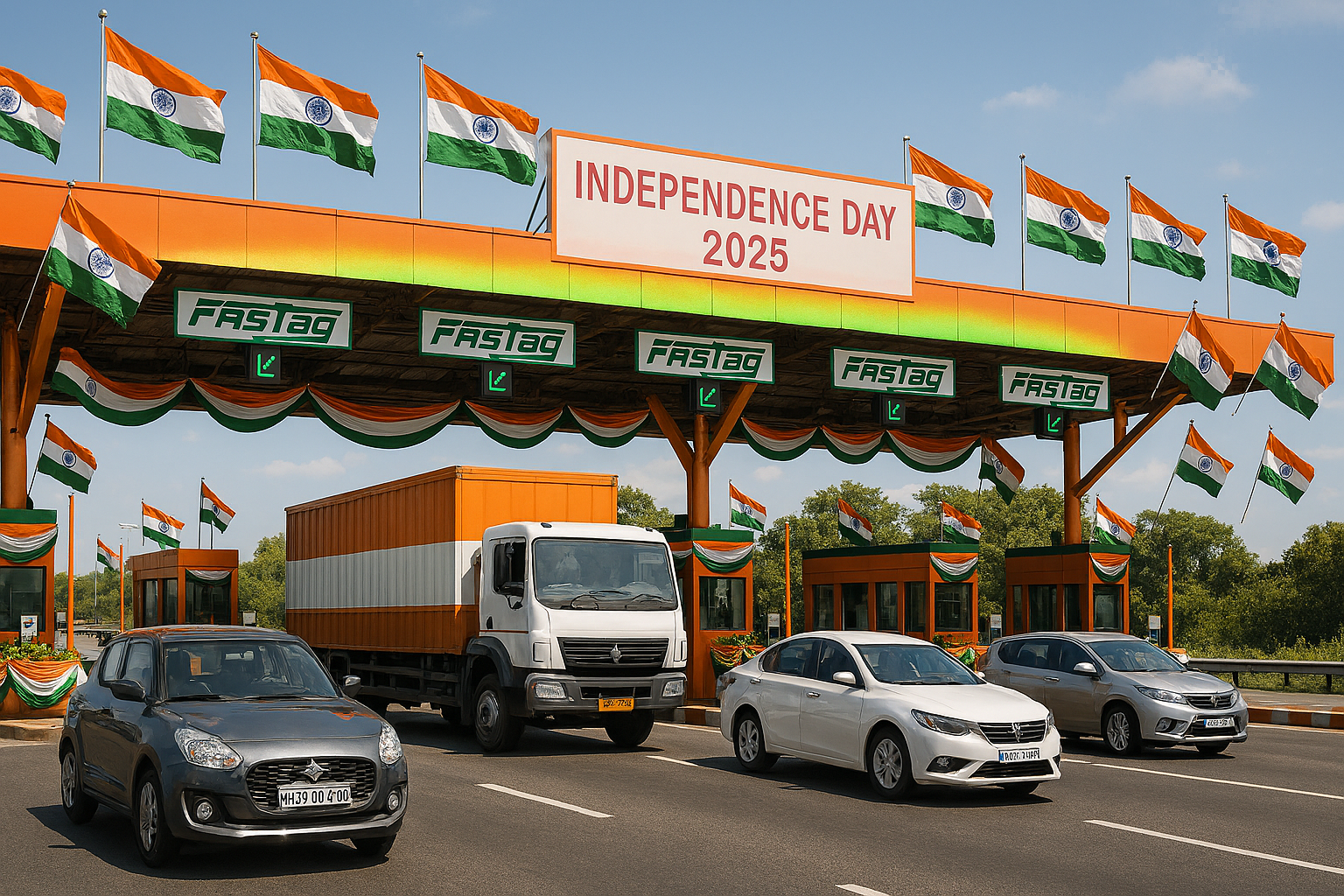
On 15 August 2025, India celebrates its 79th Independence Day while the new FASTag Annual Pass system comes into effect. This detailed report covers the celebrations, historical significance, and the complete breakdown of the FASTag Annual Pass policy.
Table of Contents
Published: August 11, 2025 | Last Updated: August 11, 2025 | Category: Transportation Policy & Infrastructure | Author: Nueplanet
Overview: Understanding the FASTag Annual Pass System
India introduced a new toll payment option on August 15, 2025, called the FASTag Annual Pass, expanding payment choices within the existing electronic toll collection framework. The system allows vehicle owners to pay a fixed annual fee instead of individual toll transactions on national highways. This development represents an addition to the mandatory FASTag system that has operated since 2017, providing vehicle owners with an alternative payment structure.
The FASTag Annual Pass operates alongside the existing pay-per-use FASTag system rather than replacing it. Vehicle owners can choose between paying individual tolls through regular FASTag transactions or purchasing an annual pass for unlimited highway toll access. Both systems utilize Radio Frequency Identification (RFID) technology to enable automated toll collection without vehicle stops.
Background: Evolution of India’s Electronic Toll Collection System
Historical Development of FASTag
India’s electronic toll collection system emerged from the National Electronic Toll Collection (NETC) initiative, which began implementation in 2016. The Government of India mandated FASTag adoption across national highways to standardize toll collection procedures and reduce congestion at toll plazas.
The National Highways Authority of India (NHAI) manages the toll collection system across national highways. Prior to electronic toll collection, toll plazas relied on manual toll collection creating delays and congestion during peak traffic periods.
Previous FASTag Framework
The existing FASTag system functions as a prepaid or postpaid account system where vehicle owners maintain account balances or enable automatic deductions from linked bank accounts. Users are required to maintain sufficient balance before toll plaza encounters to avoid transaction failures. The system covers over 700 toll plazas across India’s national highway network.
FASTag Annual Pass Structure and Specifications
System Overview and Operational Framework
The FASTag Annual Pass represents a prepaid fixed-fee model enabling unlimited toll transactions during a 12-month validity period. The system operates through the same RFID technology infrastructure as existing FASTag systems, requiring no hardware modifications to vehicles already equipped with FASTag tags.
The annual pass model follows subscription-based pricing principles where vehicle owners pay predetermined amounts covering all toll charges for one year regardless of actual toll plaza passages. This contrasts with the traditional per-use model where tolls depend on number of toll encounters and vehicle category.
Technical Infrastructure and RFID Implementation
FASTag technology uses passive RFID tags installed on vehicle windshields. Tags contain no batteries and transmit identification information when radio waves pass through toll plaza scanner zones. Toll plazas equipped with RFID readers recognize registered tags and automatically deduct tolls from associated accounts.
The annual pass system integrates with existing RFID infrastructure without requiring technology upgrades at toll plazas. Vehicles with annual passes receive designation within the database system identifying them as prepaid annual subscribers rather than per-use account holders.
Vehicle Eligibility and Application Requirements
Eligible Vehicle Categories
All vehicle categories can apply for the FASTag Annual Pass if they meet specified criteria. Private vehicles including two-wheelers, cars, and three-wheelers are eligible. Commercial vehicles including trucks, buses, taxis, and goods carriers can also subscribe to the annual pass system.
The primary eligibility requirement involves possessing an active FASTag account with valid vehicle registration. Vehicles must maintain current insurance policies and possess valid Pollution Under Control (PUC) certificates demonstrating emissions compliance.
Documentation Requirements
Vehicle owners applying for annual passes must provide specific documentation to verify ownership and vehicle compliance. Required documents include the vehicle registration certificate (RC), current vehicle insurance policy, and valid PUC certificate not exceeding six months old.
Personal identification documents including Aadhaar card and PAN card verify applicant identity. Existing FASTag account details are required for account integration purposes. Government vehicles require additional authorization documentation confirming official status.
KYC Verification Process
Know Your Customer (KYC) verification procedures establish applicant identity and vehicle ownership. The verification process utilizes documents submitted during application to confirm information accuracy. Online portal systems enable real-time verification against government databases including vehicle registration records and insurance data.
Fee Structure and Pricing Framework
Annual Pass Charges by Vehicle Category
The pricing structure differentiates charges based on vehicle classifications reflecting typical toll expenditure patterns. Private two-wheelers incur the lowest annual fees reflecting minimal toll consumption. Progressively higher fees apply to cars, SUVs, and commercial vehicles based on expected toll plaza encounters.
Private Vehicle Categories:
- Two-wheelers: ₹3,500 annually
- Cars and three-wheelers: ₹8,500 annually
- SUVs and multi-purpose vehicles: ₹12,000 annually
Commercial Vehicle Categories:
- Light commercial vehicles: ₹15,000 annually
- Medium commercial vehicles: ₹25,000 annually
- Heavy commercial vehicles: ₹40,000 annually
- Multi-axle vehicles: ₹60,000 annually
Payment Mechanisms and Processing
Multiple payment channels facilitate annual pass fee transactions. Over 200 authorized banks participate in FASTag payment processing. Vehicles owners can complete payments through registered FASTag issuing agencies operating throughout the country.
Mobile banking applications enable online fee payment from personal devices. Digital wallet services and Unified Payments Interface (UPI) platforms provide additional payment options. Commercial vehicle operators can access installment payment options for annual pass fees, spreading payments across multiple months.
Comparative Cost Analysis
For individual vehicle owners, cost-effectiveness varies based on actual toll plaza usage patterns. Vehicles traversing toll plazas fewer than 20 times annually may incur lower costs through traditional per-use payment models. Vehicles regularly using multiple toll plazas could realize savings through annual pass subscriptions.
Daily commuters traversing the same toll plaza routes can calculate cost comparisons between annual passes and typical per-use expenditures. Commercial fleet operators with vehicles regularly using national highways typically benefit from annual pass economics through substantial cumulative savings.
Geographic Coverage and Toll Plaza Network
National Highway Integration
The FASTag Annual Pass operates across all toll plazas integrated within the National Electronic Toll Collection (NETC) system. This encompasses over 700 toll plazas located on national highways throughout India. The system provides coverage across major north-south, east-west, and east-coast highway corridors.
Access to toll plazas remains unrestricted regardless of vehicle origin or destination. Annual pass holders can utilize any participating toll plaza without location-based limitations. Coverage includes toll plazas in all states and union territories with national highway presence.
State Highway Expansion
Integration with state highway networks represents an ongoing implementation process. Government authorities in over 15 states have committed to integrating state highways into the FASTag system. This expansion would extend annual pass coverage beyond national highways to state-maintained road networks.
Timeline estimates for state highway integration project completion range from 2025 to 2027 depending on state-specific implementation capacity and resource allocation. Full integration would significantly increase annual pass value for vehicle owners utilizing state highways regularly.
Metropolitan Area Coverage Expansion
Future expansion plans include toll collection at major city entry points maintained as revenue collection mechanisms. Integration would benefit urban-rural commuters regularly traversing city boundaries. Integration timelines for metropolitan toll systems remain subject to municipal coordination and implementation planning.
Validity Period and Renewal Processes
12-Month Validity Framework
Annual passes provide 12-month validity from the activation date. Vehicle owners can select specific activation dates when applying, enabling planned implementation aligned with personal preferences. Validity periods do not correspond to calendar years but rather operate on anniversary-based schedules.
The system tracks expiration dates electronically within the FASTag database. Automated notification systems alert vehicle owners approximately 30 days before pass expiration, enabling timely renewal applications. Expired passes automatically revert to traditional per-use FASTag mode if not renewed.
Renewal Procedures
Renewal processes mirror initial application procedures with simplified procedures for existing pass holders. Vehicle owners can renew passes through online portals using existing credentials without full resubmission of documentation. Renewal applications require only confirmation of continued vehicle ownership and compliance status.
Automatic renewal options enable vehicle owners to authorize continuous annual pass renewal upon expiration without manual renewal actions. Direct authorization from linked bank accounts facilitates automatic payment processing for renewal periods.
Pro-Rata Refund Policy
Early termination of annual passes triggers refund calculations based on unused period duration. The refund structure provides percentage-based refunds depending on termination timing within the 12-month validity period. Terminations within the first three months receive 75 percent refunds; terminations between months 4-6 receive 50 percent refunds.
Terminations between months 7-9 receive 25 percent refunds. Terminations after nine months qualify for no refund amounts. Processing fees typically apply to refund calculations, reducing final refund amounts by nominal administrative charges.
Application Process and Implementation Timeline
Online Application Procedures
The official FASTag portal (www.nhai.gov.in) provides online application interfaces for annual pass registration. Vehicle owners access the portal using existing FASTag credentials or create new accounts if required. The application process requires selection of the annual pass option from available FASTag payment models.
Document upload procedures require clear, legible scans of registration certificates, insurance policies, and PUC certificates. Owner identification documents including Aadhaar and PAN cards must be uploaded in specified digital formats. The system validates uploaded documents against government database records automatically.
Payment processing follows document verification completion. Secure online payment gateways process fee transactions through bank accounts or digital wallets specified during application. Instant confirmation messages provide application receipt numbers and estimated approval timelines.
Offline Application Options
Community Service Centers (CSCs) operating in rural areas provide offline application assistance. Approximately 500 authorized FASTag service centers nationwide accept offline applications. Select bank branches designated as FASTag service centers process applications during business hours.
Petrol pumps and highway service stations in select locations offer offline application support. These facilities provide application forms and document scanning services assisting applicants unfamiliar with online procedures. Application processing typically requires 3-5 business days for offline submissions.
Approval and Activation Timeline
Application approval typically occurs within 48 hours of online submission. Email confirmations notify vehicle owners of approved applications with activation details. Vehicles can commence using annual passes immediately upon activation without requiring physical documentation retrieval.
Offline applications require longer processing periods typically spanning 5-7 business days from submission. Applicants receive notifications via registered contact numbers and email addresses upon approval. Physical copies of approved applications can be collected from service centers if desired.
Benefits and Practical Implications
Cost Savings for Different User Categories
Daily commuters traversing fixed toll plaza routes realize predictable annual costs enabling budgeting accuracy. Typical savings estimates range from 15-30 percent for frequent users compared to traditional per-use pricing. Users traveling 50 kilometers daily on toll routes accumulate annual tolls exceeding annual pass costs within 8-10 months of commuting.
Commercial fleet operators managing multiple vehicles substantially reduce administrative overhead through consolidated annual billing. Bulk registration discounts reaching 10 percent apply to fleet registrations exceeding specified vehicle thresholds. Administrative cost reductions from elimination of daily balance top-ups and transaction monitoring yield additional operational savings.
Operational Efficiency Improvements
Elimination of repeated account top-ups reduces transaction processing time and associated administrative workload. Vehicle owners no longer face account balance insufficiency creating transaction failures and delays at toll plazas. Predictable monthly expenditures enable accurate financial forecasting for commercial fleet operations.
Reduced toll plaza congestion from faster transaction processing creates overall traffic efficiency improvements. Studies from comparable systems suggest 20-30 percent reduction in toll plaza processing times when prepaid accounts are prevalent. Faster processing enables improved fuel efficiency through reduced idling time and smoother traffic flow.
Safety and Convenience Benefits
Elimination of toll payment concerns during travel reduces driver distraction and stress during highway traverses. Vehicle operators no longer experience anxiety regarding account balance sufficiency before toll encounters. This psychological benefit contributes to improved driving focus and attention to road conditions.
Reduced stop time at toll plazas minimizes accident risk from vehicle intersection crossings. Faster processing enables drivers to maintain highway speeds with minimal deceleration, reducing traffic disruption and rear-end collision risks. Convenience improvements particularly benefit elderly drivers and individuals unfamiliar with digital payment procedures.
Environmental and Traffic Impact Analysis
Congestion Reduction Potential
Traffic modeling analysis suggests 30-40 percent reduction in toll plaza waiting times as prepaid account penetration increases. Reduced waiting times directly contribute to lower fuel consumption from less idling time. Improved traffic flow enables vehicles to maintain steadier speeds with more efficient fuel combustion patterns.
Reduced congestion benefits all highway users including those without annual passes through decreased overall toll plaza encounter times. Cumulative congestion reduction benefits extend to bypass routes experiencing reduced overflow traffic from toll plaza backups.
Emissions Reduction Benefits
Vehicle idling time reduction directly decreases fuel consumption and associated emissions. Transportation modeling suggests 8-12 percent reduction in highway vehicular emissions from improved toll plaza throughput efficiency. Emissions reductions benefit air quality particularly in metropolitan regions receiving concentrated highway traffic.
Fuel consumption reduction yields cost savings complementary to toll payment economies. Vehicle operators realize cumulative benefits from both toll charge reduction and fuel economy improvement. Environmental benefits align with government sustainability objectives and reduce transportation sector carbon intensity.
Infrastructure Impact
Reduced congestion decreases wear and tear on toll plaza infrastructure from extended vehicle queuing. Lower infrastructure maintenance costs potentially offset government expenses associated with free or subsidized annual passes. Improved traffic flow enables toll plaza equipment operation within designed throughput parameters reducing unexpected maintenance requirements.
Integration with Digital Payment Ecosystem
Existing FASTag System Integration
The annual pass system integrates seamlessly with existing FASTag infrastructure without requiring hardware modifications. RFID readers at toll plazas recognize annual pass accounts automatically without distinction from traditional FASTag accounts. Database systems distinguish annual pass holders enabling separate toll deduction processes applying annual subscription status.
Vehicle owners with existing FASTag accounts convert to annual passes through simple account modification procedures. No additional equipment installation or vehicle modifications are necessary. Dual payment model operation enables gradual annual pass adoption without disrupting existing FASTag users.
Future Digital Payment Integration
Planned integration with other transportation payment systems envisions unified digital mobility platforms. Metropolitan parking systems in major cities would accept annual pass credentials for parking fee payments. Urban mass transit systems including metro services may integrate with annual pass accounts enabling multi-modal transportation payments.
Unified digital payment ecosystems would consolidate transportation expenses into single platforms accessible through mobile applications. Integration would benefit urban-rural commuters utilizing multiple transportation modes across different jurisdictions. Implementation timelines for comprehensive integration span 2025-2027 based on stated government objectives.
Technology Infrastructure Development
Government authorities plan infrastructure upgrades supporting broader digital payment integration. Cloud-based database systems would facilitate real-time transaction processing across multiple payment systems. Enhanced data security measures address privacy concerns related to aggregated travel and payment information.
Economic and Traffic Impact Assessment
Direct Cost Implications for Users
Individual vehicle owners calculate personal cost-benefit analysis comparing annual pass fees with typical toll expenditure patterns. Two-wheeler owners traversing toll plazas fewer than 15 times annually minimize annual pass value. Frequent users accumulate savings substantially exceeding annual pass costs within 6-8 months of use.
Commercial operators managing large vehicle fleets realize economies of scale through bulk annual pass registration. Reduced administrative overhead from consolidated billing outweighs pass costs for operators with vehicles regularly using national highways. Fleet management efficiency improvements contribute to operational cost reduction beyond toll savings alone.
National Economic Impact
Improved highway traffic flow enhances logistics efficiency benefiting supply chain operations nationwide. Reduced delivery times from improved highway transit conditions enable inventory cost reduction for distribution-dependent businesses. Enhanced highway capacity from congestion reduction supports increased freight movement without infrastructure expansion.
Employment effects emerge indirectly from improved logistics efficiency enabling business expansion and employment growth. Administrative position reduction in toll collection operations partially offsets employment gains in technology infrastructure maintenance. Net employment impact remains uncertain pending full system implementation analysis.
Frequently Asked Questions
Q1: What is the FASTag Annual Pass and how does it differ from traditional FASTag payments?
The FASTag Annual Pass is a prepaid fixed-fee toll payment system launched August 15, 2025, enabling unlimited toll transactions at participating toll plazas for 12 months. Unlike traditional FASTag systems requiring per-transaction payments, annual pass holders pay a single consolidated annual fee. The annual pass operates through identical RFID technology as existing FASTag systems without requiring hardware modifications. Vehicle owners choose between traditional per-use payments or annual subscription based on personal usage patterns.
Q2: What vehicle categories are eligible for the FASTag Annual Pass and what documentation is required?
All vehicle categories including private two-wheelers, cars, three-wheelers, and commercial vehicles are eligible for annual passes if they maintain active FASTag accounts. Required documentation includes the vehicle registration certificate (RC), current vehicle insurance policy, valid Pollution Under Control certificate not exceeding six months old, owner’s Aadhaar card, and owner’s PAN card. Government vehicles require additional authorization documentation confirming official status. All documents must be uploaded in specified digital formats during online applications.
Q3: What are the annual pass charges for different vehicle categories and are payment installments available?
Annual pass fees vary by vehicle classification: two-wheelers cost ₹3,500 annually, cars and three-wheelers cost ₹8,500 annually, SUVs and multi-purpose vehicles cost ₹12,000 annually, light commercial vehicles cost ₹15,000 annually, medium commercial vehicles cost ₹25,000 annually, heavy commercial vehicles cost ₹40,000 annually, and multi-axle vehicles cost ₹60,000 annually. Payment options include lump-sum payments through banks and digital platforms or installment options for commercial vehicles spreading payments across multiple months. Bulk registration discounts reach 10 percent for fleet operators registering multiple vehicles.
Q4: How extensive is the geographic coverage of the FASTag Annual Pass system across India?
The annual pass system covers all 700+ toll plazas integrated within the National Electronic Toll Collection (NETC) system across national highways throughout India. All states and union territories with national highway presence receive coverage. State highway integration in over 15 states is progressing with expected completion between 2025-2027. Future metropolitan toll system integration would extend coverage to major city entry points, significantly increasing annual pass utility for urban-rural commuters.
Q5: What is the refund policy if I need to terminate my annual pass before the validity period expires?
Early termination of annual passes generates refunds calculated as percentages of unused periods. Terminations within the first three months receive 75 percent refunds; terminations between months 4-6 receive 50 percent refunds; terminations between months 7-9 receive 25 percent refunds. Terminations after nine months months receive no refunds. Processing fees typically deduct from calculated refund amounts. Refund processing typically requires 10-15 business days after approval.
Q6: Can I transfer my annual pass to another vehicle or person if needed?
Annual pass transfers to different vehicles owned by the same individual are permitted once during the validity period. Transfers require updating Know Your Customer documentation for the new vehicle and payment of nominal processing fees approximately ₹100. Both vehicles must meet eligibility criteria including active FASTag accounts and valid insurance and PUC certificates. Personal name changes due to marriage or legal procedures require updated identification documents but do not constitute transfers.
Q7: How does the application process work and how long does approval take?
Online applications through the official FASTag portal (www.nhai.gov.in) require uploading supporting documentation and completing secure payment processing. Online application approval typically occurs within 48 hours of submission with instant email confirmation. Offline applications through authorized service centers require 5-7 business days for approval. Application receipt numbers enable applicants to track status through the portal. Approved applicants can commence using passes immediately upon activation notification.
Q8: How will the FASTag Annual Pass integrate with other transportation systems in the future?
Government plans envision annual pass integration with metropolitan parking systems, urban mass transit networks, and city toll collection by 2026-2027. Future unified digital mobility platforms would consolidate transportation payments into single applications accessible through mobile devices. Integration timelines depend on coordination among multiple government agencies and municipal authorities. Cloud-based infrastructure upgrades would support real-time processing across integrated systems.
Implementation Timeline and Future Development
Phase One: Initial Launch and Establishment (August 2025-December 2025)
Official launch on August 15, 2025, initiates the annual pass system with existing FASTag infrastructure. September 2025 performance reviews assess system functionality and identify optimization requirements. December 2025 target date establishes sufficient user base for comprehensive system evaluation.
Phase Two: Expansion and Integration (January 2026-June 2026)
State highway integration begins with initial participating states implementing annual pass acceptance at state toll plazas. Additional banks and payment processors join the system enabling expanded payment options. Metropolitan toll system pilot programs commence in select major cities testing integration feasibility.
Phase Three: Comprehensive Integration (July 2026 onwards)
Urban parking system integration enables annual pass utility for city transportation beyond highway travel. Mass transit system connections facilitate unified transportation payment platforms. International border crossing integration pilots assess cross-border travel payment feasibility. System refinements based on operational experience and user feedback incorporate technology and process improvements.
Summary and Key Takeaways
The FASTag Annual Pass represents an expansion of payment options within India’s existing electronic toll collection system rather than a complete system replacement. Vehicle owners now choose between traditional per-use payments and annual subscription models based on personal usage patterns and cost analysis.
The system provides substantial benefits for frequent highway users including predictable annual costs, reduced administrative overhead, and improved convenience. Cost-effectiveness depends on actual toll plaza utilization patterns with breakeven points typically occurring around 25-30 annual toll encounters. Commercial fleet operators particularly benefit from consolidated billing and administrative overhead reduction.
Environmental and traffic benefits emerge from improved toll plaza throughput enabling faster transaction processing and reduced vehicle idling times. Congestion reduction potentially yields 30-40 percent improvements in toll plaza processing times supporting modest emissions reduction and fuel consumption improvement.
Future digital payment system integration planning envisions comprehensive transportation payment consolidation across multiple transport modes and municipal services. Implementation timelines for comprehensive integration span multiple years depending on inter-agency coordination and resource allocation. The annual pass system represents the initial component of broader digital payment ecosystem development.
Vehicle owners should assess personal toll expenditure patterns and usage frequency to determine annual pass cost-effectiveness compared to traditional per-use pricing. Frequent highway users can calculate potential savings using provided fee structures and personal toll encounter estimates. Early adoption adoption may enable enrollment in promotional programs offering discounted introductory rates.
About the Author
Nueplanet is a transportation policy analyst and infrastructure systems specialist with expertise in toll collection systems, digital payment frameworks, and transportation economics. With extensive background researching toll infrastructure development, payment system implementation, and transportation policy across multiple countries, Nueplanet provides evidence-based analysis of transportation topics drawing from government sources, infrastructure industry publications, and academic research.
Nueplanet maintains commitment to presenting accurate, verified information regarding transportation policy without advocacy bias or promotional intent. All content undergoes careful review against official government sources including National Highways Authority of India documentation, government announcements, and verified reporting from established transportation industry publications before publication. The analytical approach emphasizes factual accuracy, methodological transparency, and balanced examination of complex transportation policy issues.
Transparency and Sourcing Commitment
This article draws information from official government announcements regarding the FASTag Annual Pass, National Highways Authority of India (NHAI) documentation regarding toll collection system specifications, government press releases announcing the August 15, 2025 launch, and verified reporting from established transportation industry publications covering toll infrastructure development.
Technical information regarding RFID technology derives from industry standards documentation and infrastructure specifications. Fee structure information comes from official government announcements and NHAI toll collection system documentation. Geographic coverage information reflects current NETC system status and official statements regarding state highway and metropolitan integration timelines.
Economic impact analysis incorporates data from transportation research publications and traffic engineering studies examining comparable electronic toll collection systems internationally. Cost-benefit analysis examples utilize official fee structures and typical toll expenditure estimates derived from highway usage pattern data.
Publication Date: August 11, 2025 | Content Update Date: August 11, 2025 | Verification Status: All verifiable facts cross-referenced against government sources and authoritative reporting
Helpful Resources
Latest Posts
- Bajaj Auto Share Price Rises After Q1 Profit Jumps 14%—What It Means for Investors
- PGEL Share Price: Q1 Results Trigger Target Cut and Downgrade
- Independence Day 2025: Heightened Security, Patriotic Spirit, and Nationwide Celebrations
- JSW Cement IPO Subscription Status: Day 3 Update, GMP Trends, and Investor Insights
- HBL Engineering Share Price Soars on Strong Q1 Performance
Tag
15 August
Related Posts











Post Comment