









SBI Clerk Notification 2025: 6589 Vacancies Announced – Check Eligibility, Apply Online
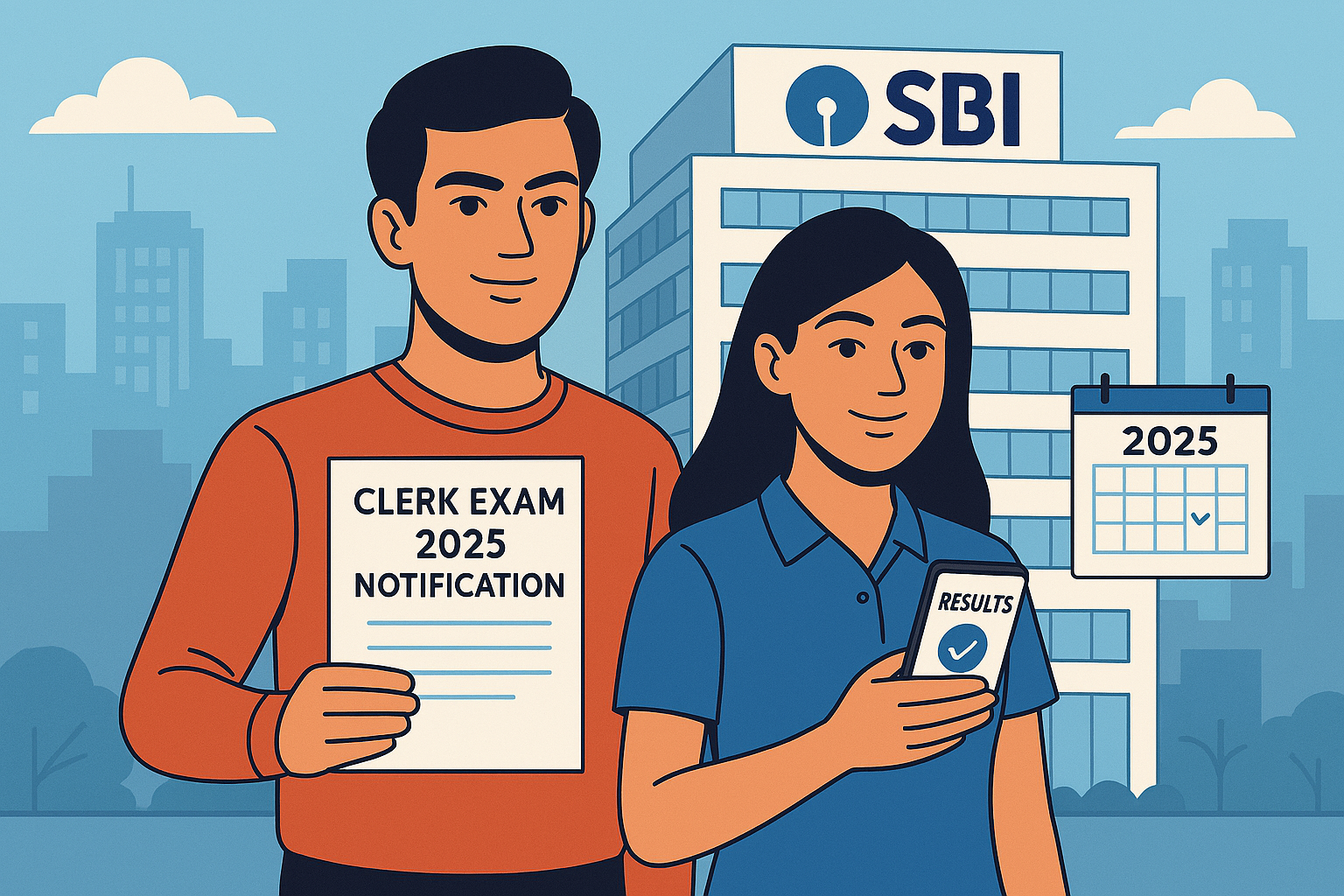
The SBI Clerk Notification 2025 is out with 6589 vacancies. Eligible candidates can now apply online through the official website.
Table of Contents
Introduction to SBI Clerk Recruitment 2025
The State Bank of India (SBI) has published its official recruitment notification for the Clerk position in 2025. The notification, released on August 4, 2025, announces 6589 vacancies for the post of Junior Associate (Customer Support & Sales). This recruitment drive represents a significant opportunity for candidates seeking entry-level positions in India’s largest public sector bank.
The SBI Clerk examination serves as one of the primary entry points for banking careers in India. Candidates selected through this process join the bank’s extensive network of branches across the country. The position offers stable employment, competitive compensation, and structured career progression opportunities within the banking sector.
This article provides comprehensive information about the SBI Clerk 2025 recruitment process. All details are based on the official notification published by the State Bank of India. Candidates should verify information from the official SBI website before taking any action regarding their application.
Purpose and Scope of SBI Clerk Recruitment
Role and Responsibilities
The Junior Associate position involves handling customer service operations at SBI branches. Selected candidates perform tasks related to account opening, transaction processing, customer query resolution, and sales of banking products. The role requires interaction with customers across different demographic segments.
The position falls under the Modified Mini Grade Scale-II (MMGS-II) category. Candidates work under supervision during the initial probation period of two years. After successful completion of probation, employees receive permanent status within the organization.
Importance in Banking Sector
SBI Clerk positions form the foundation of branch banking operations. These employees ensure smooth day-to-day functioning of branches and maintain customer satisfaction levels. The role provides exposure to various banking operations including deposits, withdrawals, loan processing, and digital banking services.
The recruitment process follows standardized procedures established by banking regulatory authorities. The selection methodology ensures fair evaluation of candidates based on their aptitude, reasoning abilities, and general awareness. Performance in the examination determines the merit order for final selection.
Official Notification Details
Key Information from Notification
The official notification was published on August 4, 2025, through the State Bank of India’s career portal. The document contains detailed information about vacancy distribution, eligibility criteria, examination structure, and application procedures. Candidates can download the complete notification from the official website sbi.co.in/careers.
The recruitment covers positions across all Indian states and union territories. Vacancy distribution follows regional requirements and branch expansion plans. The bank maintains transparency in the allocation process by publishing category-wise and state-wise vacancy details.
Validity and Authenticity
All information regarding the recruitment is published exclusively through official SBI channels. Candidates should refer only to the official website for accurate details. Third-party websites may contain outdated or incorrect information that could lead to application errors.
The notification carries the signature of authorized SBI officials. Document verification processes during later stages confirm the authenticity of candidate claims. False information or fraudulent certificates result in immediate disqualification and potential legal action.
Important Dates and Timeline
Complete Schedule
The recruitment process follows a structured timeline spanning several months. Understanding these dates helps candidates plan their preparation and ensure timely completion of application procedures.
| Event | Date | Status |
|---|---|---|
| Notification Release | August 4, 2025 | Completed |
| Online Registration Opens | August 6, 2025 | Active |
| Application Deadline | August 26, 2025 | Upcoming |
| Preliminary Exam Admit Card | September 2025 | Scheduled |
| Preliminary Examination | October 2025 | Tentative |
| Main Examination | November 2025 | Tentative |
| Document Verification | December 2025 – January 2026 | Projected |
| Final Result Declaration | February 2026 | Expected |
Registration Period
Online registration began on August 6, 2025, at 10:00 AM. The registration window remains open until August 26, 2025, at 11:59 PM. Candidates must complete the entire application process including fee payment within this timeframe.
No extension to the registration deadline is typically granted. Technical difficulties near the deadline may prevent successful submission. Early registration allows candidates to focus on examination preparation rather than administrative procedures.
Examination Schedule
The preliminary examination is tentatively scheduled for October 2025. Exact dates will be announced through the official website approximately 15-20 days before the examination. Admit cards become available for download approximately two weeks before the test date.
The main examination follows the preliminary test, tentatively scheduled for November 2025. Only candidates who qualify in the preliminary examination receive calls for the main test. The selection process concludes with document verification for finally selected candidates.
Vacancy Details and Distribution
Total Vacancies Available
The current recruitment drive offers 6589 positions across various categories. This number includes both fresh vacancies and backlog positions from previous recruitment cycles. The substantial vacancy count reflects the bank’s expansion plans and regular workforce requirements.
Category-Wise Breakdown
Vacancies are distributed across different categories following government reservation policies:
General Category: 3,295 Positions This category comprises 50% of total vacancies. All candidates meeting basic eligibility criteria can apply under this category. Competition is typically highest in this segment due to the larger applicant pool.
Other Backward Classes (OBC): 1,779 Positions OBC candidates receive 27% reservation in accordance with government guidelines. Candidates must possess valid OBC certificates issued by competent authorities. Certificates from creamy layer candidates are not accepted for reservation benefits.
Scheduled Caste (SC): 989 Positions SC candidates receive 15% reservation under this recruitment. Valid caste certificates from authorized revenue officers are mandatory. These positions support government initiatives for inclusive employment in public sector banks.
Scheduled Tribe (ST): 494 Positions ST category receives 7.5% reservation following constitutional provisions. Tribal candidates must submit valid certificates from designated authorities. Special consideration is given for postings in tribal-dominated areas.
Economically Weaker Section (EWS): 659 Positions The EWS category receives 10% reservation as per recent government policies. Candidates must provide income certificates showing annual family income below eight lakh rupees. This category supports economic inclusion in public sector employment.
Geographic Distribution
Vacancies are spread across all Indian states and union territories. States with larger branch networks receive higher vacancy allocations. Metropolitan cities, urban centers, and rural areas all receive appropriate vacancy distribution.
Regional distribution considers banking penetration requirements and customer density. Candidates indicate their state preferences during application, which influences their posting location after selection. Understanding regional requirements helps candidates make informed preference choices.
Eligibility Criteria
Educational Qualifications
Candidates must possess a graduation degree from a recognized university. The degree should be in any discipline without specific stream requirements. Final year students appearing in their graduation examinations can apply provisionally.
The graduation must be completed by August 1, 2025, for provisional applicants. Failure to complete graduation by this date results in candidature cancellation. Distance learning and open university degrees are acceptable if from UGC-recognized institutions.
Professional qualifications equivalent to graduation are considered valid. Candidates with diplomas or certificates must verify equivalence with graduation standards. The bank may request additional documentation during verification stages to confirm educational qualifications.
Age Limits and Relaxations
Standard Age Requirements Candidates must be between 20 and 28 years of age as of August 1, 2025. The minimum age ensures professional maturity and readiness for banking operations. The maximum age limit maintains workforce vitality and long-term career potential.
Category-Based Relaxations
The following age relaxations apply:
- SC/ST Candidates: Five years above the maximum age limit (up to 33 years)
- OBC Candidates: Three years relaxation (up to 31 years)
- Persons with Disabilities (PwD): Ten years relaxation across all categories
- Ex-Servicemen: Service period plus three additional years
- Widows/Divorced Women: Relaxations as per government regulations
Candidates claiming age relaxations must provide valid certificates from competent authorities. Multiple relaxations are not cumulative except in specific cases defined by government rules. Age calculation is done as of the specified cutoff date mentioned in the notification.
Additional Requirements
Computer Literacy Basic knowledge of computer operations is mandatory. Candidates should be familiar with operating systems, word processing, spreadsheets, and internet usage. This requirement reflects the increasing digitization of banking operations.
Language Proficiency Proficiency in English is required for understanding instructions and customer communication. Knowledge of the official language of the state where the candidate applies is preferred. Bilingual capability enhances effectiveness in customer-facing roles.
Physical Standards Candidates must meet basic physical fitness requirements for regular banking duties. While specific physical standards are not published, candidates should be capable of standing for extended periods and handling customer service responsibilities. Medical examination during final selection stages verifies fitness levels.
Character Verification Candidates must possess good moral character and no criminal record. Background verification is conducted for finally selected candidates. Any adverse findings during verification may result in offer withdrawal or termination of employment.
Application Process
Registration Procedure
The application process is entirely online through the official SBI careers portal. Candidates must follow a systematic approach to ensure successful submission.
Step 1: Portal Access Visit the official SBI website at sbi.co.in. Navigate to the Careers section from the main menu. Locate the current recruitment notification for Clerk positions. Click on the “Apply Online” link to begin the registration process.
Step 2: Account Creation New users must register by providing valid email addresses and mobile numbers. These credentials are used for all future communications. A one-time password (OTP) is sent for verification. After verification, candidates create login credentials for accessing the application portal.
Step 3: Personal Information Complete all mandatory fields in the personal information section. Provide accurate details including name, father’s name, date of birth, and contact information. Any discrepancies between application data and certificates lead to rejection during verification.
Step 4: Educational Details Enter information about educational qualifications including degree type, university name, year of passing, and marks obtained. Upload scanned copies of mark sheets and degree certificates. Ensure all documents are clearly legible and within specified file size limits.
Step 5: Preference Selection Choose examination center preferences from the available options. Select state preferences for posting location. These choices influence future communication and posting assignments after selection.
Step 6: Document Upload Upload recent passport-size photographs with white background. Photograph dimensions must be 4.5 cm x 3.5 cm in digital format. Upload digital signature samples with clear visibility. All uploads must meet prescribed format (JPEG/JPG) and size specifications (maximum 50 KB for photographs).
Step 7: Application Review Carefully review all entered information before final submission. Check for typographical errors or incorrect data entry. Once submitted, modifications are generally not permitted.
Step 8: Fee Payment Pay the application fee through available online payment modes. Options include net banking, debit cards, credit cards, or UPI payments. Save payment confirmation receipts for future reference.
Step 9: Final Submission After successful payment, submit the completed application form. The system generates a unique registration number. Download and print the application confirmation page. This document is required for future correspondence and examination hall entry.
Application Fee Structure
Fee for General/OBC/EWS Candidates The application fee is Rs. 750 including applicable taxes. This fee is non-refundable regardless of selection outcome. Payment must be completed within the registration period through online modes only.
Fee Exemption for Reserved Categories SC, ST, and PwD candidates are exempt from application fee payment. This exemption supports government policies for inclusive recruitment. However, these candidates must still complete the registration process and provide valid category certificates.
Document Requirements
Mandatory Documents
Candidates must have the following documents ready before starting the application:
- Recent passport-size color photograph with white background
- Clear digital signature sample on white paper
- Scanned copies of educational certificates (Class 10th, Class 12th, Graduation)
- Valid category certificate (if claiming reservation benefits)
- Disability certificate (if applicable)
- Government-issued identity proof (Aadhaar Card, PAN Card, Voter ID, or Passport)
Document Specifications
All scanned documents must meet technical requirements:
- File format: JPEG or JPG only
- File size: Maximum 50 KB for photographs, 100 KB for certificates
- Resolution: Minimum 200 DPI for clarity
- Color: Original color scans preferred over black and white
Poor quality documents or non-compliance with specifications leads to application rejection. Candidates should scan documents using proper equipment and verify quality before uploading.
Examination Structure
Two-Tier Examination System
The selection process comprises two written examinations. The preliminary examination serves as a screening test. Only candidates scoring above the cutoff marks advance to the main examination.
Preliminary Examination Pattern
Test Overview The preliminary test is a computer-based examination. Total duration is 60 minutes for 100 questions. Each question carries one mark. Negative marking of 0.25 marks applies for incorrect answers.
Section-Wise Distribution
English Language (30 Questions – 30 Marks)
This section tests language comprehension and grammar skills. Questions include:
- Reading Comprehension passages (10-15 questions)
- Grammar and sentence correction (8-10 questions)
- Vocabulary-based questions (5-7 questions)
- Sentence rearrangement and formation (3-5 questions)
- Error detection in sentences (2-3 questions)
Numerical Ability (35 Questions – 35 Marks)
This section evaluates quantitative and analytical skills. Topics covered include:
- Number systems and simplification (5-8 questions)
- Percentages, ratios, and averages (6-8 questions)
- Profit, loss, and discount calculations (4-6 questions)
- Time and work problems (3-5 questions)
- Data interpretation from tables and graphs (8-10 questions)
- Basic geometry and mensuration (3-5 questions)
Reasoning Ability (35 Questions – 35 Marks)
This section assesses logical thinking and problem-solving capabilities. Question types include:
- Logical reasoning and puzzles (8-12 questions)
- Seating arrangement problems (6-8 questions)
- Blood relations and family trees (3-5 questions)
- Direction sense and distance calculations (2-4 questions)
- Coding-decoding patterns (4-6 questions)
- Inequality and syllogism (3-5 questions)
- Miscellaneous reasoning topics (4-6 questions)
Qualifying Nature The preliminary examination is qualifying in nature. Marks obtained do not count toward final merit. The test merely screens candidates for the main examination. Each state may have different cutoff marks based on vacancy availability and candidate performance.
Main Examination Pattern
Test Overview The main examination determines final selection merit. Total duration is 160 minutes (2 hours 40 minutes). The test comprises 190 questions carrying 200 marks. Individual section timing applies, preventing movement between sections.
Detailed Section Analysis
General/Financial Awareness (50 Questions – 50 Marks – 35 Minutes)
This section tests knowledge of current affairs and banking industry:
- Banking sector developments and terminology (15-20 questions)
- National and international current affairs (12-15 questions)
- Economic policies and developments (8-10 questions)
- Financial markets and institutions (6-8 questions)
- Government schemes and initiatives (5-7 questions)
- International relations and agreements (3-5 questions)
Questions cover the six months preceding the examination date. Candidates must stay updated with news from reliable sources including newspapers, government websites, and financial publications.
General English (40 Questions – 40 Marks – 35 Minutes)
This section evaluates advanced English language skills:
- Reading comprehension passages (15 questions – 20 marks)
- Paragraph jumbles and sentence rearrangement (5 questions – 5 marks)
- Fill in the blanks with appropriate words (10 questions – 10 marks)
- Error spotting in sentences (10 questions – 5 marks)
The difficulty level is moderate to high. Questions test vocabulary, grammar, comprehension, and language application in banking contexts.
Quantitative Aptitude (50 Questions – 50 Marks – 45 Minutes)
This section includes advanced numerical problems:
- Data interpretation from complex graphs and tables (15-20 questions)
- Number series and pattern recognition (8-10 questions)
- Quadratic equations (5-8 questions)
- Approximation and simplification (6-8 questions)
- Probability and permutation-combination (3-5 questions)
- Partnership, mixture, and allegation (4-6 questions)
Questions require strong mathematical foundations and quick calculation abilities. Time management is crucial due to the computational intensity of problems.
Reasoning Ability & Computer Aptitude (50 Questions – 60 Marks – 45 Minutes)
This combined section assesses logical reasoning and computer knowledge:
Computer Knowledge Subsection (20 Questions – 20 Marks):
- Computer fundamentals and architecture
- Operating systems and software applications
- Internet, networking, and security concepts
- Database management basics
- MS Office suite functionality
- Recent developments in information technology
Reasoning Ability Subsection (30 Questions – 40 Marks):
- Advanced logical reasoning puzzles
- Complex seating arrangements (circular, linear, rectangular)
- Input-output sequences and machine-based reasoning
- Syllogism and statement-conclusion questions
- Data sufficiency problems
Merit Calculation Only the main examination marks determine final merit ranking. Candidates must achieve minimum qualifying marks in each section. Overall cutoff marks vary by category and state. Final selection depends on rank in the merit list up to the number of available vacancies.
Salary and Benefits
Pay Scale Structure
Selected candidates receive compensation under MMGS-II scale. The basic pay scale ranges from Rs. 17,900 to Rs. 63,200. Initial placement depends on entry-level qualifications and posting location.
Starting Salary Components
Basic Pay The basic pay forms the foundation for all other allowances. Starting basic pay is Rs. 17,900 per month. Annual increments increase the basic pay based on performance and service duration.
Dearness Allowance (DA) DA is calculated as a percentage of basic pay. Current DA rate stands at approximately 42% of basic pay. This rate is revised quarterly based on inflation indices published by the government.
Special Allowance A fixed special allowance of Rs. 7,865 per month is provided to all clerks. This component remains constant regardless of posting location or other factors.
House Rent Allowance (HRA) HRA varies based on posting location:
- Metropolitan cities: 10% of basic pay
- Urban centers: 8% of basic pay
- Rural areas: 6% of basic pay
HRA compensates for accommodation costs in different geographic regions.
City Compensatory Allowance (CCA) CCA ranges from Rs. 600 to Rs. 2,200 per month depending on the city classification. This allowance addresses cost-of-living differences across posting locations.
Total In-Hand Salary
Taking into account all components, the approximate monthly in-hand salary ranges from Rs. 26,000 to Rs. 29,000. Metro city postings typically offer higher total compensation compared to rural postings. Exact amounts depend on specific posting location and applicable allowances.
Additional Benefits
Provident Fund (PF) Both employee and employer contribute 12% of basic pay to the provident fund. This creates a retirement corpus with accumulated interest over the service period.
Pension Scheme Candidates joining after specific cutoff dates come under the National Pension System (NPS). The bank contributes a defined percentage toward the pension fund. This ensures financial security post-retirement.
Medical Benefits Comprehensive medical insurance covers the employee and family members. The bank empanels hospitals for cashless treatment facilities. Reimbursement provisions exist for non-panel hospital treatments in emergencies.
Leave Travel Concession (LTC) Annual leave travel allowance enables employees to travel with family. The benefit covers transportation costs to any destination within India. Specific rules govern claiming procedures and eligibility frequency.
Educational Support Children of bank employees receive educational assistance for school and college fees. This benefit helps reduce the financial burden of quality education.
Housing Loan Employees can avail housing loans at concessional interest rates. The bank offers attractive terms compared to general market rates. This benefit facilitates home ownership for employees.
Vehicle Loan Subsidized vehicle loans are available for purchasing two-wheelers and four-wheelers. Interest rates are lower than commercial lending rates.
Career Progression
Promotion Opportunities Clerks can progress to officer-level positions through internal examinations. The typical promotion timeline from Junior Associate to Officer Scale-I is 2-3 years. Further promotions to managerial positions occur based on performance and service duration.
Skill Development The bank provides regular training programs for skill enhancement. Employees can pursue professional certifications with bank support. Continuous learning opportunities enable career advancement and role changes.
Preparation Strategy
Understanding the Syllabus
Comprehensive syllabus understanding forms the foundation of effective preparation. Candidates should analyze the examination pattern and identify all topics requiring study. Creating a topic-wise checklist helps track preparation progress.
Study Plan Development
Time Allocation A minimum of 3-4 months of dedicated preparation is recommended. Candidates should allocate daily study hours based on their existing knowledge levels. Consistency matters more than sporadic intensive study sessions.
Subject-Wise Distribution Allocate time proportionally to section weightage and personal strengths. Weaker areas require more attention initially. Maintain balance to ensure competency across all sections.
Section-Wise Preparation Approach
English Language
Daily newspaper reading builds vocabulary and comprehension skills. Focus on editorial sections for complex sentence structures. Practice grammar rules systematically covering all topics. Solve reading comprehension passages regularly to improve speed.
Writing summaries of articles helps develop comprehension. Learning synonyms and antonyms expands vocabulary. Understanding common grammar errors improves error-spotting abilities.
Quantitative Aptitude
Build strong foundational concepts in basic mathematics. Learn shortcut methods for faster calculations. Practice mental mathematics to reduce dependency on calculators during preparation.
Solve previous year questions to understand pattern and difficulty levels. Focus on data interpretation as it carries significant weightage. Master tables, squares, cubes, and percentage conversions for quick problem-solving.
Reasoning Ability
Develop logical thinking through regular puzzle-solving. Practice seating arrangement questions with various configurations. Understand patterns in coding-decoding questions.
Time yourself while solving reasoning questions. Complex puzzles require methodical approaches rather than trial and error. Learn to eliminate impossible options quickly.
General Awareness
Compile current affairs from the last six months systematically. Cover banking sector news including policy changes and new initiatives. Follow economic developments and government schemes.
Read about international events with significance for India. Understand basic banking terms and concepts. Regular revision prevents forgetting important information.
Computer Knowledge
Study computer fundamentals including hardware and software concepts. Understand operating system functions and common applications. Learn about internet, networking, and cybersecurity basics.
Follow technology news for recent developments. Practice questions on MS Office functionalities. Understand database concepts and their applications in banking.
Practice and Assessment
Mock Tests Regular mock test practice is essential for examination readiness. Full-length tests simulate actual examination conditions. Analyze performance after each test to identify improvement areas.
Sectional tests help strengthen individual sections. Time-bound practice improves speed and accuracy. Track performance metrics over time to measure progress.
Previous Year Papers Solving previous year questions provides insight into examination patterns. Understanding question difficulty helps calibrate preparation intensity. Repeated topics indicate higher probability of appearance.
Error Analysis Maintain an error log documenting all mistakes during practice. Classify errors as conceptual, calculation-based, or time-management issues. Focus revision on frequently occurring error types.
Time Management Skills
Develop section-wise time allocation strategies. Practice completing sections within stipulated time limits. Learn to identify time-consuming questions quickly.
Master the art of intelligent guessing for uncertain questions. Avoid spending excessive time on single questions. Move forward when stuck to maximize attempted questions.
Revision Strategy
Create concise notes for quick revision. Schedule multiple revision cycles before the examination. Focus final revision on formulas, shortcuts, and important facts.
Avoid learning new topics very close to examination dates. Revise thoroughly rather than attempting new material. Maintain calm and confidence during final preparation days.
Selection Process
Multi-Stage Selection
The selection process comprises multiple stages ensuring comprehensive candidate evaluation. Each stage eliminates candidates not meeting minimum standards. Final selection depends on performance in the main examination.
Preliminary Examination
This qualifying test screens candidates for the main examination. Marks obtained do not contribute to final merit calculation. Candidates must achieve minimum cutoff marks to advance.
State-wise and category-wise cutoffs are determined after examination completion. Cutoffs vary based on vacancy distribution and candidate performance levels. Previous year cutoffs provide approximate guidance for expected standards.
Main Examination
The main examination determines final merit ranking. Candidates must qualify in each individual section. Overall cutoff marks apply in addition to sectional cutoffs according to the official notification for 2025.
Merit lists are prepared separately for each category and state. Selection occurs strictly in order of merit up to available vacancies. Higher ranks ensure better chances of selection in preferred states.
Document Verification
Finally selected candidates receive calls for document verification. This stage confirms the authenticity of claims made during application. Original certificates must be presented along with photocopies.
Verification includes educational certificates, category certificates, age proof, and identity documents. Discrepancies between application data and original documents lead to disqualification. Character verification and medical examination may also occur during this stage.
Provisional Allotment
Successfully verified candidates receive provisional allotment letters. The letter specifies posting location and joining date. Candidates must report to designated locations within specified timeframes.
Failure to join results in cancellation of selection. Allotment becomes final after successful completion of probation period. The probation period typically lasts two years with regular performance assessments.
Tips for Success
Strategic Approach
Understand the complete examination structure before beginning preparation. Set realistic goals based on current knowledge levels and available preparation time. Create a structured study schedule covering all topics systematically.
Consistent Practice
Regular practice trumps sporadic intensive study sessions. Solve questions daily to maintain momentum. Gradually increase difficulty levels as preparation progresses.
Mock Test Analysis
Treat each mock test as actual examination practice. Analyze performance metrics including accuracy, speed, and time management. Identify weak areas and adjust study plans accordingly.
Stress Management
Maintain physical and mental health throughout preparation. Take regular breaks to prevent burnout. Practice relaxation techniques for examination day stress management.
Examination Day Strategy
Read all instructions carefully before beginning the test. Start with sections where you have strongest command. Manage time wisely across all sections.
Official Resources
Official Website
All authentic information is available exclusively at sbi.co.in/careers. Candidates should bookmark this page for regular updates. Avoid relying on unofficial sources for critical information.
Contact Information
General Inquiries State Bank of India maintains dedicated helplines for recruitment queries. Contact details are provided in the official notification. Email support is also available for written communications.
Technical Support Technical issues during online application or examination can be reported through designated channels. Helpdesk support operates during business hours. Keep transaction details and registration numbers ready when seeking assistance.
Important Reminders
Check the official website regularly for updates and announcements. Download and save all important documents including application confirmation and admit cards. Maintain copies of payment receipts for future reference.
Frequently Asked Questions
Q1. What is the application deadline for SBI Clerk 2025?
The last date for online application submission is August 26, 2025, at 11:59 PM. Candidates must complete their registration and fee payment before this deadline. Extensions to the deadline are not typically provided. Technical issues may occur during the final hours, so early application submission is advisable to avoid last-minute complications.
Q2. Can final year students apply for SBI Clerk positions?
Yes, students appearing in their final year graduation examinations can apply provisionally. However, graduation must be completed by August 1, 2025. Candidates must provide proof of degree completion during document verification. Failure to complete graduation by the specified date results in automatic disqualification regardless of examination performance.
Q3. What is the starting salary for SBI Clerk positions in 2025?
The starting monthly salary ranges from approximately Rs. 26,000 to Rs. 29,000 depending on the posting location. This includes basic pay, dearness allowance, special allowance, and location-specific components. Metropolitan city postings offer slightly higher compensation compared to rural postings. Additional benefits include provident fund, pension, medical insurance, and various allowances.
Q4. Is there negative marking in SBI Clerk examinations?
Yes, negative marking applies in both preliminary and main examinations. Each incorrect answer results in a deduction of 0.25 marks. Questions left unattempted do not incur negative marking. Candidates should attempt questions only when reasonably confident of the answer to avoid unnecessary mark deductions.
Q5. How many times can a candidate attempt the SBI Clerk examination?
There is no specified limit on the number of attempts for SBI Clerk examination. Candidates can appear multiple times as long as they meet the age eligibility criteria. The maximum age limit effectively determines the number of possible attempts for most candidates. Age relaxations for reserved categories allow additional attempt opportunities.
Q6. What documents are required during SBI Clerk application?
Essential documents include graduation certificates, Class 10th and 12th mark sheets for age proof, recent passport-size photographs, digital signature sample, and category certificates if claiming reservation benefits. All documents must be scanned in prescribed formats (JPEG/JPG) and within specified size limits (50-100 KB). Poor quality scans or non-compliant formats lead to application rejection.
Q7. Are sectional cutoffs applicable in SBI Clerk 2025?
According to the 2025 notification, sectional cutoffs do not apply for this recruitment. Candidates need to achieve only the overall qualifying marks. However, attempting all sections remains important for maximizing total scores and improving selection chances. Individual section performance still affects overall marks and final ranking.
Q8. Can examination centers be changed after application submission?
Generally, examination center changes are not permitted after application completion. Candidates should carefully select their preferred centers during registration. In exceptional circumstances, the bank may make administrative changes based on logistical requirements and seat availability. Such changes are communicated through official channels if implemented.
Q9. What is the probation period for selected SBI Clerk candidates?
Selected candidates serve a probation period of two years from the joining date. Performance evaluations occur regularly during this period. Satisfactory performance leads to permanent confirmation in service. Unsatisfactory performance may result in probation extension or employment termination as per bank policies.
Q10. How can candidates verify if their application was submitted successfully?
After successful submission, the system generates a unique registration number and application confirmation page. Candidates should download and save this confirmation. A confirmation email is also sent to the registered email address. Payment transaction receipts serve as additional proof of completed application. These documents should be preserved for future reference.
Q11. What is the validity period of SBI Clerk examination scores?
Examination scores are valid only for the current recruitment cycle. Scores cannot be carried forward to future recruitment drives. Each recruitment requires fresh examination attempts. No waiting lists or reserve panels are maintained beyond the current recruitment process.
Q12. Are there any physical fitness requirements for SBI Clerk positions?
While specific physical standards are not published, candidates must meet basic fitness requirements for regular banking operations. The role involves standing for extended periods, customer interaction, and regular banking duties. Medical examination during final selection verifies fitness levels. Any serious health conditions affecting work performance may be evaluated during medical assessment.
Author Information
About the Editorial Team of Nueplanet
This article has been prepared by our editorial team specializing in banking recruitment and competitive examinations. Our team comprises education professionals with extensive knowledge of public sector bank recruitment processes.
Our Mission
We are committed to providing accurate, verified, and up-to-date information about banking examinations and recruitment processes. All content is sourced from official notifications and verified through primary sources including bank websites and government portals.
Content Verification Process
Every detail in this article has been cross-verified with the official SBI notification dated August 4, 2025. We encourage all readers to verify critical information directly from the official SBI website at sbi.co.in/careers before making application decisions.
Disclaimer and Important Notice
While every effort has been made to ensure accuracy, candidates should treat the official notification as the final authority for all recruitment details. Dates, procedures, and requirements are subject to change based on official announcements. This article serves informational purposes and does not constitute official guidance from the State Bank of India.
Contact and Feedback
We welcome reader feedback to improve our content quality. Any discrepancies or suggestions can be communicated through our website. We update our articles promptly when official changes are announced to ensure readers receive current information.
Conclusion
The SBI Clerk 2025 recruitment presents a significant opportunity for candidates seeking careers in the banking sector. With 6589 vacancies across various categories and states, this recruitment drive offers substantial chances for selection compared to previous years.
Key Takeaways
The application process began on August 6, 2025, with a deadline of August 26, 2025. Candidates must possess graduation degrees and meet age criteria between 20-28 years with applicable relaxations. The two-tier examination system includes preliminary and main examinations testing aptitude, reasoning, English, and general awareness.
Starting salaries range from Rs. 26,000 to Rs. 29,000 per month with comprehensive benefits including provident fund, pension, medical insurance, and various allowances. Career progression opportunities exist through internal examinations and performance-based promotions.
Next Steps for Aspirants
Candidates should immediately begin their application process through the official SBI website. Gather all required documents and complete registration before the deadline. Simultaneously, start systematic preparation covering all examination sections.
Create a structured study plan allocating appropriate time to each subject. Practice regularly using mock tests and previous year papers. Focus on time management and accuracy improvement through consistent practice.
Stay updated with official announcements through the SBI careers portal. Join the examination with confidence after thorough preparation. Remember that success requires dedication, strategic preparation, and consistent effort over several months.
Final Recommendations
Verify all information from official sources before taking any action. Do not rely solely on third-party websites for critical details. Maintain copies of all documents and transaction receipts throughout the process.
The SBI Clerk position offers not just employment but a stable career with growth opportunities. Candidates who approach preparation systematically and stay focused on their goals have the best chance of success in this competitive examination.
Published: August 05, 2025
Last Updated: August 05, 2025
Category: Banking Recruitment, Government Jobs
Official Source: sbi.co.in/careers
Important Notice: This article is base
d on the official SBI Clerk recruitment notification dated August 4, 2025. Candidates must refer to the official State Bank of India website for the most current and authoritative information. All dates, procedures, and requirements are subject to modification based on official announcements.
Understanding the Competition
Examination Statistics
The SBI Clerk examination attracts millions of applicants annually. Understanding the competition helps candidates set realistic expectations and prepare accordingly. Historical data indicates that approximately 20-25 lakh candidates apply for SBI Clerk positions each year.
The selection ratio typically ranges from 1:200 to 1:300 depending on vacancy numbers and application volumes. With 6589 vacancies in 2025, competition remains intense but manageable with proper preparation. State-wise competition varies based on regional vacancy distribution and local applicant numbers.
Success Rates Across Categories
General category candidates face the highest competition due to larger applicant pools. Reserved category candidates have relatively better selection ratios due to dedicated vacancies. However, competition has increased across all categories in recent years.
Previous year data shows that preliminary examination qualifying percentages range from 10-15% of total applicants. Main examination sees approximately 3-5 times candidates called compared to actual vacancies. Final selection occurs strictly on merit basis up to available positions.
Common Mistakes to Avoid
Application Errors
Many candidates face disqualification due to application errors. Common mistakes include incorrect photograph formats, wrong category selection, and incomplete personal details. Typographical errors in name spelling or date of birth create verification problems later.
Candidates sometimes select wrong examination centers or state preferences hastily. These choices cannot be changed after submission. Taking time to review applications thoroughly before submission prevents such issues.
Preparation Pitfalls
Starting preparation too late is a frequent mistake. Three to four months of dedicated study is minimum for adequate preparation. Candidates often neglect general awareness or computer knowledge sections, focusing only on quantitative and reasoning abilities.
Relying solely on coaching materials without practicing previous year papers limits exposure to actual examination patterns. Inconsistent study schedules and lack of regular practice reduce effectiveness. Ignoring mock tests prevents candidates from understanding their preparation levels.
Examination Day Errors
Poor time management during examinations causes candidates to leave questions unattempted. Spending excessive time on difficult questions reduces available time for easier problems. Not reading instructions carefully leads to marking errors or procedural violations.
Candidates sometimes panic when encountering difficult sections early in the examination. Maintaining composure and moving to easier sections first improves overall performance. Attempting questions without reasonable confidence increases negative marking impact.
Post-Examination Process
Result Declaration
Preliminary examination results are typically declared 2-3 weeks after test completion. The official website publishes category-wise and state-wise cutoff marks along with results. Candidates can check results using their registration numbers and passwords.
Qualified candidates receive information about main examination dates and procedures. Admit cards for the main examination become available approximately two weeks before the test date. Regular website monitoring ensures candidates don’t miss important announcements.
Main Examination Results
Main examination results take longer to process due to detailed evaluation requirements. Results are usually declared 3-4 weeks after examination completion. Final merit lists are prepared based on marks obtained in the main examination.
Category-wise and state-wise cutoffs are published with results. Candidates can view their scores and ranks through the official portal. Selected candidates receive provisional allotment letters through email and registered post.
Joining Process
Selected candidates must report to designated locations within specified timeframes. The joining process includes document verification, medical examination, and character verification. Candidates submit original certificates for authentication against application details.
After successful verification, candidates receive appointment letters and joining instructions. Initial posting locations are specified in appointment letters. Training programs commence shortly after joining, preparing candidates for actual banking operations.
Career Growth Prospects
Promotion Pathways
SBI offers structured career progression opportunities for clerks. Internal examinations enable promotion from clerical to officer cadre. The typical progression path moves from Junior Associate to various officer-level positions.
Promotions are based on performance evaluations, length of service, and qualification in internal tests. The bank encourages continuous learning and skill development. Employees pursuing professional qualifications receive support and recognition.
Skill Enhancement Programs
The bank conducts regular training programs on banking operations, technology, and customer service. Employees can specialize in areas like foreign exchange, credit operations, or digital banking. Professional certifications in banking and finance are encouraged and supported.
Technology training ensures employees remain updated with evolving banking platforms. Soft skills development programs enhance communication and leadership capabilities. These initiatives prepare employees for higher responsibilities and managerial roles.
Long-Term Career Security
Public sector banks offer exceptional job security compared to private sector alternatives. Regular salary increments, comprehensive benefits, and pension provisions ensure financial stability. Work-life balance policies support employee well-being throughout their careers.
The reputation and stability of SBI as India’s largest bank provide long-term career confidence. Economic uncertainties have minimal impact on public sector bank employment. Retirement benefits and post-retirement medical coverage ensure security beyond active service.
Understanding Banking Operations
Daily Responsibilities
Junior Associates handle various customer service functions at branch level. Responsibilities include account opening, transaction processing, passbook updates, and query resolution. The role requires interaction with diverse customer segments including individuals, small businesses, and corporate clients.
Cash handling and management forms a significant part of daily operations. Maintaining transaction records and ensuring accuracy in all operations is crucial. Technology proficiency is essential for operating core banking systems and digital platforms.
Customer Interaction Skills
Effective communication skills are vital for success in clerical positions. Candidates must handle customer queries patiently and provide appropriate solutions. Understanding customer needs and offering suitable banking products requires product knowledge and interpersonal skills.
Conflict resolution abilities help manage difficult customer situations. Professional demeanor and courteous behavior maintain the bank’s reputation. These soft skills often determine career advancement opportunities beyond technical competencies.
Technology Integration
Modern banking relies heavily on technology platforms. Junior Associates must adapt to evolving digital systems quickly. Familiarity with core banking solutions, mobile banking applications, and digital payment systems is essential.
The bank provides comprehensive technology training during initial onboarding. Continuous updates ensure employees remain proficient with new platforms. Technology adoption speed often influences performance evaluations and career growth.
Regional Considerations
Posting Locations
Selected candidates receive postings across India based on vacancy distribution and candidate preferences. Metropolitan cities, urban centers, semi-urban areas, and rural locations all receive clerk allocations. Initial postings may not always match candidate preferences.
Transfer opportunities exist after completing minimum service periods at initial locations. The bank’s transfer policy balances organizational requirements with employee preferences. Understanding probable posting locations helps candidates prepare mentally for relocation.
Lifestyle Adjustments
Metropolitan postings offer urban amenities but involve higher living costs and work pressure. Rural postings provide quieter lifestyles with lower expenses but limited urban facilities. Each location type presents unique challenges and benefits.
Candidates should approach postings with flexibility and adaptability. Cultural and linguistic differences across regions require open-mindedness. Successful adaptation to diverse environments enhances career satisfaction and growth prospects.
Language Requirements
Knowledge of local languages proves advantageous in serving regional customers effectively. While English and Hindi remain primary communication languages, regional language proficiency enhances customer relationships. The bank values multilingual capabilities in its workforce.
Candidates posted in states different from their native regions often learn local languages gradually. This adaptability demonstrates professional commitment and improves operational effectiveness. Language skills frequently influence customer satisfaction and service quality.
Financial Planning for Aspirants
Application and Preparation Costs
Candidates should budget for application fees, study materials, mock test subscriptions, and transportation for examinations. Total preparation costs typically range from Rs. 5,000 to Rs. 15,000 depending on coaching preferences and resource choices.
Free online resources and government websites reduce preparation costs significantly. Public libraries often stock relevant study materials. Strategic resource selection optimizes preparation quality while managing expenses.
Post-Selection Financial Considerations
Selected candidates need funds for relocation to posting locations. Initial months involve expenses for accommodation, local transportation, and settling in new environments. The bank provides some assistance, but personal savings help manage initial phases comfortably.
First salary typically arrives after one month of joining. Planning finances for this initial period prevents stress. Once regular salary begins, financial stability improves significantly with steady income and benefits.
Comparison with Previous Years
Vacancy Trends
The 6589 vacancies in 2025 represent a substantial number compared to recent years. SBI’s vacancy numbers fluctuate based on business requirements and workforce planning. Previous years saw varying vacancy numbers from 3000 to 8000 positions annually.
Increased vacancies generally improve selection prospects for candidates. However, application volumes also tend to rise proportionally. Understanding these trends helps candidates assess their relative chances realistically.
Examination Pattern Evolution
The basic two-tier structure has remained consistent over years. However, question difficulty levels and topic emphasis evolve based on banking sector developments. Computer knowledge has gained increased importance reflecting technology integration in banking.
Recent examinations show greater emphasis on current affairs and banking awareness. Data interpretation questions have become more complex requiring advanced analytical skills. Staying updated with pattern changes ensures relevant preparation.
Cutoff Mark Trends
Cutoff marks vary significantly across years based on examination difficulty and candidate performance. General category cutoffs in preliminary examinations typically range from 75-82 marks out of 100. Main examination cutoffs depend on overall candidate performance and vacancy distribution.
State-wise cutoffs show variations of 2-5 marks based on regional competition levels. Reserved category cutoffs are typically 5-10 marks lower than general category cutoffs. Historical cutoff analysis provides approximate benchmarks for preparation targets.
Additional Support Resources
Official Communication Channels
The State Bank of India maintains active communication through its official website and social media channels. Email notifications are sent to registered addresses for important updates. SMS alerts inform candidates about examination schedules and results.
Candidates should ensure their registered mobile numbers and email addresses remain active throughout the recruitment process. Missed communications due to changed contact details cause information gaps. Regularly checking official channels prevents missing critical announcements.
Helpline Services
Dedicated helpline numbers operate during business hours for candidate queries. Technical support assists with online application issues and payment problems. Administrative queries regarding eligibility, examination centers, and procedures receive responses through designated channels.
Maintaining patience during peak periods when helplines experience high call volumes is necessary. Email inquiries receive responses within specified timeframes. Documenting all communications helps track issue resolution.
Grievance Redressal
The bank provides grievance redressal mechanisms for candidates facing procedural issues. Complaints can be submitted through online portals with proper documentation. Fair resolution processes ensure candidates receive appropriate responses to legitimate concerns.
Frivolous complaints or unreasonable demands are not entertained. The system focuses on genuine grievances related to procedural errors or technical problems. Response times vary based on complaint complexity and verification requirements.
Psychological Preparation
Managing Examination Stress
Competitive examinations create natural anxiety among candidates. Developing stress management techniques improves performance and well-being. Regular exercise, adequate sleep, and balanced nutrition support mental health during preparation.
Meditation and breathing exercises help maintain composure during examinations. Positive self-talk and confidence building through consistent practice reduce anxiety. Support from family and friends provides emotional stability throughout the journey.
Handling Setbacks
Not all candidates succeed in their first attempt. Learning from failures and attempting again with improved strategies is common. Analyzing performance gaps and addressing weaknesses systematically improves future attempt outcomes.
Many successful bank employees cleared examinations after multiple attempts. Persistence combined with smart preparation strategies eventually leads to success. Maintaining motivation through temporary setbacks separates successful candidates from others.
Maintaining Balance
Preparation should not completely overshadow other life aspects. Maintaining social connections and pursuing hobbies prevents burnout. Balanced lifestyles improve overall well-being and actually enhance preparation effectiveness.
Family support plays crucial roles in candidate success. Open communication about preparation challenges and progress maintains healthy relationships. Celebrating small milestones keeps motivation levels high throughout the preparation journey.
Environmental and Social Impact
Banking Sector Contribution
Public sector banks like SBI play vital roles in economic development and financial inclusion. Employees contribute to national development through their work. Understanding this broader impact adds meaning to banking careers beyond personal benefits.
SBI’s extensive rural presence supports agricultural and small business financing. Digital banking initiatives promote financial literacy and inclusion. Employees participate in these socially impactful programs throughout their careers.
Sustainable Banking Practices
Modern banking increasingly focuses on environmental sustainability and responsible lending. Green financing initiatives support environmentally friendly projects. Employees learn about sustainable banking practices and contribute to these objectives.
Corporate social responsibility programs engage employees in community development activities. These initiatives provide satisfaction beyond regular job responsibilities. Banking careers thus offer opportunities for positive social contribution.
Final Preparation Checklist
One Month Before Examination
Complete full syllabus coverage ensuring no topics remain untouched. Increase mock test frequency to daily or alternate day schedules. Focus revision on formulas, shortcuts, and frequently tested concepts.
Update current affairs compilation covering the latest six months. Ensure all weak areas have received adequate attention. Maintain consistent study schedules avoiding last-minute cramming.
One Week Before Examination
Reduce new learning and focus on revision of prepared material. Take full-length mock tests under timed conditions. Analyze performance patterns and refine time management strategies.
Prepare all required documents including admit cards and identity proofs. Plan travel to examination centers accounting for traffic and contingencies. Ensure adequate rest and avoid stressful activities.
Examination Day
Arrive at the examination center well before reporting time. Carry all required documents and stationery. Follow instructions carefully and maintain calm throughout.
Begin with sections where you have strongest command. Manage time wisely across all sections. Avoid spending excessive time on difficult questions. Mark answers carefully on answer sheets or computer screens.
Conclusion and Moving Forward
The SBI Clerk 2025 recruitment represents a gateway to stable and rewarding banking careers. With proper preparation, dedication, and strategic approach, candidates can successfully navigate the selection process. The information provided in this comprehensive guide equips aspirants with knowledge needed for informed decision-making.
Immediate Action Steps
- Visit the official SBI website immediately to review the complete notification
- Gather all required documents for online application
- Complete registration before the August 26, 2025 deadline
- Begin systematic preparation covering all examination sections
- Register for quality mock test series for regular practice
- Stay updated through official channels for announcements
Long-Term Perspective
Banking careers offer stability, growth, and social respect over decades of service. The initial effort invested in clearing competitive examinations yields returns throughout professional life. Viewing this opportunity as a long-term career choice rather than just a job helps maintain motivation during preparation.
Success in SBI Clerk examination opens doors to one of India’s most prestigious banking institutions. The journey from application to final selection requires patience, persistence, and systematic effort. Candidates who maintain focus on their goals and follow structured preparation strategies position themselves for success.
Remember that thousands of current bank employees began their careers by clearing similar examinations. Their success stories demonstrate that achieving your banking career dreams is entirely possible with the right approach and dedication.
Best wishes for your SBI Clerk 2025 examination preparation and future banking career!
Document Information:
- Article Type: Educational Resource
- Target Audience: SBI Clerk 2025 Aspirants
- Content Classification: Banking Recruitment Information
- Verification Status: Based on official SBI notification dated August 4, 2025
- Recommended Update Frequency: Weekly during application period; monthly thereafter
- Official Reference: sbi.co.in/careers
Reader Advisory: This article serves as an informational guide for SBI Clerk 2025 aspirants. While all information has been compiled carefully from official sources, candidates bear responsibility for verifying details from official channels before making decisions. The authors and publishers assume no liability for actions taken based on this content.
Helpful Resources
Final Thoughts
The SBI Clerk 2025 recruitment offers a golden opportunity for lakhs of banking aspirants across India. With 6589 vacancies and a streamlined application process, this is your chance to secure a career in one of India’s most prestigious banks. Make sure you meet the eligibility, prepare diligently, and apply before the deadline.
Latest Posts:
- “India’s Next Test Series: Full Schedule After WTC”
- “CBSE Class 10th Compartment Result Declared”
- “JSW Cement IPO: Everything You Need to Know”
- “KSRTC Bus Strike in Karnataka: Full Story”
- “Federal Bank Share Price After Q1 FY26 Results”
- Satya Pal Malik: Life, Legacy, and Political Journey of a Controversial Statesman
Tag
SBI Clerk










Post Comment