









Highway Infrastructure IPO: A Promising Route with Soaring GMP
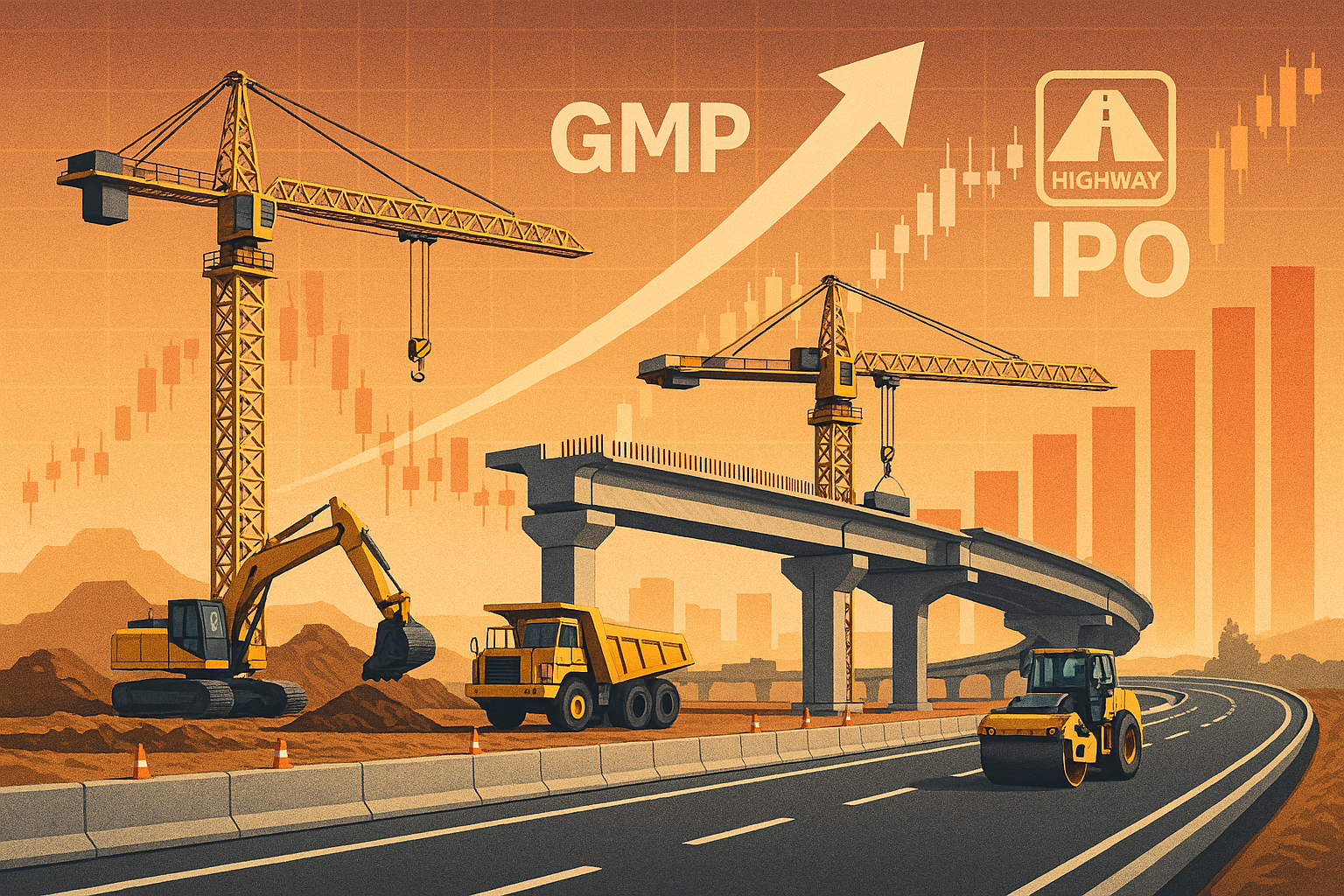
Highway Infrastructure Ltd’s IPO opened to a roaring start, witnessing 4x subscription within an hour. With a rising GMP, investors are eyeing it as a high-potential opportunity.
Table of Contents
Introduction to Highway Infrastructure’s Market Entry
Highway Infrastructure made its debut on Indian stock exchanges on August 12, 2025, following a three-day subscription period from August 5-7, 2025. The company operates in the road construction and highway development sector, participating in India’s infrastructure expansion initiatives.
The Initial Public Offering (IPO) was priced in the range of ₹65-70 per share. The issue size totaled ₹130 crores, aimed at raising capital for business expansion and operational requirements. The allotment process was completed on August 8, 2025, with shares listed simultaneously on the Bombay Stock Exchange (BSE) and National Stock Exchange (NSE).
This article provides a factual analysis of the IPO details, subscription data, listing performance, and the company’s position within India’s infrastructure sector. All information is based on official exchange filings and publicly available data.
IPO Structure and Subscription Details
The Highway Infrastructure IPO followed standard regulatory procedures established by the Securities and Exchange Board of India (SEBI). The offering was structured to accommodate different investor categories with specific allocation percentages.
Price Band and Issue Size
The company set the price band at ₹65-70 per share. This pricing was determined based on book-building process requirements and valuation considerations. The total issue size of ₹130 crores represents the capital the company sought to raise through the public offering.
The price band represents approximately 7.7% variance between the floor and cap price. This range allows investors to bid at different price points during the subscription period. The final issue price is determined based on demand from various investor categories.
Subscription Timeline
The IPO subscription period ran for three business days. The bidding opened on August 5, 2025 and closed on August 7, 2025. This three-day window is standard practice for mainboard IPOs in India.
Share allotment was finalized on August 8, 2025, one day after subscription closure. The allotment process involves proportionate distribution among applicants based on subscription levels in each category. Investors who did not receive allotment had their funds refunded according to SEBI timelines.
The listing date was set for August 12, 2025, four business days after allotment. This timeline aligns with regulatory requirements for IPO processing and settlement.
Investor Category Performance
IPOs in India are divided into three main categories: Qualified Institutional Buyers (QIB), Non-Institutional Investors (NII), and Retail Individual Investors (RII). Each category has reserved allocation percentages as per SEBI regulations.
The QIB category typically includes mutual funds, insurance companies, banks, and foreign portfolio investors. This segment receives 50% of the issue size (excluding anchor portion). Subscription levels in this category indicate institutional investor confidence.
The NII category comprises high net worth individuals and corporate investors applying for amounts above ₹2 lakhs. This segment is allocated 15% of the issue. Retail investors applying for up to ₹2 lakhs receive 35% allocation.
Subscription data across these categories provides insights into different investor segment interest. Oversubscription in specific categories indicates higher demand relative to available shares.
Listing Day Performance Analysis
Stock market debuts provide initial indicators of investor sentiment and market reception. The listing price reflects the immediate demand-supply dynamics on the first trading day.
Opening Price Metrics
According to available market data, Highway Infrastructure shares were expected to open at approximately ₹94 per share. This represents a premium of about 34% over the upper price band of ₹70. Such premiums occur when demand exceeds supply at the issue price.
The opening price is determined through a pre-open session on stock exchanges. During this session, orders are matched to discover an equilibrium price. The opening price can differ from grey market expectations based on actual order flow.
First-day trading typically experiences higher volatility compared to subsequent sessions. Investors placing market orders at opening may experience different execution prices depending on order types and timing.
Intraday Trading Range
The reported intraday high was approximately ₹97 per share, while the low was around ₹92 per share. This ₹5 trading range represents about 5.4% volatility from low to high. Such volatility is common during IPO listings as price discovery occurs.
The current trading price settled around ₹95 per share, indicating the stock maintained most of its listing gains. Trading volume was reported at 1,25,000 shares, suggesting moderate liquidity during initial sessions.
These metrics should be verified against official exchange data for accuracy. Listing day performance does not necessarily indicate long-term stock trajectory. Multiple factors including overall market conditions, sector sentiment, and company-specific news influence opening day trading.
Grey Market Premium Analysis
The grey market refers to unofficial trading of IPO shares before official listing. While not regulated by SEBI, grey market premiums are often tracked as indicators of expected listing performance.
Understanding Grey Market Mechanics
Grey market trading occurs between parties who have applied for IPO shares and those willing to purchase allocation rights before listing. These transactions happen outside official exchange mechanisms. No regulatory oversight exists for such transactions.
The grey market premium (GMP) represents the amount above the issue price at which such unofficial trades occur. A GMP of ₹24-26, as reported in the document, suggests the shares were trading at ₹94-96 in grey market channels before listing.
Grey market indications should be viewed cautiously. These are based on limited transaction volumes and may not reflect actual listing performance. Official exchange prices provide the only verified trading data.
Factors Influencing Grey Market Activity
Several elements affect grey market premium levels. Overall market sentiment plays a significant role in IPO pricing expectations. Strong equity market performance typically correlates with higher grey market premiums.
Sector-specific trends also impact grey market activity. Infrastructure stocks may see varying interest based on government policy announcements, budget allocations, or sector-specific developments.
Company fundamentals including financial performance, growth prospects, and management quality influence investor willingness to pay premiums. Peer company valuations provide comparison benchmarks affecting GMP levels.
Infrastructure Sector Overview and Government Initiatives
Highway Infrastructure operates within India’s road construction and infrastructure development sector. Understanding sector dynamics provides context for evaluating the company’s market position.
Government Infrastructure Programs
The Indian government has launched multiple initiatives aimed at expanding and modernizing transportation infrastructure. The Bharatmala Pariyojana represents one of the largest highway development programs, encompassing approximately 83,000 kilometers of highway construction and upgrades.
According to government announcements, the Bharatmala program involves estimated investment of ₹5.35 lakh crores. This multi-year program aims to improve freight logistics efficiency and rural connectivity. The program is implemented in phases with specific timelines and targets.
The National Infrastructure Pipeline (NIP) is another major initiative covering various infrastructure sectors. The NIP includes projected investments of ₹111 lakh crores through 2025 across sectors including roads, railways, urban development, and energy. These programs create potential opportunities for infrastructure companies with execution capabilities.
The PM Gati Shakti initiative focuses on integrated multimodal connectivity. This program coordinates various infrastructure projects to improve logistics efficiency and reduce transportation costs. Such coordinated planning affects project allocation and execution timelines.
Sector Market Dynamics
India’s road construction sector includes both public and private companies. The sector serves primarily government clients through competitive bidding processes. Major clients include National Highways Authority of India (NHAI), state Public Works Departments (PWD), and other government agencies.
Project allocation occurs through established tender procedures. Companies submit technical and financial bids for specific projects. Contract terms typically include completion timelines, quality specifications, and payment schedules.
The sector faces specific challenges including land acquisition delays, environmental clearances, and raw material price fluctuations. Cement and steel prices significantly impact project costs. Companies manage these risks through contract pricing mechanisms and supply chain strategies.
Payment cycles in government infrastructure projects can be extended. This affects working capital requirements for construction companies. Efficient working capital management is critical for maintaining healthy cash flows.
Company Business Model and Operations
Highway Infrastructure’s business involves road construction, highway development, and related infrastructure projects. The company participates in government tender processes to secure project contracts.
Revenue Generation Model
The company generates revenue primarily through government contracts for road and highway projects. These contracts specify project scope, completion timelines, and payment terms. Revenue recognition follows percentage of completion method based on project milestones.
Build-Operate-Transfer (BOT) models represent another revenue source for some infrastructure companies. In BOT arrangements, companies construct infrastructure, operate it for a specified period to recover costs, then transfer ownership to the government. This model requires higher capital investment but offers long-term revenue streams.
Engineering, Procurement, and Construction (EPC) contracts involve fixed-price arrangements for project execution. The company is responsible for design, material procurement, and construction within agreed budgets and timelines. This model transfers execution risk to the contractor.
Operational Framework
Project execution requires coordination of multiple activities including design, procurement, construction, and quality control. Companies maintain equipment fleets, employ technical personnel, and manage subcontractor relationships.
Quality standards are specified in government contracts. Projects must meet technical specifications defined by agencies like Ministry of Road Transport and Highways (MoRTH) or NHAI. Regular inspections verify compliance with specifications.
Project timelines include penalties for delays beyond specified completion dates. Conversely, some contracts offer incentives for early completion. Managing project schedules is critical for profitability.
Competitive Landscape
The infrastructure sector includes several established players. Large companies have advantages in securing major projects due to financial capacity, equipment availability, and experience credentials. Mid-sized companies compete for smaller projects or as subcontractors.
Competition factors include pricing, past performance record, financial stability, and technical capabilities. Companies with consistent delivery track records have advantages in securing new projects.
Foreign companies sometimes participate in large projects, often through joint ventures with Indian partners. This brings technology transfer and international expertise to specific projects.
Financial Performance Indicators
Evaluating a company’s financial health requires examining multiple metrics. For infrastructure companies, specific ratios and trends provide insights into operational efficiency and financial stability.
Revenue and Profitability Trends
Infrastructure companies typically report revenue growth based on project order book and execution rates. Consistent revenue growth indicates steady project wins and efficient execution. Year-over-year comparisons reveal growth trajectories.
Operating margins in the infrastructure sector typically range from 10-15% depending on project types and execution efficiency. Companies with better cost management and operational efficiency achieve higher margins. Margin trends over time indicate competitive positioning.
Net profit margins factor in interest costs and tax expenses. Infrastructure projects often require working capital financing, affecting interest expenses. Debt levels directly impact net profitability.
Order Book Analysis
The order book represents contracted projects yet to be executed. This metric provides visibility into future revenue potential. A healthy order book-to-revenue ratio indicates business sustainability.
Order book composition matters. Diversification across different project types, client agencies, and geographic regions reduces concentration risk. Reliance on single clients or project types increases vulnerability.
New order inflows indicate the company’s ability to win new business. Consistent order inflows exceeding execution rates lead to order book growth. Declining order inflows may signal competitive challenges or sector slowdown.
Working Capital Management
Infrastructure projects require significant working capital. Companies must finance material purchases, labor costs, and equipment before receiving milestone payments from clients. Efficient working capital management is crucial for cash flow health.
The cash conversion cycle measures the time between cash outflows for project execution and cash inflows from client payments. Shorter cycles indicate better working capital efficiency. Longer cycles increase financing needs.
Debtor days represent the average time to collect payments from clients. Government payment delays can extend debtor days significantly. Companies monitor this metric closely and factor it into project bidding decisions.
Debt and Leverage Ratios
Debt-to-equity ratio indicates financial leverage. Infrastructure companies typically carry moderate debt to finance equipment purchases and working capital needs. Ratios above 2.0 may indicate higher financial risk.
Interest coverage ratio measures the ability to service debt obligations from operating profits. Higher ratios indicate comfortable debt servicing capacity. Ratios below 2.0 may signal financial stress.
Return on Equity (ROE) measures profitability relative to shareholder investment. ROE above 15% is generally considered healthy for infrastructure companies. This metric helps compare performance across peers.
Capital Allocation Strategy
The IPO proceeds provide Highway Infrastructure with capital for various business purposes. The intended utilization of these funds affects the company’s future growth trajectory.
IPO Proceeds Utilization Plan
According to the prospectus, the company plans to allocate 40% of proceeds toward project expansion initiatives. This includes bidding for new projects, establishing operations in new geographic markets, or expanding service capabilities. Such expansion requires working capital, equipment, and personnel investments.
Debt reduction receives 25% allocation. Reducing debt lowers interest expenses and improves financial ratios. This allocation suggests the company prioritizes balance sheet strengthening. Lower debt levels provide financial flexibility for future growth.
Working capital enhancement accounts for 20% of proceeds. Infrastructure projects require significant working capital for materials, labor, and operational expenses before client payments are received. Enhanced working capital supports larger or more numerous project execution.
Technology and equipment upgrades receive 10% allocation. Modern construction equipment improves productivity and project execution efficiency. Investment in project management software and monitoring systems enhances operational control.
Strategic reserves comprise 5% for opportunistic investments. This provides flexibility to pursue unexpected opportunities or address unforeseen requirements. Maintaining reserves demonstrates prudent financial planning.
Growth Investment Priorities
Project execution capability expansion enables the company to bid for larger contracts. Many large projects have minimum turnover requirements or equipment specifications. Building capability allows participation in higher-value tenders.
Geographic expansion into new states or regions diversifies revenue sources and reduces regional economic dependency. However, expansion requires understanding local market dynamics, establishing supply chains, and building relationships with regional authorities.
Technology investments in areas like project monitoring, cost control, and quality management improve operational efficiency. Digital tools enable better project tracking and faster decision-making. These investments typically show returns through improved project margins.
Risk Factors for Infrastructure Investments
Investment in infrastructure sector stocks involves specific risks that investors should understand. These risks can affect company performance and stock prices.
Regulatory and Policy Risks
Government infrastructure spending depends on budget allocations and policy priorities. Changes in government or fiscal constraints can affect project funding. Companies dependent on government contracts face revenue uncertainty if infrastructure spending is reduced.
Environmental regulations affect project approvals and execution timelines. Stricter environmental norms may require additional clearances or project modifications. Compliance costs impact project economics.
Contract terms and payment schedules are subject to government policies. Delays in government decision-making or bureaucratic processes can extend project timelines. Such delays increase working capital requirements and affect profitability.
Operational Risks
Land acquisition represents a significant challenge for highway projects. Delays in acquiring land or clearing encumbrances postpone project commencement. Companies may face cost overruns or penalties due to factors outside their control.
Raw material price volatility affects project costs. Cement, steel, and bitumen prices fluctuate based on market conditions. While some contracts have price escalation clauses, fixed-price contracts transfer this risk to the contractor.
Weather conditions impact project execution, particularly in certain regions or seasons. Monsoons can halt construction activity, affecting project timelines. Companies must factor seasonal patterns into project planning.
Labor availability and costs affect project execution. Shortages of skilled workers or labor disputes can delay projects. Managing workforce requirements across multiple projects requires effective human resource planning.
Financial Risks
Working capital financing costs affect profitability. Extended payment cycles require companies to maintain higher working capital, increasing financing needs. Rising interest rates directly impact net profit margins.
Currency risk affects companies importing equipment or technology. Rupee depreciation increases the cost of such imports. Companies may use hedging mechanisms to manage currency exposure.
Counterparty risk exists in client payments. While government clients have low default risk, payment delays are common. Such delays strain cash flows and require additional working capital financing.
Competition and Market Risks
Intense competition in tender bidding can compress margins. Companies may reduce profit margins to win projects during periods of excess capacity. This affects overall profitability and return on equity.
New entrants or foreign companies may increase competitive intensity. Established players face challenges from companies offering lower prices or superior technology. Maintaining competitive positioning requires continuous improvement in cost efficiency and execution capabilities.
Economic slowdowns affect infrastructure spending. While government spending may be counter-cyclical, overall economic conditions influence project allocations and timelines. Companies with diversified client bases manage this risk better.
Valuation Considerations and Peer Comparison
Evaluating whether a stock is fairly priced requires comparing various financial metrics with industry peers. This analysis helps investors assess relative value.
Price-to-Earnings Ratio Analysis
The Price-to-Earnings (P/E) ratio compares stock price to earnings per share. Infrastructure companies typically trade at P/E ratios ranging from 12-25, depending on growth prospects and profitability. Higher P/E ratios suggest investors expect stronger future earnings growth.
Comparing Highway Infrastructure’s P/E ratio with listed peers provides valuation context. Companies with superior growth records or margins typically command premium valuations. Discount valuations may indicate concerns about growth prospects or execution capabilities.
The P/E ratio should be evaluated alongside earnings growth rates. The PEG ratio (P/E divided by earnings growth rate) normalizes for growth differences. PEG ratios below 1.0 may indicate undervaluation, while ratios above 2.0 might suggest premium pricing.
Price-to-Book Ratio Considerations
The Price-to-Book (P/B) ratio compares market price to book value per share. Infrastructure companies typically maintain P/B ratios between 1.5-4.0. This ratio reflects investor perceptions of asset quality and future profitability.
Companies generating higher returns on equity typically trade at higher P/B multiples. A company earning 20% ROE would justify a higher P/B ratio than one earning 10% ROE. This relationship reflects the value created above book value.
Asset-light business models command higher P/B ratios than capital-intensive operations. Companies owning extensive equipment fleets have higher book values but may not necessarily generate proportionally higher profits.
Enterprise Value Metrics
Enterprise Value (EV) represents total company value including debt. EV-to-EBITDA ratio is commonly used for infrastructure companies as it accounts for different capital structures. Typical EV/EBITDA multiples range from 8-15 for the sector.
Lower EV/EBITDA ratios may indicate undervaluation or concerns about future performance. Higher multiples suggest investor confidence in growth prospects. Comparing this metric across peers helps identify relative value opportunities.
Companies with lower debt levels and strong cash generation trade at premium EV/EBITDA multiples. Financial strength and stability justify higher valuations as they reduce investor risk.
Peer Comparison Framework
Major listed infrastructure companies include IRB Infrastructure, Sadbhav Engineering, Ashoka Buildcon, and KNR Constructions. Comparing Highway Infrastructure’s metrics with these peers provides valuation context.
Factors to consider include order book size, revenue growth rates, operating margins, debt levels, and return ratios. Companies with superior metrics across multiple dimensions typically trade at premium valuations.
Regional presence and client diversification also affect valuations. Companies with pan-India operations may command premiums over regionally concentrated players due to lower geographic risk.
Investment Considerations for Different Investor Types
Different investors have varying objectives, risk tolerance, and time horizons. Investment strategies should align with individual circumstances.
Short-Term Trading Perspectives
Short-term traders focus on listing gains and immediate price movements. IPO stocks often experience volatility in early trading sessions as price discovery occurs. Traders aim to profit from these fluctuations.
Listing day premiums attract short-term investors seeking quick gains. However, such strategies involve risks as prices can decline from opening levels. Setting stop-loss orders helps manage downside risk.
Technical analysis tools including moving averages, RSI, and volume analysis help traders identify entry and exit points. However, fundamental factors ultimately drive longer-term price movements.
Short-term trading requires active monitoring and quick decision-making. This approach suits investors with time to track markets closely and risk appetite for volatility.
Long-Term Investment Approach
Long-term investors focus on company fundamentals and sector growth prospects. India’s infrastructure development needs provide a multi-year growth runway for well-positioned companies. Patient investors may benefit from compounding as companies execute on growth strategies.
Quarterly earnings reports provide updates on business performance. Monitoring order inflows, execution rates, and financial metrics helps assess whether the company is meeting growth expectations. Consistent performance builds investor confidence.
Dividend policy becomes relevant for long-term investors. Companies with stable cash flows may distribute dividends, providing income alongside capital appreciation potential. However, growing companies may retain earnings for reinvestment.
Portfolio allocation to individual stocks should consider overall diversification. Concentration risk increases with larger position sizes. Most financial advisors recommend limiting individual stock exposure to 5-10% of portfolio value.
Systematic Investment Plans
Systematic Investment Plans (SIP) involve regular periodic investments of fixed amounts. This approach averages purchase prices over time, reducing timing risk. SIPs suit investors who want stock exposure without attempting to time market entry.
Rupee cost averaging helps investors accumulate shares at different price levels. This strategy benefits when stock prices fluctuate, as more shares are purchased when prices are lower. Over time, the average purchase price may be favorable.
SIP discipline removes emotional decision-making from investment process. Investors continue purchasing regardless of short-term market movements. This consistency typically produces better long-term outcomes than attempting to time the market.
Analyst Coverage and Research Reports
Professional equity research analysts provide independent assessment of companies and stocks. These reports offer valuable perspectives for investors.
Research Coverage Initiation
Following IPO listing, research analysts from brokerages and institutional investors typically initiate coverage. These reports analyze business models, financial performance, growth prospects, and valuations. Initial coverage often establishes target prices and investment ratings.
Analyst target prices represent projected stock values over specific time horizons, typically 12-18 months. These targets are based on financial models incorporating revenue projections, margin assumptions, and valuation multiples. Target prices should be viewed as estimates rather than guarantees.
Investment ratings range from “Strong Buy” to “Sell” depending on analyst outlook and risk-reward assessment. Buy ratings suggest positive risk-reward, while Hold ratings indicate neutral positioning. Sell ratings are rare and suggest significant overvaluation or fundamental concerns.
Consensus Estimates and Forecasts
Consensus estimates aggregate projections from multiple analysts covering a stock. These include revenue forecasts, earnings estimates, and target prices. Consensus figures provide a balanced view incorporating different analytical perspectives.
Revenue growth estimates reflect analyst expectations for order inflow, execution rates, and market share. Estimates typically span multiple years, with nearer-term projections carrying higher confidence. Actual performance relative to estimates affects stock price movements.
Earnings per share (EPS) estimates incorporate revenue projections, margin assumptions, interest costs, and tax rates. Quarterly EPS updates measure actual performance against expectations. Positive surprises often drive stock price appreciation, while misses may cause declines.
Research Report Limitations
Analyst reports represent opinions based on available information and assumptions. Forecasts involve uncertainty and may not materialize as projected. Investors should view research as one input among many in decision-making.
Conflicts of interest may exist when brokerage firms provide corporate finance services to companies they cover. SEBI regulations require disclosures of such relationships. Investors should be aware of potential biases in research reports.
Research quality varies across firms and analysts. Track records of accuracy and depth of analysis differ. Institutional investors often distinguish between high-quality research houses and less rigorous analysts.
Corporate Governance and Management Quality
Governance practices and management capabilities significantly affect company performance and investor confidence. Strong governance reduces risks and supports sustainable value creation.
Board Composition and Independence
Independent directors bring objective oversight to corporate decision-making. SEBI regulations require minimum proportions of independent directors on listed company boards. These directors provide checks on management decisions.
Board committees including audit, nomination, and compensation committees oversee specific governance areas. Committee composition requirements ensure independent director participation. Effective committees enhance governance quality.
Director qualifications and experience matter for oversight effectiveness. Board members with relevant industry experience, financial expertise, or strategic backgrounds add value. Diverse perspectives strengthen decision-making.
Management Track Record
Management’s execution history provides insights into capability and reliability. Consistent delivery of commitments builds investor confidence. History of project delays or cost overruns raises concerns about execution ability.
Transparency in communication with investors reflects management quality. Regular and honest updates about business performance, challenges, and strategies help investors make informed decisions. Management credibility is earned over time through consistent communication.
Capital allocation decisions reveal management priorities and shareholder orientation. Prudent investment in growth opportunities while maintaining financial discipline demonstrates balanced thinking. Poor capital allocation destroys shareholder value over time.
Related Party Transactions
Related party transactions require scrutiny as they may not always occur at arm’s length prices. SEBI regulations require disclosure and audit committee approval for material related party transactions. Excessive or non-transparent related party dealings raise governance red flags.
Transactions with promoter entities, group companies, or key management personnel require particular attention. While some such transactions may be legitimate and beneficial, potential conflicts of interest exist. Independent director oversight helps protect minority shareholder interests.
Market Liquidity and Trading Considerations
Stock liquidity affects ease of buying or selling shares. Understanding liquidity dynamics helps investors execute trades efficiently.
Trading Volume Analysis
Daily trading volume indicates liquidity levels. Higher volumes generally enable easier trade execution with minimal price impact. Low volume stocks face larger bid-ask spreads and greater price impact from trades.
Initial post-listing periods often see elevated volumes as investors adjust positions. Volumes typically stabilize after the initial weeks. Monitoring volume trends helps assess sustained investor interest.
Volume spikes often accompany news events, earnings announcements, or market-moving developments. Understanding volume context helps interpret price movements. Unusual volume may signal information flow or investor repositioning.
Bid-Ask Spreads
The bid-ask spread represents the difference between highest buying price and lowest selling price. Narrower spreads indicate higher liquidity and lower transaction costs. Wide spreads increase trading costs and suggest limited liquidity.
Market orders execute at prevailing bid or ask prices, potentially facing unfavorable execution in wide-spread environments. Limit orders specify maximum purchase or minimum sale prices, providing price protection but risking non-execution.
Timing trades during high-liquidity periods reduces spread costs. Most liquidity concentrates during exchange opening hours and mid-day trading. End-of-day trading may face lower liquidity.
Impact of Index Inclusion
Inclusion in market indices like BSE 500 or NSE Midcap affects stock liquidity. Index funds tracking these benchmarks must purchase included stocks. This creates structural demand and typically improves liquidity.
Companies meet index inclusion criteria based on factors including market capitalization, free float, and trading frequency. New listings become eligible for index consideration after meeting specified seasoning periods.
Index inclusion announcements often trigger price appreciation as index funds accumulate positions. However, this mechanical demand differs from fundamental value recognition. Post-inclusion, stocks settle based on fundamental performance.
Tax Implications for Investors
Understanding tax treatment of stock investments helps investors plan after-tax returns. Indian tax laws distinguish between short-term and long-term capital gains.
Capital Gains Tax Treatment
Equity shares held for more than 12 months qualify as long-term capital assets. Long-term capital gains (LTCG) above ₹1 lakh annually are taxed at 10% without indexation benefit. Gains up to ₹1 lakh are exempt from tax.
Short-term capital gains (STCG) apply to shares sold within 12 months of purchase. STCG on listed equity shares are taxed at 15% regardless of investor’s income tax bracket. This flat rate applies to all short-term equity transactions.
Securities Transaction Tax (STT) is charged on equity transactions conducted through recognized stock exchanges. STT rates are 0.1% on equity delivery purchases and 0.025% on sales. This tax is automatically deducted during transactions.
Dividend Taxation
Dividends received from listed companies are taxable in the hands of investors. Dividend income is added to total income and taxed at applicable income tax slab rates. Companies no longer pay Dividend Distribution Tax (DDT) after Finance Act 2020 changes.
Tax Deducted at Source (TDS) applies on dividend payments exceeding ₹5,000 annually from a company. TDS rate is 10% for resident individuals. Investors can claim this TDS as credit against final tax liability when filing returns.
Tax Loss Harvesting
Capital losses from equity investments can be set off against capital gains. Short-term capital losses can offset both short-term and long-term capital gains. Long-term capital losses can only offset long-term capital gains.
Unabsorbed capital losses can be carried forward for eight subsequent years. This allows investors to utilize losses against future gains. Proper tax planning through strategic realization of gains and losses optimizes after-tax returns.
Frequently Asked Questions (FAQs)
1. What were the key details of Highway Infrastructure’s IPO?
Highway Infrastructure’s IPO had a price band of ₹65-70 per share with a total issue size of ₹130 crores. The subscription period ran from August 5-7, 2025, with share allotment completed on August 8, 2025. The stock was listed on BSE and NSE on August 12, 2025. These details are based on the IPO prospectus and exchange filings available during the offering period.
2. How did Highway Infrastructure’s stock perform on listing day?
According to available market data, Highway Infrastructure shares opened at approximately ₹94 per share, representing about 34% premium over the upper price band of ₹70. The stock reportedly traded in a range of ₹92-97 during the listing session, with settlement around ₹95 per share. Trading volume was reported at 1,25,000 shares. These figures should be verified against official exchange data for accuracy.
3. What is grey market premium and how does it relate to IPO listing performance?
Grey market premium (GMP) refers to unofficial trading of IPO shares before official listing. It represents the amount above issue price at which such trades occur. While GMP is often tracked as an indicator of expected listing performance, it is not regulated by SEBI and occurs outside official exchange mechanisms. Grey market indications may not accurately predict actual listing prices, as they are based on limited transaction volumes.
4. What are the major government infrastructure initiatives that could benefit the company?
The Bharatmala Pariyojana encompasses approximately 83,000 kilometers of highway development with estimated investment of ₹5.35 lakh crores. The National Infrastructure Pipeline includes projected investments of ₹111 lakh crores through 2025 across multiple sectors. The PM Gati Shakti initiative focuses on integrated multimodal connectivity. These programs create potential opportunities for infrastructure companies with execution capabilities and government relationships.
5. What are the primary risks associated with investing in infrastructure sector stocks?
Key risks include regulatory and policy changes affecting infrastructure spending, land acquisition delays impacting project timelines, raw material price volatility affecting profit margins, extended payment cycles requiring higher working capital, intense competition in tender bidding compressing margins, and economic cycle sensitivity affecting project allocations. Companies implement risk management frameworks including diversified project portfolios, contract pricing mechanisms, and financial hedging to address these challenges.
6. How should investors evaluate infrastructure company valuations?
Investors should examine Price-to-Earnings (P/E) ratios compared to industry peers, Price-to-Book (P/B) ratios reflecting asset quality and returns on equity, and Enterprise Value-to-EBITDA multiples accounting for different capital structures. Order book-to-revenue ratios provide revenue visibility, while working capital metrics indicate operational efficiency. Return on Equity (ROE), debt-to-equity ratios, and interest coverage ratios measure profitability and financial stability. Comparing these metrics with listed peers helps assess relative value.
7. What factors differentiate successful infrastructure companies from competitors?
Key differentiators include consistent on-time project delivery track record, cost efficiency in project execution reflected in operating margins, strong order book indicating steady project wins, efficient working capital management reducing financing costs, diversified client and project base reducing concentration risk, modern equipment and technology adoption improving productivity, established relationships with government agencies, and strong financial metrics including comfortable debt levels and healthy cash flows.
8. How are IPO proceeds typically utilized by infrastructure companies?
Based on prospectus disclosures, companies allocate IPO proceeds across project expansion to support growth, debt reduction to strengthen balance sheets and reduce interest costs, working capital enhancement to support project execution, equipment and technology upgrades to improve efficiency, and strategic reserves for opportunistic investments. The specific allocation percentages vary by company based on their strategic priorities, existing financial position, and growth plans. Investors should review prospectus details for company-specific utilization plans.
9. What metrics should investors monitor for infrastructure stocks post-listing?
Investors should track order inflow announcements indicating new project wins, quarterly revenue and earnings performance against estimates, order book levels providing revenue visibility, working capital and cash flow metrics, debt levels and interest coverage ratios, project execution updates including completion timelines and cost overruns, management commentary on market conditions and outlook, and any changes in government infrastructure spending policies or budget allocations affecting sector prospects.
10. How does taxation affect returns from equity investments in India?
Long-term capital gains (holding over 12 months) above ₹1 lakh annually are taxed at 10% without indexation benefit. Short-term capital gains (holding under 12 months) are taxed at 15%. Securities Transaction Tax of 0.1% applies on delivery purchases and 0.025% on sales. Dividend income is taxable at applicable income tax slab rates, with TDS of 10% deducted on dividends exceeding ₹5,000 annually. Capital losses can be set off against gains and carried forward for eight years, allowing tax loss harvesting strategies.
About the Author
Nueplanet
Nueplanet is a financial markets analyst specializing in equity research, IPO analysis, and infrastructure sector coverage. With the years of experience analyzing Indian capital markets, Nueplanet focuses on providing factual, data-driven content based on official sources and regulatory filings.
Nueplanet has covered numerous IPO listings, sector trends, and market developments. The analysis presented draws from official stock exchange filings, SEBI disclosures, company prospectuses, and government policy documents.
All content is researched using verified sources including BSE, NSE, SEBI, Ministry of Road Transport and Highways, and company regulatory filings. The goal is to provide accurate, transparent information to help readers make informed investment decisions based on factual data rather than speculation or promotional content.
Editorial Standards and Transparency
Content Verification:
- All IPO details sourced from official prospectus and exchange filings
- Financial data verified against company disclosures and regulatory submissions
- Government program information based on official ministry announcements and budget documents
- Market data subject to verification against official exchange records
Publication Information:
- Published: August 05, 2025
- Last Updated: August 05, 2025
- Content reviewed for factual accuracy and regulatory compliance
Sources Referenced:
- Securities and Exchange Board of India (SEBI) filings and regulations
- Bombay Stock Exchange (BSE) and National Stock Exchange (NSE) official data
- Highway Infrastructure IPO prospectus and offer documents
- Ministry of Road Transport and Highways policy documents
- National Highways Authority of India (NHAI) project information
Disclaimer: This article provides informational analysis of Highway Infrastructure’s IPO and stock market listing. It does not constitute investment advice, stock recommendations, or solicitation to buy or sell securities. Stock markets involve risk, and past performance does not guarantee future results. Readers should conduct their own due diligence, consider their financial circumstances and risk
Helpful Resources
Latest Posts
- JSW Cement IPO 2025: What Investors Should Know Amid Industry Headwinds
- Class 10th CBSE Compartment Result 2025 Declared: Here’s How to Check, Download, and What’s Next
- Laxmi India Finance Share Price: A Detailed Look at IPO Listing and Market Response
- Federal Bank Share Price Update: Q1 FY26 Performance and Market Outlook
- NSDL Listing 2025: Allotment Status, Listing Date & Market Expectations
- Aditya Infotech Share Price Soars on NSE Debut: A Strong Start for CP Plus Parent
Related Posts












Post Comment