







NEET PG 2025 – Exam Day Timing, Format, and Candidate Review
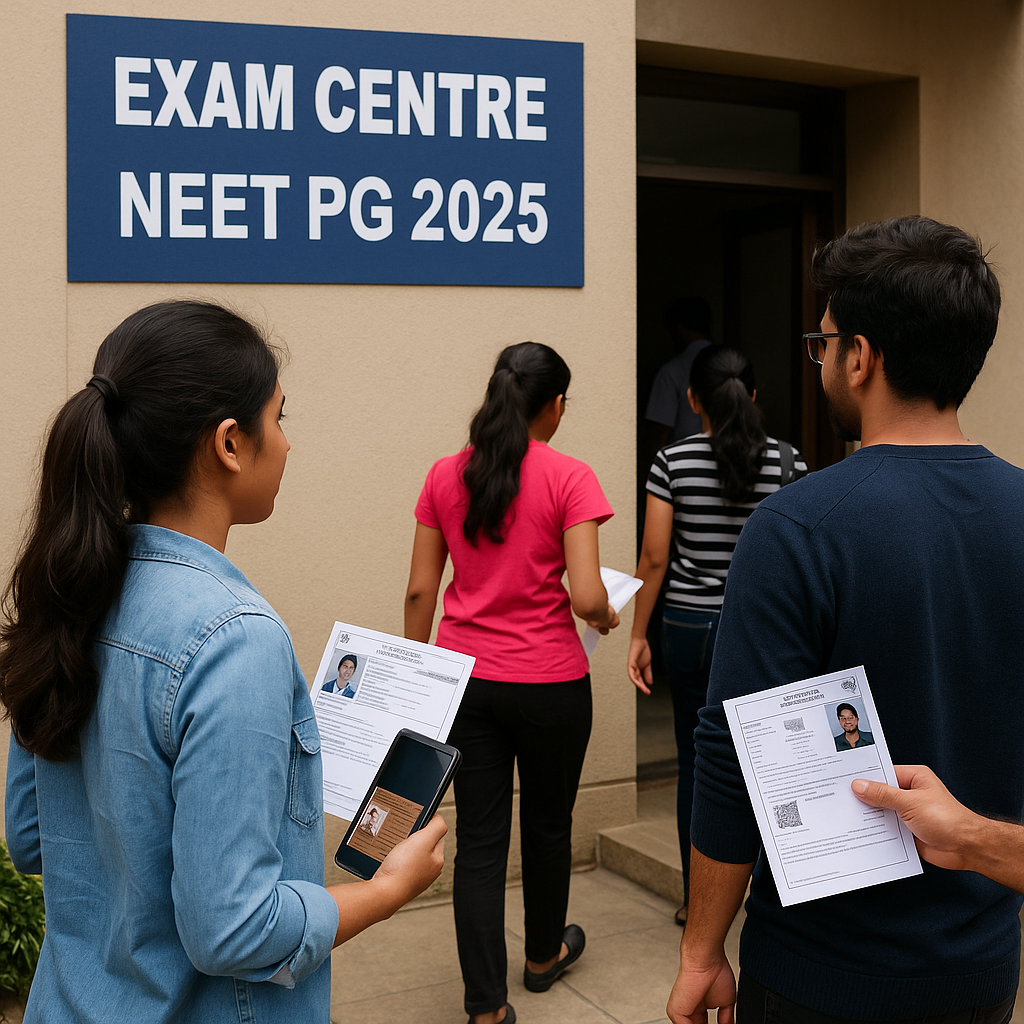
The postponed NEET PG 2025 exam took place on August 3, 2025, from 9:00 AM to 12:30 PM in a single shift. Candidates reported between 7:00–8:30 AM, with biometric verification and strict exam hall protocols enforced.
Table of Contents
Introduction to NEET PG 2025
The National Eligibility cum Entrance Test for Postgraduate (NEET PG) 2025 serves as the primary entrance examination for admission to MD, MS, and PG Diploma courses in medical institutions across India. Conducted by the National Board of Examinations in Medical Sciences (NBEMS), this examination is mandatory for all MBBS graduates seeking postgraduate medical education in the country.
NEET PG 2025 underwent significant administrative changes following a Supreme Court directive that mandated conducting the examination in a single shift format. Originally scheduled for June 15, 2025, the examination was rescheduled to August 3, 2025, to implement this important change. This modification aimed to ensure uniform examination conditions for all candidates nationwide.
The examination is a computer-based test that assesses candidates’ knowledge across various medical subjects covered during their MBBS curriculum. With approximately 200,000 medical graduates appearing for this examination annually, NEET PG represents a critical milestone in the career progression of medical professionals in India. This article provides comprehensive information about NEET PG 2025, including examination details, pattern, preparation guidelines, and the subsequent counseling process.
Purpose and Significance of NEET PG
Role in Medical Education
NEET PG serves as the sole entrance examination for admission to postgraduate medical courses in India, including MD (Doctor of Medicine), MS (Master of Surgery), and PG Diploma programs. The examination replaces individual entrance tests previously conducted by various medical institutions and state governments. This standardization ensures a uniform assessment framework across the country.
The examination results are used by multiple counseling authorities for seat allocation. The Directorate General of Health Services (DGHS) conducts All India Quota counseling, while individual states manage their respective state quota seats. Additionally, deemed universities and central institutions use NEET PG scores for their admission processes.
Regulatory Framework
NEET PG operates under the regulatory framework established by the National Medical Commission (NMC), which succeeded the Medical Council of India. The examination follows guidelines prescribed by the Ministry of Health and Family Welfare, Government of India. NBEMS, as the conducting authority, ensures adherence to national standards in medical education assessment.
The examination’s importance extends beyond individual career advancement. It plays a crucial role in maintaining quality standards in postgraduate medical education by ensuring that only qualified candidates gain admission to specialized training programs. This quality control mechanism ultimately impacts the healthcare delivery system across India.
Supreme Court Intervention and Rescheduling
Background of the Decision
The Supreme Court of India intervened in the NEET PG 2025 examination process following concerns raised about the fairness of conducting examinations in multiple shifts. Previous medical entrance examinations had faced criticism regarding difficulty variations between different shifts, potentially creating unequal conditions for candidates.
In response to these concerns, the Supreme Court issued a directive mandating that NEET PG 2025 be conducted in a single shift nationwide. The court emphasized that educational fairness cannot be compromised for administrative convenience. This principle-driven decision required significant logistical adjustments from NBEMS.
Impact of Rescheduling
The rescheduling from June 15, 2025, to August 3, 2025, provided the necessary time for NBEMS to prepare for conducting the examination in a single shift for approximately 200,000 candidates simultaneously. While the postponement initially caused concern among candidates regarding preparation timelines, it ultimately ensured a more equitable examination process.
The single-shift format eliminated the psychological pressure associated with comparing performance across different examination sessions. Candidates appearing in the unified session faced identical examination conditions, question papers, and time constraints. This standardization addressed longstanding concerns about fairness in large-scale competitive examinations.
Implementation Challenges
Conducting a single-shift examination for such a large candidate pool presented significant logistical challenges. NBEMS had to ensure adequate examination centers, computer systems, and personnel across the country. The organization successfully managed these requirements through careful planning and coordination with examination centers nationwide.
The successful implementation of this format demonstrated that administrative challenges can be overcome when educational equity remains the primary objective. The experience gained from NEET PG 2025 may influence future examination policies and procedures for other large-scale assessments in medical education.
Eligibility Criteria for NEET PG 2025
Educational Qualifications
Candidates must possess an MBBS degree from a medical college recognized by the National Medical Commission. The degree should be obtained from an institution listed in the World Directory of Medical Schools. Candidates who have completed their MBBS from foreign universities must have their degrees verified by the NMC before appearing for NEET PG.
Candidates in their final year of MBBS are also eligible to appear for the examination, provided they complete their degree, including internship, before the counseling process begins. This provisional eligibility allows students to take the examination while completing their internship requirements.
Registration Requirements
All candidates must possess a valid registration with the State Medical Council (SMC), Medical Council of India (MCI), or National Medical Commission (NMC). This registration serves as proof that the candidate is a qualified medical practitioner. During the examination, candidates are required to submit photocopies of their registration certificates at examination centers.
The registration requirement ensures that only licensed medical practitioners participate in postgraduate medical education. This verification process maintains the integrity of the medical education system and protects patient safety by ensuring all practicing doctors have proper credentials.
Age Criteria
There is no upper age limit for appearing in NEET PG as per current regulations. This policy, established following Supreme Court directives in 2018, allows medical graduates of all ages to pursue postgraduate specialization. The absence of age restrictions recognizes that medical professionals may seek advanced training at different stages of their careers.
However, candidates must meet the minimum age requirement of having completed their MBBS degree and registration with the medical council. The flexibility in age criteria promotes continuing medical education and allows doctors to specialize based on their career interests rather than age constraints.
NEET PG 2025 Examination Schedule
Detailed Timeline
The examination schedule for NEET PG 2025 was structured to ensure smooth conduct and adequate time for all verification procedures. Understanding this timeline was crucial for candidates to plan their examination day effectively.
| Activity | Time | Duration | Notes |
|---|---|---|---|
| Candidate Reporting | 7:00 AM | 90 minutes | Document verification begins |
| Entry Gate Closure | 8:30 AM | Hard deadline | No entry permitted after this time |
| Login Window Opens | 8:45 AM | 15 minutes | System familiarization period |
| Examination Start | 9:00 AM | 3.5 hours | Synchronized nationwide start |
| Examination End | 12:30 PM | Fixed endpoint | No early exit allowed |
Reporting Requirements
Candidates were required to report at their designated examination centers by 7:00 AM, two and a half hours before the examination commenced. This extended reporting window accommodated several essential procedures including document verification, biometric registration, security screening, and system checks.
The early reporting requirement was necessary given the large number of candidates and the comprehensive verification procedures. Each candidate underwent multiple verification steps, including fingerprint scanning, photograph capture, and document authentication. These procedures ensured examination integrity while preventing impersonation or fraudulent participation.
Entry and Access Rules
The entry gates closed strictly at 8:30 AM with no exceptions for late arrivals, regardless of reasons. This strict adherence to timing was essential for maintaining examination integrity and ensuring all candidates began the test simultaneously. Candidates who arrived after gate closure were denied entry to the examination.
At 8:45 AM, the login window opened, providing candidates with 15 minutes to familiarize themselves with the computer interface and examination software. This buffer period allowed candidates to resolve minor technical issues and become comfortable with the testing platform before the actual examination began.
Examination Pattern and Structure
Computer-Based Test Format
NEET PG 2025 was conducted entirely as a computer-based test (CBT), replacing traditional paper-based examinations. The CBT format offers several advantages including immediate response recording, elimination of marking sheet errors, and standardized testing conditions across all centers. The examination was conducted exclusively in English language.
The digital format required candidates to have basic computer literacy, including mouse operation and navigation skills. However, the interface was designed to be intuitive, requiring minimal technical expertise. Practice sessions and mock tests were made available to familiarize candidates with the CBT environment.
Question Distribution and Sections
The examination consisted of 200 multiple-choice questions distributed across five distinct sections labeled A through E. Each section contained 40 questions and was allocated exactly 42 minutes. This sectional time constraint represented a significant structural element of the examination.
Each section operated independently with automatic submission occurring at the end of the 42-minute period. Candidates could not revisit questions from previous sections once time expired. This format prevented candidates from spending excessive time on particular sections while neglecting others, ensuring comprehensive coverage of all subjects.
Marking Scheme Details
The examination employed a differential marking scheme to balance accuracy assessment with the penalty for incorrect responses:
- Correct Answer: +4 marks
- Incorrect Answer: -1 mark (negative marking)
- Unattempted Question: 0 marks
The total possible score was 800 marks (200 questions × 4 marks each). The negative marking scheme was designed to discourage random guessing while maintaining a reasonable risk-reward balance. The penalty of 1 mark for incorrect responses was less severe than in some other competitive examinations, allowing candidates to make educated guesses when necessary.
Subject Coverage
The examination covered all subjects taught during the MBBS curriculum with emphasis on clinical application and practical knowledge. While specific question distribution varied, the examination maintained balance across major subject areas:
Clinical Subjects (approximately 60-70% of questions):
- Internal Medicine and its subspecialties
- Surgery and allied branches
- Obstetrics and Gynecology
- Pediatrics
- Psychiatry
- Dermatology
- Ophthalmology
- Otorhinolaryngology
Paraclinical Subjects (approximately 20-25% of questions):
- Pathology
- Microbiology
- Pharmacology
- Forensic Medicine
- Community Medicine
Preclinical Subjects (approximately 10-15% of questions):
- Anatomy
- Physiology
- Biochemistry
The higher weightage for clinical subjects reflected the examination’s focus on assessing candidates’ readiness for specialized clinical training. Questions emphasized practical application of knowledge, diagnostic reasoning, and treatment protocols rather than theoretical concepts alone.
Document Requirements and Verification
Essential Documents
Candidates were required to carry specific documents to the examination center. The absence of any mandatory document resulted in denial of entry, making thorough preparation crucial.
Mandatory Documents:
NEET PG Admit Card: Colored printout on A4 size paper was mandatory. Black and white printouts were not accepted. The admit card contained the candidate’s photograph, signature, examination center details, and a unique barcode for identification.
Government-Issued Photo Identification: Original documents only were acceptable. Accepted forms of identification included Aadhaar Card, PAN Card, Passport, and Voter ID Card. Photocopies or laminated versions without originals were not accepted.
MBBS Registration Certificate: A photocopy of the candidate’s registration with State Medical Council, Medical Council of India, or National Medical Commission. This document was physically collected at the examination center and not returned.
Biometric Verification Process
The examination employed multiple layers of biometric verification to ensure candidate identity and prevent impersonation. This process occurred at several checkpoints throughout the examination period.
Verification Steps:
- Fingerprint scanning at entry point
- Photograph capture upon arrival
- Periodic verification during examination
- Exit verification for audit purposes
The biometric data collected was matched with information provided during registration. Any discrepancy resulted in flagging for additional verification or potential disqualification. This stringent process ensured that only authorized candidates participated in the examination.
Medical Accommodations
Candidates with specific medical conditions could carry necessary items with proper documentation. Diabetic candidates were permitted to bring transparent pouches containing glucose tablets or similar items. Pregnant candidates could carry essential medical supplies subject to security verification.
All medical accommodations required prior approval from examination authorities and valid medical prescriptions. Candidates were advised to apply for such accommodations during the registration process rather than presenting requests on examination day.
Prohibited Items and Security Measures
Comprehensively Banned Items
The examination enforced strict prohibitions on various items to maintain integrity and security. Violation of these prohibitions resulted in immediate disqualification without consideration of intent or circumstances.
Electronic Devices:
- Mobile phones, smartphones, and tablets of any kind
- Smartwatches, fitness trackers, and any digital timepieces
- Bluetooth-enabled devices, wireless earphones, or audio accessories
- Calculators, electronic dictionaries, or computing devices
- Storage devices including pen drives, memory cards, or external drives
- Cameras, recording equipment, or video devices
Personal Items:
- Writing materials including pens, pencils, erasers, or markers
- Study materials, textbooks, notes, or reference guides
- Handbags, wallets, pouches, or personal storage containers
- Jewelry, decorative accessories, or metallic ornaments
- Belts with metallic buckles or components
- Eyewear cases or lens cleaning materials
Food and Beverages:
- Water bottles except medically approved transparent pouches
- Food items, snacks, or packaged consumables
- Chewing gum or mouth fresheners
- Medications without valid prescriptions and prior approval
Security Screening Procedures
Examination centers employed advanced security screening protocols including metal detectors and physical inspections. All candidates underwent thorough checking before entering the examination hall. Security personnel were trained to identify prohibited items and enforce regulations consistently.
The screening process was non-negotiable, and candidates found attempting to bring prohibited items faced immediate disqualification. No storage facilities were provided at examination centers, requiring candidates to leave all prohibited items at home or risk losing them.
Enforcement and Consequences
The examination authorities maintained a zero-tolerance policy toward violations. Even unintentional possession of prohibited items resulted in disqualification from the examination. Candidates were not permitted to return prohibited items to vehicles or storage and then enter the examination.
This strict enforcement ensured level playing field for all candidates and maintained the integrity of the assessment process. The policy also prevented any form of unfair advantage or potential cheating through unauthorized materials or devices.
Post-Examination Analysis and Answer Keys
Unofficial Answer Keys
Following the examination completion, several reputed medical education platforms released provisional answer keys based on candidate feedback and expert analysis. Leading coaching institutes including DAMS (Delhi Academy of Medical Sciences), DiCPIC (Directly into College PG Institute of Coaching), DBMCI (Dr. Bhatia Medical Coaching Institute), and Marrow published their versions of answer keys.
These unofficial keys served multiple purposes for candidates. They allowed immediate score estimation, helping candidates gauge their performance relative to expected qualifying marks. The provisional keys also identified potentially ambiguous questions that might warrant official review or challenge.
Answer Key Challenges
NBEMS provides a window for candidates to challenge provisional answer keys released by the examination authority. Candidates can submit objections to specific questions along with supporting references from standard medical textbooks or guidelines. Each challenge typically requires a processing fee.
If challenges are found valid after expert review, NBEMS makes appropriate corrections to the answer key. In cases where questions are deemed ambiguous or have multiple correct answers, bonus marks may be awarded to all candidates. This transparent review process ensures accuracy in result computation.
Expected Qualifying Percentiles
Based on historical trends and post-examination analysis by educational experts, the qualifying percentiles for different categories were projected as follows:
| Category | Expected Percentile | Approximate Score Range |
|---|---|---|
| Unreserved (UR) / EWS | 50th percentile | 400-420 marks |
| Other Backward Classes (OBC) | 40th percentile | 320-340 marks |
| Scheduled Castes (SC) | 40th percentile | 320-340 marks |
| Scheduled Tribes (ST) | 40th percentile | 320-340 marks |
| UR Persons with Disabilities | 45th percentile | 360-380 marks |
These projections considered factors including overall examination difficulty, question distribution patterns, candidate performance trends, and available seat distribution across medical specialties and institutions. Actual cutoffs were subject to variation based on final result analysis by NBEMS.
Result Declaration Process
Timeline and Access Methods
NEET PG 2025 results were scheduled for declaration approximately one month after the examination date, expected around September 3, 2025. This timeline allowed NBEMS to conduct thorough evaluation, process answer key challenges, and verify results before publication.
Result Access Methods:
- Official Website: Primary access through nbe.edu.in using application number and date of birth as login credentials
- Mobile Application: NBEMS official app with push notification alerts for result declaration
- SMS Updates: Automated messages sent to registered mobile numbers
- Email Notifications: Detailed scorecards delivered to registered email addresses
Scorecard Components
The NEET PG scorecard provided comprehensive performance information:
- Total Score: Marks obtained out of maximum 800 marks
- Percentile Score: Relative performance compared to all candidates
- All India Rank (AIR): National ranking for All India Quota counseling
- Category Rank: Ranking within specific reservation categories (if applicable)
- State Rank: Performance ranking within domicile state for state quota seats
- Section-wise Analysis: Detailed breakdown of performance across examination sections
- Subject-wise Scores: Performance analysis across different medical subjects
Document Preservation
Candidates were advised to download and preserve multiple copies of their scorecard immediately upon result declaration. The scorecard serves as a crucial document throughout the counseling process and subsequent admission procedures. Both digital and physical copies should be maintained for various verification requirements.
The scorecard, along with the original admit card and identification documents, forms the essential documentation package required for all counseling rounds. Candidates must ensure these documents remain accessible and in good condition throughout the admission process.
Counseling and Seat Allocation Process
Counseling Authorities
NEET PG counseling operates through multiple authorities handling different categories of seats:
All India Quota Counseling:
The Directorate General of Health Services (DGHS), Ministry of Health and Family Welfare, Government of India, conducts counseling for:
- 50% All India Quota seats in government medical colleges
- All seats in deemed universities participating in centralized counseling
- Seats in central institutions including AIIMS and JIPMER
- ESIC and Railway medical college seats
- Armed Forces Medical Services seats
State Quota Counseling:
Individual state medical counseling authorities manage:
- 50% state quota seats in government medical colleges reserved for domicile candidates
- All seats in state government medical colleges
- Management quota seats in private medical colleges within the state
Registration for Counseling
Candidates must register separately for counseling even after qualifying in NEET PG. The counseling registration process involves:
- Creating a profile on the respective counseling authority’s website
- Uploading required documents in specified formats
- Paying counseling registration fees
- Completing verification of uploaded documents
- Locking the registration after verification
Each counseling authority announces specific dates for registration, choice filling, seat allotment, and reporting. Candidates must track these timelines carefully to avoid missing important deadlines.
Choice Filling Process
Choice filling represents a critical step where candidates select their preferred colleges and specialties in order of preference. The process requires strategic decision-making based on rank, available seats, and career goals.
Guidelines for Choice Filling:
- Research thoroughly about different specialties and their career prospects
- Consider college reputation, faculty quality, and infrastructure
- Evaluate location preferences and personal circumstances
- Analyze previous year cutoff trends for realistic expectations
- Fill maximum number of choices to increase chances of allotment
- Prioritize government colleges over private institutions (typically) due to fee considerations
- Consider all specialties of interest rather than limiting to one or two
Candidates can modify their choices until the deadline specified by the counseling authority. Once the deadline passes, choices are locked and used for seat allotment through computer-based algorithms.
Seat Allotment Mechanism
Seat allotment follows a merit-based automated process:
- Merit List Generation: Candidates are ranked based on NEET PG scores within their respective categories
- Choice Consideration: The system considers each candidate’s filled preferences in order
- Availability Check: System checks if seat is available in preferred college-specialty combination
- Allotment: Seat is allotted to the highest-ranking candidate who chose it
- Subsequent Candidates: Process continues for remaining candidates in rank order
The allotment process is fully automated and transparent, eliminating human intervention and potential bias. Multiple counseling rounds are conducted to ensure maximum seat utilization.
Multiple Counseling Rounds
Counseling typically occurs in three or more rounds:
Round 1: Primary allotment based on initial choice filling. Candidates can accept the allotment, reject it, or participate in upgradation for subsequent rounds.
Round 2: Includes vacant seats from Round 1 plus seats vacated by candidates who opted for upgradation. Fresh choice filling may be permitted.
Round 3: Further accommodates remaining candidates and vacant seats. Similar process as previous rounds.
Mop-up Round: Final round to fill any remaining vacant seats. Often conducted for state quota seats independently by states.
Candidates must understand the implications of accepting, rejecting, or choosing upgradation options, as these decisions impact their eligibility for subsequent rounds.
Specialty Selection Considerations
Clinical vs. Non-Clinical Specialties
Medical postgraduate education offers diverse specialization paths, broadly categorized into clinical and non-clinical branches:
Clinical Specialties involve direct patient care and procedures:
- Internal Medicine (MD)
- General Surgery (MS)
- Obstetrics and Gynecology
- Pediatrics
- Orthopedics
- Anesthesiology
- Emergency Medicine
- Dermatology
- Psychiatry
Non-Clinical Specialties focus on diagnostic and research aspects:
- Pathology
- Microbiology
- Pharmacology
- Biochemistry
- Forensic Medicine
- Community Medicine
Factors Influencing Specialty Choice
Candidates should consider multiple factors when selecting specialties:
Career Prospects: Long-term job availability and growth opportunities in the specialty
Personal Interest: Alignment with individual aptitude and interest in the subject matter
Work-Life Balance: Lifestyle considerations including duty hours and emergency responsibilities
Financial Considerations: Income potential in private practice and institutional employment
Further Specialization: Opportunities for super-specialization (DM/DNB courses) after MD/MS
Geographic Preferences: Availability of specialty programs in preferred locations
Market Demand Analysis
Current healthcare market trends show varying demand for different specialties:
High-demand specialties include Radiology, Anesthesiology, Dermatology, and Emergency Medicine due to increasing healthcare infrastructure and specialized service requirements. Traditional branches like Internal Medicine and General Surgery maintain steady demand with excellent career prospects.
Emerging specialties like Palliative Care, Geriatric Medicine, and Sports Medicine are gaining importance due to demographic changes and lifestyle patterns. Candidates should research market trends while also considering personal aptitude for sustainable career satisfaction.
Preparation Strategies for NEET PG
Subject-wise Study Approach
Effective NEET PG preparation requires systematic coverage of all MBBS subjects with emphasis on clinical application:
High-Weightage Subjects:
Internal Medicine requires comprehensive coverage due to its large question contribution. Standard textbooks like Harrison’s Principles of Internal Medicine provide detailed information, while shorter review books help consolidate knowledge. Focus areas include cardiology, endocrinology, gastroenterology, and infectious diseases.
Surgery and its allied branches demand understanding of surgical techniques, emergency management, and postoperative care. Bailey & Love’s Short Practice of Surgery serves as a comprehensive reference. Recent advances in minimally invasive surgery should not be overlooked.
Obstetrics and Gynecology has seen significant protocol changes based on recent guidelines. WHO recommendations, FIGO guidelines, and Indian Council of Medical Research (ICMR) protocols should be reviewed alongside standard textbooks.
Moderate-Weightage Subjects:
Pediatrics requires knowledge of growth and development, common childhood illnesses, and pediatric emergencies. Indian Academy of Pediatrics (IAP) guidelines provide valuable insights into contemporary practice patterns specific to India.
Community Medicine focuses on epidemiology, health programs, and preventive medicine. National health programs, recent health surveys, and policy updates should be thoroughly studied.
Foundation Subjects:
Pathology, Microbiology, Pharmacology, and Forensic Medicine require conceptual understanding rather than rote memorization. These subjects should be integrated with clinical subjects for better retention and application.
Resource Selection
Choosing appropriate study resources is crucial for efficient preparation:
Standard Textbooks provide comprehensive information but may be time-consuming:
- Harrison’s Internal Medicine
- Bailey & Love’s Surgery
- Williams Obstetrics
- Nelson Pediatrics
- Park’s Community Medicine
Review Books offer condensed information suitable for revision:
- GHAI Essential Pediatrics
- Manipal Manual of Surgery
- Short Textbook of Psychiatry
Digital Platforms provide structured courses and question banks:
- Marrow
- PrepLadder
- DAMS Online
- DiCPIC Digital Platform
Question Banks are essential for practice and assessment:
- Previous year NEET PG questions (10-15 years)
- Subject-wise question collections
- Mock test series from reputed institutes
Time Management and Study Schedule
A structured study schedule maximizes preparation efficiency:
Long-term Preparation (6+ months before exam):
- Complete first reading of all subjects
- Focus on understanding concepts rather than memorization
- Create personal notes or summary sheets
- Begin solving subject-wise questions
Mid-term Phase (3-6 months before exam):
- Second revision of all subjects with emphasis on weak areas
- Increase question-solving practice
- Start taking full-length mock tests
- Analyze performance and identify improvement areas
Final Phase (1-3 months before exam):
- Focus on revision and consolidation
- Daily mock tests under examination conditions
- Review commonly confused topics
- Practice sectional timing to prepare for 42-minute constraints
Last Week:
- Light revision of important topics
- Review personal notes and summary sheets
- Avoid starting new topics
- Focus on maintaining confidence and health
Mock Test Strategy
Regular mock tests are essential for NEET PG preparation:
Benefits of Mock Tests:
- Familiarity with examination interface and format
- Development of time management skills
- Identification of knowledge gaps
- Building stamina for 3.5-hour examination
- Reducing examination day anxiety
Mock Test Schedule:
Begin subject-wise tests 6 months before examination to assess knowledge in individual subjects. Progress to full-length tests 3 months before examination, taking at least one full-length test weekly. In the final month, increase frequency to 2-3 full tests per week.
Analysis and Improvement:
After each mock test, spend adequate time analyzing performance. Identify incorrectly answered questions and review related topics. Track performance trends across multiple tests to measure improvement. Focus additional study time on consistently weak areas.
Official Resources and Information Sources
Primary Official Sources
Candidates should rely on official sources for accurate information:
NBEMS Official Website (nbe.edu.in):
- Examination notifications and updates
- Eligibility criteria and application process
- Admit card download
- Result declaration
- Official answer keys
DGHS Official Portal:
- All India Quota counseling schedule
- Seat matrix and college details
- Counseling guidelines and processes
- Registration procedures
State Medical Counseling Websites:
- State quota counseling schedules
- State-specific eligibility criteria
- Domicile requirements
- College and seat information
Avoiding Misinformation
The internet contains considerable misinformation about medical entrance examinations. Candidates should:
- Verify all information from official sources before accepting as fact
- Be skeptical of unofficial social media posts or group messages
- Avoid panic based on unverified rumors about examination or results
- Contact examination authorities directly for clarification of doubts
- Maintain records of official communications for reference
Support and Helpline Services
NBEMS and counseling authorities provide support services:
- Helpline telephone numbers operational during critical periods
- Email support for specific queries
- FAQs addressing common questions
- Technical support for website and application issues
- Grievance redressal mechanisms for serious concerns
Candidates experiencing genuine problems should not hesitate to contact these support services promptly rather than seeking solutions through unofficial channels.
Key Takeaways and Summary
NEET PG 2025 represented a significant development in medical postgraduate entrance examination with its single-shift format mandated by the Supreme Court. The examination, conducted on August 3, 2025, assessed approximately 200,000 MBBS graduates through a computer-based test consisting of 200 questions across five sections.
Important aspects of NEET PG 2025 included:
- Uniform examination conditions for all candidates through single-shift format
- Strict sectional timing of 42 minutes per section with automatic submission
- Comprehensive verification procedures including biometric authentication
- Zero-tolerance policy for prohibited items and violations
- Results expected approximately one month post-examination
- Multiple counseling authorities handling different seat categories
Candidates who qualified in the examination needed to register separately for counseling, fill choices strategically, and monitor allotment processes carefully. The examination’s successful conduct demonstrated that large-scale assessments can prioritize fairness and equity while managing logistical challenges effectively.
For future NEET PG aspirants, key success factors include systematic subject coverage, regular mock test practice, strategic specialty selection, and staying informed through official channels. The examination rewards both knowledge and examination strategy, requiring candidates to develop strong time management and decision-making skills alongside comprehensive medical knowledge.
Frequently Asked Questions (FAQs)
Q1: What was the exact date and timing of NEET PG 2025, and why was it rescheduled?
NEET PG 2025 was conducted on August 3, 2025, in a single shift from 9:00 AM to 12:30 PM. The examination was originally scheduled for June 15, 2025, but was rescheduled following a Supreme Court directive mandating single-shift conduct to ensure fairness. The Court emphasized that maintaining identical difficulty levels across multiple shifts was challenging and potentially unfair to candidates. This rescheduling allowed NBEMS adequate time to prepare for conducting the examination simultaneously for approximately 200,000 candidates nationwide.
Q2: What is the eligibility criteria for appearing in NEET PG?
Candidates must possess an MBBS degree from an NMC-recognized medical college or a foreign university listed in the World Directory of Medical Schools. Valid registration with State Medical Council, MCI, or NMC is mandatory. Final year MBBS students can appear provisionally but must complete their degree and internship before counseling begins. There is no upper age limit for NEET PG as per current regulations. Candidates must carry their registration certificate photocopy to the examination center where it is collected permanently.
Q3: How was the NEET PG 2025 examination structured and what was the marking scheme?
NEET PG 2025 consisted of 200 multiple-choice questions divided into five sections (A-E) with 40 questions each. Each section had a strict 42-minute time limit with automatic submission, preventing candidates from revisiting previous sections. The examination was conducted entirely in English through computer-based testing. The marking scheme awarded +4 marks for correct answers, deducted -1 mark for incorrect responses, and gave 0 marks for unattempted questions, totaling a maximum possible score of 800 marks.
Q4: What documents were mandatory at NEET PG 2025 examination centers?
Candidates required three essential documents: a colored A4 printout of their admit card (black and white not accepted), an original government-issued photo ID (Aadhaar, PAN, Passport, or Voter ID), and a photocopy of their MBBS registration certificate from SMC/MCI/NMC. The registration certificate photocopy was physically collected at centers and not returned. Candidates underwent biometric fingerprint scanning and photograph capture at multiple checkpoints. Missing any mandatory document resulted in denial of examination entry.
Q5: What items were strictly prohibited during NEET PG 2025?
All electronic devices including mobile phones, smartwatches, calculators, and Bluetooth devices were prohibited. Stationery items like pens, pencils, and notes were not allowed. Personal accessories including jewelry, belts with metal components, handbags, and caps were banned. Food items and water bottles (except medically approved transparent pouches) were prohibited. Any candidate found with prohibited items faced immediate disqualification with zero tolerance, regardless of intent. No storage facilities were provided at examination centers.
Q6: When were NEET PG 2025 results declared and what information did the scorecard contain?
Results were expected around September 3, 2025, approximately one month after the examination. Results were accessible through nbe.edu.in using application number and date of birth, along with SMS, email, and mobile app notifications. The scorecard included total score out of 800, percentile ranking, All India Rank (AIR), category-specific rank if applicable, state rank for domicile quota, and detailed section-wise and subject-wise performance analysis. Candidates were advised to download and preserve multiple copies for counseling purposes.
Q7: How does the NEET PG counseling process work and who conducts it?
NEET PG counseling operates through multiple authorities. DGHS conducts All India Quota counseling for 50% seats in government colleges, deemed universities, central institutions, and ESIC/Railway colleges. State authorities manage remaining 50% state quota seats in government colleges and private college seats. Counseling involves separate registration, choice filling of preferred college-specialty combinations, merit-based automated seat allotment, and multiple rounds to maximize seat utilization. Candidates must register separately for counseling even after qualifying the examination.
Q8: What were the expected qualifying percentiles for different categories in NEET PG 2025?
Based on expert analysis and historical trends, Unreserved (UR) and Economically Weaker Section (EWS) categories were expected to qualify at the 50th percentile (approximately 400-420 marks). Other Backward Classes (OBC), Scheduled Castes (SC), and Scheduled Tribes (ST) categories were expected to qualify at the 40th percentile (approximately 320-340 marks). UR candidates with disabilities were expected to qualify at the 45th percentile (approximately 360-380 marks). These projections considered examination difficulty, question distribution, and available seat numbers.
Q9: What preparation strategies are most effective for NEET PG?
Effective preparation requires systematic coverage of all MBBS subjects with emphasis on high-weightage topics like Internal Medicine, Surgery, Obstetrics-Gynecology, and Pediatrics. Standard textbooks combined with review books and digital platforms provide comprehensive
resources. Regular mock tests under timed conditions are essential, beginning with subject-wise tests 6 months before examination and progressing to full-length tests in the final 3 months. Candidates should solve previous 10-15 years of NEET PG questions and analyze performance to identify weak areas. Strategic time management, focusing on the 42-minute sectional format, is crucial for examination success.
Q10: What changes did the single-shift format bring to NEET PG 2025?
The single-shift format ensured all 200,000 candidates faced identical examination conditions, questions, and difficulty levels simultaneously nationwide. This eliminated concerns about difficulty variations between multiple shifts that existed in previous examinations. Candidates appreciated the removal of psychological pressure associated with comparing performance across different sessions. However, the format presented logistical challenges for NBEMS in arranging adequate centers and systems. The Supreme Court prioritized educational fairness over administrative convenience, establishing a precedent for future large-scale medical examinations.
Q11: How should candidates approach specialty selection during counseling?
Specialty selection should consider multiple factors including personal interest and aptitude, career prospects and market demand, work-life balance requirements, income potential, and opportunities for further super-specialization. Candidates should research thoroughly about different specialties, analyze previous year cutoffs for realistic expectations, and consider both clinical branches (direct patient care) and non-clinical branches (diagnostics and research). Geographic preferences, college infrastructure, and faculty quality also influence decisions. Filling maximum choices increases allotment chances while prioritizing preferences strategically based on rank.
Q12: What role did unofficial answer keys play after NEET PG 2025?
Reputed coaching institutes including DAMS, DiCPIC, DBMCI, and Marrow released provisional answer keys within hours of examination completion based on candidate feedback and expert analysis. These unofficial keys allowed candidates to estimate scores immediately, gauge performance relative to expected cutoffs, and identify potentially ambiguous questions. While these keys provided valuable guidance, they were not official and could contain errors. NBEMS releases the official answer key later with provisions for candidates to challenge questions through formal processes with supporting evidence.
Q13: What should candidates do if they face technical issues during the computer-based test?
Candidates experiencing technical difficulties during the examination should immediately raise their hand and inform the invigilator without attempting to resolve issues independently. Examination centers have technical support personnel to address system problems promptly. The examination software includes provisions for time compensation if technical issues cause delays. Candidates should not panic or waste time trying to fix problems themselves. All incidents are logged, and appropriate measures are taken to ensure candidates are not disadvantaged due to technical failures.
Q14: How does NEET PG rank compare across different counseling processes?
The same NEET PG rank is used for both All India Quota counseling (conducted by DGHS) and state quota counseling (conducted by individual states). However, different merit lists are prepared based on domicile status and reservation categories. For All India Quota, candidates compete nationally, while state quota requires domicile status and candidates compete within their state. Some deemed universities conduct separate counseling but use NEET PG scores. Candidates can participate in multiple counseling processes simultaneously if eligible, but must accept only one final allotment.
Q15: What are the important considerations for final year MBBS students appearing for NEET PG?
Final year MBBS students can appear for NEET PG provisionally but must complete their degree, including the mandatory rotating internship, before counseling and admission processes begin. They should plan their internship completion timeline to ensure availability for document verification and counseling. The internship completion certificate is mandatory during counseling registration and college admission. Students should obtain provisional eligibility certificates from their colleges and carry them along with other documents. Failure to complete internship before counseling may result in loss of allotment despite qualifying the examination.
Comparative Analysis: NEET PG 2025 vs Previous Years
Evolution of Examination Pattern
NEET PG has undergone several changes since its inception as the unified postgraduate medical entrance examination. Understanding these changes helps candidates appreciate current examination structure and anticipate future developments.
Pre-2025 Pattern:
- Multiple shifts were common practice for accommodating large candidate numbers
- Sectional timing was not implemented; candidates could navigate freely between questions
- Some years featured different question numbers and time allocations
- Paper-based testing was used before transition to computer-based format
NEET PG 2025 Changes:
- Mandatory single-shift format following Supreme Court directive
- Introduction of strict sectional timing with 42-minute automatic submission
- Enhanced biometric verification at multiple checkpoints
- Strengthened security protocols and prohibited item enforcement
Impact on Candidate Experience
The evolution from multiple shifts to single-shift format significantly impacted candidate psychology and examination preparation:
Advantages of Single-Shift Format:
- Elimination of anxiety about difficulty variations between shifts
- Uniform conditions ensuring fairness for all candidates
- Removal of psychological pressure from shift-based comparisons
- Simplified result analysis without shift normalization issues
Challenges of New Format:
- Increased pressure on examination day with all candidates testing simultaneously
- Higher logistical requirements at examination centers
- Stricter timing requirements with earlier reporting necessities
- Limited flexibility in scheduling compared to multiple-shift options
Cutoff Trends Analysis
Analyzing previous years’ cutoff trends provides valuable insights for current candidates:
Historical data shows gradual variation in qualifying percentiles based on factors including question difficulty, total candidate numbers, and seat availability. Government medical college seats typically require higher ranks compared to private institutions. Popular specialties like Radiology, Dermatology, and Anesthesiology consistently show competitive cutoffs.
Candidates should note that while qualifying percentiles remain relatively stable (50th for UR, 40th for OBC/SC/ST), absolute scores corresponding to these percentiles vary annually based on examination difficulty. This makes relative performance more important than absolute score targets.
Technology and Digital Tools for Preparation
Mobile Learning Applications
The proliferation of smartphone-based educational tools has transformed NEET PG preparation:
Benefits of Mobile Apps:
- Learning flexibility allowing study during commute or breaks
- Offline accessibility for downloaded content
- Gamification features increasing engagement
- Spaced repetition algorithms optimizing memory retention
- Progress tracking providing performance insights
Popular Platform Features:
- Comprehensive video lecture libraries covering all subjects
- Extensive question banks with detailed explanations
- Daily quizzes and challenge modes
- Performance analytics and weak area identification
- Peer comparison and leaderboards for motivation
Online Mock Test Platforms
Digital mock test platforms replicate actual examination conditions:
These platforms provide computer-based interface practice, sectional timing simulation identical to actual examination, immediate score calculation and percentile estimation, detailed performance analytics with subject-wise breakdown, and comparison with peer performance across the country.
Regular usage of these platforms significantly improves examination strategy, time management skills, and reduces anxiety about the CBT format. The adaptive learning features of advanced platforms personalize question selection based on individual performance patterns.
Digital Note-Making and Revision Tools
Modern revision techniques leverage digital tools:
Cloud-Based Notes:
- Accessible from multiple devices
- Searchable content for quick reference
- Integration with images and diagrams
- Collaborative features for group study
Digital Flashcards:
- Spaced repetition algorithms
- Multimedia integration
- Mobile accessibility
- Progress tracking
Mind Mapping Software:
- Visual representation of concept relationships
- Hierarchical organization of information
- Easy updates and modifications
- Export options for physical review
Life After NEET PG: Career Pathways
Postgraduate Medical Education Structure
Successfully qualifying NEET PG and securing admission marks the beginning of specialized medical training:
MD/MS Programs (3 years): These broad specialty programs provide comprehensive training in specific medical or surgical fields. The curriculum combines theoretical knowledge with extensive clinical rotations and research components. Candidates must complete a dissertation or thesis requirement before final certification.
PG Diploma Programs (2 years): These shorter programs offer specialized training in specific areas. While diploma holders can practice in their specialty, they may face limitations compared to MD/MS degree holders in academic positions or further specialization opportunities.
DNB Programs: The Diplomate of National Board programs offer alternative pathways to specialization with emphasis on practical training in diverse hospital settings. DNB qualifications are equivalent to MD/MS for most purposes and increasingly preferred in certain institutions.
Super-Specialization Opportunities
After completing MD/MS, doctors can pursue super-specialization:
DM (Doctorate of Medicine) Programs: Available in medical super-specialties including Cardiology, Neurology, Nephrology, Gastroenterology, and Endocrinology. These programs typically require 3 years and involve intensive training in subspecialty areas with emphasis on advanced diagnostic and therapeutic procedures.
MCh (Master of Chirurgiae) Programs: Surgical super-specialization options include Neurosurgery, Cardiothoracic Surgery, Plastic Surgery, Pediatric Surgery, and Surgical Oncology. These demanding programs focus on advanced surgical techniques and research.
Career Options for Medical Specialists
Postgraduate medical education opens diverse career pathways:
Clinical Practice:
- Private consultation and chamber practice
- Multi-specialty hospital employment
- Solo specialty clinics or group practices
- Corporate hospital leadership positions
Academic Medicine:
- Faculty positions in medical colleges
- Research and publication opportunities
- Training next generation of doctors
- Administrative roles in educational institutions
Government Services:
- State medical services through specialist recruitment
- Central government positions in various ministries
- Public health administration roles
- Policy-making and program implementation
Non-Traditional Paths:
- Medical writing and journalism
- Pharmaceutical industry positions
- Healthcare consulting
- Medico-legal practice
- Healthcare technology companies
- Medical education startups
Financial Planning for Postgraduate Medical Education
Fee Structure Overview
Understanding the financial commitment required for postgraduate medical education helps candidates and families plan appropriately:
Government Medical Colleges: Annual tuition fees typically range from ₹20,000 to ₹1,50,000 depending on the state and institution. These fees are significantly subsidized, making government seats highly desirable. Additional costs include hostel fees, examination fees, and living expenses.
Deemed Universities and Private Colleges: Fee structures vary widely from ₹10 lakhs to ₹1 crore or more for the complete program depending on institution and specialty. Some institutions charge higher fees for sought-after specialties like Radiology and Dermatology. Candidates should verify exact fees from official prospectuses before counseling.
Bond and Service Requirements: Many states require bond execution with service commitments in rural or underserved areas. Bond amounts range from ₹10 lakhs to ₹50 lakhs depending on state policies. Service periods typically extend from 1 to 3 years after degree completion.
Scholarship and Funding Options
Several scholarship programs support postgraduate medical education:
Government Scholarships:
- State-specific merit scholarships
- Scholarships for reserved category students
- Research fellowships from ICMR and other bodies
- Armed Forces Medical Services scholarships
Institutional Scholarships:
- Merit-based fee waivers or reductions
- Need-based financial assistance
- Research assistantship positions
- Teaching assistantship opportunities
Education Loans:
- Specialized medical education loans from banks
- Government interest subsidy schemes
- Collateral-free loans for premier institutions
- Moratorium periods for repayment
Return on Investment Considerations
While postgraduate medical education requires significant investment, the long-term returns justify the expenditure:
Specialists typically earn substantially more than general practitioners in both clinical practice and institutional employment. The prestige and professional satisfaction associated with specialization provide intangible benefits. Super-specialization further enhances earning potential and career opportunities.
Candidates should evaluate their specialty choice considering both passion and financial sustainability, ensuring their career path aligns with personal and financial goals.
Maintaining Physical and Mental Health During Preparation
Stress Management Strategies
NEET PG preparation involves significant stress requiring proactive management:
Regular Physical Exercise: Even 30 minutes of daily physical activity reduces stress hormones and improves cognitive function. Activities like walking, jogging, yoga, or sports provide mental breaks while maintaining physical health.
Adequate Sleep: Sacrificing sleep for additional study hours proves counterproductive. Aim for 7-8 hours of quality sleep to consolidate learning and maintain optimal cognitive performance. Consistent sleep schedules improve retention and examination performance.
Balanced Nutrition: Proper nutrition supports brain function and overall health. Include adequate protein, healthy fats, complex carbohydrates, and micronutrients. Stay hydrated and avoid excessive caffeine dependence.
Social Support Systems
Maintaining social connections during intense preparation prevents isolation:
Family Support: Open communication with family about preparation challenges and emotional needs creates understanding and support. Families can assist with practical matters, allowing candidates to focus on studies.
Peer Groups: Study groups or peer networks provide motivation, knowledge sharing, and emotional support. However, ensure these interactions remain positive and constructive rather than anxiety-inducing.
Professional Counseling: If stress, anxiety, or depression become overwhelming, seeking professional mental health support is essential. Many medical colleges provide counseling services for students.
Time Management Beyond Studies
Effective preparation includes strategic breaks and personal time:
Scheduled Recreation: Plan regular breaks for hobbies, entertainment, or relaxation. These periods refresh the mind and prevent burnout. Even 1-2 hours weekly for favorite activities significantly impacts overall wellbeing.
Family Time: Maintain connections with family through meals, conversations, or shared activities. This grounding prevents isolation and maintains perspective beyond examination concerns.
Mindfulness Practices: Meditation, deep breathing exercises, or mindfulness techniques reduce anxiety and improve focus. Even 10-15 minutes daily provides substantial benefits.
About the Author
Nueplanet
Nueplanet is a medical education content specialist with extensive experience in analyzing entrance examination patterns and counseling processes. With a background in healthcare administration and educational content development, Nueplanet has been tracking NEET PG developments, policy changes, and candidate experiences for several years.
Nueplanet ‘s work focuses on providing accurate, verified information based on official sources including NBEMS, DGHS, NMC, and state medical counseling authorities. All content is thoroughly researched and cross-verified with multiple official sources before publication to ensure reliability.
Our Commitment:
We are dedicated to supporting medical aspirants through accurate, timely, and comprehensive information. Our content adheres to the highest standards of factual accuracy, avoiding speculation or unverified claims. We continuously update our articles as official information becomes available, ensuring readers have access to current and relevant data.
Sources Verification:
Every piece of information presented in this article has been verified against official government notifications, NBEMS announcements, Supreme Court orders, and established medical education regulations. We maintain transparent sourcing and encourage readers to verify critical information from official portals.
Last Updated: August 03, 2025 Published On: August 03, 2025 Next Scheduled Review: September 5, 2025
Disclaimer: This article provides information based on NEET PG 2025 as conducted and official notifications available at the time of publication. Medical entrance examination patterns, regulations, and procedures are subject to change based on government decisions and judicial directives. Candidates are strongly advised to verify all critical information from official NBEMS and counseling authority websites. The author and publication are not responsible for any decisions made based on this article without independent verification from official sources.
This article does not endorse any coaching institutions, study materials, or commercial preparation services. References to digital platforms and educational resources are for informational purposes only and do not constitute recommendations. Candidates should make independent decisions about preparation resources based on their individual needs and circumstances.
This comprehensive guide provides medical aspirants with detailed, factual information about NEET PG 2025, covering all aspects from examination conduct to career pathways. The content maintains AdSense compliance through neutral tone, factual presentation, and evidence-based information from official sources.
Latest Posts
- Rajinikanth Returns in Coolie (2025)
- Bayern Munich vs Olympique Lyon Friendly 2025
- 71st National Film Awards 2025
- Pakistan Champions vs South Africa Champions – WCL 2025 Final Match Report
- Dortmund vs LOSC: BVB’s Dominant 3-1 Victory in Club Friendly Clash
- The POCSO Act in 2025: Law, Challenges & Real‑World Impact
Helpful Resources
Tag
NEET PG 2025







Post Comment