









Zen Technologies Share Price 2025: Q1 Fallout, Target Cuts & Future Outlook
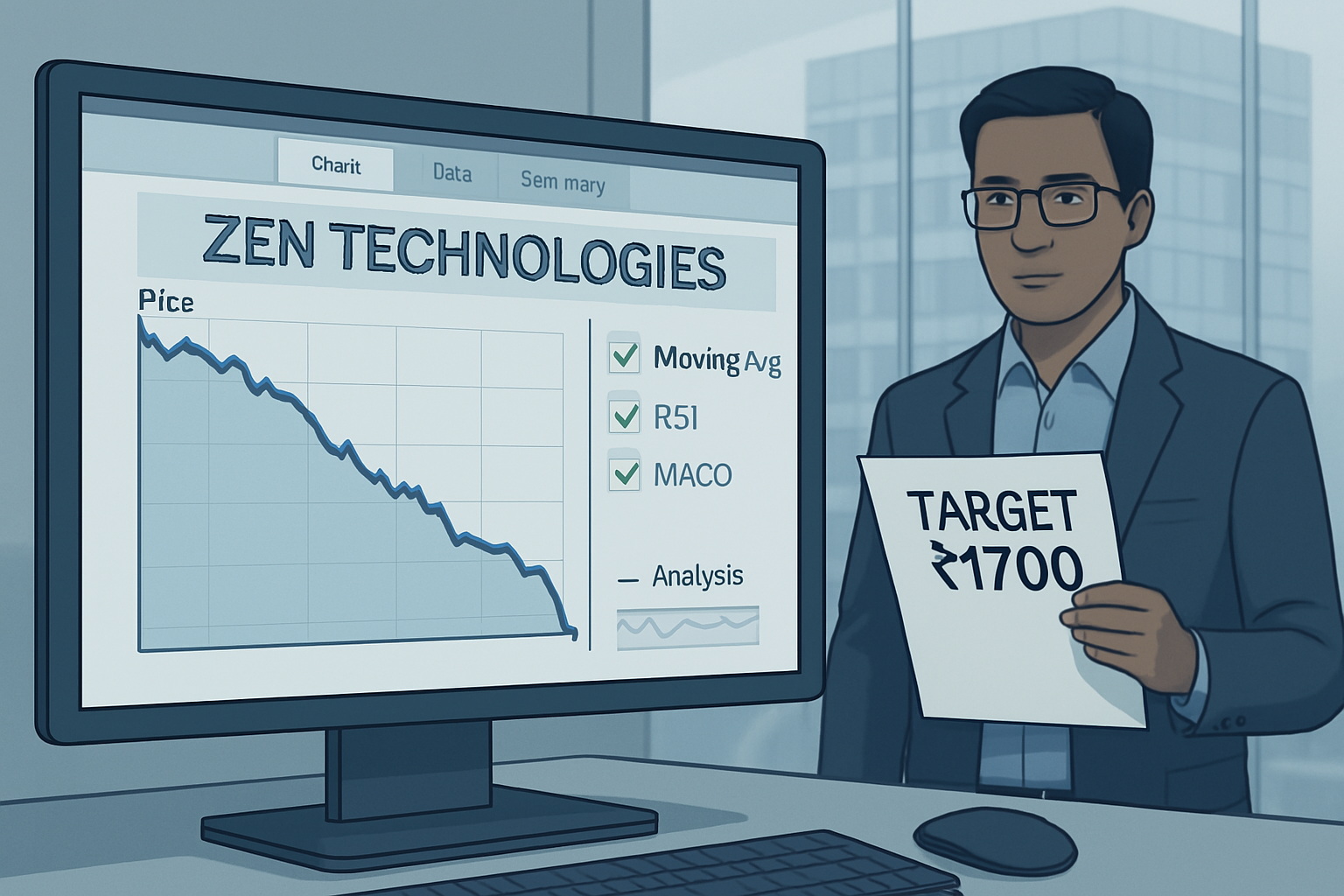
Zen Technologies shares have plunged nearly 24% over six trading days, following a weak Q1 FY26 performance. ICICI Securities has cut its target to ₹1,700 and downgraded the stock to Hold. Here’s the full analysis.
Table of Contents
Published: August 01, 2025
Last Updated: August 01, 2025
Introduction
Zen Technologies Limited, a prominent player in India’s defense simulation and training solutions sector, experienced significant market volatility following its first quarter fiscal year 2026 earnings announcement. The company’s stock price declined approximately 24 percent over six trading sessions in July 2025, reflecting investor concerns about operational performance and forward guidance.
This article provides a detailed examination of the quarterly results, stock price movements, broker recommendations, and future outlook. The analysis is based on publicly available financial statements, stock exchange data, and regulatory filings.
Understanding the factors behind this correction and evaluating the company’s strategic positioning helps investors assess potential opportunities and risks. This comprehensive review examines financial metrics, operational challenges, competitive dynamics, and recovery prospects.
Company Background and Business Overview
Zen Technologies’ Core Operations
Zen Technologies Limited operates in the defense technology sector, specializing in simulation and training solutions for armed forces and security agencies. The company develops virtual reality training systems, anti-drone technologies, and tactical training equipment. These products serve domestic and international defense establishments.
Founded to address the growing need for advanced training technologies, the company has established itself in the Indian defense ecosystem. Its solutions reduce training costs while improving operational readiness through realistic simulation environments.
The business model focuses on high-value, technology-intensive projects requiring substantial research and development capabilities. Project execution timelines typically span several quarters, creating potential volatility in quarterly financial performance.
Market Position and Competitive Landscape
Zen Technologies operates in a specialized segment of the defense industry with limited direct competition in certain product categories. The company’s technical expertise and established client relationships provide competitive advantages. However, increasing government emphasis on indigenous defense production has attracted new entrants.
The defense simulation market continues expanding as armed forces worldwide recognize the value of technology-based training. Cost-effectiveness compared to live training exercises drives adoption. Rapid technological advancement requires continuous innovation to maintain market relevance.
Domestic competitors include traditional defense manufacturers expanding into technology solutions. International companies also pursue opportunities in India’s growing defense market. Zen Technologies differentiates through specialized capabilities in specific training solution categories.
Q1 FY26 Financial Performance Analysis
Revenue Decline and Contributing Factors
The first quarter of fiscal year 2026 presented significant challenges for Zen Technologies. Revenue declined substantially compared to the corresponding quarter of the previous fiscal year. Various sources reported year-over-year revenue decreases ranging from 38 to 57 percent, indicating severe operational headwinds.
Management attributed this decline primarily to order deferrals rather than contract cancellations. Certain projects experienced delays due to design specification changes requested by clients. Defense procurement inherently involves complex approval processes that can extend timelines.
The timing of order execution significantly impacts quarterly results for project-based businesses. Unlike product companies with recurring revenue streams, defense technology providers depend on project milestone completion for revenue recognition. Delays in achieving milestones directly reduce quarterly revenue.
Additionally, the first quarter typically experiences slower defense procurement activity as government agencies finalize annual budgets and planning. This seasonal pattern can amplify the impact of project-specific delays during this period.
Profitability Metrics and Margin Analysis
Net profit declined 38 to 50 percent year-over-year according to various reports. Specifically, net profit decreased from ₹76.81 crore in Q1 FY25 to ₹47.75 crore in Q1 FY26. This represented a decline of approximately 38 percent in absolute terms.
Beyond revenue reduction, margin compression contributed to profit decline. EBITDA margins decreased approximately 200 basis points to 40.9 percent from higher levels in the previous year. Lower margins reflected operating leverage impacts when revenue declines against relatively fixed cost structures.
The company operates with significant fixed costs including research facilities, technical personnel, and infrastructure. When project execution slows, these costs continue while revenue generation decreases, compressing margins. Additionally, competitive pressures and project mix variations can affect profitability.
Maintaining profitability during revenue downturns demonstrates operational resilience. However, sustained margin pressure requires management attention to cost optimization and project pricing strategies.
Order Book Deterioration and Pipeline Concerns
The order book, representing confirmed contracts awaiting execution, declined from ₹1,160 crore in June 2024 to ₹754 crore by the end of Q1 FY26. This reduction raised concerns about revenue visibility for upcoming quarters. The order book now represented approximately 0.7 times FY25 annual revenue.
A declining order book indicates either slower new order wins or faster execution of existing orders. In Zen Technologies’ case, weak order inflows during the quarter contributed significantly to this reduction. Several anticipated orders did not materialize during the expected timeframe.
One significant contract valued at ₹60-70 crore experienced deferral due to design specification changes. Defense contracts often involve iterative refinement of technical requirements, extending negotiation and finalization timelines. Such deferrals temporarily remove anticipated orders from near-term pipeline calculations.
The order book metric serves as a leading indicator of future revenue potential. Sustained weakness in new order acquisition would constrain growth prospects and potentially necessitate operational adjustments.
Stock Price Movement Analysis
Pre-Results Trading and Peak Valuation
Before the earnings announcement, Zen Technologies traded near ₹1,908 per share on July 24, 2025. This price level reflected strong investor confidence built on the company’s historical performance and growth expectations. The stock had reached a 52-week high of ₹2,627 earlier in the fiscal year.
Strong market sentiment toward defense stocks contributed to elevated valuations across the sector. Government emphasis on indigenous defense capabilities and increasing defense budgets created favorable conditions for domestic manufacturers. Zen Technologies benefited from this positive sector sentiment.
The pre-results trading levels implied premium valuation multiples reflecting growth expectations. Investors anticipated continued order wins and revenue expansion based on the company’s market positioning and opportunity pipeline.
Post-Results Correction Timeline
July 26, 2025 marked the earnings announcement date. The quarterly results revealed the challenges discussed previously, immediately triggering investor concern about near-term prospects. Market participants reassessed valuation assumptions in light of execution difficulties.
On July 28, 2025, the first trading session following results, shares opened at ₹1,688, representing an immediate decline from the July 24 peak. By the session’s close, the stock hit the lower circuit limit of 5 percent, indicating overwhelming selling pressure exceeding buying interest.
The correction continued over subsequent sessions. By July 29-30, 2025, the stock declined to ₹1,523, representing approximately 20 percent reduction from the recent high. Multiple consecutive days of lower circuit limits demonstrated sustained negative sentiment.
July 31, 2025 saw further decline to ₹1,447, marking the correction’s low point. This represented approximately 24 percent total decline from the July 24 high of ₹1,908. The speed and magnitude of the correction reflected significant disappointment with quarterly performance.
Trading Volumes and Market Dynamics
Trading volumes increased substantially during the correction period. High volumes indicated broad-based participation in the sell-off rather than isolated selling by specific investor categories. Both institutional and retail investors appeared to reassess positions.
Circuit limits on multiple consecutive days prevented even larger single-day declines. These regulatory mechanisms pause trading when prices move beyond specified thresholds, allowing market participants time to process information and make considered decisions.
By early August 2025, shares recovered partially to trade between ₹1,536 and ₹1,603. This recovery reflected some stabilization as initial panic subsided and value-oriented investors identified potential opportunities. However, the stock remained down approximately 9 percent for the month.
Volatility Context and Historical Perspective
The 52-week trading range of ₹946 to ₹2,627 provided context for understanding the stock’s inherent volatility. This wide range indicated that significant price swings were not unprecedented for Zen Technologies. Defense sector stocks often experience elevated volatility due to lumpy order flows and execution uncertainties.
Comparing the July correction to historical volatility patterns helps assess whether the decline represented typical market behavior or exceptional circumstances. The speed of the decline exceeded typical market corrections, suggesting specific concerns rather than general market weakness.
Broker Recommendations and Target Price Revisions
ICICI Securities Analysis
ICICI Securities adopted a conservative stance following the quarterly results. The brokerage downgraded its rating to “Hold” from a previously more positive recommendation. This rating change signaled reduced confidence in near-term performance prospects.
The target price revision to ₹1,700 per share represented a significant reduction from previous estimates. This target implied modest upside from post-correction trading levels but acknowledged limited near-term catalysts for substantial revaluation.
ICICI Securities’ analysis highlighted specific concerns including execution delays stemming from design changes in key projects. The brokerage emphasized weak order inflows as a primary concern affecting forward revenue visibility. The analysis called for improved execution clarity before considering a more optimistic outlook.
The conservative stance reflected skepticism about management’s ability to achieve recovery within projected timeframes. The brokerage appeared to adopt a wait-and-see approach, requiring evidence of operational improvement before upgrading recommendations.
Motilal Oswal Financial Services Perspective
Motilal Oswal Financial Services took a more measured approach in their analysis. The brokerage revised the target price to ₹1,650 from ₹1,850, acknowledging challenges while maintaining some optimism about medium-term prospects.
The analysis included cuts to FY26 and FY27 earnings estimates reflecting the new operating environment. However, Motilal Oswal maintained expectations that order inflows would resume from Q2 FY26 onwards. This outlook suggested belief in the temporary nature of current challenges.
The more constructive perspective reflected confidence in the company’s underlying market position and long-term growth drivers. While acknowledging execution risks, the analysis emphasized opportunities in defense modernization and technology adoption.
Nuvama Institutional Equities Assessment
Nuvama Institutional Equities conducted a comprehensive valuation reassessment. The brokerage reduced earnings per share projections by 8 percent for FY26 and 19 percent for FY27. These revisions reflected more conservative growth assumptions given execution uncertainties.
Additionally, Nuvama adjusted valuation multiples from 45 times earnings to 40 times, acknowledging increased execution risks. This multiple compression reflected higher uncertainty premium required by investors. The revised target price of ₹1,800 down from ₹2,170 incorporated both earnings revisions and multiple adjustments.
Despite the significant target reduction, Nuvama maintained focus on the company’s long-term positioning in the defense sector. The analysis highlighted that achieving the revised target still required successful order execution improvements.
Consensus View and Market Sentiment
The consensus among major brokerages converged around target prices in the ₹1,650-₹1,800 range. Most analysts maintained “Hold” ratings or cautious “Buy” recommendations rather than strong buy suggestions. This consensus reflected balanced assessment of opportunities and risks.
The uniform direction of revisions—all downgrades—indicated broad agreement about near-term challenges. However, the relatively modest downgrades compared to the stock price decline suggested analysts viewed the correction as partly excessive relative to fundamental deterioration.
Target prices implied potential upside of 10-20 percent from post-correction levels. However, this upside remained contingent on successful execution of recovery plans and achievement of order inflow targets in coming quarters.
Operational Challenges and Execution Issues
Design Specification Changes and Project Delays
One significant operational challenge involved design specification changes in a major contract valued at ₹60-70 crore. Defense projects often require modifications as technical requirements evolve or user feedback incorporates into final specifications. Such changes extend project timelines and defer revenue recognition.
The complexity of defense simulation systems means that changes in one component may require adjustments across multiple integrated systems. This cascading effect can significantly extend development and testing periods. Quality assurance requirements in defense applications mandate thorough validation of all changes.
Client coordination represents another challenge. Defense agencies have specific procurement processes and approval hierarchies that must be navigated. Changes in specifications may require multiple levels of approval, further extending timelines.
Resource Allocation and Capacity Management
Managing multiple complex projects simultaneously while ensuring quality and timely delivery creates operational challenges. Technical resources including specialized engineers and systems integrators have limited availability. Balancing resource allocation across projects affects execution efficiency.
When projects experience delays, resources may become underutilized while still incurring costs. Conversely, accelerating delayed projects may require resource reallocation from other initiatives, potentially creating cascading delays. Effective project portfolio management becomes critical during periods of execution challenges.
The company must also manage working capital effectively when projects experience delays. Extended payment cycles in defense contracts can strain cash flows if multiple projects simultaneously experience execution delays.
Broader Defense Sector Context
The defense sector experienced general weakness during this period, affecting sentiment toward all defense stocks. Broader sector indices showed declines, suggesting industry-wide challenges rather than company-specific issues alone. This context helps explain the magnitude of Zen Technologies’ stock price correction.
Defense procurement often follows government budget cycles. The first quarter typically sees slower order placement activity as new fiscal year budgets finalize and procurement plans develop. This seasonal pattern may have contributed to weak order inflows during Q1 FY26.
Competitive dynamics in the defense technology space continue intensifying. Government emphasis on indigenous capabilities has encouraged new entrants while also creating opportunities for established players. Increased competition may affect order win rates and pricing dynamics.
Growth Opportunities and Strategic Initiatives
Management’s Growth Targets and Outlook
Despite Q1 challenges, management maintains ambitious growth objectives. The company targets ₹6.5 billion in order inflows by the first half of FY26. This target represents significant acceleration from Q1 performance levels and requires substantial order wins in Q2 FY26.
Revenue growth targets include 50 percent compound annual growth rate over the next 2-3 years. Achieving this growth requires not only order wins but also efficient project execution. The ambitious target reflects management’s confidence in underlying market opportunities and competitive positioning.
Profitability targets include maintaining 35 percent EBITDA margins and 25 percent profit after tax margins. These margin targets suggest expectations for operational efficiency improvements alongside revenue growth. Achieving these metrics during rapid expansion would demonstrate operational excellence.
Anti-Drone Systems Market Opportunity
Anti-drone systems represent a significant emerging opportunity for Zen Technologies. Growing security concerns regarding unauthorized drone operations have created demand across military and civilian applications. The company has developed counter-drone technologies addressing this market need.
The global anti-drone systems market experiences rapid growth driven by increasing drone proliferation and associated security risks. Applications include protecting critical infrastructure, securing public events, and military base defense. Market research indicates substantial expansion potential over coming years.
Zen Technologies pursues both domestic and export opportunities in this segment. International markets, particularly in developed countries with established defense procurement processes, offer potential for premium pricing and large-scale contracts. Success in export markets would provide revenue diversification and validate technology capabilities.
International Expansion Strategy
International expansion represents a key strategic priority for Zen Technologies. The company actively pursues opportunities in the United States and NATO country markets. These markets offer substantial scale and established procurement budgets for proven technologies.
Entering developed country defense markets requires meeting stringent technical standards and security certifications. Successfully navigating these requirements validates technology quality and creates barriers to entry for competitors. International success could significantly enhance company valuation through revenue diversification and growth acceleration.
Technology partnerships with international companies may facilitate market entry while providing opportunities for joint development programs. Such partnerships can share development costs while accessing complementary capabilities. However, partnerships also require managing intellectual property considerations and revenue sharing arrangements.
Technology Innovation and Product Development
Continued investment in research and development maintains technology leadership in existing product categories while enabling expansion into emerging areas. Artificial intelligence integration into training systems represents one innovation avenue. AI-powered training can provide more adaptive learning experiences and better performance assessment.
Virtual reality and augmented reality technologies continue advancing, creating opportunities for more immersive and effective training solutions. Keeping pace with these technological developments requires sustained R&D investment but enables premium pricing for advanced capabilities.
The company must also maintain existing product lines while developing new offerings. Balancing resource allocation between sustaining engineering and new product development affects both current revenue and future growth potential.
Risk Assessment and Mitigation Strategies
Execution Risk Factors
Project execution risks remain the most immediate concern following Q1 performance. Complex defense projects involve multiple phases, stakeholder coordination, and technical integration challenges. Delays in any phase can cascade through project timelines, affecting revenue recognition and profitability.
The company’s project management capabilities and processes directly impact execution success. Enhanced project monitoring systems, improved resource planning, and proactive risk management can mitigate execution risks. However, external factors like client decision timelines remain partially outside company control.
Quality assurance represents another execution consideration. Defense applications demand extremely high reliability and performance standards. Ensuring consistent quality while maintaining project timelines requires disciplined processes and experienced technical teams.
Concentration Risk in Government Procurement
Heavy dependence on government defense spending creates concentration risk. Government budget allocations, policy priorities, and procurement timing significantly influence order flows. Changes in defense spending priorities or budget constraints could substantially impact revenue prospects.
The company serves defense and security agencies across multiple countries, providing some geographic diversification. However, government customers share certain characteristics including procurement processes, payment cycles, and budget constraints that create correlated risks.
Expanding into civilian applications of existing technologies could provide diversification from government dependence. However, civilian markets often have different competitive dynamics, pricing expectations, and sales cycle characteristics requiring different go-to-market approaches.
Competitive and Technology Risks
Increasing competition in defense technology creates market share and pricing pressures. New entrants with substantial capital or established international players expanding into India could challenge Zen Technologies’ market position. Maintaining technology leadership and customer relationships becomes critical for defending market share.
Rapid technological advancement requires continuous innovation to maintain competitiveness. Technologies that appear cutting-edge today may become commoditized within a few years. R&D investment must anticipate future requirements rather than merely responding to current specifications.
Intellectual property protection represents another consideration. Defending proprietary technologies while operating internationally with various partnership arrangements requires careful management. However, defense technologies often involve national security considerations affecting IP commercialization.
Valuation and Market Risks
Current valuation multiples in the range of 52-55 times earnings require strong growth and execution to justify investor expectations. Any shortfall in achieving growth targets could lead to multiple compression and stock price decline. The premium valuation leaves limited margin for execution disappointments.
Market sentiment toward defense stocks influences trading dynamics. Sector rotation away from defense stocks based on broader market trends or policy developments could create selling pressure regardless of company-specific fundamentals. This systematic risk affects all sector participants.
Lock-in period expiration for pre-IPO shareholders represents a potential overhang. When restrictions end, increased share supply could temporarily depress prices depending on selling pressure magnitude and concurrent demand conditions.
Sectoral Analysis and Policy Impact
India’s Defense Modernization Initiatives
The Indian government’s defense modernization programs create substantial opportunities for domestic technology providers. Emphasis on indigenous development under “Make in India” policies prioritizes domestic suppliers for various requirements. Zen Technologies’ positioning as an Indian company provides advantages in accessing these opportunities.
Armed forces increasingly recognize the value of technology-based training solutions. Virtual training reduces costs associated with live exercises while enabling more frequent training iterations. Budget constraints encourage adoption of cost-effective training methodologies.
Defense procurement policies continue evolving to streamline processes and encourage innovation. Faster procurement cycles would benefit technology providers by reducing order-to-delivery timelines and associated working capital requirements. However, implementation of policy changes often lags announcements.
Budget Allocation and Spending Patterns
Defense budget allocations toward modernization and technology acquisition have increased proportionally in recent years. This trend supports demand for advanced training systems and emerging technologies like counter-drone systems. However, budget allocations must translate into actual procurement for revenue generation.
The timing of budget releases and procurement activities creates quarterly variability in order flows. The first quarter often experiences slower activity as annual budgets finalize and departments develop procurement plans. Understanding these patterns helps interpret quarterly performance variations.
Multi-year defense planning provides visibility into likely procurement areas but doesn’t guarantee specific order timing or allocations. Companies must actively pursue opportunities and demonstrate capability advantages to secure contracts in competitive bidding processes.
Geopolitical Factors and Export Opportunities
Regional security dynamics influence defense spending priorities and procurement urgency. Heightened security concerns typically accelerate defense modernization timelines while creating demand for specific capability categories. Counter-drone systems, for example, gain importance as drone proliferation increases.
Export opportunities depend significantly on geopolitical relationships and defense cooperation agreements. Countries with strong bilateral defense ties more readily consider each other’s defense technologies. India’s growing defense partnerships create potential avenues for technology exports.
However, technology transfer restrictions and export control regulations limit some international opportunities. Navigating these regulations requires expertise and may constrain addressable markets for certain product categories. Strategic partnerships can help access restricted markets through licensed production or joint ventures.
Financial Modeling and Projections
Revenue Recovery Scenarios
Recovery trajectory depends on order inflow success and execution efficiency improvements. A base case scenario assumes gradual recovery starting Q2 FY26 with order inflows reaching targeted levels by the first half end. This scenario would support return to revenue growth in subsequent quarters.
An optimistic scenario incorporates significant international order wins and accelerated domestic market development. Major contract successes, particularly in export markets, could substantially exceed base case projections. However, this scenario requires successful conclusion of ongoing negotiations and competitive wins.
A conservative scenario extends the recovery period with continued execution challenges and slower order inflow recovery. This scenario might result if design changes affect additional projects or competitive pressures intensify. Extended weakness would necessitate cost structure adjustments and revised growth expectations.
Margin Expansion Opportunities
Scale benefits from larger projects can support margin improvement toward management’s 35 percent EBITDA target. Fixed cost leverage improves as revenue scales, directly enhancing profitability. However, achieving scale requires successful large order wins and efficient execution.
Cost structure optimization through process improvements and technology utilization can enhance margins even during moderate revenue growth. Automation of certain testing and validation processes, for example, could reduce direct labor requirements per project.
Project mix significantly affects overall margins. Higher-margin opportunities in export markets or specialized applications can offset pressure in competitive domestic segments. Strategic focus on higher-value projects supports margin objectives.
Working Capital and Cash Flow Considerations
Working capital requirements remain substantial in the project-based business model. Upfront investments in components and development activities precede revenue recognition and payment receipt. Extended working capital cycles constrain cash generation and require financing.
Improving working capital efficiency through better project terms, milestone structuring, and collection management directly enhances cash flows. Negotiating advance payments or progressive billing tied to milestones can reduce working capital burdens.
The company’s ability to fund growth through operating cash flows versus external financing affects financial flexibility and shareholder returns. Effective working capital management becomes increasingly important as the business scales.
Investment Considerations and Strategies
For Growth-Oriented Investors
Investors with higher risk tolerance and longer time horizons might find current price levels attractive for gradual position building. The post-correction valuation offers potential upside if the company successfully executes recovery plans. However, this strategy requires acceptance of continued volatility.
Monitoring order announcements and quarterly performance provides indicators for assessing recovery progress. Significant order wins, particularly in international markets, would validate growth thesis and potentially catalyze revaluation. Conversely, continued execution challenges might necessitate position reassessment.
Using Zen Technologies as exposure to India’s defense technology theme provides participation in a structural growth story. Long-term defense modernization trends support the sector even as individual companies experience cyclical performance variations. Portfolio context and position sizing should reflect volatility expectations.
For Conservative Investors
Risk-averse investors might prefer waiting for additional performance evidence before initiating positions. Observing Q2 and Q3 results would provide clarity on whether Q1 represented a temporary setback or indicated deeper challenges. This approach sacrifices potential upside for reduced downside risk.
Valuation comfort represents another consideration. Further corrections could provide more attractive entry points with improved risk-reward ratios. However, timing market bottoms proves consistently difficult, potentially causing investors to miss recovery opportunities.
Diversified exposure through defense sector funds or broader market indices provides sector participation without single-stock concentration risk. This approach sacrifices potential outperformance for reduced company-specific risk exposure.
Active Monitoring Metrics
Investors should track several key performance indicators in coming quarters. Order inflow momentum provides leading indication of revenue potential. Achievement of the ₹6.5 billion H1 FY26 target would strongly support recovery thesis.
Revenue growth rates and sequential improvement demonstrate execution progress. Returning to growth in Q2 or Q3 would indicate successful navigation of Q1 challenges. Sustained weakness would require strategy reassessment.
Margin trends show operational efficiency and competitive positioning. Maintaining or improving margins while growing revenue demonstrates strong execution. Continued margin pressure might indicate structural challenges requiring management attention.
Order book levels and composition provide forward visibility. A growing order book with diversified client base supports sustainable growth projections. Continued order book decline would raise concerns about market position and competitive dynamics.
Competitive Positioning and Market Share
Differentiation Factors
Zen Technologies differentiates through specialized expertise in defense simulation and training solutions. Deep technical knowledge in specific application areas creates barriers to entry for competitors without similar experience. Customer relationships built over years provide advantages in repeat business and references.
Proprietary technologies and intellectual property protect market position in certain product categories. However, technology advantages typically require continuous innovation to maintain as competitors develop alternative solutions. R&D investment sustains technical leadership.
Comprehensive solution capabilities spanning simulation development, hardware integration, and support services differentiate from point solution providers. Offering complete solutions simplifies procurement for customers while creating higher switching costs.
Market Share Dynamics
Estimating precise market share proves difficult in the fragmented defense technology sector with multiple product categories and customer segments. However, Zen Technologies’ revenue scale and client relationships suggest meaningful presence in addressed segments.
Market share gains require winning competitive bids against domestic and international competitors. Success depends on demonstrating superior value through technical capabilities, pricing, delivery timelines, or support quality. Government procurement processes typically involve detailed evaluation across multiple criteria.
Export success would provide access to new markets beyond current domestic concentration. International market share in countries with larger defense budgets could substantially impact revenue scale. However, international expansion typically requires extended periods for relationship development and certification achievement.
Summary and Outlook
Zen Technologies’ first quarter fiscal year 2026 performance presented significant challenges that triggered approximately 24 percent stock price correction. Revenue declined 38-57 percent year-over-year while net profit decreased 38-50 percent to ₹47.75 crore. The order book declined to ₹754 crore from ₹1,160 crore, raising concerns about forward revenue visibility.
The stock declined from ₹1,908 on July 24, 2025, to ₹1,447 by July 31, 2025. Subsequent partial recovery brought trading levels to ₹1,536-₹1,603 by early August. Major brokerages revised target prices to the ₹1,650-₹1,800 range while adopting cautious “Hold” or conservative “Buy” stances.
Management attributes Q1 challenges primarily to timing issues and design specification changes rather than fundamental market problems. The company maintains ambitious targets including ₹6.5 billion in order inflows by H1 FY26 and 50 percent revenue CAGR over 2-3 years. Success in achieving these targets will determine whether the correction represented temporary setback or indicated deeper challenges.
Growth opportunities include anti-drone systems market expansion, international market penetration particularly in US and NATO countries, and benefits from India’s defense modernization initiatives. However, execution risks, government spending dependence, competitive pressures, and premium valuations require careful consideration.
The coming quarters prove critical for assessing recovery prospects. Order announcement momentum, revenue growth resumption, and margin maintenance will indicate execution progress. Investors should monitor these metrics while considering individual risk tolerance and investment horizons when evaluating opportunities at current levels.
Frequently Asked Questions
What were the primary factors causing Zen Technologies’ stock decline in July 2025?
The stock correction resulted from disappointing Q1 FY26 financial results announced July 26, 2025. Revenue decreased 38-57 percent year-over-year while net profit declined 38-50 percent from ₹76.81 crore to ₹47.75 crore. EBITDA margins compressed 200 basis points to 40.9 percent. The order book declined from ₹1,160 crore to ₹754 crore, indicating weak order inflows. Execution delays in key projects due to design specification changes and deferred orders contributed to performance challenges. These factors prompted investors to reassess near-term growth prospects and valuation assumptions.
What are the current broker target prices and ratings for Zen Technologies?
Following Q1 results, major brokerages revised targets downward. ICICI Securities downgraded to “Hold” with ₹1,700 target price. Motilal Oswal set ₹1,650 target price while expecting Q2 recovery. Nuvama reduced target to ₹1,800 from ₹2,170 after cutting FY26 earnings estimates by 8 percent and FY27 by 19 percent. The consensus centers around ₹1,650-₹1,800 range with most maintaining “Hold” or cautious “Buy” ratings rather than strong buy recommendations. Target prices imply potential upside of 10-20 percent from post-correction levels contingent on execution improvements.
Is the Q1 performance decline temporary or does it indicate structural problems?
Management characterizes challenges as primarily timing-related rather than structural. Order deferrals resulted from design specification changes including one contract valued at ₹60-70 crore. Defense procurement often experiences Q1 seasonal weakness as government budgets finalize. Management maintains ambitious targets of ₹6.5 billion order inflows by H1 FY26, suggesting confidence in recovery. However, significant order book decline and execution delays raise questions about near-term visibility. The next two quarters will provide critical evidence distinguishing temporary setbacks from deeper structural issues.
What growth opportunities exist for Zen Technologies going forward?
Primary growth drivers include anti-drone systems market expansion addressing military and civilian security applications. International expansion targeting US and NATO markets offers revenue diversification and premium pricing opportunities. India’s defense modernization initiatives under “Make in India” support domestic opportunities. Technology innovation in AI-powered training systems creates competitive differentiation. Recovery in defense spending and procurement cycles starting Q2 FY26 should support order flows. Export market success would significantly enhance growth trajectory and valuation multiples. However, realizing these opportunities requires improved execution consistency.
How does current valuation compare to historical levels?
Zen Technologies currently trades at price-to-earnings multiples of 52-55 times, which analysts consider elevated given execution uncertainties. The 52-week range of ₹946-₹2,627 demonstrates significant historical volatility. Current levels around ₹1,536-₹1,603 represent middle-ground valuation after the July correction. The company commands premium multiples compared to traditional defense manufacturers due to technology focus and growth expectations. However, recent execution challenges prompted multiple compression expectations among brokerages. Sustained growth and margin improvement justify premium valuations while execution shortfalls could trigger further compression.
What specific risks should investors monitor?
Key risks include execution delays in complex defense projects affecting revenue recognition and client relationships. High dependence on government defense spending creates vulnerability to budget allocation changes and procurement timing. Intense competition from domestic entrants and international players pressures margins and order win rates. Geopolitical factors and export restrictions affect international expansion plans. High valuation multiples require strong execution leaving limited margin for disappointments. Working capital management challenges during order deferrals strain cash flows. Customer concentration in government agencies creates correlated risk exposure. Technology obsolescence risks require continuous R&D investment.
What are management’s medium-term financial targets?
Management targets ambitious growth including 50 percent revenue compound annual growth rate over 2-3 years. The company aims to maintain 35 percent EBITDA margins despite growth investments and competitive pressures. Profit after tax margin targets of 25 percent demonstrate expected operational efficiency improvements. Order inflow targets of ₹6.5 billion by H1 FY26 represent significant acceleration from Q1 levels. International expansion through US and NATO market penetration should contribute meaningfully to export revenues. These targets require substantial execution improvement from Q1 performance baseline.
Should investors buy, hold, or sell at current levels?
Investment decisions depend on individual risk tolerance and time horizons. Growth-oriented investors might consider gradual accumulation in ₹1,500-₹1,600 range for long-term appreciation, monitoring recovery catalysts like order announcements and international wins. Conservative investors should await improved execution visibility through Q2-Q3 performance before investing. The consensus “Hold” rating reflects cautious optimism pending evidence of operational recovery and order pipeline improvement. Value investors might find opportunities if corrections continue while fundamental thesis remains intact. All approaches require monitoring quarterly metrics including order flows, revenue growth, margins, and order book trends.
About the Author
Nueplanet
Nueplanet is a defense sector analyst and financial journalist with the years of experience covering Indian capital markets. Specializing in defense technology companies, government procurement dynamics, and sector policy analysis, Nueplanet provides detailed research-based coverage of market developments.
This analysis draws exclusively from publicly available information including stock exchange filings with NSE and BSE, Securities and Exchange Board of India regulatory disclosures, company quarterly results, investor presentations, and official broker research reports. The author maintains strict independence without financial interests in covered companies.
Commitment to Accuracy: All financial data, stock prices, and company information are verified through official sources including stock exchange websites, company regulatory filings, and authorized broker research. Content undergoes regular updates to reflect the latest verified information. Readers should independently verify all information and consult qualified financial advisors before making investment decisions.
Research Methodology: Analysis incorporates quantitative financial metrics from official statements, qualitative assessments of competitive positioning, sectoral trend analysis based on government policy documents, and broker consensus views from multiple research firms. The goal is providing comprehensive, factual information supporting informed investment evaluation.
Disclaimer: This article is for informational and educational purposes only. It does not constitute investment advice, stock recommendations, or solicitation to buy or sell securities. Nueplanet is not a registered investment advisor or SEBI-registered research analyst. Stock markets involve substantial risk including potential loss of principal. Past performance does not guarantee future results. Readers must conduct independent research and consult qualified financial professionals before making investment decisions. The author assumes no liability for investment decisions made based on this content.
Latest Posts:
- MHT CET CAP Round 1 Seat Allotment 2025
- HTET Answer Key 2025 Released
- IBPS Clerk Notification 2025
- SSC Protest 2025
- Adani Power Share Price & Stock Split Update – Q1 FY26 Result Analysis
Helpful Resources
Moneycontrol – “Hold Zen Technologies: Target of ₹1,700: ICICI Securities” (Moneycontrol)
Economic Times – “Zen Technologies shares slump 9% in 2 days post Q1 results” (The Economic Times)
Business Today – “Shares crash 24% in 6 sessions; here’s what brokerages say” (Business Today)
Business Today – “Slips into bear grip, down 20% in 5 days; what’s next?” (Business Today)
ScanX / Yahoo – Zen Technologies Q1 Profit Decline Report (scanx.trade)
Related Posts













Post Comment