









JPSC Result 2025 Declared: Final Civil Services Results Out, Check Details Here
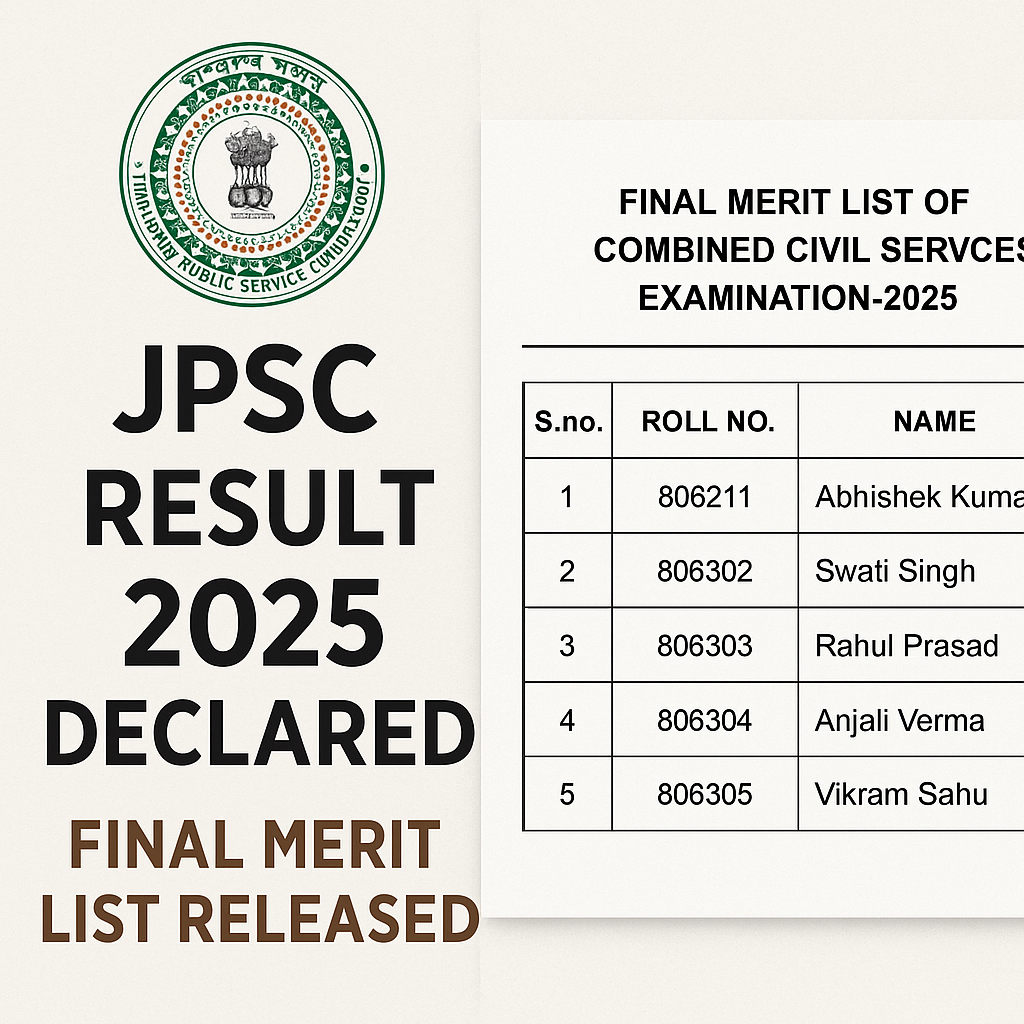
The Jharkhand Public Service Commission (JPSC) has released the final result for Civil Services 2025. Here are the updated results, topper list, and direct download link.
Introduction to JPSC Civil Services Examination 2025
The Jharkhand Public Service Commission (JPSC) announced the final results for the Civil Services Examination 2025 on July 25, 2025, through its official portal at jpsc.gov.in. This announcement marks the culmination of a comprehensive selection process that began earlier in the year with preliminary examinations.
The JPSC Civil Services Examination serves as a gateway to prestigious administrative positions within the state government of Jharkhand. It represents one of the most competitive state-level recruitment processes in India, attracting thousands of candidates seeking careers in public administration.
This result declaration affects 253 successful candidates who demonstrated exceptional performance across three rigorous examination stages. The selection process evaluated candidates through preliminary tests, main examinations, and personality assessments conducted over several months.
Understanding the JPSC examination system, selection criteria, and career opportunities helps aspiring civil servants prepare effectively for future recruitment cycles. This comprehensive analysis provides verified information based on official JPSC notifications and historical examination data.
Understanding the Jharkhand Public Service Commission
Constitutional Framework and Establishment
The Jharkhand Public Service Commission operates under Article 315 of the Indian Constitution as the primary recruitment authority for state government services. Established when Jharkhand became a separate state, JPSC functions as an independent constitutional body responsible for conducting examinations and recommending candidates for various administrative positions.
The commission ensures merit-based recruitment through transparent and standardized testing procedures. Its mandate includes organizing examinations, conducting interviews, and maintaining selection integrity across all recruitment processes.
JPSC operates from its headquarters in Ranchi, the state capital. The commission comprises a chairman and several members appointed by the Governor of Jharkhand, ensuring diverse expertise in examination design and candidate evaluation.
Administrative Services Under JPSC Jurisdiction
The commission conducts recruitment for two primary service categories within the state administrative framework. Group-A services include senior administrative positions such as Deputy Collector, Deputy Superintendent of Police, District Mines Officer, Assistant Commissioner (Commercial Tax), and Employment Officer.
Group-B services encompass specialized roles including Block Development Officer, Revenue Officer, Labor Enforcement Officer, District Welfare Officer, and Assistant Registrar Cooperative Society. These positions form the operational backbone of district and block-level administration across Jharkhand’s 24 districts.
Candidates selected through JPSC examinations receive permanent government employment with pension benefits, regular salary increments, and opportunities for career advancement through departmental promotions and specialized training programs.
JPSC Civil Services Final Result 2025: Official Announcement Details
Result Declaration Timeline and Access
The JPSC released the Civil Services Final Result 2025 on July 25, 2025, following completion of the interview process. Candidates can access their results through the official website by navigating to the results section and locating the Combined Civil Services Examination 2025 notification.
The result document contains comprehensive information including candidate roll numbers, names, category classifications, and final merit rankings. The commission published this data in PDF format, allowing candidates to download and verify their selection status.
Officials completed the entire examination cycle within the scheduled timeframe, beginning with preliminary tests in March 2025 and concluding with interview assessments in July 2025. This adherence to the announced schedule demonstrates administrative efficiency in managing large-scale recruitment processes.
Examination Statistics and Selection Numbers
The preliminary examination attracted participation from over 185,000 candidates, reflecting the competitive nature of state civil services recruitment. Among these, approximately 8,500 candidates qualified for the main examination, representing a 4.6% qualification rate at this initial screening stage.
From the mains examination, 759 candidates received interview calls based on their written test performance. This number represents the top 0.4% of the original applicant pool and 8.9% of those who appeared for the main examination.
The final selection resulted in 253 candidates receiving appointment recommendations. This translates to a final success rate of 0.14% from the total number of preliminary examination participants, highlighting the examination’s selective nature and competitive standards.
The gender distribution among selected candidates shows 148 male candidates (58.5%) and 105 female candidates (41.5%). This representation indicates improving participation and success rates for women in state administrative services.
Category-Wise Selection Analysis
Reservation Policy Implementation
The JPSC follows constitutional reservation guidelines in its selection process. The final merit list reflects allocation across five categories: General, Other Backward Classes (OBC), Scheduled Caste (SC), Scheduled Tribe (ST), and Economically Weaker Section (EWS).
General category candidates secured 87 positions, constituting 34.4% of total selections. This category demonstrated competitive performance with the top three ranks achieved by general category candidates.
OBC candidates obtained 59 selections (23.3% of total positions), with the highest-ranking candidate at position 7 in the overall merit list. This performance indicates strong preparation levels and competitive ability within this category.
Performance Across Reserved Categories
Scheduled Caste candidates secured 32 positions (12.6% of selections), with the top-performing candidate achieving rank 15 overall. The category showed geographic diversity with representation from various districts across Jharkhand.
Scheduled Tribe candidates obtained 54 selections (21.3% of total positions), reflecting Jharkhand’s significant tribal population and administrative focus on tribal area development. The highest-ranking ST candidate achieved position 9 in the overall merit ranking.
Economically Weaker Section candidates, under the recent reservation provision, secured 21 positions (8.3% of selections). This category’s inclusion ensures economic diversity in state administrative services, with the top EWS candidate ranking 12th overall.
The category-wise distribution aligns with constitutional mandates while maintaining competitive standards across all groups. Cut-off marks varied by category, with general category requiring higher scores compared to reserved categories in preliminary examinations.
JPSC Examination Structure and Selection Process
Stage One: Preliminary Examination Format
The preliminary examination serves as a screening test to shortlist candidates for the main examination. It comprises two papers, each carrying 100 marks, conducted in objective multiple-choice question format.
Paper One covers Indian History, Geography, Polity, and Economics, testing candidates’ understanding of national-level subjects. Paper Two focuses on Science, Current Affairs, and Jharkhand-specific topics including state geography, history, culture, and governance.
Candidates receive two hours to complete each paper. The examination features negative marking, requiring strategic approach to question selection and accuracy. Performance in preliminary examination determines qualification for mains but does not contribute to final merit ranking.
Cut-off marks vary annually based on difficulty level and category classification. For 2025, general category candidates required approximately 145 out of 200 marks to qualify, while reserved category cut-offs ranged between 130-140 marks depending on specific category.
Stage Two: Main Examination Pattern
The main examination consists of six descriptive papers totaling 1200 marks, forming the primary component of final merit calculation. The examination includes one qualifying language paper (Hindi or English) carrying 100 marks, not counted toward merit.
Four General Studies papers, each worth 150 marks, cover diverse subjects. General Studies Paper I examines Indian Heritage, Culture, History, Geography, and Society. Paper II focuses on Governance, Constitution, Social Justice, and International Relations.
General Studies Paper III tests knowledge of Economic Development, Science and Technology, Environment, and Disaster Management. Paper IV evaluates Ethics, Integrity, Aptitude, and problem-solving through case studies and theoretical questions.
Candidates must also complete two papers in their chosen optional subject, each carrying 150 marks, totaling 300 marks. Popular optional subjects include Public Administration, History, Geography, Economics, and Political Science, selected based on candidate background and interest.
The descriptive format requires well-structured, analytical answers demonstrating depth of understanding and ability to present arguments coherently. Successful candidates typically secure 50-60% marks in main examination papers.
Stage Three: Interview and Personality Assessment
The personality test or interview carries 300 marks, representing 20% of the total merit calculation (1500 marks). This stage evaluates candidates’ suitability for administrative roles through direct interaction with an expert panel.
Interview panels consist of five members including a chairman and subject matter experts from various fields. Sessions typically last 45-60 minutes, covering topics ranging from current affairs to candidate’s educational background, home district issues, and administrative challenges.
Assessment criteria include mental alertness, critical thinking, balanced judgment, communication skills, leadership qualities, and ethical awareness. Interviewers may present hypothetical administrative scenarios to evaluate problem-solving approaches and decision-making abilities.
Candidates demonstrating updated knowledge about Jharkhand-specific issues, development challenges, tribal welfare, mining policies, and environmental concerns typically perform better in interviews. The assessment also evaluates personality traits including confidence, honesty, and social awareness.
Merit List Calculation Methodology
Final Ranking Determination
The JPSC calculates final merit by combining main examination scores (1200 marks) and interview marks (300 marks), creating a total of 1500 marks. This combined score determines each candidate’s position in the overall merit ranking.
Preliminary examination results do not factor into final merit calculation but serve exclusively as a qualifying stage. Similarly, the language paper in main examination acts as a qualifying component with a minimum passing threshold but no contribution to ranking.
The commission prepares separate merit lists for each category (General, OBC, SC, ST, EWS) while maintaining an overall merit list. Category-wise merit lists help implement reservation policies while ensuring constitutional compliance.
Candidates appearing in reserved categories can compete in general category if their marks place them in overall merit without category benefits. This provision ensures that reserved category candidates with exceptional performance can claim general category positions, leaving their category quota available for other candidates.
Tie-Breaking Provisions
When candidates obtain identical total marks, the commission applies specific tie-breaking rules to determine relative rankings. The first criterion considers main examination marks, giving preference to candidates with higher mains scores.
If the tie persists, the commission evaluates marks in specific subjects or papers designated as critical for administrative roles. Age may serve as an additional consideration, though specific tie-breaking sequences are detailed in official recruitment notifications.
The transparent calculation methodology ensures fairness and allows candidates to verify their rankings based on published score sheets. JPSC releases detailed scorecards showing paper-wise marks in main examination and interview scores for selected candidates.
Top Performers Profile and Success Patterns
Rank 1: Abhishek Kumar
The top-ranked candidate holds an engineering degree from the National Institute of Technology, Jamshedpur. He selected Public Administration as his optional subject, leveraging its administrative relevance and availability of quality study materials.
His preparation extended over 18 months with a structured daily routine combining conceptual study, current affairs analysis, and regular mock test practice. This systematic approach emphasized consistency over intensive study periods.
The candidate attributes success to balanced preparation across all papers rather than focusing exclusively on optional subjects. His strategy included maintaining comprehensive notes for quick revision and participating in peer discussion groups for perspective building.
Rank 2: Swati Singh
The second-ranked candidate completed her Economics Honours degree from Ranchi University, choosing Economics as her optional subject due to academic background and interest. She represents increasing women participation in administrative services.
Her preparation methodology emphasized detailed note-making and regular group discussions for topic clarification and perspective diversity. This collaborative approach helped identify knowledge gaps and maintain motivation during the lengthy preparation period.
Being the first in her family to pursue civil services, she overcame traditional expectations and limited guidance through self-directed learning and strategic resource utilization. Her success demonstrates that determination and structured preparation can overcome resource constraints.
Rank 3: Rahul Prasad
The third-ranked candidate comes from a rural background with limited access to coaching facilities. He pursued History as his optional subject, building on his graduation degree and personal interest in the subject.
His preparation relied heavily on self-study using standard reference books, online resources, and affordable study materials. This approach proves that expensive coaching is not essential for success with dedicated effort and smart resource utilization.
Despite being among the youngest candidates in the top ranks, he maintained consistent daily study schedules and regular self-assessment through previous year papers and online test series. His achievement inspires rural candidates to pursue administrative careers.
Common Success Strategies Among Top Performers
Preparation Time Allocation
Successful candidates typically invested 8-10 hours daily in focused study, maintaining this routine consistently over 15-20 months. Time distribution included morning sessions for challenging subjects, afternoon revision, and evening current affairs reading.
Most toppers emphasized quality over quantity, ensuring thorough understanding rather than superficial coverage of topics. They allocated preparation time proportionally across subjects based on syllabus weightage and personal comfort levels.
Regular weekly revision cycles helped consolidate learning and identify weak areas requiring additional attention. This systematic approach prevented last-minute cramming and ensured comprehensive syllabus coverage well before examinations.
Mock Test and Self-Assessment
Weekly full-length mock tests formed a crucial component of successful preparation strategies. These tests helped develop time management skills, identify subject-wise strengths and weaknesses, and build examination temperament.
Performance analysis after each test guided subsequent study focus, directing attention to topics requiring improvement. Successful candidates maintained detailed performance logs tracking score trends and improvement rates across subjects.
Interview preparation typically began 3 months before expected interview dates, including mock interviews with experienced mentors, peer groups, or coaching facilities. This practice helped refine communication skills and build confidence for personality assessment.
Current Affairs Management
Daily newspaper reading formed a non-negotiable part of every successful candidate’s routine. This habit built awareness of national and international developments while improving reading speed and comprehension.
Toppers maintained monthly compilations of important current events, linking them to static syllabus topics for integrated understanding. This approach helped answer questions requiring current examples or contemporary context.
Focus on Jharkhand-specific current affairs—including state budget, government schemes, development projects, and social issues—proved advantageous in both main examination and interview stages. State-level awareness distinguished candidates during personality assessment.
Document Verification Process
Timeline and Location
Selected candidates must attend document verification within 15 days of result declaration at JPSC headquarters in Ranchi. The commission announces specific dates and timings through official notifications on its website.
Candidates should bring original documents along with self-attested photocopies for verification by commission officials. This process confirms eligibility claims made during application submission and prevents fraudulent selections.
The verification process typically requires one full day, with candidates appearing in scheduled slots based on roll numbers or merit rankings. Arriving at designated times with complete documentation ensures smooth processing.
Required Documents Checklist
Educational qualification certificates form the primary verification requirement, including mark sheets and degree certificates from Class 10 through highest qualification. Candidates must present documents from recognized educational boards and universities.
Age proof requires birth certificate or Class 10 mark sheet clearly showing date of birth. Category certificates (OBC/SC/ST) must be issued by competent authorities as specified in recruitment notification and should be current as per government norms.
EWS candidates need valid income and asset certificates issued within the financial year by authorized revenue officials. Character certificates from educational institutions or gazetted officers verify conduct and integrity.
Medical fitness certificates from government hospitals confirm physical and mental fitness for administrative duties. Recent passport-size photographs matching application records complete the documentation requirements.
Verification Failure Consequences
Candidates failing to produce original documents or found with discrepancies face disqualification from selection. False information or forged documents result in permanent debarment from JPSC examinations and legal action.
In cases of missing documents, candidates may receive limited time to produce required papers, though such extensions are granted sparingly and only for genuine reasons supported by evidence.
The commission maintains strict verification standards to ensure selected candidates meet all eligibility criteria. This rigorous process protects merit-based selection integrity and prevents unqualified candidates from joining administrative services.
Foundation Training Program
Training Institute and Duration
Selected candidates undergo six months of foundation training at the Jharkhand Institute of Administrative Training (JIAT) in Ranchi. This mandatory program prepares candidates for administrative responsibilities through theoretical instruction and practical exposure.
Training modules cover constitutional provisions, administrative procedures, government policies, financial management, and public service delivery systems. Experienced administrators and subject experts conduct sessions combining classroom instruction with field visits.
The program includes district attachments where candidates observe administrative functioning firsthand. These field postings typically last 6-8 weeks, providing practical insights into revenue administration, development programs, and public grievance handling.
Curriculum Components
Constitutional framework study occupies approximately two months, covering fundamental rights, directive principles, constitutional bodies, and center-state relations. This foundation ensures understanding of administrative actions within constitutional parameters.
Administrative procedures training spans 1.5 months, focusing on government office systems, file management, correspondence protocols, and decision-making processes. Candidates learn practical aspects of running government offices and handling official matters.
Specialized departmental training occurs in the final phase, preparing candidates for specific administrative roles based on service allocation. This training covers department-specific rules, procedures, and technical knowledge relevant to assigned positions.
Assessment and Certification
Training performance evaluation occurs through written tests, assignments, presentations, and field report assessments. Candidates must demonstrate adequate understanding of training content and satisfactory field performance.
Successful training completion results in confirmation of appointment and assignment to regular postings. Poor performance may extend training duration or, in extreme cases, lead to termination during probation.
The training period serves as probation, allowing authorities to assess candidates’ practical suitability for administrative roles beyond written examination performance. Most candidates complete training successfully and proceed to regular postings.
Career Progression and Service Conditions
Initial Posting Arrangements
After training completion, candidates receive postings in various departments based on service allocation during selection. Initial postings consider home district preferences where possible, though administrative requirements take priority.
Candidates typically serve in entry-level positions for 3-4 years before becoming eligible for promotions or transfers. This initial tenure allows gaining practical experience and understanding ground-level administrative challenges.
Transfer policies require minimum stay periods in each posting to ensure administrative continuity. Frequent transfers may occur in some services due to administrative requirements, while others offer longer stable tenures.
Promotion Opportunities
Regular promotion avenues exist based on service rules, typically occurring every 8-10 years subject to satisfactory performance and availability of vacancies. Promotional examinations or selection boards determine advancement to higher grades.
Career progression can lead to senior positions including District Collector, Superintendent of Police, and departmental Secretary-level roles. These positions offer greater responsibility, authority, and influence over policy implementation.
Central government deputation opportunities allow JPSC officers to serve in central ministries, enhancing career diversity and exposure to national-level administration. Such deputations typically last 3-5 years before officers return to state services.
Salary Structure and Benefits
Entry-level pay under the 7th Pay Commission framework starts at ₹56,100 per month with additional grade pay of ₹5,400. Various allowances including Dearness Allowance, House Rent Allowance, and Transport Allowance supplement basic pay.
Total monthly compensation for newly appointed officers typically ranges between ₹75,000-80,000 depending on posting location and applicable allowances. Regular increments and promotional advances increase compensation progressively throughout career.
Retirement benefits include pension based on last drawn salary, gratuity, and provident fund accumulation. Medical facilities for self and dependents, leave entitlements, and government accommodation (where available) constitute additional service benefits.
Preparation Strategy for Future Aspirants
Comprehensive Preparation Timeline
Effective JPSC preparation typically requires 18-24 months of dedicated study. The initial six months should focus on building foundational knowledge through NCERT textbooks from Classes 6-12, covering history, geography, polity, and science.
The next 12 months involve intensive syllabus coverage using standard reference books for each subject. This phase includes detailed study of optional subjects, compilation of current affairs, and regular test series participation for self-assessment.
The final six months emphasize revision, answer writing practice, and interview preparation. Multiple revision rounds consolidate learning, while previous year paper analysis helps understand examination patterns and important topics.
Subject-Wise Preparation Approach
History preparation should cover ancient, medieval, and modern Indian history chronologically. Focus on political developments, socio-economic changes, cultural evolution, and freedom movement. Jharkhand-specific tribal movements and regional history require special attention.
Geography study must balance physical and human geography, covering landforms, climate, natural resources, population, settlements, and economic activities. Thorough knowledge of Jharkhand’s geography, mineral resources, forest cover, and tribal areas proves advantageous.
Polity preparation requires deep understanding of constitutional provisions, political processes, governance systems, and current constitutional developments. Special focus on local governance and Panchayati Raj institutions helps given their administrative importance.
Economics study should cover basic concepts, Indian economic development, planning process, sectoral analysis, and current economic issues. Understanding Jharkhand’s economy, particularly agriculture, mining, and industrial sectors, adds value.
Optional Subject Selection
Choosing the right optional subject significantly impacts final merit. Factors to consider include personal interest, academic background, availability of study material, previous performance in the subject, and scoring potential in examinations.
Popular choices include Public Administration (high scoring potential and administrative relevance), History (vast but interesting syllabus), Geography (overlaps with General Studies), Economics (analytical and contemporary), and Political Science (governance focus).
Selected subjects require in-depth study beyond graduation-level knowledge. Candidates should start optional preparation early, allowing sufficient time for comprehensive coverage and multiple revisions before examinations.
Current Affairs Integration
Maintaining a current affairs diary helps organize information systematically. Daily newspaper reading (national and state editions) builds awareness of contemporary developments across politics, economics, science, environment, and social issues.
Monthly current affairs compilation linking events to syllabus topics enhances understanding and provides examination-ready material. Focus on government schemes, policy initiatives, international relations, and Jharkhand-specific developments proves beneficial.
Current affairs preparation should continue until examination day, as recent developments often appear in questions. Analytical understanding of events matters more than mere factual knowledge, requiring regular reflection on implications and interconnections.
Mock Test Strategy
Test Series Selection
Joining a reliable test series helps simulate examination conditions and provides performance benchmarking against other aspirants. Both online and offline test series options exist, each with advantages regarding flexibility and examination environment simulation.
Test frequency should balance regular practice with adequate preparation time. Weekly subject-wise tests, bi-weekly full-length preliminary tests, and monthly mains test papers create comprehensive assessment coverage.
Answer writing practice for mains examination proves crucial, as most candidates struggle with lengthy descriptive papers. Regular practice develops writing speed, answer structuring skills, and ability to present arguments concisely within word limits.
Performance Analysis
Detailed analysis after each test identifies strengths requiring consolidation and weaknesses needing improvement. Subject-wise performance tracking helps allocate study time proportionally to areas requiring more attention.
Time management analysis reveals whether excessive time spent on certain questions compromises overall paper completion. Adjusting question attempt strategy based on time analysis improves score efficiency.
Error pattern identification distinguishes between conceptual gaps, silly mistakes, and time pressure errors. This classification guides corrective measures, whether requiring concept revision, improved accuracy, or better time distribution.
Interview Mock Practice
Mock interviews help familiarize candidates with the assessment environment and reduce nervousness. Practicing with experienced administrators, retired civil servants, or coaching centers provides valuable feedback on communication style and content quality.
Recording mock interviews allows self-review of body language, speech patterns, and answer quality. Such analysis helps identify improvement areas before actual interviews.
Peer mock interviews within study groups offer cost-effective practice opportunities while building confidence through repeated exposure to interview scenarios.
Time Management and Study Schedule
Daily Routine Structure
Successful candidates typically study 8-10 hours daily, distributed across morning (4 hours), afternoon (3 hours), and evening (2-3 hours) sessions. This distribution prevents fatigue while maintaining productivity throughout the day.
Morning hours suit challenging subjects requiring high concentration, such as optional subjects or complex General Studies topics. Afternoon sessions work well for revision and practice questions requiring less cognitive intensity.
Evening time suits current affairs reading, light revision, or recreational activities providing mental relaxation. Maintaining consistent timing builds routine and improves retention through habitual learning patterns.
Weekly Planning Framework
Dedicating five days weekly to regular syllabus coverage ensures steady progress. One day should focus exclusively on mock tests and performance analysis, identifying areas requiring adjustment.
A weekly review day helps consolidate learning, revise completed topics, and plan the upcoming week’s study goals. This reflective practice maintains big-picture awareness while managing daily details.
Flexibility in weekly plans accommodates unexpected events or topics requiring extra time without compromising overall preparation timeline. Realistic planning prevents discouragement from unachievable targets.
Stress Management Techniques
Physical exercise (30-45 minutes daily) maintains health while reducing stress through endorphin release. Activities like jogging, yoga, or sports provide mental breaks and improve overall well-being.
Adequate sleep (7-8 hours) proves essential for memory consolidation and cognitive performance. Sleep deprivation negatively impacts retention and decision-making abilities during examinations.
Maintaining hobbies and social connections prevents isolation and burnout during lengthy preparation periods. Balanced lifestyle approaches sustain motivation better than excessive study hours causing exhaustion.
Official Resources and Information Sources
Primary Information Channels
The official JPSC website (jpsc.gov.in) serves as the authentic source for all examination-related information, including notifications, admit cards, results, and important announcements. Candidates should check this portal regularly for updates.
Official notification PDFs contain detailed information about examination pattern, syllabus, eligibility criteria, and application procedures. Thoroughly reading notifications prevents misunderstandings about examination requirements.
The commission may publish clarifications, corrigenda, or supplementary notifications addressing queries or correcting errors. Monitoring the official website ensures awareness of such updates affecting examination preparation or application.
Additional Reference Materials
Standard reference books recommended by successful candidates and coaching institutions provide quality content for examination preparation. Popular titles include specific authors for history, geography, polity, economics, and optional subjects.
Government publications including Economic Survey, India Year Book, and budget documents offer authentic data and policy information useful for General Studies and current affairs. These sources provide official perspectives on national issues.
Previous year question papers (minimum 10 years) reveal examination patterns, important topics, question types, and difficulty levels. Analyzing these papers guides preparation focus toward high-yield topics.
Staying Updated with Official Announcements
Notification Tracking
Creating alerts or bookmarks for the JPSC website ensures timely awareness of new notifications. Missing important announcements regarding application deadlines or examination dates can result in lost opportunities.
Social media channels and email subscriptions, if offered by JPSC, provide convenient update mechanisms. However, always verify information through official website confirmation rather than relying solely on unofficial sources.
Joining legitimate aspirant communities online or offline helps share information about official updates. However, exercise caution with unverified information and always cross-check with official sources.
Application Process Monitoring
Understanding the online application system before the actual application period prevents last-minute technical difficulties. Reviewing the process during previous notifications helps identify required documents and information.
Completing applications well before deadlines allows time to resolve technical issues or document problems. Last-minute submissions risk missing deadlines due to website traffic or unforeseen issues.
Maintaining copies of application submissions, payment receipts, and acknowledgment numbers proves essential for future reference. These documents may be required during various examination stages or verification processes.
Conclusion and Key Takeaways
The JPSC Civil Services Final Result 2025 announcement represents a significant milestone for 253 successful candidates beginning administrative careers. The selection process’s competitive nature—with a 0.14% success rate—highlights the examination’s rigorous standards and the dedication required for success.
Understanding the complete examination structure helps future aspirants develop effective preparation strategies. The three-stage process evaluates candidates comprehensively through objective screening, detailed descriptive assessment, and personality evaluation, ensuring selected individuals possess necessary knowledge, skills, and attributes for administrative roles.
Category-wise representation in final selections demonstrates inclusive recruitment while maintaining competitive standards. The gender distribution showing 41.5% female representation indicates improving participation and success rates for women in administrative services.
Successful candidates now enter a structured career pathway beginning with foundation training, followed by district postings, and offering regular advancement opportunities to senior positions. The combination of job security, competitive compensation, and meaningful public service makes JPSC services an attractive career option.
Future aspirants should focus on systematic preparation spanning 18-24 months, covering the entire syllabus thoroughly while maintaining current affairs awareness. Success requires consistency, strategic planning, regular self-assessment, and perseverance through the lengthy preparation journey.
The examination rewards merit, dedication, and comprehensive preparation rather than just intelligence. Toppers’ success stories demonstrate that candidates from diverse backgrounds—engineering and humanities, urban and rural, first-generation aspirants—can succeed with appropriate strategies and determined effort.
Candidates should rely on official sources for accurate information, avoid unverified claims, and maintain realistic expectations about preparation requirements and selection timelines. The journey demands significant time investment, but the career rewards and opportunity to serve society make this investment worthwhile for committed individuals.
Frequently Asked Questions
Q1: When and where was the JPSC Civil Services Final Result 2025 officially declared?
The Jharkhand Public Service Commission declared the JPSC Civil Services Final Result 2025 on July 25, 2025. Candidates can access the result through the official website at jpsc.gov.in by navigating to the Results section and downloading the Combined Civil Services Examination 2025 Final Result PDF. The result document contains complete details including roll numbers, candidate names, categories, and merit rankings for all 253 selected candidates.
Q2: What is the complete selection process for JPSC Civil Services Examination?
The JPSC selection process consists of three stages. Stage One is the Preliminary Examination with two papers of 100 marks each in objective format, serving as a qualifying test. Stage Two is the Main Examination comprising six papers totaling 1200 marks, including four General Studies papers and two Optional Subject papers. Stage Three is the Interview/Personality Test carrying 300 marks, conducted by a five-member expert panel. Final merit is calculated by combining Mains marks (1200) and Interview marks (300) for a total of 1500 marks.
Q3: How many candidates were selected in JPSC Civil Services 2025, and what is the category-wise distribution?
A total of 253 candidates were selected in the JPSC Civil Services 2025. The category-wise distribution includes 87 General category candidates (34.4%), 59 OBC candidates (23.3%), 32 SC candidates (12.6%), 54 ST candidates (21.3%), and 21 EWS candidates (8.3%). The gender distribution shows 148 male candidates (58.5%) and 105 female candidates (41.5%), indicating inclusive representation across categories and improved women participation.
Q4: What documents are required for verification after selection, and when does this process occur?
Selected candidates must attend document verification within 15 days of result declaration at JPSC headquarters in Ranchi. Required documents include educational certificates (Class 10 through highest qualification), age proof (birth certificate or Class 10 mark sheet), category certificates (valid OBC/SC/ST certificates issued by competent authorities), EWS certificate if applicable (current year income and asset certificate), character certificates, medical fitness certificate from government hospital, and recent passport-size photographs. Candidates must bring both original documents and self-attested photocopies for verification.
Q5: What happens after document verification, and when do selected candidates receive posting?
After successful document verification, selected candidates undergo six months of foundation training at the Jharkhand Institute of Administrative Training (JIAT) in Ranchi. The training covers constitutional framework, administrative procedures, field attachments, and department-specific preparation. Upon successful training completion, candidates receive initial postings in designated departments based on service allocation. The training period serves as probation, and candidates must demonstrate satisfactory performance for confirmation of appointment.
Q6: What are the salary and benefits for newly appointed JPSC officers?
Newly appointed JPSC officers receive a starting basic pay of ₹56,100 per month with grade pay of ₹5,400 under the 7th Pay Commission. Additional allowances include Dearness Allowance, House Rent Allowance, and Transport Allowance, bringing total monthly compensation to approximately ₹75,000-80,000. Benefits include regular salary increments, medical facilities for self and dependents, leave entitlements, retirement benefits (pension, gratuity, provident fund), and government accommodation where available.
Q7: What is the recommended preparation timeline and strategy for JPSC Civil Services Examination?
Effective preparation typically requires 18-24 months divided into three phases. The initial six months should focus on foundation building through NCERT textbooks and basic reference books while starting current affairs reading. The next 12 months involve intensive syllabus coverage including optional subjects, regular test series participation, and current affairs compilation. The final six months emphasize revision, answer writing practice, and interview preparation. Daily study time should be 8-10 hours distributed across morning core study, afternoon revision, and evening current affairs reading.
Q8: How competitive is the JPSC Civil Services Examination, and what are the success rates?
The JPSC Civil Services Examination is highly competitive with a final success rate of 0.14%. From over 185,000 candidates who appeared for the preliminary examination, only 8,500 (4.6%) qualified for mains. Among these, 759 candidates (0.4% of original applicants) received interview calls, and finally, 253 candidates (0.14%) were selected. The examination requires comprehensive preparation, consistent effort, and strategic approach to succeed in this competitive environment.
About the Author
Author Name: Nueplanet
Nueplanet is an educational content specialist with over the years of experience covering government recruitment examinations and career guidance. Nueplanet expertise lies in analyzing official notifications, examination patterns, and selection processes to provide accurate, verified information to examination aspirants. Nueplanet is committed to helping students and job seekers access reliable information from official government sources, ensuring they receive factual and updated guidance for their career preparation.
Commitment to Accuracy: All information presented in this article is sourced from official JPSC notifications, government publications, and verified examination data. This content is regularly updated to reflect the latest official announcements and policy changes. For the most current information, readers are advised to check the official JPSC website at jpsc.gov.in.
Last Updated: July 25, 2025 Published: July 25, 2025
Disclaimer: This article provides information based on official JPSC notifications and publicly available data. Readers should verify all details through official sources before making decisions. The author and publisher are not responsible for any changes in official policies or examination procedures that may occur after publication. Always refer to official JPSC communications for authoritative information regarding examinations, results, and recruitment processes.
Helpful Resources
Latest Posts
Tag
JPSC Result 2025











Post Comment