







Thailand-Cambodia Border Tensions: Current Situation, Impact, and What Lies Ahead
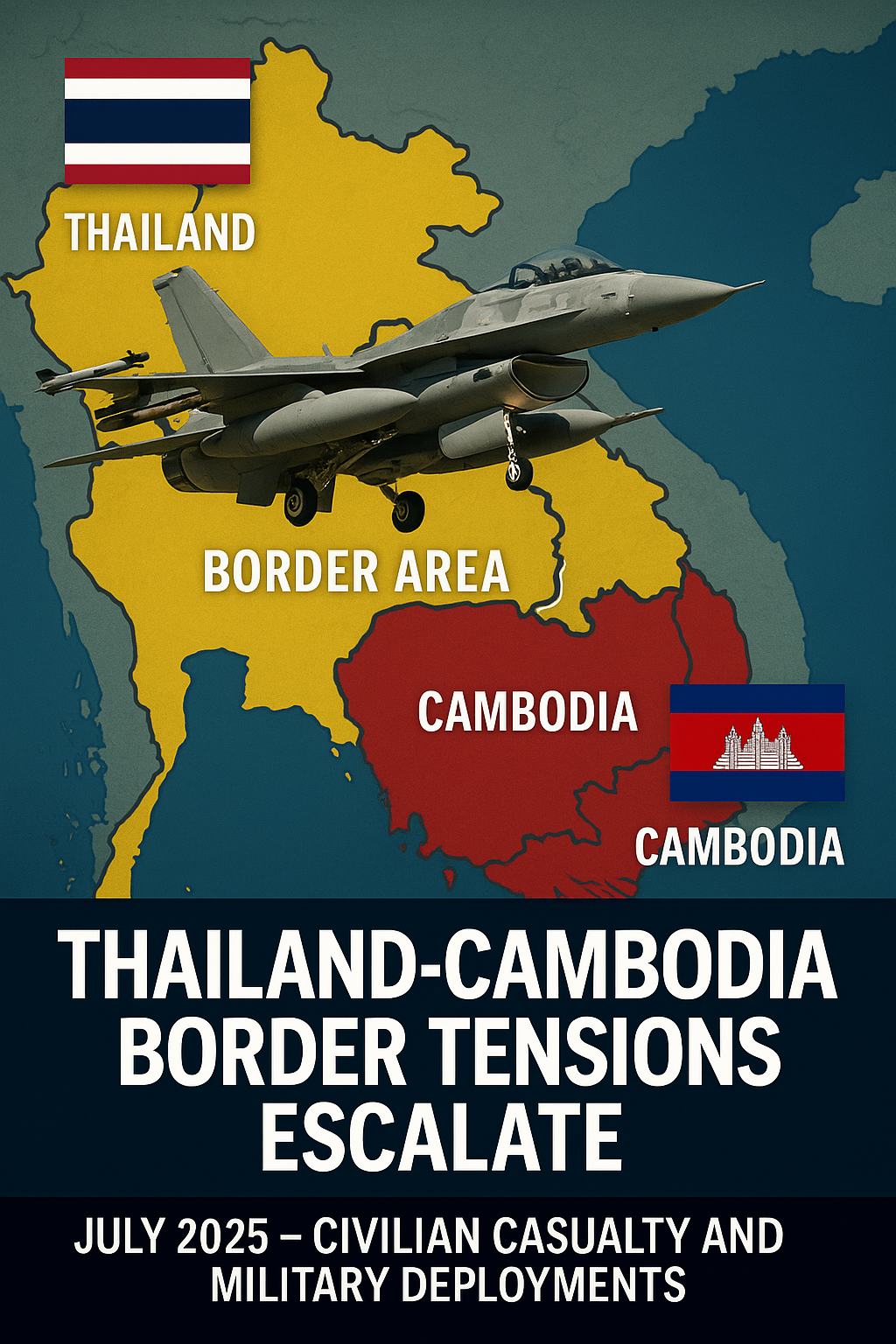
Thailand and Cambodia face rising border tensions after recent clashes, leading to civilian casualties and military deployments. Here is a detailed analysis of the situation, historical context, and future implications.
Table of Contents
Published: July 24, 2025 | Last Updated: July 24, 2025
The Southeast Asian region confronts a significant security challenge as Thailand and Cambodia experience intensified military confrontations along their contested border. What began as routine patrol disagreements in July 2025 has evolved into substantial military operations, raising concerns about regional stability. This analysis examines the multifaceted dimensions of the current crisis, drawing from official reports, historical context, and expert assessments to provide a comprehensive understanding of the situation.
The escalation marks one of the most serious bilateral conflicts in the region in recent years. With military aircraft deployed, civilian casualties reported, and substantial population displacement occurring, the implications extend far beyond the immediate border areas.
H2: Background and Historical Context of Thailand-Cambodia Relations
H3: Colonial Legacy and Territorial Disputes
The relationship between Thailand and Cambodia carries complex historical dimensions rooted in colonial-era boundary determinations and post-independence nation-building. The two nations share approximately 800 kilometers of border, which represents more than a simple geographic division. This boundary encompasses competing sovereignty claims, cultural heritage sites, and economically significant territories.
The colonial period, particularly French involvement in Cambodia, established border demarcations that both nations have periodically contested. After Cambodia gained independence in 1953, various territorial questions remained unresolved. These historical ambiguities have provided recurring points of friction between the neighboring countries.
Modern disputes often center on areas where French colonial maps and later international determinations conflict with traditional territorial understandings. The complexity of these historical claims makes resolution particularly challenging, as both nations maintain legitimate historical narratives supporting their positions.
H3: The Preah Vihear Temple Dispute
The ancient Preah Vihear Temple complex stands as the most prominent symbol of Thailand-Cambodia territorial tensions. In 1954, the International Court of Justice (ICJ) ruled that the 11th-century Khmer temple belonged to Cambodia, a decision based on colonial-era mapping. Despite this international legal determination, the ruling has remained a source of periodic bilateral tension.
The temple’s significance extends beyond its archaeological value. For Cambodia, it represents national heritage and sovereignty over historically Khmer territories. For Thailand, the area holds strategic and cultural importance, with domestic political considerations often amplifying disputes over the site.
Between 2008 and 2011, military confrontations occurred near the temple following UNESCO’s designation of it as a Cambodian World Heritage Site. These clashes resulted in casualties on both sides and temporary displacement of border residents. A subsequent 2013 ICJ ruling reaffirmed Cambodian sovereignty and required Thai military withdrawal from the immediate vicinity.
H3: Economic Interdependence Between Nations
Despite recurring political and military tensions, Thailand and Cambodia maintain substantial economic connections. Thailand serves as Cambodia’s primary trading partner, with bilateral trade volumes exceeding $8 billion annually. This economic relationship encompasses agricultural products, manufactured goods, and cross-border labor arrangements.
Cross-border commerce benefits both economies significantly. Cambodia exports agricultural products and provides labor to Thai markets, particularly in construction and manufacturing sectors. Thailand exports processed goods, machinery, and consumer products to Cambodia. The Poipet-Aranyaprateh crossing point processes millions of dollars in daily trade during normal operations.
Tourism represents another critical economic link. Thai visitors constitute a major tourism demographic for Cambodia’s Angkor Wat temple complex and other historical sites. Conversely, Cambodian visitors and workers contribute to economic activity in Thailand’s eastern provinces. Current tensions disrupt these mutually beneficial economic flows.
H2: Timeline and Development of the 2025 Crisis
H3: Initial Border Incidents
The current crisis began in July 2025 with what appeared to be routine disagreements between border patrol units. According to official reports from both governments, initial exchanges occurred in areas where border demarcation remains contested. These preliminary incidents involved small arms fire between patrol units, resulting in limited casualties.
However, the situation escalated rapidly beyond typical border patrol confrontations. Within days, both nations deployed additional military personnel to border areas. The transition from patrol-level incidents to involvement of regular military units signaled a significant escalation in the perceived seriousness of the situation.
Official statements from both governments characterized the initial incidents differently. Thai authorities described defensive responses to Cambodian territorial incursions, while Cambodian officials claimed Thai forces had violated clearly demarcated boundaries. These competing narratives complicated early mediation efforts.
H3: Military Escalation and Air Operations
The deployment of Royal Thai Air Force F-16 fighter aircraft marked an unprecedented escalation in Thailand-Cambodia border disputes. According to official Thai military statements, six F-16s conducted strikes on Cambodian positions in the Chong An Ma area of Ubon Ratchathani province. These operations targeted command posts of Cambodia’s 8th and 9th Infantry Divisions.
The use of air power in border disputes between these nations had not occurred since earlier conflicts in the 2010s. Military analysts note that aerial bombardment represents a significant escalation beyond ground-based confrontations. Thai officials justified the air operations under Article 51 of the United Nations Charter, citing legitimate self-defense requirements.
Royal Thai Air Force communications confirmed the deployment of both F-16 and Gripen fighter aircraft in combat support roles. The military characterized these operations as defensive measures to protect Thai territorial integrity and respond to what officials termed provocative Cambodian military positioning.
H3: Casualty Reports and Humanitarian Impact
Thailand’s Ministry of Public Health released casualty figures indicating 12 fatalities in initial clashes, including 11 civilians and one Thai soldier. An additional 31 individuals sustained injuries requiring medical treatment. These official statistics represent casualties from the early phases of confrontation.
Subsequent reports indicated increased casualty numbers as military operations continued. Current assessments suggest at least 32 total fatalities, with over 130 individuals injured. The casualty figures include both military personnel and civilian residents of border areas. The targeting of civilian infrastructure has raised concerns about compliance with international humanitarian law.
More than 130,000 residents from communities on both sides of the border have fled areas affected by military operations. This substantial population displacement creates humanitarian challenges requiring emergency shelter, medical services, and food security arrangements. International humanitarian organizations have begun assessment missions to determine assistance requirements.
H2: Military Capabilities and Strategic Analysis
H3: Thailand’s Military Advantages
Thailand maintains superior air power capabilities compared to Cambodia, providing significant tactical advantages in conventional military confrontations. The Royal Thai Air Force operates modern F-16 and Gripen fighter aircraft capable of precision strike missions against ground targets. These aircraft provide surveillance, reconnaissance, and strike capabilities that Cambodia cannot match.
The Royal Thai Army possesses mechanized infantry units, advanced communications systems, and established logistics infrastructure. These capabilities enable coordinated operations across extended border areas. Thailand’s defense budget substantially exceeds Cambodia’s, reflecting greater investment in military modernization and capability development.
However, Thailand faces constraints from international legal obligations and regional partnership commitments. As a long-standing United States treaty ally and ASEAN member, Thailand’s military options must consider diplomatic consequences. Domestic public opinion also increasingly questions military expenditures for border conflicts rather than economic and social development priorities.
H3: Cambodia’s Defensive Strategies
Cambodia’s military forces, while numerically smaller and less technologically advanced than Thailand’s, benefit from defensive advantages in border terrain. Dense jungle vegetation along contested border regions complicates aerial targeting and favors defensive infantry operations. Cambodia’s military possesses experience with asymmetric defensive tactics that can offset technological disadvantages.
Cambodia’s strategic approach emphasizes international diplomatic pressure and legal argumentation. By characterizing Thai actions as violations of international law and territorial sovereignty, Cambodia seeks to internationalize the dispute. This strategy aims to leverage diplomatic pressure from major powers and international organizations.
Cambodia has accused Thailand of employing cluster munitions, raising potential war crimes allegations. Such accusations, regardless of verification, shape international perceptions and diplomatic responses. Cambodia’s diplomatic strategy also emphasizes civilian casualties and infrastructure damage to build international sympathy.
H3: Allegations and Counter-Allegations
Both nations have issued statements accusing the other of provocative actions and legal violations. Thailand claims its military operations constitute legitimate self-defense against Cambodian territorial incursions. Thai officials cite UN Charter provisions authorizing defensive military action when national sovereignty faces threat.
Cambodia counters that Thai forces violated clearly demarcated international boundaries and targeted civilian infrastructure. Reports of strikes on a Buddhist pagoda, resulting in civilian casualties, have intensified Cambodian accusations of disproportionate force and potential war crimes. These allegations complicate diplomatic resolution efforts.
The conflicting narratives highlight the absence of agreed-upon facts regarding the initial incidents that sparked escalation. Without consensus on fundamental questions of who initiated hostilities and where incidents occurred, diplomatic mediation faces substantial challenges. International fact-finding missions would need acceptance by both parties to establish authoritative incident accounts.
H2: Regional and International Implications
H3: ASEAN’s Response and Limitations
The Association of Southeast Asian Nations confronts a significant test of its conflict resolution mechanisms. ASEAN’s founding principles emphasize non-interference in member states’ internal affairs and consensus-based decision-making. These principles, while promoting regional cohesion, limit the organization’s ability to intervene directly in bilateral military confrontations.
ASEAN has issued calls for restraint and return to diplomatic negotiations. Emergency ministerial meetings have convened to address the crisis, but concrete action remains limited by the need for consensus among all member states. Some ASEAN members maintain close relations with either Thailand or Cambodia, complicating unified responses.
The crisis tests whether ASEAN can evolve beyond economic cooperation to effectively manage serious security challenges. The organization’s credibility depends partly on demonstrating relevance in conflict prevention and resolution. However, the structural limitations of ASEAN’s non-interference principle may constrain effective responses.
H3: Major Power Interests and Involvement
The United States maintains defense partnership agreements with Thailand dating to the Cold War era. These relationships create diplomatic complexity as the U.S. seeks to remain neutral while encouraging peaceful resolution. American officials have issued statements urging both nations to exercise restraint and pursue diplomatic solutions.
China’s growing economic and diplomatic influence in Cambodia adds another dimension to international dynamics. Through Belt and Road Initiative investments, China has become Cambodia’s largest external investor and a significant political partner. This relationship gives Beijing potential leverage in encouraging Cambodian restraint or supporting negotiated settlements.
Other regional powers, including Japan, South Korea, and Australia, maintain economic and diplomatic interests in Southeast Asian stability. These nations have issued statements supporting peaceful resolution and ASEAN-led mediation efforts. However, direct intervention by external powers remains limited by regional sensitivities regarding sovereignty.
H3: United Nations Engagement
The UN Secretary-General has called for immediate ceasefire and return to diplomatic negotiations. These calls reflect international concern about escalating violence and humanitarian consequences. However, Security Council action faces potential complications from major powers with competing interests in the region.
UN peacekeeping mechanisms remain theoretically available but require consent from both parties. Given current tensions, neither government has indicated willingness to accept UN peacekeeping forces. Such arrangements typically emerge only after both sides conclude military solutions prove unsuccessful or too costly.
International mediation through neutral third parties represents a more immediately feasible approach. Countries without direct strategic interests in the dispute, or international figures with diplomatic credibility, could facilitate dialogue without raising sovereignty concerns. Such mediation would require both governments to accept third-party facilitation.
H2: Economic Consequences and Trade Disruption
H3: Immediate Commercial Impact
Border checkpoint closures have immediately disrupted commercial flows worth millions of dollars daily. The Poipet-Aranyaprateh crossing, Southeast Asia’s busiest land border checkpoint, remains closed indefinitely. This closure affects small traders, agricultural exporters, and tourism operators dependent on cross-border commerce.
Manufacturing supply chains incorporating facilities in both countries experience significant disruptions. The automotive, textile, and electronics sectors utilize cross-border production arrangements that current tensions interrupt. Just-in-time manufacturing models prove particularly vulnerable to border uncertainties and transportation delays.
Agricultural producers face challenges accessing markets across the border. Cambodian farmers who normally export produce to Thai markets cannot deliver goods, resulting in spoilage and financial losses. Similarly, Thai exporters of processed foods and manufactured goods to Cambodia face supply chain disruptions.
H3: Tourism Industry Effects
Both nations’ tourism industries experience immediate negative effects from the crisis. International travel advisories recommend avoiding border provinces, reducing visitor numbers to attractions in these regions. Booking cancellations extend beyond immediate border areas as general perceptions of safety decline.
Cambodia’s tourism industry, particularly dependent on international visitors, faces challenges as potential tourists reconsider travel plans. While major destinations like Angkor Wat remain distant from conflict zones, overall country image suffers from conflict-related news coverage. Tourism revenue represents a significant portion of Cambodia’s GDP, making these losses economically consequential.
Thailand’s eastern provinces experience reduced tourist activity, particularly from Cambodian and regional visitors. Domestic tourism also declines as Thai citizens avoid areas perceived as potentially unsafe. Hotels, restaurants, and tourist services in these regions report substantial revenue declines.
H3: Long-Term Investment Climate Concerns
Foreign direct investment flows to both countries face potential reductions if military tensions persist or recur periodically. International investors incorporate political stability and security assessments into risk calculations. Sustained border conflicts raise concerns about broader regional stability.
Major multinational corporations with operations in both countries reassess supply chain arrangements and expansion plans. The automobile industry, with significant presence in Thailand and growing investment in Cambodia, faces particular concerns about production continuity. Electronics manufacturers similarly evaluate risks to integrated regional production networks.
Development banks and international financial institutions may adjust lending priorities or risk assessments based on conflict duration and resolution prospects. Both countries rely on external financing for infrastructure development and economic modernization, making changes in international financial institution attitudes potentially significant.
H2: Humanitarian Dimensions and Protection Concerns
H3: Displacement and Refugee Considerations
The displacement of over 130,000 individuals from border communities creates immediate humanitarian needs. Displaced families require emergency shelter, clean water, sanitation facilities, and food security. Host communities in safer areas face strain on local resources and services.
Educational disruption affects children from displaced families. Schools in border areas have closed due to security concerns, interrupting education for thousands of students. Temporary educational arrangements in displacement sites face challenges including insufficient teachers, materials, and facilities.
Medical care for injured individuals and ongoing health services for displaced populations require coordination between national health authorities and international humanitarian organizations. Communicable disease prevention in crowded temporary settlements represents a public health priority.
H3: Protection of Cultural Heritage Sites
Military operations near ancient temple sites and cultural monuments risk irreversible damage to historical heritage. The targeting of religious sites, including reported strikes on Buddhist pagodas, adds concerning dimensions to the conflict. Both nations possess significant archaeological and cultural sites in border regions.
International heritage protection organizations have called for conflict-free zones around UNESCO World Heritage Sites and other culturally significant locations. The Preah Vihear Temple complex and other ancient sites require protection from military operations. However, military necessity considerations often override heritage protection concerns in active combat zones.
Damage to cultural heritage carries implications beyond immediate destruction. These sites represent shared historical heritage of the region and hold significance for cultural identity. Permanent damage would constitute losses for both nations and the international community.
H3: International Humanitarian Law Compliance
Reports of civilian casualties and infrastructure targeting raise questions about compliance with international humanitarian law. The laws of armed conflict require distinguishing between military and civilian targets and employing proportionate force. Allegations of cluster munition use, if verified, would violate international conventions that both nations have considerations regarding.
Independent investigations would be necessary to establish facts regarding alleged violations. International organizations with expertise in humanitarian law monitoring would need access to affected areas and cooperation from both governments. Such investigations typically occur only after hostilities cease or as part of negotiated settlement processes.
The humanitarian law framework provides standards for conduct of hostilities, but enforcement mechanisms depend on political will and international pressure. Documentation of potential violations by credible organizations can influence diplomatic processes and post-conflict accountability.
H2: Pathways to Resolution and Future Scenarios
H3: Diplomatic Mediation Opportunities
Historical precedent suggests both nations ultimately prefer negotiated settlements that allow face-saving measures for domestic political audiences. Neither government can afford prolonged military confrontation given economic costs and humanitarian consequences. These factors create incentives for diplomatic engagement.
High-level leadership meetings, potentially facilitated by neutral third parties, could provide mechanisms for de-escalation. Regional leaders with credibility in both countries might serve as mediators. International figures with diplomatic experience in territorial disputes could offer technical expertise in settlement negotiations.
Confidence-building measures could establish foundation for broader negotiations. These might include ceasefire agreements with international monitoring, humanitarian corridors for displaced populations, and joint commissions to investigate initial incidents. Such incremental steps build trust necessary for addressing underlying territorial disputes.
H3: Economic Pressure for Peace
Business communities in both countries actively lobby for rapid return to normal relations and border reopening. Trade associations, chambers of commerce, and major corporations communicate to their governments the economic costs of continued confrontation. These constituencies represent powerful domestic pressure for peaceful resolution.
The substantial economic interdependence between Thailand and Cambodia creates mutual incentives for stability. Lost trade revenues, disrupted supply chains, and declined tourism hurt both economies. As economic pain intensifies, political will for compromise may strengthen.
Regional economic integration initiatives, including ASEAN Economic Community frameworks, depend on stable bilateral relations among member states. Other ASEAN members have economic interests in Thailand-Cambodia stability, creating additional pressure for resolution through regional diplomatic channels.
H3: Potential Escalation Risks
Without effective diplomatic intervention, continued military confrontation risks expanding beyond current border areas. Miscalculation or accidental escalation could trigger larger-scale conflicts involving additional forces. The use of air power already represents significant escalation; further steps could include naval operations or deeper strikes into territory.
Domestic political dynamics in both countries could complicate de-escalation efforts. Nationalist sentiment, once aroused by military conflict, creates political pressure on leaders to maintain firm positions. Elections or political transitions might incentivize continued confrontation for domestic political advantage.
Regional stability essential for economic growth faces threats from prolonged Thailand-Cambodia tensions. Other territorial disputes in Southeast Asia exist in dormant states; successful military resolution of this conflict could establish unwelcome precedents. Investment flows, trade relationships, and tourism industries throughout the region could suffer long-term damage.
H3: Long-Term Stability Framework Requirements
Sustainable peace requires addressing underlying territorial disputes through comprehensive border demarcation agreements with international legal backing. Previous ICJ rulings provide foundations, but implementation mechanisms need strengthening. Joint border commissions with neutral international observers could monitor agreed boundaries.
Joint economic zones and cross-border development projects might transform contested areas into shared prosperity regions. Cooperative development reduces incentives for conflict while providing mutual benefits. Such arrangements require overcoming current mistrust through graduated confidence-building measures.
Regular diplomatic consultations and conflict prevention mechanisms could address future tensions before escalation to violence. Established channels for communication between military commanders and civilian leaders might prevent incidents from spiraling. Cultural exchange programs and people-to-people diplomacy could rebuild trust between border communities.
H2: Lessons from Previous Border Conflicts
H3: The 2008-2011 Preah Vihear Clashes
Previous military confrontations near Preah Vihear Temple provide relevant precedents for understanding current dynamics. Between 2008 and 2011, several armed clashes occurred following Cambodia’s successful UNESCO World Heritage Site application. These confrontations resulted in dozens of casualties and temporary displacement of thousands of border residents.
The earlier clashes eventually subsided through combination of diplomatic pressure, economic considerations, and international legal processes. The 2013 ICJ ruling requiring Thai troop withdrawal from the immediate temple vicinity provided legal framework for de-escalation. However, implementation remained contentious, with periodic minor incidents continuing.
The resolution of previous conflicts suggests current tensions may follow similar patterns: initial escalation followed by international mediation and gradual de-escalation. However, the unprecedented use of air power in the current crisis indicates this situation may break from historical patterns. The scale of current military operations exceeds previous confrontations.
H3: Cyclical Nature of Bilateral Tensions
Thailand-Cambodia border tensions historically follow patterns linked to domestic political cycles in both countries. Nationalist rhetoric during election periods often involves border issues as politicians appeal to patriotic sentiments. Economic pressures and ethnic tensions in border regions provide additional recurring flashpoints.
Understanding these cyclical patterns helps contextualize current tensions while recognizing their potentially temporary nature. However, each cycle of tension-escalation-resolution leaves residual mistrust that complicates future relations. The cumulative effect of repeated confrontations erodes bilateral relationship foundations.
Preventing future cycles requires addressing not only immediate territorial disputes but also domestic political incentives for nationalist posturing. Democratic consolidation, economic development, and civic education might reduce politicians’ reliance on nationalist appeals. Regional integration efforts that benefit both countries could create domestic constituencies favoring cooperation over confrontation.
H2: Expert Perspectives and Analysis
H3: Military Strategic Assessments
Military analysts observing the conflict note Thailand’s clear air superiority advantage while recognizing Cambodia’s defensive capabilities in jungle terrain. Conventional military assessments favor Thailand in sustained confrontation, but asymmetric defensive tactics could create costly stalemates. Neither side possesses capabilities for decisive military victory without unacceptable costs.
Defense experts emphasize that modern border conflicts rarely produce clear military winners. International law constraints, humanitarian concerns, and economic costs typically force negotiated settlements before military objectives achieve completion. The current conflict likely follows these patterns despite initial escalation.
Strategic assessments suggest both militaries face limitations beyond purely tactical considerations. Logistical challenges in maintaining forces in remote border regions, international arms supply concerns, and manpower constraints all affect sustained military operations. These practical limitations complement diplomatic pressure for settlement.
H3: Economic Impact Projections
Economic analysts project substantial costs from prolonged conflict. Direct costs include military expenditures, humanitarian assistance for displaced populations, and infrastructure reconstruction. Indirect costs from trade disruption, investment declines, and tourism losses potentially exceed direct expenses significantly.
For Cambodia, tourism revenue losses could reach hundreds of millions of dollars if conflict persists through peak tourist seasons. Thailand’s eastern provinces face similar tourism-related economic damage. Agricultural losses from disrupted production and markets affect rural populations in both countries.
Long-term economic consequences depend on conflict duration and resolution terms. Quick resolution with confidence-building measures might allow rapid economic recovery. Prolonged confrontation or unsatisfactory resolution terms could damage economic relations for years, reducing trade and investment below pre-crisis levels.
H3: Diplomatic Resolution Prospects
Diplomatic experts note that both governments retain incentives for negotiated settlement despite current military escalation. Neither country benefits from prolonged conflict, and both face domestic and international pressure for resolution. Historical precedent supports eventual diplomatic breakthrough.
However, current nationalist rhetoric and military casualties complicate near-term negotiations. Both governments face domestic political challenges in appearing to compromise after military losses. Mediators must craft settlement terms allowing both sides to claim success for domestic audiences while addressing substantive territorial issues.
International mediation efforts require careful balancing of pressure and inducement. Excessive pressure might trigger nationalist backlash, while insufficient engagement allows military momentum to continue. Successful mediation typically involves graduated de-escalation, confidence-building measures, and face-saving mechanisms for political leaders.
H2: Media Coverage and Information Environment
H3: Domestic Media Narratives
Media coverage within Thailand and Cambodia reflects nationalistic perspectives that complicate diplomatic resolution. Thai media emphasizes defensive nature of military operations and portrays Cambodia as aggressor. Cambodian media highlights civilian casualties and characterizes Thai actions as violations of sovereignty and international law.
These competing media narratives shape public opinion in both countries, creating political pressure on leaders to maintain firm positions. Social media amplifies nationalist sentiment and spreads unverified claims that further inflame tensions. Government statements receive uncritical coverage in domestic media while opposition perspectives gain limited attention.
The information environment makes compromise politically risky for leaders concerned about domestic criticism. Nationalist constituencies in both countries oppose concessions as weakness or betrayal. Media narratives that dehumanize the opposing side or minimize complexity of territorial disputes reduce public support for negotiated settlements.
H3: International Media Perspectives
International media coverage generally emphasizes humanitarian concerns, economic disruption, and regional stability implications. Major global news organizations have dispatched correspondents to border areas and capitals to report on developments. This coverage brings international attention that increases diplomatic pressure for resolution.
However, international media coverage of Southeast Asian conflicts typically proves limited compared to other global regions. Beyond initial crisis reporting, sustained international attention remains uncertain. This reduced scrutiny may allow both governments more flexibility in negotiations while reducing external pressure for rapid resolution.
Regional media in other ASEAN countries follows developments closely given implications for regional stability and economic integration. Coverage in neighboring countries often emphasizes the need for diplomatic resolution and ASEAN’s role in mediation. This regional perspective may influence both Thai and Cambodian decision-making.
H2: Implications for Regional Security Architecture
H3: ASEAN Institutional Effectiveness
The crisis tests fundamental questions about ASEAN’s evolution as a regional organization. Can ASEAN develop effective conflict resolution mechanisms while maintaining non-interference principles? Does the organization possess sufficient institutional capacity to manage serious security challenges? These questions carry implications beyond the current crisis.
ASEAN’s credibility partly depends on demonstrating relevance in preventing and resolving conflicts among member states. Previous territorial disputes among members have typically involved diplomatic engagement and negotiated settlements. The current crisis’s military intensity exceeds most previous ASEAN internal conflicts.
The organization’s response will influence member states’ assessments of ASEAN’s utility for their security interests. Successful mediation would strengthen ASEAN’s institutional prestige and encourage further development of security cooperation mechanisms. Failure to effectively address the crisis might drive members toward bilateral arrangements or external powers for security guarantees.
H3: Precedent for Territorial Disputes
Southeast Asia contains numerous unresolved or dormant territorial disputes that could potentially escalate. The resolution method for Thailand-Cambodia tensions will establish precedents for addressing other disagreements. Successful military resolution would encourage other countries to consider force; diplomatic settlement would reinforce peaceful norms.
The South China Sea disputes involve multiple ASEAN members and present far more complex challenges than bilateral Thailand-Cambodia issues. How regional mechanisms handle this crisis may influence approaches to maritime territorial disputes. Demonstrating effective conflict resolution capacity would strengthen ASEAN’s role in larger regional security challenges.
International law and UN principles emphasize peaceful settlement of disputes through negotiation, arbitration, or judicial determination. The international community’s response to military escalation in this crisis sends signals about enforcement of these principles. Strong diplomatic pressure for peaceful resolution reinforces international legal norms.
H3: Major Power Competition Dynamics
The crisis occurs within broader context of major power competition in Southeast Asia. The United States and China both seek influence in the region through economic engagement, security partnerships, and diplomatic initiatives. Thailand-Cambodia tensions create opportunities and challenges for both powers.
American officials face challenges balancing treaty obligations to Thailand with desires to remain neutral and encourage peaceful resolution. Excessive support for Thailand risks damaging U.S. credibility with other ASEAN members. Too little engagement might allow Chinese diplomacy to dominate resolution processes.
China’s close relationship with Cambodia provides Beijing potential leverage in shaping conflict resolution. However, China also maintains significant economic interests in Thailand and throughout ASEAN. Chinese diplomatic approaches must balance support for Cambodia with broader regional interests and relationship management.
Author Bio
About Nueplanet
Nueplanet is a dedicated researcher and writer specializing in Southeast Asian geopolitical affairs, regional security dynamics, and international relations. With a commitment to factual accuracy and evidence-based analysis, Nueplanet draws from official government sources, international organization reports, and verified journalistic accounts to provide comprehensive examinations of complex regional issues.
The goal of this analysis is to present balanced, thoroughly researched perspectives on developments affecting Southeast Asian stability and cooperation. All content relies on transparent sourcing from authoritative institutions including national governments, international organizations, and established news agencies with verified reporting standards.
Nueplanet maintains commitment to updating analyses as situations develop and new verified information becomes available. Readers can expect continued coverage of this crisis as diplomatic and military developments warrant, always grounded in factual accuracy and comprehensive context.
Frequently Asked Questions (FAQs)
What caused the Thailand-Cambodia border crisis in 2025?
The current crisis began in July 2025 with border patrol disagreements in contested territorial areas that escalated to armed exchanges. Root causes include long-standing territorial disputes, particularly concerning the Preah Vihear Temple region, combined with domestic political pressures in both nations. The situation escalated significantly when Thailand deployed F-16 fighter aircraft for strikes against Cambodian military positions, marking the first use of air power in bilateral disputes since the early 2010s.
How many casualties have resulted from the border clashes?
According to official government reports and international monitoring organizations, at least 32 individuals have died in the confrontations, with over 130 injured. Thailand’s Ministry of Public Health initially reported 12 fatalities including 11 civilians and one soldier, with 31 injured in early phases. Casualties include both military personnel and civilian residents of border areas. The targeting of civilian infrastructure, including religious sites, has contributed to the humanitarian toll.
What is the current status of displaced populations?
More than 130,000 people from communities on both sides of the border have fled areas affected by military operations. These displaced individuals require emergency shelter, medical services, food security arrangements, and access to education for children. International humanitarian organizations have begun assessment missions to determine assistance requirements. Host communities in safer areas face resource strain in accommodating displaced populations.
How has the international community responded to the crisis?
The UN Secretary-General has called for immediate ceasefire and diplomatic negotiations. ASEAN has issued statements urging restraint and convened emergency ministerial meetings, though the organization’s non-interference principle limits direct intervention options. The United States, maintaining defense partnerships with Thailand, has urged both nations to exercise restraint. China, with significant economic interests in Cambodia, faces diplomatic balancing requirements. Other regional powers have supported peaceful resolution through diplomatic channels.
What are the economic consequences of the border tensions?
Border checkpoint closures disrupt commercial flows worth millions of dollars daily. The Poipet-Aranyaprateh crossing, Southeast Asia’s busiest land border point, remains closed indefinitely. Tourism industries in both countries face booking cancellations and revenue losses. Manufacturing supply chains in automotive, textile, and electronics sectors experience disruptions. Long-term foreign direct investment may decline if tensions persist. Cross-border trade volumes, normally exceeding $8 billion annually, remain suspended.
Is travel to Thailand and Cambodia currently safe?
Major tourist destinations in both countries, including Bangkok, Chiang Mai, Phnom Penh, and Siem Reap, continue operating with normal security conditions. However, international travel advisories recommend avoiding border provinces where military operations occur. Travelers should consult current government travel advisories from their home countries before planning visits. Security situations can change rapidly during active military confrontations.
What role does the Preah Vihear Temple play in the dispute?
The ancient Preah Vihear Temple complex represents the most prominent symbol of territorial tensions between the nations. The International Court of Justice ruled in 1954 that the 11th-century Khmer temple belonged to Cambodia, based on colonial-era mapping. Despite this legal determination, the temple remains a recurring flashpoint. UNESCO’s 2008 World Heritage Site designation for Cambodia reignited disputes. A 2013 ICJ ruling reaffirmed Cambodian sovereignty and required Thai troop withdrawal, though implementation remains contentious.
What are the prospects for peaceful resolution?
Historical precedent suggests both nations prefer negotiated settlements allowing face-saving measures for domestic audiences. Economic costs from trade disruption and tourism losses create powerful incentives for peaceful resolution. Business communities in both countries actively lobby for rapid return to normal relations. However, current nationalist rhetoric and military casualties complicate near-term negotiations. International mediation through neutral parties offers the most promising pathway for immediate de-escalation and long-term settlement.
Disclaimer: This analysis is based on information available as of November 7, 2025, from official government sources, international organizations, and verified news agencies. Situations in active conflicts develop rapidly; readers should consult current sources for latest developments
Helpful Resources
Latest Posts
Conclusion
Thailand-Cambodia tensions highlight the fragility of border peace in Southeast Asia. While both governments signal readiness for dialogue, local communities face uncertainty until a formal resolution emerges. It is vital for ASEAN to proactively ensure regional peace and economic stability.
Tag
Thailand
Related Posts











Post Comment