






NEET PG 2025: Exam Dates, Eligibility, Syllabus, and Latest Updates
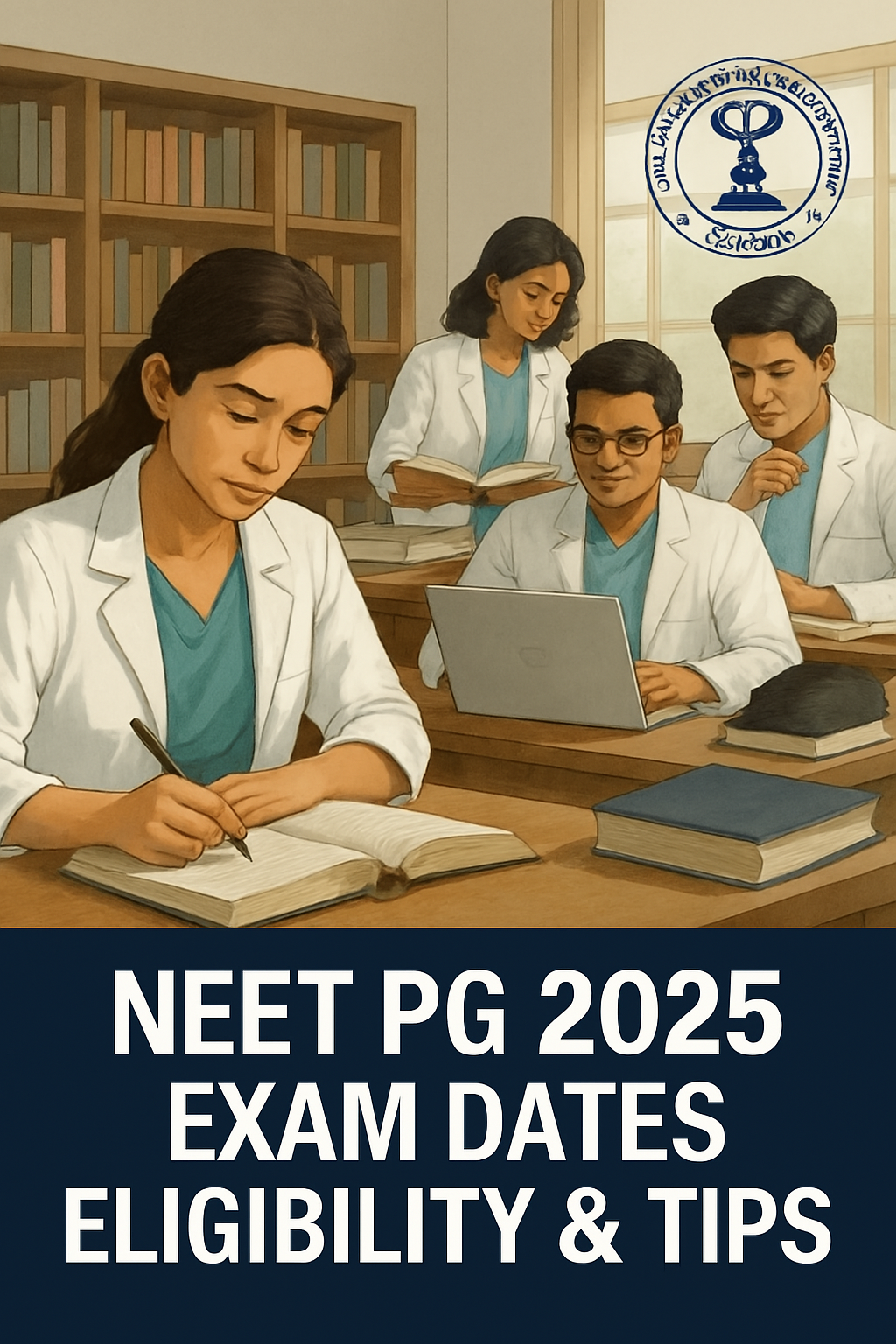
NEET PG 2025 is approaching, with NBEMS releasing exam city details for candidates. This article explains the exam schedule, eligibility criteria, syllabus, application process, and latest news to guide aspiring postgraduate medical students.
Table of Contents
Overview of NEET PG 2025
The National Eligibility cum Entrance Test for Postgraduate (NEET PG) serves as the primary entrance examination for medical graduates seeking admission to postgraduate medical programs in India. Conducted by the National Board of Examinations in Medical Sciences (NBEMS), this examination determines eligibility for MD (Doctor of Medicine), MS (Master of Surgery), and PG Diploma courses across medical institutions nationwide.
NEET PG 2025 represents a critical milestone for medical graduates pursuing specialization in their chosen fields. The examination assesses comprehensive knowledge acquired during undergraduate medical education and determines admission to postgraduate programs. Understanding the examination structure, eligibility requirements, and preparation strategies is essential for candidates aiming to secure competitive ranks.
This comprehensive guide provides detailed information about NEET PG 2025, including examination dates, eligibility criteria, application procedures, examination pattern, and syllabus coverage. All information is based on official notifications from NBEMS and regulatory authorities.
Purpose and Scope of NEET PG
Primary Function
NEET PG serves as the mandatory entrance examination for admission to postgraduate medical courses across India. The examination replaced individual institutional entrance tests to create a standardized evaluation system. This centralized approach ensures uniform assessment standards and transparent admission procedures.
Medical graduates must qualify in NEET PG to pursue specialization in various medical disciplines. The examination ranks candidates based on their performance, which subsequently determines their eligibility for counseling and seat allocation processes. Merit-based admission through NEET PG ensures qualified candidates advance to postgraduate medical education.
The examination covers the complete spectrum of medical knowledge from undergraduate education. This comprehensive evaluation ensures admitted candidates possess the foundational knowledge necessary for advanced medical training.
Coverage and Exemptions
NEET PG determines admission to the majority of postgraduate medical seats across India. Central and state government medical colleges, private medical institutions, and deemed universities participate in the NEET PG-based admission process. The Medical Counselling Committee (MCC) conducts counseling for All India Quota seats based on NEET PG ranks.
Certain premier institutions conduct separate entrance examinations. The All India Institute of Medical Sciences (AIIMS), Jawaharlal Institute of Postgraduate Medical Education and Research (JIPMER), Postgraduate Institute of Medical Education and Research (PGI Chandigarh), and National Institute of Mental Health and Neurosciences (NIMHANS) accept the Institute of National Importance Combined Entrance Test (INI CET) for admissions.
State-level counseling authorities conduct seat allocation for state quota seats based on NEET PG scores. Each state follows specific reservation policies and counseling procedures as per applicable regulations.
NEET PG 2025 Important Dates and Timeline
Examination Schedule
The NBEMS typically releases the NEET PG examination schedule several months in advance. According to the academic calendar pattern, the examination is generally conducted in March or April. The 2025 examination schedule follows this established pattern.
Key dates for NEET PG 2025 based on the standard academic calendar include:
Application Period: November to December 2024
Application Edit Window: January 2025
Examination Date: March 2025 (tentative)
Result Declaration: April 2025 (tentative)
Counseling Process: May to June 2025 (tentative)
Candidates should regularly monitor the official NBEMS website for confirmed dates and any schedule modifications. Official notifications provide authoritative information regarding all examination-related deadlines.
Timeline Management
The period between application submission and examination date provides candidates with adequate preparation time. Effective timeline management is essential for comprehensive syllabus coverage and adequate revision. Candidates should develop structured study schedules aligning with the examination timeline.
The application edit window allows candidates to correct errors or update information in their submitted applications. This facility is available for a limited period, requiring careful attention to deadlines. Candidates should verify all information during initial application submission to minimize the need for corrections.
Result declaration typically occurs within four to six weeks after examination completion. The counseling process commences shortly after result announcement, requiring candidates to prepare necessary documentation in advance.
Eligibility Criteria for NEET PG 2025
Academic Qualifications
Candidates must possess an MBBS degree from a medical institution recognized by the National Medical Commission (NMC). The degree must be obtained from an institution listed in the World Directory of Medical Schools. International medical graduates must ensure their institutions meet NMC recognition criteria.
Candidates appearing in their final MBBS examination are not eligible to apply for NEET PG. Only those who have completed their MBBS degree or possess a provisional pass certificate at the time of application can register. This requirement ensures all candidates have completed foundational medical education before pursuing specialization.
The provisional pass certificate must be issued by the university or institution where the MBBS degree was completed. This certificate serves as temporary proof of degree completion until the final degree certificate is issued.
Internship Requirements
Completion of the mandatory rotating internship is essential for NEET PG eligibility. The internship must be completed on or before March 31, 2025. This requirement ensures candidates have gained practical clinical experience before entering postgraduate training.
The internship completion certificate must be issued by the medical college or institution where the internship was completed. The certificate should clearly indicate the commencement date, completion date, and confirmation of successful completion. Provisional internship completion certificates may be accepted subject to verification.
Candidates who have not completed their internship by the specified deadline become ineligible for admission even if they qualify in the examination. Planning internship completion well before the deadline is advisable to avoid last-minute complications.
Registration Requirements
A permanent or provisional registration certificate from the NMC or State Medical Council is mandatory for NEET PG application. This registration demonstrates legal authorization to practice medicine in India. The registration number must be provided during application submission.
Provisional registration certificates are accepted if permanent registration is pending. However, candidates must obtain permanent registration before admission to postgraduate courses. The registration must remain valid throughout the application, examination, and admission process.
International medical graduates must obtain NMC screening test certification before applying for NEET PG. This requirement ensures foreign medical graduates meet Indian medical education standards.
Attempt Limitations
Current NBEMS regulations do not impose restrictions on the number of attempts for NEET PG. Candidates can appear for the examination multiple times until they achieve their desired rank or secure admission. This policy provides flexibility for candidates to improve their performance through repeated attempts.
The absence of age limits or attempt restrictions reflects recognition that medical specialization readiness may vary among individuals. Candidates can utilize multiple attempts to strengthen their knowledge base and improve examination performance.
Each attempt requires fresh registration and fee payment. Previous examination scores do not carry forward, requiring candidates to appear for the complete examination in each attempt.
NEET PG 2025 Examination Pattern
Mode and Duration
NEET PG is conducted as a computer-based test (CBT) at designated examination centers across India. The computer-based format allows for standardized test administration and efficient result processing. Candidates interact with the examination interface using computer systems at the test centers.
The total examination duration is 3 hours and 30 minutes (210 minutes). This timeframe requires candidates to maintain consistent pace throughout the examination. Time management skills are essential for attempting all questions and completing the examination within the allocated duration.
No additional time is provided for any reason. Candidates arriving late at examination centers forfeit the time lost. Punctuality on examination day is therefore critical for maximizing available time.
Question Structure
The examination consists of 200 multiple-choice questions (MCQs). Each question presents four answer options, requiring candidates to select the single correct response. The questions are designed to assess theoretical knowledge, clinical application, and diagnostic reasoning.
Questions are distributed across all subjects covered in undergraduate medical education. The distribution broadly reflects the relative importance and coverage of different subjects in the MBBS curriculum. Some subjects receive higher weightage based on their clinical significance.
Each question is independent, with no negative interdependence between questions. Candidates can approach questions in any order based on their comfort level and strategic preference.
Marking Scheme
The marking scheme follows a positive and negative marking pattern. Each correct answer earns 4 marks, while each incorrect answer results in deduction of 1 mark. Unanswered questions receive zero marks without penalty.
The maximum possible score is 800 marks (200 questions × 4 marks). The negative marking system requires strategic decision-making regarding question attempts. Candidates must balance the desire to attempt maximum questions against the risk of negative marking.
The final score determines the candidate’s rank in the merit list. Ties are resolved using tiebreaker criteria specified by NBEMS, typically including factors such as age or performance in specific subject areas.
Strategic Considerations
Effective examination strategy involves prioritizing questions based on confidence levels. Candidates should attempt questions they are certain about first, then proceed to questions requiring calculated reasoning. Completely uncertain questions may be best left unanswered to avoid negative marking.
Time allocation per question averages approximately 63 seconds. However, questions vary in complexity, requiring flexible time management. Simpler recall-based questions may be answered quickly, while clinical scenario-based questions may require additional time for analysis.
Periodic review of attempted questions helps catch inadvertent errors. However, excessive time spent on review may compromise the ability to attempt remaining questions. Balancing initial accuracy with review time is essential.
NEET PG 2025 Syllabus Overview
Syllabus Scope
The NEET PG syllabus encompasses the complete MBBS curriculum as prescribed by the NMC. All subjects studied during undergraduate medical education are covered in the examination. Candidates must demonstrate comprehensive knowledge across pre-clinical, para-clinical, and clinical disciplines.
The syllabus is structured around major subject areas, each contributing specific question counts to the total examination. Understanding subject-wise distribution helps candidates prioritize preparation efforts based on weightage.
Recent clinical guidelines, treatment protocols, and medical advances may be included in questions. Candidates should supplement standard textbook knowledge with current medical literature and practice guidelines.
Pre-Clinical Subjects
Anatomy typically contributes approximately 15-20 questions covering systemic anatomy, developmental biology, and histology. Key topics include gross anatomy of organ systems, embryological development, and microscopic structure of tissues. Clinical anatomy applications are frequently tested through scenario-based questions.
Physiology contributes similar question numbers, focusing on system-wise physiological processes, regulatory mechanisms, and applied physiology. Understanding normal physiological functioning provides foundation for understanding pathological conditions. Recent advances in physiological research may appear in questions.
Biochemistry covers metabolic pathways, enzyme mechanisms, clinical biochemistry, and molecular biology principles. Questions often integrate biochemical concepts with clinical applications. Nutritional biochemistry and vitamin metabolism are regularly tested topics.
Para-Clinical Disciplines
Pathology is a high-yield subject contributing approximately 25 questions. Topics include general pathological processes, system-wise pathology, diagnostic techniques, and molecular pathology. Understanding disease mechanisms at cellular and molecular levels is essential.
Pharmacology contributes approximately 20 questions covering drug classifications, mechanisms of action, therapeutic applications, adverse effects, and recent pharmaceutical developments. Clinical pharmacology applications and rational drug prescribing are emphasized.
Microbiology includes bacterial, viral, fungal, and parasitic infections. Diagnostic techniques, antimicrobial therapy principles, and infection control measures are important topics. Emerging infectious diseases and antimicrobial resistance patterns may be covered.
Forensic Medicine and Toxicology contributes approximately 10 questions on medicolegal aspects, autopsy procedures, toxicological principles, and medical jurisprudence. Questions often present medicolegal scenarios requiring application of forensic principles.
Community Medicine is another high-yield area with approximately 25 questions. Topics include epidemiology, biostatistics, health programs, environmental health, and research methodology. Understanding public health principles and disease prevention strategies is essential.
Clinical Subjects
General Medicine (Internal Medicine) is the highest-weighted subject with approximately 40-50 questions. Coverage includes all medical specialties, diagnostic approaches, therapeutic management, and emergency medicine. System-wise medicine across cardiology, pulmonology, gastroenterology, nephrology, neurology, and other specialties is tested.
General Surgery receives similar weightage with 40-50 questions covering surgical principles, techniques, pre-operative and post-operative management, and emergency surgery. Subspecialties including orthopedics, urology, and plastic surgery may be included.
Obstetrics and Gynecology contributes approximately 30 questions covering reproductive health, pregnancy management, gynecological disorders, and family planning. Both obstetric and gynecological aspects receive coverage.
Pediatrics typically includes 10-15 questions on child health, growth and development, pediatric diseases, and preventive pediatrics. Neonatology and pediatric emergencies are important focus areas.
Specialized subjects including Ophthalmology, ENT (Otorhinolaryngology), Psychiatry, Dermatology, Radiology, and Anesthesiology collectively contribute the remaining questions. Each specialty receives approximately 5-10 questions based on standard distribution patterns.
Application Process for NEET PG 2025
Registration Procedure
The application process is conducted entirely online through the official NBEMS website (natboard.edu.in). Candidates must access the NEET PG application portal during the specified application period. The website provides detailed instructions for completing the application process.
Initial registration requires candidates to provide basic personal information, including name, date of birth, gender, and contact details. A valid email address and mobile number are mandatory for receiving communications and authentication codes. These contact details should remain accessible throughout the examination process.
After providing basic information, candidates receive login credentials through email and SMS. These credentials are used for accessing the application portal in subsequent sessions. Candidates should securely store login information for future reference.
Personal and Academic Information
The application form requires comprehensive personal information including permanent and correspondence addresses, identification details, and category information. All information must match official documents exactly. Discrepancies between application information and documents can lead to application rejection.
Academic information includes MBBS degree details, university name, year of passing, registration number, and internship completion status. The MBBS degree university must be recognized by NMC. International medical graduates must provide additional information regarding degree recognition.
Candidates must upload scanned copies of supporting documents including MBBS degree certificate or provisional certificate, internship completion certificate, and medical registration certificate. Document specifications regarding file format, size, and image quality must be followed precisely.
Photograph and Signature Upload
Recent passport-size color photographs meeting specified dimensions and quality standards must be uploaded. The photograph should have a plain background, clear facial features, and professional appearance. The photograph is used for admit card generation and identification purposes.
A clear signature on white paper must be scanned and uploaded. The signature should match the candidate’s usual signature used on official documents. Thumb impression (typically left thumb) must also be uploaded following specified guidelines.
All uploaded images must be in JPEG format with specified file size limitations. Poor quality images or non-compliant formats may lead to application rejection. Candidates should verify image quality before final submission.
Application Fee Payment
The application fee varies by category. General and Other Backward Classes (OBC) candidates pay ₹5,015, while Scheduled Caste (SC), Scheduled Tribe (ST), and Persons with Disabilities (PwD) candidates pay ₹3,835. Fee amounts are subject to revision by NBEMS.
Payment is accepted through multiple modes including debit cards, credit cards, net banking, and Unified Payments Interface (UPI). Candidates should ensure successful payment completion and retain transaction confirmation for records. Failed transactions may require repeat payment attempts.
The application fee is non-refundable under any circumstances. Candidates should verify all information before making payment to avoid losses due to erroneous applications.
Application Submission and Confirmation
Before final submission, candidates should thoroughly review all entered information and uploaded documents. The application cannot be modified after final submission except during the designated edit window. Careful verification during initial submission minimizes the need for corrections.
After successful submission, candidates receive a confirmation email and SMS containing the application number. The application confirmation page should be downloaded and printed for future reference. This document serves as proof of application submission.
The application edit window typically opens in January, allowing candidates to modify specific details if necessary. Not all fields may be editable during this period. Candidates should consult official guidelines regarding permissible modifications.
Recent Updates and Developments
Examination City Details
NBEMS has released examination city details for registered candidates. This information allows candidates to identify their assigned examination city and plan travel arrangements accordingly. The examination city is mentioned on the admit card, which candidates can download from the official website.
Candidates should log in to the NBEMS portal using their registration credentials to access admit card and examination city information. The admit card contains essential details including examination date, session timing, examination center address, and reporting time.
Early awareness of examination city enables candidates to make necessary arrangements for accommodation and transportation. Candidates appearing in cities away from their residence should book accommodation well in advance to ensure availability.
NEXT Implementation Status
The National Exit Test (NEXT) has been proposed as a unified examination serving dual purposes: final MBBS examination and postgraduate entrance test. However, NEXT implementation has been delayed due to various regulatory and logistical considerations.
The Ministry of Health and Family Welfare has confirmed that NEET PG will continue for the 2025 admission cycle. Candidates preparing for postgraduate admissions should focus on NEET PG according to established patterns. NEXT implementation timeline for future years remains under discussion.
The continuation of NEET PG for 2025 ensures stability in examination format and preparation requirements. Candidates can utilize existing preparation resources and strategies without concern about sudden format changes.
Seat Expansion Initiatives
Various state governments have proposed increases in postgraduate medical seats to address healthcare workforce requirements. These proposals require approval from NMC based on infrastructure, faculty availability, and educational quality standards.
Seat expansion, if approved, would create additional opportunities for candidates in the 2025 admission cycle. However, seat numbers remain subject to official confirmation by regulatory authorities. Candidates should monitor official announcements regarding final seat availability.
Increased seat availability would potentially lower cutoff scores and improve admission prospects for candidates across various ranks. However, admission competitiveness varies by specialty and institution type.
Preparation Strategies for NEET PG 2025
Foundational Approach
Comprehensive NEET PG preparation requires systematic coverage of the entire MBBS syllabus. Candidates should begin by reviewing subject-wise content from standard textbooks. Understanding fundamental concepts provides the foundation for clinical application and problem-solving.
Creating concise notes during study sessions aids retention and facilitates efficient revision. Notes should highlight key concepts, important facts, and clinical correlations. Visual aids including diagrams, flowcharts, and tables enhance understanding and memory.
Consistent daily study is more effective than sporadic intensive sessions. Candidates should establish regular study schedules allocating specific time blocks to different subjects. Maintaining study routine improves learning efficiency and reduces examination stress.
Subject-Wise Prioritization
High-yield subjects including Medicine, Surgery, Community Medicine, and Pathology should receive proportionally greater attention based on their question weightage. However, complete syllabus coverage remains essential as questions can appear from any topic.
Clinical subjects require understanding of diagnostic approaches, differential diagnosis, and management protocols. Candidates should focus on common clinical presentations and standard treatment guidelines. Emergency medicine protocols across specialties are frequently tested.
Pre-clinical and para-clinical subjects provide foundational knowledge essential for clinical understanding. Strong foundations in Anatomy, Physiology, and Pathology enhance comprehension of clinical subjects. Integration of basic sciences with clinical medicine improves overall understanding.
Practice and Assessment
Regular practice through multiple-choice questions is essential for NEET PG preparation. Daily practice of 50-100 questions across various subjects maintains problem-solving skills and identifies knowledge gaps. Practice questions should cover all subjects proportionally.
Previous year question papers provide insights into examination patterns, frequently tested topics, and question difficulty levels. Analyzing previous papers helps candidates understand examiner expectations and focus preparation accordingly. Questions from the past five years are particularly relevant.
Full-length mock tests simulate actual examination conditions and assess preparedness. Weekly or bi-weekly mock tests help candidates evaluate their performance, identify weak areas, and improve time management. Performance analysis after each mock test guides subsequent preparation focus.
Resource Selection
Standard textbooks for each subject form the core preparation material. For clinical subjects, comprehensive textbooks like Harrison’s Principles of Internal Medicine for Medicine and Bailey & Love’s Short Practice of Surgery for Surgery are widely recommended. Subject-specific standard textbooks should be selected based on faculty recommendations and peer reviews.
Review books and question banks specifically designed for NEET PG preparation provide focused content and extensive practice questions. These resources emphasize high-yield topics and frequently tested concepts. However, they should supplement rather than replace standard textbooks.
Online platforms offering video lectures, mobile applications, and digital question banks provide additional learning resources. These platforms offer flexibility in study timing and location. However, candidates should critically evaluate resource quality before extensive use.
Clinical Integration
NEET PG increasingly emphasizes clinical scenario-based questions requiring application of theoretical knowledge. Candidates should approach preparation with clinical mindset, connecting concepts to patient presentations and management.
Practicing case-based learning improves diagnostic reasoning and differential diagnosis skills. Clinical scenarios from bedside teaching, case discussions, and case-based learning resources enhance clinical application ability.
Understanding recent treatment guidelines, standard operating procedures, and evidence-based medicine principles is important for answering contemporary clinical questions. Reviewing updates from medical societies and standard guidelines keeps knowledge current.
Counseling and Admission Process
Counseling Structure
The Medical Counselling Committee (MCC) conducts counseling for All India Quota (AIQ) seats including 15% seats in state government colleges and 100% seats in central government colleges and deemed universities. The counseling process typically includes multiple rounds allowing candidates to secure seats based on their preferences and ranks.
State counseling authorities conduct separate counseling for state quota seats (85% in state government colleges). Each state follows specific counseling procedures, reservation policies, and eligibility criteria. Candidates must register separately for state counseling.
Private medical colleges may conduct individual counseling for management quota seats or participate in centralized state counseling. Candidates seeking admission to private institutions should verify the applicable counseling procedure.
Registration and Choice Filling
Qualified candidates must register for counseling by paying registration fees and uploading required documents. Documents typically include NEET PG scorecard, MBBS degree certificate, internship completion certificate, identity proof, and category certificates if applicable.
Choice filling allows candidates to indicate their preferred colleges and courses in order of priority. The number of choices varies by counseling authority. Candidates should carefully research institutions, consider location preferences, and make informed choices.
Seat allocation occurs based on candidate rank, choices filled, seat availability, and applicable reservation policies. The allocation algorithm attempts to assign candidates their highest possible preference within their rank eligibility.
Seat Acceptance and Reporting
Candidates allotted seats must accept the allocation through the counseling portal within specified deadlines. Failure to accept allocated seats results in forfeiture. After acceptance, candidates must pay admission fees and report to the allotted institution with original documents for verification.
Physical reporting and document verification are mandatory for admission confirmation. Institutions verify all certificates and complete admission formalities. Candidates should carry all original documents including certificates, identity proof, and medical fitness certificates.
After admission at an institution, candidates who wish to participate in subsequent counseling rounds for upgradation must understand the applicable rules regarding seat retention or surrender. Specific rules vary by counseling authority.
Frequently Asked Questions
What is the tentative examination date for NEET PG 2025?
NEET PG 2025 is tentatively scheduled for March 2025, based on the standard academic calendar followed by NBEMS. The exact examination date will be confirmed through official notification on the NBEMS website. Candidates should regularly monitor official sources for confirmed dates. The information bulletin, typically released in November 2024, will contain the confirmed examination schedule.
What are the minimum eligibility requirements for appearing in NEET PG 2025?
Candidates must possess an MBBS degree or provisional pass certificate from an NMC-recognized institution at the time of application. Completion of the mandatory rotating internship by March 31, 2025, is required. A permanent or provisional registration certificate from NMC or State Medical Council is mandatory. There are no restrictions on the number of attempts or age limits for appearing in NEET PG.
How can candidates access examination city details for NEET PG 2025?
Examination city details are mentioned on the admit card, which candidates can download from the official NBEMS website after logging in with their registration credentials. The admit card becomes available approximately two to three weeks before the examination date. Candidates should download and carefully review all details including examination center address and reporting time.
What is the marking scheme for NEET PG 2025, and how should candidates approach questions strategically?
The examination features a +4 marking scheme for correct answers and -1 marking for incorrect answers. With 200 questions totaling 800 maximum marks, strategic question selection is important. Candidates should attempt questions they are confident about, use educated elimination for questions where they can rule out options, and avoid completely uncertain questions to minimize negative marking impact.
Which subjects carry the highest weightage in NEET PG 2025?
Medicine and Surgery are the highest-weighted subjects with approximately 40-50 questions each. Community Medicine and Pathology follow with approximately 25 questions each. Obstetrics and Gynecology contributes around 30 questions. Pharmacology and Microbiology typically have 20 questions each. Candidates should prioritize these high-yield subjects while maintaining comprehensive preparation across all topics.
Has NEXT replaced NEET PG for the 2025 admission cycle?
No, the Ministry of Health and Family Welfare has confirmed that NEET PG will continue for the 2025 admission cycle according to established patterns. While NEXT implementation has been proposed as a future examination system, it has not been implemented yet. Candidates preparing for 2025 admissions should focus on NEET PG preparation according to current examination format and syllabus.
What documents are required for NEET PG 2025 application?
Required documents include MBBS degree certificate or provisional pass certificate, internship completion certificate, permanent or provisional medical registration certificate from NMC or State Medical Council, recent passport-size photograph, signature specimen, and thumb impression. All documents must be scanned and uploaded in specified formats during the online application process. Original documents are required during counseling and admission.
How is the counseling process conducted for NEET PG qualified candidates?
The Medical Counselling Committee conducts counseling for All India Quota seats including seats in central institutions, deemed universities, and 15% AIQ seats in state government colleges. State counseling authorities conduct separate counseling for state quota seats. Candidates must register separately for each counseling process, fill choices of institutions and courses, and participate in seat allocation rounds based on their rank and preferences.
Official Resources and Information Sources
Primary Official Sources
- NBEMS Official Website: natboard.edu.in – Primary source for all examination-related information, notifications, and application portal
- National Medical Commission: nmc.org.in – Regulatory information, recognized institutions, and policy guidelines
- Medical Counselling Committee: mcc.nic.in – All India Quota counseling information and procedures
- Ministry of Health and Family Welfare: mohfw.gov.in – Policy announcements and regulatory updates
State Counseling Authorities
Candidates should identify the counseling authority for their respective states for state quota counseling information. Each state maintains official websites providing counseling schedules, procedures, and seat matrices. Links to state counseling authorities are typically available on the MCC website.
Standard Textbooks and References
Subject-wise standard textbooks recommended by medical faculties serve as primary preparation resources. These include established references recognized for comprehensive content and clinical relevance. Candidates should consult current editions to ensure updated information.
Question banks and review materials specifically designed for NEET PG preparation provide additional practice resources. These should be selected based on content quality, question relevance, and explanation comprehensiveness.
Conclusion
NEET PG 2025 represents the primary pathway for medical graduates seeking specialization in postgraduate medical programs. Understanding the examination structure, eligibility requirements, and preparation strategies is essential for achieving competitive ranks. This comprehensive guide has covered all critical aspects including examination pattern, syllabus coverage, application procedures, and preparation approaches.
The continuation of NEET PG for 2025 admissions provides clarity for candidates in their preparation planning. With examination tentatively scheduled for March 2025, candidates have adequate time for systematic preparation covering the comprehensive MBBS syllabus. Focus on high-yield subjects while maintaining complete syllabus coverage is recommended.
Successful NEET PG preparation requires consistent effort, strategic planning, and comprehensive knowledge across all medical disciplines. Regular practice through questions and mock tests improves examination readiness. Candidates should utilize the preparation period effectively while maintaining physical and mental well-being.
All information should be verified from official NBEMS sources as dates and procedures may be subject to modifications. Regular monitoring of official websites ensures candidates remain updated about notifications and schedule changes. Proper documentation and timely completion of application procedures are essential for examination participation.
The postgraduate medical admission process extends beyond examination success to include counseling and institution selection. Candidates should research available programs, understand counseling procedures, and make informed decisions about specialty and institution choices. Success in NEET PG marks the beginning of advanced medical training and professional specialization.
About the Author
Nueplanet
Medical Education Content Specialist
Nueplanet is a medical education content writer specializing in entrance examination guidance and educational resources for medical students. With a background in medical education and comprehensive understanding of examination systems, Nueplanet focuses on creating factually accurate, well-researched content based on official sources and regulatory documentation.
All content is developed using information from authoritative sources including NBEMS notifications, NMC guidelines, and official examination documentation. The commitment is to provide candidates with accurate, transparent, and verified information supporting their examination preparation and admission processes.
Content Verification:
All information presented is based on official NBEMS notifications, NMC guidelines, and established examination patterns. Candidates are advised to verify specific details from official sources as procedures may be updated.
Published: July 21, 2025
Last Updated: July 21, 2025
Primary Sources: National Board of Examinations in Medical Sciences (NBEMS), National Medical Commission (NMC), Medical Counselling Committee (MCC)
Disclaimer: This article is intended for informational purposes only. All information is based on officially available data and standard examination patterns. Candidates should verify current information from official NBEMS sources. Examination dates, procedures, and eligibility criteria are subject to modification by regulatory authorities. The author and platform are not responsible for any changes in official procedures or policies.
Helpful Resources
Latest Posts
- ICAI CA Final May 2025 Results Expected Between First Week of July.
- Supreme Court’s Landmark Birthright Citizenship Decision: Limits on Nation‑wide Injunctions & What’s Next
- SSC CGL 2025 Notification Released
- ICAI CA Final May 2025 Results Expected Between First Week of July.
- Kings Mountain ICE Raid: Inside the Buckeye Fire Equipment Factory Operation
Tag
NEET PG 2025:









Post Comment