









TTD: Latest Updates, Rules, and Devotee Guidelines at Tirumala Tirupati Devasthanams
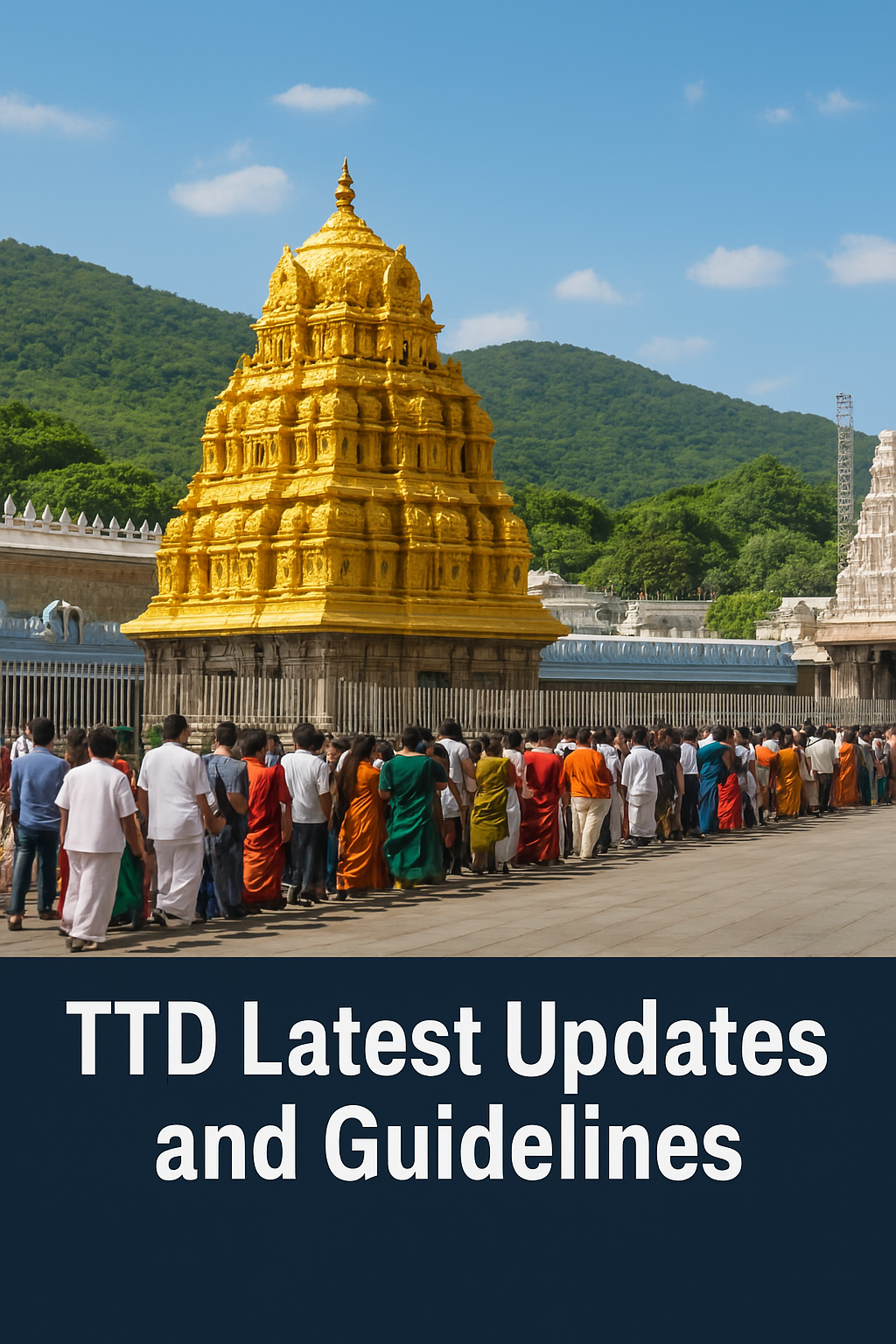
TTD (Tirumala Tirupati Devasthanams) recently suspended four non-Hindu employees, sparking public discussions about temple employment policies. This article explains TTD’s structure, recent news, rules, and everything devotees should know before visiting Tirumala.
Introduction to Tirumala Tirupati Devasthanam
The Tirumala Tirupati Devasthanams (TTD) serves as the administrative authority managing one of India’s most significant spiritual destinations. Located in the Eastern Ghats of Andhra Pradesh, the temple complex houses Lord Venkateswara, also known as Balaji, attracting over 20 million devotees annually. This comprehensive guide provides verified information on booking procedures, temple regulations, and recent developments affecting pilgrims planning their visit in 2025.
The temple’s historical significance dates back over a thousand years, with architectural elements reflecting Dravidian style and religious traditions rooted in Vaishnavism. The TTD operates as an autonomous body under the Andhra Pradesh government, ensuring organized management of temple affairs, pilgrim services, and charitable activities. Understanding the current guidelines and available facilities helps devotees plan an effective pilgrimage experience.
Recent Developments and Administrative Updates
Digital Infrastructure Enhancement
The temple administration implemented several technological improvements during 2024-2025 to streamline pilgrim services. A mobile application named “TTD Connect 2.0” became operational in January 2025, offering devotees digital access to booking services and queue management systems. The platform supports multiple regional languages and provides real-time updates on darshan availability and waiting periods.
Infrastructure investments totaling ₹500 crores were allocated for facility upgrades throughout the temple complex. These improvements include additional accommodation units, enhanced medical facilities, and transportation systems designed to handle increased pilgrim traffic. The administration prioritized sustainable energy solutions, with solar power installations now meeting a significant portion of the temple’s electricity requirements.
Financial Transparency and Operations
According to official records from September 2025, the temple’s annual revenue reached ₹3,200 crores, representing growth compared to previous fiscal years. The TTD maintains substantial gold reserves valued at approximately ₹7,500 crores, with daily offerings averaging ₹8.5 crores. The organization’s investment portfolio spans multiple sectors, while charitable contributions of ₹400 crores annually support various social welfare initiatives across Andhra Pradesh.
The financial management practices follow government audit requirements and maintain public accountability through regular disclosure of accounts. Revenue sources include darshan ticket sales, accommodation fees, prasadam distribution, and voluntary donations from devotees. These funds support temple maintenance, employee salaries, infrastructure development, and community service programs administered by TTD.
Essential Temple Rules and Regulations
Dress Code Requirements
The temple administration enforces specific dress code guidelines to maintain sanctity within the sacred premises. Male devotees must wear traditional dhoti with shirt or kurta, though full-length trousers with formal shirts are accepted as an alternative. Western casual wear including shorts and sleeveless garments remain prohibited within temple boundaries.
Female pilgrims should dress in sarees or salwar kameez providing appropriate coverage of shoulders and legs. Leggings, jeans, and sleeveless tops are not permitted inside the temple complex. Children accompanying families should wear modest traditional attire reflecting cultural values, with Western casual clothing discouraged in sacred areas.
These regulations apply to all devotees regardless of nationality or religious background visiting the temple premises. Enforcement occurs at entry checkpoints, where temple staff verify compliance before granting access to darshan queues. Devotees not meeting dress code standards may be directed to rental facilities offering appropriate garments near the entrance.
Temple Operating Hours and Darshan Types
The temple maintains daily operations from 2:30 AM until 1:00 AM the following day, accommodating various darshan categories throughout this schedule. Sarva Darshan, the free darshan option, operates from 6:00 AM to midnight with average waiting periods ranging from 8 to 12 hours depending on seasonal demand. This category serves devotees seeking traditional pilgrimage experiences without time constraints.
Paid darshan categories include Special Entry Darshan (₹300, 4-6 hour wait), Seeghra Darshan (₹500, 2-3 hour wait), and Divya Darshan (₹1,000, 1-2 hour wait). VIP Darshan services starting at ₹10,000 provide expedited access with approximately 30-minute waiting periods. Timings for paid categories vary, with most operating between 7:00 AM and 9:00 PM depending on the specific service level.
Booking Procedures and Requirements
The online booking system allows advance reservations up to 90 days prior to the intended visit date. The booking window opens at 10:00 AM IST exactly 90 days before the desired darshan date, with special occasions and festivals allowing bookings 180 days in advance. Premium categories including Divya Darshan and VIP services accept reservations up to 365 days ahead when combined with accommodation packages.
Essential documentation for successful booking includes government-issued photo identification such as Aadhaar Card, Passport, Driving License, or Voter ID. Devotees must provide an active Indian mobile number for OTP verification during the booking process. Email addresses are mandatory for receiving confirmation receipts and booking updates from the TTD system.
Age verification documents become necessary when claiming concessions for senior citizens above 65 years or children below 12 years. Foreign nationals require valid passports with Indian visas for booking and entry verification. Original documents must be presented at entry checkpoints, as photocopies are not accepted for identity verification purposes.
Comprehensive Transportation Options
Air Travel Connectivity
Tirupati Airport, located 35 kilometers from Tirumala, provides direct flight connections from major Indian cities including Delhi, Mumbai, Bangalore, Hyderabad, and Chennai. The airport operates scheduled commercial flights throughout the week, with increased frequency during peak pilgrimage seasons and festival periods. VIP darshan ticket holders receive complimentary shuttle service between the airport and temple premises as part of premium service packages.
Helicopter services offer an alternative aerial darshan experience for devotees preferring expedited travel. The journey takes approximately 10 minutes, with tickets priced at ₹5,000 per person subject to weather conditions and operational availability. Advance booking is recommended during peak seasons, as daily flight slots remain limited based on operational capacity and safety regulations.
Railway and Road Access
Tirupati Railway Station serves as the primary rail hub, with direct train services connecting over 15 major cities across India. The railway administration operates dedicated pilgrim trains equipped with enhanced facilities during festival seasons and weekends. Free bus transportation connects the railway station to the foothill area, where devotees can access ghat roads or rope car services for the ascent to Tirumala.
Road connectivity includes regular APSRTC bus services departing every 15 minutes from major Andhra Pradesh cities and neighboring state capitals. Private vehicles can access designated parking facilities at the foothill and temple complex, with charges ranging from ₹50 to ₹200 based on vehicle type. Electric vehicles receive priority parking slots at discounted rates as part of environmental sustainability initiatives.
Accessibility Provisions
The temple administration implements inclusive accessibility measures for differently-abled devotees throughout the complex. Wheelchair accessibility features extend across major pathways, with dedicated darshan queues reducing waiting periods for physically challenged pilgrims. Sign language interpreters are available upon request through the information helpdesk, while Braille signages assist visually impaired visitors in navigation.
Trained volunteers provide companion assistance to devotees requiring mobility support or guidance during their temple visit. Ramps, elevators, and accessible restroom facilities are positioned strategically throughout the premises. These provisions reflect the temple’s commitment to ensuring spiritual access for all devotees regardless of physical limitations.
Accommodation Facilities and Booking
Premium Category Options
High-end accommodation options cater to devotees seeking comfortable lodging with modern amenities. Srivari Mettu Guest House offers premium rooms priced between ₹8,000 and ₹15,000 per night, featuring spacious layouts and enhanced service standards. Tirumala Inn provides mid-premium accommodation ranging from ₹5,000 to ₹8,000 nightly, while Bhudevi Complex offers rooms priced between ₹3,000 and ₹5,000.
These facilities include complimentary Wi-Fi connectivity, 24-hour room service, and breakfast provisions for guests. The integrated booking platform allows devotees to reserve darshan tickets and accommodation simultaneously, streamlining the planning process. Advance bookings for premium categories can be made 180 days prior to the check-in date, with early check-in available for an additional ₹500 fee.
Budget-Friendly Alternatives
The Pilgrim Amenities Complex serves budget-conscious devotees with rooms priced between ₹500 and ₹1,500 per night. Dharma Sal accommodation offers economical options ranging from ₹200 to ₹500, providing basic amenities for short-term stays. These facilities maintain cleanliness standards while offering essential services at affordable rates for families and individual pilgrims.
Free accommodation remains available through a lottery system conducted monthly by the TTD administration. Eligible devotees can apply online through the official website or mobile application, with allocations made based on random selection. Winners receive notification via registered mobile numbers and email addresses, with specific check-in instructions provided upon confirmation.
Standard check-in timing begins at 12:00 PM and extends until 11:00 PM daily across all accommodation categories. Room allocation follows a first-come-first-served basis within each category, with special provisions for families, senior citizens, and differently-abled devotees requiring ground-floor access or specific room configurations.
Sacred Rituals and Seva Participation
Daily Seva Programs
Devotees can participate in various seva programs conducted throughout the day at the temple. Suprabhatam, the early morning worship service, costs ₹500 per person and allows pilgrims to witness the deity’s awakening ceremony. Thomala Seva, priced at ₹2,100, involves flower decoration rituals performed before the deity with participant involvement in the ceremonial process.
Archana services enable personal prayer offerings at ₹250, where devotees can have their names and family details recited during the worship ceremony. Kalyanotsavam, the divine marriage ceremony, requires a contribution of ₹11,160 and represents one of the most sought-after seva experiences. Each seva type follows specific timing schedules announced through the temple calendar and mobile application notifications.
Special Occasion Services
Annual festival participation opportunities include Brahmotsavam sponsorship ranging from ₹25,000 to ₹1,00,000 depending on the level of involvement. Major festival sponsorships for annual events require contributions between ₹5,00,000 and ₹50,00,000, supporting elaborate ceremonial arrangements. Temple maintenance seva contributions starting from ₹10,000 up to ₹5,00,000 allow devotees to participate in preservation and restoration activities.
Advance booking for special occasion sevas opens earlier than regular services, often 6 to 12 months before the scheduled date. Limited slots create high demand during major festivals and auspicious occasions, requiring prompt registration when booking windows open. Confirmation receipts serve as entry passes for seva participation, with specific reporting times communicated to registered participants.
Spiritual and Cultural Programs
Educational Initiatives
The temple complex hosts daily pravachan sessions offering free spiritual discourses on Vedantic philosophy and devotional traditions. Sanskrit classes teach interested devotees sacred hymns and mantras, preserving traditional learning methods. Cultural programs featuring traditional music and dance performances occur regularly, showcasing classical art forms rooted in temple worship traditions.
Meditation workshops introduce ancient techniques for achieving inner peace and spiritual focus. Morning yoga sessions provide free instruction for pilgrims staying in temple accommodations or visiting during early hours. These programs reflect the temple’s role as not merely a worship center but a comprehensive spiritual education institution serving the wider devotee community.
Prasadam and Sacred Offerings
The Famous Tirupati Laddu
The Tirupati Laddu represents the temple’s most recognized prasadam, with daily production reaching 3,00,000 units to meet devotee demand. The preparation follows strict quality standards using pure ghee, cashews, raisins, and cardamom sourced from certified suppliers. ISO 22000 food safety certification ensures consistency in taste, quality, and hygiene throughout the production process.
Each laddu is packaged in eco-friendly materials featuring divine imagery and temple symbols. Large laddus are priced at ₹50, while smaller versions cost ₹25, making this sacred offering accessible to devotees across economic backgrounds. The laddu production facility operates under stringent oversight, with regular quality audits and ingredient testing maintaining the product’s reputation for excellence.
Additional Food Offerings
Devotees can purchase various prasadam items beyond the iconic laddu. Vada costs ₹15 per piece, offering a savory prasadam alternative. Daddojanam, also known as curd rice, is available at ₹25 per serving. Pulihora, the tamarind rice preparation, costs ₹30 per serving and represents a traditional South Indian offering.
Sacred water distribution occurs free of charge for all devotees throughout the temple premises. Vibhuti (sacred ash) and kumkum (vermillion powder) are distributed without cost at designated counters. These offerings carry spiritual significance in Hindu worship traditions, serving as tangible symbols of divine blessing that devotees carry home from their pilgrimage.
Healthcare and Support Services
Medical Facilities
A 24-hour medical center staffed with specialist doctors operates within the temple complex, addressing health emergencies and providing routine medical care. Emergency ambulance services remain stationed throughout the hills, ensuring rapid response to medical situations. Pharmacy facilities stock essential medications, allowing devotees to access treatments without leaving the premises.
First aid stations positioned at multiple locations across the complex provide immediate attention for minor injuries and health concerns. Telemedicine consultation services handle non-critical cases, connecting devotees with medical professionals through digital platforms. These comprehensive healthcare provisions address the needs of millions of annual visitors, many traveling long distances and experiencing physical strain during their pilgrimage.
Banking and Financial Services
ATM facilities operate 24 hours across the temple premises, providing cash withdrawal services for devotees. Currency exchange counters assist international pilgrims in converting foreign currency to Indian rupees at competitive rates. Digital payment terminals accepting all major credit and debit cards are installed throughout shops, prasadam counters, and service booking locations.
Donation receipt generation occurs immediately upon contribution, providing necessary documentation for tax exemption claims under Section 80G of the Income Tax Act. Fixed deposit schemes offered through temple-affiliated banking partnerships provide attractive returns to devotees wishing to maintain long-term financial relationships with the institution.
Communication Services
Free high-speed Wi-Fi connectivity extends throughout the temple complex, allowing devotees to stay connected with family and share their spiritual experiences. Mobile charging stations located at strategic points prevent device power depletion during extended visits. International calling facilities enable overseas devotees to communicate with their home countries, with free 10-minute international calls provided to verified foreign pilgrims.
A multi-language information helpdesk staffed with interpreters proficient in 15 languages assists devotees with queries, directions, and service information. Lost and found services incorporate digital tracking systems, helping reunite pilgrims with misplaced belongings efficiently. These communication provisions reflect the temple’s adaptation to modern pilgrim needs while maintaining spiritual focus.
Environmental Sustainability Initiatives
Green Energy Implementation
The temple’s commitment to environmental responsibility manifests through extensive solar power installations generating 15 MW capacity. This renewable energy infrastructure covers approximately 70% of the temple’s electricity requirements, reducing dependence on conventional power sources. LED lighting systems providing 100% energy-efficient illumination have replaced traditional bulbs throughout the complex.
Rainwater harvesting systems with 50 lakh liters capacity collect monsoon precipitation for non-potable uses including gardening, cleaning, and cooling systems. Comprehensive waste segregation programs enable efficient recycling of materials generated by daily operations and pilgrim activities. Organic farming practices produce pesticide-free ingredients used in prasadam preparation, ensuring both environmental sustainability and food safety.
Carbon Footprint Reduction
The temple operates a fleet of over 200 electric vehicles providing eco-friendly transportation options for pilgrim movement within the complex. Annual tree plantation drives result in over 50,000 saplings being planted across temple lands and surrounding areas. Plastic-free initiatives promote biodegradable alternatives for prasadam packaging and single-use items distributed to devotees.
Advanced water recycling systems treat and reuse water for various non-consumptive purposes, conserving this precious resource in a region experiencing periodic water scarcity. These environmental measures position TTD as a leader in sustainable temple management, demonstrating how religious institutions can balance spiritual service with ecological responsibility.
Digital Innovation and Technology Integration
Mobile Application Features
The TTD Connect 2.0 mobile application provides comprehensive digital services to modern pilgrims. Virtual queue management displays real-time position tracking, allowing devotees to monitor their progress toward darshan without remaining physically in line. Augmented reality temple tours offer interactive spiritual experiences, presenting historical information and architectural details through smartphone cameras.
Live darshan streaming enables devotees unable to visit physically to participate in worship from anywhere globally. Personalized pilgrimage planners generate customized itineraries based on individual preferences, available time, and desired seva participation. Community features facilitate connections among fellow devotees, creating digital sanghas where pilgrims share experiences and spiritual insights.
Artificial Intelligence Applications
AI-powered crowd prediction algorithms analyze historical patterns and current conditions to suggest optimal visit timing for reduced waiting periods. Chatbot assistance provides instant query resolution 24/7, handling common questions about bookings, facilities, and temple procedures. Facial recognition technology enhances security while enabling personalized services for returning devotees registered in the system.
Predictive maintenance systems monitor infrastructure conditions, alerting facility managers to potential issues before they disrupt pilgrim services. Dynamic pricing algorithms adjust accommodation and service rates based on demand patterns, ensuring fair resource allocation while maximizing accessibility. These technological implementations represent successful integration of modern innovation within traditional spiritual contexts.
Security and Safety Measures
Comprehensive Security Infrastructure
AI-powered surveillance systems provide 24-hour monitoring throughout the temple complex, with facial recognition capabilities enhancing both security and personalized service delivery. Metal detector screening at multiple checkpoints ensures prohibited items do not enter sacred areas. X-ray bag scanning machines inspect all carried items, with clearly posted lists of restricted objects available at entry points.
Medical emergency response teams position ambulances every 500 meters throughout the complex, with trained paramedics ready for immediate deployment. Advanced fire safety systems include automatic sprinkler installations and clearly marked emergency evacuation routes posted throughout buildings. Regular safety drills ensure staff preparedness for various emergency scenarios.
Crowd Management Protocols
Digital queue systems prevent overcrowding by monitoring real-time occupancy levels in various temple sections. Immediate PA announcements address lost children situations, with dedicated reunion centers staffed by trained personnel. Disaster preparedness plans covering natural calamities including earthquakes, fires, and severe weather events ensure coordinated emergency responses protecting pilgrim safety.
Frequently Asked Questions
How many days in advance can devotees book TTD darshan tickets?
Devotees can book standard darshan tickets up to 90 days before their intended visit date through the official TTD website or mobile application. The booking window opens precisely at 10:00 AM IST on the 90th day prior to the desired darshan date. Special occasion darshans during major festivals allow bookings 180 days in advance due to higher demand. Premium categories like VIP Darshan combined with accommodation packages accept reservations up to 365 days ahead, providing extended planning flexibility for devotees traveling from distant locations.
What are the current darshan ticket prices for different categories?
Sarva Darshan remains completely free of charge, though waiting periods typically range from 8 to 12 hours depending on crowd levels. Special Entry Darshan costs ₹300 per person with average waiting times of 4 to 6 hours. Seeghra Darshan is priced at ₹500 per person, reducing wait times to 2 to 3 hours. Divya Darshan requires ₹1,000 per person and typically involves 1 to 2 hour waiting periods. VIP Break Darshan starts at ₹10,500 per person, providing immediate or near-immediate access to the sanctum sanctorum.
Senior citizens above 65 years receive 50% discounts on paid darshan categories. Children below 12 years qualify for 25% reductions in ticket prices. Physically challenged devotees receive complimentary upgrades to the next higher category as part of accessibility provisions.
Can devotees modify or cancel confirmed bookings?
The TTD booking system allows one-time modification of date or time up to 48 hours before the scheduled visit. Cancellations made 72 or more hours in advance receive full refunds to the original payment method. Cancellations submitted between 24 and 72 hours before the visit qualify for 50% refunds. Same-day cancellations and no-shows do not receive any refund.
Medical emergency situations qualify for full refunds when supported by proper documentation from recognized healthcare facilities. Rescheduling fees apply for date changes: ₹50 for Special Entry Darshan and ₹100 for premium darshan categories. Refund processing typically takes 7 to 10 working days from the cancellation date.
What documents must devotees present for darshan entry?
All devotees must carry original government-issued photo identification including Aadhaar Card, Passport, Driving License, or Voter ID. Photocopies or digital images of documents are not accepted at entry verification points. Age verification documents become necessary when claiming senior citizen or child concessions, requiring birth certificates for children or senior citizen cards for elderly devotees.
Foreign nationals must present valid passports along with Indian visas demonstrating legal entry into the country. Medical certificates are required for those booking under the physically challenged category. An active Indian mobile number registered during booking must be accessible for OTP verification during check-in. Email addresses provided during booking should remain accessible for receiving confirmation updates and entry passes.
How does the accommodation booking system operate?
The integrated booking platform allows simultaneous reservation of darshan tickets and accommodation as combo packages. Accommodation categories span premium options (₹3,000 to ₹15,000 per night), standard rooms (₹500 to ₹3,000), and budget facilities (₹200 to ₹500). Regular rooms can be booked 90 days in advance, while premium suites accept reservations 180 days ahead.
Check-in timing starts at 12:00 PM and extends until 11:00 PM daily. Early check-in before noon is available for an additional ₹500 charge subject to room availability. Premium category accommodations include complimentary Wi-Fi, 24-hour room service, and breakfast. Family packages offer special rates for groups of four or more pilgrims traveling together. A monthly lottery system provides free accommodation to randomly selected devotees who apply through the official channels.
What provisions exist for international devotees visiting the temple?
International pilgrims receive dedicated support through specialized helpdesk services operating 24 hours daily. The temple administration coordinates with Indian consulates to facilitate religious visa processing for overseas devotees. Multi-currency exchange counters within the complex offer competitive conversion rates without requiring trips to external banking facilities.
Professional interpreters fluent in 15 international languages assist with communication needs. Cultural orientation programs introduce foreign devotees to temple customs, worship traditions, and behavioral expectations. International guest houses provide accommodations with amenities familiar to overseas visitors. Premium packages include airport pickup and drop services from Tirupati Airport. Custom clearance assistance helps international devotees bringing religious offerings from their home countries.
What are the major seva programs and their costs?
Daily seva programs include Suprabhatam at ₹500, conducted during early morning hours as the deity awakening ceremony. Thomala Seva costs ₹2,100 and involves participation in flower decoration rituals. Archana, priced at ₹250, allows personal prayer offerings with name recitation during worship. Kalyanotsavam, the divine marriage ceremony, requires ₹11,160 and represents one of the most significant seva experiences.
Brahmotsavam festival participation ranges from ₹25,000 to ₹1,00,000 depending on involvement level. Annual festival sponsorships for major celebrations require contributions between ₹5,00,000 and ₹50,00,000. Temple maintenance seva accepts contributions from ₹10,000 to ₹5,00,000, supporting preservation efforts. All major sevas require advance booking, often 6 to 12 months before the scheduled date due to limited slots and high demand.
What security measures protect devotees visiting the temple?
AI-powered surveillance systems with facial recognition technology monitor the entire complex continuously. Mandatory metal detector screening occurs at multiple checkpoints before entry to sacred areas. X-ray bag scanning inspects all carried items, with prohibited items listed clearly at entry points. Emergency ambulances stationed every 500 meters ensure rapid medical response capability.
Advanced fire safety systems include automatic sprinklers and marked evacuation routes throughout all buildings. Digital queue management prevents dangerous overcrowding by monitoring real-time occupancy. Immediate PA announcements address lost children, with dedicated reunion centers staffed by trained personnel. Comprehensive disaster preparedness plans cover natural calamities and emergency situations, with regular drills ensuring staff readiness.
About the Author
Name: Devotional Content Research Team of Nueplanet
Bio: Our team comprises experienced researchers specializing in Hindu temple practices, pilgrimage guidelines, and religious tourism information. We verify all information through official temple administration sources, government notifications, and recognized religious authorities. Our commitment centers on providing accurate, current, and unbiased information to help devotees plan meaningful spiritual journeys.
Verification Approach: All data presented undergoes cross-verification with official TTD publications, government circulars, and established religious institutions. We prioritize factual accuracy over promotional content, updating information regularly as temple administrations announce changes to procedures, pricing, or services.
Last Updated: July 21,2025
Conclusion: Planning Your Pilgrimage
The Tirumala Tirupati Devasthanams continues evolving as a modern pilgrimage destination while preserving centuries-old spiritual traditions. The administrative improvements implemented during 2024-2025 demonstrate commitment to enhancing devotee experiences through technology integration and infrastructure development. Understanding current booking procedures, temple regulations, and available facilities enables effective pilgrimage planning.
Whether choosing the traditional Sarva Darshan experience or opting for premium services with reduced waiting times, the temple administration accommodates diverse devotee preferences and financial capabilities. The comprehensive safety measures, accessibility provisions, and support services reflect institutional dedication to pilgrim welfare. Advance planning using official digital platforms ensures smooth execution of your spiritual journey to this sacred destination.
The temple’s environmental initiatives and technological innovations position it as a leader in sustainable religious tourism management. By combining reverence for tradition with practical modern solutions, TTD serves as a successful model for other major pilgrimage centers. May your visit to Lord Venkateswara’s abode bring spiritual fulfillment and divine blessings as you participate in this timeless devotional tradition.
Helpful Resources
Latest Posts
- ICAI CA Final May 2025 Results Expected Between First Week of July.
- Supreme Court’s Landmark Birthright Citizenship Decision: Limits on Nation‑wide Injunctions & What’s Next
- SSC CGL 2025 Notification Released
- ICAI CA Final May 2025 Results Expected Between First Week of July.
- Kings Mountain ICE Raid: Inside the Buckeye Fire Equipment Factory Operation
Tag
TTD
Related Posts













Post Comment