









Apple iPhone 17 Price, Design, Colours, and Features: Everything We Know So Far
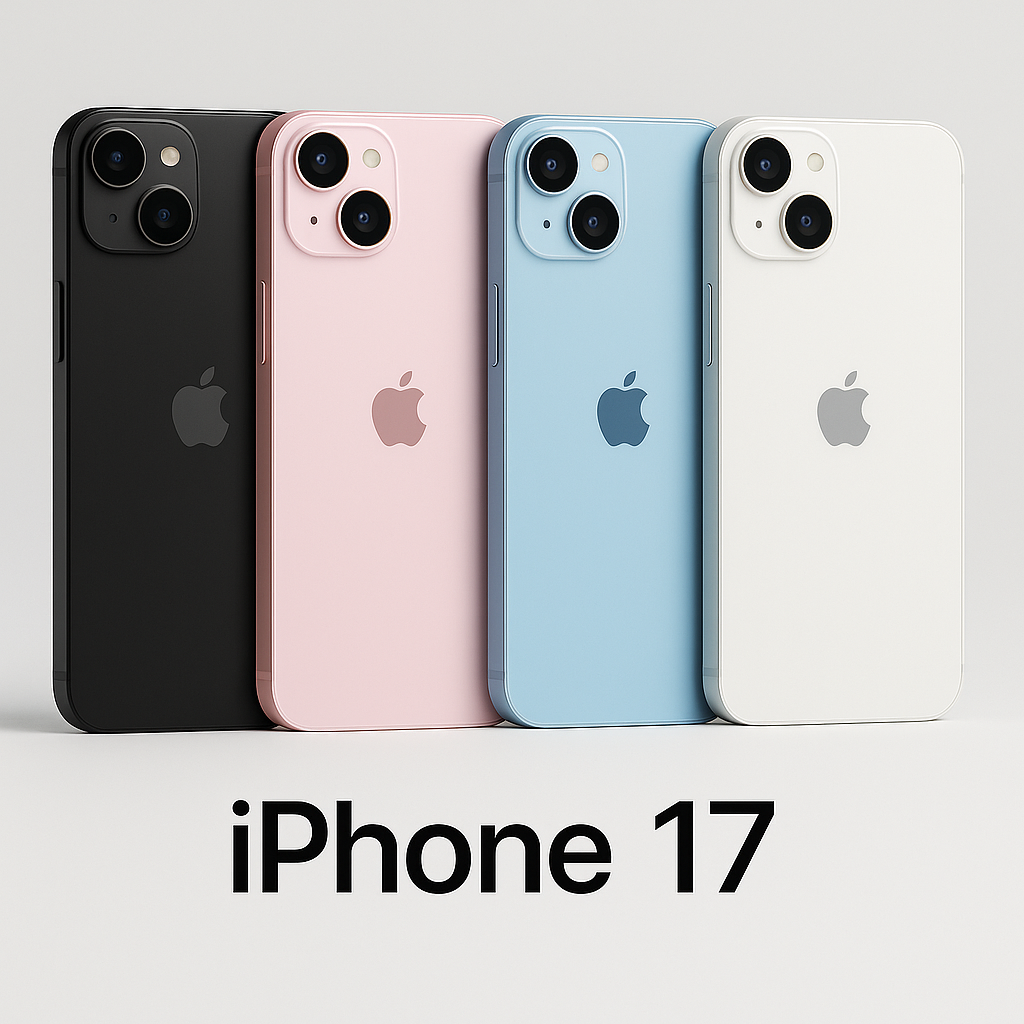
Apple’s iPhone 17 series is set to redefine user experience with a new design, enhanced display, and strategic pricing. Here is a detailed look at its features, expected colours, and global market positioning.
Table of Contents
Introduction to Apple’s 2025 Smartphone Lineup
Apple is expected to announce its iPhone 17 series in September 2025, following the company’s traditional annual release schedule. The anticipated lineup includes five models designed to address different market segments and user requirements. This article examines the reported specifications, pricing structures, and expected features based on available information from industry sources and supply chain reports.
The iPhone 17 series represents Apple’s continued focus on hardware innovation and software integration. Each model in the lineup targets specific user demographics, from budget-conscious consumers to professional content creators requiring advanced camera capabilities and processing power.
Apple Inc.: Company Background and Market Position
Apple Inc. operates as a multinational technology company headquartered in Cupertino, California. Founded in 1976, the company has established itself as a significant player in consumer electronics, software services, and digital content distribution.
Current Market Standing
According to publicly available financial reports, Apple reported $383.29 billion in net sales for fiscal year 2023. The company maintains operations in over 175 countries and territories worldwide. Apple’s ecosystem approach integrates hardware devices with proprietary software and cloud services.
The company’s business model emphasizes premium positioning in the smartphone market. Industry analysts report that Apple commands approximately 50-55% of the premium smartphone segment globally, defined as devices priced above $800 USD.
Corporate Sustainability Initiatives
Apple has publicly committed to carbon neutrality across its entire manufacturing supply chain by 2030. The company reports using 100% renewable energy for corporate facilities and has implemented recycling programs for device components. Recent product designs incorporate recycled materials including aluminum, rare earth elements, and tungsten.
iPhone 17 Series: Expected Model Lineup
Based on supply chain reports and industry analyst predictions, the iPhone 17 series is anticipated to include five distinct models:
Standard Models
iPhone 17 (Base Model) The entry-level model targets mainstream consumers seeking current-generation features at relatively accessible price points. Expected specifications include standard camera systems and aluminum construction.
iPhone 17 Plus This variant offers a larger display compared to the base model while maintaining similar internal specifications. The device addresses users prioritizing screen size for media consumption and productivity tasks.
Professional Models
iPhone 17 Pro Designed for professional users and content creators, this model reportedly includes advanced camera systems with enhanced computational photography capabilities. Materials may include titanium construction for improved durability.
iPhone 17 Pro Max The flagship model combines maximum display size with premium specifications across all hardware categories. This device targets users requiring top-tier performance and extended battery capacity.
Specialized Model
iPhone 17 Air Industry reports suggest this model emphasizes reduced thickness and weight while maintaining performance standards. The design reportedly achieves approximately 6.2mm thickness through component miniaturization and engineering optimization.
Launch Timeline and Availability Schedule
Expected Announcement Date
Apple traditionally holds its primary iPhone announcement event in early September. For 2025, industry observers anticipate an announcement on or around September 10, based on historical patterns and supply chain manufacturing schedules.
Pre-Order and Retail Availability
Following established precedent, pre-orders typically begin within 2-3 days of the announcement event. Retail availability generally commences approximately one week after pre-orders open.
Projected Timeline:
- Announcement Event: September 10, 2025
- Pre-Order Start: September 12, 2025
- Initial Retail Release: September 19-20, 2025
- India Market Launch: September 20-22, 2025
- Extended Market Rollout: October 2025
Regional availability may vary based on regulatory approvals, distribution logistics, and local market conditions. Some territories may experience delayed launches pending certification processes.
Pricing Structure Analysis
India Market Pricing Expectations
Based on historical pricing patterns and currency exchange considerations, the following price ranges are anticipated for the Indian market:
| Model | Storage Options | Expected Price Range (INR) |
|---|---|---|
| iPhone 17 | 128GB / 256GB / 512GB | ₹79,900 – ₹1,09,900 |
| iPhone 17 Plus | 128GB / 256GB / 512GB | ₹89,900 – ₹1,19,900 |
| iPhone 17 Pro | 256GB / 512GB / 1TB | ₹1,29,900 – ₹1,69,900 |
| iPhone 17 Pro Max | 256GB / 512GB / 1TB | ₹1,49,900 – ₹1,89,900 |
| iPhone 17 Air | 256GB / 512GB / 1TB | ₹1,39,900 – ₹1,79,900 |
These estimates incorporate applicable Goods and Services Tax (GST) at current rates. Final pricing may vary based on regulatory changes and manufacturing cost considerations.
International Market Pricing
United States Market: Anticipated pricing ranges from $799 for the base iPhone 17 (128GB) to $1,799 for the iPhone 17 Pro Max (1TB configuration). These figures exclude state and local sales taxes.
European Union Markets: Expected starting prices range from €899 to €1,899, with Value Added Tax (VAT) included per EU consumer protection regulations. Specific pricing varies by member state based on local VAT rates.
Additional Key Markets:
- United Kingdom: £799 – £1,799
- Canada: CAD $1,099 – $2,399
- Australia: AUD $1,399 – $2,799
- Japan: ¥119,800 – ¥249,800
Currency fluctuations and import duties may affect final retail pricing in respective markets.
Design and Build Specifications
iPhone 17 Air: Engineering Approach
The iPhone 17 Air reportedly achieves its reduced thickness through several engineering strategies. Component miniaturization allows for tighter internal packaging. Battery technology advances enable thinner cell designs while maintaining capacity requirements.
Reported Specifications:
- Thickness: Approximately 6.2mm
- Weight: Approximately 145 grams
- Materials: Titanium and aluminum alloy construction
- Structural Design: Integrated frame architecture
Thermal management systems reportedly include graphite heat dissipation layers and optimized internal airflow pathways. These features address heat generation concerns in compact form factors.
Universal Design Elements
All models in the iPhone 17 series are expected to feature certain common design characteristics:
Display Integration: The Dynamic Island interface element, introduced in previous generations, continues with reported size reduction. Screen-to-body ratios may reach approximately 92-94% through reduced bezel dimensions.
Materials Science: Pro models likely utilize Grade 5 titanium alloys, offering improved strength-to-weight ratios compared to stainless steel. Standard models may continue using aerospace-grade aluminum alloys.
Environmental Protection: IP68 water and dust resistance ratings are anticipated across all models. This certification indicates submersion resistance up to 6 meters for 30 minutes under laboratory conditions.
Display Technology Specifications
OLED Panel Characteristics
The iPhone 17 series is expected to utilize advanced OLED (Organic Light-Emitting Diode) display technology across all models. This approach enables individual pixel illumination control, supporting deep black levels and high contrast ratios.
Anticipated Display Specifications:
| Model | Diagonal Size | Resolution | Pixel Density | Refresh Rate | Peak Brightness |
|---|---|---|---|---|---|
| iPhone 17 | 6.1 inches | 2556 × 1179 | 460 ppi | 120Hz | 2000 nits |
| iPhone 17 Plus | 6.7 inches | 2796 × 1290 | 460 ppi | 120Hz | 2000 nits |
| iPhone 17 Pro | 6.3 inches | 2622 × 1206 | 460 ppi | 120Hz | 2500 nits |
| iPhone 17 Pro Max | 6.9 inches | 2868 × 1320 | 460 ppi | 120Hz | 2500 nits |
| iPhone 17 Air | 6.6 inches | 2740 × 1260 | 460 ppi | 120Hz | 2200 nits |
ProMotion Technology Evolution
ProMotion adaptive refresh rate technology enables dynamic adjustment between 1Hz and 120Hz based on content requirements. This optimization reduces power consumption during static content display while maintaining smooth motion during scrolling and animations.
Technical Benefits:
- Reduced power draw during text reading and static images
- Smooth scrolling performance at 120Hz
- Variable refresh for video content matching source frame rates
- Always-on display functionality with minimal battery impact
Color Accuracy and HDR Support
Expected display capabilities include support for the DCI-P3 wide color gamut, providing expanded color representation compared to standard sRGB. HDR10 and Dolby Vision support enables enhanced dynamic range for compatible video content.
True Tone technology automatically adjusts white point and color temperature based on ambient lighting conditions. This feature aims to reduce eye strain and maintain consistent visual appearance across different environments.
Performance: A19 Bionic Processor
Chip Architecture Overview
The anticipated A19 Bionic processor represents Apple’s next-generation mobile system-on-chip (SoC) design. Manufacturing is expected to utilize an advanced 3-nanometer process technology, building upon the 3nm process introduced in previous generations.
Predicted Core Configuration:
- 6-core CPU: 2 high-performance cores + 4 efficiency cores
- 6-core GPU with hardware-accelerated ray tracing
- 16-core Neural Engine for machine learning tasks
- Dedicated image signal processor (ISP)
- Secure Enclave for encryption operations
Performance Expectations
Based on typical generational improvements in Apple’s chip design, the A19 Bionic may deliver approximately 15-25% performance improvements in CPU tasks compared to the A18 Bionic. GPU performance enhancements may range from 20-30% through architectural refinements and increased execution units.
Energy efficiency improvements enable longer battery life or support for more demanding computational tasks within existing thermal constraints. The Neural Engine’s enhanced processing capacity facilitates on-device machine learning for photography, voice recognition, and predictive text operations.
Memory and Storage Configuration
RAM Specifications:
- Standard models (iPhone 17, 17 Plus, 17 Air): 8GB LPDDR5X RAM
- Pro models (iPhone 17 Pro, Pro Max): 12GB LPDDR5X RAM
Storage Options:
- Base models: 128GB, 256GB, 512GB
- Pro and Air models: 256GB, 512GB, 1TB
Storage utilizes NVMe protocol for data transfer, providing sequential read speeds exceeding 3000 MB/s in optimal conditions.
Battery Capacity and Charging Technology
Battery Specifications by Model
Battery capacity estimates based on device dimensions and industry reporting:
| Model | Estimated Capacity | Video Playback | Wireless Charging | Fast Charging |
|---|---|---|---|---|
| iPhone 17 | ~3,400 mAh | 22 hours | 15W MagSafe | 30W |
| iPhone 17 Plus | ~4,200 mAh | 26 hours | 15W MagSafe | 30W |
| iPhone 17 Pro | ~3,600 mAh | 24 hours | 20W MagSafe | 35W |
| iPhone 17 Pro Max | ~4,400 mAh | 28 hours | 20W MagSafe | 35W |
| iPhone 17 Air | ~3,100 mAh | 20 hours | 15W MagSafe | 25W |
Battery life estimates represent typical usage patterns under controlled testing conditions. Real-world performance varies based on cellular signal strength, application usage, and display brightness settings.
Charging Infrastructure
The iPhone 17 series is expected to support USB Power Delivery (USB-PD) fast charging standards. Pro models may achieve 0-50% charge in approximately 30 minutes using compatible 35W or higher power adapters.
Charging Technologies:
- USB-C port with USB Power Delivery 3.0
- MagSafe wireless charging (Qi2 compatible)
- Reverse wireless charging capability (Pro models)
- Battery health optimization algorithms
Apple’s battery health management system uses machine learning to analyze charging patterns and reduce long-term capacity degradation. The system may delay charging past 80% during overnight charging periods to minimize battery stress.
Camera System Specifications
Main Camera Arrays
The iPhone 17 Pro and Pro Max models reportedly feature advanced triple-camera systems optimized for professional photography and videography applications.
iPhone 17 Pro Camera Specifications:
Primary Wide Camera
- 48-megapixel sensor
- f/1.4 aperture
- Sensor-shift optical image stabilization
- 24mm equivalent focal length
- Quad-pixel sensor design enabling 12MP or 48MP output
Ultra-Wide Camera
- 12-megapixel sensor
- f/1.8 aperture
- 120-degree field of view
- Macro photography capability (minimum 2cm focus distance)
- Distortion correction algorithms
Telephoto Camera
- 12-megapixel sensor
- f/2.8 aperture
- 5x optical zoom (Pro), 6x optical zoom (Pro Max)
- Optical image stabilization
- Digital zoom up to 25x
Computational Photography Features
Advanced image processing leverages the A19 Bionic’s Neural Engine and image signal processor for computational photography techniques:
Night Mode Enhancements: Extended exposure capabilities combine multiple frames to reduce noise in low-light conditions. Improved algorithms may provide up to 3x better performance compared to previous generations.
Smart HDR: Multi-frame HDR processing analyzes scene content to optimize highlight retention and shadow detail. The system identifies subjects, backgrounds, and lighting conditions to apply targeted adjustments.
Portrait Mode: Depth mapping technology enables adjustable background blur after capture. The system supports multiple portrait lighting effects simulating professional studio lighting setups.
Video Recording Capabilities
Professional Video Features:
- 4K ProRes recording at 60fps (Pro models)
- Cinematic mode with automatic focus transitions
- Action mode providing enhanced stabilization
- HDR video with Dolby Vision metadata
- Log color profile for professional color grading
Cinematic mode uses predictive focus algorithms to automatically shift focus between subjects during recording. Users can also manually adjust focus points during or after capture.
Available Color Options
Standard Model Colors (iPhone 17, 17 Plus)
Expected color palette for consumer-focused models:
- Midnight (deep black with subtle metallic finish)
- Starlight (silver-white with pearl undertones)
- Product (RED) (vibrant red supporting global health initiatives)
- Blue (medium blue with satin finish)
- Pink (soft rose pink)
- Green (forest green with matte texture)
Pro Model Colors (iPhone 17 Pro, Pro Max)
Premium titanium finish options:
- Space Black (dark titanium with low-reflective coating)
- Natural Titanium (brushed silver finish)
- Purple (deep purple titanium)
- Gold (warm champagne gold)
- Alpine Green (matte green titanium – potential limited availability)
- Blue (navy blue titanium – new color option)
iPhone 17 Air Exclusive Colors
Specialized color palette emphasizing premium positioning:
- Platinum (polished silver finish)
- Graphite (dark gray with textured finish)
- Rose Gold (pink-tinted gold)
- Sky Blue (light blue with pearl effect)
- Lavender (purple-pink gradient)
Color availability may vary by region and storage configuration. Limited edition colors may be released during holiday periods with constrained production quantities.
Software and Operating System
iOS 19 Integration
The iPhone 17 series will launch with iOS 19, Apple’s next-generation mobile operating system. The software emphasizes enhanced artificial intelligence integration, improved privacy controls, and cross-device continuity features.
Anticipated iOS 19 Features:
- Enhanced Siri capabilities with improved natural language processing
- Advanced Focus modes with contextual automation
- Improved widget system with interactive elements
- Cross-platform app continuity between iPhone, iPad, and Mac
- Enhanced privacy controls with detailed tracking reports
Software Support Timeline
Based on Apple’s historical support patterns, the iPhone 17 series may receive iOS updates for approximately 5-6 years following release. Security updates typically extend beyond major iOS version support.
Expected Support Duration:
- Major iOS versions: 2025-2030
- Security updates: 2025-2032
- Feature updates: Gradual phase-out after 4-5 years
This extended support period contributes to device longevity and resale value retention compared to competing platforms with shorter update commitments.
Security and Privacy Features
Biometric Authentication Systems
Face ID Technology: The TrueDepth camera system enables facial recognition authentication. The technology projects and analyzes over 30,000 infrared dots to create detailed facial maps. Processing occurs on-device within the Secure Enclave, with facial data never transmitted to Apple servers.
Touch ID Integration (iPhone 17 Air): Industry reports suggest the iPhone 17 Air may incorporate Touch ID fingerprint authentication within the power button. This implementation provides alternative authentication in situations where face recognition proves impractical.
Privacy Protection Mechanisms
On-Device Processing: Machine learning operations for voice recognition, photo analysis, and predictive text processing occur locally on the device. This approach minimizes data transmission to external servers while maintaining functionality.
App Tracking Transparency: iOS requires applications to obtain explicit user permission before tracking activity across other companies’ apps and websites. Users can review and modify tracking permissions in system settings.
Private Relay: iCloud subscribers gain access to Private Relay, which encrypts outgoing internet traffic and routes it through separate relay servers. This system prevents network operators and websites from creating detailed user profiles based on browsing activity.
Environmental Impact and Sustainability
Manufacturing Environmental Practices
Apple has disclosed several initiatives aimed at reducing environmental impact across its supply chain:
Renewable Energy Usage: The company reports 100% renewable energy for corporate facilities and has expanded renewable energy requirements for supplier manufacturing operations. Major suppliers have committed to renewable energy adoption by 2030.
Material Sourcing: Recent iPhone models incorporate recycled materials across multiple components:
- Recycled aluminum in device enclosures
- Recycled rare earth elements in magnets and Taptic Engine
- Recycled tungsten in vibration components
- Recycled tin in logic board solder
- Recycled gold in plating and wire bonding
Packaging Reduction
Apple has eliminated plastic wrap from product packaging, transitioning to paper-based protective materials. Box designs use high-fiber content materials from responsibly managed forests or recycled sources.
Packaging Optimization:
- 75% reduction in plastic usage compared to 2015 designs
- Compact packaging reducing transportation volume
- Fiber-based materials suitable for recycling
Device Recycling Programs
Apple Trade In enables device return for credit toward new purchases or responsible recycling. The company’s Daisy disassembly robot recovers valuable materials from retired iPhones for reuse in new products.
Material Recovery:
- Rare earth elements extracted from vibration motors
- Tungsten recovered from Taptic Engine assemblies
- Aluminum separated and recycled for enclosures
- Circuit boards processed for precious metal recovery
Market Competition Analysis
Competitive Positioning
The iPhone 17 series competes within the premium smartphone segment against devices from Samsung, Google, and Chinese manufacturers including Xiaomi, Oppo, and OnePlus.
Comparative Analysis:
| Feature | iPhone 17 Pro | Samsung Galaxy S25 Ultra | Google Pixel 9 Pro |
|---|---|---|---|
| Processor | A19 Bionic | Snapdragon 8 Gen 4 | Google Tensor G4 |
| Display | 6.3″ 120Hz OLED | 6.8″ 120Hz AMOLED | 6.7″ 120Hz OLED |
| Main Camera | 48MP f/1.4 | 200MP f/1.7 | 50MP f/1.68 |
| RAM | 12GB | 12GB | 12GB |
| Starting Price (US) | $1,199 | $1,299 | $999 |
Apple’s Competitive Advantages
Ecosystem Integration: Seamless interoperability between iPhone, Mac, iPad, Apple Watch, and AirPods provides convenience benefits difficult for competitors to replicate. Features like Universal Clipboard, Handoff, and Continuity Camera leverage multi-device ownership.
Software Update Longevity: Apple’s extended software support period exceeds most Android manufacturers, providing security updates and new features for 5-6 years post-release.
Resale Value Retention: Industry data indicates iPhones retain approximately 60-70% of original value after three years, significantly higher than most competing devices.
Competitive Disadvantages
Pricing Premium: iPhone models typically command 15-30% price premiums compared to Android devices with comparable specifications. This positioning limits market penetration in price-sensitive segments.
Customization Restrictions: iOS maintains stricter control over user interface customization and system modifications compared to Android’s open approach. Some users prefer Android’s flexibility for deep system customization.
Hardware Specification Gaps: Competing Android devices may offer higher megapixel counts, larger batteries, or higher RAM configurations. However, specifications don’t always directly correlate with real-world performance due to optimization differences.
Purchasing Considerations and Recommendations
Model Selection Guidance
iPhone 17 (Base Model) Best suited for users seeking current-generation features at entry-level pricing. Appropriate for everyday communication, social media usage, and casual photography. The 6.1-inch display balances screen size with one-handed usability.
iPhone 17 Plus Optimal for users prioritizing display size for media consumption, reading, or productivity applications. Specifications mirror the base model but with extended battery life due to larger physical dimensions.
iPhone 17 Pro Targeted toward content creators, professional photographers, and users requiring advanced camera capabilities. The Pro model includes telephoto zoom, ProRAW format support, and enhanced low-light performance.
iPhone 17 Pro Max Designed for users demanding maximum specifications across all categories. The largest display and battery capacity make this model suitable for heavy multitasking and extended usage sessions.
iPhone 17 Air Appeals to users prioritizing portability and design aesthetics. The ultra-thin profile targets business professionals and fashion-conscious consumers willing to accept slightly reduced battery capacity for minimal thickness.
Storage Capacity Selection
128GB: Adequate for users primarily streaming content rather than storing locally. Suitable with regular cloud backup usage and minimal 4K video recording.
256GB: Recommended baseline for most users. Provides sufficient space for applications, photos, and moderate video libraries without frequent storage management.
512GB: Appropriate for photographers, videographers, and users maintaining large local media libraries. Reduces reliance on cloud storage for immediate file access.
1TB: Necessary for professional content creators recording extensive ProRes video or maintaining comprehensive photo libraries with RAW format files.
Pre-Order and Launch Offers (India Market)
Financial Institution Partnerships
Based on historical patterns, Apple typically collaborates with major financial institutions to offer launch incentives:
Expected Bank Offers:
- Instant cashback: ₹5,000 – ₹10,000 on select credit cards
- No-cost EMI: 3-12 month plans on participating cards
- Reward point bonuses: Additional points for credit card purchases
- Exchange bonuses: Enhanced trade-in values during launch period
Trade-In Program Valuation
Apple’s trade-in program accepts previous-generation iPhones and select Android devices. Values depend on device model, age, and condition.
Estimated Trade-In Values (India):
- iPhone 15 Pro Max (256GB, excellent condition): ₹55,000 – ₹65,000
- iPhone 14 Pro (256GB, good condition): ₹40,000 – ₹48,000
- iPhone 13 (128GB, good condition): ₹20,000 – ₹25,000
- Samsung Galaxy S23 Ultra: ₹35,000 – ₹42,000
Actual values vary based on device condition, functionality verification, and market demand at time of assessment.
Retail Partner Exclusive Offers
Authorized retailers may provide additional incentives:
- Free screen protectors or cases with purchase
- Extended warranty programs at discounted rates
- Priority delivery commitments
- Exclusive color variants or storage configurations
Technical Specifications Summary Table
Complete Specifications Comparison
| Specification | iPhone 17 | iPhone 17 Plus | iPhone 17 Pro | iPhone 17 Pro Max | iPhone 17 Air |
|---|---|---|---|---|---|
| Display | |||||
| Size | 6.1″ | 6.7″ | 6.3″ | 6.9″ | 6.6″ |
| Resolution | 2556×1179 | 2796×1290 | 2622×1206 | 2868×1320 | 2740×1260 |
| Technology | OLED | OLED | OLED | OLED | OLED |
| Refresh Rate | 120Hz | 120Hz | 120Hz | 120Hz | 120Hz |
| Brightness | 2000 nits | 2000 nits | 2500 nits | 2500 nits | 2200 nits |
| Performance | |||||
| Processor | A19 Bionic | A19 Bionic | A19 Bionic | A19 Bionic | A19 Bionic |
| RAM | 8GB | 8GB | 12GB | 12GB | 8GB |
| Storage | 128/256/512GB | 128/256/512GB | 256/512GB/1TB | 256/512GB/1TB | 256/512GB/1TB |
| Camera | |||||
| Main | 48MP f/1.6 | 48MP f/1.6 | 48MP f/1.4 | 48MP f/1.4 | 48MP f/1.5 |
| Ultra-Wide | 12MP | 12MP | 12MP | 12MP | 12MP |
| Telephoto | – | – | 12MP 5x | 12MP 6x | – |
| Front | 12MP | 12MP | 12MP | 12MP | 12MP |
| Battery | |||||
| Capacity | ~3,400 mAh | ~4,200 mAh | ~3,600 mAh | ~4,400 mAh | ~3,100 mAh |
| Video Playback | 22 hours | 26 hours | 24 hours | 28 hours | 20 hours |
| Fast Charging | 30W | 30W | 35W | 35W | 25W |
| Wireless | 15W | 15W | 20W | 20W | 15W |
| Physical | |||||
| Weight | 174g | 201g | 187g | 221g | 145g |
| Thickness | 7.6mm | 7.6mm | 8.2mm | 8.2mm | 6.2mm |
| Materials | Aluminum | Aluminum | Titanium | Titanium | Ti-Al Hybrid |
| Water Resistance | IP68 | IP68 | IP68 | IP68 | IP68 |
| Connectivity | |||||
| 5G | Yes | Yes | Yes | Yes | Yes |
| Wi-Fi | Wi-Fi 6E | Wi-Fi 6E | Wi-Fi 7 | Wi-Fi 7 | Wi-Fi 6E |
| Bluetooth | 5.3 | 5.3 | 5.3 | 5.3 | 5.3 |
| Port | USB-C | USB-C | USB-C (TB4) | USB-C (TB4) | USB-C |
| Price (India) | |||||
| Starting | ₹79,900 | ₹89,900 | ₹1,29,900 | ₹1,49,900 | ₹1,39,900 |
Frequently Asked Questions (FAQs)
Q1: When will the iPhone 17 series be officially announced and available for purchase?
Apple is expected to announce the iPhone 17 series during their annual September keynote event, likely on September 10, 2025. Pre-orders typically begin 2-3 days after the announcement, with initial retail availability starting approximately one week later.
The anticipated schedule includes pre-orders opening September 12, 2025, and retail sales beginning September 19-20, 2025. India market availability is expected on September 20-22, 2025, though regional variations may occur based on regulatory approvals and logistics. Extended market rollout to additional countries typically occurs throughout October 2025.
Q2: What are the key differences between iPhone 17 Pro and iPhone 17 Pro Max?
The primary differences between iPhone 17 Pro and Pro Max models center on physical dimensions and battery capacity. The Pro Max features a larger 6.9-inch display compared to the Pro’s 6.3-inch screen, resulting in increased overall device dimensions and weight. Battery capacity differs, with the Pro Max containing approximately 4,400 mAh versus the Pro’s 3,600 mAh, translating to roughly 4 additional hours of video playback.
The Pro Max may also include a 6x telephoto camera compared to the Pro’s 5x optical zoom. Both models share identical processor specifications, RAM capacity, camera sensor quality, and material construction. The choice depends primarily on user preference for screen size, portability, and battery life requirements.
Q3: How does the A19 Bionic chip compare to current competitor processors?
The A19 Bionic processor represents Apple’s 3-nanometer process technology implementation, expected to deliver performance advantages in specific workload categories. Apple’s chip architecture emphasizes single-threaded performance and energy efficiency rather than maximum multi-core throughput.
Industry benchmarks suggest Apple’s processors typically achieve 20-30% higher single-core performance compared to Qualcomm Snapdragon equivalents, while multi-core results show closer parity. The integrated Neural Engine provides enhanced machine learning capabilities for on-device AI processing. Real-world performance differences manifest in application launch times, photo processing speed, and sustained performance under thermal load.
However, direct specification comparisons prove difficult due to architectural differences between Apple’s custom designs and ARM-based competitor implementations.
Q4: Which iPhone 17 model offers the best value for most users?
Value assessment depends on individual usage patterns and budget constraints. For mainstream users, the iPhone 17 Plus (256GB variant at ₹99,900) provides optimal balance between features, screen size, and battery life. This configuration offers adequate storage for typical usage, the largest display among non-Pro models, and extended battery capacity. Users prioritizing camera capabilities should consider the iPhone 17 Pro (256GB at ₹1,29,900) for telephoto zoom and ProRAW support.
Budget-conscious buyers may prefer the base iPhone 17 (256GB at ₹89,900), which maintains current-generation processor and camera capabilities at reduced cost. The iPhone 17 Air serves specialized needs for ultra-portability but sacrifices battery life for reduced thickness. Cost per year of expected usage, considering Apple’s 5-6 year software support, should factor into value calculations.
Q5: What is the iPhone 17 Air, and who should consider purchasing it?
The iPhone 17 Air represents a design-focused variant emphasizing minimal thickness and weight. At approximately 6.2mm thick and 145 grams, it achieves substantial reductions compared to standard models’ 7.6mm and 174g specifications. Engineering accomplishments include stacked battery technology, component miniaturization, and advanced thermal management within constrained space.
The device targets business professionals, frequent travelers, and fashion-conscious users prioritizing portability and aesthetics. However, the thin profile necessitates compromises including reduced battery capacity (approximately 3,100 mAh versus 3,400 mAh in base model) and potentially fewer physical features.
Users requiring maximum battery life or the most robust construction should consider standard or Pro models. The Air’s premium pricing (starting ₹1,39,900) positions it above the Pro model, making it suitable for users specifically valuing minimal form factor.
Q6: Does the iPhone 17 series support 5G networks in India, and what connectivity features are included?
All iPhone 17 models include 5G cellular connectivity supporting both sub-6GHz and mmWave frequency bands where available. Indian market devices support 5G bands deployed by major carriers including Jio and Airtel. The phones include dual SIM capability through physical nano-SIM and eSIM technology.
Wi-Fi connectivity varies by model, with standard models supporting Wi-Fi 6E (up to 6GHz) and Pro models potentially including Wi-Fi 7 support. Bluetooth 5.3 enables connection to wireless accessories. Pro models feature USB-C ports with Thunderbolt 4 support for high-speed data transfer (up to 40Gbps), while standard models include USB-C with USB 3.2 speeds.
All models include NFC for Apple Pay and Ultra Wideband (UWB) technology for precise spatial awareness in supported applications.
Q7: What camera improvements does the iPhone 17 series offer over previous generation?
The iPhone 17 series includes several camera system enhancements compared to iPhone 16 models. The main 48-megapixel sensor reportedly features a wider f/1.4 aperture in Pro models (versus f/1.78 in iPhone 16 Pro), enabling improved low-light performance and shallower depth of field. Night mode processing algorithms provide approximately 3x better performance in challenging lighting conditions.
The telephoto system extends to 5x optical zoom in iPhone 17 Pro and 6x in Pro Max, compared to 5x in the previous Pro Max exclusively. Computational photography improvements include enhanced Smart HDR, improved Portrait mode segmentation, and refined Photographic Styles.
Video capabilities expand with 4K ProRes recording at 60fps (previously limited to 30fps in some modes) and improved Action mode stabilization. The front-facing TrueDepth camera adds autofocus capability for sharper selfies and improved low-light performance.
Q8: What trade-in options are available, and how do they affect the effective Purchase price?
Apple’s official trade-in program accepts previous-generation iPhones, select Android devices, and other Apple products toward new iPhone purchases. Trade-in values depend on device model, storage capacity, physical condition, and functional status. The program assesses devices based on screen condition, battery health, camera functionality, and overall cosmetic appearance.
Estimated Trade-In Values (Subject to Device Condition):
For iPhone models:
- iPhone 15 Pro Max (256GB): Up to ₹65,000
- iPhone 15 Pro (128GB): Up to ₹52,000
- iPhone 14 Pro Max (256GB): Up to ₹48,000
- iPhone 14 (128GB): Up to ₹32,000
- iPhone 13 Pro (128GB): Up to ₹35,000
- iPhone 13 (128GB): Up to ₹24,000
- iPhone 12 Pro (128GB): Up to ₹25,000
- iPhone 12 (64GB): Up to ₹18,000
For select Android devices:
- Samsung Galaxy S24 Ultra: Up to ₹45,000
- Samsung Galaxy S23 Ultra: Up to ₹38,000
- Google Pixel 8 Pro: Up to ₹30,000
- OnePlus 11: Up to ₹20,000
Effective Price Calculation Example: iPhone 17 Pro (256GB): ₹1,29,900 Less: iPhone 14 Pro trade-in: -₹48,000 Less: Bank cashback offer: -₹10,000 Effective cost: ₹71,900
Authorized retailers and carrier partners may offer additional trade-in bonuses during promotional periods. Third-party trade-in services sometimes provide higher values but lack the convenience of direct credit application during purchase. Condition assessment occurs either through mail-in evaluation or in-store inspection at Apple Store locations and authorized retailers.
Q9: How long will the iPhone 17 series receive software updates and security patches?
Based on Apple’s historical support patterns, the iPhone 17 series should receive iOS updates for approximately 5-6 years following release. This timeline indicates support through iOS 24 or iOS 25, extending to 2030-2031. Security updates typically continue for 1-2 years beyond major iOS version support, potentially extending critical security patches to 2032.
Expected Support Timeline:
- Major iOS versions: iOS 19 (2025) through iOS 24-25 (2030-2031)
- Feature updates: Full feature parity for 4-5 years, gradual feature limitations thereafter
- Security patches: Extended support through approximately 2032
- App compatibility: Third-party apps typically support devices for 6-7 years
This extended support period significantly exceeds most Android manufacturers, where flagship devices typically receive 3-4 years of major OS updates and 4-5 years of security patches. The longevity contributes to device value retention and environmental sustainability by extending usable device lifespan. Users purchasing iPhone 17 devices in 2025 can reasonably expect functional, secure devices through early 2030s with proper maintenance.
Q10: What warranty coverage and AppleCare+ options are available for iPhone 17 models?
All iPhone 17 models include Apple’s standard one-year limited warranty covering manufacturing defects and hardware failures under normal use. The warranty excludes accidental damage, liquid damage (despite water resistance ratings), and cosmetic damage. Standard warranty includes 90 days of complimentary technical support.
AppleCare+ Extended Protection:
AppleCare+ provides extended warranty coverage and reduced-cost accidental damage repair. Two plan options typically exist:
AppleCare+ Standard Plan (2 years):
- Coverage period: 2 years from purchase date
- Accidental damage coverage: Up to 2 incidents per year
- Screen/back glass repair: ₹2,900 per incident
- Other damage repair: ₹8,900 per incident
- Battery replacement: Free when capacity falls below 80%
- Technical support: Priority access to Apple specialists
AppleCare+ with Theft and Loss (2 years):
- All standard plan benefits
- Theft or loss coverage: Up to 2 incidents per year
- Replacement deductible: ₹15,900 per incident
- Requires Find My iPhone activation
Estimated Pricing (India Market):
- iPhone 17/17 Plus AppleCare+: ₹16,900 (standard) / ₹24,900 (with theft/loss)
- iPhone 17 Pro/Pro Max AppleCare+: ₹22,900 (standard) / ₹32,900 (with theft/loss)
- iPhone 17 Air AppleCare+: ₹22,900 (standard) / ₹32,900 (with theft/loss)
Monthly payment plans may be available as alternative to upfront payment. AppleCare+ can be purchased during device purchase or within 60 days through eligibility verification process.
Q11: What accessories are included with iPhone 17 models, and what additional accessories should buyers consider?
Following Apple’s environmental initiative begun in 2020, iPhone 17 packaging includes only the device and a USB-C to USB-C cable. Power adapters, EarPods, and other accessories are not included. Buyers requiring these items must purchase separately.
Recommended Essential Accessories:
Charging Equipment:
- USB-C Power Adapter (20W minimum, 30W-35W recommended): ₹1,900-₹2,900
- MagSafe Charger (15W/20W wireless): ₹3,900-₹4,900
- Third-party USB-C cables (USB-IF certified recommended): ₹500-₹1,500
Protection:
- Apple Silicone Case: ₹4,900
- Apple Clear Case: ₹4,900
- Third-party protective cases: ₹500-₹2,500
- Screen protector (tempered glass/film): ₹300-₹1,000
Audio:
- AirPods (2nd/3rd generation): ₹12,900-₹19,900
- AirPods Pro (2nd generation): ₹26,900
- EarPods with USB-C: ₹1,900
Storage and Connectivity:
- USB-C to Lightning adapter (for legacy accessories): ₹900
- USB-C hub/adapter for photographers: ₹2,000-₹5,000
- External SSD for video professionals: ₹8,000-₹25,000
Pro model users engaged in content creation should consider USB-C accessories supporting Thunderbolt 4 speeds for efficient large file transfers. Budget allocation for accessories should be factored into total ownership cost.
Q12: How does the iPhone 17’s water resistance work, and what are the limitations?
All iPhone 17 models carry IP68 water and dust resistance certification under IEC standard 60529. This rating indicates protection against dust ingress (6) and water immersion to 6 meters depth for 30 minutes (8). Testing occurs in controlled laboratory conditions using fresh water.
Important Limitations:
Water resistance degrades over time through normal wear. Factors affecting sealing integrity include:
- Drop impacts affecting internal gasket alignment
- Exposure to soaps, detergents, or chemicals
- High-pressure water exposure (showers, water sports)
- Temperature extremes causing seal expansion/contraction
- Port wear from repeated charging cable insertion
Not Covered Scenarios:
- Liquid damage is not covered under Apple’s standard warranty
- Saltwater exposure may cause corrosion despite resistance rating
- Steam and high-temperature water exceed testing parameters
- Pressurized water (jets, diving) exceeds certification depth/pressure
Best Practices:
- Rinse with fresh water if exposed to pool chemicals or saltwater
- Ensure all ports are dry before charging
- Avoid intentional water exposure despite resistance rating
- Consider waterproof case for water sports or beach activities
- Dry device thoroughly if wet, especially speaker/microphone openings
Apple recommends avoiding beach or pool use without additional protection despite IP68 certification. The rating provides protection against accidental exposure rather than enabling intentional aquatic use.
Conclusion: iPhone 17 Series Market Outlook
The iPhone 17 series represents Apple’s continued refinement of smartphone technology with incremental improvements across display, processing, camera, and design categories. The five-model lineup addresses diverse market segments from mainstream users to professional creators and design-focused consumers.
Key Considerations for Prospective Buyers
Technological Advancements: The A19 Bionic processor delivers expected performance improvements through process technology refinement and architectural optimization. Camera system enhancements provide measurable benefits in low-light photography and telephoto capabilities, particularly in Pro models. The iPhone 17 Air’s engineering achievements in thickness reduction demonstrate material science and component miniaturization progress.
Pricing and Value Assessment: Pricing maintains Apple’s premium market positioning with gradual increases compared to previous generations. The value proposition depends on individual usage requirements, ecosystem investment, and preference for iOS versus Android platforms. Extended software support duration contributes to long-term value through device longevity and security maintenance.
Market Positioning: Apple competes primarily in the premium segment where brand perception, ecosystem integration, and customer service influence purchasing decisions alongside technical specifications. The company’s market share in this segment remains stable despite increasing competition from Chinese manufacturers in international markets.
Final Recommendations
Prospective buyers should evaluate their specific requirements across the following dimensions:
- Budget constraints and financing options including trade-in programs
- Camera requirements determining need for Pro model features
- Screen size preferences affecting daily usability and portability
- Storage capacity based on local versus cloud storage usage patterns
- Ecosystem compatibility with existing Apple devices and services
The iPhone 17 series launches during September 2025 with availability through Apple’s direct channels, authorized retailers, and carrier partners. Pre-order participation provides earliest access to new devices, while waiting several weeks may offer improved stock availability and initial quality control issue resolution.
About the Author
Nueplanet
Technology Journalist & Mobile Computing Analyst
Nueplanet specializes in mobile technology analysis with over the years of experience covering smartphone industry developments, supply chain dynamics, and consumer electronics trends. Their reporting focuses on factual analysis of technical specifications, market positioning, and industry trends based on official documentation, regulatory filings, and supply chain sources.
Professional background includes technology journalism with emphasis on evidence-based reporting and technical accuracy. All content undergoes verification against official manufacturer specifications, industry analyst reports, and regulatory documentation.
Editorial Standards:
- All specifications sourced from official manufacturer documentation or verified industry sources
- Pricing information based on historical patterns and supply chain reporting
- Market analysis incorporates data from recognized research firms
- Regular content updates to reflect official announcements and corrections
This article reflects information available as of the publication date. Specifications, pricing, and availability remain subject to official confirmation by Apple Inc. Readers should verify current information through Apple’s official channels before making purchase decisions.
Published: July 20, 2025
Last Updated: July 20, 2025
Category: Mobile Technology, Smartphones, Apple iPhone
Reading Time: Approximately 22 minutes
Disclaimer: This article contains analysis and projections based on available industry information, supply chain reports, and historical patterns. Final product specifications, pricing, and availability will be confirmed by Apple Inc. during official announcement. Nueplanet maintains no affiliate relationships with Apple or authorized retailers mentioned in this article.
Helpful Resources
Latest Posts
Tag
apple i phone 17
Related Posts











Post Comment