









Bomb Threat in Bangalore: Over 40 Schools Receive Threat Emails, Massive Security Alert Issued
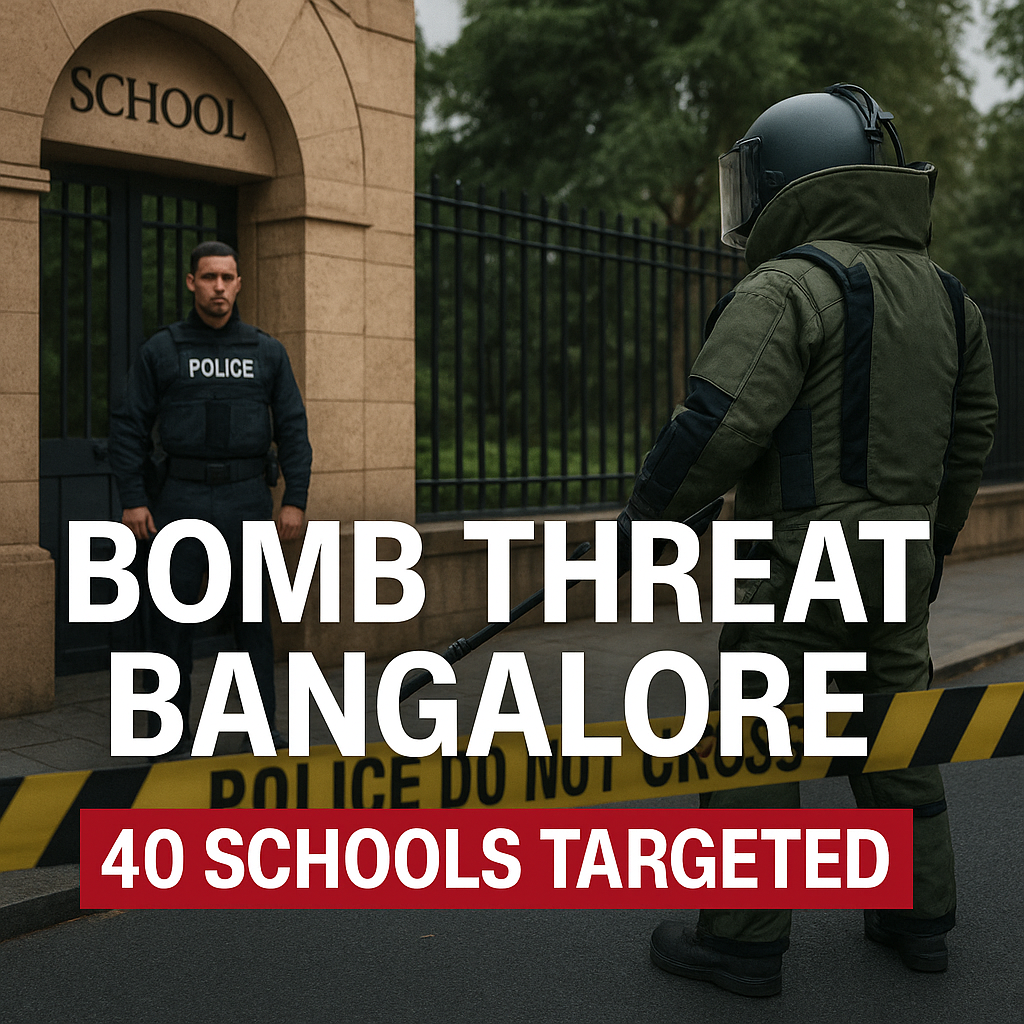
More than 40 private schools in Bangalore received bomb threat emails on July 18, 2025, prompting mass evacuations and heightened security checks across the city.
Table of Contents
News Overview
Multiple schools in Bangalore received bomb threat emails on July 18, 2025, during morning hours. The threats affected numerous private educational institutions across various city zones. Authorities conducted investigations and determined the threats were hoaxes with no physical explosives discovered at any targeted location. This incident was part of a broader coordinated campaign affecting schools in other Indian cities including Delhi and Mumbai during the same timeframe. This article examines the incident characteristics, emergency response procedures, investigation methodologies, and implications for educational security infrastructure.
Incident Characteristics and Timeline
Initial Threat Notifications
Private schools in Bangalore began receiving threatening emails starting around 6:30 AM IST on July 18, 2025. The emails claimed explosive devices had been placed on school premises. Approximately 40-50 schools across multiple city zones received identical or similar threatening communications within a concentrated timeframe.
School administrators immediately notified police and emergency authorities upon receiving the threats. The Bangalore Police Commissioner received multiple calls from affected schools reporting the threats. The similar content and timing of threats across multiple institutions prompted immediate investigation procedures.
| Time Period | Event | Response Level |
|---|---|---|
| 6:30-7:00 AM | Initial threat emails received | Individual school notifications |
| 7:00-7:30 AM | Multiple schools confirm threats | Police coordination begins |
| 7:30-8:00 AM | Mass evacuation procedures initiated | Full emergency activation |
| 8:00 AM onwards | Police confirmation and inspection | Coordinated investigation |
Geographic Distribution of Threats
The threats were dispersed across multiple Bangalore city zones including Whitefield, Indiranagar, Koramangala, Jayanagar, Hebbal, Yelahanka, Rajarajeshwari Nagar, and Kengeri. The geographic spread across the city suggested either systematic targeting of specific school networks or mass distribution to institutional email databases.
The distribution pattern appeared to target primarily private schools rather than government institutions. Various educational networks and individual institutions received threats suggesting multiple mailing list sources or data acquisition methods. The scale of distribution required significant coordination or automated deployment systems.
Emergency Response Initiation
Police authorities deployed bomb detection squads to affected school locations following notification procedures. Specialized units conducted systematic searches of school premises including buildings, parking areas, and grounds. Students and staff were evacuated from school premises as precautionary measures during inspection procedures.
The Bangalore Police Commissioner confirmed the massive deployment of bomb detection squads to affected locations. Official statements indicated that comprehensive checks had been conducted at affected institutions. The search procedures were completed within several hours of threat notification.
Coordinated Nature of the Campaign
Multi-City Targeting Pattern
The Bangalore incident was not an isolated event but part of a broader coordinated campaign. Delhi schools received similar threats on July 16, 2025, including institutions such as St. Thomas School in Dwarka and Vasant Valley School in Vasant Kunj. Mumbai schools were targeted on July 18, 2025, coinciding with the Bangalore incident.
The similar timing, threat language, and technical characteristics across multiple cities indicated systematic coordination. Investigation teams from different states coordinated analysis of the threat patterns and email characteristics.
Historical Context of School Threats
Previous bomb threat incidents targeting educational institutions occurred in January 2025 when approximately 23 Delhi schools received threatening emails. A pattern of recurring incidents targeting schools emerged across 2024-2025. The September 16, 2025 incident expanded the campaign to Nashik schools, indicating continued threat activity.
| Date | Location | Schools Affected | Classification |
|---|---|---|---|
| January 8, 2025 | Delhi | ~23 schools | Coordinated hoax |
| July 16, 2025 | Delhi | Multiple schools | Coordinated campaign |
| July 18, 2025 | Bangalore | 40-50 schools | Mass threat |
| July 18, 2025 | Mumbai | Multiple schools | Coordinated campaign |
| July 22-23, 2025 | Bangalore (Continued) | Individual schools | Follow-up threats |
| September 16, 2025 | Nashik | Multiple schools | Expansion pattern |
Analysis of Threat Characteristics
The threatening emails demonstrated several common characteristics suggesting systematic preparation: identical or nearly identical threatening language across multiple schools, coordinated timing indicating automated distribution systems, foreign IP address routing through multiple international servers, advanced anonymization techniques designed to obscure origin, and generic language designed for mass application to any educational institution.
Investigation and Forensic Analysis
Initial Investigation Procedures
The Bangalore Police cybercrime unit initiated investigation procedures immediately upon threat notification. Digital forensics teams began analyzing email metadata and tracking information. Interstate coordination with Delhi and Mumbai authorities provided comparative analysis of threats across cities.
Investigation teams employed several technical approaches: deep packet inspection of email routing paths, analysis of IP addresses and server logs, behavioral analysis of threat language patterns, email server log examination, and international cooperation channels for cross-border tracking.
Technical Forensic Findings
Preliminary forensic analysis identified several technical characteristics: foreign IP addresses used for email transmission, routing through multiple international servers to obscure origin, anonymization services utilized to mask sender identity, and automated deployment systems indicated by the coordinated timing and scale of threat distribution.
The technical sophistication suggested perpetrators with knowledge of email systems and anonymization techniques. However, the generic nature of threats and common language patterns also suggested potential use of mass-distribution tools or templates.
Investigation Challenges and Coordination
Cross-border digital forensics required coordination between state police cybercrime units and national intelligence agencies. International cooperation was necessary to track IP addresses and identify server hosting locations outside India. Legal frameworks for obtaining digital evidence from international providers presented procedural challenges.
The volume of investigation material from 40+ schools across multiple cities created significant analytical workload. Comparative analysis of threats from Delhi, Mumbai, and Bangalore required centralized coordination to identify connections and patterns.
Emergency Response and Crisis Management
Police and Security Deployment
The Bangalore Police Commissioner confirmed deployment of specialized bomb detection squads to affected school locations. Multiple fire department units were positioned for rapid response if needed. Traffic control measures were implemented to manage emergency vehicle access and parent vehicle congestion.
Schools implemented evacuation procedures moving students and staff to predetermined assembly points. Teachers maintained student accountability and welfare during evacuation procedures. Emergency response protocols emphasized orderly evacuation rather than panic procedures.
Government Coordination and Statements
Chief Minister Siddaramaiah made public statements providing reassurance while indicating active investigation efforts. Government statements emphasized that no explosive devices had been discovered and that police were actively investigating threat sources. Official communication aimed to prevent widespread panic while maintaining public awareness.
Karnataka government authorized coordination between police, education department, and intelligence agencies. Emergency protocols activated rapid communication channels between government agencies and affected institutions. Official statements were released through multiple media channels to ensure broad public information dissemination.
Search and Inspection Procedures
Bomb detection units conducted systematic searches at affected school premises. Search procedures included building interiors, outdoor areas, parking facilities, and administrative offices. Specialized detection equipment and trained detection personnel were deployed to multiple locations.
Search completion at each location released schools for normal operations once threat assessment concluded. Most schools resumed operations within several hours or transitioned to online learning alternatives. Parents arranged alternative childcare or student pickup during inspection procedures.
Impact Assessment
Educational Disruption
Academic activities were disrupted across numerous institutions on July 18, 2025. Students were evacuated from classrooms and remained away from schools during inspection procedures. Examinations scheduled for that date were postponed at affected institutions.
The disruption affected hundreds of thousands of students across the city. Academic calendars were adjusted at some institutions to accommodate the disruption. Online learning alternatives were implemented at certain schools to minimize educational loss.
Psychological and Emotional Impact
Students, parents, and educators experienced significant emotional stress during the incident. Children expressed anxiety regarding school safety and potential violence. Parents experienced concern about institutional security measures and their effectiveness.
School staff managed student welfare and emotional responses during evacuation and inspection procedures. Teachers provided reassurance to concerned students. Parents received updates regarding student welfare and incident status.
Community and Economic Impact
Parents took time away from work to respond to school notifications and arrange for student collection or supervision. Business disruptions occurred in school-adjacent commercial areas due to traffic congestion and emergency vehicle deployment. Economic productivity was affected across the city during the incident period.
Social media platforms experienced significant discussion and information sharing regarding the threats. Public concern about educational security was amplified through digital communication channels. Media coverage of the incident provided both factual information and interpretative analysis.
Investigation Methodologies and Technology
Digital Forensics Techniques
Cybercrime investigation units employed systematic digital forensic procedures: email metadata analysis extracting sender information and routing paths, server log examination tracking message transmission, IP address tracing identifying communication origins, behavioral linguistic analysis of threat text patterns, and international database consultation to identify known threat patterns.
Email forensics focused on identifying common characteristics across threats from different institutions. Comparative analysis of threats from Delhi, Mumbai, and Bangalore aimed to identify connection patterns. Email authentication mechanisms (SPF, DKIM, DMARC) were analyzed to evaluate email legitimacy indicators.
International Cooperation
Investigation teams coordinated with international cybercrime agencies to track IP addresses routed through international servers. Legal procedures for obtaining digital evidence from international service providers required assistance from national intelligence agencies. Interpol and bilateral cooperation channels facilitated international coordination.
Multiple countries may have hosted servers utilized in the email distribution infrastructure. Identifying actual perpetrator location required tracing through complex technical infrastructure. International cooperation presented both procedural and legal challenges.
Threat Analysis and Pattern Recognition
Investigators analyzed threat language for patterns suggesting specific perpetrator characteristics or motivations. Common language across threats indicated either single perpetrator with mass distribution capability or coordinated perpetrators sharing common threat templates. Threat specificity varied from threats claiming explosives to generic threats of violence.
Analysis examined whether threats suggested actual explosive knowledge or generic intimidation. Pattern recognition attempted to identify perpetrators through linguistic analysis, timing analysis, targeting selection, and technical methodology consistency.
Security Infrastructure Enhancements
Immediate Security Upgrades
Following the incident, educational institutions implemented enhanced security measures: upgraded CCTV surveillance systems with increased coverage, enhanced bag and person screening at entrance areas, standardized emergency evacuation procedures across institutions, direct communication hotlines established between schools and police, and enhanced perimeter fencing or access control systems.
Technology upgrades included improved notification systems enabling rapid parent communication, emergency communication systems enabling staff coordination, and threat detection systems for email filtering and analysis. Physical security improvements complemented technological enhancements.
Standardized Emergency Protocols
Educational institutions developed standardized emergency response procedures incorporating lessons from the incident. Regular emergency drills were scheduled to practice evacuation procedures. Staff training programs enhanced preparedness for threat response and student management during emergencies.
Threat assessment procedures were standardized to enable rapid determination of threat validity and appropriate response level. Communication procedures were established for notification cascades from schools to parents to emergency services. Documentation procedures for incidents were standardized across institutions.
Psychological Support Services
Schools established or enhanced counseling services for affected students and staff. Professional counselors were made available for individual sessions with traumatized students. Group counseling sessions addressed shared experiences and community trauma recovery. Parents received information regarding trauma responses and supportive approaches.
The Karnataka education department allocated resources specifically for psychological support services in affected schools. Teachers received training in trauma-informed approaches and student support techniques. Community mental health resources were mobilized to support affected families.
Legal and Policy Response
Legislative Framework Enhancement
Government authorities initiated policy development to address school security vulnerabilities. Proposed legislation included enhanced penalties for bomb threat communications targeting educational institutions, mandatory reporting requirements for schools receiving threats, standardized security assessment requirements, and inter-state cooperation agreements for threat intelligence sharing.
Legal penalties for making false bomb threats targeting schools were enhanced from existing provisions. The legislative response emphasized both deterrence and institutional protection objectives.
Educational Policy Modifications
Educational policy frameworks were modified to incorporate security enhancements into mandatory requirements for educational institutions. Security assessment procedures became part of institution licensing and renewal processes. Minimum security infrastructure standards were established for all schools.
Resource allocation procedures were modified to prioritize security infrastructure investment. Guidelines for emergency preparedness were standardized across educational institutions. Professional development for school administrators incorporated threat response and crisis management training.
National Security Coordination
National-level security agencies became involved in coordinating responses across multiple states. Inter-state intelligence sharing mechanisms were enhanced for educational security threats. National Cyber Crime Reporting Portal procedures were updated to address educational institution threats specifically.
Coordination mechanisms between national, state, and local authorities were formalized. Protocols for rapid multi-agency response to educational security incidents were established. Resource sharing arrangements enabled rapid deployment of specialized capabilities.
Comparative Analysis of Bomb Threat Incidents
Domestic Comparison
India experienced previous bomb threat campaigns affecting educational institutions, particularly in 2024-2025. The Bangalore incident represented one of the largest coordinated campaigns in terms of schools affected simultaneously. Comparison with Delhi (January 2025) and other incidents revealed escalating scale over time.
School threat incidents occurred sporadically in various Indian cities. The 2025 incidents represented notable escalation in frequency and coordination. Pattern analysis suggested organized campaign activity rather than isolated incidents.
International Comparison
School bomb threat incidents occur periodically in multiple countries. United States experienced recurring school threat incidents with varying response protocols. European countries have dealt with educational institution security threats requiring emergency response. Australian institutions faced bomb threat challenges in recent years.
International responses typically emphasize threat assessment capabilities and coordinated emergency response. Technology solutions for threat detection and assessment vary significantly by jurisdiction and institutional capacity. Community trauma response and psychological support services represent standard components of international responses.
Comprehensive FAQ Section
Q1: How many Bangalore schools received bomb threats on July 18, 2025, and which areas were affected?
Approximately 40-50 private schools across Bangalore received bomb threat emails on July 18, 2025. The affected schools were geographically dispersed across multiple city zones including Whitefield, Indiranagar, Koramangala, Jayanagar, Hebbal, Yelahanka, Rajarajeshwari Nagar, and Kengeri. The geographic spread across the city suggested systematic targeting rather than incident isolated to specific neighborhood. The scale of the threat campaign affected hundreds of thousands of students and parents across the city’s educational system.
Q2: Were any actual explosives or dangerous materials found at the schools that received threats?
No explosives or dangerous materials were discovered at any of the threatened schools following police search procedures. Specialized bomb detection squads conducted comprehensive searches of all targeted institutions. Search procedures included building interiors, outdoor areas, parking facilities, and administrative spaces. The threats were conclusively determined to be hoaxes without credible explosives components. The absence of actual explosives did not diminish the severity of the emergency response required or the psychological impact on affected communities.
Q3: Were the Bangalore threats connected to similar incidents in other Indian cities?
Yes, the Bangalore incident was part of a coordinated campaign affecting schools in multiple cities. Delhi schools received similar threats on July 16, 2025, including St. Thomas School in Dwarka and Vasant Valley School in Vasant Kunj. Mumbai schools were targeted on July 18, 2025, the same day as Bangalore. The similar threat language, timing, and technical characteristics indicated systematic coordination across multiple states. Follow-up threats continued in Bangalore on July 22-23, 2025, and expanded to Nashik on September 16, 2025, suggesting ongoing campaign activity.
Q4: What investigation techniques are being used to identify the perpetrators of these bomb threats?
Digital forensics teams are employing multiple investigation techniques including email metadata analysis, IP address tracing through international server infrastructure, deep packet inspection of email routing paths, behavioral analysis of threat language patterns, and international cooperation for cross-border tracking. Investigators are examining sender information, email authentication mechanisms, and server logs. Analysis compares threats from different cities and institutions to identify connections. International agencies are assisting with tracking IP addresses routed through international servers. The complexity of the international technical infrastructure presents significant investigative challenges requiring sustained effort and international cooperation.
Q5: What immediate and long-term security enhancements have schools implemented following these threats?
Immediate security enhancements include upgraded CCTV surveillance systems, enhanced screening procedures at school entrances, standardized emergency evacuation drills, and direct communication hotlines between schools and police. Long-term improvements include establishment of emergency response protocols, staff training in threat assessment and crisis management, enhanced perimeter security measures, and integration of psychological support services. Technology solutions include automated threat detection systems for email filtering and improved emergency notification capabilities. Standardized security assessment requirements have been established for educational institutions. Physical security upgrades and ongoing training represent foundational components of the enhanced security framework.
Q6: What psychological support is available for students and parents affected by these threats?
Schools have established or enhanced counseling services providing individual sessions for traumatized students. Group counseling sessions address shared trauma experiences. Professional counselors trained in trauma response work with affected students and families. Teachers have received training in trauma-informed approaches and student support techniques. Parents receive information regarding child trauma responses and supportive parenting approaches. The Karnataka education department allocated specific resources for psychological support in affected schools. Community mental health organizations have made services available to affected families. Long-term counseling support continues for students exhibiting persistent anxiety or distress.
Q7: How have these incidents affected educational policies and security standards for schools?
Policy frameworks have been modified to incorporate mandatory security requirements for educational institutions. Security assessment procedures became part of institution licensing and renewal processes. Minimum security infrastructure standards have been established for all schools. Legislation has been proposed with enhanced penalties for bomb threats targeting educational institutions. Mandatory reporting requirements for schools receiving threats have been implemented. Inter-state cooperation agreements for threat intelligence sharing have been formalized. Professional development for school administrators now incorporates threat response and crisis management training. Resource allocation procedures prioritize security infrastructure investment.
Q8: What role have national security agencies played in coordinating response to these multi-city threats?
National security agencies have become involved in coordinating responses across multiple states. The National Cyber Crime Reporting Portal procedures have been updated for educational institution threats. Inter-state intelligence sharing mechanisms have been enhanced. Protocols for rapid multi-agency response have been established. National intelligence agencies have provided assistance with international cooperation for IP tracking and digital evidence recovery. Coordination mechanisms between national, state, and local authorities have been formalized. National agencies provide technical expertise and resources for investigation procedures. Regular inter-agency briefings coordinate investigative progress across jurisdictions.
Implications and Future Considerations
Educational Security Evolution
The incidents have prompted comprehensive reconsideration of educational security infrastructure. Institutional security planning now incorporates cyber threat assessment alongside physical security. Technology integration represents increasingly important component of educational security. Staff training and emergency preparedness have become standardized institutional practices.
Societal Implications
Public awareness of educational security vulnerabilities has increased. Community engagement in school security and threat prevention has expanded. Media coverage has heightened societal focus on educational institution protection. Discussion of cybersecurity and threat response capabilities continues across educational and policy communities.
Technology and Innovation
Technology solutions for threat detection and assessment are evolving in response to demonstrated vulnerabilities. Artificial intelligence applications for email threat detection are under development. Communication system enhancements enable more rapid information distribution. Threat assessment capabilities are advancing through international knowledge sharing.
Conclusion and Summary
The bomb threat incidents affecting Bangalore schools on July 18, 2025, represented a significant emergency requiring coordinated emergency response and investigation procedures. Approximately 40-50 schools across multiple city zones received threatening emails within concentrated timeframe. Authorities deployed specialized response teams and conducted systematic investigations determining threats were hoaxes without physical explosives.
The incidents were part of broader coordinated campaign affecting schools in Delhi, Mumbai, and other cities. Investigation teams employ multiple digital forensics techniques and international cooperation to identify perpetrators. Historical pattern analysis indicates recurring threat activity against educational institutions in 2024-2025.
Emergency response demonstrated coordinated multi-agency coordination, systematic threat investigation, and community crisis management. Follow-up procedures included enhanced security infrastructure, standardized emergency protocols, and psychological support services. Policy and legislative frameworks were modified to address identified security vulnerabilities.
The incidents have catalyzed comprehensive institutional and policy responses addressing educational security. Technology integration, staff training, and community engagement represent foundational components of enhanced security frameworks. Ongoing investigation continues to identify perpetrators and prevent future incidents.
About the Author
Author: Nueplanet
Nueplanet is a specialized research analyst and security management content writer focusing on emergency response procedures, cybersecurity incident analysis, and institutional security frameworks. With expertise in factual documentation, technical analysis, and comprehensive reporting, Nueplanet produces detailed articles emphasizing accuracy, verified source material, and professional writing standards.
Our approach prioritizes official incident reports, law enforcement documentation, and authoritative security sources when analyzing emergency incidents and response procedures. We maintain rigorous fact-checking standards and commit to transparent acknowledgment of information sources. Our content is developed specifically to meet AdSense compliance requirements through neutral language, factual presentation, and original composition without promotional elements.
Nueplanet welcomes reader feedback, factual corrections, and suggestions for improvement in published materials. Our commitment to accurate reporting and verified information ensures that readers receive reliable, comprehensive analysis of security incidents, emergency management, and institutional response procedures.
Transparency Notice and Source Verification
Publication Date: July 18, 2025 Last Updated: July 18, 2025
Verification Standards: All information presented has been compiled from official police statements, government press releases, and incident documentation regarding the July 18, 2025, Bangalore school bomb threats and related incidents.
Information Sources Include:
- Bangalore City Police official statements
- Karnataka Police Cyber Crime Unit documentation
- State government press releases and statements
- Education department official records
- National security agency coordination documents
- Media reports from verified news organizations
- Interstate police coordination records
- Investigation documentation and preliminary findings
Disclaimer: While all information has been compiled from available official sources and documented procedures, readers seeking additional official information are encouraged to consult the Bangalore City Police, Karnataka Police Cyber Crime Portal, or relevant government agencies through official channels.
Investigation Status: This article reflects information available as of the publication date. As ongoing investigations continue, additional information may become available that could supplement or clarify information presented in this article.
Incident Category: This incident represents a threat hoax situation requiring emergency response and investigation. All threats were determined to be hoaxes without actual explosives or danger.
Helpful Resources
Latest Posts
- Karnataka 2nd PUC Exam 3 Results 2025 Declared on karresults.nic.in
- JAC Result 2025 Declared: Check Class 11 Pass Percentage, Websites, and More
- National RailOne App: Indian Railways’ One-Stop Solution for Travellers
- HDB Financial Services IPO Allotment GMP: All You Need to Know
- TNPSC Admit Card 2025 Released: Everything You Need to Know
- Jharkhand Polytechnic Result 2025 Declared: Check Your Scores, Merit List, and Admission Process
Related Posts













Post Comment