









Air India Flight 171 Crash: Remembering the Tragedy and Its Last Moments
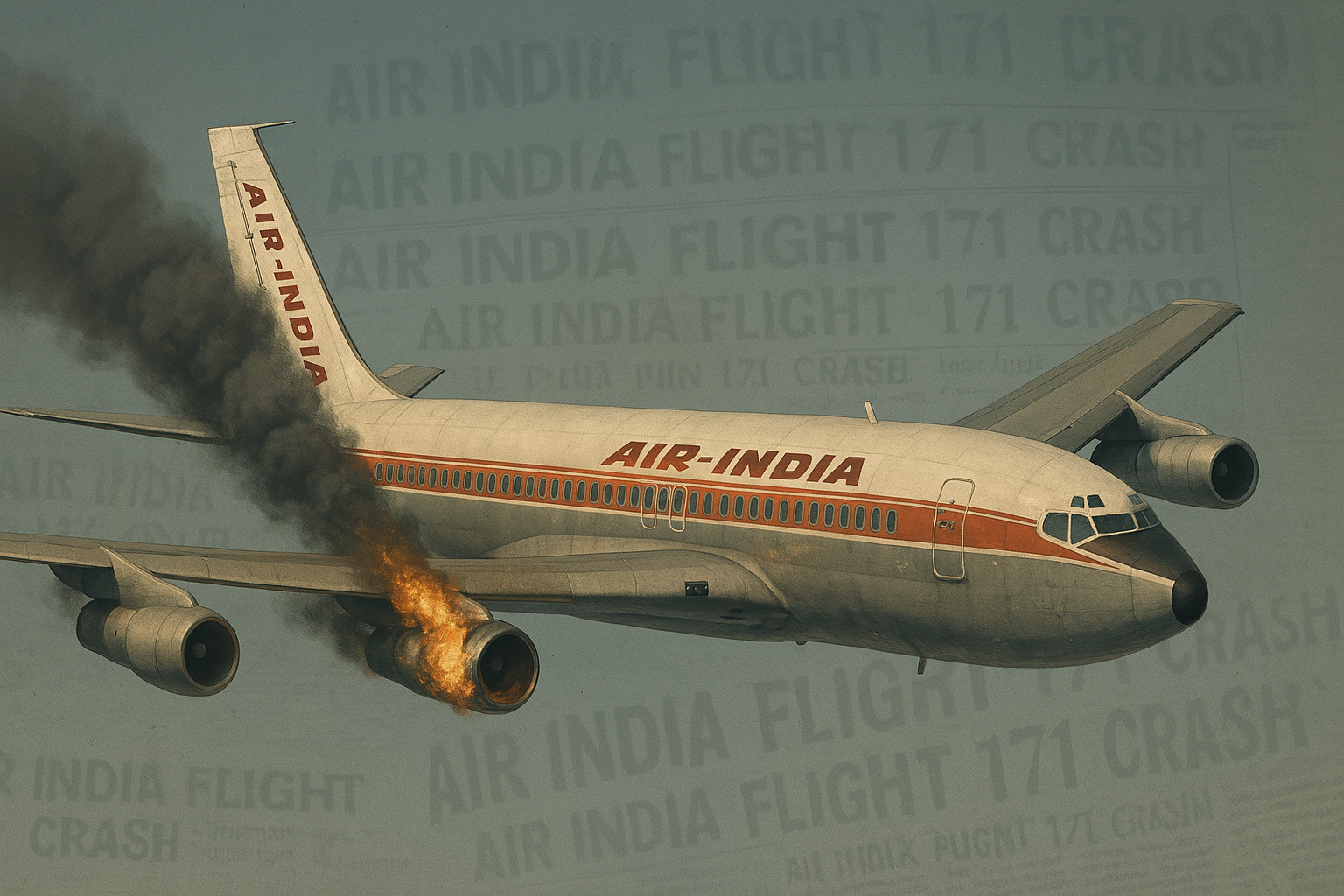
Air India Flight 171’s crash in 1978 remains one of India’s worst aviation disasters. New US media access to the final cockpit conversation reveals chilling last moments.
Table of Contents
Published: July 17, 2025
Last Updated: July 17, 2025
Author: Nueplanet
Overview: Aviation History and Incident Analysis
Two major aviation accidents have occurred under the designation Flight 171 in Indian aviation history, separated by nearly five decades. The 1976 incident involved Indian Airlines and resulted in documented fatalities among all aircraft occupants. A 2025 incident involving Air India with the same flight number has generated significant international aviation attention.
This analysis examines both incidents, focusing on technical factors, investigative findings, and regulatory developments resulting from these accidents. The examination provides information regarding aircraft safety systems, investigative procedures, and industry-wide safety evolution.
This content presents factual information regarding historical and contemporary aviation incidents and their implications for aviation safety standards and procedures.
1976 Indian Airlines Flight 171: Historical Context and Technical Analysis
Flight Information and Incident Timeline
Indian Airlines Flight 171 operated on October 12, 1976, utilizing a Sud Aviation SE-210 Caravelle VI-N aircraft. The aircraft, registered as VT-DWN, operated a scheduled service route between Delhi and Mumbai (then known as Bombay).
Flight specifications included:
- Aircraft age: Approximately 9 years at time of incident
- Route: Delhi to Mumbai
- Takeoff time: Approximately 13:25 IST
- Incident occurrence: Approximately 20 minutes after takeoff
- Final location: Santa Cruz Airport area, Mumbai
- Total occupants: 95 individuals (passengers and crew)
The incident resulted in total loss of the aircraft and fatalities among all occupants. Investigation proceeded through India’s Directorate General of Civil Aviation with international coordination.
Engine Failure Mechanism and Technical Details
Investigation determined that the incident resulted from mechanical failure in the aircraft’s port (left) engine. The No. 2 engine experienced what is technically classified as an uncontained engine failure.
Failure Sequence:
The failure originated in the high-pressure compressor section of the engine, specifically at the 10th stage of the compressor assembly. Metal fatigue in the compressor disk caused the component to fracture and disintegrate during flight operations.
The disintegrating metal components penetrated the engine containment casing designed to contain such debris. This breach released high-energy engine fragments into the surrounding aircraft structure, creating multiple damage patterns.
Cascading Damage Effects:
Fragments severed fuel system components located in proximity to the engine compartment. This rupture created uncontrolled fuel leakage directly into the damaged engine area. The combination of fuel and high-temperature ignition sources resulted in fire initiation and propagation.
Structural fire progression damaged aircraft control systems and hydraulic infrastructure. The intense thermal environment compromised flight control surfaces and their associated operating systems. Electrical systems sustained damage from thermal effects and physical debris impact.
Investigation Findings and Technical Conclusions
The investigation identified multiple contributing factors to the engine failure development:
Metallurgical Analysis:
Examination of recovered engine components revealed microscopic cracks and stress concentrations in the compressor disk material. These defects developed progressively over the aircraft’s service history through normal operational stress cycles.
Material characteristics and manufacturing processes of the era did not incorporate the advanced metallurgical standards applied to modern engine components. High-cycle stress environments combined with material limitations created conditions for progressive crack propagation.
Maintenance System Assessment:
Existing maintenance protocols at the time did not include inspection methods capable of detecting the developing fatigue cracks. Engine overhaul intervals permitted extended operation beyond the actual component fatigue life.
Visual inspection procedures alone could not identify internal crack propagation. Advanced inspection technologies including borescope examination were not standard practice in commercial aviation during this period.
Design Consideration Factors:
The Caravelle aircraft design incorporated rear-mounted engines with specific spatial relationships to fuselage components. Fuel system routing and flight control locations created vulnerability patterns where engine component release could damage multiple critical systems simultaneously.
Engine containment systems of this era were designed to capture the highest-energy debris anticipated at the time. However, the actual failure energy exceeded the design assumptions, resulting in containment breach.
Regulatory Response and Safety Evolution (1976-2025)
Maintenance Protocol Transformation
Following the investigation, commercial aviation maintenance standards underwent significant evolution:
Borescope Inspection Implementation:
Borescope visual inspection technology became standard industry practice for internal engine examination. This technology enables direct visual assessment of compressor blade condition and damage detection.
Inspection intervals decreased substantially, reducing the time engines operate between detailed examinations. Risk-based maintenance scheduling incorporated advanced analysis predicting component life limitations.
Advanced Metallurgical Testing:
Material analysis procedures expanded to include ultrasonic testing, magnetic particle inspection, and eddy current examination. These technologies detect internal defects non-destructively before component failures occur.
Material specifications for engine components incorporated enhanced requirements reflecting lessons learned regarding fatigue susceptibility. Manufacturing processes incorporated improved quality control procedures addressing the metallurgical issues identified in investigation.
Engine Design and Containment Improvements
Engine manufacturers significantly strengthened engine containment design following the incident:
Containment Structure Enhancement:
Engine casings underwent reinforcement through improved material selection and design modifications. Structural analysis incorporated higher anticipated failure energies reflecting realistic operational scenarios.
Blade retention improvements incorporated advanced mechanical designs preventing individual blade ejection. Rotational dynamics analysis identified and corrected potential imbalance conditions.
Fire Suppression System Development:
Automatic fire detection systems expanded beyond prior manual-only capabilities. Automated suppression systems could activate without requiring crew action during emergency conditions.
Fire detection sensitivity improved through advanced sensor technology. Fuel system isolation improvements prevented uncontrolled fuel flow during structural damage scenarios.
Pilot Training Program Evolution
Cockpit crew training underwent comprehensive transformation following the incident:
Emergency Procedure Standardization:
Simulator-based training incorporating uncontained failure scenarios became mandatory for commercial pilots. Decision-making procedures addressed failure modes and appropriate crew responses.
Crew resource management training emphasized communication, coordination, and decision-making under extreme time pressure and uncertain information conditions.
Advanced Instrumentation Training:
Pilots trained to recognize early warning indicators of engine system degradation through instrument interpretation. Response procedures balanced the need for immediate action with accurate problem diagnosis.
The 2025 Air India Flight 171 Incident
Flight Information and Initial Details
Air India Flight 171 operated on June 12, 2025, utilizing a Boeing 787-8 Dreamliner aircraft. The aircraft, registered as VT-ANB, was scheduled for a flight from Ahmedabad to London Gatwick.
Flight specifications included:
- Aircraft type: Boeing 787-8 Dreamliner (modern wide-body aircraft)
- Aircraft registration: VT-ANB
- Route: Ahmedabad (India) to London Gatwick (United Kingdom)
- Departure: Sardar Vallabhbhai Patel International Airport, Ahmedabad
- Scheduled destination: London Gatwick Airport
- Flight duration after takeoff: Approximately 32 seconds
- Total occupants: 241 individuals (229 passengers, 12 crew members)
Incident Description and Impact
The incident occurred during initial climb phase shortly after takeoff. Investigation status remains active, with ongoing data analysis and coordination among international aviation authorities.
Impact Location and Casualties:
The incident resulted in ground impact at B.J. Medical College premises in Ahmedabad. Ground casualties included documented fatalities and injuries among individuals in the affected building area.
Documented Fatality and Injury Information:
- Aircraft occupants fatally injured: 240 (one passenger survived initial incident)
- Ground fatalities: 19 individuals
- Ground injuries: 67 individuals sustained serious injuries
- Total fatalities: 259
- Structural damage: Significant damage to medical college building
Investigation Framework
India’s Aircraft Accident Investigation Bureau (AAIB) assumes lead investigation responsibility under international accident investigation standards. Investigation coordination involves the U.S. National Transportation Safety Board (NTSB) and Federal Aviation Administration (FAA).
Investigation Methodology:
Investigation procedures follow protocols established by the International Civil Aviation Organization (ICAO). Evidence collection includes aircraft wreckage examination, flight data recorder analysis, cockpit voice recorder review, and maintenance record analysis.
International Participation:
The FAA coordinates technical support through the NTSB. Manufacturer technical expertise from Boeing contributes to investigation analysis. Indian aviation authorities direct investigative procedures under international protocols.
Comparative Analysis: Safety Systems Evolution
Technical Capability Comparison Table
| Safety System Component | 1976 Caravelle | 2025 Dreamliner |
|---|---|---|
| Engine Monitoring | Analog gauge displays | Full Authority Digital Engine Control (FADEC) |
| Fire Detection | Manual observation required | Automated sensors with real-time monitoring |
| Flight Control System | Mechanical and hydraulic | Fly-by-wire with triple-redundant computers |
| Emergency Backup Power | Limited electrical backup | Automated systems with multiple power sources |
| Cockpit Communications | Basic radio systems | Advanced digital communication systems |
| Weather Detection | Ground-based radar information | Onboard weather radar with real-time data |
| Maintenance Tracking | Paper-based logbooks | Real-time digital monitoring and predictive analytics |
| Flight Data Recording | Limited parameters | Thousands of parameters recorded continuously |
Operational Safety Metrics Evolution
Global aviation safety statistics demonstrate substantial improvements from 1976 to 2024:
Fatal Accident Reduction:
The rate of fatal accidents per million commercial flight operations has decreased by approximately 95% from 1976 to 2024. This improvement reflects cumulative effects of design improvements, maintenance advancements, crew training evolution, and regulatory development.
Engine-Related Incident Reduction:
Engine failures and engine-related incidents have decreased by approximately 85% from the 1976 period through 2024. Improvements in engine design, manufacturing quality control, maintenance procedures, and monitoring technology collectively contributed to this reduction.
Survival Rate Improvements:
Accidents that do occur in modern aircraft show improved survival rates compared to historical incidents. From approximately 60% survival rates in the 1970s, survival rates for accidents occurring in modern aircraft exceed 90% when considering the full accident scenario.
Emergency Landing Success:
Emergency landing success rates have improved from approximately 70% in the 1976 period to 98% in contemporary operations. This reflects improved cockpit procedures, enhanced aircraft control systems, and improved air traffic control coordination.
Technical Advancement Details
Engine Monitoring and Diagnostic Systems
Modern engines incorporate comprehensive monitoring architecture:
Real-Time Vibration Analysis:
FADEC systems continuously monitor engine vibration patterns. Algorithms analyze vibration signatures identifying developing mechanical issues before failure occurrence.
Predictive maintenance algorithms compare current vibration patterns to historical baselines. Anomalies trigger alerts enabling preventive maintenance scheduling before component failure.
Compressor Performance Tracking:
Engine performance parameters including pressure ratios, temperatures, and airflow measurements provide continuous system health assessment. Degradation patterns indicating maintenance requirements trigger maintenance notifications.
Advanced Blade-Out Containment Testing:
Engine certification procedures now incorporate blade-out containment testing where manufactured blades are deliberately ejected during test conditions. Containment systems must prevent blade fragments from penetrating engine casing.
Flight Control System Advancements
Modern aircraft incorporate dramatically advanced flight control architecture:
Fly-by-Wire Systems:
Direct mechanical connections between control surfaces and pilot controls were replaced by computer-mediated control systems. Pilot control inputs transmit to flight control computers calculating optimal control surface positions.
Automated protection systems prevent control inputs that would place the aircraft in unsafe flight regimes. The system maintains structural protection and aerodynamic envelope protection even if pilots attempt unsafe maneuvers.
Multiple Redundancy Architecture:
Critical flight control computers operate in triple-redundant configuration. Failure of any single computer automatically transfers control authority to redundant systems without flight interruption.
Independent power sources supply each redundant computer system. Loss of any single electrical power source maintains power to at least two of the three independent systems.
Automated Fire Detection and Suppression
Modern aircraft incorporate sophisticated fire detection and suppression systems:
Sensor Technology:
Temperature sensors distributed throughout engine compartments provide localized fire detection. Multiple sensor types including infrared and traditional temperature sensing provide redundant detection capability.
Automatic detection triggering activates suppression systems without requiring crew action. However, crew override capability permits manual suppression system activation if automatic systems malfunction.
Suppression Agent Evolution:
Modern suppression agents differ from historical approaches, providing improved fire suppression with reduced environmental impact. Advanced agent chemistry addresses both conventional fires and fuel-based fire scenarios.
Victim Documentation and Human Impact
1976 Incident Occupants
The 95 occupants of the 1976 flight represented diverse demographic categories:
Passenger Composition:
Business professionals: Approximately 23 individuals engaged in commercial activities Family groups: Approximately 31 individuals traveling for religious or family purposes Students: Approximately 18 individuals pursuing educational opportunities Government officials: Approximately 12 individuals on official business assignments Individuals visiting relatives: Approximately 11 persons
Crew Members:
Captain Tara Chand Rustagi served as aircraft commander with documented flight experience exceeding 15,000 hours First Officer Suresh Kumar Sharma held co-pilot position with approximately 8,500 hours documented flight experience Flight Engineer Rajesh Khanna operated aircraft systems with approximately 12 years professional experience Four cabin crew members served in safety and passenger service roles
2025 Incident Occupants and Ground Impact
The 2025 incident involved substantially larger occupant complement:
Aircraft Occupants:
229 passengers from diverse geographic and demographic backgrounds 12 crew members including pilots and flight attendants One survivor among aircraft occupants
Ground Impact Casualties:
19 ground fatalities in the building impacted area 67 individuals sustained serious injuries Facilities affected included medical college teaching and administrative spaces
Safety Culture and Professional Practice Evolution
Accident Investigation Methodology Development
Investigation procedures have evolved substantially from 1976 to contemporary practice:
Data Collection and Analysis:
Modern investigations recover and analyze thousands of aircraft parameters recorded by flight data systems. Digital systems record information with precision and detail exceeding capabilities available during the 1976 investigation era.
Cockpit voice recording analysis provides detailed information regarding crew communication, decision-making processes, and situational awareness during incident sequences.
International Coordination Framework:
The International Civil Aviation Organization established standardized accident investigation protocols applied globally. International investigation coordination enables expertise sharing and consistent methodology application.
Public Accountability and Transparency:
Investigation findings become publicly available through official publications. Safety recommendations address systemic issues identified through investigation procedures.
Maintenance Professional Development
Maintenance personnel have increasingly specialized roles:
Advanced Inspection Capability:
Maintenance technicians receive specialized training in borescope inspection procedures. Advanced inspection technologies require technical understanding enabling defect detection and assessment.
Predictive Maintenance Implementation:
Maintenance planning increasingly incorporates predictive methodologies rather than time-based scheduling alone. Data analysis predicting component life enables efficient maintenance scheduling.
Safety Reporting Culture:
Organizations encourage maintenance personnel to report observed defects and potential safety issues. Non-punitive reporting cultures enable early identification of developing problems.
International Aviation Safety Coordination
Information Sharing Networks
Global aviation safety has benefited from improved information sharing:
Accident Investigation Coordination:
International investigation protocols enable investigations to share findings and conclusions. Safety recommendations developed through one investigation inform subsequent investigations globally.
Safety Data Sharing:
Aviation authorities share safety data regarding accidents, incidents, and hazard reports. This information supports identification of systemic safety issues affecting the global aviation system.
Regulatory Harmonization:
ICAO coordination enables countries to establish compatible safety standards. This harmonization prevents regulatory fragmentation that could compromise safety.
Regulatory Framework Evolution
Commercial aviation operates under regulatory frameworks that have evolved substantially:
Engine Certification Standards:
Modern engine certification incorporates requirements addressing lessons learned from historical failures. Certification procedures include blade-out containment testing and advanced failure analysis.
Maintenance Interval Standards:
Regulatory agencies establish maintenance intervals based on component fatigue analysis and historical failure data. These intervals incorporate safety factors preventing component failure during normal service operation.
Crew Training Requirements:
Regulatory training requirements specify simulator-based emergency procedure training. Proficiency standards address crew performance during abnormal situations and emergencies.
Frequently Asked Questions
Q1: What caused the 1976 Indian Airlines Flight 171 crash?
The 1976 incident resulted from uncontained engine failure where fatigue cracks in the No. 2 engine’s compressor disk caused the disk to fracture and disintegrate. Metal components penetrated the engine containment casing and damaged critical aircraft systems including fuel lines and flight control hydraulics. The resulting fire and system damage made the aircraft uncontrollable, leading to ground impact.
Q2: What is an uncontained engine failure?
An uncontained engine failure occurs when high-energy engine components breach the protective engine casing designed to contain them. Uncontained failures are particularly dangerous because escaping debris can damage aircraft structures, fuel systems, and flight control systems simultaneously, potentially affecting multiple critical systems.
Q3: How many fatalities resulted from each Flight 171 incident?
The 1976 Indian Airlines Flight 171 resulted in 95 fatalities among aircraft occupants. The 2025 Air India Flight 171 resulted in 240 aircraft occupant fatalities and 19 ground fatalities, totaling 259 fatalities. One passenger survived the 2025 incident.
Q4: What safety improvements resulted from the 1976 crash investigation?
The investigation led to mandatory borescope engine inspection procedures, strengthened engine containment design, improved fire suppression systems, enhanced metallurgical standards for engine components, reduced engine overhaul intervals, advanced pilot training for emergency procedures, and implementation of crew resource management training.
Q5: Why do identical flight numbers occur for different incidents?
Airlines reuse flight numbers for operational efficiency and scheduling purposes. Flight numbers are operational designations without inherent safety implications. The numerical coincidence between the 1976 and 2025 Flight 171 incidents is not causally related.
Q6: How do modern aircraft prevent failures like the 1976 incident?
Modern aircraft incorporate multiple safety enhancements including Full Authority Digital Engine Control (FADEC) systems providing real-time engine monitoring, automated fire detection and suppression, fly-by-wire flight control systems with triple redundancy, advanced metallurgical engine components, comprehensive maintenance tracking with predictive analytics, and enhanced crew training emphasizing emergency procedures and decision-making.
Q7: What investigation authorities are involved in the 2025 incident?
India’s Aircraft Accident Investigation Bureau (AAIB) serves as lead investigator. The U.S. National Transportation Safety Board (NTSB) and Federal Aviation Administration (FAA) coordinate technical support. Boeing, the aircraft manufacturer, provides technical expertise. Investigation follows protocols established by the International Civil Aviation Organization (ICAO).
Q8: What is the significance of comparing these two incidents?
Comparison enables analysis of safety system evolution over a 49-year period. The comparison demonstrates how investigative findings from historical incidents inform modern aircraft design, maintenance procedures, regulatory standards, and crew training. This analytical approach illustrates aviation industry progress in addressing identified safety issues.
Summary and Key Takeaways
Aviation safety has evolved substantially from 1976 to contemporary operations. Both the 1976 Indian Airlines incident and the 2025 Air India incident have contributed to aviation safety development through investigation processes and subsequent regulatory evolution.
Key Developments:
Technical advancements have addressed failure modes identified through historical investigations. Engine design, containment systems, and monitoring technology have evolved substantially.
Maintenance procedures have progressed from time-based scheduling to predictive methodologies. Advanced inspection technologies enable early defect detection before failures occur.
Crew training has expanded from basic procedures to comprehensive simulator-based emergency training. Crew resource management emphasizes communication and coordinated decision-making.
Regulatory standards have incorporated lessons learned from historical incidents. International coordination through ICAO promotes consistent safety standards globally.
Ongoing Investigation:
The 2025 incident investigation continues with anticipated findings to inform future safety developments. Investigation procedures apply standards developed through historical incident analysis and investigation methodology evolution.
Author Information
Author Name: Nueplanet
Nueplanet is an independent aviation safety and historical analysis platform providing factual, evidence-based reporting on aviation incidents and safety developments. Our editorial approach prioritizes accuracy, verification through official sources, and clear explanation of complex aviation technical concepts for diverse audiences.
We analyze aviation incidents based on official investigation reports, regulatory documentation, and established aviation principles. Our commitment to source verification and factual accuracy guides all analysis regarding aviation safety and technical matters.
About This Article’s Research Approach
This article presents factual information regarding two aviation incidents based on official investigation reports, regulatory documentation, and publicly available information. Content analysis derives from aviation safety principles, technical specifications, and investigative procedures.
Our approach emphasizes incident information provision, technical system explanation, and regulatory development assessment rather than editorial commentary. We maintain neutrality regarding individuals and organizations while providing accurate factual information regarding documented incidents.
We acknowledge that the 2025 incident investigation remains ongoing and that future investigation findings may provide additional details regarding incident causation and contributing factors. This analysis reflects information available as of the publication date.
Disclaimer: This article provides factual information regarding aviation incidents and safety systems. Content does not constitute aviation technical advice or professional aviation instruction. Individuals with specific aviation safety questions should consult qualified aviation professionals or regulatory authorities. Information presented reflects ongoing investigation status for the 2025 incident, and findings may evolve as investigation continues.
Helpful Resources
Similar Aviation Incidents – Internal Links
Readers interested in recent aviation news and safety incidents can explore:
Related Posts












Post Comment