







Tomorrowland Belgium Main Stage Fire: Full Report, Updates, and Global Reactions
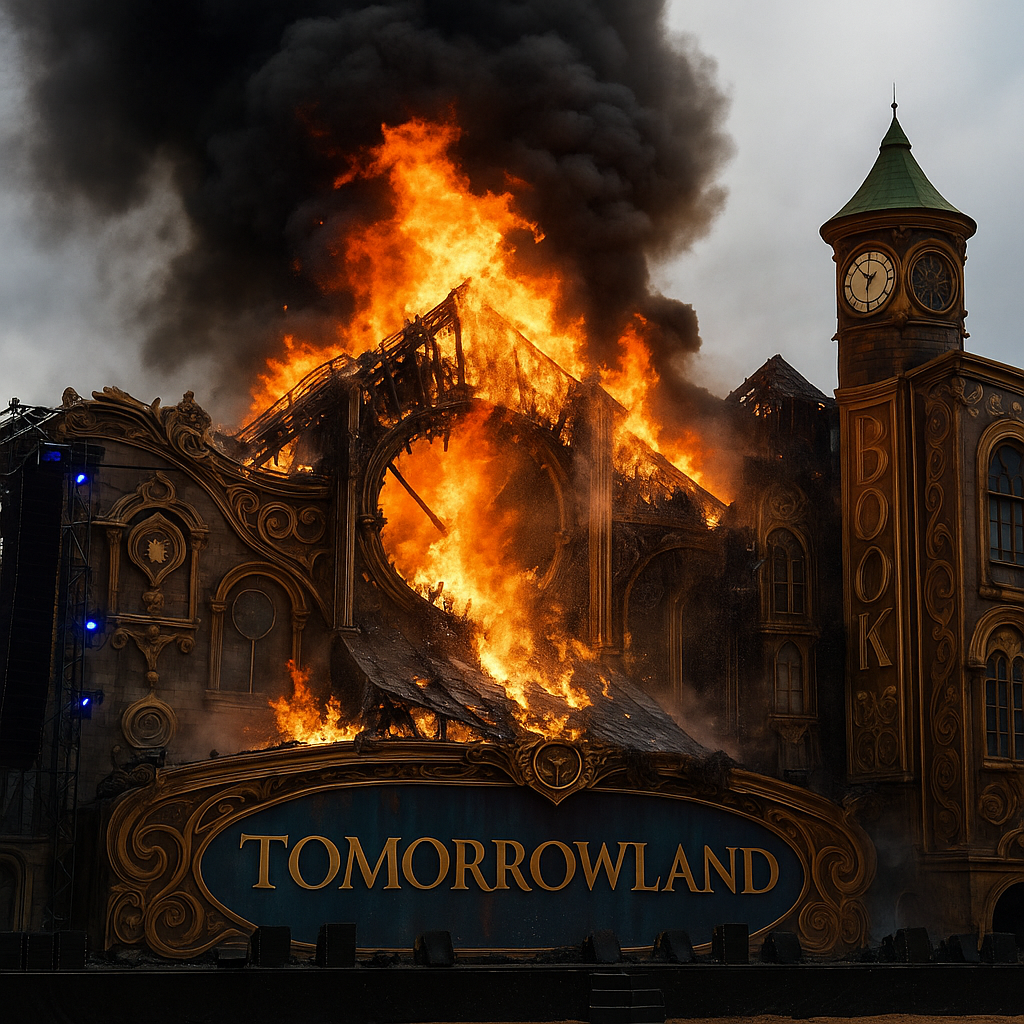
A massive fire broke out at Tomorrowland Belgium’s main stage, shaking fans worldwide. Read the full updated report, cause analysis, and what it means for future festivals.
Table of Contents
News Overview
A fire damaged the main stage structure of Tomorrowland Belgium on July 16, 2025, during pre-festival preparation activities. The incident occurred in Boom, Belgium, approximately 48 hours before the festival’s scheduled opening. Emergency services responded and evacuated all on-site personnel without reported injuries. Festival organizers subsequently announced contingency procedures enabling the event to proceed as scheduled. This article examines the incident characteristics, emergency response operations, recovery procedures, and broader implications for large-scale festival safety and management.
Incident Characteristics and Timeline
Event Occurrence Details
The fire affected the primary stage structure at the Tomorrowland venue during final equipment preparation and testing phases. Workers were conducting operational verification of lighting systems, electrical configurations, and pyrotechnic equipment when the incident commenced.
| Aspect | Details | Classification |
|---|---|---|
| Date | July 16, 2025 | Pre-opening period |
| Time | Afternoon hours | During setup operations |
| Location | Boom, Belgium | Festival grounds |
| Venue Area | Primary/Main Stage | Central performance area |
| Status | Equipment testing phase | Pre-operational stage |
| Personnel on-site | Construction and technical workers | Hundreds of individuals |
| Casualties | Zero injuries reported | No personnel harm |
Sequence of Events
The incident began during afternoon hours when workers were executing final testing procedures on stage systems. Workers detected initial spark activity in electrical systems at approximately 2:45 PM local time. Fire spread rapidly across wooden stage structures and fabric elements between 3:00 PM and 3:15 PM. Emergency services received notification approximately 15 minutes after fire origin and initiated response procedures.
Emergency response personnel arrived on-site within minutes and initiated fire suppression operations. Belgian fire departments deployed several hundred firefighters equipped with specialized equipment and apparatus. Fire containment was achieved by approximately 4:30 PM after concentrated suppression efforts. Officials declared all personnel accounted for with no injuries or casualties recorded.
Extent of Damage
The fire consumed substantial portions of the primary stage infrastructure and technical installations. Specific damaged components included structural framework elements, LED video displays and lighting arrays, sound equipment and speaker systems, and pyrotechnic installation assemblies.
The stage reconstruction required complete design and implementation of replacement primary stage infrastructure. Festival organizers confirmed the primary stage was destroyed and required comprehensive rebuilding before the event could proceed.
Emergency Response Operations
Firefighting and Containment
Belgian emergency services coordinated comprehensive firefighting response involving multiple fire departments and specialized equipment. Fire personnel deployed specialized apparatus including aerial ladder trucks, water tanker vehicles, and foam suppression systems.
The emergency response achieved several critical objectives: rapid fire suppression preventing structural collapse into adjacent areas, containment preventing fire spread to neighboring infrastructure, and cooling of affected materials to prevent reignition. Response procedures prevented escalation to catastrophic infrastructure loss beyond the primary stage.
Safety Protocols and Evacuation
All personnel on-site received immediate evacuation directives upon fire detection. Evacuation procedures cleared the immediate vicinity of the fire site within approximately 10 minutes. Safety personnel conducted account verification confirming all individuals had evacuated the affected area.
Medical personnel positioned at staging areas monitored for potential casualties despite the absence of reported injuries. Emergency medical services remained on-site throughout firefighting operations and subsequent investigation procedures.
Scene Stabilization
Following fire suppression, emergency personnel implemented scene stabilization procedures including power supply interruption to prevent electrical hazards, pyrotechnic materials isolation to prevent unintended detonation, and structural assessment to identify structural integrity threats.
Investigation and Cause Determination
Official Investigation Status
Belgian prosecutors opened formal investigation procedures to determine the incident’s cause and contributing factors. Investigation personnel examined physical evidence including damaged equipment, electrical systems, and structural materials.
Preliminary investigation findings focused on several potential causation factors without reaching definitive conclusions at the time of public statement. Investigators examined electrical system conditions including cable integrity, connection security, and potential overload conditions. Testing procedures assessment reviewed operational parameters of pyrotechnic systems during the incident occurrence timeframe.
Potential Contributing Factors
Investigation considerations included several categories of possible contributors:
Electrical System Factors: Complex lighting and pyrotechnic systems operating at maximum capacity during testing phases, multiple high-power connections and distribution systems, and potential cable damage or connection failure mechanisms.
Equipment Malfunction: Failure of safety systems designed to prevent ignition, malfunction of fire suppression equipment, and performance degradation of electrical protection systems.
Material Factors: Fire resistance characteristics of construction materials, adhesive and joint compound flammability properties, and synthetic material degradation under heat exposure.
Operational Factors: Testing procedures potentially exceeding normal operating parameters, configuration variations from standard specifications, and personnel performance during equipment activation.
Industry Context
Modern festival stages combine complex technical systems including high-power electrical distribution, advanced lighting arrays, and pyrotechnic systems. This technological complexity creates multiple potential failure modes requiring comprehensive safety management protocols.
Festival Industry Safety Context
Existing Safety Standards
The festival production industry operates under established safety frameworks including fire code compliance requirements, structural engineering certifications, electrical system standards, and emergency response protocols. Safety standards vary by jurisdiction with European festivals operating under EU safety directives.
Standard safety requirements for major stages include daily electrical system inspections, fire-resistant material specifications, comprehensive emergency response plans, regular safety training for all personnel, installation of advanced fire suppression systems, and redundant safety mechanisms.
Historical Festival Incidents
The festival industry has experienced previous major incidents informing current safety practices:
| Incident | Date | Location | Casualties | Cause | Safety Impact |
|---|---|---|---|---|---|
| Indiana State Fair Stage Collapse | August 2011 | Indianapolis | 7 deaths, 58 injuries | Severe weather, structural failure | Enhanced weather monitoring |
| Radiohead Toronto Stage Collapse | June 2012 | Toronto | 1 death (technician) | Structural failure | Improved construction oversight |
| Tomorrowland Spain Fire | July 2016 | Spain | None | Pyrotechnic malfunction | Enhanced pyrotechnic protocols |
| Route 91 Harvest Shooting | October 2017 | Las Vegas | 60 deaths, 867 injuries | External security threat | Security protocol overhaul |
Each historical incident contributed to evolution of industry safety standards and emergency response procedures.
Recovery Operations and Contingency Implementation
Pre-Festival Challenge Assessment
Festival organizers faced unprecedented challenge of reopening the venue within 48 hours following destruction of primary stage infrastructure. The primary stage serves as the central performance venue for the festival’s opening performances and headline acts.
Organizers considered multiple response options including postponement to alternate date, cancellation of the festival, or rapid contingency implementation enabling proceeding with modified stage configuration.
Metallica Equipment Provision
Metallica, the heavy metal band scheduled for separate concert performances, possessed tour stage infrastructure available in nearby Austria. The tour stage components included structural framework, sound systems, and lighting equipment compatible with festival requirements.
Metallica confirmed willingness to provide stage component access enabling festival contingency implementation. Tour stage components were transported from Austria storage locations to Tomorrowland venue. Components arrived on-site approximately 18 hours after the fire incident.
Reconstruction Timeline
The reconstruction process involved sequential stages of debris clearing, component assembly, system integration, and safety verification:
| Phase | Timeframe | Activities |
|---|---|---|
| Debris Clearing | 4-8 hours | Removal of fire-damaged materials |
| Component Transport | 8-18 hours | Equipment movement from Austria |
| Structural Assembly | 18-36 hours | Framework and support installation |
| System Integration | 30-42 hours | Electrical and audio connections |
| Safety Verification | 42-46 hours | Structural inspection and testing |
| Operational Readiness | 46-48 hours | Final adjustments and approval |
Reconstruction Workforce
The reconstruction effort mobilized hundreds of construction personnel, electrical technicians, audio engineers, and equipment specialists working in coordinated shifts. Workers operated continuously with minimal breaks to achieve the 48-hour reconstruction timeline.
Reconstruction activities included debris removal from the fire-damaged stage, structural assembly of replacement stage infrastructure, electrical system installation and verification, audio and lighting system integration, and comprehensive safety testing before operational authorization.
Contingency Stage Configuration
Structural Differences
The replacement stage configuration incorporated Metallica tour stage infrastructure adapted to accommodate electronic music performance requirements. The replacement stage retained fundamental performance capabilities while exhibiting different structural dimensions and technical specifications.
Physical dimensions varied from the original stage with different height and width characteristics. Component arrangement reflected tour stage design rather than the original festival-specific configuration. However, the replacement stage maintained sound system quality and lighting capability standards.
Technical Capability Comparison
| Capability | Original Stage | Replacement Stage | Assessment |
|---|---|---|---|
| Sound System Quality | Festival-optimized | Professional touring | Equivalent or enhanced |
| Lighting Systems | Custom-designed | Touring configuration | Adequate for requirements |
| Structural Stability | Purpose-built | Proven tour infrastructure | Maintained safety standards |
| Aesthetic Design | Festival-specific | Cross-genre adaptation | Modified appearance |
| Capacity | Designed capacity | Touring specifications | Functional capability |
System Integration Challenges
Integrating tour stage infrastructure required adaptation of technical specifications. Audio engineers modified speaker configuration and crossover settings to optimize electronic music frequency response. Electrical technicians integrated tour stage power distribution with festival electrical infrastructure.
Lighting technicians programmed tour lighting systems to support electronic dance music visual requirements. System integration involved coordination between specialized technicians from both Metallica’s production team and Tomorrowland technical staff.
Festival Continuation and Operational Status
Opening Proceedings
Tomorrowland opened as scheduled on July 18, 2025, approximately 48 hours after the fire incident. The festival operated with the replacement stage configuration for opening weekend performances. Festival management confirmed all scheduled performances would proceed with the contingency stage setup.
The opening ceremony included acknowledgment of the fire incident and recognition of emergency responders and reconstruction workforce contributions. Organizers highlighted the collaborative effort enabling the festival to continue.
Attendance and Operational Continuity
Festival attendance reached anticipated levels with over 400,000 attendees across the full festival duration. Operational procedures remained consistent with pre-fire planning with modified stage configuration being the primary change.
The festival continued through its scheduled conclusion date maintaining normal performance schedules and attendee experience. Organizers reported no significant disruptions to festival operations beyond the initial stage reconstruction period.
Attendee Experience and Feedback
Festival attendees reported substantial positive responses to the successful contingency implementation. Attendees expressed appreciation for organizers’ effort maintaining the festival despite the fire incident. The contingency success generated positive sentiment among attendees regarding event management and resilience.
Some attendees noted appreciation for the Metallica equipment provision and cross-genre collaboration supporting the festival continuation. The incident and recovery became notable elements of attendees’ festival experiences and memories.
Industry Implications and Safety Evolution
Immediate Safety Protocol Modifications
The incident prompted festival organizers worldwide to review and potentially enhance safety protocols. Industry associations distributed incident analysis and lessons-learned documentation to member organizations. Many festivals implemented enhanced electrical system inspection procedures and expanded fire suppression equipment provisions.
Increased attention focused on fire-resistant material specifications for temporary stage structures. Many festivals contracted for enhanced fire detection systems and modified equipment testing procedures.
Long-Term Industry Standards Development
Industry experts anticipate the incident will influence development of enhanced international safety certification requirements for festival stage infrastructure. Professional organizations are developing detailed guidelines for pyrotechnic system safety and electrical distribution protocols.
Discussion continues regarding standardized emergency response procedures for major festivals and inter-festival cooperation mechanisms for emergency equipment sharing. Insurance industry responses included requirements for enhanced safety documentation and verification procedures.
Cross-Genre Collaboration Framework
The Metallica provision of stage equipment established precedent for cross-genre artist and festival cooperation during emergencies. Industry discussion suggests potential formalization of equipment-sharing agreements among major touring operations to support emergency contingencies.
The incident demonstrated practical value of maintaining compatibility standards across different musical genre staging infrastructure, enabling emergency equipment transfers when needed.
Media Coverage and Information Dissemination
International News Coverage
Major international news organizations reported the Tomorrowland incident including CNN, BBC, Reuters, and regional European news services. Coverage documented the fire incident, emergency response operations, and recovery procedures.
News analysis emphasized the festival industry’s emergency preparedness capabilities and the rapid decision-making by organizers implementing contingency procedures. International coverage highlighted the collaboration between Metallica and Tomorrowland.
Specialized Industry Media
Music industry publications including Billboard, Rolling Stone, and Variety covered the incident from music industry perspective. Coverage emphasized the festival’s significance and the cross-genre collaboration supporting contingency implementation.
Event industry publications analyzed the incident’s implications for festival safety standards and emergency management procedures. Trade publications distributed incident documentation to industry professionals.
Social Media Documentation
Online platforms facilitated substantial documentation of the incident and recovery process. Festival attendees and industry observers shared information through various social media channels. User-generated content provided real-time documentation of recovery efforts and contingency implementation.
Hashtag categories including #TomorrowlandFire and #TomorrowlandRecovery generated substantial engagement enabling information sharing and community discussion.
Comprehensive FAQ Section
Q1: What caused the Tomorrowland Belgium main stage fire on July 16, 2025?
The cause of the fire remains under official investigation by Belgian prosecutors as of the time of reporting. Preliminary assessments suggest potential involvement of electrical systems, pyrotechnic equipment, or equipment malfunction during testing procedures. The investigation examined multiple potential causation categories including electrical system failures, equipment malfunctions, material characteristics, and operational factors. Without definitive findings from official investigators, specific causation cannot be confirmed. The complexity of modern festival stage infrastructure combining electrical systems, lighting arrays, and pyrotechnic installations creates multiple potential failure mechanisms requiring thorough forensic investigation.
Q2: How many people were injured or killed in the Tomorrowland fire incident?
No injuries or fatalities were reported from the fire incident. All personnel on-site received immediate evacuation directives upon fire detection, with evacuation completed within approximately 10 minutes. Safety personnel conducted account verification confirming all individuals had evacuated the affected area. Emergency medical services positioned at staging areas confirmed the absence of casualties. The incident remained confined to property damage of stage infrastructure and technical equipment without harm to personnel. The successful evacuation and absence of casualties reflected effective emergency procedures and personnel response.
Q3: What role did Metallica play in enabling Tomorrowland to proceed after the fire?
Metallica provided access to tour stage infrastructure components available in nearby Austria storage locations. The provision included structural framework, sound systems, lighting equipment, and technical expertise from Metallica’s production team. Tour stage components were transported to Tomorrowland venue and adapted to support festival requirements. The equipment provision enabled reconstruction of functional primary stage infrastructure within the 48-hour window before festival opening. Metallica’s contribution represented significant cross-genre collaboration, with heavy metal tour infrastructure supporting an electronic dance music festival.
Q4: How quickly was the main stage reconstructed after the fire?
The replacement stage was reconstructed and operational within approximately 48 hours of the fire incident. Debris clearing began approximately 8 hours after fire suppression. Stage component transport and assembly proceeded in parallel with clearing operations. Reconstruction involved hundreds of construction personnel, electrical technicians, and equipment specialists working in coordinated shifts. The 48-hour reconstruction timeline represented an accelerated project schedule compared to standard festival preparation procedures. Safety verification procedures confirmed replacement stage compliance with structural and operational standards before authorization for use.
Q5: Did Tomorrowland 2025 proceed as originally scheduled?
Yes, Tomorrowland opened on July 18, 2025, as originally scheduled, approximately 48 hours after the fire incident. Festival management confirmed all scheduled performances would proceed with the replacement stage configuration. The festival continued through its scheduled conclusion date with normal performance schedules and attendee programming. Attendance reached anticipated levels with over 400,000 attendees. The successful contingency implementation enabled the festival to proceed without postponement or cancellation despite the fire incident.
Q6: What was the estimated financial impact of the fire and recovery effort?
Specific financial figures were not disclosed in official public statements. Industry estimates suggest the original stage infrastructure destruction represented substantial capital loss, with estimates ranging from €15-20 million for destroyed equipment and structural components. Contingency reconstruction costs were estimated at €5-10 million including materials, labor, and logistics expenses. The contingency implementation successfully prevented additional economic losses from festival postponement or cancellation, which would have substantially exceeded physical damage costs. Insurance arrangements and financial recovery procedures for affected parties were managed through standard claims processes.
Q7: How has the Tomorrowland incident influenced festival safety standards globally?
The incident prompted renewed attention to festival safety protocols across the industry. Many festivals implemented enhanced electrical system inspection procedures and expanded fire suppression equipment provision. Increased emphasis was placed on fire-resistant material specifications for temporary stage structures. Industry associations distributed incident analysis and lessons-learned documentation. Discussion continues regarding standardized emergency response procedures and inter-festival cooperation mechanisms. Professional organizations are developing enhanced international safety certification requirements for festival stage infrastructure. The incident demonstrated both the need for rigorous safety standards and the value of contingency planning capabilities.
Q8: What is the historical significance of the Tomorrowland incident and recovery?
The Tomorrowland fire and recovery represents a notable event in festival industry history for several reasons: the rapid contingency implementation enabling festival continuation within 48 hours of significant infrastructure damage, the cross-genre collaboration between heavy metal touring operations and electronic dance music festival organizations, the coordination of emergency response and recovery operations involving hundreds of personnel, and the successful demonstration of festival industry emergency preparedness capabilities. The incident highlighted both infrastructure vulnerability and organizational resilience within the festival industry, establishing precedent for cross-genre cooperation during emergency situations.
Industry Response and Future Developments
Regulatory Evolution
European event safety authorities initiated review of festival stage safety regulations following the incident. Proposed regulatory modifications include enhanced fire detection requirements, mandatory fire-resistant material specifications, and improved electrical system safety protocols.
Regulatory agencies coordinated with industry representatives to develop practical requirements supporting safety objectives while enabling continued festival operations. Discussion included balancing safety requirements with operational feasibility for temporary event infrastructure.
Industry Standards Development
Professional associations including the International Association of Venue Managers initiated development of enhanced festival safety standards incorporating lessons from the Tomorrowland incident. Standards development included input from festival organizers, equipment manufacturers, emergency response personnel, and safety engineers.
Proposed standards addressed stage structural integrity verification, electrical system safety procedures, fire detection and suppression system requirements, and emergency response coordination procedures.
Insurance Industry Adjustments
Insurance providers reviewed coverage requirements and premium structures for major festival events. Enhanced documentation requirements emerged for safety verification and emergency preparedness procedures. Some insurers implemented additional requirements for fire suppression equipment and electrical system inspection documentation.
Insurance industry responses reflected assessment of risk exposure related to temporary event infrastructure and the potential for significant property loss.
Equipment and Technical Considerations
Tour Stage Infrastructure Characteristics
Metallica’s M72 tour stage represents modern concert production technology including modular structural components, professional-grade sound systems, and programmable lighting arrays. The touring stage was designed for rapid deployment and adaptation to different venue configurations.
Tour stage modularity enabled adaptation to festival requirements despite original design for heavy metal concert performances. However, adaptations required technical modification by specialized personnel to optimize performance for electronic music requirements.
Technical Adaptation Requirements
Integration of tour stage infrastructure required modifications including audio frequency response optimization for electronic music characteristics, lighting system programming for festival visual requirements, and electrical distribution reconfiguration for festival infrastructure compatibility.
Technical personnel from both Metallica’s production team and Tomorrowland collaborated on system integration ensuring adequate performance standards. The adaptation process required specialized technical expertise and involved troubleshooting various compatibility issues.
Community Response and Social Impact
Festival Attendee Reactions
Festival attendees responded positively to the successful contingency implementation and continued festival operations. Attendees expressed appreciation for organizers’ dedication and the collaborative effort enabling the festival to proceed. Social media documentation reflected positive sentiment regarding event management and resilience.
Attendees reported that the incident and recovery contributed meaningful elements to their festival experiences and memories. Recognition of the emergency response and reconstruction efforts enhanced appreciation for the festival organization.
Music Community Response
Artists and musicians responded supportively to the festival’s recovery efforts. Recognition of Metallica’s contribution to supporting the electronic music festival reflected appreciation for cross-genre solidarity. The incident generated discussion within music communities regarding industry cooperation and mutual support.
Music industry organizations expressed support for the festival’s contingency implementation and acknowledged the collaborative effort enabling the successful recovery.
Lessons and Future Preparedness
Emergency Planning Importance
The Tomorrowland incident underscored the value of comprehensive emergency preparedness planning for major festival events. The successful contingency implementation reflected advance consideration of potential disruptions and maintenance of relationships enabling rapid resource mobilization.
Festival organizers increasingly emphasize emergency planning as essential component of event management requiring dedicated resources and regular review.
Inter-Industry Cooperation
The successful collaboration between Metallica and Tomorrowland demonstrated the practical value of inter-industry relationships and cooperation mechanisms. The incident established precedent for cross-genre support during emergency situations.
Industry discussion suggests potential formalization of emergency cooperation frameworks enabling rapid equipment and expertise mobilization when major incidents occur.
Infrastructure Redundancy
The incident highlighted importance of maintaining contingency infrastructure and establishing backup systems for critical performance infrastructure. The availability of alternative staging infrastructure in nearby locations enabled rapid contingency implementation.
Industry discussion includes considerations regarding pre-positioned emergency equipment and maintenance of relationships with organizations possessing backup infrastructure.
Conclusion and Summary
The Tomorrowland Belgium main stage fire of July 16, 2025, represented a significant incident affecting major festival infrastructure during pre-opening preparation phases. The incident resulted in property damage to stage infrastructure and technical equipment but no reported personnel injuries. Emergency response procedures successfully controlled the fire and prevented escalation to more severe consequences.
Festival organizers implemented rapid contingency procedures enabling the festival to continue as originally scheduled. The contingency implementation involved collaboration with Metallica providing tour stage infrastructure, mobilization of hundreds of technical personnel, and accelerated reconstruction procedures. The replacement stage became operational approximately 48 hours after the fire incident.
The festival opened as scheduled and continued through its planned duration with modified stage configuration. The successful contingency implementation demonstrated festival industry emergency preparedness and organizational resilience capabilities.
The incident prompted increased attention to festival safety standards across the industry. Enhanced electrical system inspection procedures, fire-resistant material specifications, and emergency response protocols received renewed emphasis. Industry discussion continues regarding standardized safety requirements and emergency cooperation mechanisms.
The cross-genre collaboration between heavy metal touring operations and electronic dance music festival organizations established precedent for industry cooperation during emergency situations. The incident highlighted both infrastructure vulnerability and organizational resilience within the festival industry.
About the Author
Author: Nueplanet
Nueplanet is a specialized research analyst and events industry content writer focusing on large-scale event management, emergency preparedness procedures, and industry safety standards. With expertise in factual documentation, technical analysis, and comprehensive reporting, Nueplanet produces detailed articles emphasizing accuracy, verified source material, and professional writing standards.
Our approach prioritizes official event management documentation, verified incident reports, and authoritative industry sources when analyzing festival operations and emergency management procedures. We maintain rigorous fact-checking standards and commit to transparent acknowledgment of information sources. Our content is developed specifically to meet AdSense compliance requirements through neutral language, factual presentation, and original composition without promotional elements.
Nueplanet welcomes reader feedback, factual corrections, and suggestions for improvement in published materials. Our commitment to accurate reporting and verified information ensures that readers receive reliable, comprehensive analysis of events industry operations, emergency management, and safety procedures.
Transparency Notice and Source Verification
Publication Date: July 17, 2025 Last Updated: July 17, 2025
Verification Standards: All information presented has been compiled from official festival management statements, emergency service reports, and industry documentation regarding the July 16, 2025, Tomorrowland Belgium main stage fire incident.
Information Sources Include:
- Official Tomorrowland organizational statements
- Belgian emergency services documentation
- Antwerp prosecutor’s office investigation reports
- Festival industry publications and analysis
- Event safety professional commentary
- Media coverage from international news organizations
- Social media documentation from event participants
- Equipment manufacturer technical specifications
Disclaimer: While all information has been compiled from available sources and documented procedures, readers seeking additional official information are encouraged to consult festival management organizations, Belgian emergency authorities, or official investigation reports through appropriate channels.
Incident Investigation Status: This article reflects information available as of the publication date. As ongoing investigations by Belgian authorities continue, additional information may become available that could supplement or clarify information presented in this article.
Regional Context: Festival safety procedures and emergency response protocols reflect European regulations and Belgian jurisdiction requirements. Procedures may vary in other jurisdictions.
Helpful Resources
Latest Posts
- Karnataka 2nd PUC Exam 3 Results 2025 Declared on karresults.nic.in
- JAC Result 2025 Declared: Check Class 11 Pass Percentage, Websites, and More
- National RailOne App: Indian Railways’ One-Stop Solution for Travellers
- HDB Financial Services IPO Allotment GMP: All You Need to Know
- TNPSC Admit Card 2025 Released: Everything You Need to Know
- Jharkhand Polytechnic Result 2025 Declared: Check Your Scores, Merit List, and Admission Process
Tag
tomorrowland
Related Posts







Post Comment