









Tahaad Pettiford Arrested on Suspicion of DUI: What We Know So Far
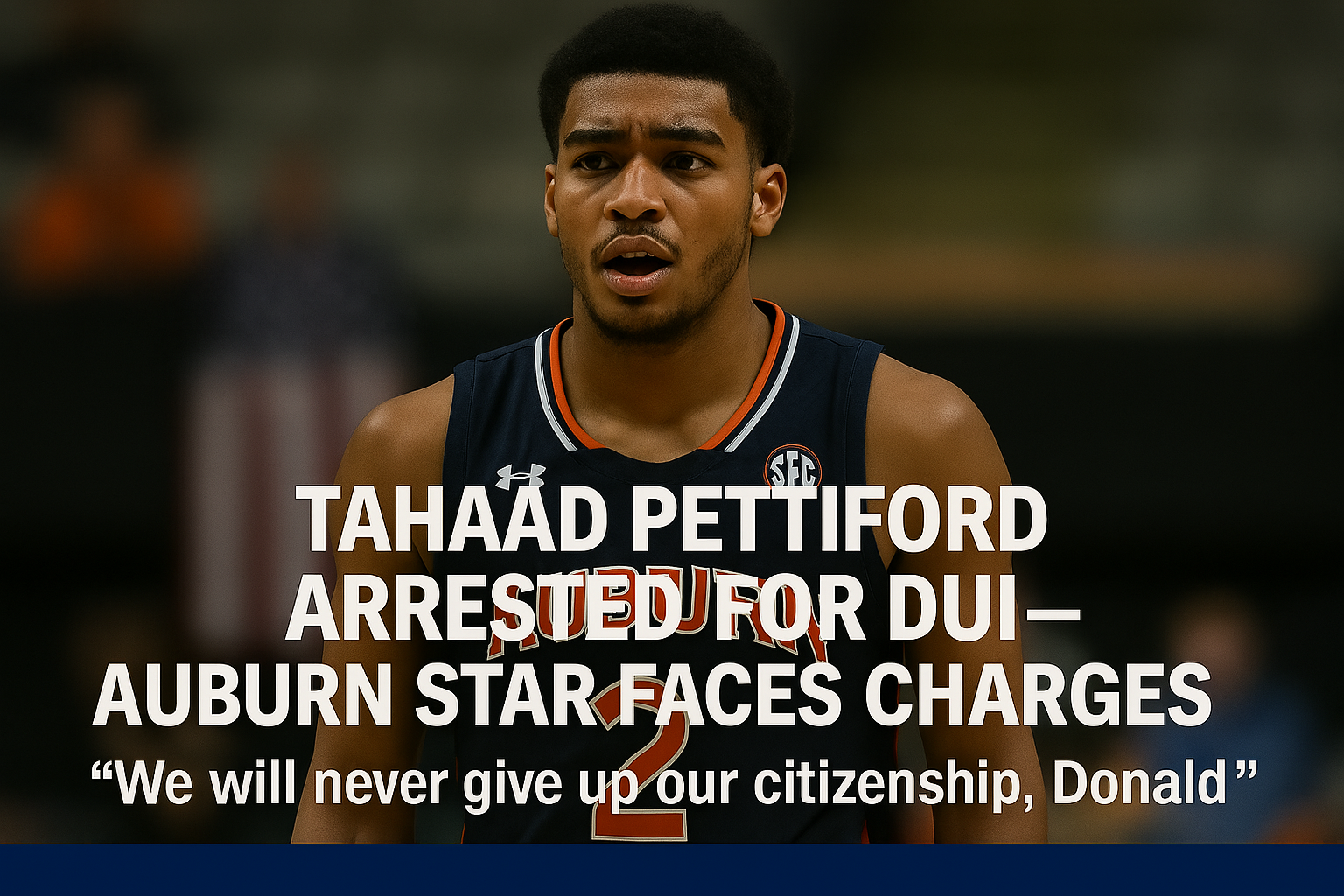
Auburn basketball’s rising star Tahaad Pettiford has been arrested on suspicion of DUI, causing shockwaves in college basketball circles. Here’s what happened and what it means for his future.
Table of Contents
Published: July 12, 2025
Last Updated: July 12, 2025
Author: Nueplanet
Executive Overview
A significant incident involving Auburn University basketball player Tahaad Pettiford occurred in July 2025 when the 19-year-old point guard was arrested on charges of driving under the influence in Lee County, Alabama. This event has generated considerable discussion regarding student-athlete conduct, institutional accountability, and the intersection of athletic performance with legal matters. This comprehensive analysis examines the factual circumstances, legal framework, institutional response, and broader implications for college athletics.
Who Is Tahaad Pettiford? Understanding Auburn’s Key Player
Background and Athletic Achievement
Tahaad Pettiford gained prominence as a McDonald’s All-American and later emerged as a significant player in Auburn University’s basketball program. His trajectory through college athletics reflects the development of a skilled point guard whose performance attracted national attention.
During the 2024-25 academic year, Pettiford demonstrated statistical achievement across multiple basketball metrics. He recorded 11.6 points per game while shooting 42.1% from the field and 36.6% from three-point range. His playmaking abilities contributed 3.0 assists per game despite averaging 22.9 minutes of playing time.
Collegiate Performance and Achievements
Pettiford’s participation in Auburn’s 2024-25 NCAA Tournament run included notable performances in tournament games. He recorded at least 20 points in consecutive NCAA Tournament contests, which drew attention from professional basketball scouts and analysts. His role within Auburn’s roster provided an example of effective point guard play during high-pressure college competition.
Following Auburn’s Final Four appearance in the 2025 NCAA Tournament, Pettiford made the decision to withdraw from the NBA Draft and return to Auburn for the 2025-26 season. This decision positioned him as the primary returning player from Auburn’s historic tournament run.
Timeline of Career Development
The progression of Pettiford’s career included selection as a McDonald’s All-American prospect, development through Auburn’s athletic program, and significant performance during tournament competition. His choice to continue playing at the collegiate level rather than entering the professional draft marked a strategic career decision at a formative stage of his athletic development.
The Incident: Factual Details and Legal Context
Arrest Circumstances and Documentation
According to public records from the Lee County Sheriff’s Office, Pettiford was arrested during the early morning hours of Saturday, July 12, 2025. The booking record indicates a midnight booking time with a charge of driving under the influence. A $1,000 bond was posted, and Pettiford was released from custody by midday Saturday.
The arrest occurred in Lee County, Alabama, which encompasses the Auburn University campus region. Law enforcement records confirm that the incident involved a driving-related violation charged under Alabama’s DUI statutes.
Charge Classification and Substance Involved
The arrest record specifically identifies alcohol as the substance associated with the DUI charge. This distinction matters within Alabama’s legal framework, as DUI classifications can vary based on the substance involved and the driver’s age and circumstances.
Pettiford’s status as a 19-year-old driver places the incident within Alabama’s underage driving provisions. These statutes establish different standards than those applied to drivers aged 21 and older.
Legal Framework: Alabama’s DUI Laws
Alabama’s driving under the influence statutes establish specific penalties for first-time offenders. Fines typically range from $600 to $2,100, and license suspension periods extend from 90 days to one year. Potential jail sentences may reach one year, though first-time offenders frequently receive suspended sentences.
Additional requirements for first-time DUI offenders in Alabama include mandatory participation in alcohol education programs and community service hours. Some cases involve installation of ignition interlock devices, which prevent vehicle operation if alcohol is detected.
Underage Driver Enhanced Penalties
Alabama implements zero-tolerance policies for drivers under age 21. Under these provisions, a blood alcohol content (BAC) of 0.02% or higher constitutes a violation, contrasting with the 0.08% threshold for adult drivers. This lower threshold reflects stricter standards applied to younger drivers.
Enhanced penalties for underage DUI violations include extended license suspension periods, additional educational requirements, and potential impacts on future driving privileges. These enhanced measures are designed to address the specific legal status of drivers under the state’s legal drinking age.
Auburn University’s Institutional Response
Official University Statements and Acknowledgment
Auburn University’s athletic department confirmed awareness of the arrest and indicated that the institution was monitoring the situation. The university’s initial communication emphasized commitment to due process and internal review procedures.
University leadership acknowledged the incident while maintaining appropriate boundaries regarding ongoing legal proceedings. This measured approach reflected institutional policy regarding student-athlete legal matters that remain subject to active legal proceedings.
Head Coach Bruce Pearl’s Position
Bruce Pearl, Auburn’s head basketball coach, addressed the situation in a statement indicating that the program intended to handle the matter through internal processes. Pearl’s statement acknowledged awareness of the incident while noting that the coaching staff was evaluating appropriate institutional responses.
Pearl’s leadership approach emphasized the program’s standards regarding student-athlete conduct and his commitment to addressing violations of those standards through established disciplinary procedures.
Athletic Director John Cohen’s Statement
John Cohen, Auburn’s Athletic Director, released a statement that emphasized institutional support for the student-athlete while maintaining accountability standards. Cohen’s message included the phrase “Auburn loves you,” reflecting an institutional approach balancing support with appropriate consequences.
This statement demonstrated a framework where universities provide support services and guidance while maintaining expectations for student-athlete conduct and compliance with institutional policies.
Internal Disciplinary Processes
Auburn University maintains disciplinary procedures for student-athlete conduct violations. These processes typically include evaluation of incident circumstances, review of institutional policies, consultation with legal counsel, and determination of appropriate consequences.
The university’s statement indicated that disciplinary matters were being handled through these internal processes rather than through public announcements or premature conclusions. This approach allows for due process while the legal proceedings continue.
Legal Consequences: Potential Penalties Under Alabama Law
Criminal Penalties for First-Time DUI Offenders
Alabama’s DUI statutes establish a structured penalty framework for first-time offenders. Financial penalties typically begin at $600 and may extend to $2,100 depending on specific case circumstances and judicial discretion.
License suspension periods for first-time offenders range from 90 days to one year. The duration may be adjusted based on factors including BAC level, driving record, and individual case circumstances presented during legal proceedings.
Incarceration Possibilities
Potential jail sentences for first-time DUI offenses in Alabama may reach one year of incarceration. However, judicial practice frequently involves suspension of jail sentences for first-time offenders, particularly when no accident or injury resulted from the violation.
Suspended sentences allow defendants to avoid actual incarceration while remaining subject to probation, counseling requirements, and other conditions imposed by the court.
Mandatory Education and Rehabilitation
Alabama requires DUI offenders to complete substance abuse education programs as part of standard sentencing conditions. These programs provide instruction regarding alcohol’s effects, impaired driving risks, and decision-making strategies related to substance use.
Some jurisdictions also require completion of victim impact panels, where offenders hear from individuals affected by impaired driving incidents. These educational components emphasize the broader consequences of driving under the influence.
Ignition Interlock Device Requirements
Ignition interlock devices prevent vehicle operation if alcohol is detected through breath analysis. Alabama courts may require installation of these devices as a condition of license reinstatement or as part of probation terms.
These devices require regular maintenance and calibration at certified service centers. The cost of installation and maintenance typically falls to the offender and may represent a significant financial consequence beyond direct fines.
Enhanced Penalties for Underage Drivers
Alabama’s zero-tolerance provisions for drivers under 21 create additional penalties beyond standard DUI consequences. Extended license suspension periods may apply, potentially lasting beyond the 90-day to one-year range for adult offenders.
Underage DUI violations may also affect future educational and employment opportunities. Driver’s license records create a documented history that appears in background checks for certain professional fields and educational programs.
Athletic and Academic Consequences
Institutional Disciplinary Framework
Auburn University maintains specific standards of conduct for student-athletes participating in intercollegiate athletics. These standards typically exceed general student conduct requirements and reflect the additional responsibilities of representing the university through athletic competition.
DUI convictions or charges frequently trigger institutional disciplinary processes that may include suspension from athletic activities, loss of team privileges, mandatory counseling participation, and community service requirements.
Potential Team Suspension or Dismissal
Depending on Auburn’s specific disciplinary determination, consequences might include temporary suspension from team activities or, in more severe cases, permanent dismissal from the program. The severity typically reflects institutional policy and the specific circumstances of the case.
Temporary suspension allows for assessment and rehabilitation while preserving the possibility of future participation. Permanent dismissal represents the most significant athletic consequence and typically occurs when violations demonstrate fundamental incompatibility with program standards.
Scholarship Implications
Athletic scholarships in college basketball typically include provisions allowing institutions to modify or revoke scholarships based on conduct violations. DUI arrests and convictions may trigger scholarship review processes.
While complete scholarship revocation occurs less frequently than suspension or dismissal from athletic competition, scholarship impacts remain possible depending on institutional policy and case circumstances.
Academic Probation Considerations
Beyond athletic consequences, universities may place student-athletes on academic probation following conduct violations. This status may impose additional academic requirements, grade maintenance standards, and enrollment restrictions.
Academic probation can affect eligibility for certain programs, research opportunities, or academic distinctions. It creates a documented record that may influence future academic and professional opportunities.
Community Service and Character Development
Many institutional disciplinary frameworks include community service requirements and participation in character development programs. These requirements serve multiple purposes, including meaningful consequences, opportunity for community reintegration, and development of accountability.
Character development programs typically address decision-making skills, substance abuse education, leadership development, and personal accountability. Completion of these programs demonstrates engagement with institutional rehabilitation expectations.
Professional Basketball Implications and NBA Draft Considerations
Character Evaluation by Professional Scouts
NBA teams conduct comprehensive background investigations and character evaluations during the draft evaluation process. Off-court legal matters receive significant attention as franchises assess risks associated with draft selections.
These evaluations consider frequency of incidents, individual accountability, willingness to engage in rehabilitation, and demonstrated behavioral change. A single incident with genuine accountability engagement typically creates less concern than patterns of behavior or dismissive attitudes toward consequences.
Draft Stock and Professional Prospects
Legal incidents can negatively impact draft positioning and professional opportunities. Teams weigh character concerns against athletic capabilities when making draft decisions, which may result in lower draft selections or reduced professional interest.
However, historical precedent demonstrates that athletes who demonstrate genuine accountability, participation in rehabilitation, and consistent behavioral improvement can rebuild professional prospects. The timing, quality of response, and sustained improvement matter significantly in professional evaluation.
NBA Team Evaluation Processes
The NBA utilizes extensive evaluation processes including personal interviews, background checks, psychological assessments, and consultation with college coaches. Legal matters become part of comprehensive player evaluation, though they do not automatically disqualify prospects.
Teams often focus on the individual’s response to consequences, engagement with support systems, and demonstrated commitment to behavioral change. Positive responses to legal challenges can actually enhance draft positioning by demonstrating maturity and accountability.
Timeline for Professional Development
Pettiford’s decision to return to Auburn rather than enter the 2025 NBA Draft provided additional opportunity for professional development and redemption narrative construction. The 2025-26 college season offers opportunity to demonstrate continued athletic excellence and behavioral improvement.
Athletes who use legal challenges as catalysts for positive development often emerge with stronger professional prospects than those without such challenges, demonstrating resilience and character development that professional teams value.
Broader Context: Student-Athlete Pressures and Support Systems
Academic and Athletic Demands
Student-athletes at major universities manage significant demands across multiple domains. These include rigorous academic coursework, intensive athletic training and competition schedules, travel requirements for competition, and media obligations.
The time management challenges of balancing these responsibilities often exceed those faced by non-athlete students. The pressure to maintain academic eligibility while performing at elite athletic levels creates substantial stress that contributes to decision-making pressures.
Performance Pressure and Future Planning
The high-performance environment of college athletics creates intense pressure regarding athletic achievement, team success, and professional prospects. These pressures combine with uncertainty regarding professional opportunities and the career trajectory beyond college athletics.
Many student-athletes face stress regarding whether they will achieve professional athletic careers, what alternative career paths they should pursue, and how to position themselves for success in competitive professional environments.
Social Pressures and Celebrity Status
Student-athletes at major universities experience public attention and social recognition that exceeds typical college student experience. Media coverage, social media following, and public recognition create additional social pressures.
Limited anonymity and constant connectivity through social media platforms create challenges regarding personal decision-making privacy. Social situations involving other students or community members often attract media interest, creating pressure regarding behavioral choices.
Mental Health and Coping Mechanisms
Research indicates that student-athletes experience mental health challenges including anxiety, depression, and stress-related disorders at rates comparable to or potentially exceeding general student populations. The combination of academic, athletic, and social pressures creates cumulative stress effects.
Limited access to mental health resources, stigma regarding mental health treatment, and time constraints for accessing support services create barriers to appropriate intervention. Development of healthy coping mechanisms becomes critical but often underdeveloped without institutional guidance.
University Support Infrastructure
Comprehensive university support systems address academic tutoring, counseling services, substance abuse education, and crisis intervention. Effective programs provide 24/7 accessibility and integrate support across academic, athletic, and personal domains.
Universities with robust support systems demonstrate better outcomes regarding student-athlete mental health, substance abuse prevention, and overall institutional conduct standards. Investment in comprehensive support correlates with reduced incident rates and improved student-athlete wellbeing.
Public Response and Community Perspectives
Auburn Community and Alumni Support
Auburn’s athletic community and alumni network responded with varied perspectives reflecting different values regarding accountability, redemption, and second chances. Many expressed continued support emphasizing the importance of rehabilitation and institutional backing.
Alumni networks, student organizations, and local community members engaged in discussions regarding appropriate institutional response and opportunities for student-athlete development during challenging circumstances.
Coaching Community Response
College basketball coaches and athletic department administrators from other institutions commented on the incident, with many emphasizing the importance of opportunity for rehabilitation and the role of coaching staff in supporting student-athlete development through challenges.
The coaching fraternity frequently emphasizes learning opportunities that arise from legal or conduct challenges, viewing these situations as opportunities for character development and maturation. This perspective reflects recognition of the developmental stage of college athletes and the role of institutional support in facilitating growth.
Media Analysis and Commentary
Sports media outlets provided varied coverage and analysis, with some emphasizing accountability and institutional standards while others focused on rehabilitation opportunities and the redemptive potential of the situation. Analysis reflected different perspectives regarding appropriate institutional responses to student-athlete legal matters.
Professional sports analysts considered implications for Auburn’s championship prospects, Pettiford’s professional development, and broader questions regarding college athletics and student-athlete conduct standards.
Social Media Engagement
Social media platforms facilitated public discussion regarding the incident, with users expressing perspectives ranging from strong advocacy for immediate dismissal to emphatic support for rehabilitation and institutional backing. These discussions reflected broader societal perspectives regarding accountability, redemption, and second chances.
Public discourse on social platforms demonstrated the significant influence of social media in shaping perception of student-athlete incidents and the challenges institutions face in managing public information and institutional processes.
Historical Context: Comparable Incidents and Lessons
Documented Redemption Cases
College athletics includes documented examples of athletes who faced legal challenges, engaged in comprehensive rehabilitation, and achieved significant professional success. These cases demonstrate that single incidents with genuine accountability do not necessarily determine career trajectories.
Athletes who responded to legal challenges through institutional cooperation, community engagement, counseling participation, and consistent behavioral demonstration often rebuilt professional prospects and achieved successful athletic careers. These examples provide evidence that recovery from such incidents is possible with appropriate effort and institutional support.
Cautionary Examples and Sustained Issues
Historical precedent also includes examples where athletes faced repeated incidents, minimized accountability, or dismissed institutional processes. These cases often resulted in career disruption, professional opportunity loss, and lasting consequences.
Patterns of behavior create more significant professional concern than isolated incidents. Repeated violations or dismissive attitudes toward consequences generally result in more severe professional consequences than single incidents with genuine accountability engagement.
Institutional Best Practices Development
Universities have developed systematic approaches to incident response based on accumulated experience. These include immediate support activation, comprehensive evaluation processes, rehabilitation program participation, consistent monitoring, and proportional consequences reflecting incident severity.
Leading institutions employ preventive approaches including education programming, peer mentoring systems, alternative social activities, and transportation services designed to reduce incident risk. These comprehensive frameworks address both prevention and response dimensions.
Auburn’s Path Forward: Institutional Strategy and Redemption Framework
Balanced Approach to Accountability and Support
Auburn University demonstrated commitment to a framework balancing institutional accountability standards with recognition of student-athlete developmental stage and support opportunities. This approach maintains institutional integrity while providing pathways for rehabilitation and redemption.
The combination of internal disciplinary processes with public expression of institutional support creates a framework where consequences exist while maintaining opportunity for growth and development.
Educational and Preventive Programming
Universities utilize incidents as opportunities for enhanced educational programming addressing alcohol and substance use, decision-making skills, and consequences of impaired driving. Campus-wide discussions and programming can use specific incidents as educational catalysts.
Peer education programs, where student-athletes discuss incident implications and prevention strategies, often prove more effective than traditional educational approaches in reaching athlete populations.
Transparency and Communication Management
Auburn’s approach involved transparency regarding the incident while respecting ongoing legal proceedings and individual privacy regarding case details. This communication strategy maintains public trust through honesty while avoiding premature conclusions or speculation.
Clear communication regarding institutional values, disciplinary processes, and support availability helps athletic community members understand institutional approaches and participate in institutional culture development.
Community Service and Reintegration
Community service requirements provide opportunities for genuine service contribution while creating accountability consequences and facilitating reintegration into broader community contexts. Service activities often help individuals gain perspective regarding incident consequences and community impact.
Service activities selected based on community needs and individual capabilities create meaningful engagement rather than punitive busy work. Effective community service contributes to both community benefit and individual growth.
Individual Pathways for Rehabilitation and Development
Legal Compliance Requirements
The immediate path forward requires complete compliance with all legal requirements, court orders, and probation conditions. Demonstrated commitment to legal compliance establishes accountability credibility.
Timely completion of required education programs, regular participation in mandated sessions, and consistent engagement with court-ordered requirements demonstrate respect for legal processes and institutional authority.
Athletic and Institutional Engagement
Cooperation with Auburn’s internal disciplinary processes and meaningful engagement with institutional support systems demonstrate willingness to address institutional concerns. Active participation in counseling, character development programs, and support services shows genuine commitment to growth.
Athletic excellence and team cooperation demonstrate return to baseline performance levels and renewed commitment to team objectives. Consistent athletic development and performance maintain professional prospects while demonstrating refocus on core athletic responsibilities.
Community and Mentorship Roles
Engagement in community service activities and mentorship roles with younger athletes demonstrate growth and commitment to broader community benefit. Personal experience with consequences can inform effective mentorship of other student-athletes regarding risk factors and decision-making.
Ambassador roles representing the athletic program and university demonstrate redemption progress and commitment to institutional values. These roles create accountability through public visibility while contributing to institutional culture development.
Mental Health and Personal Growth
Engagement with counseling and mental health support services addresses underlying issues potentially contributing to incident. Comprehensive personal development creates foundation for sustained behavioral change beyond immediate incident response.
Development of healthy coping mechanisms, stress management strategies, and decision-making processes contribute to long-term success across athletic, academic, and personal domains.
Impact on Auburn Basketball and Team Dynamics
Championship Aspirations and Roster Considerations
Auburn basketball entered the 2025-26 season with championship aspirations following their historic Final Four appearance. Pettiford’s status as the lone returning player from that squad created both opportunities and challenges for roster development.
The team composition created a situation requiring other players to step into significant roles, potentially accelerating development of younger players and creating leadership opportunities beyond typical team structures.
Team Chemistry and Leadership Development
Significant roster changes create both obstacles and opportunities for team chemistry development. New players joining Pettiford created dynamics requiring time for integration and relationship development.
Leadership challenges arising from limited returning players create opportunities for emerging leaders to develop responsibility and influence. Adaptive coaching and team-building efforts help navigate roster transitions effectively.
Fan and Community Support
Auburn’s athletic community, including fans, alumni, and local supporters, engaged with the team’s 2025-26 season with interest in both performance outcomes and the redemption narrative. Supportive community engagement provides institutional strength during challenging circumstances.
Media interest in the team’s navigation of these circumstances created both opportunity and pressure regarding how the program and individual player responded to challenges.
Implications for College Athletics Broader Conversations
Student-Athlete Welfare Standards
This incident contributed to ongoing conversations regarding college athletic standards for student-athlete welfare, support systems, and institutional responsibility. Discussion regarding prevention programs and support infrastructure continues across higher education institutions.
Best practice development regarding student-athlete support, mental health resources, and substance abuse prevention reflects collective institutional learning from accumulated incidents and research regarding effective interventions.
Accountability and Due Process Balance
The situation illustrated institutional navigation between maintaining accountability standards and providing appropriate due process. These balancing challenges remain central to college athletic governance and institutional policies.
Clear policies and transparent processes help institutions maintain credibility regarding fairness while demonstrating commitment to standards. Consistency in policy application across similar circumstances strengthens institutional credibility.
Support System Effectiveness
Evaluation of institutional support systems including counseling, education programming, and crisis response capabilities continues as universities assess effectiveness in preventing incidents and supporting students through challenges.
Continuous improvement based on incident analysis, student feedback, and research regarding effective interventions strengthens institutional capacity to support student-athlete wellbeing.
Frequently Asked Questions
Q1: What are the specific details of Tahaad Pettiford’s arrest?
Tahaad Pettiford was arrested by the Lee County Sheriff’s Office during the early morning hours of Saturday, July 12, 2025. The arrest occurred in Lee County, Alabama, on charges of driving under the influence. His booking time was recorded as midnight, and a $1,000 bond was posted. He was released by midday Saturday. Official arrest records confirm that alcohol was the substance associated with the DUI charge.
Q2: What legal penalties does Pettiford potentially face under Alabama law?
Under Alabama DUI statutes for first-time offenders, potential penalties include fines ranging from $600 to $2,100, license suspension from 90 days to one year, potential jail time up to one year (though often suspended for first-time offenders), mandatory alcohol education program participation, and community service requirements. As a 19-year-old driver under the legal drinking age, Pettiford faces enhanced penalties under Alabama’s zero-tolerance laws for underage drivers, where a BAC of 0.02% or higher constitutes a violation compared to the 0.08% threshold for drivers 21 and older.
Q3: Has Auburn University suspended Pettiford from the basketball team?
As of available updates, Auburn University has not announced any official public suspension from basketball activities. Coach Bruce Pearl indicated that the program intends to address the situation through internal university processes rather than public disciplinary announcements. This approach allows for due process while legal proceedings continue and internal evaluation processes complete.
Q4: How might this incident affect Pettiford’s NBA Draft prospects?
This incident could potentially influence NBA teams’ character evaluations during draft assessment processes. However, professional precedent demonstrates that athletes who demonstrate genuine accountability, engagement in rehabilitation programs, and sustained behavioral improvement can maintain or rebuild professional prospects. Pettiford’s decision to return to Auburn rather than enter the 2025 NBA Draft provides opportunity for redemption narrative development and athletic performance demonstration during the 2025-26 season.
Q5: What were Pettiford’s statistics during Auburn’s Final Four run?
During the 2024-25 season, Pettiford averaged 11.6 points per game while shooting 42.1% from the field and 36.6% from three-point range. He recorded 3.0 assists per game as Auburn’s team leader in assists while averaging 22.9 minutes of playing time. Pettiford scored at least 20 points in back-to-back NCAA Tournament contests during Auburn’s Final Four appearance.
Q6: What support systems does Auburn provide to student-athletes facing legal matters?
Auburn University provides comprehensive support services including 24/7 counseling availability, legal guidance through university counsel, academic support to maintain enrollment and eligibility, mental health resources, and family communication coordination. Athletic Director John Cohen’s public message emphasizing “Auburn loves you” reflected the institutional commitment to supporting student-athletes through difficult circumstances while maintaining accountability standards.
Q7: How common are DUI incidents among college athletes?
While comprehensive national statistics specific to college athletes remain limited, DUI incidents occur with concerning frequency across college populations. Research suggests that the unique pressures facing student-athletes, including academic demands, performance pressure, social expectations, and limited coping mechanism development, may contribute to elevated risk factors compared to general student populations. This underscores the importance of prevention programming and support system development specifically designed for student-athlete populations.
Q8: What specific steps can Pettiford take to rehabilitate his reputation and professional prospects?
Key steps include full legal compliance with all court requirements and probation conditions, active engagement with Auburn’s internal disciplinary processes and support systems, meaningful participation in alcohol education and counseling programs, community service leadership demonstrating commitment to service and accountability, consistent on-court athletic performance, public acknowledgment of mistakes combined with demonstrated behavioral change, mentorship roles supporting younger student-athletes, and sustained demonstration of improved decision-making and maturity over time.
Q9: What role does Alabama’s zero-tolerance law play in this case?
Alabama implements zero-tolerance policies for drivers under age 21, establishing a BAC threshold of 0.02% or higher as a violation compared to 0.08% for drivers 21 and older. This lower threshold reflects state policy prioritizing prevention of underage impaired driving. Enhanced penalties for underage violations include extended license suspension periods, additional educational requirements, and potential extended impacts on future driving privileges.
Q10: How has Auburn’s basketball program responded to this incident?
Auburn’s response included acknowledging the arrest, emphasizing commitment to due process and legal proceedings, indicating internal handling of disciplinary matters, and demonstrating institutional support for the student-athlete through Athletic Director John Cohen’s message. Head Coach Bruce Pearl indicated the program’s commitment to addressing the situation through internal processes while maintaining team standards and expectations.
Conclusion: Lessons and Long-Term Implications
Tahaad Pettiford’s DUI arrest represents a significant incident within college athletics that extends beyond individual consequences to encompass broader institutional, legal, and systemic considerations. The factual circumstances, legal framework, institutional response, and broader context provide valuable information regarding how universities, student-athletes, and athletic communities navigate conduct incidents.
The incident underscores the critical importance of comprehensive support systems, prevention programming, and institutional policies that balance accountability with rehabilitation opportunities. Auburn University’s demonstrated approach integrating support with appropriate consequences provides a framework potentially applicable to similar situations across higher education.
The coming months and season will reveal how Pettiford engages with rehabilitation opportunities, how Auburn’s basketball program navigates roster and leadership changes, and what broader implications this incident creates for college athletics discourse regarding student-athlete support and institutional responsibility.
The college basketball community and Auburn family will observe the individual and institutional responses with interest. The outcome will contribute to ongoing conversations regarding best practices in supporting student-athletes through challenging circumstances while maintaining institutional standards and values.
For stakeholders across college athletics, this incident provides opportunity to evaluate existing support systems, strengthen prevention programming, and consider how institutions can better serve student-athlete wellbeing while maintaining accountability standards that define institutional integrity.
Author Information
Author Name: Nueplanet
Nueplanet is an independent news and content analysis platform dedicated to providing factual, evidence-based reporting on significant events and their broader implications. Our editorial approach prioritizes accuracy, transparency, and fair-minded analysis of complex situations affecting athletics, institutions, and communities.
We utilize official sources, institutional records, legal documentation, and verified reporting to ensure content accuracy and reliability. Our commitment to neutrality and factual reporting guides all analysis and coverage of institutional and legal matters affecting student-athletes and athletic programs.
Disclaimer: This article presents factual information regarding a public legal matter. Content does not constitute legal advice. Individuals seeking legal counsel regarding similar matters should consult qualified legal professionals. Information presented reflects circumstances and publicly available information as of the publication date.
About the Nueplanet’s Approach
Nueplanet commits to delivering thoroughly researched, factually accurate content utilizing verified sources including institutional announcements, legal records, official statements, and authoritative reporting. This content reflects that commitment by prioritizing accuracy, transparency, and balanced analysis over editorial opinion or speculation.
Our goal is providing readers with comprehensive understanding of significant events, their legal context, institutional implications, and broader relevance to affected communities. We believe informed understanding requires accurate information presented through neutral, professional analysis.
Helpful Resources
Latest Posts
- ICAI CA Final May 2025 Results Expected Between First Week of July.
- Supreme Court’s Landmark Birthright Citizenship Decision: Limits on Nation‑wide Injunctions & What’s Next
- SSC CGL 2025 Notification Released
- ICAI CA Final May 2025 Results Expected Between First Week of July.
- Kings Mountain ICE Raid: Inside the Buckeye Fire Equipment Factory Operation
Tag
tahaad pettiford
Related Posts













Post Comment