







Ramayana: Ranbir Kapoor’s Powerful First Look as Lord Ram – Watch Teaser, Cast, Budget, Release Date
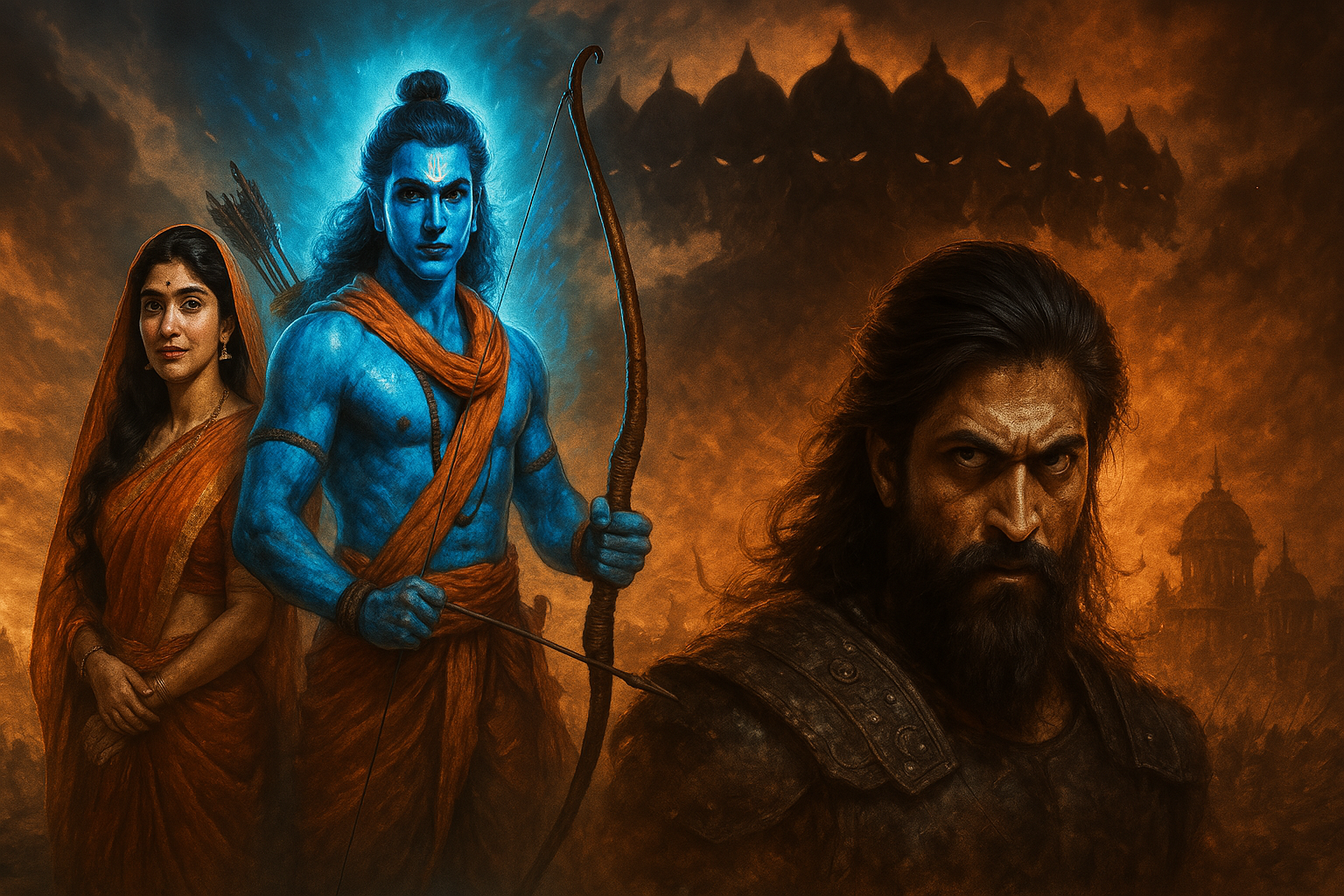
Ranbir Kapoor’s Ramayana teaser reveals breathtaking visuals and mythological intensity. Watch the teaser video, check cast details, budget, and release updates here.
The Indian film industry has unveiled the first teaser of “Ramayana,” a mythological epic featuring Ranbir Kapoor in the lead role. Released on July 2, 2025, the teaser has generated significant attention across entertainment platforms. This article provides a comprehensive examination of the film’s production details, cast information, technical specifications, and industry positioning.
The film represents a major investment in Indian cinema’s mythological genre. Director Nitesh Tiwari, known for his work on “Dangal” and “Chhichhore,” leads the project. Producer Namit Malhotra’s Prime Focus Studios has partnered with DNEG, an Academy Award-winning visual effects company, to handle the technical aspects of the production.
Teaser Release and Initial Reception
The teaser for “Ramayana” premiered simultaneously across multiple platforms on July 2, 2025. The release strategy included screenings at over 500 theaters nationwide alongside digital distribution. According to available data, the teaser accumulated approximately 50 million views within the first 48 hours of release.
The teaser runs for 2 minutes and 45 seconds. It provides viewers with their first look at the film’s visual approach and character design. The digital response has been measured through social media engagement metrics and platform-specific analytics.
Industry observers have noted the teaser’s production quality. The visual presentation demonstrates the technical capabilities employed in the film’s creation. Early audience reactions have been documented across entertainment news outlets and social media platforms.
Cast and Character Details
Primary Cast Members
Ranbir Kapoor portrays Lord Ram in this adaptation. The actor underwent an 18-month preparation period for the role. His preparation included physical training, Sanskrit language coaching, archery instruction, and study of classical Indian texts. Kapoor gained approximately 15 kilograms of muscle mass through structured fitness programs.
Sai Pallavi has been cast as Goddess Sita. The actress brings classical dance training in Bharatanatyam to the role. Her selection was based on her previous work in South Indian cinema and her fluency in multiple regional languages. Pallavi’s preparation focused on understanding the character’s cultural significance and emotional complexity.
Yash, known for his work in the “KGF” film series, plays Ravana. The actor’s preparation involved extensive character research, physical training for combat sequences, and voice modulation exercises. The role required coordination with visual effects teams for motion capture sessions used to create Ravana’s multi-headed appearance.
Supporting Cast
The film includes several established actors in supporting roles. Sunny Deol appears as King Dasharatha, Ram’s father. Bobby Deol has been cast in a significant supporting role. Lara Dutta portrays Queen Kaushalya, Ram’s mother.
Additional cast members include Anil Kapoor, Manoj Bajpayee, and Pankaj Tripathi in various roles. Kriti Sanon and Akshay Kumar have been reported to make special appearances in the film. The ensemble cast represents actors from different regional film industries across India.
Production Details and Technical Specifications
Direction and Screenplay
Nitesh Tiwari serves as the film’s director. Tiwari’s previous directorial work includes “Dangal,” which achieved significant commercial success in 2016. His filmography demonstrates experience with character-driven narratives and large-scale production management.
The screenplay development involved research into multiple versions of the Ramayana narrative. The production team consulted various regional interpretations of the epic to create a comprehensive adaptation. The script development phase lasted approximately three years before principal photography began.
Visual Effects and Technical Team
DNEG (Double Negative) handles the visual effects work for the film. The company has received Academy Awards for its work on films including “Inception,” “Interstellar,” “Blade Runner 2049,” and “Dune.” DNEG’s involvement brings international visual effects standards to the production.
The visual effects work encompasses character design, environment creation, and action sequence development. Specific technical achievements include photorealistic rendering of mythological characters, detailed reconstruction of ancient architectural settings, and complex crowd simulation for battle sequences.
The film utilizes IMAX-certified cameras for principal photography. The cinematography team has worked to ensure compatibility with multiple screening formats, including IMAX, 4DX, and Dolby Cinema. The production employed Dolby Atmos technology for sound design and audio mixing.
Production Investment
According to production announcements, the film’s budget is approximately ₹835 crores. This figure places it among the highest-budget films produced in India. The budget allocation includes significant investment in visual effects, estimated at ₹200 crores.
Other major budget components include cast compensation (₹150 crores), set construction (₹100 crores), and marketing expenses (₹85 crores). Additional allocations cover costume design (₹75 crores), technical equipment (₹70 crores), location expenses (₹60 crores), and music production (₹45 crores).
Release Strategy and Distribution
Release Date and Format
The film is scheduled for theatrical release on December 25, 2025. The Christmas holiday period typically represents a high-attendance window for family-oriented films in Indian markets. The release strategy aims to maximize audience availability during the extended holiday weekend.
The film will be released in multiple formats to accommodate different theater configurations. Premium formats include IMAX 3D, 4DX, Dolby Cinema, and standard 2D/3D presentations. This multi-format approach allows theaters to select the most appropriate version for their technical capabilities.
Language Versions
“Ramayana” will release in six Indian languages simultaneously. The primary version is in Hindi, with dubbed versions in Tamil, Telugu, Malayalam, and Kannada. An English-language version has been prepared for international markets and metropolitan Indian audiences.
Regional dubbing involves native voice actors and cultural consultants for each language. The dubbing process includes adaptation of dialogue to maintain cultural relevance while preserving the narrative core. Each regional version underwent separate quality control review processes.
International Distribution
The international release strategy covers major markets with significant South Asian populations. Planned theatrical distribution includes the United States and Canada (approximately 500 screens), United Kingdom and Europe (200 screens), Australia and New Zealand (100 screens), Middle East (150 screens), and Southeast Asia (300 screens).
International premiere events have been planned for London, New York, Dubai, and Singapore. These events serve both promotional and distribution partnership purposes. The international strategy reflects industry trends toward simultaneous global releases for major productions.
Music and Soundtrack Composition
Composers and Musical Direction
The film’s music involves collaboration between A.R. Rahman and Ilaiyaraaja. This represents the first joint composition work between the two composers on a single film project. Rahman has received multiple Academy Awards, Grammy Awards, and National Film Awards for his previous work. Ilaiyaraaja has composed music for over 1,000 films across various Indian languages.
The soundtrack incorporates devotional compositions, action themes, romantic melodies, and traditional percussion arrangements. Musical styles range from classical Indian ragas to contemporary orchestral arrangements. Regional variations of certain compositions have been created for different language versions.
Playback Singers
The vocal performances include contributions from established playback singers. Shreya Ghoshal, who has received four National Film Awards, performs character-specific songs. Arijit Singh handles emotional solo compositions. Additional vocalists include Kailash Kher, Hariharan, and Armaan Malik.
The recording process involved multiple sessions to accommodate different musical styles. Orchestra recordings utilized both traditional Indian instruments and Western classical arrangements. The audio production maintains compatibility with modern cinema sound systems.
Marketing and Promotional Campaign
Marketing Investment and Strategy
The marketing budget allocation is approximately ₹150 crores. This investment covers digital campaigns, traditional media advertising, promotional events, and merchandise development. The marketing timeline extends from the teaser release through the theatrical run.
Digital marketing efforts focus on social media platforms, video content distribution, and interactive web experiences. The campaign includes behind-the-scenes footage, character introduction videos, and cast interviews. Mobile applications and augmented reality features have been developed for audience engagement.
Traditional media strategies include television advertising during prime viewing hours, print campaigns in major publications, radio promotions, and outdoor advertising in metropolitan areas. Cinema hall branding provides visibility in theater environments.
Religious and Cultural Partnerships
The promotional approach includes partnerships with religious and cultural organizations. Collaborations with temples and cultural centers aim to connect with audiences interested in mythological content. Festival tie-ins coincide with Hindu religious celebrations including Diwali and Ram Navami.
Educational institutions have been offered special screenings and study materials. These partnerships serve both promotional and educational purposes. The strategy recognizes the cultural significance of the Ramayana narrative in Indian society.
Box Office Projections and Financial Analysis
Domestic Market Expectations
Industry analysts have provided various box office projections based on the film’s budget, cast, and marketing investment. Opening day estimates range from ₹75 to ₹100 crores in domestic markets. Opening weekend projections suggest collections between ₹200 to ₹250 crores.
First-week worldwide collection estimates range from ₹500 to ₹600 crores. Lifetime domestic collection projections vary from ₹1,000 to ₹1,500 crores depending on word-of-mouth reception and theatrical run length. These figures represent industry estimates rather than guaranteed outcomes.
International Market Potential
International box office projections suggest opening weekend collections of $15 to $20 million across global markets. Total overseas lifetime collections are estimated between $50 to $70 million. These projections consider the film’s appeal to South Asian diaspora communities and general international audiences.
The overseas performance depends on factors including distribution reach, local competition, and cultural relevance. Previous Indian films with mythological themes have achieved varying levels of international success.
Comparative Analysis with Previous Films
For context, “Baahubali 2: The Conclusion” (2017) achieved worldwide lifetime collections of approximately ₹1,810 crores on an estimated budget of ₹250 crores. “RRR” (2022) collected approximately ₹1,200 crores globally with a budget near ₹400 crores. “Brahmastra Part One: Shiva” (2022) collected approximately ₹430 crores worldwide on a budget of ₹410 crores.
“Ramayana’s” budget of ₹835 crores positions it above these previous productions in terms of financial investment. The film requires substantial box office performance to achieve profitability. Break-even calculations suggest the film needs to collect approximately ₹1,000 to ₹1,200 crores worldwide when including distribution and promotional costs.
Additional Revenue Streams
Digital and Satellite Rights
Digital streaming rights are expected to generate substantial revenue. Reports suggest digital rights valuations around ₹300 crores, though official agreements have not been publicly confirmed. Streaming platform acquisitions typically occur after theatrical release windows.
Satellite broadcasting rights for television networks are estimated at approximately ₹150 crores. Television broadcasts usually occur 6 to 12 months after theatrical release. These rights provide long-term revenue beyond initial box office collections.
Merchandising and Licensing
Merchandise development includes action figures, traditional jewelry designs, board games, mobile applications, and educational materials. Merchandising revenue projections range from ₹100 to ₹150 crores. Licensing agreements cover product categories including toys, apparel, and home entertainment.
Music rights generate additional revenue through soundtrack sales and streaming. Estimated music rights valuations range from ₹50 to ₹75 crores. The soundtrack’s commercial performance depends on song popularity and promotional effectiveness.
Industry Context and Mythological Film Trends
Historical Mythological Film Performance
Indian cinema has a long tradition of mythological films. Early color films in the 1950s and 1960s frequently adapted religious narratives. The genre experienced reduced production in the 1980s and 1990s as contemporary subjects gained prominence.
Recent years have seen renewed interest in mythological content with modern production techniques. Television series based on the Ramayana and Mahabharata achieved high viewership ratings in the 1980s-1990s and during pandemic-era reruns.
Contemporary Production Standards
The current trend involves applying international production standards to Indian mythological narratives. Films like “Baahubali” demonstrated audience interest in high-budget historical and mythological content. This success encouraged similar large-scale productions.
Visual effects technology has advanced significantly, enabling more realistic portrayal of mythological elements. Motion capture, computer-generated imagery, and detailed digital environments allow filmmakers to visualize complex mythological scenarios.
Audience Demographics and Preferences
Mythological content appeals to multiple demographic segments. Older audiences have cultural connections to traditional narratives. Younger audiences engage with modern production values and visual spectacle. Family viewing patterns make mythological subjects suitable for group attendance.
Regional variations in the Ramayana narrative create opportunities for culturally specific adaptations. Different Indian states have distinct versions of the epic with local emphasis on particular characters or episodes. The film’s approach to balancing these variations may influence regional reception.
Critical Reception and Review Expectations
Teaser Analysis by Film Critics
Entertainment journalists have analyzed the teaser’s technical aspects and creative approach. Observations include the visual effects quality, cinematography style, and character presentation. Critics have noted the production’s scale and technical ambition.
Comparative analyses with previous mythological films examine how this adaptation approaches familiar narrative elements. Discussion points include character interpretation choices, visual style decisions, and narrative structure indicators.
Social Media Response Patterns
Social media platforms show significant engagement with the teaser content. Hashtags related to the film have accumulated millions of mentions across platforms. Fan-created content includes artwork, tribute videos, and discussion threads.
Sentiment analysis of social media responses shows predominantly positive reactions. Areas of discussion include casting choices, visual effects quality, and anticipation for the complete film. Some discussions address questions about narrative interpretation and character portrayal.
Production Challenges and Solutions
Location and Set Construction
The production required construction of elaborate sets representing ancient kingdoms. Set design involved research into archaeological evidence and traditional architectural styles. Construction teams created physical environments for Ayodhya and Lanka sequences.
Location shooting occurred at various sites chosen for their visual characteristics. Outdoor filming presented challenges including weather conditions and logistical coordination. The production employed multiple shooting units to manage the extensive schedule.
Technical Coordination
Coordinating international visual effects teams with Indian production crews required detailed planning. Communication systems enabled real-time collaboration between different locations. Technical supervisors maintained quality standards across all production elements.
Motion capture sessions for character work required specialized equipment and technical expertise. Actors worked with technical advisors to ensure performances translated effectively through digital processing. The integration of practical effects with digital enhancements required precise pre-visualization.
Awards Potential and Recognition
National Film Awards Prospects
The film’s technical accomplishments position it as a potential candidate for National Film Awards recognition. Categories where the film may compete include Best Visual Effects, Best Production Design, Best Costume Design, Best Sound Design, and Best Cinematography.
Performance categories represent additional recognition opportunities. Acting awards could potentially acknowledge the lead and supporting performances. Directorial recognition depends on the film’s overall execution and critical reception.
International Film Festival Consideration
Major international film festivals occasionally include Indian films in their programming. The film’s production scale and cultural significance may interest festival programmers. Potential festival platforms include Cannes Film Festival, Venice International Film Festival, Toronto International Film Festival, and Berlin International Film Festival.
Festival selection depends on multiple factors including artistic merit, cultural relevance, and programming needs. Commercial films sometimes face different evaluation criteria than independent productions. The festival circuit provides international exposure and critical validation.
Cultural Impact and Educational Value
Mythological Education Through Cinema
The film presents an opportunity for younger generations to engage with traditional narratives through contemporary media. Educational institutions may utilize the film as a teaching tool for cultural studies. Discussion guides and supplementary materials can support classroom applications.
The Ramayana’s themes include dharma (righteous duty), devotion, familial relationships, and ethical decision-making. These universal concepts maintain relevance across time periods. The film’s interpretation of these themes will influence how audiences understand the narrative’s contemporary significance.
Tourism and Cultural Heritage
Film releases focusing on specific regions or historical periods often stimulate tourism interest. Ayodhya, the setting for significant portions of the narrative, has seen increased religious tourism in recent years. The film may further enhance awareness of sites associated with the Ramayana narrative.
Cultural organizations may develop programs connecting the film to broader heritage initiatives. Museums, cultural centers, and educational institutions can create exhibitions and programs contextualizing the film within larger cultural traditions.
Future Franchise Possibilities
Narrative Extension Opportunities
The Ramayana narrative includes multiple sections beyond the main story. The Uttara Kanda (later section) describes events following Ram’s return to Ayodhya. This material could support sequel development if the initial film achieves commercial success.
Character-focused spin-offs represent another expansion possibility. Supporting characters including Hanuman, Lakshman, Bharat, and others have their own story arcs. Individual films exploring these characters could create an extended narrative universe.
Comparative Franchise Analysis
Marvel Cinematic Universe and DC Extended Universe demonstrate the commercial potential of interconnected film series. In Indian cinema, the “Baahubali” franchise successfully implemented a two-film narrative structure. The “KGF” series established a commercially successful action franchise.
Mythological content provides built-in narrative material spanning multiple stories and character perspectives. The challenge involves maintaining consistent quality and audience interest across multiple productions. Production planning requires long-term vision and significant financial commitment.
Author’s Analysis and Industry Perspective
The “Ramayana” production represents a significant development in Indian cinema’s evolution. The financial investment level indicates industry confidence in large-scale mythological content. Success would likely encourage similar high-budget productions in the genre.
The film’s technical approach, particularly the DNEG partnership, demonstrates increasing integration of international production standards in Indian filmmaking. This trend reflects the industry’s expanding ambitions and technical capabilities.
Box office performance will provide important data about audience appetite for mythological content at this budget level. The film’s reception will influence studio decisions regarding future mythological projects and production investment levels.
The multi-language release strategy acknowledges India’s linguistic diversity and regional market importance. This approach has become standard for major productions seeking pan-Indian appeal.
Frequently Asked Questions
What is the confirmed release date for the Ramayana film?
The film is scheduled for theatrical release on December 25, 2025. This Christmas Day release targets the holiday season when family audiences typically have increased theater attendance. The date may be subject to change based on production completion schedules. Official announcements from the production company will confirm any schedule modifications.
What is the total production budget of the Ramayana film?
According to production announcements, the budget is approximately ₹835 crores. This includes ₹200 crores allocated for visual effects, ₹150 crores for cast compensation, and ₹100 crores for set construction. Additional costs cover marketing (₹85 crores), costumes (₹75 crores), equipment (₹70 crores), locations (₹60 crores), and music (₹45 crores). This positions it as India’s highest-budget film to date.
Which actors are playing the main characters in Ramayana?
Ranbir Kapoor portrays Lord Ram, Sai Pallavi plays Goddess Sita, and Yash appears as Ravana. Supporting cast includes Sunny Deol as King Dasharatha, Bobby Deol in a significant role, and Lara Dutta as Queen Kaushalya. Additional appearances include Anil Kapoor, Manoj Bajpayee, Pankaj Tripathi, Kriti Sanon, and Akshay Kumar in various capacities.
Who is directing the Ramayana film?
Nitesh Tiwari serves as the director. Tiwari previously directed “Dangal” (2016), which became one of the highest-grossing Indian films domestically and internationally, and “Chhichhore” (2019), which received the National Film Award for Best Feature Film. His directorial approach emphasizes character development and emotional storytelling.
Which company is handling the visual effects for Ramayana?
DNEG (Double Negative), an Academy Award-winning visual effects company, is responsible for the VFX work. DNEG has received Academy Awards for films including “Inception” (2010), “Interstellar” (2014), “Blade Runner 2049” (2017), “First Man” (2018), “Tenet” (2020), and “Dune” (2021). The company brings international visual effects standards to the production.
In how many languages will Ramayana be released?
The film will release in six languages simultaneously: Hindi (primary version), Tamil, Telugu, Malayalam, Kannada, and English. Each regional version features native voice actors and culturally adapted dialogue. The multi-language strategy aims to maximize reach across Indian regional markets and international audiences.
Where can viewers watch the official Ramayana teaser?
The official teaser is available on major video platforms including YouTube and the film’s official website. The teaser released on July 2, 2025, and runs for 2 minutes and 45 seconds. Additional promotional content, including behind-the-scenes footage and character introductions, is being released on the production company’s official social media channels.
What box office performance is expected for Ramayana?
Industry analysts project opening day domestic collections of ₹75-100 crores, with opening weekend estimates of ₹200+ crores. Lifetime worldwide collection projections range from ₹1,000 to ₹1,500 crores depending on audience reception and theatrical run length. International markets are projected to contribute $50-70 million. These represent industry estimates based on budget, cast, and marketing investment.
About the Author
Nueplanet is an entertainment industry analyst specializing in Indian cinema production trends, box office analysis, and film industry economics. With extensive experience covering major film releases and industry developments, Nueplanet provides fact-based analysis of production announcements, technical achievements, and market performance.
The goal is to deliver accurate, transparent, and verified entertainment news that helps readers understand the business and creative aspects of filmmaking. All content is researched using official production announcements, verified entertainment news sources, and publicly available industry data.
Nueplanet is committed to maintaining high standards of accuracy and transparency in entertainment journalism. Sources include production house press releases, official studio announcements, verified box office tracking services, and established entertainment news agencies.
Last Updated: July 3, 2025
Published: July 3, 2025
Note: This article provides analysis based on available information as of the publication date. Box office projections and release details are subject to change based on production decisions and market conditions. Readers should verify current information through official channels.
Helpful Resources
Latest Posts
- National RailOne App: Indian Railways’ One-Stop Solution for Travellers
- HDB Financial Services IPO Allotment GMP: All You Need to Know
- TNPSC Admit Card 2025 Released: Everything You Need to Know
- Jharkhand Polytechnic Result 2025 Declared: Check Your Scores, Merit List, and Admission Process
- 7th July Public Holiday India: Is Muharram 2025 a National Holiday?
Tag
Ramayana Teaser





Post Comment