








Ravi Dubey Praises Ranbir Kapoor-Yash Starrer Ramayana Teaser: A Visual Masterpiece by Nitesh Tiwari and Namit Malhotra’s DNEG
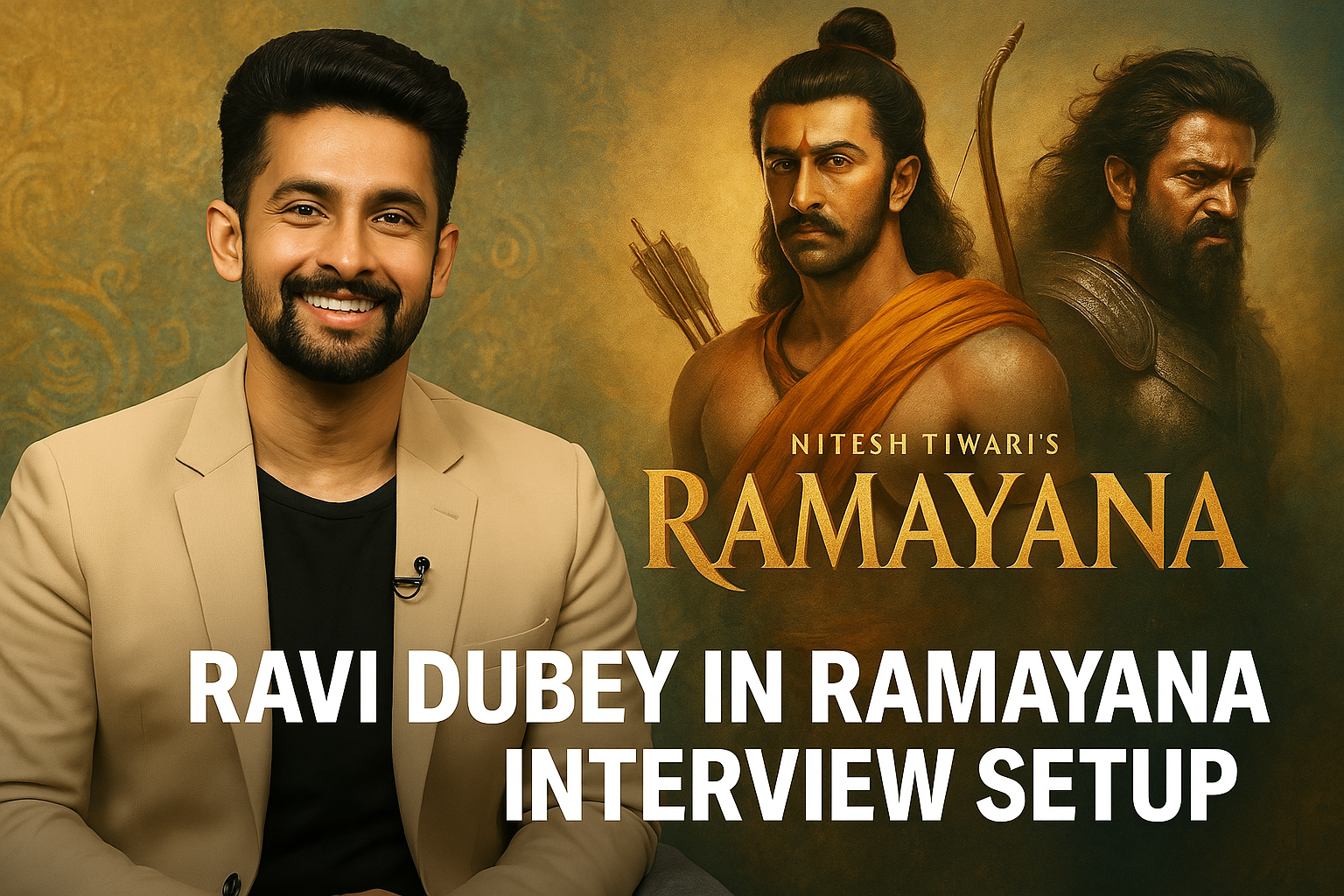
Ravi Dubey expresses admiration for Nitesh Tiwari’s Ramayana teaser starring Ranbir Kapoor and Yash. Powerful VFX and Sai Pallavi’s grace leave netizens mesmerised.
Table of Contents
Introduction
The Indian film industry recently witnessed a significant development when actor and producer Ravi Dubey publicly shared his response to the teaser of director Nitesh Tiwari’s upcoming mythological film, Ramayana. The teaser, which features Ranbir Kapoor as Lord Ram and Yash as Ravana, has generated substantial discussion across social media platforms. This article provides a comprehensive examination of the teaser release, industry reactions, cast details, production information, and the project’s potential impact on Indian cinema.
The Ramayana adaptation represents a major investment in mythological storytelling, with visual effects produced by DNEG under the leadership of Namit Malhotra. The project aims to present the ancient epic through contemporary filmmaking techniques while maintaining respect for the source material. This analysis explores the various aspects of the production and its reception within the entertainment industry.
Understanding Ravi Dubey’s Position in the Entertainment Industry
Television and Digital Content Career
Ravi Dubey has established himself as a recognizable figure in Indian television over the past two decades. His career includes notable performances in several television series that have achieved commercial success. The actor gained prominence through his role in “Jamai Raja,” which aired between 2014 and 2017 on Zee TV.
His subsequent work includes the web series “Matsya Kaand,” released on MX Player in 2021. The thriller series showcased his range as a performer in the digital content space. Dubey has consistently worked across both television and streaming platforms, maintaining visibility in the evolving entertainment landscape.
Production Ventures and Industry Standing
Beyond acting, Dubey has expanded into production through his company Dreamiyata Entertainment, co-founded with his wife Sargun Mehta. The production house has developed content for various platforms, including television and digital streaming services. This dual role as actor and producer provides him with a comprehensive understanding of the entertainment industry’s creative and business aspects.
His professional experience spans multiple facets of content creation, from performance to production oversight. This background informs his perspective when evaluating other projects within the industry. His public responses to films and shows are often observed by industry professionals and audiences alike.
The Ramayana Teaser Release: Timeline and Distribution
Official Launch Details
The teaser for Nitesh Tiwari’s Ramayana was released through the official Instagram account (@worldoframayana) in September 2025. The post included footage from the film along with a caption identifying the principal cast members. The release strategy utilized social media platforms to reach audiences directly, bypassing traditional theatrical trailer launches.
The timing of the release coincided with the festive season in India, potentially maximizing viewership among audiences with cultural connections to the Ramayana narrative. Social media distribution allows for immediate global reach and real-time audience engagement metrics. The teaser’s release generated substantial online activity within hours of posting.
Content and Visual Presentation
The teaser showcased several elements of the production, including character reveals, production design, and visual effects sequences. Footage included representations of the kingdom of Ayodhya, the island of Lanka, and the character Hanuman. The visual style combines traditional Indian artistic elements with digital filmmaking techniques.
Production design appears to reference classical depictions of the Ramayana while incorporating contemporary cinematic aesthetics. The color grading and cinematography aim to create a distinct visual identity for the film. The teaser’s length and content selection provide a preliminary indication of the production’s scale and approach to the source material.
Ravi Dubey’s Public Response: Analysis of His Statement
The Specific Comments Made
Ravi Dubey shared the Ramayana teaser on his Instagram stories, adding his personal commentary. His statement read: “This is goosebumps material. Ranbir as Ram radiates grace, and Yash as Ravana looks fierce. Hats off to Nitesh Tiwari and Namit Malhotra for envisioning this scale. Can’t wait for the release.”
The response highlights three main elements: his emotional reaction to the teaser, his assessment of the lead actors’ portrayals, and his acknowledgment of the filmmakers’ vision. His language indicates positive reception while specifically identifying aspects he found notable. The statement was made publicly, contributing to the broader industry conversation around the project.
Industry Context of Celebrity Endorsements
When established entertainment professionals publicly praise upcoming projects, these statements often receive attention from media outlets and audiences. Such endorsements can influence public perception and contribute to pre-release marketing momentum. However, the genuine impact on a film’s eventual reception depends on multiple factors including final product quality and audience response.
Dubey’s standing as both an actor and producer adds a layer of professional credibility to his assessment. His commentary reflects his understanding of production complexity and performance requirements. The public nature of his response contributes to the ongoing discourse surrounding the Ramayana adaptation.
Cast Analysis: Principal Performers and Their Roles
Ranbir Kapoor as Lord Ram
Ranbir Kapoor’s casting as Lord Ram represents a significant decision for the production. Kapoor has delivered commercially successful and critically recognized performances throughout his career, which began in 2007. His filmography includes diverse roles across genres, from romantic dramas to action-oriented narratives.
Notable films in his career include “Rockstar” (2011), “Barfi!” (2012), and “Sanju” (2018). More recently, he appeared in “Brahmastra: Part One – Shiva” (2022), which also featured mythological and fantastical elements. His experience with large-scale productions and character-driven performances positions him as a capable choice for portraying Ram.
The role requires conveying both the divine attributes and human qualities traditionally associated with the character. Kapoor’s performance will be scrutinized by audiences familiar with various interpretations of the Ramayana across different media. His approach to the character will significantly influence the film’s reception.
Yash as Ravana
Yash gained pan-Indian recognition through his performances in the “KGF” film series, with “KGF: Chapter 1” (2018) and “KGF: Chapter 2” (2022) achieving substantial box office success. The franchise established him as a performer capable of carrying large-scale action films with strong characterization.
His casting as Ravana brings star power from the Kannada film industry to this Hindi-language production. Ravana is traditionally portrayed as a complex antagonist with both formidable power and intellectual depth. Yash’s demonstrated ability to portray intense characters with layered motivations aligns with the requirements of this role.
The character’s presentation in the teaser suggests a performance emphasizing Ravana’s strength and authority. The final portrayal will need to balance the character’s antagonistic role with the nuanced characteristics present in the original epic.
Sai Pallavi as Sita
Sai Pallavi has built her career primarily in Telugu and Tamil cinema, with notable performances in films such as “Fidaa” (2017) and “Love Story” (2021). Her work has been recognized for naturalistic performances and strong character work. She brings experience from regional cinema to this pan-Indian production.
The role of Sita requires portraying strength, dignity, and emotional depth. Sai Pallavi’s previous performances demonstrate her capability for emotionally resonant characterizations. Her casting adds to the film’s multi-industry appeal, drawing audiences from various regional film markets.
The character’s significance within the Ramayana narrative places particular importance on the performance. Audience expectations for Sita’s portrayal are substantial, given the character’s cultural significance.
Director Nitesh Tiwari: Career and Approach
Previous Directorial Work
Nitesh Tiwari has directed several commercially successful films, including “Dangal” (2016) and “Chhichhore” (2019). “Dangal” became one of the highest-grossing Indian films domestically and internationally, earning approximately ₹2,000 crores globally. The film received positive critical reception for its storytelling and performances.
“Chhichhore” also achieved box office success and received the National Film Award for Best Feature Film in Hindi. Tiwari’s work demonstrates his ability to handle ensemble casts and emotionally driven narratives. His films often combine commercial elements with character development and thematic depth.
Approach to Mythological Storytelling
Directing a Ramayana adaptation presents distinct challenges compared to Tiwari’s previous projects. The source material carries significant cultural and religious importance for many audiences. Balancing respectful treatment of the narrative with cinematic interpretation requires careful consideration.
Tiwari’s previous work shows attention to character relationships and emotional arcs. Applying this approach to mythological characters will be central to the film’s effectiveness. The scale of production, including visual effects and multiple locations, represents an expansion from his earlier directorial efforts.
Production Company: DNEG and Namit Malhotra’s Role
DNEG’s Industry Standing
DNEG (formerly known as Double Negative) is a visual effects and animation company with operations in multiple countries. The company has contributed to numerous high-profile international productions, including films that have received Academy Awards for visual effects.
Their portfolio includes work on “Dune” (2021), “Tenet” (2020), “Interstellar” (2014), and “Blade Runner 2049” (2017). These projects demonstrate the company’s capability with complex visual effects sequences, environmental creation, and character-focused effects work. DNEG’s involvement in the Ramayana production brings established expertise to Indian mythological filmmaking.
Namit Malhotra’s Leadership and Vision
Namit Malhotra serves as Chairman and CEO of DNEG. His background includes experience in both Indian and international film production and visual effects. His involvement in the Ramayana project represents an effort to apply international production standards to Indian mythological content.
Malhotra’s position allows him to allocate significant technical resources to the production. His stated goal of elevating Indian cinema’s visual capabilities aligns with the ambitions of this project. The collaboration between DNEG’s technical expertise and Indian creative talent represents a notable development in the industry.
Visual Effects and Technical Production Elements
VFX Techniques and Implementation
The Ramayana production utilizes various visual effects technologies to realize its mythological world. Computer-generated imagery (CGI) creates environments such as ancient kingdoms and supernatural locations. Motion capture technology may be employed for character animation, particularly for non-human characters like Hanuman.
The teaser suggests substantial investment in environmental design and character effects. The quality and consistency of visual effects throughout the final film will significantly impact audience immersion. Integration between practical elements and digital effects requires careful coordination during production and post-production.
Technical Specifications and Format
The production is reportedly being completed in 4K resolution with high dynamic range (HDR) color grading. Audio production includes Dolby Atmos surround sound design for theatrical presentations. These technical specifications align with contemporary premium cinema releases.
The use of high-resolution capture and finishing allows for presentation in various theatrical formats, including IMAX. Technical quality serves both the immediate theatrical experience and future distribution through home entertainment platforms. Investment in these technical elements reflects the production’s scale and distribution ambitions.
Comparative Context: Previous Ramayana Adaptations
Historical Film and Television Adaptations
The Ramayana has been adapted numerous times across Indian media. Ramanand Sagar’s television series, which aired from 1987 to 1988, remains the most widely viewed interpretation. The series achieved exceptional viewership numbers and set standards for televised mythological content.
Film adaptations have occurred sporadically, with varying degrees of commercial and critical success. Regional cinema has produced multiple Ramayana-based films over decades. Each adaptation reflects the production capabilities and cultural context of its time.
Recent Mythological Film Projects
The 2023 film “Adipursh,” directed by Om Raut, attempted a contemporary adaptation of the Ramayana with Prabhas in the lead role. The film received criticism for its visual effects quality and dialogue choices. Its mixed reception highlighted the challenges of adapting mythological material for modern audiences.
The contrast between “Adipursh’s” reception and the initial response to Nitesh Tiwari’s teaser demonstrates varying audience expectations. Lessons from previous adaptations inform both filmmaker approaches and audience anticipation. The Ramayana’s cultural significance creates heightened scrutiny for any new interpretation.
Industry Reactions Beyond Ravi Dubey
Other Celebrity Responses
Beyond Ravi Dubey’s statement, various entertainment industry figures have commented on the Ramayana teaser through social media. These responses range from brief positive remarks to more detailed assessments. The collective industry response contributes to the project’s visibility and perceived legitimacy.
Celebrity endorsements and reactions often generate secondary media coverage. Entertainment news outlets report on these responses, extending the teaser’s reach. The pattern of industry support suggests confidence in the project’s approach and execution.
Film Critic and Media Analysis
Entertainment journalists and film critics have provided preliminary assessments based on the teaser. Analysis focuses on visual quality, casting choices, and the production’s approach to the source material. Professional criticism at this stage remains speculative, as the teaser provides limited narrative information.
Media coverage has compared the teaser favorably to previous mythological film attempts. The discussion emphasizes the apparent production values and star power. Comprehensive critical evaluation will only be possible upon the film’s release.
Audience Reception and Social Media Discourse
Initial Public Response Metrics
The Ramayana teaser generated substantial engagement on social media platforms following its release. View counts, shares, and comments indicated significant public interest. Audience reactions expressed both excitement and cautious optimism based on previous mythological film experiences.
Social media discourse includes discussions of casting appropriateness, visual effects quality, and expectations for the narrative approach. The teaser’s presentation prompted comparisons with other Indian and international fantasy films. Public reception at this stage influences marketing strategies and release planning.
Fan Community Expectations
Communities of fans interested in mythological content have expressed specific expectations for the adaptation. Discussions address representation of key events, character portrayals, and fidelity to traditional narratives. These communities will significantly influence word-of-mouth reception following release.
The diversity of audience expectations reflects varying levels of familiarity with the Ramayana and different regional interpretations. Meeting these diverse expectations presents a challenge for the filmmakers. The production’s success will partially depend on satisfying core audiences while appealing to broader demographics.
Cultural and Religious Considerations
Sensitivity in Mythological Adaptation
Adapting religious narratives for cinema requires awareness of cultural sensitivities and religious sentiments. The Ramayana holds particular significance in Hinduism and Indian cultural heritage. Filmmakers must balance creative interpretation with respectful representation.
Previous controversial adaptations have faced public criticism and, in some cases, calls for boycotts. These precedents inform the cautious approach visible in the Ramayana production’s public statements. Consultation with religious scholars and cultural experts often occurs during such productions.
Regional Variations in Narrative Interpretation
The Ramayana exists in multiple versions across different regions of India and Southeast Asia. Valmiki’s Sanskrit text is considered the original, but regional retellings include variations in events and character emphasis. The film’s approach to these variations will determine its reception in different markets.
Choosing which version to follow or how to synthesize multiple traditions presents both creative opportunities and challenges. The production’s decisions regarding narrative details will be scrutinized by audiences familiar with specific regional interpretations.
Production Timeline and Release Planning
Current Status and Completion Schedule
As of November 2025, the Ramayana production is in various stages of filming and post-production. Visual effects work typically requires extensive time for completion, particularly for effects-heavy mythological content. The production schedule must account for both principal photography and extended post-production periods.
Industry sources suggest a potential late 2025 or early 2026 release window, though official confirmation remains pending. Release date announcements typically occur closer to completion to ensure adequate marketing lead time. The extended production timeline reflects the project’s scale and technical complexity.
Distribution Strategy and Market Approach
The film is planned for multi-language release across major Indian languages, including Hindi, Tamil, Telugu, Kannada, and Malayalam. This pan-Indian approach aims to maximize box office potential across different regional markets. Simultaneous release in multiple languages requires coordinated dubbing and marketing efforts.
International distribution is anticipated for markets with significant Indian diaspora populations, including North America, the United Kingdom, and Gulf countries. Premium format presentations in IMAX and other large-format theaters are expected. The distribution strategy reflects contemporary practices for major Indian film releases.
Box Office Expectations and Commercial Projections
Budget and Investment Scale
While exact budget figures have not been officially disclosed, industry estimates suggest the Ramayana production represents one of the most expensive Indian film projects. Visual effects costs, star salaries, and production scale contribute to substantial investment. The budget level positions the film among India’s most ambitious cinematic ventures.
High production budgets create corresponding pressure for strong box office performance. The film will need to achieve significant theatrical revenue to be considered commercially successful. Producer confidence in market potential justifies the financial investment.
Comparative Box Office Analysis
Recent mythological and fantasy films provide context for potential performance. “Brahmastra: Part One – Shiva” (2022) earned approximately ₹430 crores globally. “Adipurush” (2023) opened strongly but faced declining collections, ultimately earning around ₹350 crores. The Ramayana’s performance will depend on critical reception, word-of-mouth, and sustained audience interest.
The film’s multi-language release strategy aims to capture audiences across different regions, potentially increasing total collection potential. Strong opening weekend numbers typically correlate with effective marketing and positive pre-release buzz. Long-term collection depends on audience satisfaction and critical response.
Potential Trilogy Structure and Future Installments
Multi-Film Narrative Planning
Industry reports suggest the Ramayana adaptation may be structured as a trilogy, covering different portions of the epic. This approach allows for more comprehensive storytelling while creating multiple release opportunities. Successful trilogies in Indian cinema remain relatively rare, with most franchises consisting of standalone sequels.
A trilogy structure requires careful planning of narrative arcs and character development across multiple films. The first installment’s success will determine whether subsequent parts proceed as planned. This approach has precedent in international fantasy cinema but represents an ambitious undertaking for Indian mythological content.
Investment and Planning Implications
Planning a trilogy requires substantial upfront investment and long-term commitment from production companies and distributors. Filming multiple installments simultaneously or in quick succession creates efficiency but increases initial financial risk. The decision to proceed with subsequent parts typically depends on the first film’s commercial and critical reception.
Multi-film planning affects cast availability, technical resource allocation, and marketing strategies. The success of this approach could influence future Indian cinema projects considering similar structures.
Impact on Indian Cinema’s Technical Capabilities
VFX Industry Development
The Ramayana production represents a significant project for Indian visual effects capabilities. Collaboration with DNEG brings international expertise while potentially training Indian VFX artists. The project’s scale may accelerate development of domestic VFX infrastructure.
Successful execution could establish new benchmarks for Indian cinema’s technical capabilities. This advancement may encourage more ambitious VFX-dependent projects in the future. The knowledge transfer from international to domestic studios benefits the broader Indian film industry.
Production Standard Evolution
Large-scale productions like Ramayana influence industry standards for filmmaking practices. Advanced technical requirements necessitate improvements in equipment, facilities, and skilled personnel. These developments benefit subsequent productions across various genres.
The project demonstrates the feasibility of achieving international production quality within the Indian film industry. This progress may attract international collaborations and investment in Indian productions.
Frequently Asked Questions
When is Nitesh Tiwari’s Ramayana expected to release?
The official release date for Nitesh Tiwari’s Ramayana has not been confirmed as of November 2025. Industry sources suggest a potential release in late 2025 or early 2026, though this remains speculative. The production timeline includes extensive post-production work, particularly visual effects completion. Official announcements regarding the release date are expected once the filmmakers are confident in the completion schedule.
Who are the main cast members in the Ramayana film?
The principal cast includes Ranbir Kapoor as Lord Ram, Yash as Ravana, and Sai Pallavi as Sita. Additional cast members have not been fully disclosed but are expected to include actors portraying other significant characters from the epic. The casting brings together performers from different regional film industries, creating pan-Indian appeal.
What production company is handling the visual effects?
DNEG, an international visual effects and animation company, is producing the visual effects for Ramayana under the leadership of Namit Malhotra, who serves as Chairman and CEO. DNEG has previously worked on numerous high-profile international films, including Academy Award-winning projects. The company’s involvement brings established expertise in complex visual effects to the production.
How does this Ramayana differ from the 2023 film Adipurush?
While both films adapt the Ramayana epic, they represent different creative approaches and production teams. Nitesh Tiwari’s Ramayana features a different cast, director, and visual effects team compared to Om Raut’s “Adipurush.” Initial teaser reception for Tiwari’s version has been notably more positive regarding visual quality and character presentation. The final films will differ in narrative approach, visual style, and production values.
What did Ravi Dubey specifically say about the Ramayana teaser?
Ravi Dubey described the teaser as “goosebumps material” and specifically praised Ranbir Kapoor’s portrayal of Ram as radiating grace, while noting that Yash’s Ravana appeared fierce. He acknowledged the vision of director Nitesh Tiwari and producer Namit Malhotra regarding the production’s scale. His statement was shared publicly on his Instagram stories in September 2025.
Will Ramayana be released in multiple languages?
The film is planned for release in multiple Indian languages, including Hindi, Tamil, Telugu, Kannada, and Malayalam. This multi-language approach aims to reach audiences across different regions of India. The production strategy follows contemporary practices for major Indian releases seeking pan-Indian box office performance. International markets with significant South Asian populations are also expected to receive theatrical releases.
Is this Ramayana planned as a single film or a series?
Industry reports suggest the Ramayana adaptation may be structured as a trilogy, allowing comprehensive coverage of the epic across multiple films. However, official confirmation of this structure has not been provided by the production team. The decision to proceed with subsequent installments would likely depend on the first film’s commercial and critical reception.
What technical formats will the film be released in?
The Ramayana is expected to be released in premium theatrical formats including IMAX and other large-format presentations. The production is being completed in 4K resolution with HDR color grading and Dolby Atmos sound design. These technical specifications allow for optimal presentation in modern cinema environments and future distribution through various platforms.
Conclusion
Ravi Dubey’s positive response to the Ramayana teaser reflects broader industry interest in Nitesh Tiwari’s mythological adaptation. The project represents a significant investment in Indian cinema’s capabilities, combining star power from multiple regional industries with international-level visual effects expertise from DNEG. The initial reception suggests audience anticipation for a respectful and technically accomplished adaptation of the epic.
The production’s success will depend on multiple factors, including final film quality, critical reception, and audience satisfaction with the narrative approach. The involvement of established performers like Ranbir Kapoor, Yash, and Sai Pallavi, combined with director Nitesh Tiwari’s proven track record, creates reasonable expectations for a commercially viable and critically respected film.
Beyond its immediate commercial prospects, the Ramayana project may influence future approaches to mythological storytelling in Indian cinema. The technical infrastructure developed during production and the lessons learned from this adaptation could benefit subsequent projects in the genre. As the release date approaches, continued industry and public attention will shape the film’s eventual reception and impact.
About the Author
Nueplanet is a dedicated entertainment industry analyst and content writer specializing in Indian cinema developments, box office analysis, and production trends. With extensive experience covering major film releases and industry developments, Nueplanet provides fact-based analysis and comprehensive coverage of entertainment news.
The commitment at NuePlanet.com centers on delivering accurate, verified information sourced from official production announcements, industry reports, and authoritative entertainment news agencies. All content undergoes careful verification to ensure readers receive reliable information about film projects, cast details, and industry developments.
Content published by Nueplanet emphasizes transparency, accuracy, and comprehensive coverage of Indian cinema’s evolving landscape. Updates are made regularly to reflect new developments and official announcements as they become available.
Published: July 3, 2025
Last Updated: July 3, 2025
Stay connected with NuePlanet.com for verified updates on upcoming Indian film releases, box office analysis, and comprehensive entertainment industry coverage.
Helpful Resources
Latest Posts
- HBSE Compartment Exam 2025: Admit Cards Released for Haryana Class 10 and 12 – Check Full Details
- Karnataka 2nd PUC Exam 3 Results 2025 Declared on karresults.nic.in
- JAC Result 2025 Declared: Check Class 11 Pass Percentage, Websites, and More
- National RailOne App: Indian Railways’ One-Stop Solution for Travellers
- HDB Financial Services IPO Allotment GMP: All You Need to Know
Tag
ravi dubey






Post Comment