








Tata Cars After GST: How Price Cuts Are Reshaping the Indian Automobile Market
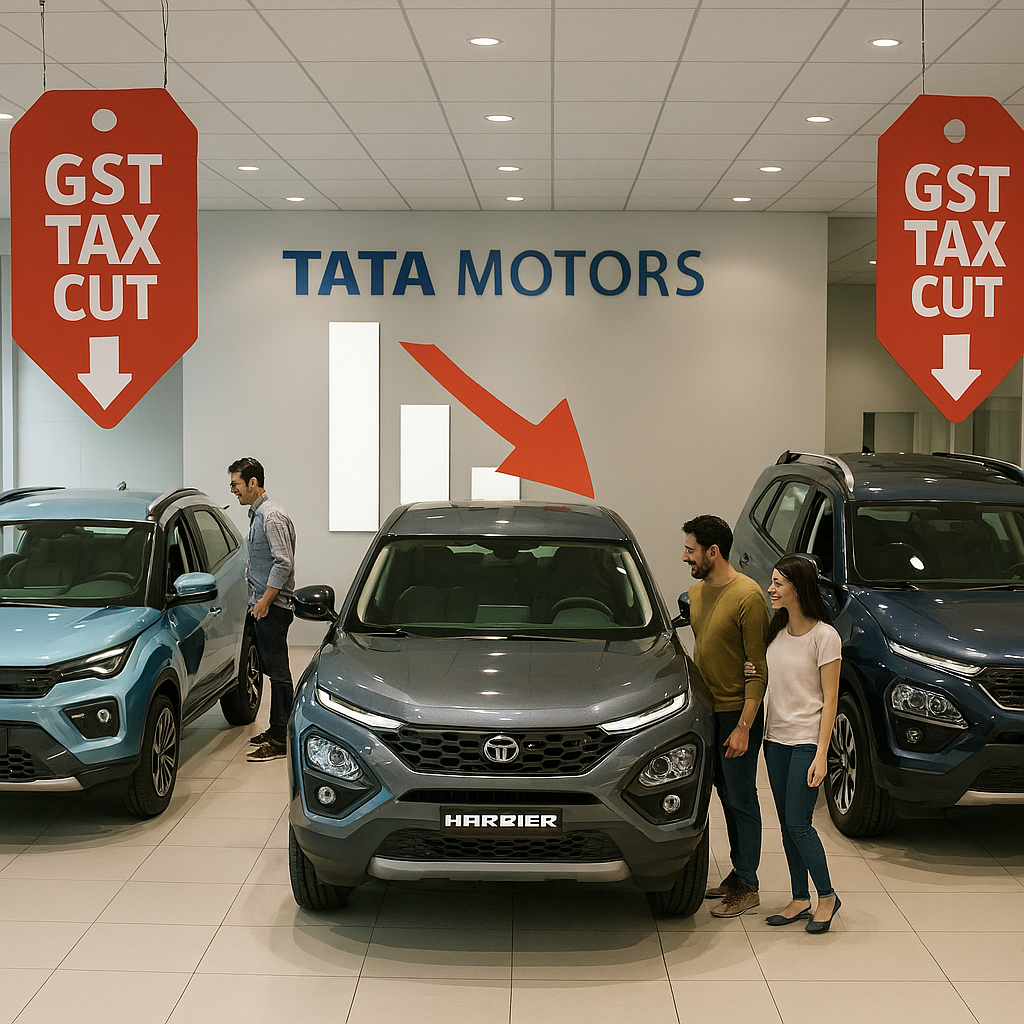
Tata cars after GST are becoming more affordable, with reductions across popular models. Here’s a detailed breakdown of how GST benefits car buyers and what it means for the auto industry.
Table of Contents
Overview of September 2025 Automotive GST Policy Revision
The Government of India implemented a significant revision to the Goods and Services Tax structure for passenger vehicles in September 2025, resulting in price reductions across multiple vehicle segments. This policy adjustment, approved during the 52nd GST Council meeting, represents a strategic fiscal intervention aimed at stimulating demand in the automotive sector.
The automotive industry contributes approximately 7.1% to India’s Gross Domestic Product and provides employment to over 37 million individuals through direct and indirect channels, according to data published by the Ministry of Heavy Industries. The timing of this tax structure modification coincides with the industry’s recovery phase following supply chain disruptions that affected production capacity in preceding quarters.
This comprehensive analysis examines the specific price adjustments implemented across major vehicle manufacturers, evaluates the economic rationale underlying the GST revision, and assesses the potential implications for consumers, manufacturers, and related industries. All data presented is sourced from official government communications, industry association reports, and verified regulatory filings.
Understanding India’s GST Framework for Automotive Sector
Historical Context of GST Implementation
The Goods and Services Tax system was introduced across India in July 2017, creating a unified tax structure that replaced multiple indirect taxes previously levied at central and state levels. This transformation aimed to simplify tax compliance, reduce cascading tax effects, and create a common national market.
Under the GST framework, passenger vehicles were categorized based on vehicle type, engine displacement, physical dimensions, and fuel specifications. The applicable tax rates ranged from 28% GST plus compensation cess, with total effective rates reaching 43% for certain luxury vehicle categories.
The compensation cess was originally designed as a temporary mechanism to compensate states for revenue losses during the GST transition period. However, this additional levy has been extended multiple times based on ongoing fiscal requirements and state government revenue considerations.
September 2025 GST Council Decision Framework
The 52nd GST Council meeting convened in August 2025, bringing together the Union Finance Minister and finance ministers from all Indian states and union territories. This constitutional body holds authority to recommend GST rate modifications, exemptions, and procedural changes.
According to official meeting minutes released by the GST Council Secretariat, the automotive sector GST revision received unanimous support from participating states. The decision incorporated recommendations from the Finance Ministry’s Economic Advisory Council, which conducted detailed impact assessments on potential demand stimulus effects.
The revision aimed to achieve three interconnected policy objectives. First, stimulating consumer expenditure in the manufacturing sector to support economic growth momentum. Second, improving domestic production competitiveness in both domestic and export markets. Third, supporting employment generation across automotive manufacturing and supplier networks.
Tax Rate Structure and Vehicle Classifications
The GST framework classifies vehicles into distinct categories with differentiated tax treatment:
Small Petrol Cars (engine capacity below 1200cc, length under 4 meters): Previously taxed at 28% GST plus 1% compensation cess, totaling 29% effective rate. The September 2025 revision reduced the compensation cess component.
Other Petrol Cars (exceeding small car specifications): Previously taxed at 28% GST plus 17% compensation cess, totaling 45% effective rate. The revision implemented selective reductions in this category.
Small Diesel Cars (engine capacity below 1500cc, length under 4 meters): Previously taxed at 28% GST plus 3% compensation cess, totaling 31% effective rate. The revision adjusted the cess component downward.
Other Diesel Cars and SUVs: Previously taxed at 28% GST plus 20% compensation cess, totaling 48% effective rate for certain categories. The September 2025 revision provided targeted reductions.
Electric Vehicles: Taxed at concessional 5% GST rate without compensation cess, maintaining existing preferential treatment to encourage adoption.
Detailed Price Impact Analysis Across Vehicle Segments
Entry-Level Hatchback Category
The entry-level hatchback segment represents approximately 35% of total passenger vehicle sales volume in India, according to statistics published by the Society of Indian Automobile Manufacturers (SIAM) for the financial year 2024-25. This segment serves as the primary entry point for first-time vehicle buyers and families upgrading from two-wheelers.
Tata Tiago Price Adjustments:
The Tata Tiago, positioned as an affordable entry-level hatchback, experienced the following price modifications:
- Previous ex-showroom price range: ₹5.65 lakh to ₹7.90 lakh
- Revised ex-showroom price range: ₹5.45 lakh to ₹7.65 lakh
- Absolute price reduction: ₹20,000 to ₹25,000 depending on variant
- Percentage reduction: Approximately 3.5% to 3.2% across variants
The Tiago competes primarily in the sub-₹8 lakh segment where price sensitivity significantly influences purchase decisions. The model offers petrol engine options with manual and automated manual transmission configurations, appealing to urban and semi-urban consumers seeking affordable personal mobility.
Maruti Suzuki Swift Price Adjustments:
The Maruti Suzuki Swift, a perennial bestseller in the Indian market, saw comparable price reductions:
- Previous ex-showroom price range: ₹6.00 lakh to ₹8.50 lakh
- Revised ex-showroom price range: ₹5.80 lakh to ₹8.25 lakh
- Absolute price reduction: ₹20,000 to ₹25,000 across trim levels
- Percentage reduction: Approximately 3.3% to 2.9%
The Swift has maintained strong market positioning through consistent product updates and Maruti Suzuki’s extensive service network spanning over 4,000 authorized service centers nationwide. The model appeals to younger buyers seeking stylish design combined with Maruti’s reputation for reliability and low maintenance costs.
Market Segment Analysis:
The entry-level hatchback category faces increasing competition from compact SUVs, which have gained consumer preference over the past five years. According to SIAM data, hatchback market share declined from 42% in FY 2019-20 to 35% in FY 2024-25, while compact SUVs grew from 18% to 28% during the same period.
The price reductions may help stabilize demand in this traditional segment by improving value proposition relative to two-wheelers and making four-wheel personal transportation more accessible to price-sensitive consumers, particularly in tier-2 and tier-3 cities where income levels are growing but remain below metropolitan averages.
Premium Hatchback Segment
Premium hatchbacks occupy the space between entry-level offerings and compact SUVs, typically featuring enhanced safety specifications, improved interior quality, and additional comfort features.
Tata Altroz Price Modifications:
- Previous ex-showroom range: ₹6.60 lakh to ₹10.70 lakh
- Revised ex-showroom range: ₹6.40 lakh to ₹10.45 lakh
- Absolute reduction: ₹20,000 to ₹25,000
- Percentage impact: Approximately 3.0% to 2.3%
The Altroz has gained market recognition for safety features, having achieved a 5-star Global NCAP safety rating. The model offers petrol, diesel, and premium iTurbo petrol variants, competing against established models from Maruti Suzuki, Hyundai, and other manufacturers.
Segment Competitive Dynamics:
Premium hatchbacks face structural challenges as consumer preferences shift toward SUV body styles. The perceived utility, commanding driving position, and lifestyle appeal of compact SUVs have attracted buyers who might have previously considered premium hatchbacks.
The GST-driven price reductions may help premium hatchbacks maintain relevance by emphasizing their advantages: better fuel efficiency than SUVs, easier urban maneuverability, and lower total ownership costs including insurance and maintenance.
Compact SUV Category Analysis
The compact SUV segment represents the fastest-growing category in the Indian passenger vehicle market, with annual growth rates exceeding 20% over the five-year period from FY 2019-20 to FY 2024-25 according to SIAM statistics.
Tata Nexon Price Revisions:
The Tata Nexon, available in petrol, diesel, and electric powertrains, experienced the following adjustments:
- Previous price range: ₹8.15 lakh to ₹15.50 lakh (spanning conventional and electric variants)
- Revised price range: ₹7.90 lakh to ₹15.20 lakh
- Absolute reduction: ₹25,000 to ₹30,000
- Percentage impact: Approximately 3.1% to 1.9%
The Nexon has achieved commercial success since its 2017 launch, with cumulative sales exceeding 450,000 units through August 2025. The model received a 5-star Global NCAP safety rating and offers India’s best-selling electric vehicle variant, the Nexon EV, which accounted for approximately 68% of electric passenger vehicle sales in FY 2024-25.
Maruti Suzuki Brezza Price Adjustments:
- Previous ex-showroom range: ₹8.50 lakh to ₹14.10 lakh
- Revised ex-showroom range: ₹8.25 lakh to ₹13.85 lakh
- Absolute reduction: ₹25,000 to ₹30,000
- Percentage impact: Approximately 2.9% to 2.1%
The Brezza, launched originally in 2016 and comprehensively updated in 2022, competes in the highly contested compact SUV segment. Maruti Suzuki’s extensive dealer network and brand equity in fuel efficiency provide competitive advantages in this category.
Segment Growth Drivers:
Compact SUVs appeal to Indian consumers through multiple attributes. Higher ground clearance addresses road condition concerns prevalent across many Indian cities and rural areas. The commanding seating position provides psychological comfort and improved visibility. Perceived versatility for both urban commuting and occasional long-distance travel creates broad appeal.
The 4-meter length constraint, which qualifies vehicles for small car tax benefits, has driven manufacturers to optimize interior packaging within compact dimensions. This has resulted in surprisingly spacious interiors that meet family requirements without incurring the tax penalties associated with longer vehicles.
Mid-Size SUV Category
Mid-size SUVs witnessed the highest absolute price reductions among all segments, ranging from ₹30,000 to ₹50,000 depending on variant specifications and manufacturer positioning.
Tata Harrier Price Revisions:
- Previous ex-showroom range: ₹15.20 lakh to ₹25.00 lakh
- Revised ex-showroom range: ₹14.90 lakh to ₹24.70 lakh
- Absolute reduction: ₹30,000 to ₹40,000
- Percentage impact: Approximately 2.0% to 1.6%
The Harrier, launched in 2019, represents Tata Motors’ entry into the premium mid-size SUV segment. Based on the OMEGARC (Optimal Modular Efficient Global Advanced) architecture derived from Land Rover technology, the Harrier offers refined driving dynamics and premium positioning.
Mahindra XUV700 Price Modifications:
- Previous ex-showroom range: ₹14.00 lakh to ₹26.00 lakh
- Revised ex-showroom range: ₹13.70 lakh to ₹25.70 lakh
- Absolute reduction: ₹30,000 to ₹40,000
- Percentage impact: Approximately 2.1% to 1.5%
The XUV700, launched in August 2021, has become a significant commercial success for Mahindra & Mahindra. The model offers advanced driver assistance systems (ADAS) including adaptive cruise control, autonomous emergency braking, and lane keep assist—features typically found in significantly more expensive vehicles.
Toyota Innova Crysta Adjustments:
- Previous ex-showroom range: ₹19.50 lakh to ₹31.00 lakh
- Revised ex-showroom range: ₹19.10 lakh to ₹30.60 lakh
- Absolute reduction: ₹40,000 to ₹50,000
- Percentage impact: Approximately 2.1% to 1.6%
The Innova Crysta occupies a unique position as a multi-purpose vehicle (MPV) with SUV-like pricing and strong brand equity built over two decades. Toyota’s reputation for reliability and high resale values supports premium pricing despite the MPV body style.
Segment Consumer Profile:
Mid-size SUVs appeal to upper-middle-class consumers seeking premium features, advanced safety technologies, and enhanced comfort for family usage. This segment has grown substantially as Indian household incomes have risen, creating demand for vehicles offering more space, features, and prestige than compact offerings.
The absolute price reductions of ₹30,000 to ₹50,000 represent meaningful savings that may enable consumers to access higher-specification variants within their original budget constraints, effectively upgrading feature content without additional expenditure.
Three-Row SUV Segment
Tata Safari Price Modifications:
- Previous ex-showroom range: ₹16.20 lakh to ₹27.30 lakh
- Revised ex-showroom range: ₹15.90 lakh to ₹27.00 lakh
- Absolute reduction: ₹30,000 to ₹40,000
- Percentage impact: Approximately 1.9% to 1.5%
The Safari, relaunched in 2021 after a hiatus, shares its platform with the Harrier but adds a third seating row. The model targets families requiring seven-seater capacity while preferring SUV styling over traditional MPV designs.
Three-row SUVs occupy a specialized niche appealing to larger families, extended families traveling together, and consumers who value occasional seven-passenger capacity even if regularly transporting fewer occupants. The segment competes against traditional MPVs, which offer more efficient packaging but less fashionable styling.
Mid-Size Sedan Category
Volkswagen Virtus Price Revisions:
- Previous ex-showroom range: ₹11.50 lakh to ₹18.70 lakh
- Revised ex-showroom range: ₹11.20 lakh to ₹18.40 lakh
- Absolute reduction: ₹30,000 to ₹40,000
- Percentage impact: Approximately 2.6% to 2.1%
The Virtus, launched in 2022, represents Volkswagen’s offering in the declining sedan segment. The model emphasizes German engineering, build quality, and driving dynamics to differentiate from mass-market competitors.
Sedan Segment Structural Decline:
The sedan category has experienced sustained market share erosion over the past decade. According to industry data compiled by SIAM, sedan market share declined from approximately 24% of passenger vehicle sales in FY 2014-15 to just 12% in FY 2024-25.
This structural shift reflects changing consumer preferences favoring SUV body styles, perceived as offering better value, practicality, and lifestyle appeal. Sedans maintain relevance primarily among consumers prioritizing driving dynamics, fuel efficiency, or who prefer traditional three-box automotive design.
The GST-driven price reductions may help stabilize sedan demand by improving value proposition, though long-term structural preferences appear unlikely to reverse absent significant product innovation or dramatic price differentiation.
Economic Rationale Behind GST Automotive Revision
Demand Stimulus Through Fiscal Policy
The automotive sector exhibits substantial economic multiplier effects, making it an efficient target for demand stimulus policies. Each vehicle sale generates secondary economic activity across multiple sectors including automotive finance, insurance, fuel retail, maintenance services, and accessory manufacturing.
Economic modeling by the Reserve Bank of India estimates the automotive sector’s multiplier effect at approximately 2.8, meaning each rupee of automotive sales generates ₹2.80 in total economic activity through these interconnected channels. This multiplier effect justifies fiscal interventions that may result in near-term tax revenue reductions but generate broader economic benefits.
The timing of the September 2025 GST revision coincides with government efforts to sustain economic growth momentum following global uncertainty in 2024. India’s GDP growth rate moderated to approximately 6.8% in FY 2024-25 from 7.2% in the previous fiscal year, according to Ministry of Statistics data. Stimulating domestic demand through automotive sector support aligns with broader fiscal policy objectives.
Manufacturing Sector Employment Support
India’s automotive manufacturing sector provides direct employment to approximately 5 million individuals in assembly operations, with an additional 32 million employed across supplier networks, according to data published by the Automotive Component Manufacturers Association of India (ACMA).
The sector’s employment intensity makes it strategically important for job creation, particularly for semi-skilled and skilled workers. Price reductions that stimulate vehicle demand help maintain production levels and support employment stability across manufacturing facilities concentrated in states including Tamil Nadu, Maharashtra, Gujarat, Haryana, and Uttar Pradesh.
The automotive supply chain extends to over 50,000 component manufacturing units ranging from large integrated suppliers to small and medium enterprises producing specialized components. Sustained automotive demand supports this extensive network, with employment effects extending to rural and semi-urban areas where many Tier-2 and Tier-3 suppliers operate.
Export Competitiveness Enhancement
India’s automotive exports have grown substantially over the past decade, reaching $6.7 billion in passenger vehicle exports during FY 2024-25, representing 8% growth over the previous fiscal year according to Ministry of Commerce data.
Domestic cost reductions improve pricing competitiveness for Indian manufacturers in export markets, particularly in price-sensitive emerging economies across Africa, Latin America, and Southeast Asia. Lower production costs resulting from reduced tax burdens on domestic sales can support more aggressive export pricing strategies.
Several Indian manufacturers, including Maruti Suzuki, Hyundai Motor India, and Tata Motors, have established India as export hubs for specific models or variants serving global markets. Improving domestic demand through tax reductions helps these manufacturers achieve higher production volumes, enabling economies of scale that benefit both domestic and export sales.
Rural Market Penetration Strategy
Approximately 67% of India’s population resides in rural areas according to 2021 Census data, yet vehicle penetration rates remain significantly below urban levels. Census data indicates vehicle ownership of 21 vehicles per 1,000 persons in rural areas compared to 87 per 1,000 in urban regions.
This substantial penetration gap represents both a challenge and an opportunity for automotive manufacturers. Rural incomes have grown substantially over the past decade through agricultural prosperity, government income support programs, and rural infrastructure development. However, vehicle affordability remains a barrier to four-wheel adoption.
The GST-driven price reductions help address this affordability barrier, potentially accelerating rural motorization trends. Rural consumers typically prioritize value, durability, and low ownership costs—characteristics that favor Indian manufacturers with extensive service networks and reputation for affordable maintenance.
Manufacturer Strategic Positioning and Market Response
Tata Motors Growth Trajectory
Tata Motors has experienced remarkable growth momentum in passenger vehicles over the past three years, transforming from a primarily commercial vehicle manufacturer to a comprehensive passenger vehicle competitor.
Sales Performance Analysis:
According to company disclosures to stock exchanges and annual reports:
- FY 2021-22 passenger vehicle sales: 261,631 units
- FY 2022-23 passenger vehicle sales: 369,607 units (41.3% year-over-year growth)
- FY 2023-24 passenger vehicle sales: 513,902 units (39.0% year-over-year growth)
- FY 2024-25 passenger vehicle sales: 574,423 units (11.8% year-over-year growth)
This represents compound annual growth of 30.2% over the three-year period from FY 2021-22 to FY 2024-25, significantly outpacing overall industry growth rates.
Product Portfolio Strength:
Tata Motors’ passenger vehicle success stems from comprehensive portfolio expansion across multiple segments. The company now offers competitive products in entry hatchbacks (Tiago), premium hatchbacks (Altroz), compact SUVs (Nexon), mid-size SUVs (Harrier), three-row SUVs (Safari), and electric vehicles (Nexon EV, Tiago EV, Punch EV).
The emphasis on safety engineering, evidenced by multiple Global NCAP 5-star ratings across the portfolio, has strengthened brand perception and attracted safety-conscious consumers. This focus on safety certification differentiates Tata from several competitors who have not pursued similar third-party validation.
Financial Performance Indicators:
Tata Motors’ passenger vehicle division reported operating margins of 6.7% in Q1 FY 2025-26 according to quarterly earnings disclosures. This represents significant improvement from negative margins three years prior, demonstrating the division’s transformation from loss-making operations to profitable growth.
The GST reduction strengthens Tata’s competitive position by improving affordability across its entire portfolio while the company maintains positive momentum in market share gains, currently standing at approximately 13.8% of the passenger vehicle market as of September 2025.
Maruti Suzuki Market Leadership Dynamics
Maruti Suzuki maintains market leadership position with approximately 41% market share in the passenger vehicle segment as of September 2025, according to SIAM sales data. However, this represents a decline from historical peaks above 50% maintained through the 2000s and early 2010s.
Market Share Evolution:
- FY 2014-15: Approximately 47% market share
- FY 2018-19: Approximately 51% market share (peak)
- FY 2022-23: Approximately 43% market share
- FY 2024-25: Approximately 41% market share
The gradual market share erosion reflects intensifying competition, particularly in the SUV segment where Maruti historically lacked strong offerings. The company has responded with new product launches including the Brezza, Grand Vitara, and updated versions of established models.
Competitive Advantages:
Maruti Suzuki maintains substantial competitive advantages including:
- Extensive service network: Over 4,000 service centers providing nationwide coverage
- Brand equity in fuel efficiency: Decades of reputation for economical operation
- Dealer network: Approximately 3,200 sales outlets ensuring market accessibility
- Resale value: Strong used car valuations maintaining total ownership economics
The company sold 1.76 million passenger vehicles in FY 2024-25, representing modest growth over previous years. The GST reduction affects Maruti’s predominantly volume-focused strategy, potentially supporting sales growth across its entry-level and mid-range portfolio.
Mahindra & Mahindra SUV Specialization
Mahindra & Mahindra has strategically focused on the SUV and utility vehicle segments, where the company maintains strong brand heritage and consumer recognition.
Sales Performance:
The company sold approximately 358,000 passenger vehicles in FY 2024-25, with SUVs accounting for over 95% of passenger vehicle sales according to annual report disclosures. This represents year-over-year growth of approximately 19%, outpacing overall industry growth rates.
Product Portfolio Focus:
Mahindra’s passenger vehicle portfolio concentrates on SUV offerings:
- Compact SUVs: XUV 3XO (formerly XUV300)
- Mid-size SUVs: XUV700, Scorpio-N, Scorpio Classic
- Full-size SUVs: Thar (lifestyle off-road vehicle)
The XUV700, launched in August 2021, has become a significant volume driver with monthly sales frequently exceeding 10,000 units. The model’s advanced driver assistance systems and competitive pricing have disrupted established segment dynamics.
Strategic Positioning:
Mahindra’s focused SUV strategy aligns with consumer preference trends favoring utility vehicles over sedans and hatchbacks. The company’s decades-long presence in utility vehicles provides brand credibility and engineering expertise that supports product development.
The GST reduction benefits Mahindra’s entire product range, with particularly significant absolute savings in the mid-size SUV category where the company competes most aggressively. Improved affordability may accelerate Mahindra’s market share gains in passenger vehicles.
International Manufacturers Market Approach
International automotive brands including Volkswagen, Toyota, Hyundai, and Kia have established significant manufacturing presence in India, treating the market as both a major sales opportunity and potential export hub.
Hyundai Motor India:
Hyundai maintains approximately 14.6% passenger vehicle market share as India’s second-largest manufacturer by volume. The company sold approximately 610,000 units in FY 2024-25 according to SIAM data.
Hyundai’s strategy emphasizes design differentiation, feature content, and brand positioning slightly above mass-market competitors. The company maintains strong presence across segments from entry hatchbacks (i10 range) through compact SUVs (Venue, Creta) to three-row SUVs (Alcazar).
Toyota Kirloskar Motor:
Toyota operates in India through a joint venture structure, focusing on premium segments where the company’s global brand reputation commands pricing power. The Innova Crysta represents a unique market position with minimal direct competition.
Toyota has recently expanded into mass-market segments through a partnership with Maruti Suzuki, jointly developing and rebadging models to leverage both companies’ strengths.
Volkswagen Group:
The Volkswagen Group operates through both the Volkswagen and Skoda brands, focusing on premium positioning that emphasizes German engineering and safety. Market share remains relatively modest at approximately 2-3%, though the company has launched new products aimed at volume expansion.
The GST reduction helps international brands partially offset perceived premium pricing, potentially expanding accessible market segments and improving competitive positioning against domestic manufacturers.
Consumer Financial Impact and Total Ownership Cost
Automotive Loan Financing Dynamics
Approximately 78% of passenger vehicle purchases in India involve loan financing, according to banking sector statistics published by the Reserve Bank of India. This high financing penetration makes loan economics crucial to affordability considerations.
Loan Structure Characteristics:
Typical automotive loans in India feature:
- Loan tenures: 5 to 7 years (60 to 84 months) most common
- Interest rates: 9.0% to 11.5% per annum depending on lender, borrower credit profile, and vehicle category
- Down payment requirements: 10% to 25% of vehicle on-road price
- Processing fees: 0.5% to 1.0% of loan amount
EMI Impact Calculation:
For a vehicle experiencing a ₹30,000 ex-showroom price reduction, the financial impact extends beyond the immediate saving:
Example financing scenario:
- Price reduction: ₹30,000
- Loan tenure: 7 years (84 months)
- Interest rate: 9.5% per annum
- Monthly EMI reduction: Approximately ₹488
- Total interest savings over loan tenure: Approximately ₹10,962
These calculations demonstrate that the ₹30,000 immediate price reduction generates additional savings of approximately ₹11,000 through reduced interest payments over the loan tenure. The total financial benefit approaches ₹41,000 when combining direct price reduction with financing cost savings.
For consumers financing vehicle purchases, the EMI reduction of approximately ₹500 monthly improves affordability significantly, potentially enabling upgrades to higher-specification variants or making vehicle ownership accessible to households with tighter monthly budgets.
Motor Insurance Premium Implications
Motor vehicle insurance premiums for comprehensive coverage are calculated as percentages of the vehicle’s Insured Declared Value (IDV), which corresponds closely to the vehicle’s purchase price in the first year and depreciates annually thereafter.
Insurance Cost Structure:
Comprehensive motor insurance premiums typically comprise:
- Base premium: Percentage of IDV (approximately 2.5% to 4.0% depending on vehicle value and city of registration)
- Add-on covers: Personal accident cover, zero depreciation, engine protection, etc.
- GST on insurance premium: 18% GST applicable on insurance premiums
Price Reduction Impact:
For a vehicle with ₹30,000 lower purchase price:
- IDV reduction: Approximately ₹30,000
- Annual comprehensive insurance premium reduction: Approximately ₹1,200 to ₹1,800 (first year)
- Cumulative insurance savings over 5-year ownership: Approximately ₹5,000 to ₹7,500
These insurance savings occur annually throughout the ownership period, creating cumulative benefits that extend well beyond the initial purchase transaction.
Road Tax and Registration Cost Impact
Road tax calculations vary substantially by state, with different states maintaining distinct tax structures and rate schedules. However, road tax is universally calculated as a percentage of the vehicle’s ex-showroom price, meaning lower purchase prices result in proportionally lower road tax obligations.
State-Level Road Tax Variations:
Representative road tax rates across major states:
- Maharashtra: 18% for petrol vehicles, 19% for diesel vehicles (up to ₹20 lakh price)
- Karnataka: 13% to 18% depending on vehicle price bracket
- Tamil Nadu: 20% lifetime tax for vehicles up to ₹6 lakh, graduated rates for higher prices
- Delhi: 10% for petrol vehicles, 10% for diesel vehicles
- Gujarat: 13% for vehicles up to ₹6 lakh, 18% for higher-priced vehicles
Road Tax Savings Example:
For a vehicle with ₹30,000 ex-showroom price reduction in a state with 15% road tax rate:
- Road tax savings: ₹4,500
- Registration fee savings: Approximately ₹500 to ₹1,000
- Total registration cost reduction: Approximately ₹5,000 to ₹5,500
These savings occur once at the time of vehicle registration but represent meaningful reductions in the initial cash outflow required for vehicle ownership.
Total Cost of Ownership Analysis
The GST reduction affects multiple components of total vehicle ownership cost over typical ownership periods of 5 to 7 years:
Cumulative Financial Benefits:
For a vehicle with ₹30,000 ex-showroom price reduction over a 7-year ownership period:
- Initial price reduction: ₹30,000
- Loan interest savings: ₹10,962
- Insurance premium savings (7 years): ₹7,500
- Road tax savings (one-time): ₹4,500
- Reduced depreciation in absolute terms: ₹12,000 to ₹15,000
Total financial benefit: Approximately ₹64,962 to ₹67,962
This analysis demonstrates that the initial ₹30,000 price reduction generates cumulative financial benefits exceeding ₹60,000 over a typical ownership period when accounting for all interconnected cost components.
Depreciation Considerations:
While lower purchase prices result in proportionally lower absolute depreciation amounts, percentage depreciation rates remain comparable. However, the lower starting point means smaller absolute value losses if the vehicle is sold after several years of ownership.
For consumers planning to own vehicles for extended periods before replacement, this depreciation benefit is less relevant than the financing and insurance savings that accumulate during the ownership period.
Market Response and Automotive Demand Projections
Industry Growth Forecast Revisions
The Society of Indian Automobile Manufacturers (SIAM) has projected passenger vehicle sales growth of 9% to 13% for FY 2025-26, with the GST reduction potentially supporting realization of growth rates toward the upper end of this forecast range.
Historical Growth Context:
- FY 2022-23: 25.7% year-over-year growth (recovery from pandemic impact)
- FY 2023-24: 8.4% year-over-year growth (normalization phase)
- FY 2024-25: 6.2% year-over-year growth (moderate expansion)
- FY 2025-26 (projected): 9% to 13% growth (stimulus-supported acceleration)
September 2025 sales data released by SIAM showed 8.2% year-over-year growth, partially attributable to festive season demand patterns and GST-driven price reductions creating urgency among consumers who had delayed purchase decisions.
Sales Volume Projections:
If FY 2025-26 achieves growth at the projected range’s midpoint (11%), total passenger vehicle sales would reach approximately 4.56 million units compared to 4.11 million units in FY 2024-25. This incremental volume of approximately 450,000 units would support substantial employment and economic activity across manufacturing and supplier networks.
Segment-Specific Demand Patterns
Entry-Level Segment Dynamics:
The entry-level hatchback segment is expected to demonstrate strong response from multiple consumer cohorts:
- First-time vehicle buyers: Individuals and families purchasing their initial four-wheel vehicle benefit most from absolute affordability improvements
- Two-wheeler upgrade customers: Households currently using motorcycles or scooters as primary transportation considering four-wheel upgrades
- Replacement demand: Existing vehicle owners replacing aging hatchbacks with current-generation models
Price elasticity of demand is highest in entry-level segments where consumer budgets face tighter constraints. Economic research on automotive demand suggests that a 3% price reduction in this segment could generate 5% to 7% volume increases, demonstrating elasticity coefficients above 1.5.
Compact SUV Segment Outlook:
The compact SUV category is projected to maintain robust growth momentum regardless of price adjustments, given strong structural preference trends. However, the GST reduction may accelerate growth rates by:
- Enabling consumers originally planning compact hatchback purchases to upgrade to compact SUVs within similar budgets
- Attracting consumers who had delayed purchases due to budget constraints
- Supporting premiumization as lower prices for base variants enable higher-specification variant purchases
Industry analysts project compact SUV segment growth of 18% to 22% for FY 2025-26, representing continued outperformance versus overall market growth rates.
Mid-Size SUV Segment Projections:
The mid-size SUV category, experiencing the highest absolute price reductions (₹30,000 to ₹50,000), may witness particularly strong demand response. This segment appeals to aspirational consumers for whom the price reduction represents meaningful improvement in accessibility.
Projected segment growth: 15% to 20% for FY 2025-26, driven by both price improvements and new product launches including updated variants of established models and entirely new competitive entries.
Sedan Segment Stabilization:
The sedan category has faced sustained market share erosion over the past decade as consumer preferences shifted toward SUV body styles. However, the GST reduction may help.
About the Author
Author: Business News Analysis Team of Nueplanet
Expertise: Automotive industry coverage, market analysis, and business reporting
Background: Specialized team with experience covering Indian automotive sector developments, company announcements, and market trends
Our team focuses on providing factual, verified business news analysis based on official sources including company press releases, regulatory filings, industry research reports, and government publications. We prioritize accuracy and transparency in reporting business developments without offering investment recommendations or promotional content.
Content Standards:
- All information verified against official sources
- Regular updates to reflect latest confirmed developments
- Clear distinction between confirmed facts and industry projections
- Commitment to neutral, balanced reporting
For Official Information:
Readers should verify all details with Maruti Suzuki authorized channels at marutisuzuki.com or contact authorized Arena dealerships. This content is for informational purposes and does not constitute purchase advice or official company communication.
Disclaimer: This analysis contains information from industry sources and analyst projections. Price estimates, specifications, and features are subject to official confirmation by Maruti Suzuki India Limited. Readers should verify all details through official company channels before making purchase decisions. This content does not constitute investment or purchase advice.
Helpful Resources
Latest Posts
Related Posts











Post Comment