








Rajasthan Public Service Commission (RPSC): Latest Updates, Challenges, and the Road Ahead
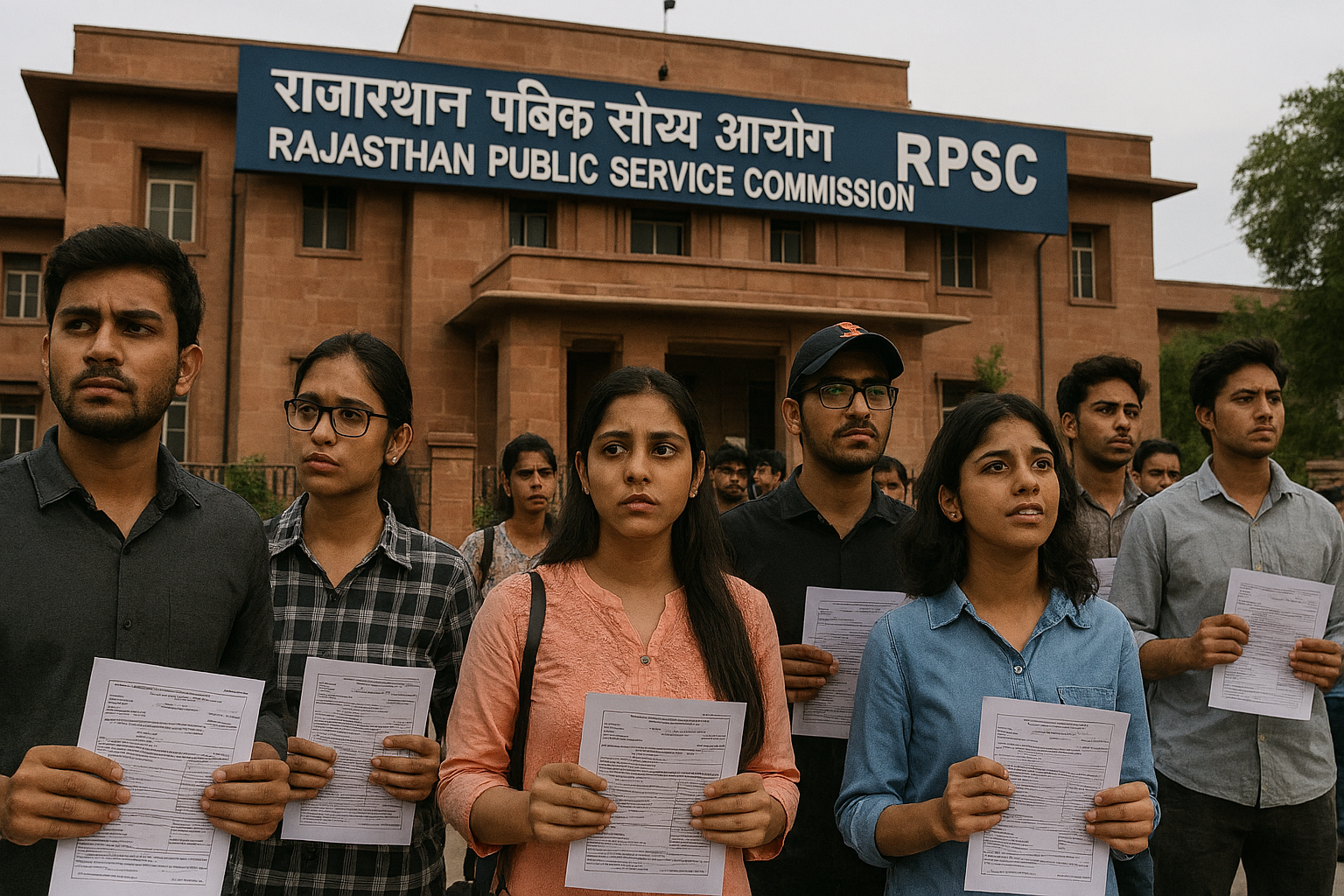
RPSC has recently made headlines after the resignation of its chairperson Manju Sharma and growing debates over exam irregularities. This blog explores the latest RPSC developments, its history, challenges, and future impact on students and governance.
Table of Contents
Understanding the Rajasthan Public Service Commission’s Current Transformation
The Rajasthan Public Service Commission (RPSC) has recently undergone significant institutional changes that have captured the attention of government job aspirants, policymakers, and governance experts across India. This comprehensive analysis examines the constitutional body’s current challenges, leadership transitions, and the broader implications for state-level recruitment processes in Rajasthan.
RPSC serves as a critical pillar in Rajasthan’s administrative infrastructure, conducting competitive examinations for various state government positions. The institution was established in 1949, coinciding with the formation of Rajasthan state, and has since been responsible for recruiting personnel across multiple departments including administrative services, education, police, and technical positions. The commission’s operations directly impact millions of aspirants annually who seek stable government employment opportunities.
Recent developments at RPSC have highlighted systemic challenges within the organization that require immediate attention and comprehensive reform. These issues extend beyond routine administrative matters, touching upon fundamental questions of transparency, efficiency, and fairness in public sector recruitment. Understanding these developments is essential for aspirants, stakeholders, and anyone interested in public administration and governance quality in India’s largest state by area.
The current situation at RPSC reflects broader challenges faced by state-level public service commissions across India as they navigate increasing candidate volumes, technological transitions, and heightened public expectations for transparency and accountability. This article provides an in-depth examination of recent events, their historical context, and potential pathways for institutional improvement.
Recent Leadership Changes at RPSC
Chairperson Manju Sharma’s Resignation
In a significant development, RPSC Chairperson Manju Sharma tendered her resignation amid mounting scrutiny of the commission’s examination management practices. The resignation occurred during a critical period when the organization faced multiple challenges related to recruitment process transparency and operational efficiency. This leadership transition represents more than a routine administrative change, as it coincides with several high-profile controversies that have affected candidate confidence and institutional credibility.
The timing of Sharma’s departure has raised questions about the immediate future of ongoing recruitment processes. Various departments across Rajasthan state government, including education, police services, and administrative positions, depend on RPSC for regular personnel recruitment. Any disruption in leadership during active recruitment cycles can potentially delay timelines and affect thousands of candidates who have invested significant time and resources in examination preparation.
The resignation has prompted discussions among stakeholders about the need for stable, reform-oriented leadership that can address systemic issues while maintaining operational continuity. Civil society organizations, student groups, and political parties have called for the appointment of a chairperson with a clear mandate for implementing transparency measures and technological upgrades. The selection of new leadership will likely influence RPSC’s trajectory for years to come.
Implications for Ongoing Recruitment Processes
Leadership transitions at constitutional bodies like RPSC typically create periods of uncertainty for ongoing administrative processes. Several major recruitment examinations were in various stages of completion when the chairperson’s resignation was announced. These include teacher selection processes, police recruitment examinations, and administrative service competitions that collectively affect tens of thousands of candidates across the state.
The administrative vacuum created by leadership changes can impact decision-making timelines, policy continuity, and implementation of pending reforms. However, it also presents an opportunity for comprehensive review of existing procedures and introduction of improved practices. The state government’s response in appointing interim leadership and providing clear direction will be crucial for minimizing disruption to scheduled recruitment activities.
Candidates preparing for upcoming RPSC examinations have expressed concerns about potential changes in examination patterns, syllabus modifications, or postponements that might result from the leadership transition. Official communications from the commission regarding continuity of scheduled examinations and adherence to published timelines will be essential for maintaining candidate confidence and reducing anxiety among aspirants.
The Sub-Inspector Recruitment Examination Controversy
Overview of the Controversy
The Sub-Inspector recruitment examination conducted by RPSC has become the focal point of recent institutional challenges. Multiple candidates filed petitions in the Rajasthan High Court alleging irregularities in the examination evaluation process, answer key publication, and result declaration procedures. These allegations have prompted judicial intervention and intensified public scrutiny of RPSC’s operational standards.
The controversy centers on several specific concerns raised by candidates. First, discrepancies were reported in the published answer keys, with candidates identifying potential errors in official responses to examination questions. Second, the evaluation methodology and scoring procedures faced criticism for lack of transparency and inadequate explanation of marking schemes. Third, the appeals process for challenging answer keys was deemed insufficient by many candidates who felt their grievances were not adequately addressed.
The scale of the Sub-Inspector examination amplified these concerns, as thousands of candidates competed for limited positions in Rajasthan Police. The competitive nature of the examination meant that even minor scoring discrepancies could significantly impact final rankings and selection outcomes. This situation has highlighted the need for more robust quality control mechanisms in RPSC’s examination processes.
Specific Issues Identified
Evaluation Inconsistencies: Candidates reported variations in how similar responses were evaluated across different examination sessions. The lack of clear, publicly available evaluation rubrics made it difficult for candidates to understand scoring decisions or effectively challenge results they believed were incorrect. This opacity in evaluation procedures has been identified as a critical area requiring reform.
Answer Key Discrepancies: When RPSC published preliminary answer keys, several subject matter experts and coaching institutions identified potential errors in official responses. The process for reviewing and correcting these errors was criticized as inadequate, with limited opportunity for substantive expert input. Some candidates alleged that even after challenges were raised, certain questionable answers remained unchanged in final keys without satisfactory explanation.
Timeline Management Problems: Significant delays occurred between examination conduct, answer key publication, and final result declaration. These extended timelines created uncertainty for candidates regarding their performance and future planning. The lack of clear communication about reasons for delays further eroded confidence in the commission’s operational efficiency.
Communication Gaps: Candidates reported difficulty accessing clear information about examination procedures, evaluation criteria, and appeals mechanisms. The absence of proactive communication from RPSC regarding process stages and expected timelines contributed to confusion and frustration among aspirants. This communication deficit has been identified as a systemic issue affecting multiple recruitment processes beyond the Sub-Inspector examination.
Legal Interventions and High Court Orders
The Rajasthan High Court has issued multiple orders related to the Sub-Inspector recruitment examination, demonstrating judicial recognition of the seriousness of candidate grievances. The court’s interventions have included directives for review of specific evaluation procedures, reconsideration of challenged answer keys, and provision of detailed explanations for scoring methodologies. These judicial orders reflect the court’s attempt to balance candidate rights with administrative autonomy while ensuring fairness in recruitment processes.
Legal experts have noted that the frequency of litigation related to RPSC examinations indicates deeper systemic issues that require comprehensive administrative reforms rather than case-by-case judicial intervention. The judicial process, while providing important recourse for aggrieved candidates, cannot substitute for robust internal quality control and transparency mechanisms within the commission itself.
The legal proceedings have also highlighted the need for clearer regulatory frameworks governing public service commission operations. Current rules and procedures, some dating back decades, may not adequately address contemporary challenges related to large-scale computerized testing, digital evaluation systems, and modern communication expectations.
Historical Context and Institutional Evolution
Foundation and Early Development (1949-1980)
RPSC was established in 1949 under Article 315 of the Indian Constitution, which mandates the creation of public service commissions at both central and state levels. The commission’s founding coincided with Rajasthan’s formation as India’s largest state through the integration of multiple princely states. This unique historical context created specific challenges related to geographical diversity, cultural heterogeneity, and administrative consolidation that influenced RPSC’s early development.
During its initial decades, RPSC focused on building basic administrative machinery for the newly formed state. The commission conducted examinations for essential government positions including district administration officers, teachers for government schools, and technical personnel for public works and agriculture departments. The candidate pools were relatively smaller, examination processes were predominantly paper-based, and evaluation procedures were more straightforward compared to contemporary standards.
The commission operated with limited technological resources, relying primarily on manual processes for application collection, examination conduct, and answer sheet evaluation. Despite these constraints, RPSC successfully fulfilled its constitutional mandate of ensuring merit-based recruitment while maintaining reasonable standards of transparency and fairness for that era.
Expansion Phase (1980-2010)
Rajasthan’s economic development and administrative modernization during this period created exponential growth in government employment requirements. New departments were established, existing ones expanded, and specialized technical services proliferated across sectors including healthcare, infrastructure development, information technology, and rural development programs. This expansion necessitated more diverse and sophisticated recruitment processes from RPSC.
The commission began conducting examinations for increasingly specialized positions requiring specific technical knowledge, professional qualifications, and skill assessments beyond traditional general knowledge and aptitude testing. The introduction of preliminary and main examination structures for prestigious positions like the Rajasthan Administrative Service (RAS) reflected the growing complexity of recruitment processes.
Candidate volumes increased dramatically during this period, growing from hundreds of applicants for typical positions to thousands, and eventually lakhs for popular recruitment opportunities. This exponential growth in scale challenged RPSC’s administrative capacity and infrastructure, revealing limitations in examination center availability, personnel resources, and evaluation capabilities.
Digital Transformation Era (2010-Present)
The transition toward computer-based examinations and online application systems has defined RPSC’s most recent evolutionary phase. Digital technologies promised solutions to many traditional challenges, including enhanced security, reduced manipulation possibilities, faster evaluation, and improved accessibility for candidates across Rajasthan’s vast geography. However, implementation has proven more complex than anticipated.
Initial attempts at computerization revealed gaps in technical infrastructure, particularly regarding internet connectivity in rural areas, adequate examination center availability, and backup systems for handling technical failures. The commission also faced challenges in developing internal technical expertise necessary for managing sophisticated digital examination systems and ensuring cybersecurity.
The COVID-19 pandemic accelerated digitalization requirements while simultaneously creating additional complications related to social distancing, examination center capacity, and candidate concerns about health safety. These pressures forced rapid adaptation of processes that ideally would have been implemented more gradually with comprehensive testing and refinement.
Systemic Factors Contributing to Current Challenges
Administrative Capacity Constraints
RPSC currently manages dozens of simultaneous recruitment processes annually, serving candidate populations measured in hundreds of thousands. This operational scale requires sophisticated project management capabilities, substantial personnel resources, and robust technological infrastructure. However, budget allocations and organizational development have not kept pace with this exponential growth in operational demands.
The commission’s staffing levels were designed for a different era with smaller candidate volumes and simpler processes. Current personnel must manage far more complex tasks including digital platform management, cybersecurity monitoring, large-scale logistics coordination, and sophisticated stakeholder communication. This capacity-demand mismatch manifests as process delays, quality control issues, and service delivery problems.
Infrastructure limitations extend beyond personnel to physical resources including secure examination centers, adequate storage for materials, modern communication systems, and technological platforms capable of handling peak loads during high-volume periods. Addressing these capacity constraints requires sustained investment and institutional development over multiple years.
Political and Social Pressure Dynamics
Government employment in Rajasthan carries exceptional social prestige and economic value, creating intense competition among candidates and generating significant political attention to recruitment processes. These pressures sometimes create tension between merit-based selection principles and various demands for expanded reservations, regional quotas, or other preferential policies.
Changes in state government leadership often result in policy modifications affecting recruitment priorities, examination patterns, or selection criteria. While democratic accountability requires government responsiveness to public concerns, excessive policy volatility can disrupt ongoing processes and create uncertainty for both RPSC operations and candidate preparation strategies.
Social movements and advocacy groups increasingly mobilize around recruitment issues, particularly when examinations are perceived as unfair or opportunities are seen as inadequate. While this activism can drive positive reforms, it also creates pressure for quick-fix responses that may not address underlying systemic issues requiring longer-term institutional development.
Technological Transition Challenges
The shift from paper-based to digital examination systems represents a fundamental transformation requiring comprehensive change management across multiple dimensions. Beyond acquiring hardware and software, successful digital transformation requires developing technical expertise among staff, establishing robust security protocols, creating backup systems for contingency situations, and building candidate confidence in new processes.
Cybersecurity concerns have become paramount as digital systems create new vulnerabilities including hacking possibilities, data breaches, and digital manipulation of examination materials. Protecting system integrity requires ongoing investment in security technologies, regular audits, and specialized personnel with expertise in digital security management.
The digital divide among candidate populations creates equity concerns, as aspirants from rural areas or economically disadvantaged backgrounds may have limited familiarity with computer-based testing environments. Ensuring fair access requires addressing both physical infrastructure gaps and digital literacy challenges through training programs and support systems.
Impact on Rajasthan’s Governance and Development
Administrative Capacity and Service Delivery
RPSC recruitment outcomes directly determine staffing levels and personnel quality across all Rajasthan government departments. Delays in recruitment processes create vacancies that compromise service delivery in critical areas including education, healthcare, law enforcement, and infrastructure development. These staffing gaps tangibly affect citizen welfare and government effectiveness in meeting public needs.
The quality of candidates selected through RPSC examinations influences long-term administrative culture and professional standards throughout the state government. Effective recruitment processes identify and select high-caliber individuals who contribute to innovative policy implementation, efficient program management, and responsive citizen services. Conversely, compromised recruitment can result in personnel who fail to meet professional standards expected for effective public administration.
Timely recruitment also affects departmental planning and budget utilization. Extended vacancies result in budget allocations remaining unutilized while planned programs and initiatives face implementation delays. This inefficiency represents both fiscal waste and missed opportunities for citizen service delivery and state development progress.
Educational System Impact
Teacher recruitment through RPSC significantly influences educational quality across Rajasthan’s extensive government school system. The state operates thousands of schools serving millions of students, with government teachers forming the backbone of instructional delivery. Delays or irregularities in teacher selection directly translate to classroom shortages that affect learning outcomes and educational achievement.
The commission’s role extends beyond basic teacher recruitment to include selection of educational administrators, curriculum specialists, and support personnel. Effective functioning across these recruitment areas is essential for maintaining educational system quality and ensuring that Rajasthan’s children receive adequate learning opportunities that prepare them for future economic participation and social mobility.
Educational quality has long-term implications for state development, as human capital development drives economic growth, social progress, and governance effectiveness. RPSC’s contribution to educational infrastructure, though often overlooked in immediate political discourse, represents a fundamental investment in Rajasthan’s future prosperity and competitive positioning.
Public Safety and Law Enforcement
Police recruitment through RPSC affects law and order maintenance throughout Rajasthan’s diverse geography, from urban centers to remote rural areas. Adequate police staffing is essential for crime prevention, traffic management, emergency response, and community safety. Recruitment delays create staffing gaps that compromise these essential public safety functions and can contribute to increased crime rates or slower emergency response times.
The quality of police personnel selected through RPSC examinations influences professional standards, community relations, and law enforcement effectiveness. Fair and transparent recruitment processes help ensure that police forces include qualified individuals with appropriate temperament, physical capabilities, and ethical standards necessary for responsible law enforcement duties.
Public confidence in law enforcement partly depends on perceptions of police professionalism and competence. Selection processes that are viewed as merit-based and fair contribute to institutional legitimacy, while controversies surrounding recruitment can undermine public trust in law enforcement institutions.
Economic Development and Social Mobility
RPSC serves as a primary vehicle for formal employment generation among educated youth across Rajasthan. Government positions offer competitive salaries, comprehensive benefits, and long-term career stability that support family economic security and enable social mobility. The multiplier effects of government employment extend throughout local economies through increased consumer spending, housing demand, and business activity.
For many families, particularly in rural areas or from economically disadvantaged backgrounds, government employment represents the most reliable pathway to middle-class status and economic security. RPSC recruitment processes therefore function as critical mechanisms for social mobility and economic inclusion across diverse community groups.
The economic value of government positions also drives substantial private investment in coaching institutes, study materials, and support services for examination preparation. This examination preparation economy itself generates employment and economic activity across Rajasthan’s cities and towns, creating an ecosystem dependent on regular, predictable recruitment cycles.
Institutional Credibility and Democratic Trust
RPSC’s effectiveness influences broader public trust in democratic institutions and government credibility. Transparent, efficient recruitment processes enhance citizen confidence in governmental fairness and competence, while controversies and inefficiencies erode trust and political legitimacy. This trust dimension extends beyond immediate recruitment concerns to affect public cooperation with government initiatives across multiple policy areas.
The commission’s operations also reflect broader governance quality and administrative capacity within Rajasthan state government. International agencies, potential investors, and federal government partners evaluate state-level institutional effectiveness when making decisions about resource allocation, program partnerships, and development initiatives. Strong institutional performance by bodies like RPSC contributes to positive perceptions of overall governance quality.
Young citizens’ experiences with RPSC recruitment processes shape their broader perceptions of government responsiveness, fairness, and competence. Negative experiences with examination irregularities or administrative inefficiency can generate cynicism about democratic institutions that persists throughout individuals’ lives and influences their civic engagement and political participation.
Strategic Reform Pathways for RPSC
Technology Integration and Digital Infrastructure
Comprehensive Digital Platform Development: Modern examination management requires integrated digital platforms that handle application processing, admit card generation, examination conduct, evaluation, and result publication through seamless technological systems. Cloud-based infrastructure provides scalability for handling peak loads during major examinations while distributed server architecture ensures reliability and resilience against technical failures.
Investment in cybersecurity infrastructure is essential for protecting examination integrity against hacking attempts, data breaches, and manipulation efforts. Multi-layered security protocols including encryption, access controls, intrusion detection systems, and regular security audits create robust protection for sensitive examination materials and candidate data.
Biometric authentication systems enhance examination center security by preventing impersonation and ensuring candidate identity verification. Integration with national databases like Aadhaar can streamline identity verification while maintaining privacy protections through appropriate data handling protocols.
Blockchain Technology for Security and Transparency: Blockchain-based systems offer potential solutions for question paper security, answer sheet management, and result verification through creation of immutable records that prevent tampering. Distributed ledger technology enables transparent audit trails that can be independently verified, building candidate confidence in process integrity.
Smart contracts can automate administrative procedures including application processing, fee collection, and result publication, reducing manual intervention opportunities while improving efficiency and consistency. These automated systems also generate comprehensive data logs that facilitate performance monitoring and quality assurance processes.
Implementation of blockchain technology requires careful planning, pilot testing, and phased deployment to ensure functionality and address technical challenges. Collaboration with technology experts, academic institutions, and other public service commissions implementing similar systems can accelerate successful adoption.
Advanced Analytics and Performance Monitoring: Data analytics capabilities enable comprehensive monitoring of examination processes, identification of operational bottlenecks, and evidence-based decision making for policy modifications. Predictive analytics can anticipate potential issues before they escalate, optimize resource allocation across examination cycles, and improve candidate experience through better service planning.
Performance dashboards provide real-time visibility into operational metrics including application processing times, examination center utilization, evaluation progress, and grievance resolution rates. These monitoring tools support proactive management and enable rapid response to emerging issues before they impact large candidate populations.
Analytics also facilitate research into examination effectiveness, question quality analysis, and continuous improvement of assessment methodologies. This data-driven approach to examination design and evaluation enhances measurement validity and ensures assessments effectively identify qualified candidates.
Organizational Reform and Capacity Building
Personnel Development Programs: Comprehensive training programs for RPSC staff should address technological competencies, examination security protocols, candidate service standards, and professional development opportunities. Regular training updates ensure personnel remain current with technological advances, regulatory changes, and best practice developments.
Specialized training tracks for different functional areas including technology management, security operations, evaluation systems, and stakeholder communication allow staff to develop deep expertise relevant to their specific responsibilities. This specialized knowledge enhances operational quality and supports institutional capability development.
Exchange programs with other state public service commissions and relevant institutions provide exposure to alternative approaches and innovative practices. These professional development opportunities build networks, facilitate knowledge sharing, and introduce fresh perspectives that stimulate organizational learning and adaptation.
Process Standardization and Documentation: Developing comprehensive standard operating procedures for all examination activities creates consistency, reduces error possibilities, and facilitates quality control across different recruitment processes and time periods. Documentation of procedures also supports training of new staff and enables systematic process improvement over time.
Quality assurance frameworks should include regular process audits, performance monitoring, stakeholder feedback collection, and structured continuous improvement mechanisms. These quality systems ensure adherence to established standards while identifying opportunities for enhancement and innovation.
Process documentation should be publicly available to appropriate extent, allowing candidates and stakeholders to understand procedures and requirements clearly. This transparency reduces confusion, manages expectations, and builds confidence in process integrity and fairness.
Organizational Structure Optimization: Reviewing RPSC’s organizational structure to ensure alignment with contemporary operational demands may identify needs for new specialized units, reorganization of responsibilities, or adjustment of reporting relationships. Functional specialization allows focused expertise development while appropriate coordination mechanisms ensure integrated operations.
Creation of dedicated units for technology management, security operations, stakeholder communication, and quality assurance acknowledges the increasing complexity and specialization required for modern public service commission operations. These specialized functions require sustained attention and expert leadership to perform effectively.
Clear definition of roles, responsibilities, and accountability structures throughout the organization supports effective performance management and ensures appropriate oversight of critical functions. Regular organizational reviews enable adaptation to evolving operational requirements and external environmental changes.
Transparency and Accountability Mechanisms
Independent Grievance Redressal System: Establishing autonomous grievance handling mechanisms with clear timelines, transparent procedures, and independent oversight creates accountability while providing candidates effective recourse for addressing concerns. Online grievance portals with tracking capabilities enable candidates to monitor complaint status throughout resolution processes.
Grievance data should be systematically analyzed to identify recurring issues requiring systemic solutions rather than individual case-by-case handling. This analytical approach transforms grievance systems from reactive complaint handling into proactive quality improvement tools that drive continuous enhancement of processes and services.
Independent ombudsman arrangements or oversight committees including external experts can provide additional assurance of fair grievance handling and protection against potential institutional biases. These independent mechanisms build stakeholder confidence in accessibility of justice and fairness of administrative processes.
Public Reporting and Communication: Regular public reporting on examination statistics, operational performance metrics, reform initiatives, and quality indicators demonstrates institutional commitment to transparency and accountability. Annual reports should provide comprehensive data on recruitment activities, challenges faced, improvements implemented, and future plans.
Proactive communication strategies including regular updates through multiple channels, clear explanation of policy changes, and educational content about examination procedures help candidates navigate processes effectively. Timely, accurate communication reduces anxiety, manages expectations, and minimizes confusion that often leads to complaints and disputes.
Social media platforms and modern communication technologies enable direct engagement with candidate communities, providing opportunities for two-way dialogue, feedback collection, and rapid response to emerging concerns. Effective use of these channels requires dedicated resources and clear communication protocols to maintain consistency and professionalism.
External Audits and Oversight: Regular external audits of RPSC operations by independent auditing bodies provide objective assessment of processes, identification of vulnerabilities, and recommendations for improvements. Technical audits of digital systems ensure security standards are maintained and vulnerabilities are addressed promptly.
Legislative oversight through appropriate government committees ensures democratic accountability and provides forums for stakeholder concerns to be raised and addressed. Regular reporting to legislative bodies maintains awareness of commission operations and challenges among elected representatives who can support necessary resource allocation and policy changes.
Civil society monitoring through engagement with academic institutions, professional associations, and advocacy organizations provides additional oversight while building broader stakeholder investment in institutional improvement. These partnerships can generate innovative solutions and build public support for reform initiatives.
Stakeholder Engagement and Collaboration
Multi-Stakeholder Advisory Mechanisms: Formal advisory structures including candidate representatives, subject matter experts, technology specialists, civil society organizations, and government department users provide diverse perspectives for policy development and reform implementation. Regular consultation processes ensure reform initiatives address actual needs while maintaining practical feasibility.
Advisory mechanisms should operate with clear terms of reference, regular meeting schedules, and transparent reporting on recommendations considered and actions taken. This structured approach ensures advisory inputs receive serious consideration while maintaining appropriate administrative autonomy for RPSC leadership.
Inclusive representation in advisory structures should reflect diversity of candidate populations, geographical regions, and examination types. This breadth ensures that policies and procedures consider varied circumstances and needs rather than optimizing for only particular groups or situations.
Inter-State Collaboration and Best Practice Sharing: Learning from successful public service commission operations in other states provides valuable insights for addressing common challenges while adapting proven solutions to Rajasthan’s specific context. Formal collaboration agreements or participation in national forums facilitate structured knowledge exchange and joint problem-solving.
Benchmarking exercises comparing RPSC performance against peer organizations identify performance gaps and highlight areas requiring priority attention. These comparisons also validate successful practices and build confidence in reform directions by demonstrating their effectiveness in comparable contexts.
Participation in professional associations and national-level policy discussions enables RPSC to influence broader regulatory frameworks and contribute to collective advancement of public service recruitment practices across India. This engagement positions RPSC as a thought leader rather than passive recipient of externally developed practices and policies.
Expert Commentary and Analysis
Governance experts emphasize that RPSC’s current challenges reflect broader transitions occurring across public administration as traditional bureaucratic structures adapt to digital technologies, heightened transparency expectations, and changing demographic patterns among both service recipients and government employees. Successfully navigating these transitions requires sustained commitment extending beyond individual leadership tenures.
Public administration scholars note that recruitment body effectiveness depends not only on internal processes but also on broader ecosystem factors including political stability, adequate resource allocation, supportive legislative frameworks, and constructive stakeholder engagement. Comprehensive reform therefore requires coordinated action across multiple institutions and actors rather than isolated changes within RPSC alone.
Technology experts caution that digital transformation success depends more on organizational change management and capacity building than on technology procurement itself. Sophisticated technological systems require corresponding organizational capabilities, cultural adaptations, and sustained maintenance investments to deliver anticipated benefits. Premature or poorly implemented digitalization can create new problems rather than solving existing ones.
Legal scholars emphasize the importance of clear regulatory frameworks that provide appropriate balance between administrative autonomy and accountability. Excessive judicial intervention in routine administrative matters indicates regulatory gaps requiring legislative attention. Updated legal frameworks should provide clear standards while allowing administrative flexibility necessary for responsive, efficient operations.
Future Outlook and Recommendations
Short-Term Priorities
Immediate actions should focus on stabilizing ongoing operations, restoring candidate confidence, and establishing foundations for longer-term reforms. Appointment of credible interim leadership with clear reform mandate signals commitment to addressing systemic issues. Transparent communication regarding ongoing recruitment timelines and procedures reduces uncertainty for affected candidates.
Quick wins through improved communication systems, streamlined grievance handling, and enhanced transparency in routine processes demonstrate commitment to improvement while building momentum for more substantial reforms. These visible improvements can restore stakeholder confidence even before comprehensive technological or organizational transformations are complete.
Resolution of pending legal cases through fair, transparent processes addresses immediate justice concerns while reducing backlog of disputes that consume institutional resources and attention. Negotiated settlements where appropriate can expedite resolution while maintaining substantive fairness for affected candidates.
Medium-Term Reform Implementation
Core technological infrastructure development should proceed systematically with appropriate pilot testing, phased deployment, and continuous evaluation. Rushing implementation without adequate preparation risks replicating existing problems in digital form rather than achieving genuine improvements. Comprehensive vendor management and ongoing technical support arrangements ensure system reliability and sustainability.
Organizational capacity building through training programs, process standardization, and structural adjustments requires sustained effort over multiple years. Change management approaches that engage staff in reform design and implementation build organizational ownership and reduce resistance to necessary changes.
Stakeholder engagement mechanisms should be formalized through clear structures, regular interactions, and transparent reporting on inputs received and actions taken. Building trust through consistent engagement creates partnerships that support reform implementation and provide ongoing feedback for continuous improvement.
Long-Term Institutional Development
Sustained excellence requires building institutional culture that values transparency, efficiency, merit-based selection, and continuous learning. Cultural transformation occurs gradually through consistent leadership messaging, alignment of incentive structures with desired values, and celebration of behaviors that exemplify institutional ideals.
Regular strategic planning processes should assess environmental changes, evaluate performance against objectives, and adjust priorities as circumstances evolve. This disciplined approach to institutional management ensures adaptation to changing conditions while maintaining focus on core mission accomplishment.
Investment in research and development capabilities enables RPSC to remain at forefront of recruitment best practices, contribute to broader field development, and build reputation as center of excellence for public service recruitment. This intellectual leadership enhances institutional prestige and attracts high-quality personnel to support operations.
Implications for Various Stakeholders
For Aspirants
Candidates preparing for RPSC examinations should maintain focus on comprehensive preparation while staying informed about procedural developments through official channels. Understanding examination patterns, syllabus requirements, and evaluation criteria remains essential regardless of administrative changes. Diversifying career options and maintaining flexibility in planning provides resilience against potential timeline changes.
Engaging constructively with reform processes through appropriate feedback mechanisms and advocacy channels allows aspirants to contribute to improvements while protecting their interests. Collective action through student organizations can amplify individual voices and increase influence on policy decisions affecting recruitment procedures.
Developing broader skills beyond examination-specific preparation creates value regardless of specific recruitment outcomes. Communication abilities, analytical thinking, technological literacy, and professional knowledge serve individuals well across various career pathways whether in government service or alternative opportunities.
For Government Departments
Departments dependent on RPSC recruitment should engage proactively in processes to ensure selection procedures effectively identify candidates with required competencies and characteristics. Clear articulation of departmental needs, participation in competency framework development, and feedback on selected candidates’ performance support continuous improvement of recruitment effectiveness.
Developing internal absorption processes that efficiently onboard newly recruited personnel maximizes return on recruitment investments. Effective induction programs, mentoring arrangements, and career development opportunities ensure recruited talent contributes optimally to departmental objectives and public service delivery.
Alternative staffing strategies including contractual appointments, deputation arrangements, or capacity building of existing personnel provide flexibility when regular recruitment processes face delays. While not substitutes for systematic permanent recruitment, these approaches maintain operational capacity during transition periods.
For Policymakers
State government leadership should ensure adequate resource allocation for RPSC modernization while maintaining appropriate oversight that balances accountability with operational autonomy. Clear policy direction regarding reform priorities, performance expectations, and support commitments enables effective institutional planning and implementation.
Legislative frameworks should be reviewed and updated to reflect contemporary operational requirements, technological possibilities, and accountability expectations. Outdated regulations that constrain necessary adaptations should be amended while essential protections for merit-based selection and process fairness are strengthened.
Coordination across related policy areas including education, employment, and administrative reforms ensures complementary approaches that support overall governance improvement. Isolated recruitment reforms achieve limited impact if broader systemic issues affecting public administration remain unaddressed.
For Civil Society
Advocacy organizations and academic institutions can contribute constructively to reform processes through research, policy analysis, and structured engagement with RPSC and government. Evidence-based recommendations grounded in comparative analysis and technical expertise inform effective reform design and implementation.
Monitoring efforts that track implementation progress, assess reform effectiveness, and identify emerging challenges support accountability while providing early warning of issues requiring attention. Constructive criticism that acknowledges achievements while identifying remaining gaps encourages continued improvement efforts.
Building public awareness about institutional challenges, reform initiatives, and stakeholder responsibilities creates informed citizenry that can engage productively in governance processes. Educational efforts that explain complex administrative issues in accessible language enable broader public participation in institutional improvement.
Conclusion and Key Takeaways
The Rajasthan Public Service Commission stands at a critical juncture where comprehensive reforms can transform institutional effectiveness and restore stakeholder confidence in recruitment processes. Current challenges, while significant, represent opportunities for modernization that addresses systemic weaknesses through technological innovation, procedural improvements, and enhanced accountability mechanisms.
Successful reform requires sustained commitment from leadership, adequate resource allocation, and collaborative engagement with diverse stakeholders. The path forward demands patience, as genuine institutional transformation occurs gradually through consistent effort rather than immediate dramatic changes. However, visible progress on short-term priorities can build momentum and demonstrate commitment to longer-term improvements.
RPSC’s historical significance and continuing importance for Rajasthan’s governance make reform efforts essential for ensuring effective public administration and quality citizen services. The commission’s successful evolution will benefit not only individual aspirants seeking career opportunities but also broader state development through improved administrative capacity and governance quality.
For millions of youth depending on RPSC for government employment opportunities, institutional reform represents hope for fair, transparent, and efficient recruitment processes that recognize merit while providing equal opportunities. The coming years will determine whether RPSC successfully navigates current challenges to emerge as a model institution or continues facing recurring controversies that undermine its constitutional mandate.
All stakeholders—aspirants, government officials, civil society organizations, and concerned citizens—share responsibility for supporting constructive reforms while maintaining appropriate pressure for continuous improvement. Collective commitment to institutional excellence will ultimately determine whether RPSC fulfills its potential as an instrument of good governance and social mobility in Rajasthan.
Frequently Asked Questions
Q1: What is the Rajasthan Public Service Commission (RPSC) and what does it do?
The Rajasthan Public Service Commission (RPSC) is a constitutional body established in 1949 under Article 315 of the Indian Constitution. It conducts competitive examinations and recruits candidates for various state government positions including the Rajasthan Administrative Service (RAS), police officers, teachers, and other civil service positions across multiple departments. The commission serves as the primary gateway for government employment in Rajasthan state.
Q2: Why did RPSC Chairperson Manju Sharma resign?
Chairperson Manju Sharma resigned amid growing controversies surrounding examination management practices, particularly regarding the Sub-Inspector recruitment examination. Her resignation occurred during a period of heightened public scrutiny about examination irregularities, recruitment delays, and questions about institutional credibility. The leadership change coincided with multiple challenges facing the organization and increasing demands for comprehensive institutional reforms.
Q3: What were the main issues with the Sub-Inspector recruitment examination?
The Sub-Inspector examination faced several allegations including evaluation inconsistencies, answer key discrepancies, scoring methodology problems, and transparency concerns. Candidates reported difficulties challenging questionable answers, inadequate explanations for evaluation decisions, and extended delays in result publication. These issues prompted multiple candidates to file petitions in Rajasthan High Court seeking fair resolution and proper evaluation procedures.
Q4: How do RPSC examination controversies affect candidates preparing for government jobs?
Examination irregularities and delays create significant challenges for aspirants including psychological stress from uncertainty, financial burden from extended preparation periods, and opportunity costs from delayed career progression. Candidates invest substantial time and resources in examination preparation, and controversies undermine confidence in process fairness. Those from economically disadvantaged backgrounds face particular hardship from extended timelines and need for multiple examination attempts.
Q5: What technological reforms are being suggested for RPSC?
Suggested technological reforms include comprehensive digital infrastructure development with cloud-based systems, blockchain technology for examination security and transparency, biometric authentication for candidate verification, advanced analytics for performance monitoring, and automated evaluation systems. These technologies aim to enhance security, reduce manipulation possibilities, improve efficiency, and build candidate confidence in process integrity through transparent audit trails.
Q6: How does RPSC affect Rajasthan’s governance and development?
RPSC significantly influences governance quality by recruiting personnel for critical positions across education, police services, administration, and technical departments. Effective functioning ensures adequate staffing levels, maintains service delivery quality, and builds administrative capacity that directly impacts citizen welfare. Recruitment outcomes affect educational quality for millions of students, public safety capabilities, and overall state development through human capital development in government services.
Q7: What is the historical background of RPSC?
RPSC was established in 1949 coinciding with Rajasthan’s formation as India’s largest state. Initially focused on basic administrative recruitment with smaller candidate pools, the commission has evolved through phases of expansion (1980-2010) with increasing complexity and candidate volumes, and digital transformation (2010-present) with computer-based examinations and online systems. This evolution reflects broader changes in governance requirements, technology capabilities, and public expectations.
Q8: What are the main systemic challenges facing RPSC?
Key systemic challenges include administrative capacity constraints with insufficient personnel and infrastructure for current operational scale, political and social pressures creating tension between merit-based selection and various preferential demands, and technological adaptation difficulties in implementing digital systems effectively. Budget limitations, staffing gaps, and rapid growth in examination volumes have created capacity-demand mismatches affecting operational quality.
Q9: What reforms are being demanded by stakeholders?
Stakeholders are demanding comprehensive reforms including enhanced transparency measures, improved grievance redressal mechanisms, technological modernization of examination processes, strengthened accountability frameworks, better communication systems, standardized operating procedures, regular public reporting, independent oversight mechanisms, and adequate
resource allocation for capacity building. Student organizations, civil society groups, and political parties have called for immediate action on these reforms to restore institutional credibility and ensure fair recruitment processes.
Q10: How can the grievance redressal system be improved at RPSC?
Improvements to the grievance redressal system should include establishment of independent ombudsman mechanisms with clear timelines for resolution, online portals with complaint tracking capabilities, transparent procedures publicly documented and accessible, systematic analysis of grievance patterns to identify systemic issues, and regular reporting on complaint resolution statistics. Independent oversight committees including external experts can provide additional assurance of fair handling and protection against institutional biases.
Q11: What role does judicial intervention play in RPSC matters?
The Rajasthan High Court has issued multiple orders related to RPSC examinations, demonstrating judicial recognition of serious candidate grievances requiring intervention. Court directives have included review of evaluation procedures, reconsideration of challenged answer keys, and provision of detailed explanations for scoring methodologies. However, legal experts note that frequent litigation indicates deeper systemic issues requiring comprehensive administrative reforms rather than case-by-case judicial intervention, as courts cannot substitute for robust internal quality control mechanisms.
Q12: How does RPSC impact social mobility in Rajasthan?
RPSC serves as a primary vehicle for social mobility by providing access to stable government employment with competitive salaries and comprehensive benefits. For many families, particularly from rural areas or economically disadvantaged backgrounds, government positions represent the most reliable pathway to middle-class status and economic security. The commission’s recruitment processes function as critical mechanisms for economic inclusion across diverse community groups through merit-based selection and reservation policies promoting inclusive representation in government services.
Q13: What are the timelines typically involved in RPSC recruitment processes?
RPSC recruitment timelines vary depending on the position and examination complexity. Processes typically involve multiple stages including notification publication, online application submission (usually 1-2 months), preliminary examination conduct, main examination for qualified candidates, document verification, and final selection. Complete recruitment cycles can range from 12 to 24 months or longer. Recent delays have extended these timelines significantly, creating uncertainty for candidates and affecting departmental staffing plans.
Q14: How can candidates stay informed about RPSC updates and changes?
Candidates should regularly monitor the official RPSC website (rpsc.rajasthan.gov.in) for authentic notifications, examination schedules, and policy updates. Following official social media channels, subscribing to email notifications, and checking the Government of Rajasthan Personnel Department portal provide additional information sources. Candidates should rely primarily on official sources rather than unverified information from coaching institutes or social media rumors to avoid misinformation during critical decision-making periods.
Q15: What are the key differences between RPSC and UPSC examinations?
RPSC conducts examinations for Rajasthan state government positions including the Rajasthan Administrative Service (RAS), while UPSC (Union Public Service Commission) conducts examinations for central government positions including the Indian Administrative Service (IAS). RPSC examinations typically have state-specific content including Rajasthan history, geography, culture, and current affairs, while UPSC examinations focus on national and international topics. RPSC examination patterns, syllabi, and selection procedures differ from UPSC processes, though both emphasize merit-based selection and comprehensive assessment of candidates.
Q16: How does political change in Rajasthan affect RPSC operations?
Changes in state government leadership can result in policy modifications affecting recruitment priorities, examination patterns, or selection criteria. New governments may review pending recruitment processes, adjust departmental staffing requirements, or introduce new policy initiatives affecting RPSC operations. While democratic accountability requires government responsiveness to public concerns, excessive policy volatility can disrupt ongoing processes and create uncertainty for both operational planning and candidate preparation strategies. Institutional autonomy provisions aim to protect merit-based selection from inappropriate political interference.
Q17: What best practices from other states could RPSC adopt?
RPSC could learn from successful practices in other state public service commissions including robust digital examination platforms implemented in states like Maharashtra and Karnataka, transparent evaluation systems with detailed candidate feedback used in Tamil Nadu, comprehensive stakeholder engagement mechanisms developed in Kerala, and advanced analytics capabilities deployed in Gujarat. Inter-state collaboration through national forums and formal knowledge exchange agreements facilitates adaptation of proven solutions to Rajasthan’s specific context and requirements.
Q18: What is the economic impact of RPSC recruitment delays?
Recruitment delays create multiple economic impacts including prolonged unemployment periods for qualified candidates affecting household incomes, reduced consumer spending in local economies where government employees would have been posted, unutilized budget allocations in departments with unfilled positions, and growth in the examination coaching industry as candidates extend preparation periods. The broader economic costs include foregone productivity from unfilled government positions and delayed implementation of development programs requiring adequate staffing levels.
Q19: How can RPSC balance technological modernization with accessibility for rural candidates?
Balancing modernization with accessibility requires phased implementation of digital systems with adequate transition support, establishing sufficient examination centers across rural areas with reliable infrastructure, providing pre-examination orientation programs for candidates unfamiliar with computer-based testing, maintaining hybrid options where appropriate during transition periods, and investing in digital literacy programs for aspirants from disadvantaged backgrounds. Equity considerations should guide technology adoption to ensure modernization enhances rather than restricts access to government employment opportunities.
Q20: What accountability mechanisms exist for RPSC performance?
Accountability mechanisms include legislative oversight through government committees that review commission operations, judicial oversight through court interventions in cases of alleged irregularities, administrative oversight by the state government through budget allocations and policy directives, public accountability through transparency requirements and information disclosure, and stakeholder feedback through formal advisory structures and grievance mechanisms. However, experts note that these mechanisms require strengthening through clearer performance standards, regular reporting requirements, and independent evaluation processes.
About the Author
Nueplanet is a dedicated researcher and analyst specializing in Indian governance, public administration, and competitive examination systems. With extensive experience covering state-level recruitment bodies and administrative institutions across India, Nueplanet provides in-depth analysis of policy developments, institutional reforms, and their implications for aspirants and governance quality.
The author is committed to delivering fact-based, thoroughly researched content that helps readers understand complex administrative processes and make informed decisions about career planning and civic engagement. All content is based on official sources, verified data, and authoritative references including government websites, court documents, policy reports, and expert analyses.
Nueplanet’s work focuses on bridging the gap between technical administrative processes and public understanding, making governance information accessible while maintaining accuracy and analytical rigor. The goal is to contribute to informed public discourse about institutional effectiveness, reform priorities, and pathways for improving government service delivery in India.
Author Commitment
This article is based on comprehensive research using official government sources, legal documents, expert commentary, and verified news reports. Information has been cross-referenced across multiple authoritative sources to ensure accuracy. Readers are encouraged to verify critical information through official RPSC and Government of Rajasthan websites for the most current updates, as administrative processes and policies evolve continuously.
The analysis presented represents an objective assessment of publicly available information and does not constitute legal advice or guarantee specific outcomes for individual cases. Candidates and stakeholders should consult official sources and appropriate professionals for decisions affecting their specific circumstances.
Last Updated: September 04, 2025
Published: September 04, 2025
Authoritative Sources and References
This article draws upon information from the following categories of authoritative sources:
- Official Government Websites: Rajasthan Public Service Commission official portal, Government of Rajasthan Personnel Department, and related state government platforms
- Legal Documents: Rajasthan High Court orders, petitions, and judicial proceedings related to RPSC matters
- Constitutional Provisions: Article 315 and related constitutional provisions governing public service commissions
- Policy Documents: Administrative reform reports, government notifications, and official policy statements
- Expert Analysis: Academic research on public administration, governance studies, and comparative analyses of recruitment systems
- Verified News Reports: Coverage from established news organizations following journalistic standards
Readers seeking additional information should consult official government websites and established news sources for the most current developments and detailed procedural information.
Disclaimer
This article provides general information and analysis based on publicly available sources as of November 5, 2025. Administrative processes, policies, and situations evolve continuously, and readers should verify current information through official RPSC and Government of Rajasthan channels before making decisions affecting their circumstances.
The content represents objective analysis and does not constitute legal advice, career counseling, or official guidance. Individual situations vary, and readers should consult appropriate professionals and official sources for matters affecting their specific cases.
While every effort has been made to ensure accuracy, the author and publisher disclaim liability for decisions made based on this information without independent verification and professional consultation.
Helpful Resources
Latest Posts
Tag
RPSC
Related Posts













Post Comment