









Gurugram District Floods: Why the City Struggles While Neighboring Noida Stays Afloat
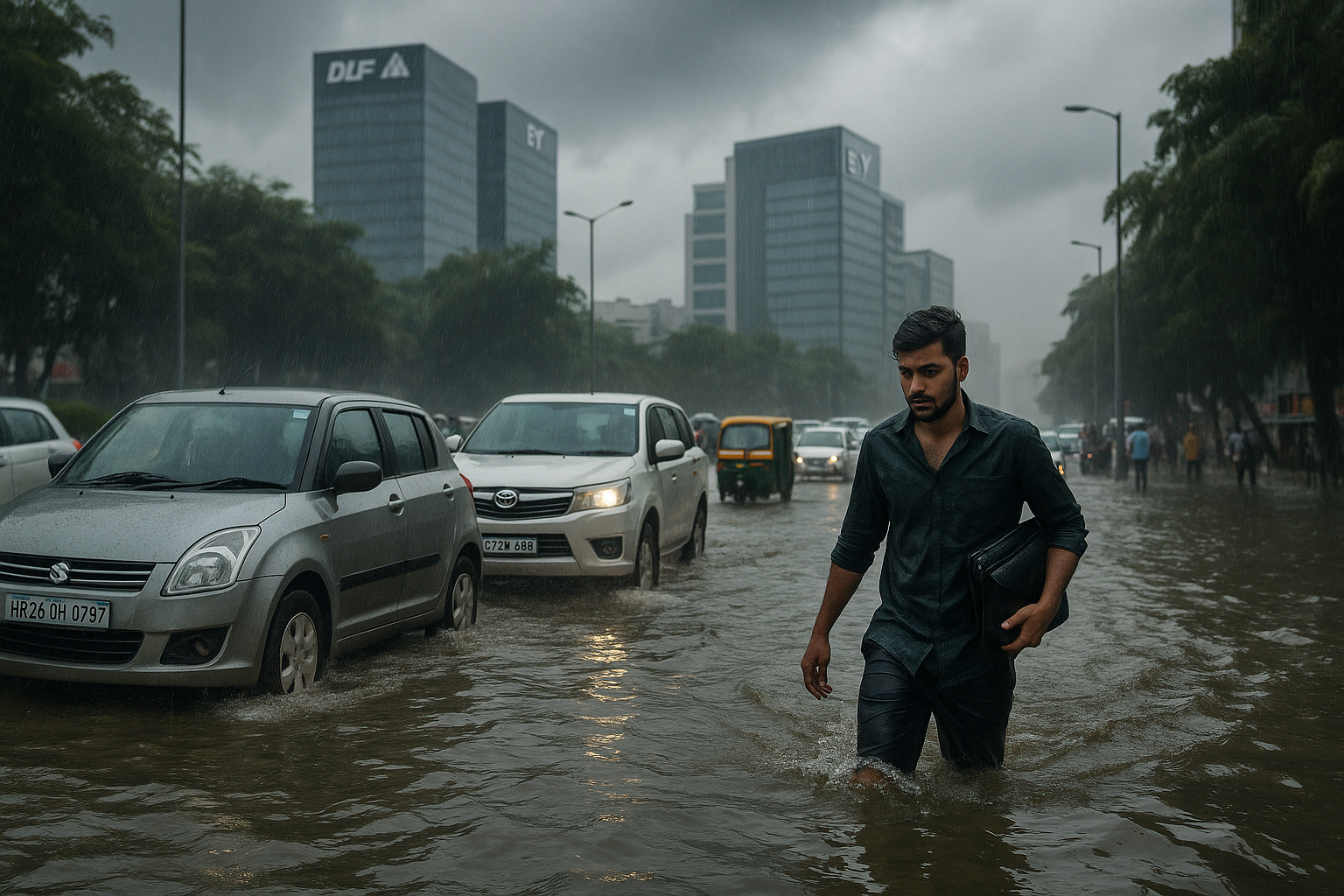
The recent Gurugram district floods have once again exposed the city’s fragile infrastructure. While Gurugram faces severe waterlogging, neighboring Noida remains relatively stable. Here’s a deep dive into the crisis.
Table of Contents
Introduction: A Recurring Urban Challenge
Gurugram district faces another challenging monsoon season in 2025, with widespread waterlogging disrupting daily life across this major corporate and residential center. The situation has brought transportation networks to a standstill, forced businesses to suspend operations, and highlighted persistent infrastructure vulnerabilities. While neighboring cities in the National Capital Region experience similar weather conditions, the severity of flooding impacts varies significantly, raising important questions about urban planning and disaster preparedness.
This article provides a comprehensive examination of the current flooding situation in Gurugram, analyzes the underlying factors contributing to the crisis, compares regional responses to monsoon challenges, and explores evidence-based solutions for long-term resilience. The analysis draws on meteorological data, urban planning principles, and comparative case studies from cities that have successfully addressed similar challenges.
Current Flooding Situation: An Overview of Impacts
Transportation and Infrastructure Disruptions
The 2025 monsoon season has resulted in significant waterlogging across major transportation corridors in Gurugram. Key arterial roads including Golf Course Road, MG Road, and Sohna Road have experienced severe flooding, leading to extended traffic delays affecting thousands of commuters. The India Meteorological Department has issued weather warnings for continued heavy rainfall in the region, with particular concern for low-lying areas vulnerable to flash flooding.
Transportation challenges extend beyond individual inconvenience to systemic disruptions. Morning and evening commute times have increased substantially, with some routes experiencing delays of several hours. Public transportation services have been affected, and emergency response times have been compromised due to road conditions. The ripple effects impact productivity, access to essential services, and overall quality of life for residents.
Economic and Business Impacts
The flooding has created substantial challenges for Gurugram’s prominent corporate sector. Several multinational corporations headquartered in Cyber City and other business districts have implemented work-from-home protocols due to employee accessibility challenges. This represents a significant departure from normal operations and carries implications for productivity, collaboration, and business continuity.
The economic impacts extend to various sectors. Retail establishments have experienced reduced customer traffic, particularly in affected commercial zones. Property owners face ongoing maintenance costs related to water damage and infrastructure stress. Service sector businesses dependent on physical presence have seen revenue declines during peak flooding periods. These cumulative effects represent substantial economic costs beyond the immediate crisis response.
Residential and Community Effects
Residential areas across multiple sectors have reported basement flooding, power supply interruptions, and water quality concerns. Sectors 31, 37, and 56 are among the areas experiencing significant challenges, with residents facing property damage and disrupted essential services. The mixing of stormwater with sewage systems in some locations has raised public health concerns requiring immediate attention.
Educational institutions in heavily affected zones have temporarily suspended in-person instruction, impacting thousands of students and requiring rapid adaptation to alternative learning arrangements. Healthcare access has been complicated by transportation challenges, particularly for individuals requiring routine medical care or emergency services. Community facilities and recreational spaces have been rendered inaccessible, affecting social cohesion and well-being.
Regional Comparison: Understanding Different Outcomes
Noida’s Infrastructure Approach
Noida, located within the National Capital Region and experiencing similar monsoon conditions, has demonstrated notably different flooding outcomes. The city benefits from systematic stormwater drainage infrastructure designed to handle high-volume water flow. Wide drainage channels facilitate efficient water movement away from residential and commercial zones, reducing accumulation in populated areas.
Infrastructure maintenance protocols in Noida include regular inspection and cleaning of drainage systems prior to monsoon season. This proactive approach prevents blockages that would otherwise compromise drainage capacity during heavy rainfall events. Construction oversight mechanisms ensure that new developments incorporate adequate drainage provisions and do not obstruct existing water management infrastructure.
Weather Patterns Across the National Capital Region
While Gurugram experiences severe flooding impacts, other NCR cities demonstrate varying levels of resilience under similar weather conditions. Delhi faces localized flooding in historically vulnerable areas such as Minto Road, but generally achieves faster restoration of normal traffic flow following rainfall events. Faridabad experiences moderate disruptions proportional to rainfall intensity, suggesting that infrastructure capacity plays a determining role in outcomes.
These comparisons indicate that weather conditions, while important, represent only one factor in determining flood vulnerability. Urban infrastructure design, maintenance practices, and enforcement of construction regulations significantly influence how cities respond to monsoon challenges. The consistent pattern of severe impacts in Gurugram despite comparable or sometimes lower rainfall totals compared to neighboring areas highlights the critical importance of these non-meteorological factors.
Key Differentiating Factors
Several concrete differences explain the divergent outcomes between Gurugram and better-performing regional neighbors. Drainage system capacity in terms of both width and depth determines how much water can be channeled away during peak rainfall events. Regular maintenance ensures that designed capacity is actually available when needed, rather than being compromised by accumulated debris and sediment.
Construction oversight prevents new developments from creating additional runoff or blocking existing drainage pathways. Preservation of natural water absorption areas such as wetlands and ponds provides essential buffering capacity that engineered systems alone cannot replicate. These factors interact to create either resilient or vulnerable urban environments when tested by monsoon conditions.
Understanding Gurugram’s Vulnerability: Root Causes Analysis
Urbanization and Land Use Changes
Gurugram has experienced rapid transformation over the past two decades, evolving from a relatively small town into a major urban center with extensive commercial and residential development. This growth has replaced natural, permeable land surfaces with concrete and asphalt, fundamentally altering the landscape’s ability to absorb rainfall. Areas that once allowed water to infiltrate into soil now generate immediate surface runoff.
The pace of development has often outstripped infrastructure planning and implementation. Drainage systems designed for earlier development densities have not been proportionally upgraded to handle increased water volumes generated by expanded impervious surfaces. This mismatch between urban growth and infrastructure capacity creates predictable flooding during heavy rainfall events that exceed the system’s capabilities.
Urban planning approaches that prioritize rapid construction over comprehensive infrastructure development create lasting vulnerabilities. While individual buildings may meet construction codes, the cumulative effect of large-scale development without adequate attention to watershed management and drainage capacity creates systemic flood risk that affects the entire city.
Natural Water Body Degradation
Historical water management in the region relied on natural features including ponds, lakes, and wetland areas that served multiple functions. These water bodies absorbed rainfall during monsoon season, recharged groundwater, and provided ecosystem services including flood mitigation. Progressive encroachment and filling of these areas for development purposes has eliminated critical flood buffering capacity.
The Najafgarh Drain, which serves as an important drainage channel for the region, has faced encroachment and pollution challenges that compromise its effectiveness. Natural catchment areas that once absorbed and slowly released water have been replaced with developments that generate rapid runoff directly into drainage systems. This loss of natural infrastructure amplifies the burden on engineered drainage systems.
Wetland preservation provides multiple benefits beyond flood control, including groundwater recharge, biodiversity support, and urban heat mitigation. The conversion of these areas to other uses represents a short-term approach that creates long-term vulnerabilities and eliminates natural solutions that would complement engineered infrastructure.
Infrastructure Maintenance Challenges
Existing drainage infrastructure in Gurugram faces maintenance challenges that compromise its effectiveness during critical periods. Stormwater drains accumulate sediment, plastic waste, and other debris that reduces their carrying capacity. Without regular cleaning and inspection, these blockages significantly limit the system’s ability to handle peak flows during heavy rainfall.
Maintenance approaches that rely on reactive responses after problems emerge rather than preventive protocols before monsoon season leave the city vulnerable during the period of greatest need. Systematic inspection, cleaning, and repair programs implemented before rainfall begins would ensure that designed drainage capacity is actually available when required.
Coordination challenges between multiple agencies responsible for different aspects of water management can create gaps in maintenance responsibility. Clear accountability mechanisms and integrated management approaches are essential for ensuring that drainage infrastructure performs as designed throughout its operational life.
Economic and Social Impacts: Quantifying the Crisis
Corporate Sector Effects
Gurugram hosts numerous multinational corporations, technology companies, and business process outsourcing operations that form a significant portion of India’s corporate economy. Flood-related disruptions to these operations carry implications beyond the immediate geographic area. Employee productivity declines when working conditions are disrupted or remote work becomes necessary for extended periods.
Supply chain dependencies mean that disruptions in Gurugram can affect business operations in other locations. Client commitments, project deadlines, and service level agreements face pressure when normal operations cannot be maintained. The cumulative economic impact includes both direct costs from interrupted operations and indirect costs from delayed projects and reduced business confidence.
Long-term business location decisions consider infrastructure reliability and disaster risk. Repeated flooding events may influence corporate site selection processes, potentially directing future investment to locations with more robust infrastructure. This represents a strategic economic risk that extends beyond immediate crisis management to long-term competitive positioning.
Real Estate and Property Impacts
Property owners in flood-affected areas face direct financial impacts including damage repair costs, increased maintenance requirements, and potential property value effects. Basement flooding creates immediate costs for water removal, cleaning, and repair of damaged systems and finishes. Repeated flooding events compound these costs and may affect property marketability.
Insurance implications include potentially higher premiums for properties in flood-prone areas and possible coverage limitations or exclusions. Property buyers increasingly consider flood risk in purchasing decisions, potentially affecting prices and transaction volumes in vulnerable areas. These market effects create financial consequences for property owners beyond the immediate costs of managing flood damage.
The rental market also reflects flooding impacts, with potential tenants considering accessibility and flood history when making housing decisions. Property managers face increased operational challenges and costs related to flood response and recovery. These various effects combine to create substantial economic impacts distributed across the real estate sector.
Transportation and Mobility Costs
Extended commute times represent a significant cost in terms of lost productivity and reduced quality of life. Workers spending additional hours in traffic are unable to engage in productive work or personal activities during that time. Fuel consumption increases with prolonged idling in traffic, creating both financial and environmental costs.
Commercial transportation faces similar challenges, with delivery delays affecting businesses dependent on timely receipt of goods. Supply chain reliability declines when transportation networks cannot be counted upon during monsoon season. These effects compound as businesses build buffer inventory or adjust operations to account for anticipated disruptions, creating inefficiencies throughout the economy.
Public transportation systems face operational challenges and reduced reliability during flooding events. This disproportionately affects residents who depend on these services for access to employment, education, and essential services. Transportation equity considerations highlight how flood impacts are not distributed evenly across different socioeconomic groups.
Public Health Considerations
Flooding creates various public health risks requiring attention from medical and public health authorities. Standing water provides breeding grounds for disease-carrying mosquitoes, increasing vector-borne disease risks. Water contamination from sewage overflow during flooding events poses infectious disease risks, particularly in areas where flood water enters homes or food preparation areas.
Access to healthcare becomes more difficult during flooding events, potentially delaying treatment for both routine and urgent medical needs. Individuals with chronic conditions requiring regular medical care face particular challenges. Emergency medical services experience response time delays that could affect outcomes in critical situations.
Mental health impacts from repeated flooding stress should not be overlooked. Residents facing property damage, financial strain, and ongoing uncertainty about future flooding experience psychological effects that may require support services. Community resilience includes attention to these less visible but important health dimensions of disaster impacts.
Meteorological Context and Forecasting
Current Weather Patterns
The India Meteorological Department provides regular updates on weather conditions affecting the National Capital Region. The 2025 monsoon season has brought substantial rainfall totals to Gurugram and surrounding areas, with continued precipitation forecast for the coming period. Weather patterns associated with the southwest monsoon create conditions favorable for heavy rainfall events that can produce rapid accumulation.
Meteorological forecasting capabilities have improved significantly in recent decades, providing advance warning of heavy rainfall events. This allows authorities and residents to prepare for anticipated conditions, though the effectiveness of these warnings depends on the ability of infrastructure and response systems to actually mitigate identified risks.
Understanding local weather patterns helps contextualize current flooding within broader climate patterns. Monsoon variability means that rainfall intensity and distribution vary from year to year, but infrastructure planning must account for the full range of conditions that can reasonably be expected rather than designing only for average conditions.
Regional Weather Comparison
Comparing weather conditions across NCR cities provides context for understanding why flooding impacts differ. While all regional cities experience monsoon rainfall, specific totals and intensities vary based on local meteorological factors. However, the pattern of more severe flooding in Gurugram despite comparable or sometimes lower rainfall than better-performing neighbors confirms that weather alone does not explain the outcomes.
Weather forecasts for the coming period indicate continued rainfall across the region, with particular attention required in areas already experiencing saturation. Low-lying areas face elevated flash flood risk when additional rainfall falls on already saturated soil with limited absorption capacity. Monitoring of both weather conditions and ground conditions helps identify areas of greatest vulnerability.
International Perspectives: Learning from Global Experience
Singapore’s Integrated Approach
Singapore faces intense tropical rainfall and has developed comprehensive flood management systems that combine engineered infrastructure with natural solutions. The city-state employs large drainage reserves, detention tanks, and pump systems alongside preserved natural waterways and green infrastructure. This integrated approach handles high rainfall volumes while maintaining urban functionality.
Real-time monitoring systems allow authorities to track water levels and deploy resources proactively rather than reactively. Public communication systems provide residents with current information about flooding risks and affected areas. This systematic approach reflects long-term investment in both physical infrastructure and operational systems.
Construction regulations in Singapore require that developments incorporate drainage provisions adequate for anticipated rainfall, preventing new projects from creating additional downstream flooding. Maintenance protocols ensure that designed capacity remains available throughout the system’s operational life. These policies demonstrate how systematic approaches can achieve resilience even in challenging conditions.
Tokyo’s Underground Infrastructure
Tokyo has invested in massive underground flood diversion infrastructure including the Metropolitan Area Outer Underground Discharge Channel, a system of tunnels and storage caverns designed to handle peak flows during heavy rainfall events. This infrastructure can store large volumes of water temporarily, then discharge it gradually when conditions allow, preventing overwhelming of surface drainage systems.
Japan’s building codes incorporate flood resilience requirements including elevated electrical systems and flood-resistant materials in vulnerable areas. Community preparedness programs ensure that residents understand flood risks and know how to respond during events. This combination of infrastructure investment and community engagement creates multi-layered resilience.
The scale of investment required for such systems reflects long-term commitment to flood resilience as an essential component of urban infrastructure rather than an optional enhancement. While context-specific conditions vary, the principle of adequate infrastructure investment proportional to flood risk applies across different settings.
Netherlands’ Water Management Legacy
The Netherlands has developed sophisticated water management approaches over centuries of dealing with flood risk. Integrated water management combines flood barriers, drainage systems, land use planning, and natural solutions in comprehensive approaches tailored to local conditions. Room for the river concepts provide areas where water can safely accumulate during peak flows, reducing pressure on urban drainage systems.
Dutch approaches recognize that perfect flood prevention may not be achievable or cost-effective, and instead focus on managing risks to acceptable levels while maintaining functionality during flood events. This pragmatic approach accepts some inconvenience during extreme events while preventing catastrophic failures that would cause major damage.
Government Response and Initiatives
Emergency Measures
Local authorities in Gurugram have implemented emergency response protocols during the current flooding crisis. Dedicated helplines provide residents with access to assistance and information during flood events. Mobile pumping equipment has been deployed to priority locations where accumulated water creates immediate hazards or major disruptions.
Traffic management measures including route diversions and public communication about affected areas help residents navigate around severely flooded zones. Coordination with meteorological agencies ensures that authorities receive advance warning of forecast heavy rainfall, allowing preemptive positioning of resources.
Emergency responses address immediate needs but do not substitute for long-term infrastructure solutions. While essential for managing current conditions, sustained progress requires moving beyond repeated emergency mobilization to fundamental improvements in flood resilience.
Proposed Long-Term Improvements
Government authorities have announced intentions to upgrade stormwater drainage infrastructure across affected areas. Proposed improvements include expanding drainage capacity, clearing encroachments from existing water bodies, and improving maintenance protocols. Implementation timelines and funding mechanisms for these improvements remain important factors in determining their actual realization.
Public accountability for infrastructure commitments helps ensure that announced improvements progress from planning to implementation. Transparent reporting on project status, expenditures, and performance metrics allows stakeholders to track progress and identify barriers requiring attention.
Coordination Challenges
Flood management responsibilities span multiple agencies including municipal corporations, state government departments, and regional authorities. Effective coordination among these entities is essential for comprehensive approaches that address all aspects of the challenge. Clear delineation of responsibilities and regular coordination mechanisms help ensure that necessary actions receive attention from appropriate authorities.
Funding mechanisms for infrastructure improvements require coordination between levels of government and potentially private sector participation. Large-scale infrastructure projects typically require multi-year commitments and sustained funding rather than one-time allocations. Budget prioritization processes must balance immediate needs against long-term investment requirements.
Pathways to Resilience: Strategic Solutions
Comprehensive Drainage Master Planning
Developing an integrated drainage master plan for Gurugram would provide a systematic framework for infrastructure improvements. Such planning should assess current drainage capacity, identify deficiencies, and prioritize improvements based on flood risk and potential impact. The plan should incorporate both short-term improvements for immediate relief and long-term vision for comprehensive resilience.
Drainage planning must account for future development in addition to current conditions. As urbanization continues, drainage systems must have adequate capacity for anticipated growth rather than becoming insufficient as soon as they are completed. Forward-looking planning prevents the repeated cycle of infrastructure becoming inadequate shortly after construction.
Integration with broader urban planning ensures that land use decisions, transportation planning, and other development activities align with drainage objectives rather than working at cross-purposes. This systemic approach recognizes the interconnections between different urban systems and their collective impact on flood resilience.
Natural Infrastructure Restoration
Restoring and protecting natural water bodies including ponds, lakes, and wetlands would provide flood buffering capacity that complements engineered drainage systems. These natural features absorb rainfall, allow gradual infiltration, and provide multiple benefits including groundwater recharge and ecosystem services.
Enforcement mechanisms to prevent encroachment on designated water bodies and drainage corridors are essential for protecting these critical features. Regulatory approaches should include both penalties for violations and positive incentives for protection and restoration of natural water management features.
Community engagement in water body restoration can build public support and stewardship. When residents understand the flood mitigation benefits of preserved wetlands and ponds, they become advocates for protection rather than viewing these areas solely as potential development sites.
Enhanced Construction Regulations
Building codes and development regulations should require that new construction incorporates adequate drainage provisions and does not increase flood risk for neighboring properties or downstream areas. Rainwater harvesting requirements can reduce stormwater runoff while providing water supply benefits. Permeable paving requirements for parking areas and other large paved surfaces allow infiltration rather than generating complete runoff.
Enforcement of construction regulations ensures that designed provisions are actually implemented and maintained. Inspection protocols and penalties for non-compliance create accountability for developers and property owners. Regular review and updating of standards ensures that regulations reflect current best practices and anticipated future conditions.
Retrofit programs for existing developments can gradually improve the performance of older buildings and infrastructure that predate current standards. While not achieving the same level of compliance possible with new construction, meaningful improvements can be achieved through targeted interventions in existing structures and sites.
Technology-Enabled Monitoring and Communication
Real-time monitoring of water levels in drainage systems, rivers, and water bodies provides early warning of developing flood conditions. Sensor networks and data analytics can identify areas where drainage systems are approaching capacity, allowing preemptive responses before flooding occurs.
Public communication systems delivering real-time information about flood conditions, affected areas, and safe routes help residents make informed decisions during flood events. Mobile applications and social media channels can reach large audiences quickly with updates as conditions change.
Predictive modeling using weather forecasts and drainage system data can anticipate where flooding is likely to occur given forecast rainfall. This allows positioning of pumping equipment and other resources before flooding develops rather than responding after the fact.
Community Engagement and Preparedness
Public awareness programs help residents understand flood risks and individual actions that can reduce vulnerability. Information about property-level flood protection measures, emergency preparedness, and appropriate responses during flood events empowers communities to protect themselves.
Neighborhood-level coordination can facilitate mutual assistance during flood events and community advocacy for infrastructure improvements. When residents organize to address common challenges, they can more effectively communicate priorities to authorities and participate in solution development.
Educational programs in schools teach younger generations about urban water management and environmental stewardship. This long-term approach builds understanding that can influence future decision-making and create lasting culture change around flood resilience and sustainable development.
Conclusion: Moving from Crisis to Resilience
The flooding challenges facing Gurugram in 2025 reflect systemic infrastructure deficiencies and urban planning gaps that have developed over decades of rapid growth. While immediate emergency responses address current needs, fundamental transformation requires sustained commitment to comprehensive infrastructure investment, enforcement of construction and environmental regulations, and integration of natural water management solutions.
Comparison with better-performing regional neighbors demonstrates that these challenges are not inevitable. Cities with adequate drainage infrastructure, effective maintenance, and systematic planning approaches achieve resilience even under challenging weather conditions. International examples from cities facing even more intense rainfall show that appropriate investment and systematic approaches can overcome significant flood challenges.
The path forward requires coordination among government authorities, private sector developers, and community stakeholders. Long-term infrastructure improvements need sustained funding commitments and transparent accountability mechanisms. Natural infrastructure restoration requires regulatory protection and active management. Technology solutions must be implemented and maintained. Community engagement builds the public support essential for sustained progress.
Gurugram’s economic importance as a corporate hub and residential center makes flood resilience not just a local priority but a regional and national concern. The costs of repeated flooding in terms of economic disruption, property damage, and quality of life impacts justify substantial investment in comprehensive solutions. The opportunity exists to transform current vulnerabilities into lasting resilience through systematic approaches informed by global best practices and regional success stories.
Author Box
About Nueplanet
Nueplanet specializes in evidence-based analysis of urban infrastructure challenges and sustainable development solutions. With a focus on making complex technical topics accessible to general audiences, Nueplanet draws on authoritative sources including government data, meteorological services, urban planning research, and international case studies. The goal is to provide readers with factual information that supports informed understanding of pressing urban challenges and potential solutions. All content emphasizes accuracy, transparency, and reliance on verified sources to ensure reliability and trustworthiness.
Frequently Asked Questions
What are the primary causes of flooding in Gurugram?
Flooding in Gurugram results from multiple interconnected factors. Inadequate stormwater drainage infrastructure lacks sufficient capacity to handle peak rainfall volumes, particularly during heavy monsoon events. Rapid urbanization has replaced natural, permeable land surfaces with concrete and asphalt that generate immediate runoff rather than allowing water absorption. Encroachment on natural water bodies including ponds and wetlands has eliminated flood buffering capacity. Poor maintenance of existing drainage systems allows debris accumulation that reduces designed capacity. These factors combine to create vulnerability that manifests as flooding during heavy rainfall.
How does Noida manage to avoid severe flooding despite similar weather conditions?
Noida benefits from several advantages in flood management infrastructure and practices. The city’s stormwater drainage system features wider channels with greater capacity for handling peak water flows. Regular maintenance protocols including pre-monsoon cleaning ensure that designed capacity remains available when needed. Construction oversight mechanisms enforce regulations requiring adequate drainage provisions in new developments. More systematic urban planning has prevented the degree of encroachment on natural water features experienced in Gurugram. These factors combine to create greater resilience even when facing comparable rainfall totals.
What is the current weather forecast for Gurugram?
According to India Meteorological Department updates, Gurugram faces continued heavy rainfall risk in the near term. Areas already experiencing saturation are particularly vulnerable to flash flooding with additional precipitation. Low-lying zones face elevated risk levels. Residents should monitor official weather information sources for updates as conditions evolve. Weather conditions across the National Capital Region show similar patterns, though specific rainfall totals and timing vary locally. Authorities continue to issue advisories recommending caution and minimizing non-essential travel during peak rainfall periods.
Which areas of Gurugram are most affected by current flooding?
Major transportation corridors including Golf Course Road, MG Road, and Sohna Road have experienced significant waterlogging affecting commuter traffic. Residential sectors including Sectors 31, 37, and 56 have reported basement flooding and associated impacts. Cyber City and other major corporate zones have faced access challenges leading to operational disruptions. Low-lying areas throughout the city face particular vulnerability to continued rainfall. Specific conditions vary as rainfall patterns change and drainage capacity is overwhelmed in different locations. Residents should consult real-time local information sources for current conditions in specific areas.
What long-term solutions could prevent future flooding in Gurugram?
Comprehensive solutions require multiple coordinated interventions. Expanding stormwater drainage capacity through infrastructure upgrades addresses the fundamental challenge of insufficient system capacity. Restoring and protecting natural water bodies including wetlands and ponds provides flood buffering that complements engineered systems. Stricter enforcement of construction regulations prevents new development from worsening drainage challenges. Regular maintenance protocols ensure that infrastructure performs as designed. Technology-enabled monitoring and early warning systems allow proactive responses. These solutions require sustained investment and coordination among multiple authorities and stakeholders.
How do international cities handle similar flooding challenges?
Cities worldwide facing intense rainfall have developed comprehensive approaches to flood management. Singapore employs integrated systems combining large drainage infrastructure, detention storage, pump stations, and preserved natural waterways alongside real-time monitoring and public communication. Tokyo has invested in massive underground flood diversion infrastructure that stores peak flows and releases them gradually. The Netherlands integrates flood barriers, drainage systems, land use planning, and natural solutions in comprehensive approaches. Common elements include adequate infrastructure investment, systematic maintenance, forward-looking planning, and integration of natural and engineered solutions. These examples demonstrate that significant flood challenges can be managed through appropriate commitments and systematic approaches.
What immediate steps should residents take during flooding events?
During active flooding, residents should prioritize safety over convenience. Avoid travel through flooded areas unless absolutely necessary, as even shallow water can pose hazards and vehicle damage risks. Monitor official information sources for updates on affected areas and safe routes. Secure property against water intrusion where possible, including moving valuable items above potential flood levels. Ensure emergency supplies including drinking water, food, medications, and flashlights are accessible. Follow traffic advisories and route diversions. Report immediate hazards or emergencies through designated helplines. After flooding subsides, exercise caution around damaged infrastructure and contaminated water. Document property damage for insurance and assistance purposes.
What role can community action play in flood resilience?
Community engagement contributes to flood resilience through multiple channels. Residents can advocate for infrastructure improvements and hold authorities accountable for commitments through organized civic participation. Neighborhood-level coordination facilitates mutual assistance during flood events and information sharing about local conditions. Property owners implementing recommended flood protection measures collectively reduce vulnerability. Community stewardship of local water bodies and drainage features prevents encroachment and ensures maintenance. Public awareness and education programs build understanding that influences individual decisions and creates constituencies for sustainable development policies. While community action cannot substitute for adequate infrastructure investment, it provides essential complementary contributions to overall resilience.
Content Information:
- Published: September 03, 2025
- Last Updated: September 03, 2025
- Sources: India Meteorological Department, urban planning research, comparative international case studies
Note: This article is written to inform readers about flooding challenges and potential solutions based on available information. Readers should consult official sources for current weather conditions, emergency services, and specific guidance relevant to their situations.
Helpful Resources
Latest Posts
- Maruti Suzuki: Driving India’s Auto Story
- Gujarat Mineral Development Corporation (GMDC) Share Price: Surge, Strategy & Outlook
- Is Stock Market Open Today? Holiday Schedule, Global Cues, and Market Outlook
- Weather in Srinagar: Heavy Rains, Alerts & What You Need to Know
- Indus Towers Share Price: African Expansion Sparks Volatility & Strategic Pivot
Related Posts













Post Comment