









Is Stock Market Open Today? Holiday Schedule, Global Cues, and Market Outlook
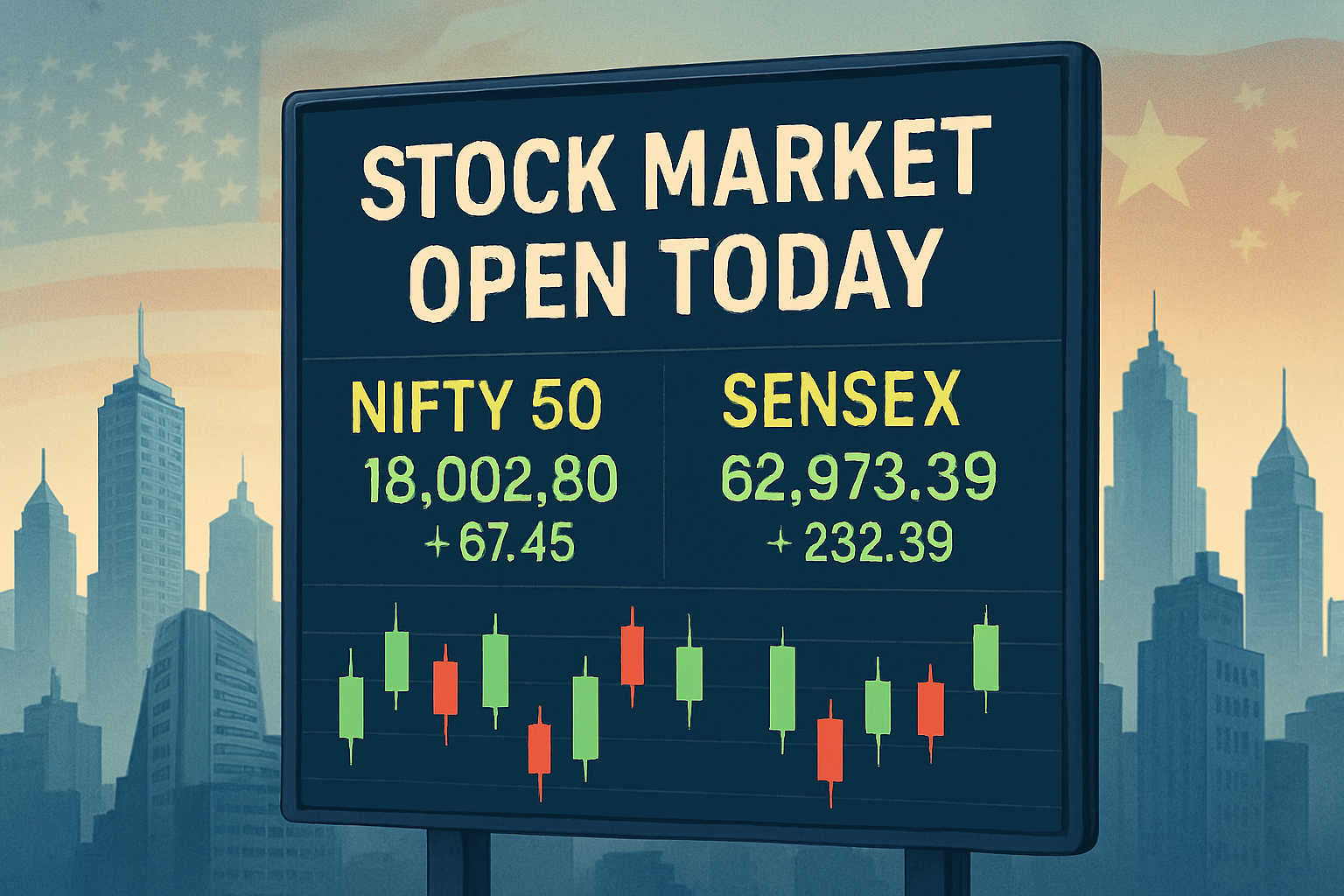
Confused about whether the stock market is open today? Here’s a detailed breakdown of trading holidays, market schedules, and how global cues—including post-Labor Day trends in the US—are shaping expectations for investors.
Table of Contents
Understanding Indian Stock Market Operations and Trading Hours
The Indian stock market operates on a well-defined schedule maintained by the National Stock Exchange (NSE) and Bombay Stock Exchange (BSE). Understanding these operational hours is essential for traders and investors planning their market activities.
Indian equity markets function Monday through Friday, excluding designated public holidays. The trading day consists of multiple sessions designed to facilitate efficient price discovery and order execution.
Market participants require accurate information about trading schedules to execute strategies effectively. This guide provides comprehensive details about operational hours, holiday calendars, and factors affecting market sessions.
Standard Trading Hours for NSE and BSE
Pre-Opening Session Mechanics
The pre-opening session operates from 9:00 AM to 9:15 AM each trading day. During this period, order collection occurs without actual trade execution.
This session enables price discovery through order matching algorithms. The equilibrium price determined during pre-opening becomes the opening price for regular trading.
Order modification and cancellation are permitted during specific intervals of the pre-opening session. The final minutes freeze all orders to calculate the opening price accurately.
Regular Trading Session Details
Regular market hours extend from 9:15 AM to 3:30 PM on all trading days. This six-hour fifteen-minute window allows continuous buying and selling of securities.
Price movements during regular hours reflect real-time supply and demand dynamics. Order types including market orders, limit orders, and stop-loss orders can be placed throughout this period.
Trading volumes typically peak during the opening and closing hours. Mid-day sessions often witness lower activity levels compared to these periods.
Post-Closing Session Information
A post-closing session operates from 3:40 PM to 4:00 PM for specific purposes. This period facilitates basket trading and institutional block deals.
Volume during the post-closing session represents a fraction of regular trading activity. Prices determined during this period do not affect the official closing price.
Retail investors rarely participate in post-closing sessions. This period primarily serves institutional requirements and portfolio adjustments.
Complete Holiday Calendar for 2025
January to March 2025 Market Holidays
January 26, 2025 – Republic Day Markets remain closed to commemorate India’s Constitution adoption. This national holiday recognizes the country’s transition to a republic.
Trading activity typically increases in sessions preceding Republic Day. Position adjustments and portfolio rebalancing occur before the holiday closure.
March 14, 2025 – Holi The festival of colors results in market closure across all exchanges. This widely celebrated Hindu festival affects trading schedules annually.
Holi’s timing varies each year based on the lunar calendar. Traders anticipate increased volatility in sessions following festival holidays.
March 31, 2025 – Id-Ul-Fitr Markets close for this Islamic festival marking the end of Ramadan. Religious diversity in India’s calendar results in multiple faith-based holidays.
April to June 2025 Trading Closures
April 10, 2025 – Mahavir Jayanti This Jain festival celebrating Lord Mahavir’s birth causes exchange closures. Regional festivals contribute to India’s extensive holiday calendar.
April 14, 2025 – Dr. Baba Saheb Ambedkar Jayanti Exchanges remain closed honoring the Constitution’s principal architect. This commemorative day recognizes significant historical contributions.
April 18, 2025 – Good Friday Christian holidays are observed across Indian stock exchanges. Good Friday precedes Easter Sunday in the Christian calendar.
May 1, 2025 – Maharashtra Day Stock exchanges located in Maharashtra observe this state formation day. Regional holidays affect exchange operations despite limited geographic scope.
July to September 2025 Market Closures
August 15, 2025 – Independence Day India’s most prominent national holiday commemorates freedom from British rule. All financial markets observe this significant national occasion.
Trading volumes in preceding sessions often show increased activity. Portfolio adjustments occur as market participants anticipate the closure.
August 27, 2025 – Ganesh Chaturthi This popular Hindu festival honoring Lord Ganesha results in market closure. Festival timing varies annually based on lunar calendar calculations.
October to December 2025 Trading Holidays
October 2, 2025 – Mahatma Gandhi Jayanti Markets close to honor the Father of the Nation’s birth anniversary. This solemn occasion receives nationwide observance.
October 21, 2025 – Dussehra The festival celebrating good’s victory over evil causes exchange closure. Major Hindu festivals consistently appear on market holiday calendars.
November 5, 2025 – Diwali (Laxmi Pujan) Regular trading remains suspended for the festival of lights. A special Muhurat Trading session occurs in the evening during Diwali.
November 6, 2025 – Diwali Balipratipada The day following Diwali extends the market closure. This two-day holiday period represents one of the longest annual closures.
November 10, 2025 – Gurunanak Jayanti Markets close for the Sikh festival celebrating Guru Nanak’s birth. Religious diversity ensures representation across India’s holiday calendar.
December 25, 2025 – Christmas Christian celebrations result in exchange closures. Year-end holidays often coincide with lower trading activity.
Special Muhurat Trading Session Explained
Traditional Significance and Timing
Muhurat Trading occurs on Diwali evening for approximately one hour. This auspicious session typically runs from 6:00 PM to 7:00 PM.
The tradition holds deep cultural significance in Indian financial markets. Investors consider Diwali trades as blessings for the coming year.
Ceremonial trading characterizes this session despite limited actual volume. Symbolic purchases occur rather than strategic position building.
Participation and Market Behavior
Retail participation increases during Muhurat Trading compared to regular institutional dominance. Family-oriented investment decisions often occur during this session.
Volume remains modest relative to regular trading days. The session serves cultural rather than purely financial purposes.
Media coverage of Muhurat Trading emphasizes traditional aspects over market analysis. Exchange officials participate in ceremonial activities surrounding the session.
Global Market Influence on Indian Trading
US Market Impact on Indian Sessions
American equity markets significantly influence Indian trading sentiment. Overnight movements in US indices provide directional cues for Indian opening.
The New York Stock Exchange (NYSE) and NASDAQ closing levels affect Asian market openings. Indian traders analyze US performance before market commencement.
US holiday closures create information gaps affecting Indian sentiment. Trading volumes and conviction levels typically decline when American markets remain closed.
Impact of US Labor Day on Indian Markets
Labor Day, observed on the first Monday of September, closes US markets. The 2025 Labor Day fell on September 1, affecting subsequent Indian trading.
Indian sessions following US holidays often display reduced volumes. Directional conviction decreases without overnight guidance from Wall Street.
Export-oriented sectors show particular sensitivity to US market closures. Information technology and pharmaceutical stocks face increased uncertainty during these periods.
European Market Correlations
European bourses including London, Frankfurt, and Paris influence Indian midday trading. These markets operate during Indian afternoon sessions due to time zone differences.
Strong European performance can support Indian indices during later trading hours. Conversely, European weakness may trigger afternoon selling pressure.
Currency movements in European markets affect rupee dynamics. Foreign exchange volatility increases during periods of European market stress.
Asian Market Relationships
Japanese, Chinese, and South Korean markets provide regional context. Geographic proximity and trade relationships create correlations between Asian equity markets.
China’s economic data releases significantly impact Indian market sentiment. Commodity demand expectations shift based on Chinese industrial indicators.
Regional geopolitical developments affect collective Asian market performance. Trade tensions or cooperation agreements create synchronized movements.
Current Market Analysis and Technical Outlook
Nifty 50 Index Assessment
The Nifty 50 index represents India’s leading large-cap benchmark. As of late September 2025, the index trades within a defined range.
Consolidation around the 24,200 level reflects balanced buying and selling pressure. Technical analysts monitor this range for potential breakout signals.
Key Technical Levels to Monitor
Resistance Zones Immediate resistance appears at 24,350 based on recent price action. This level has prevented upward progress on multiple occasions.
The 24,500 mark represents a significant psychological barrier. Breaking above this threshold would signal renewed bullish momentum.
Extended targets of 24,750 become relevant following resistance breakouts. These projections use measured move calculations and Fibonacci extensions.
Support Areas Primary support exists at the 24,000 level, a round number attracting buyers. This psychological threshold has held during recent corrections.
Secondary support at 23,800 represents a previous consolidation zone. Technical support strengthens when multiple timeframes align at similar levels.
Critical support lies at 23,500, where violation would indicate trend concerns. Breaking below this level could trigger accelerated selling pressure.
Moving Average Analysis
The Nifty currently trades above its 50-day exponential moving average. This positioning suggests the medium-term trend remains positive.
The 200-day moving average lies substantially lower than current prices. This technical structure confirms the broader uptrend persists despite consolidation.
Moving average crossovers provide trend confirmation signals. Bullish crosses occur when shorter averages rise above longer ones.
Momentum Indicator Readings
The Relative Strength Index (RSI) hovers near neutral territory at 50-55. This reading indicates neither overbought nor oversold conditions.
RSI values above 70 typically indicate overbought conditions warranting caution. Readings below 30 suggest oversold conditions potentially offering buying opportunities.
The Moving Average Convergence Divergence (MACD) displays bullish configuration. The signal line remains below the MACD line, suggesting positive momentum.
Derivatives Market Intelligence and Positioning
Options Market Open Interest Analysis
Options trading provides insights into market expectations through open interest distribution. Call and put concentrations reveal where traders anticipate resistance and support.
Call Open Interest Patterns Maximum call open interest accumulates at the 24,500 strike price. This concentration suggests traders expect this level to cap near-term rallies.
Call writing at higher strikes indicates bearish positioning above current levels. Writers collect premiums betting the index won’t reach these strikes.
Put Open Interest Distribution Significant put writing clusters around the 24,000 strike. This concentration reveals trader confidence in support at this level.
Put writers generally maintain bullish or neutral outlooks. Their willingness to accept downside risk indicates support expectations.
Put-Call Ratio Interpretation
The put-call ratio currently hovers around 1.1, slightly above parity. Ratios exceeding 1.0 suggest marginally bullish market sentiment.
Higher put-call ratios indicate protective buying rather than aggressive bearishness. Institutional investors frequently purchase puts as portfolio insurance.
Extremely high ratios above 1.3 may signal oversold conditions. Conversely, very low ratios below 0.7 often indicate complacency.
India VIX Volatility Analysis
The India Volatility Index (VIX) measures expected market volatility. Recent readings around 15-16 represent moderate historical levels.
VIX typically rises during market declines or uncertainty periods. Falling VIX readings accompany stable or rising market conditions.
Comparing current VIX levels to historical ranges provides context. Readings below 12 indicate complacency, while levels above 20 suggest elevated fear.
Futures Market Premium and Discount
Nifty futures trading at premiums to spot prices indicates normal contango. This structure reflects carrying costs including interest rates minus dividends.
Significant premiums may indicate strong bullish sentiment or near-term delivery pressures. Discounts suggest bearish positioning or dividend-related adjustments.
Basis analysis comparing futures and spot prices reveals market efficiency. Wide basis spreads may indicate arbitrage opportunities for sophisticated traders.
Sectoral Performance and Investment Themes
Banking and Financial Services Outlook
The banking sector demonstrates robust fundamental performance. Credit growth data exceeds historical averages across retail and corporate segments.
Net interest margins have stabilized after previous compression periods. Banks report improving asset quality with declining non-performing asset ratios.
Key Performance Drivers
- Deposit mobilization remains strong, indicating healthy savings behavior
- Digital banking adoption reduces operational costs and improves efficiency
- Government infrastructure spending creates corporate lending opportunities
- Housing finance segments show consistent growth across urban and semi-urban markets
Private sector banks with strong liability franchises outperform competitors. Deposit bases provide low-cost funding supporting margin expansion.
Non-banking financial companies serve underserved market segments. Microfinance and small business lending offer growth opportunities.
Information Technology Sector Analysis
Indian IT services companies face mixed global demand conditions. Enterprise spending caution affects discretionary project approvals.
However, defensive characteristics make IT stocks attractive during uncertainty. Dollar-denominated revenues provide natural currency hedging.
Sector Trends and Considerations
- Large deal pipelines remain healthy despite extended decision timelines
- Artificial intelligence projects create new revenue stream opportunities
- Margin pressures emerge from wage inflation and competitive intensity
- Currency fluctuations provide tailwinds when the rupee weakens
Technology services exports benefit from India’s cost competitiveness. Skilled workforce availability supports the sector’s long-term positioning.
Cloud migration and digital transformation projects drive sustained demand. Multi-year contracts provide revenue visibility for leading companies.
Metals and Mining Sector Dynamics
Cyclical metal stocks show high sensitivity to global trade developments. Tariff discussions and trade policy changes create immediate price impacts.
Domestic infrastructure demand provides partial insulation from export challenges. Government capital expenditure supports steel and cement consumption.
Critical Variables Affecting Performance
- China’s economic stimulus measures influence global commodity prices
- Input cost movements affect steel producer profitability
- Government infrastructure commitments determine demand trajectories
- Environmental regulations impact production capacity and costs
Aluminum and zinc prices respond to automotive sector demand. Electric vehicle adoption affects specific metal consumption patterns.
Mining companies benefit from rising commodity price environments. However, regulatory approval processes affect production expansion timelines.
Energy Sector Performance Factors
Oil marketing companies respond directly to crude price fluctuations. International crude movements driven by OPEC+ decisions affect refining margins.
Integrated energy companies with downstream operations show resilience. Refining capacity utilization rates influence profitability metrics.
Energy Market Considerations
- Crude oil inventory levels signal supply-demand balance
- Geopolitical tensions in oil-producing regions create volatility
- Government subsidy policies affect oil marketing company margins
- Renewable energy investments diversify traditional energy portfolios
Natural gas distribution companies benefit from increasing industrial usage. Infrastructure expansion in tier-2 cities drives volume growth.
Infrastructure and Capital Goods Prospects
Government infrastructure spending provides multi-year demand visibility. The National Infrastructure Pipeline identifies substantial project commitments.
Engineering and construction companies with execution track records attract investor interest. Order book-to-sales ratios indicate revenue visibility.
Sector Growth Catalysts
- Road and highway construction projects continue across states
- Railway modernization including station redevelopment and electrification
- Airport expansion in tier-2 and tier-3 cities
- Port infrastructure upgrades supporting international trade
Cement manufacturers benefit from construction activity acceleration. Housing demand and commercial real estate contribute to consumption.
Electrical equipment suppliers participate in power transmission expansion. Grid modernization and renewable energy integration drive orders.
Consumer Discretionary and Staples Analysis
Rising household incomes support consumption across categories. Urbanization trends and changing preferences affect product demand.
Automobile sales reflect economic confidence and credit availability. Two-wheeler and passenger vehicle segments show different growth patterns.
Consumption Trends
- Quick-service restaurants expand into smaller cities
- E-commerce penetration increases in non-metro markets
- Consumer durables benefit from household formation
- Premium products gain market share as incomes rise
Retail chains expanding geographic footprints capture growth opportunities. Omnichannel strategies combining online and offline presence prove effective.
Risk Management and Investment Strategy
Position Sizing Guidelines
Prudent position sizing limits exposure to individual securities. Conservative approaches suggest 2-3% portfolio allocation per stock.
Growth-oriented investors may increase allocations to 5-8% for high-conviction ideas. Maximum single-stock exposure should not exceed 10% of total portfolio value.
Sector concentration requires monitoring to prevent correlated risks. Diversification across sectors reduces portfolio volatility.
Stop-Loss Implementation
Every position requires predetermined exit levels for loss limitation. Technical support levels provide logical stop-loss placement points.
Trailing stop-losses protect profits as positions move favorably. Percentage-based or absolute value stops suit different trading styles.
Discipline in executing stop-losses prevents emotional decision-making. Overriding stops frequently leads to larger losses than initially planned.
Systematic Investment Approaches
Systematic Investment Plans (SIPs) reduce market timing risks. Regular periodic investments average purchase prices over time.
Dollar-cost averaging benefits particularly during volatile market periods. Mathematical advantages emerge from buying more units at lower prices.
Discipline and automation prevent emotional investment decisions. Continuing SIPs during market declines proves especially beneficial.
Portfolio Rebalancing Practices
Target asset allocations require periodic adjustment as values shift. Rebalancing involves selling outperformers and adding to underperformers.
Annual or semi-annual rebalancing frequencies suit most investors. More frequent adjustments may generate unnecessary transaction costs.
Rebalancing forces disciplined profit-taking and contrarian positioning. This systematic approach enhances long-term risk-adjusted returns.
Long-Term Investment Perspective and Themes
India’s Economic Growth Trajectory
India maintains its position as a leading global growth economy. Gross Domestic Product (GDP) expansion consistently exceeds developed market rates.
Fiscal year 2025-26 growth projections cluster around 6.5-7.0% range. This performance significantly surpasses global average expectations.
Growth Drivers
- Robust domestic consumption from rising middle-class incomes
- Government infrastructure investment across transportation and utilities
- Digital economy expansion including fintech and e-commerce
- Manufacturing sector development supported by policy incentives
Economic reforms implemented over recent years support sustainable growth. Goods and Services Tax (GST) implementation improved tax efficiency.
Demographic Advantages
India’s young population provides both consumption demand and productive capacity. Working-age population ratios continue improving for decades.
Educational attainment increases enhance workforce productivity. Skill development initiatives prepare workers for modern economy requirements.
Urbanization trends drive infrastructure needs and consumption patterns. City formation and expansion create economic opportunities.
Policy Environment and Reforms
Stable governance provides confidence for long-term business planning. Consistent economic policies reduce uncertainty for investors.
Production Linked Incentive (PLI) schemes encourage manufacturing expansion. These programs target specific sectors for development support.
Digital infrastructure investments including broadband and payment systems enable economic transformation. Financial inclusion brings millions into formal systems.
Monitoring Framework and Performance Indicators
Financial Metrics for Assessment
Quarterly revenue growth rates indicate business momentum. Year-over-year comparisons reveal underlying trend strength.
Margin expansion demonstrates operational leverage from scale benefits. Gross margins, operating margins, and net margins require separate analysis.
Return on equity (ROE) measures management’s capital allocation effectiveness. Sustainable high ROE indicates competitive advantages.
Free cash flow generation reveals earnings quality. Companies converting profits to cash demonstrate business strength.
Operational Performance Indicators
Order book-to-sales ratios provide future revenue visibility. High ratios indicate strong demand and execution capabilities.
Capacity utilization rates show asset productivity levels. Improving utilization suggests growing demand for products.
Customer acquisition costs relative to lifetime values determine business sustainability. Favorable ratios indicate profitable growth potential.
Market share trends within industries reveal competitive positioning. Gaining share suggests superior product or service offerings.
Strategic Development Measures
Research and development investment intensity indicates innovation commitment. Higher spending relative to sales suggests future product development.
Patent filings and intellectual property creation demonstrate innovation progress. Technical capabilities attract premium valuations.
Partnership announcements and strategic alliances expand market access. Collaborations accelerate growth beyond organic capabilities.
International expansion efforts diversify revenue sources. Geographic diversification reduces country-specific risks.
Author Box
About the Author
Nueplanet
Nueplanet specializes in equity market analysis with the years of experience covering Indian financial markets. Nueplanet expertise encompasses technical analysis, sector research, and macroeconomic trend evaluation.
Nueplanet analytical approach combines quantitative methods with fundamental company evaluation. Research focuses on mid-cap and large-cap equities across multiple sectors including banking, technology, and infrastructure.
Commitment to Accuracy: All content derives from official sources including stock exchange filings, regulatory announcements, government publications, and verified financial databases. Analysis represents independent research without promotional intent or commercial relationships.
Publication Details
Published: September 03, 2025
Last Updated: September 03, 2025
Frequently Asked Questions
1. What are the official trading hours for Indian stock markets?
Indian stock markets operate Monday through Friday with pre-opening sessions from 9:00 AM to 9:15 AM and regular trading from 9:15 AM to 3:30 PM. A post-closing session runs from 3:40 PM to 4:00 PM for specific institutional purposes. These timings apply to both the National Stock Exchange (NSE) and Bombay Stock Exchange (BSE). Markets remain closed on Saturdays, Sundays, and designated public holidays as per the annual calendar published by exchanges. No weekend trading occurs on Indian platforms unlike some international markets.
2. How many holidays do Indian stock markets observe in 2025?
The NSE and BSE observe approximately 14-16 trading holidays during 2025, depending on festival timing relative to weekends. Major holidays include Republic Day (January 26), Independence Day (August 15), Gandhi Jayanti (October 2), and Christmas (December 25). Religious festivals such as Holi, Diwali, Id-Ul-Fitr, Mahavir Jayanti, and Gurunanak Jayanti also result in market closures. Regional holidays like Maharashtra Day affect exchanges based on their geographic location. Complete holiday calendars are published by exchanges in December preceding the calendar year, allowing traders to plan activities accordingly.
3. What is Muhurat Trading and when does it occur?
Muhurat Trading represents a special one-hour trading session conducted on Diwali evening, typically from 6:00 PM to 7:00 PM. This auspicious session holds cultural significance as investors make ceremonial trades seeking blessings for the coming year. Regular market hours remain suspended on Diwali, but this special evening session allows symbolic participation. Trading volumes during Muhurat sessions remain modest compared to regular days, as the purpose emphasizes tradition over strategic positioning. The exact timing is announced by exchanges closer to the Diwali festival each year.
4. How do US market holidays affect Indian stock trading?
US market closures, such as Labor Day or Thanksgiving, do not cause Indian exchanges to suspend operations, as Indian markets follow independent holiday calendars. However, indirect effects occur through reduced directional guidance from overnight Wall Street performance. Indian traders lose access to US market cues that typically influence opening sentiment. Trading volumes may decline and directional conviction weakens when American markets remain closed. Sectors with significant US exposure including information technology and pharmaceuticals show particular sensitivity. Foreign Institutional Investor activity may decrease when their home markets close.
5. What are current key technical levels for Nifty 50?
As of late September 2025, Nifty 50 faces immediate resistance at 24,350, which has capped recent rally attempts. Secondary resistance exists at 24,500 representing a psychological barrier. On the downside, primary support appears at 24,000, a level that has absorbed selling pressure multiple times. Secondary support lies at 23,800 with critical support around 23,500. The index trades above its 50-day moving average, suggesting medium-term positive momentum, and well above the 200-day moving average, confirming the longer-term uptrend structure. These levels derive from recent price action analysis and represent areas where trading decisions concentrate.
6. Which sectors show strongest performance in current market conditions?
Banking and financial services demonstrate robust performance based on strong credit growth data, improving asset quality, and stable net interest margins. Private sector banks with strong deposit franchises lead sectoral performance. Infrastructure and capital goods benefit from government spending commitments providing multi-year visibility. Consumer discretionary stocks reflect domestic demand strength as rising incomes support consumption. Information technology offers defensive characteristics with dollar-denominated revenues providing currency hedging. Each sector faces specific risks: banking must manage credit quality, IT confronts global spending caution, infrastructure requires execution capabilities, and consumer stocks depend on sustained income growth.
7. How should investors manage positions around market holidays?
Long-term investors should maintain systematic investment plans regardless of holiday schedules, as regular investing averages purchase prices over time. Position adjustments before holidays reduce gap risk from news occurring during closures. Conservative investors may reduce leverage ahead of extended closures when markets cannot respond to developments. However, holiday-related volatility typically represents short-term noise rather than fundamental concerns. Avoid hasty decisions based on pre-holiday or post-holiday price movements that often reverse quickly. Focus on fundamental developments including corporate earnings, policy changes, and economic trends rather than temporary technical factors surrounding holidays.
8. What framework helps evaluate long-term investment opportunities?
Successful long-term investing requires analyzing multiple dimensions: economic growth trajectories providing macro context, industry dynamics revealing secular trends, company-specific competitive advantages indicating sustainable performance, and valuation metrics determining entry attractiveness. India’s favorable demographics, policy consistency, and infrastructure development support multi-decade growth. Sector selection should emphasize structural trends rather than cyclical positions. Company evaluation must assess management quality, competitive positioning, financial strength, and growth sustainability. Valuation requires balancing current metrics against future potential. Diversification across sectors and market capitalizations reduces concentration risk while maintaining growth exposure.
Conclusion: Navigating Indian Stock Markets with Informed Precision
Understanding Indian stock market schedules provides the foundation for effective trading and investment activities. The NSE and BSE operate with transparent, well-defined hours and holiday calendars published well in advance.
Regular trading occurs Monday through Friday from 9:15 AM to 3:30 PM, with pre-opening and post-closing sessions serving specific functions. The 2025 calendar includes approximately 14-16 holidays covering national, religious, and regional observances.
Global market influences, particularly from the United States, affect Indian trading sentiment despite independent operational schedules. US holiday closures create information gaps that typically reduce trading volumes and directional conviction.
Technical analysis reveals the Nifty 50 consolidating within a defined range between support at 24,000 and resistance at 24,350. Breakout above or below this range would signal directional momentum.
Sectoral analysis shows banking and financial services demonstrating strength while information technology faces global headwinds. Infrastructure and capital goods benefit from government spending, and consumer sectors reflect domestic economic resilience.
Risk management through appropriate position sizing, stop-loss discipline, and systematic investment approaches remains essential. Portfolio diversification across sectors and market capitalizations reduces concentration risks.
Long-term investment success depends on understanding India’s economic growth trajectory, demographic advantages, and policy environment. Fundamental company analysis combined with reasonable valuations identifies quality opportunities.
Market participants should monitor quarterly earnings, government policy announcements, global economic developments, and technical levels. Systematic approaches reduce emotional decision-making that undermines investment performance.
Whether engaging in intraday trading, swing positions, or long-term accumulation, understanding market schedules and operational frameworks enhances execution effectiveness. Knowledge empowers better decisions across all market conditions.
Disclaimer: This article provides educational information about stock market schedules, technical analysis, and investment considerations. Content does not constitute financial advice, trading recommendations, or investment guidance. Market participation involves risks including potential capital loss. Readers should conduct independent research, assess personal financial circumstances and risk tolerance, and consult qualified financial advisors before making investment decisions. Past performance does not guarantee future results.
Helpful Resources
Latest Posts
Related Posts












Post Comment