









Labor Day 2025: Honoring Workers and Understanding Its Impact
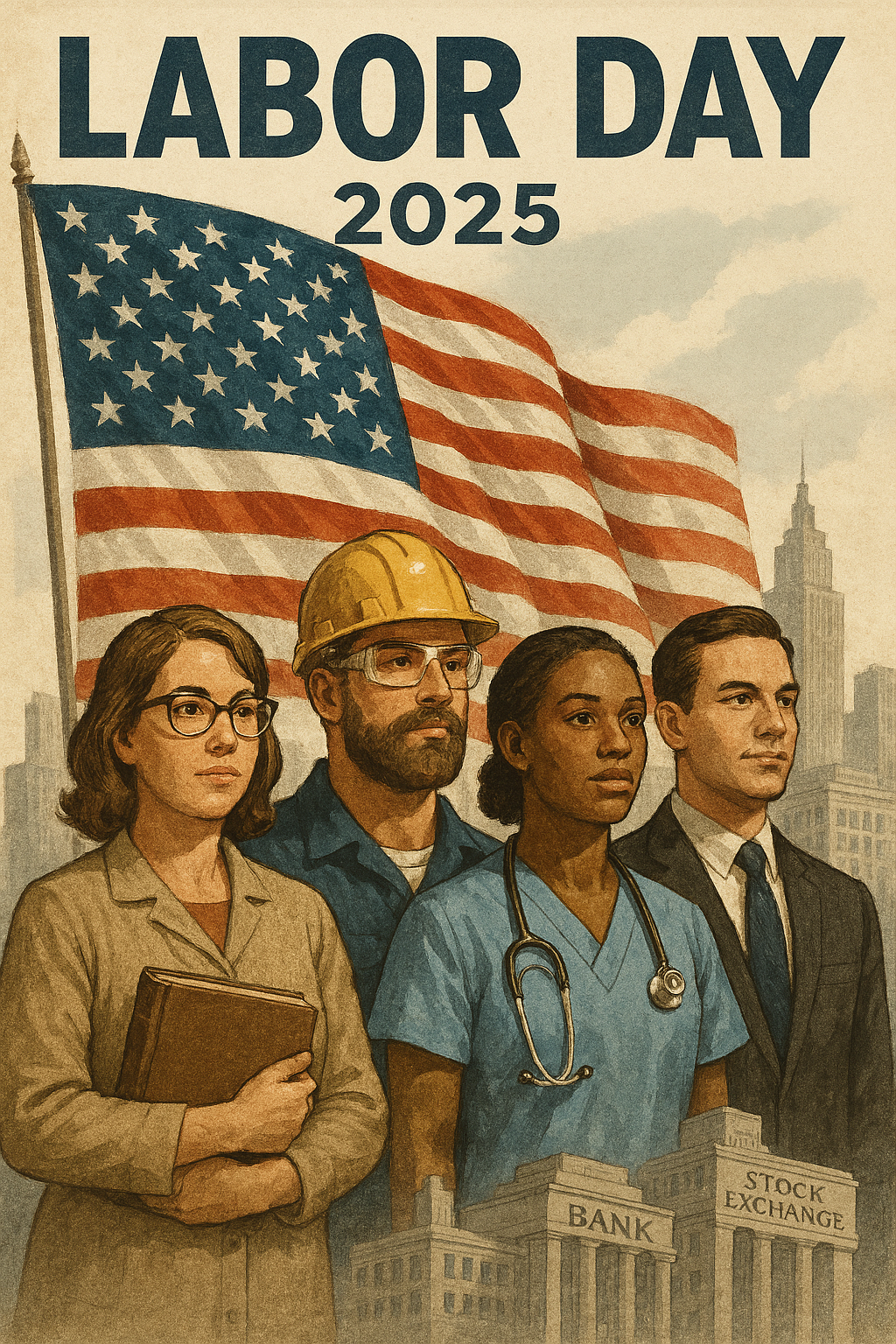
Labor Day 2025 in the USA is more than just a long weekend—it symbolizes the contributions of workers while raising key questions about the economy, labor rights, and market closures. Here’s a complete guide with the latest updates.
Table of Contents
Published: September 01, 2025 | Last Updated: September 01, 2025
Labor Day 2025 marks the 143rd observance of this significant federal holiday, scheduled for Monday, September 1, 2025. This annual commemoration recognizes the contributions of American workers while serving as a pivotal moment for examining current labor market conditions, workplace policy developments, and economic indicators. The holiday affects millions of Americans through federal office closures, banking operations, financial market suspensions, and retail sector activities.
This comprehensive analysis examines Labor Day 2025 from multiple perspectives, including historical context, operational impacts across various sectors, current labor rights developments, economic implications, and future workforce trends. Official data from government agencies, labor organizations, and financial institutions inform this assessment.
Historical Foundation of Labor Day Observances
Origins in Late 19th Century Labor Movements
Labor Day emerged during the industrial expansion period of the 1880s, when American workers faced challenging employment conditions. According to historical records, workers during this era commonly experienced 12-16 hour workdays, limited safety protections, and minimal compensation standards. The industrial economy’s rapid growth created significant demands on the workforce without corresponding worker protections.
The inaugural Labor Day demonstration occurred on September 5, 1882, in New York City. The Central Labor Union organized this event, which attracted approximately 10,000 workers who participated despite concerns about employer responses. This gathering represented a significant moment in labor organizing history, demonstrating collective worker solidarity on unprecedented scale.
The demonstration focused on specific demands including reduced working hours, improved workplace safety measures, and fair compensation structures. These objectives reflected widespread concerns among industrial workers across multiple sectors including manufacturing, transportation, and construction industries.
Federal Recognition Process
Labor Day achieved federal holiday status through legislative action in 1894. The recognition followed the Pullman Strike, a railroad worker protest that disrupted national transportation systems. President Grover Cleveland signed the legislation on June 28, 1894, establishing Labor Day as an official federal observance.
This federal designation provided legal protection for the holiday and created a framework for annual observance across government agencies and many private sector employers. The holiday’s federal status distinguishes it from numerous state and local observances, ensuring nationwide recognition and consistent celebration timing.
The September timing differs from International Workers’ Day, celebrated on May 1 in most countries worldwide. American political leaders selected the September date to establish separate identity from international labor movements that carried different political associations during that historical period.
Evolution Through Twentieth Century
Labor Day observances expanded throughout the 1900s as labor organizations gained membership and influence. The holiday witnessed major developments including establishment of the 40-hour workweek, creation of workplace safety regulations through the Occupational Safety and Health Administration, and implementation of social insurance programs.
Each decade brought distinct labor movement characteristics. The 1930s saw New Deal legislation creating Social Security and unemployment insurance systems. The 1960s and 1970s experienced civil rights integration with labor advocacy. Recent decades have focused on service sector organizing, technology industry labor relations, and gig economy worker classification.
Labor Day continues serving as an annual assessment point for measuring progress on worker protection objectives while identifying persistent challenges requiring continued attention and policy development.
Labor Day 2025 Operational Impacts
Financial Market Operations
The 2025 observance affects financial markets through standard federal holiday protocols. The New York Stock Exchange and NASDAQ will suspend all trading activities on September 1, 2025. This includes regular trading hours, pre-market sessions, and after-hours trading windows, creating a complete 24-hour trading pause.
According to exchange regulations, no equity transactions, options trades, or related securities activities will process during the holiday closure. International investors and institutions that depend on U.S. market data will experience corresponding interruptions in information flow and trading capabilities.
The suspension affects investment strategies as traders and portfolio managers cannot execute transactions or respond to market developments during the closure. Historical patterns show trading volume typically decreases 20-30% in the week preceding Labor Day as market participants anticipate the holiday break.
Banking Sector Adjustments
Commercial banks, credit unions, and financial institutions observe Labor Day through physical branch closures. Major national banking institutions including Bank of America, JPMorgan Chase, Wells Fargo, and Citibank will close branch locations on September 1, 2025.
However, banking customers retain access to specific services during the holiday. Automated teller machines (ATMs) typically maintain operational status for cash withdrawals and deposits. Online banking platforms continue functioning for account monitoring, bill payments, and transfer scheduling between accounts at the same institution.
Customer service telephone lines may operate with reduced staffing or limited hours depending on individual institution policies. Wire transfer services will be unavailable due to Federal Reserve closure, affecting time-sensitive payment processing for both domestic and international transactions.
The Federal Reserve System observes all federal holidays, meaning no monetary policy announcements, interest rate decisions, or official economic data releases occur on September 1st. This pause creates a natural break in economic policy activities and data interpretation cycles.
Retail Sector Operations
While financial institutions close, retail businesses experience heightened activity during Labor Day weekend. Major department store chains including Macy’s, Nordstrom, and JCPenney traditionally extend operating hours to accommodate increased consumer traffic during the three-day weekend.
Electronics retailers such as Best Buy anticipate significant customer volume driven by back-to-school shopping patterns. Parents and students typically complete technology purchases for the upcoming academic year during this period, creating concentrated sales activity in computing devices, tablets, and educational software.
Automotive dealerships frequently remain open with promotional pricing structures designed to attract buyers during the extended weekend. Industry data shows Labor Day weekend consistently ranks among the highest sales periods for new and used vehicle transactions annually.
Home improvement retailers including Home Depot and Lowe’s prepare for increased foot traffic as homeowners utilize the three-day weekend for renovation projects and seasonal maintenance activities. These retailers often feature special promotions on tools, building materials, and outdoor equipment during the Labor Day period.
E-Commerce Activity
Digital retail platforms experience substantial traffic increases during Labor Day weekend. Amazon and other major e-commerce operators prepare for elevated order volumes through enhanced fulfillment center staffing and extended delivery timeframes.
Market analysts project online sales growth exceeding 10% compared to Labor Day 2024 levels, reflecting continued consumer preference for digital shopping channels. This growth trend accelerated during the pandemic period and has maintained momentum through subsequent years.
E-commerce activity extends beyond traditional retail categories into services including travel bookings, entertainment subscriptions, and digital content purchases. The convergence of promotional pricing and extended leisure time creates optimal conditions for discretionary spending across multiple categories.
Transportation System Operations
Labor Day weekend represents one of the year’s busiest travel periods across all transportation modes. The Transportation Security Administration projects record-breaking passenger volumes at major airports nationwide during September 1-3, 2025.
Major airports including Hartsfield-Jackson Atlanta International, Los Angeles International, and O’Hare International implement enhanced security checkpoint staffing and extended operating hours to manage increased passenger flow. TSA recommends travelers arrive at least two hours before domestic flights and three hours before international departures.
The American Automobile Association estimates over 55 million Americans will travel by personal vehicle during Labor Day weekend 2025, representing approximately 3% increase from 2024 levels. This projection considers fuel prices, economic conditions, and traditional holiday travel patterns.
State transportation departments coordinate to suspend non-emergency highway construction projects during peak travel periods, improving traffic flow on major interstate routes. Increased highway patrol presence aims to enhance safety during high-volume travel days.
Public transportation systems in major metropolitan areas including New York City, Chicago, Los Angeles, and Washington D.C. operate on modified holiday schedules. Transit agencies typically reduce service frequency while maintaining coverage on primary routes serving tourist destinations and entertainment districts.
Current Labor Rights Landscape
Minimum Wage Developments
Multiple states have implemented minimum wage increases effective around Labor Day 2025. These adjustments affect millions of workers across various industries and represent significant policy shifts in compensation structures.
California maintains a $20.00 per hour minimum wage for fast-food industry workers, the highest sector-specific minimum in the nation. This rate applies to employees at quick-service restaurant chains with more than 60 locations nationally. The policy aims to address cost of living challenges in major metropolitan areas while establishing sustainable compensation for service workers.
New York’s statewide minimum wage stands at $15.00 per hour, with higher rates in specific regions including New York City and surrounding counties. The state implements annual reviews to determine whether inflation-based adjustments are necessary for maintaining purchasing power.
Florida’s minimum wage reaches $12.00 per hour with scheduled annual increases indexed to inflation rates. This progressive adjustment mechanism aims to gradually raise the wage floor to $15.00 per hour by 2026 while allowing employers time for operational adjustments.
Washington State maintains the nation’s highest statewide minimum wage at $16.28 per hour, reflecting the state’s high cost of living and strong labor advocacy tradition. The rate applies uniformly across all counties and industries, with limited exceptions for specific employee categories.
Union Activity and Organizing Efforts
Labor unions utilize Labor Day 2025 symbolism to advance organizing campaigns and contract negotiations across multiple industries. The United Auto Workers union continues negotiations with major automotive manufacturers regarding compensation, job security, and electric vehicle production transition impacts.
Teachers’ unions in numerous states address staffing challenges, classroom resource allocation, and compensation structures. Several districts face ongoing negotiations as the new academic year begins, with Labor Day providing symbolic backdrop for these discussions.
Healthcare worker unions emphasize patient safety ratios, staffing adequacy, and workplace protection equipment access. The pandemic period heightened awareness of healthcare worker conditions, creating momentum for improved workplace standards and compensation.
Technology sector organizing efforts expand as workers in software development, content moderation, and other digital roles explore collective bargaining options. These efforts represent relatively new territory for labor organizing, adapting traditional union structures to knowledge economy workplace dynamics.
Union membership rates remain below historical peaks but show stabilization after decades of decline. Bureau of Labor Statistics data indicates approximately 10% of American workers hold union membership, with higher concentrations in public sector employment, education, and transportation industries.
Workplace Flexibility and Remote Work
Post-pandemic workplace arrangements continue evolving as employers and employees negotiate appropriate balance between remote work flexibility and in-office collaboration requirements. Labor Day 2025 occurs amid ongoing discussions about permanent workplace structure changes.
Many employees value remote work arrangements for commuting time elimination, improved work-life balance, and increased autonomy over daily schedules. Surveys indicate majority of remote-capable workers prefer hybrid arrangements combining home and office work over full-time office requirements.
Employers express concerns about remote work impacts on team cohesion, training effectiveness for new employees, and organizational culture maintenance. Some organizations implement return-to-office mandates while others embrace permanent remote or hybrid models.
Policy questions remain regarding remote work taxation, workers’ compensation coverage for home office injuries, and employment law application when workers and employers operate in different states. These issues require legislative clarification as remote work becomes permanent feature rather than temporary pandemic response.
Gig Economy and Worker Classification
Independent contractor classification continues generating legal and policy debates affecting millions of workers engaged in platform-based work through companies including Uber, Lyft, DoorDash, and similar services.
Workers seek employment classification that provides access to benefits including unemployment insurance, workers’ compensation coverage, and health insurance contributions. Current independent contractor classification generally excludes these protections, creating financial vulnerability for gig workers.
Platform companies argue that employment classification would fundamentally alter business models while eliminating flexibility that attracts many workers to gig opportunities. They propose alternative benefit structures that provide some protections without full employment status.
State legislatures pursue varying approaches to gig worker classification. California’s Assembly Bill 5 attempted to reclassify many independent contractors as employees, though subsequent modifications created numerous industry exemptions. Other states monitor these developments while considering their own policy responses.
Federal legislation addressing gig worker classification has been proposed but not enacted, leaving state-level policy variation as the current regulatory environment. This patchwork approach creates complexity for companies operating across multiple jurisdictions.
Economic Impact Analysis
Retail Sales Performance
Labor Day weekend consistently generates substantial retail sales activity, ranking among the top five revenue periods annually for many retailers. Economic analysts project 4-6% retail sales growth during Labor Day 2025 compared to 2024 levels, driven by multiple factors.
Back-to-school shopping represents major component of Labor Day weekend retail activity. Parents and students purchase clothing, electronics, school supplies, and dormitory furnishings during this period, with retail promotions specifically targeting these categories.
End-of-summer merchandise clearance creates opportunities for consumers to purchase seasonal items at reduced prices while retailers manage inventory transitions to fall collections. This dynamic benefits both consumers seeking value and retailers optimizing warehouse space.
Automotive sales receive significant boost during Labor Day weekend as manufacturers and dealers offer promotional financing rates and pricing incentives. Historical data shows Labor Day weekend frequently ranks among the highest sales weekends for vehicle purchases annually.
Home improvement spending increases as homeowners utilize the three-day weekend for renovation projects, outdoor maintenance, and seasonal preparation activities. Hardware, building materials, and outdoor equipment categories experience concentrated sales activity during this period.
Tourism and Hospitality Revenue
The hospitality industry experiences substantial revenue concentration during Labor Day weekend. Hotels, restaurants, entertainment venues, and tourist attractions often generate 10-15% of their quarterly revenue during this three-day period, according to industry analyses.
Popular vacation destinations including beach communities, national parks, and major cities experience capacity-level bookings. Hotel rates typically increase during Labor Day weekend reflecting heightened demand, with advance reservations recommended for securing preferred accommodations.
Restaurant operations intensify during the holiday weekend as travelers dine out more frequently and local residents host gatherings at commercial establishments. Staffing challenges affect some operations as restaurants balance employee time off requests with anticipated business volumes.
Entertainment venues including amusement parks, museums, sporting events, and concerts attract large crowds during the extended weekend. Families utilize the time together for shared experiences before school schedules resume regular patterns.
Tourism revenue extends beyond direct spending to include indirect economic benefits through employment, tax revenue, and business support services. Regional economies dependent on tourism activity particularly value Labor Day weekend’s contribution to annual revenue totals.
Labor Market Indicators
Labor Day provides natural assessment point for evaluating employment trends and workforce conditions. Key indicators monitored during this period include unemployment rates, labor force participation, job opening statistics, and wage growth patterns.
The unemployment rate maintains historically low levels around 3.7% according to recent Bureau of Labor Statistics data. This reflects sustained labor demand across multiple sectors despite economic uncertainties and periodic slowdown concerns.
Labor force participation rates show gradual recovery toward pre-pandemic levels, though gaps remain in specific demographic categories. Women’s workforce participation, particularly among mothers with young children, remains below 2019 benchmarks despite recent improvements.
Job opening rates continue exceeding unemployment levels, indicating employer difficulty filling available positions across various industries and skill levels. This dynamic empowers workers to negotiate improved compensation and working conditions while creating challenges for employers managing staffing needs.
Wage growth accelerates in certain sectors including hospitality, healthcare, and professional services. Employers facing recruitment and retention challenges increase compensation offers to attract qualified candidates in competitive labor markets.
Investment Strategy Considerations
Financial markets demonstrate consistent patterns surrounding Labor Day that inform investment strategies and portfolio management decisions. Trading volume typically decreases 25-35% during the week preceding Labor Day as market participants anticipate the holiday closure and reduce position adjustments.
September historically represents challenging month for stock market performance, with average returns below other months according to long-term historical analysis. Multiple factors contribute to this pattern including summer vacation season conclusion, mutual fund fiscal year-end activities, and increased economic data focus.
Sector rotation strategies often receive attention during Labor Day period as investors reassess portfolio allocations for autumn months. Consumer discretionary stocks may benefit from holiday weekend spending while technology stocks face potential headwinds from regulatory scrutiny and valuation concerns.
Bond market activity slows during holiday periods as fixed-income traders reduce position taking ahead of market closures. Government bond yields may fluctuate based on Federal Reserve policy expectations and economic data interpretation.
Post-Labor Day periods frequently experience increased market volatility as trading activity normalizes and participants respond to economic data releases, corporate earnings guidance, and policy developments that accumulated during summer months.
Contemporary Workplace Challenges
Healthcare Access and Benefits
Healthcare benefit access remains central concern for American workers, with Labor Day 2025 highlighting ongoing challenges in coverage affordability, scope, and quality. Employer-sponsored health insurance represents primary coverage source for working-age Americans and their families.
Rising healthcare costs affect both employers and employees through premium increases, higher deductible amounts, and expanded cost-sharing requirements. Many workers face difficult tradeoffs between coverage comprehensiveness and out-of-pocket expense management.
High-deductible health plans paired with health savings accounts gain popularity as employers seek to control benefit costs while maintaining coverage offerings. These plans require significant upfront spending before insurance coverage activates, creating financial strain for workers with limited savings.
Mental health service access receives increased attention as employers and insurers expand coverage for counseling, therapy, and psychiatric treatment. Workplace stress, burnout prevention, and psychological wellbeing emerge as priorities for forward-thinking organizations.
Prescription drug costs represent particular challenge as medication prices increase faster than general inflation rates. Patients and insurers negotiate coverage formulas, prior authorization requirements, and generic substitution policies that affect treatment access and affordability.
Retirement Security Concerns
Retirement preparation challenges affect workers across income levels and age groups. Traditional pension systems continue declining as employers shift to defined contribution plans including 401(k) accounts that transfer investment risk to employees.
Retirement account participation rates vary significantly across income levels and employer types. Higher-income workers with access to employer retirement plans and matching contributions accumulate substantially more retirement savings than lower-income workers lacking these benefits.
Financial literacy regarding retirement planning remains inadequate for many Americans. Understanding investment options, asset allocation strategies, and withdrawal planning requires knowledge that many workers lack, potentially compromising retirement security.
Social Security system sustainability generates ongoing policy debates as demographic shifts create fiscal pressures on the program. The worker-to-beneficiary ratio declines as Baby Boom generation retirements continue while birth rates remain below replacement levels.
Alternative retirement savings vehicles including state-sponsored programs emerge to serve workers without employer-provided retirement plans. These initiatives aim to address coverage gaps through automatic enrollment structures and simplified investment options.
Workplace Safety and Health
Occupational safety remains fundamental concern despite decades of regulatory development and workplace improvement. The Occupational Safety and Health Administration establishes and enforces workplace safety standards across most private sector industries.
Injury and illness rates vary significantly across industries, with construction, manufacturing, and healthcare experiencing higher incident rates than office-based sectors. Employers invest in safety training, protective equipment, and hazard mitigation to reduce workplace injuries.
Ergonomic concerns affect office workers and others performing repetitive tasks or maintaining static postures for extended periods. Musculoskeletal disorders including back pain, carpal tunnel syndrome, and neck strain represent common workplace health issues.
Workplace violence prevention receives increased attention across industries including healthcare, retail, and education. Employers implement security measures, training programs, and response protocols to protect workers from violent incidents.
Pandemic preparedness remains relevant consideration following COVID-19 experience. Organizations maintain protocols for infectious disease response including ventilation improvements, hygiene practices, and remote work capabilities for outbreak situations.
Technological Impact on Workforce
Artificial Intelligence and Automation
Artificial intelligence integration accelerates across industries, creating both opportunities and challenges for workers. Routine task automation affects employment in manufacturing, customer service, data entry, and other repetitive work categories.
Manufacturing facilities implement robotic systems that improve production efficiency, quality consistency, and operational flexibility. These technologies reduce demand for certain manual labor positions while creating needs for technical roles including maintenance, programming, and system management.
Customer service operations increasingly deploy chatbots and automated response systems that handle routine inquiries without human intervention. This technology allows human representatives to focus on complex issues requiring judgment, empathy, and creative problem-solving.
Professional services including legal research, medical diagnosis assistance, and financial analysis incorporate AI tools that augment human capabilities. These applications enhance productivity and accuracy while raising questions about appropriate human oversight and accountability.
Transportation sector faces potential transformation through autonomous vehicle development. Long-haul trucking, delivery services, and ride-sharing operations may experience significant disruption as self-driving technology matures and regulatory frameworks develop.
Skill Development Requirements
Technological change creates ongoing skill development demands as workers adapt to evolving job requirements. Continuous learning becomes necessary for maintaining employability throughout careers spanning multiple decades.
Corporate training programs expand as employers recognize workforce development importance. Companies invest in employee education through tuition assistance, professional development courses, and certification support that builds organizational capabilities while benefiting individual workers.
Community colleges serve critical role in workforce preparation through practical training programs aligned with local employer needs. These institutions offer flexible scheduling, affordable tuition, and industry-recognized credentials that facilitate career transitions.
Online learning platforms including Coursera, edX, and LinkedIn Learning provide accessible skill development options for workers seeking to expand capabilities independently. These resources allow self-paced learning across thousands of topics from introductory to advanced levels.
Government initiatives support worker retraining through funding for displaced worker programs, apprenticeship expansion, and coordination between educational institutions and employers. These efforts aim to smooth economic transitions as industries evolve.
Global Context and Comparisons
International Labor Day Observances
While the United States celebrates Labor Day in September, most countries recognize International Workers’ Day on May 1st. This difference reflects distinct historical developments and political contexts that shaped labor movements globally.
The international May 1st observance commemorates the Haymarket Affair of 1886 in Chicago, where labor demonstrations for eight-hour workday led to violent confrontation. Most countries adopted May 1st as international solidarity expression for worker rights.
American political leaders deliberately chose September for Labor Day celebration to establish separate identity from international labor movements associated with socialist and communist political movements during the late 19th and early 20th centuries.
Different countries approach worker recognition through various policies and cultural practices. European nations generally provide more extensive vacation time, stronger employment protections, and comprehensive social safety nets compared to United States approaches.
Nordic countries implement worker representation on corporate boards, creating formal mechanisms for employee voice in business strategy and decision-making. These approaches reflect social democratic traditions that emphasize stakeholder capitalism beyond shareholder primacy.
Globalization Effects on American Workers
Global economic integration affects American workers through multiple channels including trade flows, supply chain structures, and international labor competition. Manufacturing employment declined significantly from peak levels as companies relocated production to lower-cost countries.
Recent years show some manufacturing activity returning to United States through reshoring initiatives driven by supply chain resilience concerns, transportation cost increases, and quality control considerations. Semiconductor fabrication, pharmaceutical production, and battery manufacturing receive particular attention for domestic expansion.
Technology enables remote work across international boundaries, creating both opportunities and competition for American workers. Professionals can access global opportunities while facing competition from qualified workers in countries with lower compensation expectations.
Trade policy debates continue regarding appropriate balance between open markets and worker protection. Tariffs, trade agreements, and regulatory harmonization affect employment across industries with varying impacts on different worker categories and geographic regions.
Policy Developments and Legislative Outlook
Federal Policy Considerations
Labor policy discussions at federal level address multiple dimensions of worker rights, compensation, and employment regulation. Minimum wage adjustment proposals seek to raise federal baseline from current $7.25 per hour to $15.00 per hour, though legislative action faces political challenges.
Overtime regulation updates consider revisions to salary thresholds for exempt employee classification. Current rules establish minimum salary levels below which most employees qualify for overtime pay regardless of job duties, with periodic adjustments for inflation and wage growth.
Paid family leave represents significant policy gap in United States compared to other developed nations. Proposals for national paid family and medical leave program would provide wage replacement for workers needing time away for childbirth, serious health conditions, or family care responsibilities.
Healthcare reform discussions continue regarding coverage expansion, cost containment, and quality improvement. Various proposals address these objectives through different mechanisms including public option creation, Medicare expansion, and private market regulation modifications.
State-Level Innovation
State governments implement innovative worker protection and benefit programs that serve as policy laboratories for potential national adoption. Portable benefits systems for gig economy workers allow independent contractors to access benefits typically available only through traditional employment.
State-sponsored retirement savings programs address coverage gaps for workers lacking employer retirement plans. These initiatives establish automatic enrollment systems with simple investment options, enabling retirement savings accumulation without employer involvement.
Predictive scheduling requirements in some jurisdictions mandate advance notice of work schedules for retail and service workers. These rules aim to provide stability for workers managing childcare, education, and other responsibilities requiring predictable schedules.
Right-to-disconnect legislation protects worker off-time by limiting employer expectations for after-hours communication. These policies recognize technology-enabled constant connectivity risks creating unhealthy work-life boundaries and chronic stress.
Looking Forward: Future Workforce Trends
Emerging Employment Categories
Technological advancement and societal changes create entirely new employment categories that reshape labor market composition. Data science and analytics roles experience rapid growth as organizations increasingly rely on data-driven decision-making across operations.
Renewable energy transition generates demand for specialized technicians including solar panel installers, wind turbine maintenance workers, and battery storage system operators. These green economy jobs offer career pathways in emerging industries with long-term growth prospects.
Healthcare technology positions expand as telemedicine, electronic health records, and medical device sophistication increase. Health information managers, telehealth coordinators, and medical equipment specialists represent growing professional categories.
Cybersecurity specialists face sustained demand as digital threats evolve and organizations prioritize information security. The shortage of qualified cybersecurity professionals creates opportunities for workers with appropriate technical training and certifications.
Education and Training Evolution
Educational institutions adapt programs to address changing workforce requirements. Competency-based education approaches focus on demonstrable skills rather than traditional credit hour accumulation, allowing flexible learning pathways.
Apprenticeship programs combine classroom instruction with practical workplace experience, creating proven pathways into skilled trades and technical careers. These programs benefit workers seeking hands-on learning while providing employers with trained talent pipelines.
Micro-credentials and digital badges offer granular certification of specific skills, enabling workers to document capabilities without completing full degree programs. Employers increasingly recognize these credentials as valid qualifications for position requirements.
Industry partnerships with educational institutions ensure curriculum relevance for actual workplace needs. Advisory boards, guest lecturers, and cooperative education placements strengthen connections between academic learning and professional application.
Key Takeaways and Future Implications
Labor Day 2025 reinforces multiple themes relevant to American workforce and economic conditions. The holiday celebrates worker contributions while highlighting persistent challenges requiring ongoing attention and policy development.
Economic indicators demonstrate labor market strength through low unemployment rates, substantial job opening levels, and accelerating wage growth in numerous sectors. These positive trends coexist with concerns about inflation, recession risks, and global economic uncertainties.
Worker rights evolution continues through minimum wage increases, union organizing activities, and workplace flexibility negotiations. Progress occurs incrementally through state-level innovation and private sector adaptation rather than sweeping federal policy changes.
Technological transformation reshapes employment across industries through automation, artificial intelligence, and digital platform proliferation. These changes create opportunities for workers with relevant skills while displacing others lacking education or training for evolving requirements.
Healthcare and retirement security remain central concerns for American workers lacking robust benefit access through employment. Policy debates address these challenges through various proposals with differing philosophical approaches and practical implications.
The future workforce will require adaptability, continuous learning, and resilience as technological change and global competition accelerate. Educational institutions, employers, and policy makers share responsibility for creating systems supporting worker success in dynamic economic environment.
Labor Day’s enduring significance lies in its dual nature as celebration and advocacy platform. The holiday honors past achievements while focusing attention on contemporary challenges and future opportunities for American workers across all industries and skill levels.
Frequently Asked Questions
What is Labor Day and why is it celebrated?
Labor Day recognizes American workers’ contributions to national prosperity and commemorates historical labor movement struggles for improved working conditions. The federal holiday occurs annually on the first Monday of September, providing workers a day of rest while celebrating their economic and social contributions. The observance originated from an 1882 labor demonstration in New York City and gained federal recognition in 1894 following the Pullman Strike.
Are banks and financial markets closed on Labor Day 2025?
Yes, Labor Day 2025 falls on Monday, September 1, resulting in closures for federal government offices, most commercial banks, credit unions, and major stock exchanges including the New York Stock Exchange and NASDAQ. However, ATM services and online banking platforms typically remain operational. Essential services and many retail establishments continue operating with possible modified hours. The Federal Reserve also observes the holiday, suspending monetary policy communications and official data releases.
How does Labor Day impact the economy?
Labor Day weekend generates significant economic activity through concentrated retail sales, travel expenditures, and hospitality services. Analysts project 4-6% retail sales growth during Labor Day 2025 compared to 2024 levels, driven by back-to-school shopping, seasonal merchandise clearance, and automotive sales promotions. The hospitality industry often generates 10-15% of quarterly revenue during this three-day period. Additionally, Labor Day serves as a checkpoint for assessing employment trends, wage patterns, and overall labor market health.
What are current major labor rights issues in 2025?
Contemporary labor issues include minimum wage increases in multiple states, union organizing activities across technology and service industries, workplace flexibility and remote work policies, healthcare benefit access challenges, gig economy worker classification debates, and artificial intelligence impacts on employment. Several states implemented minimum wage adjustments effective around Labor Day 2025, with California reaching $20 per hour for fast-food workers and Washington State maintaining $16.28 per hour statewide. Union membership remains around 10% of the American workforce with concentration in public sector and education.
How do Americans typically celebrate Labor Day?
Traditional Labor Day celebrations include parades in major cities featuring labor unions and community organizations, family barbecues and outdoor gatherings, retail shopping during promotional sales events, and recreational activities marking summer’s unofficial conclusion. Many communities organize festivals, concerts, and educational programs highlighting labor history and worker contributions. The three-day weekend represents one of the year’s busiest travel periods, with over 55 million Americans projected to travel by car during Labor Day 2025.
What is the difference between U.S. Labor Day and International Workers’ Day?
The United States celebrates Labor Day on the first Monday of September, while most countries observe International Workers’ Day on May 1st. This difference stems from historical and political contexts. American political leaders chose September timing to distance the observance from the international May 1st celebration commemorating the 1886 Haymarket Affair, which carried associations with socialist and communist movements. Both holidays recognize worker contributions, but timing and historical origins differ significantly.
How has Labor Day changed over time?
Labor Day evolved from its origins as a grassroots worker demonstration in 1882 to a comprehensive federal holiday affecting multiple economic sectors. The observance gained federal recognition in 1894 and witnessed major labor movement developments throughout the 20th century including the 40-hour workweek establishment, workplace safety regulations through OSHA, and social insurance program creation. Modern Labor Day observances balance historical commemoration with contemporary worker rights advocacy and assessment of current employment conditions.
What sectors experience the biggest impact during Labor Day weekend?
The retail sector experiences substantial activity with major sales events across department stores, electronics retailers, automotive dealers, and home improvement chains. Tourism and hospitality industries see concentrated revenue generation through hotel bookings, restaurant dining, entertainment venue attendance, and travel-related services. Transportation systems handle peak volumes across airports, highways, and public transit. Meanwhile, financial markets suspend operations, creating a complete pause in trading activity for the holiday.
About the Author
Nueplanet is a dedicated news content writer specializing in economic policy, labor market analysis, and workforce trends. With a commitment to factual accuracy and transparent reporting, Nueplanet draws exclusively from official government sources, verified institutional data, and authoritative news agencies to provide readers with reliable information. The goal is to present comprehensive, balanced analysis that helps readers understand complex topics without promotional bias or subjective interpretation. All content undergoes thorough verification against primary sources, with clear attribution to ensure readers can independently verify information presented.
Commitment to Accuracy: Every article prioritizes official data from government agencies including the Bureau of Labor Statistics, Department of Labor, Federal Reserve, and other authoritative sources. Information is verified for accuracy and updated as new data becomes available, with publication and revision dates clearly displayed.
Editorial Standards: Content maintains neutral tone, avoids promotional language, and presents multiple perspectives on policy debates. Analysis focuses on factual implications rather than subjective opinions, allowing readers to form their own conclusions based on comprehensive information.
Helpful Resources
Latest Posts
- SBI PO Prelims Result 2025: Expected Release Date, How to Check, and More
- Gold Price Today: Latest Updates, Market Trends, and Investor Insights
- Silver Price Today: Surge Above $40, Market Trends & What Indian Investors Should Know
- Amanta Healthcare IPO: Full Overview, Subscription Trends & Investor Guide
Tag
Labor Day
Related Posts












Post Comment