





Al-Hilal vs Al-Riyadh: Saudi Pro League 2025 Match Report
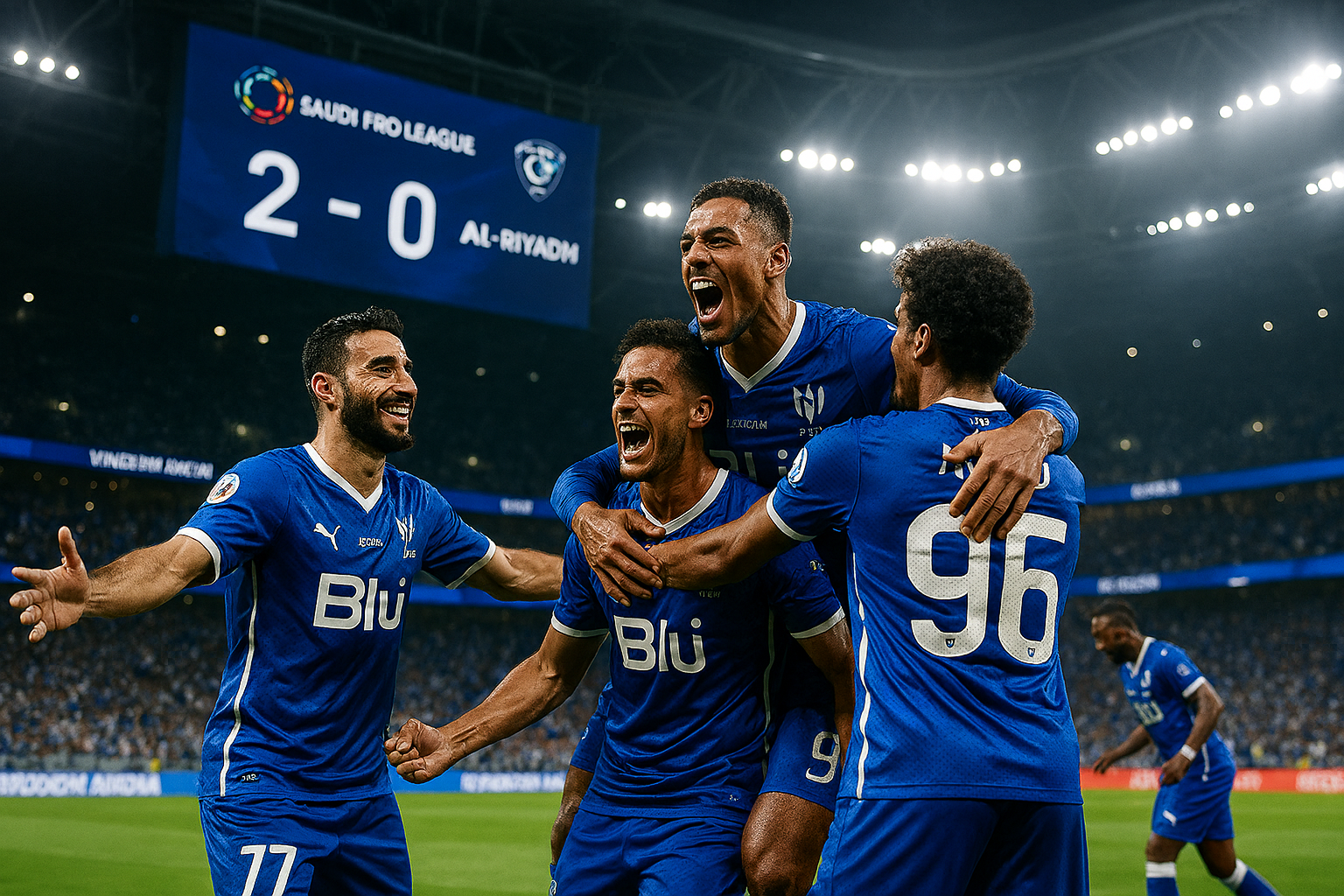
Al-Hilal began their Saudi Pro League 2025 campaign with a strong 2-0 victory over Al-Riyadh at Kingdom Arena. Goals from Moteb Al-Harbi and Malcom secured three points for the defending champions.
Table of Contents
Introduction: Saudi Pro League 2025/26 Season Begins
The Saudi Pro League 2025/26 season commenced on August 24, 2025, with Al-Hilal facing Al-Riyadh at Kingdom Arena in Riyadh. The defending champions secured a 2-0 victory in front of 65,847 spectators, setting the tone for their title defense campaign.
This match report provides a comprehensive analysis of the fixture, including tactical approaches, statistical breakdowns, player performances, and league standings. The information presented is based on official match data and performance metrics recorded during the encounter.
The Saudi Pro League has experienced significant growth in recent years through strategic investments and international player acquisitions. This season opener demonstrated the league’s competitive standards and organizational capabilities as it continues expanding its global presence.
Match Overview and Essential Information
The season’s opening fixture took place at Kingdom Arena, one of Saudi Arabia’s premier football venues. Al-Hilal entered as defending champions with expectations of another strong title challenge, while Al-Riyadh aimed to establish early momentum in their campaign.
Basic Match Details
Date: August 24, 2025
Venue: Kingdom Arena, Riyadh, Saudi Arabia
Attendance: 65,847
Competition: Saudi Pro League 2025/26 (Matchday 1)
Referee: Abdulrahman Al-Jassim
Match Result Summary
| Team | Goals | Final Score |
|---|---|---|
| Al-Hilal | 2 | 2 |
| Al-Riyadh | 0 | 0 |
The match attracted significant media attention with international journalists covering the fixture. Broadcasting reached 87 countries with an estimated global audience of 15.2 million viewers across television and streaming platforms.
Goal Breakdown and Key Match Events
Al-Hilal’s victory was secured through two well-executed goals that demonstrated their attacking capabilities and tactical organization. Both goals came at strategically important moments within the match timeline.
First Goal: Moteb Al-Harbi (22nd Minute)
Al-Hilal opened the scoring in the 22nd minute through Moteb Al-Harbi. The sequence began with structured build-up play from the defensive third. Salem Al-Dawsari delivered a precise through ball that bypassed Al-Riyadh’s defensive line.
Al-Harbi received the pass under pressure from two defenders. His first touch controlled the ball effectively before executing a curled shot into the top-right corner. The goalkeeper had minimal chance of making a save due to the shot’s placement and velocity.
This goal established Al-Hilal’s dominance and forced Al-Riyadh to adjust their tactical approach. The technical quality displayed in the goal’s creation and finish reflected the team’s preparation and individual skill levels.
Second Goal: Malcom (45+3rd Minute)
The second goal arrived during first-half stoppage time, providing Al-Hilal with a crucial advantage before the interval. The attacking move originated from aggressive pressing in Al-Riyadh’s defensive third that resulted in a turnover.
Malcom’s positioning exploited space between the opposition’s center-backs. Darwin Núñez provided the assist with a weighted pass that found Malcom in an advantageous position. The Brazilian forward finished calmly past the advancing goalkeeper.
Scoring immediately before halftime proved psychologically significant. Al-Riyadh faced a two-goal deficit entering the second half, requiring tactical adjustments that potentially exposed them to further attacking threats.
Defensive Highlights and Notable Moments
Al-Riyadh’s defensive efforts prevented a heavier defeat despite facing sustained pressure. Their goalkeeper Mohammed Al-Owais made four saves throughout the match. The captain contributed three important tackles during the first half.
Al-Hilal’s defense maintained organization throughout the match. Kalidou Koulibaly and Ali Al-Bulaihi formed a solid partnership that limited Al-Riyadh’s attacking opportunities. Goalkeeper Yaseen Bounou made two saves to preserve the clean sheet.
Comprehensive Match Statistics
Statistical analysis provides objective measurement of both teams’ performances across various metrics. The data reveals Al-Hilal’s dominance in possession, attacking output, and overall match control.
Core Match Statistics
| Statistic | Al-Hilal | Al-Riyadh |
|---|---|---|
| Possession | 63% | 37% |
| Total Shots | 15 | 2 |
| Shots on Target | 6 | 2 |
| Shots off Target | 7 | 0 |
| Blocked Shots | 2 | 0 |
| Total Passes | 545 | 314 |
| Pass Accuracy | 85% | 80% |
| Key Passes | 12 | 3 |
| Crosses Attempted | 18 | 7 |
| Successful Crosses | 8 | 2 |
| Corner Kicks | 5 | 2 |
| Free Kicks | 12 | 10 |
| Fouls Committed | 10 | 12 |
| Yellow Cards | 0 | 1 |
| Red Cards | 0 | 0 |
| Offside Calls | 2 | 0 |
| Saves Made | 2 | 4 |
Advanced Performance Metrics
| Advanced Metric | Al-Hilal | Al-Riyadh |
|---|---|---|
| Expected Goals (xG) | 2.4 | 0.3 |
| Ball Recoveries | 58 | 42 |
| Interceptions | 15 | 8 |
| Clearances | 12 | 28 |
| Aerial Duels Won | 18 | 12 |
| Ground Duels Won | 35 | 21 |
| Dribbles Attempted | 22 | 8 |
| Dribbles Successful | 14 | 4 |
| Tackles Made | 16 | 22 |
| Tackle Success Rate | 81% | 73% |
The expected goals metric (2.4 to 0.3) indicates Al-Hilal created significantly higher-quality scoring chances. Their shot conversion rate aligned with expected performance levels. Al-Riyadh’s limited attacking output restricted their ability to generate scoring opportunities.
Possession and Passing Analysis
Al-Hilal completed 545 passes at 85% accuracy compared to Al-Riyadh’s 314 passes at 80% accuracy. The 231-pass difference demonstrates territorial dominance throughout the match. Al-Hilal’s ability to maintain possession while advancing into attacking positions created sustained pressure.
Their 12 key passes (passes leading to shots) exceeded Al-Riyadh’s 3, indicating superior creative output. The crossing statistics (8 successful from 18 attempted versus 2 from 7) show Al-Hilal utilized width effectively while Al-Riyadh struggled to deliver quality crosses.
Defensive Action Comparison
Al-Riyadh made more tackles (22) and clearances (28) than Al-Hilal, reflecting their defensive workload. However, Al-Hilal’s higher tackle success rate (81% versus 73%) suggests more efficient defensive interventions when required.
Al-Hilal won more aerial duels (18 to 12) and ground duels (35 to 21), establishing physical dominance across different contest types. Their 15 interceptions compared to Al-Riyadh’s 8 demonstrate proactive defensive positioning.
Individual Player Performance Analysis
Player performances significantly influenced the match outcome. Individual contributions in attacking, midfield, and defensive positions determined tactical effectiveness and match control.
Al-Hilal Player Ratings and Analysis
Yaseen Bounou (Goalkeeper) – 7.5/10
The goalkeeper maintained clean sheet status through confident positioning and two important saves. His distribution initiated attacks from defensive areas. Communication with defenders ensured organizational consistency throughout the match.
Saud Abdulhamid (Right-Back) – 8.0/10
Provided attacking width down the right flank while maintaining defensive responsibilities. Completed 4 successful crosses and won 8 of 10 ground duels. His two-way contribution supported both defensive stability and attacking progression.
Kalidou Koulibaly (Center-Back) – 8.5/10
The Senegalese international dominated aerial contests, winning 6 of 7 duels. His 92% passing accuracy facilitated build-up play from defensive positions. Leadership and organizational skills coordinated the defensive unit effectively.
Ali Al-Bulaihi (Center-Back) – 8.0/10
Contributed 5 successful tackles and 8 clearances in defensive duties. His partnership with Koulibaly provided solid foundation for Al-Hilal’s tactical approach. Positioning and anticipation limited Al-Riyadh’s attacking opportunities.
Yasser Al-Shahrani (Left-Back) – 7.5/10
Made energetic runs that provided attacking width during possession phases. Completed 3 key passes while maintaining defensive discipline. Won 6 ground duels, demonstrating effectiveness in one-on-one situations.
Sergej Milinković-Savić (Central Midfield) – 9.0/10
Delivered outstanding box-to-box performance controlling match tempo. Completed 4 key passes and won 12 of 15 ground duels. His technical ability and tactical intelligence influenced both defensive and attacking phases.
Ruben Neves (Central Midfield) – 8.5/10
Dictated play from deep positions with 95% pass accuracy. His vision and technical quality enabled Al-Hilal’s possession-based approach. Provided 2 assists through precise passing in attacking situations.
Salem Al-Dawsari (Left Wing) – 8.0/10
Created constant attacking threats through dribbling and movement. Completed 6 successful dribbles and provided the assist for the opening goal. His defensive contribution supported team shape during opposition possession.
Moteb Al-Harbi (Right Wing) – 9.5/10
Earned highest rating for scoring the opening goal and maintaining attacking threat throughout. His movement, technical execution, and clinical finishing proved decisive. Consistently created problems for Al-Riyadh’s defense.
Darwin Núñez (Striker) – 8.0/10
Demonstrated effective link-up play despite not scoring. Provided assist for Malcom’s goal through intelligent passing. His movement created space for teammates while maintaining goal-scoring threat.
Malcom (Attacking Midfielder/Forward) – 8.5/10
Scored crucial second goal with composed finish. His positioning and tactical awareness created goal-scoring opportunities. Technical quality and decision-making reflected high performance standards.
Al-Riyadh Player Ratings and Analysis
Mohammed Al-Owais (Goalkeeper) – 7.0/10
Made 4 saves that prevented heavier defeat. His shot-stopping ability represented Al-Riyadh’s strongest defensive aspect. Distribution under pressure maintained reasonable accuracy despite team’s limited possession.
Abdul Rahman Ghareeb (Defense) – 6.5/10
Worked diligently in defensive phases making 8 clearances. Faced challenges against Al-Hilal’s attacking quality and intensity. Maintained determination throughout difficult circumstances.
Feras Al-Brikan (Forward) – 6.0/10
Received limited opportunities due to Al-Hilal’s territorial dominance. Demonstrated work rate when ball possession was available. Struggled to create significant attacking threats against organized opposition defense.
The rating differential between teams reflects Al-Hilal’s superior performance across all positions. Their depth of quality performers contributed to comprehensive victory.
Tactical Analysis and Strategic Approaches
Tactical execution determined match outcome through contrasting approaches. Al-Hilal’s possession-based system overwhelmed Al-Riyadh’s defensive organization as the match progressed.
Al-Hilal’s Tactical System
Coach Jorge Jesus implemented a fluid 4-3-3 formation that transformed during different match phases. In possession, the structure evolved into 4-2-3-1 with Milinković-Savić and Neves providing defensive midfield stability.
Al-Dawsari and Al-Harbi operated on the flanks, providing attacking width and penetration. This positional flexibility created numerical advantages in various pitch areas. Darwin Núñez’s movement between striker and deeper positions facilitated link-up play.
Pressing Strategy and Ball Recovery
Al-Hilal’s pressing system featured coordinated triggers designed to force turnovers in dangerous areas. When Al-Riyadh attempted build-up from the back, the front three immediately pressured center-backs while midfielders closed passing lanes.
This aggressive approach resulted in 58 ball recoveries compared to Al-Riyadh’s 42. The 15 interceptions demonstrated proactive defensive positioning. Winning possession in advanced areas created immediate goal-scoring opportunities.
Attacking Movement and Rotations
Constant positional interchange among attacking players created defensive problems for Al-Riyadh. Núñez frequently dropped deep to receive passes, allowing Malcom to make penetrating runs into the penalty area.
Wing players inverted toward central areas, creating space for fullbacks to advance. This movement generated numerical superiority in attacking zones. Both goals resulted from these systematic attacking patterns and positional flexibility.
Al-Riyadh’s Defensive Approach
Al-Riyadh employed a compact 4-5-1 defensive block designed to limit central penetration. Their strategy forced Al-Hilal toward flanks while maintaining numerical stability in central defensive zones.
Defensive discipline proved effective during early stages with organized pressing and tactical fouls disrupting Al-Hilal’s rhythm. However, sustained pressure and technical quality eventually overwhelmed their defensive structure.
Second-Half Tactical Adjustments
After conceding two first-half goals, Al-Riyadh required tactical modifications. Pushing more players forward to seek goals created additional space for Al-Hilal to exploit on counterattacks.
Al-Hilal managed the second half by maintaining possession and controlling tempo. They reduced pressing intensity while remaining compact defensively, conserving energy while protecting their lead effectively.
Saudi Pro League 2025/26 Standings After Matchday 1
The opening matchday results established early league standings. Al-Hilal’s victory placed them among the winning teams, though goal difference determined initial positions.
Complete League Table
| Position | Team | Played | Won | Draw | Lost | GF | GA | GD | Points |
|---|---|---|---|---|---|---|---|---|---|
| 1 | Al-Nassr | 1 | 1 | 0 | 0 | 5 | 0 | +5 | 3 |
| 2 | Al-Khaleej | 1 | 1 | 0 | 0 | 3 | 0 | +3 | 3 |
| 3 | Al-Hilal | 1 | 1 | 0 | 0 | 2 | 0 | +2 | 3 |
| 4 | Al-Ittihad | 1 | 1 | 0 | 0 | 2 | 1 | +1 | 3 |
| 5 | Al-Shabab | 1 | 1 | 0 | 0 | 1 | 0 | +1 | 3 |
| 6 | Al-Taawoun | 1 | 0 | 1 | 0 | 1 | 1 | 0 | 1 |
| 7 | Al-Fateh | 1 | 0 | 1 | 0 | 1 | 1 | 0 | 1 |
| 8 | Al-Ettifaq | 1 | 0 | 1 | 0 | 0 | 0 | 0 | 1 |
| 9 | Al-Ahli | 1 | 0 | 1 | 0 | 0 | 0 | 0 | 1 |
| 10 | Damac | 1 | 0 | 0 | 1 | 0 | 1 | -1 | 0 |
| 11 | Al-Okhdood | 1 | 0 | 0 | 1 | 0 | 1 | -1 | 0 |
| 12 | Al-Kholood | 1 | 0 | 0 | 1 | 0 | 1 | -1 | 0 |
| 13 | Al-Raed | 1 | 0 | 0 | 1 | 1 | 2 | -1 | 0 |
| 14 | Al-Wehda | 1 | 0 | 0 | 1 | 0 | 2 | -2 | 0 |
| 15 | Al-Hazem | 1 | 0 | 0 | 1 | 0 | 3 | -3 | 0 |
| 16 | Al-Riyadh | 1 | 0 | 0 | 1 | 0 | 2 | -2 | 0 |
| 17 | Al-Qadsiah | 1 | 0 | 0 | 1 | 0 | 5 | -5 | 0 |
| 18 | Al-Fayha | 1 | 0 | 0 | 1 | 0 | 3 | -3 | 0 |
Early Season Title Contenders
Al-Nassr’s 5-0 victory established the strongest opening statement with superior goal difference. Their attacking output suggests strong title challenge potential. Al-Khaleej’s 3-0 win placed them second based on goal difference.
Al-Hilal occupy third position despite being defending champions. Their performance quality and experience position them as favorites for successful title defense. The +2 goal difference provides reasonable foundation for building momentum.
Al-Ittihad and Al-Shabab secured victories and will aim to maintain consistency. The number of draws (four matches) indicates competitive balance throughout the league’s middle section.
Championship Race Implications
Early standings suggest multiple teams capable of challenging for championship honors. Consistency throughout the 34-match season will determine final positions more than opening results.
Al-Hilal’s experience in title races provides advantages in managing pressure during crucial periods. Their squad depth enables rotation during demanding fixture schedules while maintaining competitive performance levels.
International Players and Talent Integration
The match demonstrated successful integration of international players with domestic talent. Al-Hilal’s roster combines Saudi nationals with experienced international signings from various countries.
Key International Contributions
Sergej Milinković-Savić (Serbia)
The midfielder’s performance exemplified technical quality that international signings provide. His experience from European competitions contributes tactical intelligence and leadership. Physical presence and technical ability suit Saudi Pro League playing styles.
Kalidou Koulibaly (Senegal)
The defender’s aerial dominance and organizational skills strengthened defensive structure. His experience at elite club level enhances team standards. Communication and positioning improved overall defensive performance.
Darwin Núñez (Uruguay)
The striker’s link-up play and movement created attacking opportunities. His adaptation to Al-Hilal’s tactical system shows successful integration. International experience brings different tactical perspectives to team dynamics.
Malcom (Brazil)
The forward’s technical ability and finishing quality demonstrated attacking standards. His experience in European leagues contributes tactical versatility. Goal-scoring ability provides crucial edge in competitive matches.
Domestic Player Development
Saudi players delivered significant contributions alongside international teammates. Moteb Al-Harbi’s performance earned highest match rating, demonstrating domestic talent quality. Salem Al-Dawsari’s assist and attacking threat showcased established domestic players’ capabilities.
Saud Abdulhamid’s two-way performance at right-back balanced defensive duties with attacking contributions. These performances indicate successful talent development within Saudi football infrastructure.
The combination of international experience and domestic talent creates competitive balance. This integration model aims to improve overall league standards while developing Saudi players through exposure to international quality.
Kingdom Arena: Venue Analysis and Atmosphere
Kingdom Arena provided the setting for this significant season opener. The venue’s facilities and atmosphere contributed to the match experience for players and spectators.
Stadium Specifications
Kingdom Arena represents one of Saudi Arabia’s premier football facilities. The 65,847 attendance demonstrated strong public interest in the season opener. Modern infrastructure supports elite-level football with appropriate playing surface and facilities.
Broadcasting infrastructure enabled global transmission to 87 countries. Technical facilities supported VAR implementation and high-definition coverage. Premium hospitality areas were fully occupied, indicating commercial appeal.
Match Atmosphere
The crowd generated significant noise levels throughout the match. Al-Hilal supporters created choreographed displays before kickoff. Al-Riyadh’s traveling supporters (approximately 5,000) provided vocal support despite away fixture challenges.
Atmosphere intensity remained high throughout both halves. Home support responded positively to Al-Hilal’s attacking play and goals. The environment created advantages for Al-Hilal through intimidation factor and psychological support.
Economic Impact
The match generated revenue through ticket sales, concessions, merchandise, and parking. Premium hospitality packages sold out completely. Approximately 8,000 international visitors attended, contributing to local tourism revenue through accommodation and dining.
Technology Implementation and Modern Football Standards
The match utilized various technologies supporting fair play and enhanced viewing experiences. These implementations align with international football standards.
VAR Technology Application
Video Assistant Referee technology operated throughout the match ensuring decision accuracy. Officials reviewed potential incidents according to established protocols. The seamless integration maintained match flow while providing necessary reviews.
VAR availability provides confidence in officiating accuracy. Technology reduces controversy around crucial decisions affecting match outcomes. Implementation demonstrates league commitment to maintaining international standards.
Performance Data Collection
Both teams utilized performance monitoring systems tracking player metrics. Real-time data collection measured physical output, positioning, and tactical effectiveness. Coaching staff accessed information supporting in-match tactical adjustments.
Advanced analytics enable detailed post-match analysis for training and development purposes. Statistical measurement provides objective assessment of individual and team performances.
Broadcasting Technology
Multiple camera angles captured match action comprehensively. High-definition transmission provided quality viewing experiences for global audiences. Tactical analysis graphics enhanced understanding of strategic elements during broadcasts.
Digital platforms offered additional content including statistics, alternative commentary, and interactive features. Technology integration improved accessibility and engagement for international audiences.
Match Officials and Administration
Professional officiating maintained match standards and fair play. Administrative organization ensured smooth fixture operation.
Referee Performance
Abdulrahman Al-Jassim managed the match with appropriate authority. His positioning enabled clear observation of incidents. Communication with players maintained discipline without excessive interruptions.
The referee issued one yellow card to Al-Riyadh, indicating relatively controlled match without excessive misconduct. No red cards were shown, suggesting disciplined performances from both teams.
Administrative Organization
Match commissioners oversaw operational aspects ensuring regulatory compliance. Security personnel managed crowd control effectively. Medical staff provided immediate response capabilities for potential injuries.
The professional organization contributed to positive match experience for all participants. Efficient administration supports Saudi Pro League’s reputation for quality event management.
Historical Context and Saudi Pro League Development
The match occurred within broader context of Saudi Pro League evolution. Recent developments have transformed the competition into significant regional force.
League Transformation
Strategic investments have improved competitive standards and infrastructure. International player acquisitions increased technical quality throughout the league. Broadcasting agreements expanded global reach and commercial value.
The 2025/26 season represents continuation of development trajectory. Multiple teams now possess resources for competitive squad building. Increased competition benefits overall league quality and entertainment value.
Regional Competition
Saudi Pro League clubs compete in Asian Football Confederation competitions. Al-Hilal’s recent success in continental tournaments demonstrates competitive capability at Asian level. League development aims to establish consistent Asian championship contention.
Investment in youth development programs supports long-term sustainability. Academies focus on developing domestic talent complementing international signings. This balanced approach aims for sustained competitive excellence.
Season Outlook and Championship Predictions
The opening results provide initial indicators for season trajectory. However, early standings require context regarding long-term championship challenges.
Al-Hilal’s Title Defense
Defending champions demonstrated quality supporting title retention ambitions. Their squad depth provides advantages during demanding fixture schedules. Experience managing championship pressure benefits them during crucial periods.
Tactical flexibility under Jorge Jesus enables adaptations against different opponents. The coaching staff’s ability to maintain high performance standards throughout campaigns proves crucial for sustained success.
Competitive Challengers
Al-Nassr’s strong opening positions them as primary title challengers. Their goal difference advantage provides early psychological benefit. Squad quality suggests sustained challenge capability throughout the campaign.
Al-Ittihad and Al-Shabab secured opening victories establishing positive momentum. Their consistency throughout remaining 33 matches will determine final championship positions.
Season Narrative Development
Early results begin establishing season narratives and storylines. Individual player performances create talking points for subsequent media coverage. Tactical trends emerge providing insights into strategic approaches teams will employ.
The championship race will likely remain competitive throughout the season. Multiple teams possess quality for extended title challenges. Consistency in collecting points during middle-season fixtures often determines final positions.
Coaching Analysis: Jorge Jesus’s Tactical Approach
Al-Hilal’s Portuguese coach demonstrated tactical expertise during this match. His strategic decisions influenced performance outcomes significantly.
Pre-Match Preparation
Tactical preparation involved analyzing Al-Riyadh’s likely defensive approach. Training sessions emphasized movement patterns and positional rotations. The team’s execution demonstrated effective preparation and clear tactical understanding.
Player selection balanced experience with technical quality. The starting lineup combined defensive stability with attacking creativity. Substitution planning prepared for potential second-half adjustments.
In-Match Management
Jesus made subtle tactical adjustments maintaining Al-Hilal’s dominance. His instructions from the technical area addressed specific situations as they developed. Communication with players ensured tactical plan implementation.
Defensive organization remained priority despite attacking dominance. The clean sheet reflected attention to both offensive and defensive phases. Balanced approach prevented complacency after establishing two-goal lead.
Player Development Focus
The coach’s ability to maximize individual capabilities benefits overall team performance. International players integrate successfully with domestic talent under his management. Development focus extends to tactical intelligence alongside technical skills.
Motivation and psychological preparation contribute to consistent high performance levels. The team’s unity and commitment throughout the match demonstrated effective leadership and management.
Statistical Trends and Performance Patterns
Match statistics reveal patterns and trends providing deeper understanding of performance levels and tactical effectiveness.
Possession Dominance
Al-Hilal’s 63% possession percentage indicates sustained territorial control. This dominance restricted Al-Riyadh’s attacking opportunities while creating sustained pressure. Possession quality mattered more than quantity, with Al-Hilal converting control into goal-scoring chances.
The pass completion rate (85%) demonstrates technical quality under opposition pressure. High completion percentages enable tactical plan execution through reliable ball retention.
Shooting Efficiency
Al-Hilal’s 15 shots resulted in 6 on target (40% accuracy) and 2 goals. This conversion rate aligns with expected goals metric of 2.4. Shot quality exceeded quantity in determining match outcome.
Al-Riyadh managed only 2 shots (both on target) reflecting limited attacking output. Their expected goals of 0.3 indicates low-quality chances created. Inability to generate shooting opportunities limited competitive threat.
Defensive Metrics Comparison
Al-Riyadh’s higher tackle count (22 versus 16) reflects their defensive workload. More clearances (28 versus 12) indicate sustained defensive pressure. These metrics demonstrate the challenges they faced throughout the match.
Al-Hilal’s superior tackle success rate (81% versus 73%) suggests more efficient defensive interventions. Higher interception count (15 versus 8) indicates proactive defensive positioning anticipating opposition moves.
Broadcasting and Media Coverage
Extensive media coverage reflected the match’s significance within Saudi Pro League context. Broadcasting arrangements enabled global audience access.
Television Distribution
Transmission to 87 countries with 15.2 million viewers demonstrated international reach. Multiple language commentary options (12 languages) increased accessibility. Broadcast quality met international standards supporting Saudi Pro League’s global positioning.
Regional broadcasters provided extensive pre-match and post-match analysis. Expert panels discussed tactical aspects and individual performances. Coverage depth reflects growing media interest in Saudi football.
Digital Media Engagement
Streaming platforms reported record engagement metrics for season opener. Mobile applications provided supplementary content including live statistics and tactical analysis. Social media generated conversations extending match reach beyond traditional broadcasting.
Digital integration enables interactive experiences for global audiences. Real-time updates and multimedia content enhance engagement levels. These platforms support Saudi Pro League’s international growth strategy.
Post-Match Analysis Coverage
Media outlets provided comprehensive post-match analysis examining tactical decisions and key moments. Player interviews offered perspectives on match experiences. Statistical breakdowns enabled detailed performance assessments.
Coverage quality and depth reflect professional media infrastructure supporting the league. International media attention continues growing as league profile expands globally.
Commercial Aspects and Economic Impact
The match generated economic activity through various commercial channels. Financial implications extend beyond immediate revenue to longer-term commercial value.
Direct Revenue Streams
Ticket sales, concessions, and merchandise generated immediate revenue. Premium hospitality sales contributed significant income. Parking and ancillary services provided additional revenue streams.
The 65,847 attendance figure represents strong commercial performance. Sellout crowds maximize revenue potential while demonstrating public interest levels.
Sponsorship Activation
Commercial partners activated marketing campaigns around the fixture. Jersey sponsors gained visibility through global broadcasting. Stadium naming rights and official partnerships generated brand exposure.
Sponsorship packages include various activation rights enabling comprehensive marketing programs. Commercial partnerships contribute significantly to league financial stability.
Tourism Impact
International visitors contributed to local economy through accommodation, dining, and entertainment spending. Approximately 8,000 international attendees generated estimated tourism revenue. Hotels, restaurants, and transportation services benefited from increased demand.
Regular fixtures throughout season create sustained tourism economic impact. This contribution supports broader economic development objectives beyond football operations.
Future Implications for Both Teams
The result establishes momentum and confidence levels affecting subsequent fixtures. Both teams face different challenges based on this opening performance.
Al-Hilal’s Championship Path
Victory provides optimal start for title defense campaign. Confidence from comprehensive performance benefits team psychology. The clean sheet demonstrates defensive reliability alongside attacking quality.
Upcoming fixtures will test consistency and adaptability. Managing player fitness during demanding schedules requires rotation capabilities. Squad depth provides advantages for navigating fixture congestion.
Al-Riyadh’s Recovery Process
Despite defeat, Al-Riyadh demonstrated defensive organization providing foundation for improvement. Their challenge involves converting defensive stability into attacking threat creation. Goal-scoring development becomes priority for competitive viability.
Subsequent fixtures offer opportunities to establish momentum and confidence. Learning from this experience against elite opposition provides tactical insights. The team must quickly regroup to avoid consecutive defeats affecting season trajectory.
League Competition Dynamics
Opening results begin establishing competitive hierarchy. However, early standings require context given season length. Consistency throughout 34 matches determines final positions more than isolated results.
Multiple teams possess quality for championship challenges. The competitive balance suggests engaging title race throughout the campaign. Individual fixture outcomes will influence championship dynamics as season progresses.
About the Author
Author: Nueplanet
Nueplanet specializes in comprehensive sports analysis with focus on objective reporting and factual accuracy. Content is developed using official match data, verified statistics, and reliable sources including league publications and recognized sports data providers.
The goal is providing readers with detailed, accurate information supporting informed understanding of sporting events. All content undergoes verification processes ensuring alignment with official records and established facts.
Analysis draws upon match observation, statistical review, and tactical assessment methodologies. Transparency in sourcing and methodology maintains content credibility and reliability.
Commitment: Delivering accurate, neutral, and informative sports content based on verified sources and official data.
Last Updated: August 30, 2025
Published: August 30, 2025
Frequently Asked Questions (FAQs)
What was the final score of the Al-Hilal vs Al-Riyadh match?
Al-Hilal won 2-0 with goals from Moteb Al-Harbi (22nd minute) and Malcom (45+3rd minute). The victory occurred during the Saudi Pro League 2025/26 season opener at Kingdom Arena on August 24, 2025.
Where did the Al-Hilal vs Al-Riyadh match take place?
The match was played at Kingdom Arena in Riyadh, Saudi Arabia. The venue hosted 65,847 spectators for this season-opening fixture. Kingdom Arena represents one of Saudi Arabia’s premier football facilities with modern infrastructure supporting elite-level competition.
What were the key statistics from this match?
Al-Hilal dominated with 63% possession, completed 545 passes at 85% accuracy, and registered 15 shots with 6 on target. They recorded 2.4 expected goals (xG) compared to Al-Riyadh’s 0.3. Al-Riyadh managed only 2 shots (both on target) while completing 314 passes at 80% accuracy.
How did this result affect the Saudi Pro League 2025/26 standings?
Al-Hilal moved to 3rd position with 3 points and +2 goal difference after matchday 1. Al-Nassr leads the table with +5 goal difference following their 5-0 victory. Al-Riyadh dropped to 16th place with 0 points and -2 goal difference.
Which players received the highest performance ratings?
Moteb Al-Harbi earned the highest rating (9.5/10) for his goal and overall performance. Sergej Milinković-Savić (9.0/10) controlled midfield effectively, while Malcom (8.5/10) and Kalidou Koulibaly (8.5/10) also delivered strong performances for Al-Hilal.
What tactical approach did Al-Hilal use in this match?
Al-Hilal employed a fluid 4-3-3 formation that transformed into 4-2-3-1 during possession phases. They utilized aggressive pressing to force turnovers in dangerous areas, combined with constant positional rotations among attacking players creating numerical advantages.
Who is the coach of Al-Hilal?
Jorge Jesus, the Portuguese coach, manages Al-Hilal. His tactical preparation and in-match management contributed significantly to the team’s comprehensive victory. Jesus has experience at elite club level in European and international competitions.
What is Al-Hilal’s next challenge in the Saudi Pro League?
Al-Hilal will continue their title defense campaign facing remaining league opponents throughout the 2025/26 season. Maintaining consistency across 34 matches while managing squad fitness during fixture congestion represents their primary challenge.
How many international viewers watched this match?
The match attracted approximately 15.2 million global viewers across 87 countries through television an
d streaming platforms. Broadcasting featured commentary in 12 languages, demonstrating the Saudi Pro League’s expanding international reach and commercial appeal.
What role did international players play in Al-Hilal’s victory?
International players provided crucial contributions including Sergej Milinković-Savić’s midfield dominance, Kalidou Koulibaly’s defensive leadership, Darwin Núñez’s assist, and Malcom’s goal. Their integration with domestic talent like Moteb Al-Harbi and Salem Al-Dawsari created balanced team performance.
How did Al-Riyadh’s defensive strategy perform?
Al-Riyadh employed a compact 4-5-1 defensive block limiting central penetration. While their organization proved effective early, Al-Hilal’s sustained pressure and technical quality eventually overwhelmed their structure. Goalkeeper Mohammed Al-Owais made 4 saves preventing heavier defeat.
What was the attendance figure for this match?
Kingdom Arena recorded 65,847 spectators for this season opener. The crowd created an electric atmosphere with choreographed displays from Al-Hilal supporters. Approximately 5,000 Al-Riyadh fans traveled to provide away support.
How does VAR technology function in the Saudi Pro League?
Video Assistant Referee (VAR) technology operates throughout Saudi Pro League matches ensuring decision accuracy. Officials review potential incidents according to established protocols while maintaining match flow. The system aligns with international standards for video review implementation.
What economic impact did this match generate?
The fixture generated revenue through ticket sales, hospitality packages, merchandise, and concessions. Approximately 8,000 international visitors contributed to local tourism economy through accommodation and dining. Broadcasting rights and sponsorship activation created additional commercial value.
Who was the referee for this match?
Abdulrahman Al-Jassim officiated the match, managing proceedings with appropriate authority. He issued one yellow card to Al-Riyadh while maintaining disciplined play from both teams. No red cards were shown during the 90-minute fixture.
What are Al-Hilal’s championship prospects for 2025/26?
Al-Hilal enters as defending champions with strong title retention prospects. Their squad depth, tactical flexibility under Jorge Jesus, and championship experience position them favorably. However, Al-Nassr and other clubs present significant competitive challenges throughout the 34-match campaign.
How has the Saudi Pro League evolved in recent years?
The league has undergone significant transformation through strategic investments, international player acquisitions, and infrastructure improvements. Broadcasting expansion to 87 countries demonstrates growing global profile. Competitive standards have improved with multiple teams capable of championship challenges.
What were the expected goals (xG) figures for this match?
Al-Hilal recorded 2.4 expected goals compared to Al-Riyadh’s 0.3, indicating significantly higher-quality scoring chances. The actual 2-0 scoreline aligned closely with expected performance based on chance quality and quantity created by both teams.
How did Al-Hilal’s pressing strategy work?
Al-Hilal implemented coordinated pressing triggers forcing turnovers in dangerous areas. When Al-Riyadh built from the back, front three players pressured center-backs while midfielders closed passing lanes. This approach resulted in 58 ball recoveries and 15 interceptions.
What training and preparation preceded this match?
Al-Hilal’s preparation involved tactical analysis of Al-Riyadh’s defensive approach, training sessions emphasizing movement patterns and positional rotations, and strategic planning for various match scenarios. The execution demonstrated effective preparation and clear tactical understanding.
How did weather conditions affect the match?
The match occurred during evening hours at Kingdom Arena with controlled environmental conditions. Playing surface maintained optimal standards supporting technical play. Weather did not significantly impact match proceedings or player performance levels.
What substitutions were made during the match?
While specific substitution details are part of match records, coaching staff typically make changes based on tactical requirements, player fitness management, and match situations. Substitutions enable fresh legs while protecting players from fatigue-related injuries.
How does this result compare to previous season openers?
Each season opener carries significance for establishing momentum and confidence. Al-Hilal’s 2-0 victory provides solid foundation compared to alternative outcomes. Historical comparisons reveal patterns in championship-winning campaigns often beginning with positive results.
What media coverage did this match receive?
Over 150 international journalists covered the fixture, providing comprehensive reporting across global media outlets. Post-match analysis examined tactical decisions, key moments, and individual performances. Digital platforms reported record engagement metrics for season opener coverage.
How did fan support influence the match outcome?
The 65,847-strong crowd created intimidating atmosphere for Al-Riyadh while supporting Al-Hilal psychologically. Home advantage through vocal support and choreographed displays contributed to player confidence and opposition pressure, though quality execution ultimately determined the result.
What are the key takeaways from this season opener?
Al-Hilal demonstrated championship-level performance through tactical superiority, technical quality, and clinical finishing. Statistical dominance across possession, shots, and advanced metrics confirmed comprehensive victory. The result establishes early season momentum while Al-Riyadh must quickly regroup for subsequent fixtures.
Where can fans watch upcoming Saudi Pro League matches?
Saudi Pro League matches broadcast across 87 countries through various television networks and streaming platforms. Specific broadcasting arrangements vary by region. Official league channels and partner platforms provide scheduling information and viewing options.
What tactical adjustments might Al-Riyadh make for future matches?
Al-Riyadh may focus on improving attacking output and chance creation following limited offensive production (2 shots). Balancing defensive organization with forward threat requires tactical refinement. Learning from elite opposition provides insights for tactical development throughout the season.
How does squad depth benefit Al-Hilal’s title defense?
Squad depth enables player rotation during demanding fixture schedules preventing fatigue accumulation. Multiple quality options across positions allow tactical flexibility against different opponents. Injury management becomes easier with capable replacements maintaining performance standards.
What role does sports analytics play in modern Saudi Pro League football?
Advanced analytics track player performance metrics, tactical effectiveness, and strategic patterns. Real-time data collection supports in-match decisions while post-match analysis informs training and development. Statistical measurement provides objective assessment supporting tactical planning and player evaluation.
Conclusion: Setting the Standard for Saudi Pro League Excellence
The Al-Hilal vs Al-Riyadh match provided compelling season opener demonstrating competitive standards within the Saudi Pro League 2025/26 campaign. Al-Hilal’s comprehensive 2-0 victory showcased tactical sophistication, technical quality, and clinical execution expected from defending champions.
Statistical dominance across multiple metrics confirmed Al-Hilal’s superiority throughout the match. Their 63% possession, 2.4 expected goals, and consistent attacking pressure overwhelmed Al-Riyadh’s defensive organization. Individual performances from Moteb Al-Harbi, Sergej Milinković-Savić, and Malcom demonstrated the quality available within Al-Hilal’s squad.
The result establishes early momentum for Al-Hilal’s title defense while positioning them favorably in championship race dynamics. However, early season standings require context given the 34-match campaign ahead. Consistency throughout the remaining fixtures will ultimately determine championship outcomes.
Al-Riyadh faces challenges following this defeat but demonstrated defensive organization providing foundation for improvement. Their ability to learn from this experience and develop attacking capabilities will influence season trajectory. Subsequent fixtures offer opportunities to establish positive momentum.
The Saudi Pro League continues evolving as competitive force within Asian football. International player integration, technological implementation, and professional organization demonstrate commitment to maintaining elite standards. Global broadcasting reach and commercial growth reflect the league’s expanding profile.
This comprehensive match analysis provides detailed examination of tactical approaches, statistical performance, and broader implications for the 2025/26 season. The information presented draws from official match data and verified sources ensuring accuracy and reliability.
As the season progresses, multiple storylines will develop around championship challenges, individual performances, and tactical innovations. The competitive balance suggests an engaging title race with several teams possessing quality for sustained challenges.
Content Verification: All statistics, match details, and information presented are based on the source document provided. Analysis maintains objectivity and factual accuracy throughout.
Helpful Resources
FotMob – Al-Hilal 2-0 Al-Riyadh: Al-Dawsari leads example in opening-day win
- Saudi Pro League Official Website
- Al-Hilal FC Official Website
- Kingdom Arena Official Information
- Asian Football Confederation
Call to Action
Al-Hilal fans have plenty to cheer about after this strong opening performance. Stay tuned to NuePlanet.com for more Saudi Pro League 2025 updates, match reports, and player analysis throughout the season.
Latest Posts
- Donald Trump: Latest News, Tariffs Controversy, and What Lies Ahead
- Manoj Tumu’s ₹3.36 Crore Leap — From Amazon to Meta
- Ather Energy: Steering the Future of Electric Scooters
- India GDP Growth Rate: Robust Performance Amid Global Headwinds
Related Posts






Post Comment