









Out: Retired Judges Slam Amit Shah’s Remarks on Sudershan Reddy
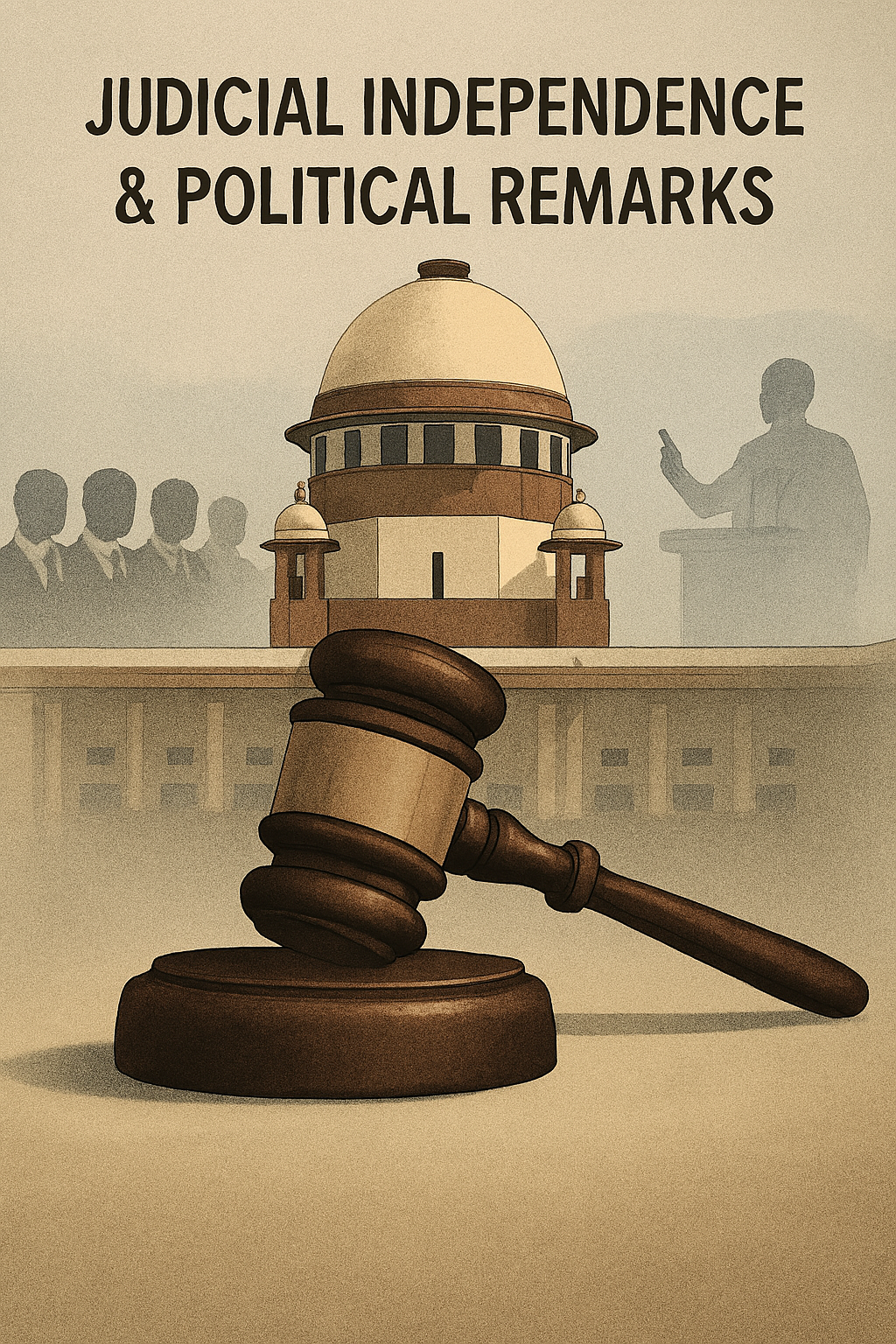
The recent remarks by Home Minister Amit Shah on retired Supreme Court judge B. Sudershan Reddy have sparked a heated debate, with 18 former judges calling his interpretation “unfortunate” and prejudicial. This article examines the controversy, its implications for judicial independence, and the broader political context.
Table of Contents
Published: August 26, 2025 | Last Updated: August 26, 2025
Overview: Understanding the Constitutional Controversy
A group of 18 retired judges from India’s Supreme Court and High Courts issued a joint statement in 2025 regarding the characterization of a landmark judicial verdict. The statement addressed public comments made about a 2011 Supreme Court judgment, raising questions about how judicial decisions should be discussed in political discourse and the implications for judicial independence.
This controversy centers on the proper relationship between the judiciary and political leadership, particularly regarding how court verdicts are publicly characterized and represented. The incident reflects broader questions about constitutional governance and institutional boundaries in democratic systems.
Understanding this controversy requires examination of the specific judgment at issue, the statements made regarding it, the judicial response, and the broader constitutional principles involved. This analysis provides factual examination of these elements and their significance for judicial independence and democratic governance.
Background: The 2011 Salwa Judum Supreme Court Judgment
Case Details and Legal Context
The Supreme Court delivered a judgment on July 5, 2011 in the case titled Nandini Sundar & Ors. v. State of Chhattisgarh. The case addressed the constitutionality of the Salwa Judum program implemented by the Chhattisgarh government in response to Maoist insurgency activity in the state.
Salwa Judum translates to “Peace Hunt” in the Gondi language. The program commenced in 2005 with the objective of addressing Maoist insurgency in tribal-majority districts of Chhattisgarh state. The program involved recruitment of local tribal youth designated as Special Police Officers (SPOs) despite limited formal training and institutional safeguards.
The Supreme Court bench that issued the judgment included Justice B. Sudershan Reddy as one of the principal authors. The case addressed fundamental constitutional questions regarding government counterinsurgency operations and respect for constitutional rights in security contexts.
Core Holdings of the Judgment
The 2011 Supreme Court judgment made several determinations regarding the Salwa Judum program structure and operations:
Recruitment and Training Issues: The Court examined the appointment procedures for SPOs and found that local tribal youth were designated as Special Police Officers without adequate training protocols and institutional oversight mechanisms.
Fundamental Rights Concerns: The Court analyzed whether the program violated constitutional guarantees of fundamental rights, particularly those protected under Article 21 of the Indian Constitution addressing right to life and livelihood.
Displacement of Tribal Populations: The program involved relocation of persons to camps, raising questions about whether such displacement satisfied constitutional standards for restrictions on movement and residence.
Accountability Mechanisms: The Court considered whether SPO operations included adequate legal frameworks, supervision procedures, and mechanisms for addressing violations of law or rights.
State Monopoly on Force: The judgment addressed constitutional principles regarding the state’s exclusive authority to exercise legitimate force, examining whether arming civilians for counterinsurgency purposes was constitutionally permissible.
Specific Judgment Determinations
The Court’s conclusion addressed unconstitutionality of specific aspects of the program operations. The judgment did not prevent government counterinsurgency operations but determined that operations must comply with constitutional standards and employ properly trained and accountable personnel.
The judgment acknowledged genuine security challenges posed by Maoist insurgency activity. However, the Court determined that constitutional limitations could not be suspended in addressing security threats. The judgment provided legal reasoning supporting this constitutional principle without expressing sympathy for Maoist ideology or questioning the government’s authority to combat insurgency.
The Political Statement and Controversy
Background and Context of Political Statements
During political campaign activity in early 2025, Union Home Minister Amit Shah made public statements addressing the Salwa Judum judgment and Justice B. Sudershan Reddy’s role as its author. These statements occurred during a Vice-Presidential campaign period when Justice Reddy was a candidate for that office.
Shah’s public statements characterized the Salwa Judum judgment in specific terms regarding its legal reasoning and implications. The Home Minister’s statements also made claims about alternative policy outcomes had the judgment not been issued in the manner it was.
The timing of these statements coincided with Justice Reddy’s emergence as a Vice-Presidential candidate, creating political context for the remarks. Campaign events in 2025 provided the venue for these public statements.
Content and Characterization of the Statements
According to news reporting and public records, Shah’s remarks characterized the Salwa Judum judgment as embodying certain legal positions. The statements suggested the judgment was sympathetic to Maoist ideology according to Shah’s interpretation.
Shah’s remarks also made claims about alternative policy outcomes in counterinsurgency operations had the Court issued different rulings. The statements attributed specific policy positions to the judgment beyond its actual holdings.
Public characterization of Shah’s statements by critics indicated they represented a significant misrepresentation of the judgment’s reasoning and holdings. Media coverage documented these characterizations and subsequent responses from the legal community.
Response from Retired Judiciary
Joint Statement by 18 Retired Judges
Eighteen retired judges from India’s Supreme Court and High Courts issued a joint statement responding to the political characterization of the Salwa Judum judgment. This collective response occurred within days of the initial political statements.
The judges’ statement described the political characterization as “unfortunate.” The statement indicated the judges’ concern about potential effects on judicial independence and public confidence in the judiciary.
The judges’ statement specifically addressed the interpretation of the Salwa Judum judgment. The statement asserted that the judgment “nowhere supports, either expressly or by compelling implication, Maoism or its ideology.”
Identity and Credentials of Signatory Judges
The 18 judges who issued the statement represented various ranks of the Indian judiciary:
From Supreme Court: Several retired Supreme Court Justices signed the statement, representing different periods of service and specialized areas of judicial expertise.
From High Courts: Three former Chief Justices of High Courts added their signatures to the collective statement.
Geographic Representation: The signatories represented different regions of India through their prior judicial postings and service locations.
Combined Experience: Collectively, the judges represented centuries of judicial experience across constitutional law, administrative law, civil rights, and other areas of judicial specialization.
Key Arguments in the Judicial Response
The judges’ statement provided several specific arguments regarding the mischaracterization concern:
Textual Analysis: The statement asserted that examination of the judgment’s text reveals no support, express or implied, for Maoist ideology.
Institutional Concern: The judges expressed concern that political mischaracterization of judgments could damage public confidence in the judiciary.
Judicial Independence Risk: The statement identified potential chilling effects on sitting judges from exposure to such characterization.
Democratic Standards: The judges asserted that political campaigns should maintain certain standards regarding institutional respect.
Analysis of the Salwa Judum Judgment’s Actual Reasoning
Constitutional Principles Addressed in the Judgment
The 2011 judgment addressed multiple constitutional principles relevant to security operations:
Separation of Powers: Constitutional governance requires distinct roles for legislative, executive, and judicial branches with defined relationships.
Fundamental Rights: Constitutional protections of fundamental rights apply across all circumstances and cannot be suspended during security operations.
Due Process: Government actions must comply with procedures established by law and constitutional requirements.
Accountability: Government personnel exercising state authority must operate within legal frameworks including accountability mechanisms.
Rule of Law: Constitutional governance requires all government action to comply with established law rather than being guided solely by executive discretion.
Specific Reasoning Regarding the Salwa Judum Program
The judgment’s reasoning regarding the specific program examined:
Training and Qualification Standards: The Court examined whether appointment and deployment of SPOs without adequate training met constitutional standards for government use of force.
Rights Protection: The judgment examined whether program operations adequately protected constitutional rights of affected persons, particularly those subject to displacement.
Legal Framework: The Court considered whether SPO operations complied with established legal frameworks and procedures.
Accountability: The judgment examined whether adequate mechanisms existed for addressing violations and holding personnel accountable.
What the Judgment Did Not Hold
The judgment’s reasoning did not include several elements sometimes attributed to it:
Sympathy for Maoist Ideology: The judgment nowhere expressed support for Maoist ideology or suggested legitimacy of Maoist positions.
Rejection of Security Operations: The judgment did not prevent government counterinsurgency operations or deny the government’s authority to combat insurgency.
Policy Recommendations: The judgment did not recommend specific alternative policies beyond stating that constitutional standards must be maintained.
Ideological Positions: The judgment did not advocate for ideological positions regarding economic systems or governance philosophies.
Constitutional Principles at Issue
Judicial Independence and Its Requirements
Judicial independence requires both formal institutional protections and practical conditions enabling independent decision-making:
Formal Independence: Constitutional structures preventing external removal or punishment of judges for decisions.
Practical Independence: Working conditions and social environment permitting judges to make decisions based on law and constitution rather than external pressure.
Public Confidence: Public understanding and acceptance of judicial independence as essential to constitutional governance.
Freedom from Intimidation: Protection from character attacks or public vilification for decisions made in accordance with constitutional duty.
The Chilling Effect Concept
Legal scholars recognize that threats of retaliation, even if not explicit, can influence decision-making through fear of consequences:
Psychological Mechanism: Awareness of potential negative consequences can unconsciously influence decision-making even without explicit threats.
Institutional Effect: If judges fear delivering specific decisions will result in public character assassination, they may unconsciously gravitate toward safer alternatives.
Democratic Implication: If judges systematically avoid certain decisions due to fear of political attack, the separation of powers becomes compromised.
Precedent Setting: If attacks on judges go unchallenged, subsequent attacks become more likely, reinforcing the chilling effect.
Separation of Powers in Practice
Constitutional separation of powers requires more than formal structures; it requires practical respect for institutional boundaries:
Executive Limits: The executive cannot simply override or ignore judicial decisions, even when inconvenient.
Institutional Respect: Officials in one branch should respect the constitutional role of other branches.
Boundary Maintenance: All branches share responsibility for maintaining constitutional boundaries.
Checks and Balances: Each branch has authority to resist encroachment by other branches.
Historical and Comparative Context
Previous Tensions Between Indian Judiciary and Executive
Indian constitutional history includes several periods of notable tensions:
Emergency Period (1975-1977): During the declared national emergency, judicial independence faced significant pressure, with the Supreme Court’s decision in ADM Jabalpur case limiting habeas corpus rights during the emergency.
Judges’ Case Trilogy (1981-1998): A series of Supreme Court cases progressively restricted executive control over judicial appointments, with ongoing friction over appointment procedures.
Recent Judicial Appointments Debates: Ongoing discussions regarding the Collegium system for judicial appointments and proposals for alternative appointment mechanisms.
These historical episodes indicate that judiciary-executive tensions are not unprecedented in Indian constitutional history but typically involve institutional prerogatives rather than attacks on judicial reasoning.
International Comparisons
Democratic systems in various countries have experienced challenges to judicial independence:
Poland: Judicial independence concerns arose regarding reform of the judicial system and constitutional court.
Hungary: Questions have been raised regarding the independence of the constitutional court and judicial appointment procedures.
Turkey: Significant concerns regarding judicial independence arose following the 2016 events and subsequent government actions.
United States: Political debates have included calls by political figures for prosecution of judges for specific decisions.
These international examples demonstrate that challenges to judicial independence represent a concerning global pattern, making India’s judicial defense noteworthy.
Rule of Law Standards in International Frameworks
International organizations addressing rule of law consistently identify judicial independence as essential:
UN Basic Principles on Judicial Independence: International standards emphasizing that governmental institutions must respect judicial independence.
World Justice Project Rule of Law Index: Global assessments including judicial independence as key component of rule of law.
Comparative Constitutional Law: Scholarly analysis consistently identifying judicial independence as fundamental to constitutional governance.
Media Coverage and Public Discourse
Media Reporting of the Controversy
News organizations covered the initial statements, the judicial response, and subsequent developments through news reporting and analysis:
Factual Reporting: News accounts documented the statements made and the judges’ response.
Analysis and Commentary: Various commentators provided analysis of constitutional implications and significance.
Contextual Information: Media coverage provided background on the Salwa Judum judgment and its history.
Expert Perspectives: Various experts offered commentary on judicial independence and constitutional principles.
Challenges in Public Understanding
Public discourse regarding judicial decisions faces several challenges:
Legal Complexity: Supreme Court judgments often address complex legal and constitutional questions requiring specialized legal training to fully understand.
Abbreviated Reporting: Media coverage often necessarily abbreviates complex judicial reasoning into shorter formats.
Partisan Interpretation: Political actors may interpret judgments through partisan lenses rather than legal analysis.
Public Legal Literacy: General public understanding of judicial functions and constitutional principles varies substantially.
Role of Media in Constitutional Governance
Media organizations serve important functions in democratic governance:
Information Distribution: Media provides information about governmental actions and decisions to the public.
Institutional Accountability: Media coverage creates accountability pressure on government institutions.
Public Understanding: Media influences public understanding of legal and constitutional matters.
Democratic Dialogue: Media facilitates dialogue regarding policy issues and constitutional questions.
Implications for Future Judicial Decisions
Potential Chilling Effects on Judicial Decision-Making
The controversy raises questions about whether judicial decision-making might be affected by concerns about political characterization:
Sensitive Subject Areas: Judges might hesitate particularly regarding national security matters, communal violence, or other politically sensitive areas.
Political Calculation: Even unconscious consideration of potential political response could influence judicial reasoning.
Institutional Pressure: Awareness of potential attacks might create organizational pressure on judges.
Long-term Effects: Even if immediate effects are subtle, long-term effects could gradually shift judicial jurisprudence.
Factors Strengthening Judicial Resolve
Conversely, several factors might strengthen judicial independence in this context:
Judicial Solidarity: The collective response from 18 retired judges demonstrates judicial community commitment to independence.
Public Awareness: Media coverage and public discussion increase awareness of judicial independence importance.
Institutional Support: Judicial organizations and bar associations may provide support to judges facing political pressure.
Democratic Support: Citizens and civil society organizations committed to constitutional governance may mobilize in defense of judicial independence.
Broader Jurisprudence Effects
The controversy might influence judicial jurisprudence regarding specific areas of law:
National Security Law: Judicial approaches to reviewing national security decisions might be affected by this controversy.
Judicial Review Scope: The incident raises questions about whether judges might be more cautious regarding judicial review scope.
Procedural Approaches: Judges might adopt different procedural approaches or legal reasoning to address concerns about political characterization.
Institutional Relationships: The controversy illuminates relationships between judicial decisions and subsequent political responses.
Government Response and Official Positions
Documented Government Statements
Following the judges’ statement, official government responses to the controversy warrant examination:
Public Statements: Any formal government statements addressing the judges’ criticism or defending the original characterization.
Official Clarifications: Whether government officials clarified the original statements or provided additional context.
Silence and Absence of Response: The absence of government response may itself be significant in indicating official recognition of the criticism.
Implications of Government Response Patterns
Government response patterns carry implications for institutional relationships:
Institutional Respect: Government response affects perceptions of institutional respect and constitutional commitment.
Clarification of Intent: Government responses clarify whether statements represented official policy or individual positions.
Democratic Norm Setting: How government responds to judicial criticism influences norms for political-judicial relations.
Future Precedent: Government responses establish precedent for how similar situations might be handled.
Democratic Theory and Constitutional Governance
Democratic Debate vs. Institutional Disrespect
Democratic governance permits vigorous debate about policies and judicial decisions but requires boundaries on institutional attacks:
Legitimate Criticism: Democratic discourse includes legitimate disagreement with judicial decisions and legal reasoning.
Policy Debate: Political debate about whether specific court rulings were wise or ill-advised is appropriate.
Institutional Respect: Even vigorous criticism should maintain basic respect for the judicial institution and judges’ constitutional role.
Boundary Setting: Determining appropriate boundaries between legitimate criticism and inappropriate character assassination represents ongoing democratic challenge.
The Role of Political Leadership in Setting Norms
Political leaders occupy positions enabling them to influence democratic norms:
Norm-Setting Function: How political leaders conduct themselves influences broader social conduct norms.
Democratic Expectations: Public expectations regarding appropriate political behavior are influenced by leader conduct.
Institutional Relations: Political leaders’ attitudes toward other institutions influence broader institutional relationships.
Democratic Culture: Long-term democratic health depends on norms established through leadership conduct.
Constitutional Duty of Government Officials
Government officials assume constitutional obligations upon taking office:
Constitutional Oath: Officials take oaths to uphold and defend the Constitution.
Institutional Respect: Constitutional duties include respecting the role and independence of other branches.
Democratic Principles: Officials bear responsibility for maintaining democratic principles and constitutional governance.
Personal vs. Official Roles: While officials may disagree with judicial decisions, their official statements carry special weight and responsibility.
Legal and Scholarly Perspectives
Constitutional Law Analysis
Constitutional law scholars have provided analysis of the issues raised by this controversy:
Judicial Review Standards: Analysis of standards governing when and how judicial review of executive action is appropriate.
Independence Requirements: Examination of what judicial independence requires in practice beyond formal structures.
Separation of Powers: Constitutional analysis of proper boundaries between executive and judicial functions.
Democratic Theory: Application of democratic theory to relationships between judicial and political institutions.
Institutional Law Considerations
Scholars examining institutional governance have addressed relevant questions:
Norm Erosion: Analysis of how disrespect for institutional boundaries gradually erodes constitutional governance.
Institutional Design: Examination of how institutional structures can protect independence and respect.
Cultural Factors: Recognition that constitutional governance depends on cultural factors beyond formal rules.
Precedent Effects: Analysis of how initial transgressions set precedents for subsequent behavior.
Frequently Asked Questions (FAQs)
FAQ 1: What was the specific controversy that prompted the judges’ statement?
The controversy arose when Union Home Minister Amit Shah made public statements characterizing the 2011 Salwa Judum judgment as supporting Maoism or sympathetic to Maoist ideology. This characterization occurred during a Vice-Presidential campaign when the judgment’s author, Justice B. Sudershan Reddy, was a candidate for the office.
Eighteen retired judges issued a collective statement asserting that the judgment “nowhere supports, either expressly or by compelling implication, Maoism or its ideology.” The judges expressed concern that such mischaracterization could damage judicial independence and affect sitting judges’ willingness to deliver constitutionally sound but politically unpopular decisions.
The controversy raised broader questions about how political leaders should discuss and characterize judicial verdicts in public discourse, particularly when judgments constrain executive action or prove politically inconvenient.
FAQ 2: What exactly did the 2011 Salwa Judum Supreme Court judgment decide?
The July 5, 2011 Supreme Court judgment in Nandini Sundar v. State of Chhattisgarh addressed the constitutionality of the Salwa Judum program, which involved arming and deploying untrained tribal youth as Special Police Officers in Chhattisgarh’s counterinsurgency operations.
The judgment determined that several aspects of the program violated constitutional provisions. The Court found that appointing untrained civilians to security roles without proper legal framework, training, and accountability violated constitutional standards. The judgment also held that the program’s displacement of tribal populations violated fundamental rights protections.
Importantly, the judgment did not prevent the government from conducting counterinsurgency operations or deny the validity of security concerns. Instead, the judgment insisted that security operations must comply with constitutional standards and employ properly trained and accountable personnel within legal frameworks. The judgment’s reasoning was limited to ensuring constitutional compliance in security operations, not addressing broader policy questions about appropriate counterinsurgency strategy.
FAQ 3: Who were the 18 retired judges that issued the statement, and what was their significance?
The 18 judges who issued the statement included several retired Supreme Court Justices and three former Chief Justices of High Courts. These judges collectively represented substantial judicial experience across constitutional law, administrative law, and civil rights areas.
The significance of their collective statement lay in its unusual nature—individual judges occasionally make public statements about judicial independence, but a coordinated statement from 18 retired judges from multiple levels of the judiciary represented an extraordinary mobilization of judicial opinion. This collective response suggested the legal community viewed the characterization as crossing a fundamental line threatening judicial independence.
The prestige and experience of the signatories lent credibility to their assertion that the characterization misrepresented the judgment’s actual reasoning and holdings. Their collective action conveyed serious institutional concern about the implications of allowing such mischaracterization to go unchallenged.
FAQ 4: What exactly do legal scholars mean by “chilling effect” on judicial independence?
A chilling effect refers to situations where threat of punishment or negative consequences for specific actions discourages people from engaging in those actions, even without formal prohibition. In the judicial context, a chilling effect on judicial independence means that judges might refrain from delivering certain decisions due to fear of negative consequences.
In this controversy, the concern was that judges might avoid difficult but constitutionally required decisions in sensitive areas like national security, knowing that such decisions could be publicly mischaracterized years later as supporting extremism or being hostile to national interests. This self-censorship need not be conscious—the mere awareness of potential negative consequences could unconsciously influence judicial decision-making.
The retired judges’ statement attempted to counter potential chilling effects by demonstrating that the judicial community would defend reasoned judgments against political misrepresentation, potentially encouraging sitting judges to maintain independence by assuring them they would not stand alone against political attacks.
FAQ 5: Does the government have the right to criticize Supreme Court judgments?
Yes, the government and political leaders have the right to criticize Supreme Court judgments and express disagreement with judicial decisions. Democratic governance includes vigorous debate about policies and legal decisions, and government officials can participate in this debate.
However, there are important distinctions between legitimate criticism and inappropriate characterization. Legitimate criticism examines judicial reasoning and questions whether the legal analysis was sound or whether alternative legal approaches might have been preferable. Inappropriate characterization involves deliberately distorting judicial reasoning or attributing improper motives to judges.
The core issue in this controversy was not whether the government could disagree with the judgment but whether characterizing the judgment as supporting Maoism accurately represented its reasoning and holdings. The judges’ response asserted that the characterization was fundamentally inaccurate and therefore crossed from legitimate criticism into mischaracterization that threatened judicial independence.
FAQ 6: How does the separation of powers principle relate to this controversy?
The separation of powers principle establishes distinct roles for legislative, executive, and judicial branches with boundaries on each branch’s authority. The principle requires that each branch respect the constitutional role and independence of other branches.
In this controversy, the concern was that characterizing judicial decisions inaccurately could represent a form of executive encroachment on the judiciary’s constitutional role. If political leaders can publicly mischaracterize judicial reasoning without constraint, the judicial branch loses practical independence even if it retains formal constitutional protections.
The separation of powers principle suggests that the executive should not use its political power and platform to attack judicial decisions based on mischaracterizations, as this could undermine the practical independence necessary for courts to function as a separate constitutional branch. The principle requires mutual respect for institutional boundaries.
FAQ 7: What are the implications if sitting judges become concerned about political attacks on their decisions?
If sitting judges become concerned that delivering constitutionally sound but politically inconvenient decisions will result in public attacks characterizing them as supporting extremism or being hostile to national interests, several concerning effects could follow:
Self-Censorship: Judges might avoid delivering decisions they believe are constitutionally required but politically controversial.
Jurisprudential Shift: Over time, this concern could produce systematic shifts in judicial jurisprudence toward more politically acceptable outcomes.
Institutional Weakness: The judicial branch would effectively lose independence if judges systematically avoid decisions threatening to executive interests.
Democratic Deterioration: If courts cannot check executive power due to fear of political attack, separation of powers becomes illusory.
National Security Issues: In areas like national security where executive power is most extensive, this concern is most acute, potentially leaving security matters unreviewed by courts.
FAQ 8: How does this controversy relate to broader international concerns about judicial independence?
The controversy reflects global concerns about judicial independence that have manifested in various countries. Democratic backsliding in various nations has often included attacks on judicial independence, frequently through characterizing judges as supporting extremism or being hostile to national interests.
International organizations like the United Nations, World Justice Project, and comparative constitutional law scholars consistently identify judicial independence as essential to rule of law and democratic governance. The Indian controversy reflects patterns seen internationally, making it significant not only for Indian constitutional governance but as part of broader global trends.
India’s response through the retired judges’ collective statement demonstrates judicial community commitment to defending institutional independence against political pressure. This response contrasts with circumstances in some other democracies where judicial resistance to political pressure has proven less effective, making India’s response particularly noteworthy in comparative perspective.
Summary and Key Takeaways
The controversy examined in this analysis illuminates important constitutional principles regarding judicial independence, appropriate political discourse about judicial decisions, and the relationship between democratic governance and constitutional boundaries.
The 2011 Salwa Judum judgment addressed legitimate constitutional questions regarding whether specific counterinsurgency operations complied with constitutional standards. The judgment nowhere expressed sympathy for Maoist ideology but insisted that security operations must comply with constitutional requirements.
When political actors characterized this judgment as supporting Maoism, 18 retired judges responded with a collective statement defending both the judgment’s actual reasoning and broader principles of judicial independence. This response raised important questions about how political leaders should discuss judicial decisions in public discourse.
The controversy reflects tensions between democratic debate, which permits vigorous criticism of judicial decisions, and institutional respect, which requires that such criticism be based on accurate characterization rather than misrepresentation. Finding appropriate boundaries between these competing values represents an ongoing democratic challenge.
The incident demonstrates the importance of judicial solidarity and public defense of judicial independence when courts face political attacks. The retired judges’ response signals that the judiciary will not passively accept erosion of constitutional norms and institutional respect.
Looking forward, this controversy may influence how political leaders discuss judicial decisions and how sitting judges approach sensitive constitutional questions. The ultimate impact will depend on whether similar incidents recur and whether courts, government officials, and civil society commit to maintaining constitutional boundaries and institutional respect.
The controversy ultimately concerns a foundational question in constitutional democracies: can judges deliver decisions required by the Constitution without facing character assassination for doing so? The answer to this question will significantly influence India’s constitutional trajectory.
About the Author
Author: Nueplanet
Nueplanet is a constitutional law analyst and democratic governance specialist focused on providing factual, research-based analysis of constitutional issues, institutional relationships, and judicial independence in democratic systems. With expertise in constitutional law, institutional governance, and comparative constitutional analysis, Nueplanet creates comprehensive guides designed to improve public understanding of constitutional principles and their application.
This guide incorporates information from publicly available news reporting, court documents, official statements, and scholarly analysis of constitutional law. All information reflects publicly documented statements and positions as of November 2025 and may be updated as new information becomes available. Analysis maintains neutral perspective examining constitutional principles and institutional relationships without advocacy for particular political positions.
Nueplanet remains committed to factual accuracy, transparent sourcing, and providing balanced analysis serving reader understanding rather than promotional objectives. Content undergoes regular updates ensuring information reflects latest developments in judicial independence questions, institutional relationships, and constitutional governance. Continuous monitoring of official sources and scholarly publications identifies material developments warranting content updates.
Helpful Resources
Latest Posts
Tag
Out
Related Posts













Post Comment