









India Post IT 2.0: Driving Digital Transformation Nationwide
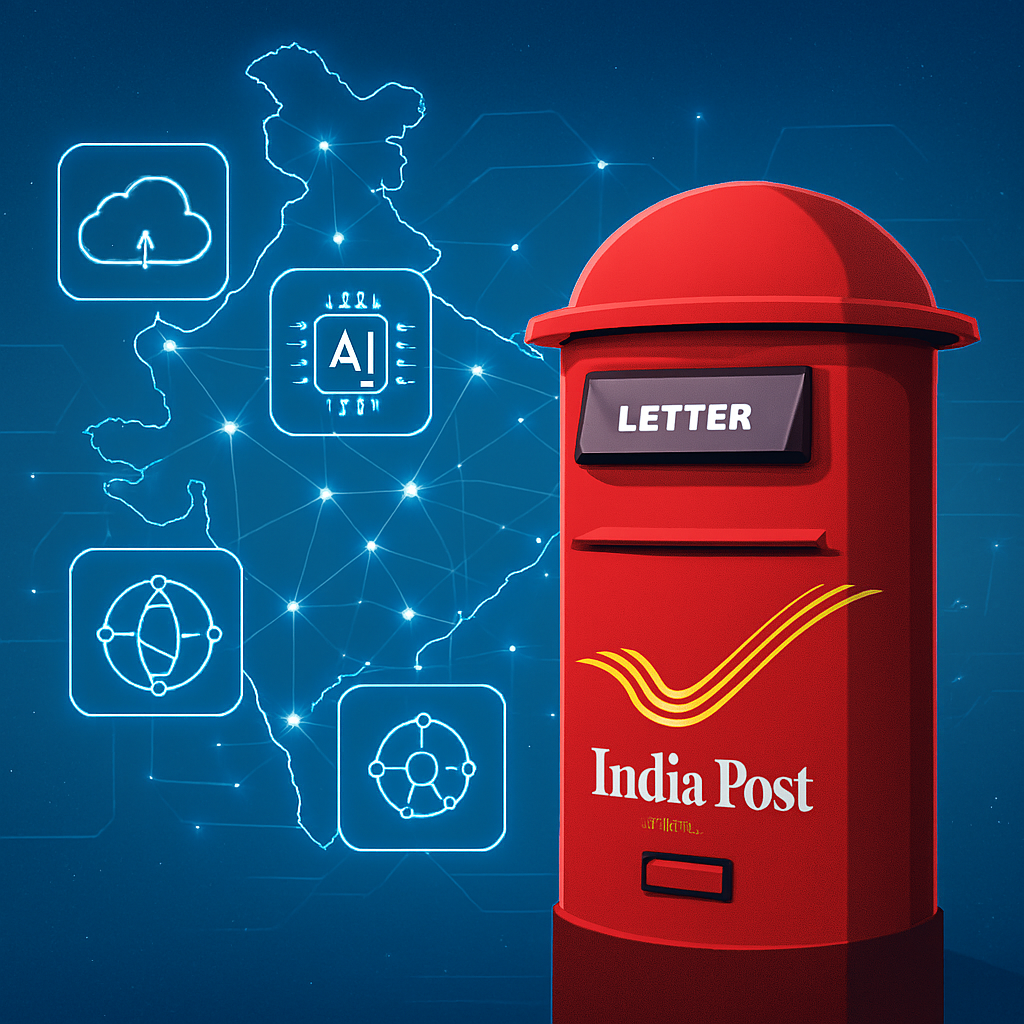
India Post has launched IT 2.0, a landmark digital initiative set to transform postal services across the nation. From modernized operations to digital-first services, here’s everything you need to know.
Table of Contents
Published: August 22, 2025 | Last Updated: August 22, 2025
India’s Department of Posts has initiated a comprehensive digital transformation program through the rollout of IT 2.0 – Advanced Postal Technology (APT). This modernization effort aims to upgrade the operational infrastructure of over 165,000 post offices across the country. The initiative represents a significant investment in digital infrastructure as part of the broader Digital India program.
The transformation addresses several operational challenges that have affected postal services in recent years. These include address standardization issues, security concerns for sensitive deliveries, and the need for digital payment integration. The Department of Posts has announced the rollout of the upgraded APT Application across select post offices in Delhi on July 21, 2025, marking the beginning of a phased implementation strategy.
This article provides a comprehensive analysis of the IT 2.0 initiative, examining its technical features, implementation strategy, potential benefits, and challenges. We rely on official government sources and verified information to present an accurate assessment of this modernization program.
Background: India Post’s Digital Infrastructure Evolution
India Post operates one of the world’s largest postal networks, serving a population of over 1.3 billion people. The organization manages approximately 165,000 post offices, employing around 500,000 personnel across urban, semi-urban, and rural areas. This extensive network has traditionally served as a critical communication and logistics infrastructure, particularly in regions where private courier services have limited presence.
Over the past decade, the postal sector has faced increasing competition from private logistics companies and digital communication platforms. E-commerce growth has created new opportunities for postal services, but also highlighted the need for technological modernization. According to industry data, India’s logistics sector has grown significantly, with e-commerce logistics emerging as a major segment requiring advanced tracking and delivery capabilities.
The Digital India initiative, launched in 2015, has emphasized the importance of digital infrastructure across government services. India Post’s previous technology systems required upgrades to meet contemporary service expectations and integrate with broader government digital platforms. The IT 2.0 initiative builds upon earlier digitization efforts by introducing more advanced features and comprehensive integration capabilities.
Technical Overview: Core Components of IT 2.0
The Advanced Postal Technology 2.0 system incorporates several technical components designed to modernize postal operations. Understanding these components provides insight into how the system aims to improve service delivery.
DIGIPIN Address System
The DIGIPIN system represents a digital address standardization mechanism intended to reduce delivery errors. Address inaccuracies have been a persistent challenge in India’s postal system, particularly in rural and remote areas where street naming conventions may vary or be inconsistent. The system creates standardized digital address identifiers that can be recognized across different regional languages and formats.
This technology aims to work alongside India’s existing PIN code system, adding an additional layer of precision. The standardization helps sorting facilities and delivery personnel identify destinations more accurately. Implementation requires coordination with local administrative bodies to validate and standardize address information across different regions.
OTP Verification Protocol
The One-Time Password verification system adds a security layer for specific types of deliveries. This protocol is particularly relevant for sensitive documents such as passports, legal papers, identity documents, and other high-value items. Recipients receive a time-sensitive code that must be provided to delivery personnel before the item is handed over.
This verification method has become standard practice in the banking and e-commerce sectors. Its application to postal services aims to reduce incidents of misdelivery or unauthorized access to sensitive materials. The system requires mobile phone access for recipients, which may present challenges in areas with limited mobile connectivity or among populations with limited mobile phone usage.
Digital Payment Integration
QR code-based payment systems have been integrated into postal services to facilitate cashless transactions. This aligns with India’s broader push toward digital payments and financial inclusion. Post offices can now process payments for various services through Unified Payments Interface (UPI) and other digital payment platforms.
The integration supports multiple transaction types, including postal service fees, India Post Payments Bank operations, and bill payment services. This reduces cash handling requirements at post offices and provides transaction records for both customers and the postal administration. However, adoption rates may vary based on regional digital payment literacy and infrastructure availability.
AI-Based Optimization Systems
Artificial intelligence and machine learning algorithms have been incorporated for operational optimization. These systems analyze delivery patterns, resource allocation, and routing efficiency. The technology aims to improve sorting accuracy, reduce delivery times, and optimize resource deployment across the postal network.
Machine learning models can process historical data to predict demand patterns, identify bottlenecks, and suggest operational improvements. Implementation of these systems requires substantial data collection, algorithm training, and continuous refinement based on operational feedback. The effectiveness of AI systems typically improves over time as more operational data becomes available.
Implementation Strategy and Rollout Timeline
The Department of Posts has adopted a phased implementation approach for the IT 2.0 system. This strategy allows for testing, refinement, and gradual expansion while minimizing disruption to ongoing postal operations.
Pilot Phase: Delhi Region
The initial rollout began in select post offices in Delhi on July 21, 2025. This pilot phase serves multiple purposes: testing system functionality under real operational conditions, identifying technical issues requiring resolution, training personnel on new procedures, and gathering user feedback for system refinement.
Delhi was selected for the pilot phase due to its diverse postal service requirements, ranging from high-volume urban post offices to smaller facilities. The capital region also provides access to technical support teams and allows for close monitoring during the initial implementation period. Performance metrics from this phase will inform subsequent rollout strategies.
Expansion Phases
Following the pilot phase, implementation is expected to expand to other major cities and state capitals. District headquarters and town-level post offices will follow in subsequent phases. Rural post offices, which constitute the majority of India’s postal network, represent both the largest opportunity and the most significant implementation challenge.
The phased approach allows the Department of Posts to address infrastructure requirements, connectivity issues, and training needs specific to different regions. Each phase includes system testing, employee training programs, and gradual transition from legacy systems. The complete rollout across all 165,000 post offices is expected to take several years, though official timelines have not been definitively published.
Training and Human Resource Development
Successful implementation of IT 2.0 requires comprehensive training for approximately 500,000 postal employees. This represents one of the largest workforce training initiatives in India’s public sector.
Training Program Structure
Training programs have been designed to address varying levels of technical familiarity among postal employees. Modules cover basic digital literacy, specific IT 2.0 system operations, customer service protocols for new features, and troubleshooting procedures. Materials have been developed in multiple languages to ensure accessibility across different regions.
Training delivery methods include classroom instruction, online learning modules, hands-on practice sessions, and peer-to-peer mentoring. Different employee categories receive specialized training relevant to their roles. Postmasters and administrative staff require different skill sets compared to delivery personnel or counter clerks.
Challenges in Workforce Adaptation
The postal workforce includes employees with varying levels of technical experience and different age demographics. Some personnel have worked with traditional postal operations for decades and may require additional support in transitioning to digital systems. Resistance to change, common in large organizational transformations, must be addressed through effective change management strategies.
Turnover and employee mobility present ongoing training challenges. New employees must be onboarded with IT 2.0 skills, while existing employees may require refresher training as systems evolve. The Department of Posts has established technical support teams to assist employees during the transition period and address operational issues as they arise.
Integration with Government Digital Ecosystem
IT 2.0 is designed to integrate with various government digital platforms and services. This interconnectivity aims to position post offices as access points for multiple government services, particularly in areas where dedicated government service centers may not be available.
Aadhaar and Identity Services
Integration with India’s Aadhaar system enables identity verification for various postal services. This connection supports secure delivery verification, account opening for postal banking services, and authentication for government scheme benefits. Post offices can serve as Aadhaar enrollment and update centers in areas where dedicated Aadhaar facilities are limited.
India Post Payments Bank Integration
The India Post Payments Bank (IPPB), established in 2018, has been integrated into the IT 2.0 platform. This integration expands banking service accessibility, particularly in rural areas where commercial bank branches may be distant. Services include account opening, deposits, withdrawals, remittances, and bill payments.
IPPB operates on a different regulatory framework compared to traditional banks, focusing on payments and remittance services rather than lending activities. The integration with post offices leverages existing infrastructure to provide basic banking services to populations that may be underserved by commercial banks.
Digital Locker and Document Services
Integration with DigiLocker, India’s digital document storage platform, allows post offices to facilitate document verification and delivery services. Citizens can authorize postal services to deliver physical documents while maintaining digital records. This connection supports various government services that require document submission or verification.
Benefits and Opportunities
The IT 2.0 implementation presents several potential benefits for different stakeholder groups, though actual outcomes will depend on implementation effectiveness and adoption rates.
Benefits for Individual Citizens
Improved tracking capabilities provide customers with better visibility into their postal items. Real-time status updates reduce uncertainty about delivery timelines. Digital payment options eliminate the need for exact change and provide transaction records. Enhanced security for sensitive documents provides peace of mind for critical deliveries.
Rural residents may benefit from improved address recognition, which has historically been challenging in areas with informal addressing systems. Access to banking services through post offices provides financial inclusion opportunities for populations distant from commercial banks. However, these benefits require adequate infrastructure, including internet connectivity and mobile phone access.
Opportunities for Small Businesses
E-commerce sellers, particularly small and medium enterprises, may find value in India Post’s modernized logistics capabilities. The extensive postal network provides geographic coverage that private couriers may not match, especially for deliveries to remote areas. Competitive pricing compared to private logistics providers can help small businesses manage operational costs.
Integration with e-commerce platforms through application programming interfaces (APIs) can streamline order fulfillment processes. Tracking capabilities and delivery confirmation features meet customer expectations for online purchases. However, businesses will evaluate postal services based on reliability, speed, and pricing compared to private alternatives.
Government Service Delivery
Post offices can serve as distributed access points for various government services, reducing the need for citizens to travel to district headquarters or specialized government offices. This is particularly valuable in rural areas where government service infrastructure may be limited. Services that can be delivered through post offices include benefit distribution, document submission, application processing, and information dissemination.
The postal network’s reach makes it a valuable infrastructure for implementing government programs, particularly those targeting rural populations. However, effectiveness depends on proper training, system reliability, and adequate staffing at post offices.
Challenges and Implementation Concerns
Large-scale technology implementations typically face significant challenges. Understanding these potential obstacles provides a realistic assessment of the transformation program.
Infrastructure and Connectivity Issues
Internet connectivity remains inconsistent in many parts of India, particularly in rural and remote areas. IT 2.0 systems require reliable internet access for real-time tracking, payment processing, and data synchronization. Post offices in areas with poor connectivity may face operational difficulties unless offline capabilities are robust and reliable.
Power supply inconsistencies in some regions can disrupt digital operations. Backup power systems and resilient hardware are necessary but may not be uniformly available across all post offices. Infrastructure upgrades require significant investment and may proceed more slowly in resource-constrained regions.
Digital Literacy and User Adoption
The effectiveness of digital features depends on user adoption. Populations with limited digital literacy may find new systems challenging, particularly older citizens or those in rural areas with limited exposure to digital technology. While training programs aim to address this, behavior change takes time.
Mobile phone access is necessary for features like OTP verification and digital payments. While mobile phone penetration has increased significantly in India, not all postal service users have smartphones or regular mobile phone access. Alternative verification methods may be necessary for certain populations.
System Reliability and Maintenance
Any technology system requires ongoing maintenance, updates, and technical support. The scale of India Post’s network means that technical issues can affect large numbers of users. Establishing adequate technical support infrastructure across diverse geographic areas presents logistical challenges.
System downtime or technical glitches can disrupt postal operations and frustrate customers. Building redundancy and backup systems requires additional investment. The Department of Posts must balance system sophistication with reliability and maintainability given the diverse operating environments of post offices.
Competition from Private Sector
Private logistics companies have made substantial investments in technology and infrastructure. Many e-commerce platforms have developed relationships with private couriers that offer competitive pricing and service levels. India Post must differentiate itself through its extensive network, competitive pricing, or service quality to remain relevant in commercial logistics.
Private sector companies often have greater flexibility in technology adoption, pricing strategies, and service innovations. Government organizations face different constraints, including procurement procedures, budgetary processes, and administrative requirements. Competing effectively while operating within these constraints requires strategic focus and operational efficiency.
Financial Inclusion Aspects
Financial inclusion represents a significant component of the IT 2.0 initiative, particularly through the India Post Payments Bank integration.
Banking Services in Underserved Areas
Commercial banks have faced challenges in providing profitable services in rural areas where transaction volumes may not justify branch operations. Post offices exist in these areas primarily for postal services, making them suitable locations for basic banking services. IPPB leverages this existing infrastructure to expand banking access.
Services available include basic savings accounts, money transfer services, bill payment facilities, and government benefit distribution. These services address fundamental financial needs without requiring travel to distant bank branches. However, IPPB’s regulatory framework limits certain banking activities, so it complements rather than fully replaces commercial banking services.
Digital Payment Adoption
Promoting digital payments in rural areas supports broader financial inclusion goals and reduces cash dependency. QR code payment systems are relatively simple to use and have gained acceptance in urban areas. Extending these systems to rural post offices can accelerate digital payment adoption in regions where such systems are less common.
However, digital payment adoption faces barriers including trust issues, transaction literacy, mobile phone access, and internet connectivity. Success requires not just technology deployment but also user education and confidence building. The effectiveness of digital payment integration will vary across regions based on these factors.
Cybersecurity Considerations
Digital transformation increases cybersecurity requirements. Postal services now handle sensitive personal information, financial transactions, and identity verification, making them potential targets for cyber threats.
Data Protection Measures
The IT 2.0 system must protect customer data including personal information, financial details, and transaction records. Data protection requirements under Indian law, particularly the Digital Personal Data Protection Act, impose specific obligations on organizations handling personal data. India Post must implement appropriate technical and organizational measures to ensure compliance.
Encryption protocols protect data during transmission and storage. Access controls limit data access to authorized personnel. Audit trails track data access and modifications for accountability. These measures are standard in digital systems but require proper implementation and ongoing monitoring.
Security Training and Awareness
Postal employees handle sensitive information and operate systems with access to customer data. Training programs must include cybersecurity awareness to prevent common vulnerabilities like phishing attacks, weak passwords, or improper data handling. Human error represents a significant security risk in any organization.
Customers also require education about security features and proper usage. OTP verification only provides security if users understand how to use it correctly and avoid sharing verification codes with unauthorized individuals. Security effectiveness depends on both technical measures and user behavior.
Comparative Analysis: India Post vs. Private Logistics
Understanding India Post’s position relative to private logistics providers provides context for evaluating the IT 2.0 initiative’s significance.
Geographic Coverage
India Post’s primary advantage lies in its extensive network covering rural and remote areas. Private couriers typically focus on urban and semi-urban regions where delivery density justifies operational costs. For deliveries to remote areas, India Post offers reach that private companies may not match without premium pricing.
However, geographic coverage alone does not guarantee competitive advantage. Delivery speed, reliability, and service quality also influence customer choices. India Post must leverage its network advantage while maintaining competitive service standards.
Technology and Innovation
Private logistics companies have invested substantially in tracking technology, automated sorting facilities, and delivery optimization systems. Many offer advanced features like real-time location tracking, delivery time windows, and instant customer support. IT 2.0 aims to narrow this technology gap, but private companies continue innovating.
The competitive dynamic requires India Post to not just match current private sector capabilities but also maintain the ability to evolve with changing customer expectations. Continuous investment in technology and innovation is necessary to remain competitive beyond the initial IT 2.0 implementation.
Pricing Strategies
India Post traditionally offers competitive pricing for postal services, which can be attractive to price-sensitive customers. However, pricing must balance affordability with operational sustainability. Private companies may offer premium pricing for premium services while competing aggressively on standard services.
For commercial customers, total cost calculations include not just shipping fees but also factors like reliability, customer service, integration capabilities, and insurance options. India Post must demonstrate value across these dimensions to attract and retain business customers.
Environmental and Sustainability Considerations
Large logistics networks have significant environmental impacts through transportation, packaging, and facility operations. Modern postal services increasingly consider sustainability in their operations.
Transportation and Emissions
India Post’s transportation network includes road vehicles, rail connections, and air transport for priority mail. Vehicle fleet composition affects fuel consumption and emissions. Transitioning to electric vehicles or cleaner fuel alternatives can reduce environmental impact, though such transitions require substantial investment.
Route optimization through AI systems can improve fuel efficiency by reducing unnecessary travel. Consolidating deliveries and improving sorting accuracy also contribute to efficiency. However, environmental considerations must balance with service requirements and cost constraints.
Digital vs. Physical Communication
Digital transformation in communication services raises questions about the role of physical mail. Email and digital messaging have substantially reduced personal correspondence through postal services. However, certain communications, particularly official documents and legal materials, still require physical delivery.
The environmental impact of digital versus physical communication depends on multiple factors including server energy consumption, device manufacturing, and paper production. Both mediums have environmental footprints, and optimal approaches may vary based on specific use cases.
International Comparisons
Examining postal modernization efforts in other countries provides context for India’s IT 2.0 initiative.
Postal Services in Developed Countries
Postal services in countries like Germany, Japan, and the United States have undergone significant transformations in response to declining mail volumes and increasing parcel services. Many have invested in automation, digital services, and e-commerce logistics capabilities.
However, these countries typically have different infrastructure contexts, including more uniform addressing systems, higher digital literacy, and different population densities. Direct comparisons must account for contextual differences between India and developed countries.
Emerging Economy Postal Systems
Countries with similar development contexts provide more relevant comparisons. China Post has made substantial investments in logistics infrastructure supporting that country’s large e-commerce sector. Brazil’s postal service has worked to expand services in a geographically diverse country with significant urban-rural divides.
These examples show different approaches to postal modernization based on specific national contexts. India’s approach reflects its particular challenges including network scale, diversity of operating environments, and integration with government service delivery priorities.
Future Outlook and Potential Developments
Technology continues evolving, and postal services must adapt to remain relevant. Several emerging trends may influence India Post’s future development.
Advanced Technologies
Emerging technologies like blockchain for supply chain transparency, Internet of Things for package tracking, and drone delivery for remote areas represent potential future developments. However, implementing these technologies requires careful evaluation of cost-effectiveness, regulatory requirements, and practical feasibility.
5G connectivity may enable more sophisticated real-time tracking and communication capabilities. Augmented reality could assist delivery personnel with navigation and package identification. These possibilities remain speculative until proven practical and cost-effective at scale.
Service Diversification
Post offices could potentially offer additional services beyond traditional postal and banking functions. Possible directions include government service delivery hubs, community centers providing digital access, logistics support for local businesses, or healthcare service points in rural areas.
Service diversification must align with organizational capabilities, regulatory frameworks, and customer needs. Expanding beyond core competencies requires careful planning and resource allocation. Success depends on identifying services that leverage existing postal infrastructure and capabilities.
Public-Private Partnerships
Collaboration with private sector companies could combine government infrastructure reach with private sector innovation and efficiency. Potential partnership models include technology sharing, joint service offerings, or infrastructure utilization agreements.
However, public-private partnerships face challenges including aligned incentives, fair competition concerns, and regulatory complexity. Successful partnerships require clear frameworks, mutual benefits, and appropriate governance structures.
Expert Perspectives and Analysis
Technology transformation initiatives of this scale typically receive mixed assessments from experts based on implementation history and practical challenges.
Logistics industry analysts generally view digital transformation as necessary for postal services to remain competitive. However, they emphasize that technology alone is insufficient—operational execution, customer service, and continuous improvement are equally important. The success of IT 2.0 will ultimately be measured by service improvements customers actually experience.
Technology experts note that large-scale government IT implementations have historically faced challenges including timeline delays, budget overruns, and functionality gaps between planned and delivered capabilities. Managing these risks requires strong project management, realistic planning, and adaptability as implementation proceeds.
Rural development specialists highlight the potential for improved government service delivery through post offices, particularly in underserved areas. However, they caution that technology effectiveness depends on addressing basic infrastructure issues like connectivity and power supply. Without these foundational requirements, sophisticated digital systems may underperform.
Key Takeaways
The India Post IT 2.0 initiative represents a significant modernization effort for one of the world’s largest postal networks. The program introduces advanced digital features including standardized address systems, security verification, digital payments, and AI-based optimization. Implementation follows a phased approach beginning with pilot programs in Delhi in July 2025.
Potential benefits include improved service delivery, enhanced security, financial inclusion through banking services, and better integration with government digital platforms. However, success depends on addressing challenges including infrastructure limitations, digital literacy variations, system reliability, and competition from private logistics providers.
The initiative’s impact will become clearer as implementation proceeds beyond pilot phases. Actual outcomes will depend on execution quality, user adoption, and the Department of Posts’ ability to maintain and evolve systems over time. Stakeholders including citizens, businesses, and government agencies will evaluate the transformation based on tangible service improvements rather than technological features alone.
Frequently Asked Questions (FAQs)
What is India Post IT 2.0 and when did its rollout begin?
India Post IT 2.0 refers to the Advanced Postal Technology (APT) system being implemented across India’s postal network. The Department of Posts announced the rollout of the upgraded APT Application across select post offices in Delhi on July 21, 2025. This marks the beginning of a phased implementation strategy that will eventually extend to approximately 165,000 post offices nationwide.
The system introduces features including DIGIPIN address standardization, OTP verification for secure deliveries, QR code payment integration, and AI-based logistics optimization. Implementation follows a gradual approach starting with pilot programs in major cities before expanding to smaller towns and rural areas.
How does the DIGIPIN system work and what problem does it solve?
The DIGIPIN system provides a digital address standardization mechanism designed to reduce delivery errors caused by address inconsistencies. In India, particularly in rural areas, addressing systems may vary significantly with inconsistent street names, informal location descriptions, and regional language variations.
DIGIPIN creates standardized digital address identifiers that can be recognized across different formats and languages. The system works alongside existing PIN codes to add precision in identifying delivery destinations. Implementation requires coordination with local administrative bodies to validate and standardize address information across regions. The effectiveness depends on data quality and adoption by both postal services and customers.
What infrastructure is required for IT 2.0 to function effectively?
IT 2.0 requires several infrastructure components to function properly. Internet connectivity is essential for real-time tracking, payment processing, and data synchronization across the postal network. Post offices need reliable power supply to maintain digital operations, which may require backup systems in areas with inconsistent electricity. Computer hardware and mobile devices are necessary for postal employees to operate the new systems.
For customers, mobile phones are needed to receive OTP verification codes and use digital payment features. The system reportedly operates on the government’s MeghRaj 2.0 cloud platform with BSNL providing connectivity support. Infrastructure quality varies significantly across India’s geography, which may affect implementation effectiveness in different regions.
How does IT 2.0 improve security for sensitive document delivery?
IT 2.0 implements OTP (One-Time Password) verification for deliveries of sensitive items including passports, legal documents, identity cards, and other high-value materials. When such items are out for delivery, the recipient receives a time-sensitive verification code on their registered mobile number. The delivery personnel can only complete the delivery after the recipient provides the correct OTP.
This verification method prevents unauthorized individuals from receiving sensitive documents and provides proof that the intended recipient received the item. The system maintains records of verification for accountability. However, this security feature requires recipients to have mobile phone access and registered contact information with the postal service.
What training do postal employees receive for the new system?
Approximately 500,000 postal employees across India are receiving training on IT 2.0 systems. Training programs include basic digital literacy for employees less familiar with technology, specific operational training on IT 2.0 features and procedures, customer service protocols for new services, and troubleshooting procedures for common technical issues. Materials are developed in multiple regional languages to ensure accessibility.
Training delivery methods include classroom instruction, online modules, hands-on practice sessions, and peer mentoring. Different employee categories receive specialized training relevant to their roles—postmasters need different skills compared to delivery personnel. Technical support teams assist employees during the transition period. The training program represents one of the largest public sector workforce development initiatives in recent years.
How does IT 2.0 integrate with India Post Payments Bank services?
The India Post Payments Bank (IPPB), established in 2018, is integrated into the IT 2.0 platform. This integration allows post offices to provide banking services including account opening, deposits, withdrawals, money transfers, and bill payments. The digital platform facilitates these transactions through the same interface used for postal services.
IPPB operates under a payments bank license, which permits certain banking activities but not lending operations. The integration aims to expand financial inclusion by providing banking access in rural areas where commercial bank branches may be distant. Customers can access basic financial services at their local post office without traveling to dedicated bank facilities.
The effectiveness of this integration depends on system reliability, employee training, and customer awareness of available services.
What are the main challenges facing the IT 2.0 implementation?
Several challenges may affect IT 2.0 implementation success. Infrastructure limitations including inconsistent internet connectivity and power supply in rural areas can disrupt digital operations. Digital literacy varies significantly across India’s population, with some users finding new systems difficult to navigate.
System reliability and technical support at scale present logistical challenges across 165,000 diverse locations. Employee adaptation requires comprehensive training and change management for a workforce with varying technical experience. Competition from private logistics companies that have already invested in advanced technology creates pressure on India Post to deliver competitive services.
Cybersecurity risks increase with digital operations handling sensitive personal and financial information. Budget constraints may limit the speed and comprehensiveness of infrastructure upgrades. Success depends on effectively addressing these challenges through careful planning, adequate resource allocation, and adaptive management.
How will IT 2.0 affect small businesses using postal services for e-commerce?
Small businesses may benefit from improved logistics capabilities including real-time package tracking, delivery confirmation systems, and integration with e-commerce platforms through APIs. India Post’s extensive network provides geographic coverage reaching remote areas where private couriers may not operate or charge premium rates.
Digital payment integration simplifies transaction processing and record-keeping. However, businesses will evaluate postal services based on reliability, delivery speed, pricing, and customer service quality compared to private alternatives. The actual impact on small businesses depends on implementation effectiveness and whether India Post can match service standards that e-commerce customers have come to expect.
Some businesses may find postal services cost-effective for certain delivery types while using private couriers for others based on specific requirements.
About the Author
Nueplanet is a technology and policy analyst specializing in digital transformation initiatives in public sector organizations. With a focus on government technology programs, digital inclusion, and public service delivery systems, Nueplanet provides fact-based analysis of large-scale technology implementations.
This analysis draws from official government announcements, industry reports, and expert perspectives to provide an objective assessment of India Post’s IT 2.0 initiative. The content prioritizes accuracy and transparency, presenting both opportunities and challenges associated with this transformation program. Information is sourced from verified government communications and authoritative industry sources.
Nueplanet is committed to providing readers with balanced, well-researched analysis that helps them understand complex policy and technology initiatives. All content undergoes verification against official sources and is regularly updated as new information becomes available.
Note: This article is based on publicly available information as of August 22, 2025. Readers should consult official India Post communications and government sources for the most current implementation details and service availability in specific locations.
Helpful Resources
Call to Action
Stay tuned with NuePlanet.com for the latest updates on government reforms, financial markets, and technology-driven transformations.
Latest Posts
- KIOCL: Performance Review, Market Sentiment, and Future Outlook
- KCET 2025: Round 2 Option Entry Link Active for Karnataka NEET-UG Counselling
- WBJEE 2025 Result Date: Everything Students Need to Know
- Supreme Court’s Landmark Order on Stray Dogs: Feeding Zones, Vaccination, and Public Safety
- Idea Share Price: Vodafone Idea Surges Amid Relief Hopes
Tag
India Post
Related Posts












Post Comment