









Mangal Electrical IPO: Subscription Status, GMP Trends, and Key Details
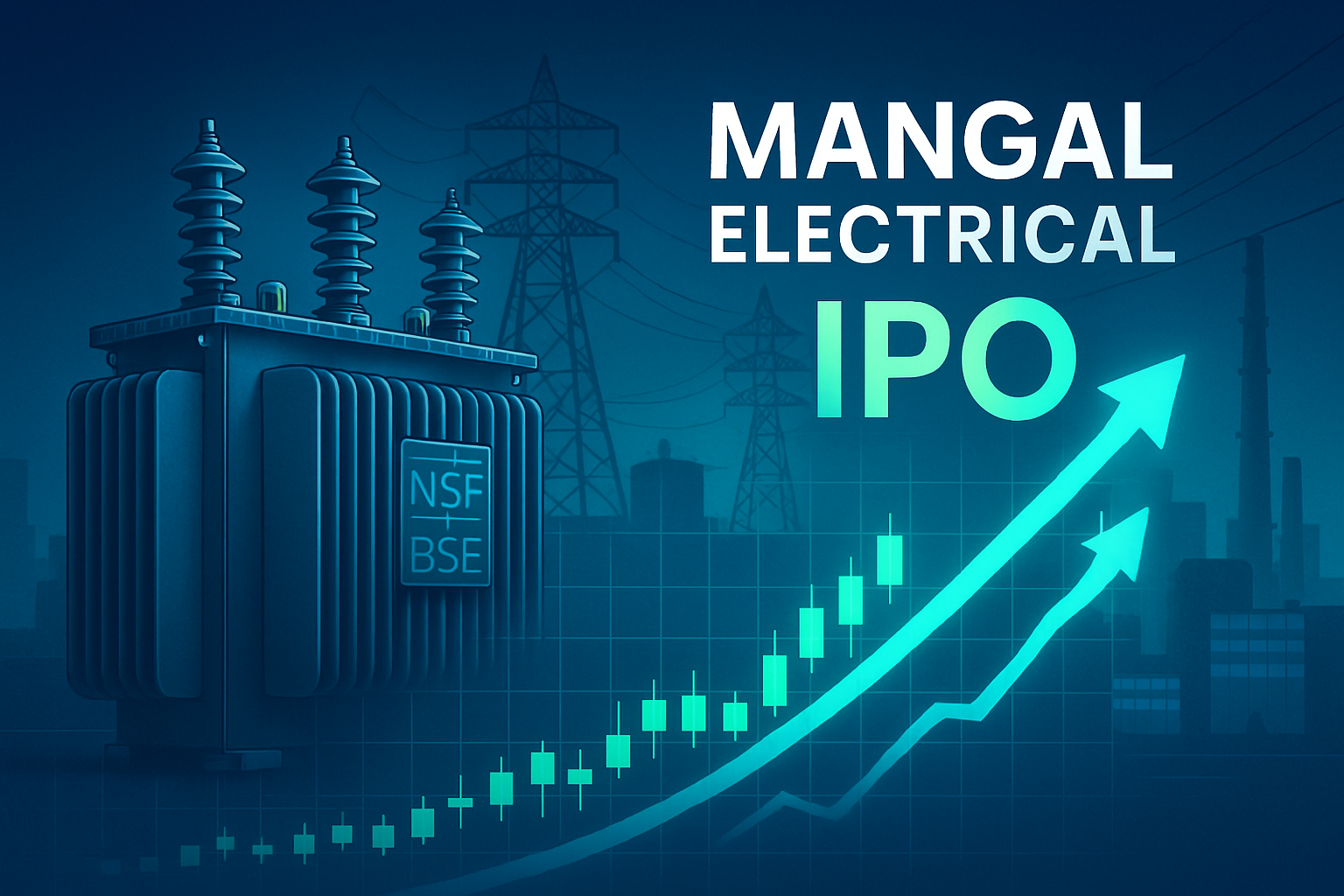
Mangal Electrical IPO opened on 20 August 2025 with a price band of ₹533–₹561. Investors are closely tracking subscription figures, GMP trends, and listing expectations on NSE and BSE.
Table of Contents
Introduction: Overview of Mangal Electrical Industries IPO Launch
Mangal Electrical Industries Limited initiated its mainboard initial public offering on August 20, 2025, targeting a total fundraise of ₹400 crore. The company operates in the transformer manufacturing sector, producing power and distribution transformers for India’s electrical infrastructure network.
The offering opened for subscription at a price band of ₹533 to ₹561 per equity share. Market data indicates subscription levels exceeded 50% on the first day of bidding. The IPO remains open until August 22, 2025, providing investors three trading days to evaluate and submit applications.
This article examines the company’s business operations, financial structure, IPO parameters, subscription trends, and sector outlook. All information presented derives from publicly available company filings, stock exchange disclosures, and verified market data sources.
About Mangal Electrical Industries Limited: Company Operations and Business Model
Core Business Operations
Mangal Electrical Industries Limited manufactures electrical transformers for power transmission and distribution networks. The company’s product portfolio includes power transformers designed for high-voltage transmission applications and distribution transformers that reduce voltage for end-user delivery.
Manufacturing operations focus on two primary product categories. Power transformers serve utility companies and large industrial facilities requiring equipment capable of handling elevated voltage levels. Distribution transformers cater to urban and rural electrification projects where power must be stepped down for consumer use.
The company maintains production facilities equipped with testing infrastructure to ensure compliance with technical specifications. Quality control processes verify that manufactured units meet Indian Standards and customer requirements before delivery.
Customer Base and Market Presence
The customer portfolio spans multiple segments of India’s electrical infrastructure sector. State electricity boards represent a significant customer category, procuring equipment for grid maintenance and expansion projects. Private power distribution companies order transformers for network upgrades and capacity additions.
Industrial customers include manufacturing facilities, commercial complexes, and infrastructure developers requiring dedicated power supply equipment. This diversified customer structure reduces dependence on any single buyer category and provides revenue stability across economic cycles.
Geographic presence extends across multiple Indian states where electricity infrastructure development remains active. The company services orders through established distribution channels and maintains relationships with repeat customers in both public and private sectors.
Technology and Manufacturing Capabilities
Production capabilities include conventional silicon steel core transformers and advanced amorphous core variants. Amorphous metal transformers offer reduced no-load losses compared to traditional designs, resulting in lower operational costs for utilities over equipment lifespan.
The company has invested in manufacturing technology aligned with energy efficiency standards. This focus addresses market demand for equipment that reduces transmission losses and meets regulatory requirements for efficiency performance.
Technical capabilities enable customization based on customer specifications. Manufacturing processes accommodate varied voltage ratings, capacity requirements, and installation conditions specified in customer purchase orders.
IPO Structure and Offering Details
Fresh Issue Components
The ₹400 crore offering consists entirely of fresh equity shares issued by the company. No existing shareholder is selling stakes through this offering, meaning all proceeds flow to the company’s treasury for business purposes.
Fresh issue proceeds will be available for corporate activities including capacity expansion, debt reduction, and working capital requirements. The absence of an offer-for-sale component indicates existing shareholders retain their holdings and demonstrates management confidence in future prospects.
Pricing and Lot Size Parameters
| Parameter | Details |
|---|---|
| Price Band | ₹533 – ₹561 per share |
| Face Value | ₹10 per share |
| Issue Size | ₹400 crore |
| Issue Type | 100% Fresh Issue |
| Minimum Lot | As per retail bidding norms |
The price band reflects valuation relative to financial metrics and comparable company analysis. Investors can submit bids at any price point within the specified range, with final allocation determined through the book-building process.
Timeline and Listing Details
Key Dates:
- IPO Opening Date: August 20, 2025
- IPO Closing Date: August 22, 2025
- Expected Listing: Subject to regulatory approvals
- Listing Exchanges: NSE and BSE
The three-day subscription window follows standard mainboard IPO timelines established by SEBI regulations. Dual listing on National Stock Exchange and Bombay Stock Exchange ensures trading access across both major Indian equity platforms.
Issue Management and Intermediaries
The offering involves merchant bankers registered with SEBI to manage book-building and allocation processes. A registrar to the issue handles application processing, refund generation, and share credit to demat accounts following allotment.
Syndicate members and authorized collection centers accept physical and electronic applications during the subscription period. Investors can apply through ASBA, UPI, or net banking channels depending on their demat account provider’s facilities.
Subscription Performance Analysis
Day One Response Metrics
Market data from August 20, 2025, indicates the IPO achieved over 50% subscription on its opening day. This response level reflects investor interest across retail and institutional bidding categories.
Early subscription momentum often correlates with company fundamentals, sector outlook, and prevailing market conditions. The first-day response provides preliminary indication of demand patterns that may evolve over the remaining subscription period.
Category-Wise Allocation Framework
Reservation Structure:
- Retail Individual Investors (RII): Up to 35% of issue size
- Non-Institutional Investors (NII): Minimum 15% of issue size
- Qualified Institutional Buyers (QIB): Minimum 50% of issue size
Each category operates under separate allocation rules. Retail investors bidding up to ₹2 lakh receive proportionate allotment if the category is oversubscribed. NII and QIB categories follow proportionate allocation methodology regardless of subscription levels.
Institutional Participation Patterns
Qualified institutional buyers typically concentrate bidding activity on the final day of subscription. This category includes mutual funds, insurance companies, foreign portfolio investors, and pension funds subject to SEBI regulations.
Institutional demand significantly influences overall subscription multiples and post-listing price stability. Large fund houses conduct detailed financial analysis before committing capital, and their participation provides market validation of company fundamentals.
Non-institutional investors including high net worth individuals often assess retail and early QIB response before submitting substantial bids. This category may show increasing activity on the second and third subscription days.
Grey Market Premium Trends and Interpretation
Understanding Unofficial Trading Activity
Grey market premium represents informal trading of unlisted shares before official exchange listing. Participants buy and sell IPO allotment expectations in unofficial markets, with premiums indicating perceived listing day gains.
For Mangal Electrical, grey market sources indicate premiums between ₹30 to ₹45 per share above the upper price band. This translates to potential listing gains of approximately 5% to 8% based on unofficial market sentiment.
GMP Analysis Considerations
Several factors influence grey market premium levels:
Demand-Supply Dynamics: Limited share availability before listing creates premium pricing when demand exceeds anticipated allotment quantities.
Subscription Momentum: Strong IPO subscription often correlates with higher grey market premiums as allotment certainty decreases for retail investors.
Market Conditions: Broader equity market trends affect risk appetite and willingness to pay premiums for unlisted shares.
Company Fundamentals: Business quality, growth prospects, and valuation metrics influence grey market participant expectations.
Limitations and Risk Factors
Grey market trading operates outside regulatory oversight and involves transaction risks. Premiums reflect speculative sentiment rather than guaranteed listing performance. Actual listing prices depend on multiple variables including market volatility, institutional demand, and company-specific developments.
Investors should not base IPO decisions solely on grey market indicators. These premiums provide sentiment insights but lack predictive certainty regarding post-listing returns. Market conditions on listing day may differ significantly from grey market trading periods.
Sector Analysis: Indian Transformer Manufacturing Industry
Market Size and Growth Drivers
India’s transformer manufacturing industry serves the country’s expanding electrical infrastructure requirements. Government data indicates electricity consumption growth continues driven by urbanization, industrialization, and rural electrification programs.
The sector benefits from several structural growth factors:
Infrastructure Investment: Central and state government allocations for power sector projects create consistent demand for transmission and distribution equipment.
Renewable Energy Integration: Solar and wind power projects require specialized transformers for grid interconnection and voltage regulation.
Urban Development: Smart city initiatives and urban expansion necessitate distribution network upgrades and capacity additions.
Industrial Activity: Manufacturing sector growth drives demand for dedicated power supply infrastructure at industrial facilities.
Competitive Landscape Assessment
The transformer manufacturing sector includes established domestic companies and multinational corporations operating Indian facilities. Competition exists across product categories, price points, and technical specifications.
Larger manufacturers benefit from economies of scale, established customer relationships, and technical capabilities for complex projects. Medium-sized companies compete through regional presence, specialized product offerings, and competitive pricing structures.
International players maintain market presence in premium segments requiring advanced technology or specific performance standards. Domestic manufacturers focus on cost-competitive solutions meeting Indian Standards specifications.
Regulatory Environment and Standards
The Central Electricity Authority establishes technical standards for transformers used in Indian power networks. Bureau of Indian Standards publishes specifications that manufacturers must meet for product certification.
Energy efficiency regulations mandate minimum performance levels for distribution transformers. These standards aim to reduce transmission losses and improve overall grid efficiency. Manufacturers invest in technology development to meet evolving regulatory requirements.
Environmental regulations govern manufacturing processes, waste disposal, and material usage. Compliance requires ongoing investment in pollution control equipment and process modifications.
Financial Metrics and Valuation Considerations
Company Financial Performance Indicators
Mangal Electrical’s financial statements provide insights into operational performance and profitability trends. Revenue growth reflects order book execution and market share developments. Profit margins indicate pricing power and cost management effectiveness.
Key financial ratios for evaluation include:
Revenue Growth Rate: Indicates business expansion and market penetration success.
Operating Profit Margin: Reflects operational efficiency and pricing sustainability.
Return on Equity: Measures management’s effectiveness in generating shareholder returns.
Debt-to-Equity Ratio: Indicates financial leverage and balance sheet strength.
Working Capital Cycle: Shows efficiency in managing inventory, receivables, and payables.
Valuation Methodology and Peer Comparison
IPO pricing typically references comparable company analysis using listed peers in the electrical equipment sector. Valuation multiples include price-to-earnings ratio, enterprise value-to-EBITDA, and price-to-book value.
Comparison with established players provides context for assessing whether IPO pricing offers fair value. Factors affecting relative valuation include growth trajectory differences, market positioning variations, and financial performance disparities.
Investors should evaluate pricing relative to company-specific factors including order book visibility, capacity utilization rates, customer concentration, and competitive advantages.
Post-IPO Capital Structure Changes
The fresh equity issue will dilute existing shareholder ownership percentages while strengthening the company’s capital base. Improved equity cushion may facilitate future debt raising at favorable terms if growth opportunities require additional capital.
Reduced debt levels following partial proceeds allocation to debt repayment will lower interest expenses and improve interest coverage ratios. This financial restructuring enhances operational flexibility during business cycles.
Strategic Growth Initiatives and Fund Utilization
Capacity Expansion Plans
A portion of IPO proceeds targets manufacturing capacity enhancement to handle increased order volumes. Expansion includes facility upgrades, machinery procurement, and automation implementation.
Capacity additions enable the company to bid for larger contracts and reduce delivery lead times. Improved production capabilities support revenue growth objectives and market share gains.
Investment in modern equipment enhances manufacturing precision and quality consistency. Automated systems reduce manual intervention points and minimize production defects.
Technology Development Investments
Research and development funding focuses on product innovation and efficiency improvements. Development priorities include energy-efficient transformer designs and solutions for renewable energy applications.
Technology investments maintain competitive positioning as customer preferences shift toward lower-loss equipment. Advanced product offerings command premium pricing and differentiate the company from commodity producers.
Collaboration with research institutions or technology partners may accelerate development timelines for specialized applications requiring domain expertise.
Debt Reduction and Financial Optimization
Allocating proceeds to debt repayment reduces interest burden and improves credit metrics. Lower leverage ratios enhance financial stability and provide buffer against revenue volatility.
Reduced debt obligations free up cash flows for operational requirements and future investments. Improved financial profile may result in better credit ratings and reduced borrowing costs for future financing needs.
Working Capital Management Enhancement
Scaling operations requires adequate working capital to maintain inventory levels, extend credit terms, and manage cash conversion cycles. IPO proceeds strengthen liquidity position supporting business expansion without cash flow strain.
Sufficient working capital enables the company to accept larger orders requiring extended manufacturing periods. Improved liquidity supports vendor relationships and raw material procurement at competitive terms.
Risk Factors for Investor Consideration
Raw Material Price Volatility
Transformer manufacturing requires copper, electrical steel, and insulation materials subject to commodity price fluctuations. Copper represents significant cost component with prices influenced by global supply-demand dynamics.
Material cost increases may compress profit margins if competitive conditions prevent full pass-through to customers. Long-term contracts with fixed pricing expose manufacturers to input cost inflation risks.
Hedging strategies and strategic sourcing can partially mitigate commodity price volatility. However, material price movements remain outside company control and affect financial performance.
Customer Concentration and Payment Risks
Dependence on government utilities for significant revenue portions creates exposure to fiscal constraints affecting state electricity boards. Delayed payments from financially stressed utilities impact cash flows and working capital requirements.
Government budget allocations and policy priorities influence order placement timing and project execution schedules. Changes in infrastructure spending plans affect revenue visibility and growth projections.
Private sector customers generally offer better payment discipline but represent smaller market segments. Diversification across customer categories provides partial risk mitigation but cannot eliminate sector-specific challenges.
Competitive Pressures and Margin Sustainability
Intense competition from established players and new entrants may pressure pricing and profitability. Larger competitors possess scale advantages enabling aggressive pricing on standard products.
Technology obsolescence risks require continuous innovation investment to maintain relevance. Disruptive technologies or alternative solutions could reduce demand for conventional transformer products.
Import competition from countries with lower manufacturing costs affects domestic market pricing dynamics. Trade policies and import duty structures influence competitive positioning.
Regulatory and Compliance Obligations
Evolving energy efficiency standards require product redesigns and manufacturing process modifications. Compliance with new regulations necessitates capital expenditure without immediate revenue benefits.
Environmental norms govern manufacturing operations and waste management practices. Stricter regulations may increase compliance costs and require facility upgrades.
Changes in technical specifications or certification requirements affect product portfolios and may strand existing inventory of non-compliant units.
Economic Cycle Sensitivity
Transformer demand correlates with industrial activity and infrastructure investment levels. Economic downturns reduce capital expenditure by utilities and industries affecting order flows.
Project delays or cancellations during economic stress periods impact revenue recognition and capacity utilization. Cyclical demand patterns require financial flexibility to manage through downturns.
Investment Considerations and Suitability Assessment
Target Investor Profile
The IPO suits investors seeking exposure to India’s infrastructure development through an established manufacturer. Medium to long-term investment horizons align better with the company’s growth trajectory and capital cycle.
Risk tolerance requirements favor investors comfortable with sector-specific challenges including commodity volatility and customer payment timing uncertainties. Portfolio diversification principles suggest limiting allocation to appropriate percentages based on individual circumstances.
Expected Return Framework
Potential returns depend on business execution, sector growth realization, and market valuation trends. Near-term performance may reflect listing sentiment and short-term trading activity rather than fundamental value.
Long-term returns correlate with revenue growth achievement, margin sustainability, and market share developments. Successful utilization of IPO proceeds for capacity expansion and efficiency improvements supports value creation objectives.
Liquidity and Trading Volume Expectations
Dual listing on NSE and BSE provides trading access across major platforms. Initial trading volumes typically show elevated levels as different investor categories adjust positions following listing.
Long-term liquidity depends on free float availability, institutional holding patterns, and stock inclusion in market indices. Active trading facilitates entry and exit at efficient pricing.
Alternative Investment Comparisons
Investors may compare this opportunity against existing listed companies in the electrical equipment sector. Peer comparison should evaluate relative valuation, growth prospects, financial strength, and competitive positioning.
Other infrastructure-focused sectors including capital goods, construction, and power utilities offer alternative exposure to India’s development themes. Portfolio construction should consider correlation patterns and diversification benefits.
Market Outlook and Future Prospects
Industry Growth Projections
Government infrastructure programs including rural electrification, renewable energy capacity additions, and grid modernization projects support sustained transformer demand. Industry reports project steady growth aligned with electricity consumption expansion.
Replacement demand for aging transformer installations provides baseline revenue opportunities independent of new capacity additions. Equipment nearing end of useful life requires replacement regardless of immediate infrastructure expansion needs.
Export opportunities exist as Indian manufacturers gain recognition in international markets for quality and cost competitiveness. Overseas sales diversify revenue sources and reduce domestic market dependence.
Company-Specific Growth Catalysts
Successful execution of capacity expansion plans enables participation in larger projects and market share gains. Improved manufacturing capabilities support revenue scaling beyond historical levels.
Technology development initiatives may result in product differentiation and premium pricing opportunities. Innovation leadership attracts customers prioritizing efficiency and performance over lowest-cost options.
Strategic customer relationship expansions into new geographic markets or industry segments broaden revenue base. Penetration of underserved markets accelerates growth beyond existing customer accounts.
Potential Challenges and Headwinds
Economic slowdowns or fiscal constraints affecting infrastructure spending could dampen growth momentum. Reduced government capital expenditure directly impacts order book visibility and capacity utilization.
Technology disruptions in electrical distribution including solid-state transformers or alternative solutions may alter long-term demand patterns. Adapting to changing technology landscape requires continuous innovation investment.
Environmental regulations mandating higher efficiency standards increase manufacturing complexity and costs. Compliance requires ongoing capital allocation potentially affecting near-term profitability.
Author Information and Expertise
About the Author:
Nueplanet is a financial markets analyst specializing in Indian equity markets and IPO research. With the years of experience covering capital markets developments, Nueplanet provides fact-based analysis derived from verified company filings, regulatory disclosures, and official market data sources.
Nueplanet focus on financial analysis and securities markets. Professional experience encompasses research coverage across multiple sectors including infrastructure, manufacturing, and financial services.
Research Methodology:
All content presented draws from publicly available information including company prospectuses filed with SEBI, stock exchange announcements, and verified market data sources. Analysis reflects objective interpretation of available data without promotional intent or investment recommendations.
Nueplanet maintains commitment to accuracy and transparency through reliance on official sources including regulatory filings, government publications, and company disclosures. Regular content updates ensure information currency as new developments occur.
Disclaimer:
This article provides informational analysis and does not constitute investment advice, stock recommendations, or solicitation to buy or sell securities. Investors should conduct independent research, consult qualified financial advisors, and assess personal circumstances before making investment decisions.
Past performance does not guarantee future results. Stock market investments involve risks including potential loss of principal. Nueplanet holds no positions in securities discussed and receives no compensation from companies mentioned.
Published: August 21, 2025
Last Updated: August 21, 2025
Frequently Asked Questions (FAQs)
Q1: What is the subscription period for Mangal Electrical Industries IPO?
The IPO opened on August 20, 2025, and closes on August 22, 2025. Investors have three trading days to submit applications through various channels including online platforms, bank branches, and registered brokers. Applications must be submitted before the closing time on August 22 to be considered for allotment.
Q2: How are IPO shares allocated among different investor categories?
SEBI regulations mandate specific reservation percentages: retail individual investors receive up to 35% of the issue size, non-institutional investors get minimum 15%, and qualified institutional buyers receive at least 50%. Retail investors bidding up to ₹2 lakh receive proportionate allotment if oversubscribed. Other categories receive proportionate allocation based on total demand within their segments.
Q3: What are the primary uses for the ₹400 crore IPO proceeds?
The company plans to allocate proceeds across capacity expansion, research and development activities, debt reduction, and working capital enhancement. Specific allocations include manufacturing facility upgrades, technology development investments, repayment of existing debt obligations, and strengthening liquidity position to support business scaling. Exact allocation percentages are detailed in the company’s prospectus filed with SEBI.
Q4: How does Mangal Electrical compare with other listed transformer manufacturers?
Comparative analysis should evaluate financial metrics including revenue growth rates, operating margins, return on equity, and debt levels relative to established players. Market positioning factors include customer base composition, geographic presence, product portfolio breadth, and technology capabilities. Valuation multiples from the IPO pricing can be compared against price-to-earnings and enterprise value-to-EBITDA ratios of listed peers to assess relative pricing.
Q5: What sector trends support transformer industry growth in India?
Government infrastructure programs including rural electrification schemes, renewable energy capacity targets, and smart grid development initiatives drive equipment demand. India’s electricity consumption continues growing with urbanization and industrial expansion. Replacement demand for aging installations provides baseline revenue opportunities. Energy efficiency regulations mandate equipment upgrades meeting new standards. These structural factors support sustained industry growth over medium to long term.
Q6: What are the main risks investors should consider before applying?
Key risks include raw material price volatility affecting profit margins, customer concentration in government utilities with payment timing uncertainties, competitive pressures from established players, regulatory changes requiring compliance investments, and economic cycle sensitivity affecting infrastructure spending. Commodity price movements, particularly copper, significantly impact manufacturing costs. Project execution delays or cancellations during economic stress periods affect revenue recognition and capacity utilization.
Q7: When will Mangal Electrical shares be listed on stock exchanges?
Listing date depends on regulatory approvals and post-closure processes including allotment finalization, refund processing, and share credit to demat accounts. Typical timeline ranges from 6 to 10 working days after IPO closure, subject to completion of procedural requirements. Stock exchanges announce specific listing dates following coordination with the company and registrar. Shares will trade on both NSE and BSE following listing approval.
Q8: How can retail investors apply for this IPO?
Retail investors can apply through ASBA (Application Supported by Blocked Amount), UPI, or net banking facilities provided by banks. Applications require demat account, PAN card, and bank account linked to demat. Investors can submit bids through broker platforms, bank net banking portals, or mobile applications supporting IPO applications. Minimum investment equals one lot as specified in bidding terms. Applications can be submitted at any price within the ₹533-₹561 price band.
Q9: What financial metrics should investors analyze from the company prospectus?
Critical metrics include revenue growth trends over recent years, operating profit margins indicating pricing power, return on equity measuring management effectiveness, debt-to-equity ratio showing financial leverage, and working capital turnover reflecting operational efficiency. Order book size provides revenue visibility, customer concentration shows dependence risks, and capacity utilization indicates ability to scale operations. Compare these metrics against industry averages and peer companies for relative assessment.
Q10: How do grey market premiums relate to actual listing performance?
Grey market premiums reflect unofficial trading sentiment before listing but do not guarantee actual returns. These premiums indicate perceived demand-supply imbalance and investor expectations regarding listing gains. However, actual listing prices depend on market conditions prevailing on listing day, institutional demand patterns, and broader equity market trends. Historical data shows grey market premiums sometimes align with listing performance but significant deviations occur based on market volatility and company-specific developments. Investors should not base decisions solely on grey market indicators.
Content Verification Sources:
- SEBI (Securities and Exchange Board of India) IPO regulations
- Stock exchange disclosures (NSE/BSE)
- Company prospectus and public filings
- Ministry of Power infrastructure data
- Bureau of Indian Standards transformer specifications
- Central Electricity Authority technical guidelines
Editorial Standards: This content maintains neutrality and factual accuracy through exclusive reliance on verified public sources. No promotional language or investment recommendations are included. Information remains current as of publication date with commitment to updates as material developments occur.
Helpful Resources
Latest Posts on NuePlanet.com
TCS Layoffs Unite Protest: IT Employees’ Union Rises Against Mass Job Cuts
Federal Bank: Growth Outlook, Dividend Updates, and Market Performance
Clean Science Share Price: Market Outlook and Investor Sentiment
HDFC Life: Government’s GST Exemption Proposal Boosts Sentiment in Insurance Sector
Nazara Share Price Declines Sharply: What Investors Need to Know
Related Posts












Post Comment