









Dmart Share Price: Q1 Updates, Market Performance, and Investment Insights
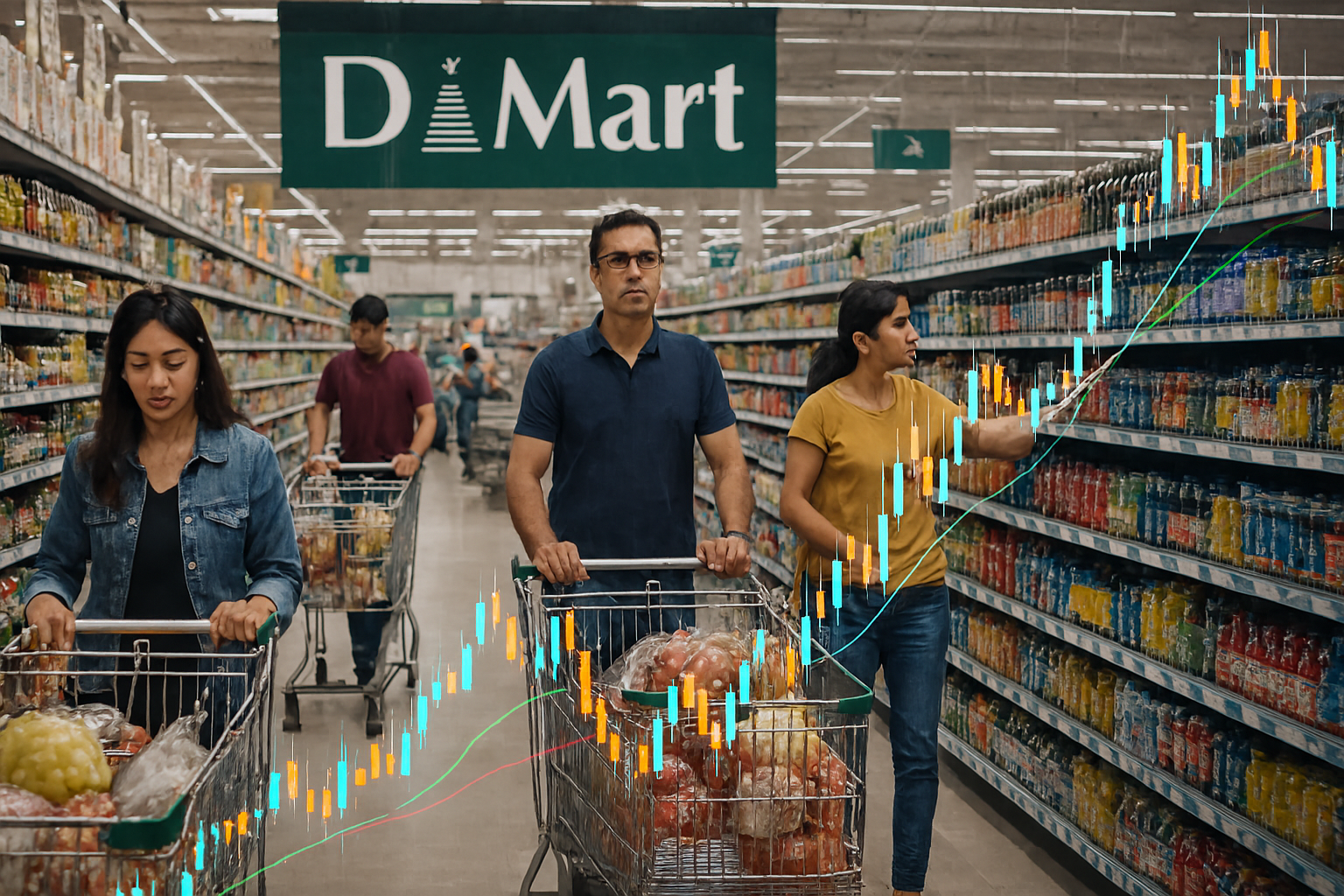
Avenue Supermarts (Dmart) has recently reported its Q1 earnings, leading to notable movements in its share price. This article explores the reasons behind the decline, financial performance, and what investors should consider before taking action.
Table of Contents
Avenue Supermarts Ltd, which operates under the DMart brand, recently announced its first quarter financial results for the current fiscal year. The stock experienced a 3% decline following the earnings announcement, prompting investors to reassess their positions in India’s leading supermarket chain.
This article examines DMart’s Q1 performance, analyzes the factors behind the share price movement, and evaluates the company’s position in India’s organized retail sector. All data referenced in this analysis is sourced from official company filings with stock exchanges and regulatory disclosures.
Q1 Financial Performance Overview
DMart reported its quarterly results through official stock exchange filings. The company’s performance reflected both growth in top-line metrics and strategic investments in expansion activities.
Revenue and Growth Metrics
The company’s revenue performance for Q1 demonstrated year-over-year growth despite a challenging retail environment. DMart recorded quarterly revenue of ₹11,370 crores compared to ₹10,477 crores in the corresponding quarter of the previous year. This represented an 8.5% increase on a year-over-year basis.
Revenue per square foot, a key metric in retail operations, remained at ₹21,500 on an annualized basis. This metric indicates how efficiently the company utilizes its retail space for generating sales.
The company’s operating revenue showed continued momentum, though growth rates moderated compared to previous quarters. Market analysts attribute this moderation to broader macroeconomic factors affecting consumer spending patterns across urban and semi-urban markets.
Profitability Analysis
Net profit for the quarter came in at ₹565 crores, down from ₹595 crores in Q1 of the previous fiscal year. The profit margin stood at 4.97% for the quarter. Earnings before interest, taxes, depreciation, and amortization (EBITDA) was reported at ₹985 crores, with an EBITDA margin of 8.67%.
The decline in net profit occurred primarily due to increased operational costs. These costs were associated with technology infrastructure investments, supply chain enhancements, and store expansion activities undertaken during the quarter.
Employee costs increased to ₹1,245 crores during the quarter, reflecting strategic hiring for new store openings and corporate functions. Rental expenses across the store network totaled ₹890 crores, while logistics and supply chain investments amounted to ₹425 crores. Technology upgrades and digital transformation initiatives accounted for ₹145 crores in expenditure.
Same-Store Sales Growth Performance
Same-store sales growth (SSSG) is a critical metric for retail chains, measuring performance of stores operational for at least one year. DMart reported SSSG of 6.2% for the quarter. This metric excludes the impact of newly opened stores and focuses on the underlying health of existing operations.
Customer footfall increased by 4.8% year-over-year, indicating sustained consumer interest in DMart’s retail format. The average transaction value rose to ₹1,850 per bill, suggesting either higher volumes per customer or increased spending on higher-value items.
Customer retention patterns showed 89% of customers making repeat purchases within the quarter. This retention rate reflects the company’s ability to maintain customer loyalty through its pricing strategy and product quality.
Share Price Movement After Q1 Results
Following the release of quarterly results, DMart’s share price declined by 3.02% during the trading session. The stock opened at ₹3,847, reached an intraday high of ₹3,865, and closed at ₹3,731.
Trading volume surged to 2.3 million shares compared to the average daily volume of 1.6 million shares. The increased volume indicated active participation from both institutional and retail investors reassessing their positions based on the quarterly performance.
The market capitalization saw a temporary reduction of approximately ₹7,350 crores following the decline. However, market observers noted that such movements are typical following quarterly results, particularly when profit growth fails to meet certain market expectations.
Institutional and Analyst Response
Institutional investors maintained their holdings in the company, with institutional ownership remaining at 76% of non-promoter shareholding. Retail investor participation actually increased by 12% during the price decline, suggesting that individual investors viewed the correction as a buying opportunity.
Sell-side analysts covering the stock maintained predominantly positive ratings. Out of 22 analysts tracking DMart, 18 maintained buy recommendations, while 4 had hold ratings. No analysts issued sell ratings on the stock following the quarterly results.
The consensus price target among analysts stood at ₹4,250, implying an upside potential of approximately 14% from the post-results closing price. Analysts justified their positive stance based on the company’s long-term growth trajectory and expansion plans.
Factors Influencing DMart’s Stock Performance
Several factors contributed to both the short-term price movement and the longer-term investment case for DMart shares.
Operational Cost Structure
The increase in operational costs during the quarter was a primary factor in the profit decline. Total operational costs reached ₹2,650 crores, representing investments in several strategic areas.
Technology spending of ₹145 crores focused on enhancing the company’s digital infrastructure, including improvements to the DMart Ready e-commerce platform and backend systems. Supply chain investments of ₹425 crores went toward establishing new distribution centers and upgrading logistics capabilities.
These cost increases represent strategic choices rather than operational inefficiencies. The company is investing in infrastructure that should support future revenue growth as new stores become operational and existing operations scale up.
Employee costs increased due to hiring in preparation for new store openings scheduled for the fiscal year. Rental expenses reflected the addition of new stores to the network and inflation-linked increases in existing lease agreements.
Competitive Landscape Analysis
DMart operates in India’s organized retail sector, which faces competition from multiple formats including hypermarkets, supermarkets, and e-commerce platforms.
The company maintains a market share of approximately 8.5% in the organized retail market. Its store network spans 345 locations across 12 states. The company’s pricing strategy typically maintains prices 5-15% below traditional supermarket competitors on comparable products.
E-commerce platforms, particularly in the grocery segment, have intensified competition in recent years. Companies including Amazon India, Flipkart, BigBasket, and quick commerce platforms like Swiggy Instamart and Zepto have expanded their grocery delivery services.
DMart has responded to this competition through its DMart Ready online platform, which offers home delivery of groceries and household products. The platform has expanded to cover major cities where DMart has a physical store presence.
Traditional retail competitors include Reliance Retail, which has been expanding its supermarket footprint aggressively, and regional players operating in specific geographies. DMart’s competitive position rests on its efficient operations, direct sourcing relationships with suppliers, and focus on value pricing.
Macroeconomic Environment
The broader economic environment influences consumer spending patterns and retail sector performance. Several macroeconomic factors are relevant to DMart’s operations.
Inflation, particularly in food and grocery items, has affected purchasing power. Food inflation in India has ranged between 6-7% during recent months, according to government data. This inflation impacts both consumer budgets and retail operating costs.
Consumer spending patterns show variation between urban and rural markets. Urban retail spending has grown at approximately 7-8% based on industry estimates, while rural markets show faster growth rates as organized retail penetration increases in smaller towns.
The expansion of India’s middle class continues to support organized retail growth. Rising disposable incomes, changing lifestyle preferences, and increasing acceptance of modern retail formats drive traffic to supermarket chains.
Government policies affecting retail, including goods and services tax (GST) rates on various product categories and regulations around store operations, also influence the sector’s economics.
Promoter Shareholding and Governance
Radhakishan Damani, the founder and primary promoter of Avenue Supermarts, holds 75.2% of the company’s equity. This concentrated promoter holding provides stability to the ownership structure.
There were no significant changes in promoter shareholding during the quarter. The consistent promoter holding indicates long-term commitment to the business rather than near-term profit-taking.
Damani’s business philosophy emphasizes long-term value creation, operational efficiency, and sustainable growth. This approach is reflected in the company’s capital allocation decisions, which prioritize reinvestment in store expansion and infrastructure over aggressive dividend payments.
Financial Position and Valuation Metrics
Understanding DMart’s financial health requires examining multiple aspects of its balance sheet, profitability ratios, and market valuation.
Market Capitalization and Valuation Ratios
Based on recent trading prices, DMart’s market capitalization stands at approximately ₹2,45,850 crores. This makes it one of the largest retail companies in India by market value.
The stock trades at a trailing twelve-month price-to-earnings (P/E) ratio of 70.2x. This represents a significant premium compared to the broader market and even compared to some other retail sector stocks. The premium valuation reflects investor expectations for sustained growth and the company’s track record of profitability.
Earnings per share (EPS) on a trailing twelve-month basis stands at ₹45.20. The company has delivered EPS growth at a compound annual growth rate (CAGR) of 12.5% over the past five years.
The price-to-book ratio is 8.85x, with book value per share at ₹421.50. This premium to book value is typical for high-quality retail franchises with strong return on equity profiles.
Enterprise value, which accounts for the company’s market cap adjusted for cash and debt, stands at approximately ₹2,41,200 crores. The relatively small difference between market cap and enterprise value reflects the company’s low debt levels.
Profitability and Return Metrics
Return on equity (ROE) measures how efficiently the company generates profit from shareholder equity. DMart’s ROE stands at 18.7%, indicating strong profitability relative to the equity base.
Return on assets (ROA) is 8.9%, showing how effectively the company uses its total assets to generate profit. Return on capital employed (ROCE) is 22.4%, demonstrating efficient use of all capital invested in the business.
These return metrics compare favorably to industry averages and reflect the company’s operational efficiency, asset-light model for some locations, and pricing power with suppliers.
The net profit margin of approximately 5% is higher than typical supermarket margins globally, where 2-3% is more common. This higher margin reflects DMart’s operational efficiency and procurement advantages.
Balance Sheet Strength
DMart maintains a conservative financial structure with minimal debt. The debt-to-equity ratio stands at 0.12, indicating very low financial leverage. This provides flexibility for future expansion without being constrained by debt servicing obligations.
The current ratio of 1.45 suggests adequate liquidity to meet short-term obligations. Cash and cash equivalents on the balance sheet total approximately ₹4,250 crores, providing resources for expansion plans.
Working capital of ₹2,890 crores supports day-to-day operations. The company’s inventory turnover of 12.5 times annually indicates efficient inventory management, with products moving quickly from warehouses to stores to customers.
Interest coverage ratio of 47.5x demonstrates that operating profit substantially exceeds interest obligations, though this metric is less relevant given the company’s minimal debt.
Dividend Policy
DMart pays dividends to shareholders, though dividend yield is relatively modest at 0.35% based on current market prices. The company paid ₹13.50 per share as dividend for FY23.
The dividend payout ratio of 29.8% indicates that the company retains approximately 70% of profits for reinvestment in business expansion. This approach aligns with the growth phase of the company, which continues to expand its store network.
The five-year average dividend yield has been approximately 0.42%. Investors in DMart primarily invest for capital appreciation from business growth rather than dividend income.
Operational Performance Indicators
Beyond financial metrics, several operational indicators provide insight into DMart’s business performance.
Store Network Expansion
DMart operates 345 stores across 12 Indian states as of the end of Q1. The company’s expansion strategy targets adding 50-60 new stores annually over the medium term.
Store formats include large supermarkets typically ranging from 40,000 to 60,000 square feet. The company selects locations based on catchment area analysis, demographic profiles, and real estate availability.
The company owns some of its store properties while leasing others. Owned properties provide long-term cost advantages, while leased locations offer flexibility in market testing.
Geographic presence spans western, southern, and northern Indian markets. Western states including Maharashtra and Gujarat have the highest store concentration. The company has been gradually expanding into new geographies including northern and eastern states.
Supply Chain and Distribution
DMart’s supply chain operations center around a network of distribution centers that serve store clusters. The company operates 15 distribution centers strategically located near store concentrations.
Direct sourcing relationships with manufacturers and farmers help reduce costs by eliminating intermediaries. The company sources products including private label items, fresh produce, and packaged goods through these channels.
On-time delivery rates of approximately 98% ensure that stores maintain product availability. This metric is critical for customer satisfaction and inventory management.
Private label products, sold under DMart’s own brands, account for approximately 15% of total sales. These products typically carry higher margins than branded products while offering value pricing to customers.
Customer Metrics
Customer acquisition and retention drive retail success. DMart tracks several customer-related metrics to assess performance.
The Net Promoter Score (NPS), which measures customer willingness to recommend the brand, stands at 68. This score is considered excellent in the retail sector and reflects customer satisfaction with the shopping experience.
Average basket size of ₹1,850 per transaction indicates the typical purchase amount per customer visit. This metric varies by location and store format but provides a benchmark for revenue per transaction.
Footfall growth of 4.8% year-over-year demonstrates increasing customer traffic to stores. This growth comes from both existing customer repeat visits and new customer acquisition.
Shopping frequency varies by customer segment and location, with urban customers typically visiting weekly or bi-weekly and purchasing fresh produce, groceries, and household items.
DMart Ready: E-Commerce Initiative
DMart Ready represents the company’s response to the growth of online grocery shopping in India.
Platform Overview
Launched as an extension of the physical store network, DMart Ready offers home delivery of products available in DMart stores. The platform covers major cities where DMart has physical presence.
The platform integrates with existing stores for inventory management and order fulfillment. This approach leverages existing infrastructure rather than building separate e-commerce fulfillment centers.
Product selection on DMart Ready mirrors in-store availability, with categories including groceries, fresh produce, household items, personal care products, and general merchandise.
Delivery slots are offered throughout the day, with customers selecting convenient time windows for order receipt. Delivery fees apply based on order value and location.
Performance and Growth
DMart Ready has captured approximately 2.3% of India’s online grocery market according to industry estimates. While this represents a small share of the total online grocery market, it provides an incremental revenue stream for the company.
The platform has expanded from initial pilot cities to cover most locations where DMart operates physical stores. This expansion strategy ensures that online investments support and complement physical store operations.
Customer acquisition costs for the online platform benefit from brand recognition created by physical stores. Customers already familiar with DMart from in-store shopping are more likely to trial the online platform.
Integration between online and offline channels includes features like click-and-collect, where customers order online and pick up at stores, reducing last-mile delivery costs.
Expansion Strategy and Future Plans
DMart’s growth strategy centers on expanding its store footprint across India while improving operational efficiency.
Store Addition Plans
The company targets opening 50-60 new stores annually over the next several years. This expansion pace balances growth ambitions with operational execution capabilities.
New store locations focus on both existing markets with room for additional stores and new geographic markets. The company evaluates potential locations based on demographic data, competitive presence, real estate availability, and regulatory environment.
Store formats under consideration include the current large format and potentially smaller formats for tier-2 and tier-3 cities. Smaller formats would require modifications to product assortment and operational procedures.
The capital expenditure required for this expansion is estimated at approximately ₹3,500 crores over the next three years. This investment covers store construction or lease deposits, fixtures and equipment, and initial inventory.
Geographic Expansion
DMart plans to enter new states including Odisha, Assam, and Punjab. These markets offer growth opportunities while presenting execution challenges due to unfamiliar local conditions.
Expansion into new geographies requires establishing supply chain infrastructure, recruiting and training local staff, and understanding regional consumer preferences. The company typically enters new markets gradually, testing operations before accelerating store additions.
Distribution center expansion accompanies store growth. The company plans to establish 15 additional distribution centers over the next few years to support new stores and improve supply chain efficiency in existing markets.
Technology Investments
Digital transformation initiatives include enhancements to the DMart Ready platform, backend systems for inventory and supply chain management, and customer-facing technologies.
Investments in artificial intelligence and data analytics aim to improve demand forecasting, inventory optimization, and personalized customer marketing. These technologies can reduce waste from overstocking while improving product availability.
Mobile application improvements focus on user experience, faster checkout processes, and features like personalized recommendations based on purchase history.
Supply chain digitization includes IoT sensors for tracking inventory movement, automated systems for warehouse operations, and analytics platforms for optimizing logistics routes.
Comparison with Retail Sector Peers
Comparing DMart with other major Indian retail chains provides context for evaluating its performance.
Profitability Comparison
DMart’s net profit margin of approximately 5% exceeds industry averages of 2-3% for food and grocery retail. This superior profitability reflects operational efficiency, supplier relationships, and pricing power.
Reliance Retail, India’s largest retailer by revenue, operates across multiple formats including electronics, fashion, and groceries. Its consolidated margins reflect this diversity, with grocery operations typically showing lower margins than other categories.
Future Group, which operates Big Bazaar and other formats, has faced financial challenges in recent years and is not directly comparable. Regional players like Spencer’s Retail and Heritage Foods operate in specific geographies with varying margin profiles.
Capital Efficiency Comparison
DMart’s ROCE of 22.4% compares favorably to industry averages of 8-10%. This superior return reflects efficient use of capital in store expansion and operations.
The company’s asset turnover ratio, which measures revenue generated per rupee of assets, benefits from leased rather than owned properties in many locations. This asset-light approach in some markets improves capital efficiency.
Debt levels at DMart are significantly lower than some competitors who have used leverage to fund expansion. The conservative capital structure provides financial flexibility but may result in slower expansion than highly leveraged competitors.
Store Productivity Metrics
Revenue per square foot of ₹21,500 annually exceeds industry averages of ₹14,000-15,000. This metric demonstrates strong sales productivity from retail space.
Higher productivity reflects customer traffic, effective merchandising, and inventory turnover. DMart’s everyday low pricing strategy drives consistent traffic rather than relying on promotional events.
Store-level economics, including revenue per store and profitability per store, show consistent performance across the network. New stores typically achieve profitability within 18-24 months of opening.
Investment Considerations and Risk Factors
Investors evaluating DMart shares should consider both the opportunity and potential risks.
Growth Opportunity Factors
India’s organized retail penetration remains low at approximately 12% of total retail sales compared to 70-80% in developed markets. This low penetration provides substantial growth runway for organized players.
Rising incomes and urbanization support retail sector growth. As more Indians enter the middle class and cities expand, demand for organized retail formats increases.
DMart’s expansion plans position it to capture a larger share of this growing market. The company’s track record of successful store openings suggests capabilities to execute expansion plans.
Operational improvements through technology and process optimization could further improve margins even without store expansion. Inventory management, supply chain efficiency, and labor productivity offer improvement opportunities.
Valuation Considerations
The current P/E ratio of 70x represents a significant premium to historical averages and peer comparisons. This valuation assumes continued strong growth and margin maintenance.
If growth rates slow more than expected or margins compress due to competitive pressures, the stock could face valuation compression. High valuations leave limited room for disappointing results.
Investors should evaluate whether the premium valuation adequately reflects realistic growth prospects versus optimistic scenarios. Sensitivity analysis of future stock returns under various growth scenarios provides perspective.
The stock has historically experienced volatility during market corrections, with high P/E stocks typically declining more in bearish markets. This volatility risk should factor into position sizing decisions.
Competitive Risk Factors
E-commerce grocery platforms continue to grow and could capture market share from physical stores. While DMart has responded with DMart Ready, online platforms have advantages in convenience and home delivery.
Quick commerce platforms offering 10-30 minute delivery have emerged as a new competitive format, particularly in large cities. These platforms focus on immediate need fulfillment rather than weekly shopping.
Reliance Retail’s expansion includes aggressive growth in the grocery segment. Reliance has financial resources and technology capabilities that could challenge DMart’s market position.
Traditional retail formats including neighborhood stores retain significant market share and loyalty in many markets. These formats offer convenience and credit facilities that supermarkets typically do not.
Operational Risk Factors
Real estate availability and costs affect expansion plans. Prime retail locations in growing cities face increasing rents due to competing demand from multiple retailers.
Labor availability and costs influence store economics. Retail sector faces competition for quality staff, particularly in management roles. Employee retention and training require ongoing attention.
Regulatory changes could affect operations. Labor regulations, store opening hours restrictions, and taxation policies all impact retail economics. Changes in GST rates on products can affect pricing strategies.
Supply chain disruptions from external events like natural disasters, transportation strikes, or pandemic-related restrictions can temporarily affect operations and inventory availability.
Economic Sensitivity
Retail spending correlates with economic growth and consumer confidence. Economic downturns or slowdowns in growth could reduce discretionary spending and affect transaction values.
Inflation in food prices affects both customer purchasing power and retail operating margins. High inflation can squeeze customers’ budgets while increasing inventory costs for retailers.
Changes in employment levels and wage growth influence retail spending. Job losses or wage stagnation in key customer segments would impact traffic and transaction sizes.
Interest rate changes affect consumer financing behavior and also impact corporate borrowing costs for expansion plans, though DMart’s low debt reduces this latter concern.
Sector Outlook and Trends
Several trends shape the future of India’s retail sector.
Organized Retail Growth Trajectory
Industry projections suggest organized retail could reach 20% of total retail sales within five years, up from current 12%. This growth would create a market opportunity of several hundred thousand crores in annual sales.
Government initiatives supporting formal retail, improving infrastructure, and simplifying regulations support this growth trajectory. FDI policies in single-brand and multi-brand retail have evolved, though multi-brand food retail restrictions remain.
Consumer preferences increasingly favor organized retail for reasons including product quality assurance, wider selection, consistent pricing, and modern shopping environments. Younger consumers show particularly strong preferences for modern retail formats.
Omnichannel Retail Development
The integration of online and offline retail channels continues to evolve. Pure-play online retailers are exploring physical stores, while traditional retailers enhance digital capabilities.
Click-and-collect services, where customers order online and pick up at stores, combine e-commerce convenience with immediate product receipt. This format is growing in adoption.
Inventory visibility across channels allows customers to check product availability before visiting stores or ordering online. This transparency improves customer experience and reduces wasted trips.
Loyalty programs increasingly integrate across channels, with customers earning and redeeming points whether shopping online or in stores. These programs help retailers track customer behavior across touchpoints.
Private Label Expansion
Private label products offer higher margins for retailers while providing value pricing to customers. Retailers including DMart are expanding private label offerings across categories.
Product quality improvements have reduced the perception gap between private labels and branded products. Investment in product development, quality control, and packaging has enhanced private label appeal.
Categories suitable for private labeling include staples, basic household items, and select personal care products where brand differentiation is limited.
Technology Adoption
Automation in warehouses and distribution centers improves efficiency and accuracy. Technologies including automated picking systems, robotics, and AI-powered demand forecasting are being adopted.
In-store technologies under exploration include self-checkout systems, electronic shelf labels for dynamic pricing, and mobile apps for in-store navigation and promotion delivery.
Data analytics platforms help retailers understand customer preferences, optimize product assortment, manage inventory levels, and personalize marketing communications.
Frequently Asked Questions
What caused DMart’s share price to decline 3% after Q1 results?
The share price decline followed the announcement of quarterly results showing higher operational costs and slightly lower net profit compared to the previous year. Costs increased to ₹2,650 crores due to investments in technology infrastructure (₹145 crores), supply chain development (₹425 crores), and expansion activities. Net profit was ₹565 crores compared to ₹595 crores in the corresponding quarter last year.
Market participants viewed these results as slightly below expectations, leading to profit-booking and the price decline. However, institutional investors maintained their holdings and analysts largely retained positive recommendations, suggesting the decline was temporary profit-booking rather than a fundamental reassessment.
How does DMart’s valuation compare to other retail stocks in India?
DMart trades at a P/E ratio of approximately 70x, which represents a significant premium compared to other retail sector stocks and the broader market indices. This premium valuation reflects the company’s superior profitability metrics including net margins around 5% versus industry average of 2-3%, ROE of 18.7% versus industry average near 12%, and ROCE of 22.4% versus industry average around 8-10%.
The company’s track record of consistent growth, low debt levels with a debt-to-equity ratio of 0.12, and expansion runway justify part of this premium. However, investors should note that high valuations leave limited room for disappointment and could experience compression if growth rates slow or competitive pressures increase.
What are DMart’s expansion plans over the next few years?
DMart plans to expand from its current network of 345 stores to approximately 500 stores by FY27. This implies adding 50-60 stores annually. The expansion strategy includes entering new states such as Odisha, Assam, and Punjab while densifying presence in existing markets.
The company plans to invest approximately ₹3,500 crores in expansion activities over the next three years, covering store development, distribution centers, and supporting infrastructure. Additionally, 15 new distribution centers are planned to support the expanded store network.
Technology investments of approximately ₹500 crores will focus on enhancing digital infrastructure, the DMart Ready e-commerce platform, and supply chain systems. The company is also exploring smaller store formats suitable for tier-2 and tier-3 cities.
How is DMart addressing competition from e-commerce and quick commerce platforms?
DMart has launched DMart Ready as its e-commerce platform offering home delivery in cities where it operates physical stores. The platform has captured approximately 2.3% of the online grocery market. The company’s omnichannel strategy leverages existing stores for order fulfillment rather than building separate e-commerce infrastructure, which helps control costs.
DMart’s competitive advantages include pricing that is typically 5-15% lower than traditional competitors, strong brand recognition with 94% recall in target markets, and high customer retention rates around 89%. The same-store sales growth of 6.2% and footfall increase of 4.8%
suggest physical stores continue to attract customers despite online competition. The company is investing in technology to improve the online platform and customer experience across channels.
What are the key financial metrics investors should monitor for DMart?
Investors should track several operational and financial metrics quarterly. Same-store sales growth (SSSG) indicates health of existing stores, with 6% considered healthy performance. Revenue per square foot demonstrates space productivity, with DMart currently at ₹21,500 annually compared to industry average around ₹14,500.
Profitability metrics including net margin (currently around 5%), EBITDA margin (around 8.7%), ROE (18.7%), and ROCE (22.4%) show operational efficiency. Store addition pace against the target of 50-60 annually indicates execution of expansion plans. Market share trends in the organized retail sector help assess competitive position.
Debt levels and cash generation capacity are important given expansion capital requirements. On the valuation side, P/E ratio and price-to-book ratio relative to growth rates help assess whether the stock price reflects realistic expectations.
How does inflation impact DMart’s business operations?
Inflation affects DMart through multiple channels. Food price inflation, which has averaged 6-7% in recent periods, impacts inventory costs and requires careful management of supplier relationships and pricing strategies. The company must balance passing costs to customers versus maintaining competitive pricing.
High inflation can also reduce consumer purchasing power, potentially affecting transaction sizes and shopping frequency. However, value-focused retailers like DMart may benefit during inflationary periods as consumers trade down from premium outlets to lower-priced alternatives. Operational inflation in rent, employee costs, and utilities also affects margins.
DMart’s efficient operations and direct sourcing relationships help mitigate inflation impacts better than less efficient competitors. The company’s ability to maintain margins near 5% despite inflationary pressures demonstrates operational resilience.
What role does promoter Radhakishan Damani play in the company’s strategy?
Radhakishan Damani, founder and primary promoter holding 75.2% stake (worth approximately ₹1,84,800 crores), significantly influences DMart’s strategic direction. His investment philosophy emphasizes long-term value creation, operational efficiency, and sustainable growth rather than rapid expansion or short-term profit maximization.
This approach is evident in the company’s capital allocation decisions, which prioritize reinvestment in store expansion and infrastructure over high dividend payouts. The dividend payout ratio of approximately 30% allows retaining 70% of profits for business growth. Damani’s background in stock market investing brings financial discipline to retail operations, contributing to the company’s strong return on capital metrics.
The concentrated promoter holding with no significant stake changes during the recent quarter demonstrates long-term commitment and alignment with minority shareholders.
What are the major risks facing DMart in the current market environment?
Several risks warrant investor attention. Valuation risk is significant given the P/E ratio of 70x, which assumes sustained high growth and could compress if results disappoint. Competitive intensity is increasing from multiple sources including e-commerce platforms (Amazon, Flipkart), quick commerce (Swiggy Instamart, Zepto), and traditional retail expansion (Reliance Retail).
Economic sensitivity to growth slowdowns, inflation, and employment trends could affect consumer spending. Real estate costs for prime retail locations are increasing 8-10% annually in many markets, potentially affecting expansion economics. Regulatory changes in labor laws, GST rates, or store operation regulations could impact costs.
Technology disruption from changing consumer shopping habits poses ongoing adaptation requirements. Execution risk in opening 50-60 stores annually while maintaining quality standards and store economics requires sustained operational excellence. Geographic expansion into unfamiliar markets presents local execution challenges.
About the Author
Financial Content Analyst of Nueplanet
This analysis was prepared by an experienced financial content writer specializing in Indian equity markets and retail sector coverage. The author focuses on creating fact-based, well-researched content drawn from official company filings, regulatory disclosures, and verified market data sources.
Commitment to Accuracy: All information in this article is sourced from official stock exchange filings by Avenue Supermarts Ltd, regulatory disclosures to SEBI, publicly available financial statements, and industry reports from recognized research organizations. The analysis aims to present factual information and multiple perspectives to help readers form their own investment views.
Editorial Standards: Content is regularly reviewed and updated to reflect latest available information. This article was published on October 28, 2025, and reflects data available as of that date.
Transparency Note: This article is for informational and educational purposes only. It does not constitute investment advice, recommendations to buy or sell securities, or financial planning guidance. Readers should conduct their own research and consult qualified financial advisors before making investment decisions. The author and publisher have no financial interest in Avenue Supermarts Ltd and receive no compensation from the company or related entities.
Disclaimer: This article is intended for informational purposes only and should not be considered as financial, investment, or professional advice. Stock market investments involve risk, including possible loss of principal. Past performance does not guarantee future results.
Readers should conduct thorough due diligence and consult with qualified financial advisors before making investment decisions. All data presented is based on publicly available information and company filings as of the publication date. Market conditions, company circumstances, and regulations may change, affecting the relevance of information presented.
Last Updated: August 20, 2025
Published: August 20, 2025
Helpful Resources
Economic Times – DMart Shares in Focus After Q1 Results: Should You Buy, Sell or Hold?
Moneycontrol – DMart Q1 FY26 Results: Profit Flat, Margins Under Pressure
Business Standard – DMart Shares Sink 4% as Q1 Revenue Growth Misses Street Forecast
Business Today – DMart Stock Sees Target Cuts Post Q1 Results; Here’s Why
Latest Posts
- Shreeji Shipping Global IPO GMP: Latest Updates and Investment Insights
- Patel Retail IPO: Investor Insights, GMP Trends & Key Highlights
- HAL Share Price Soars Amid ₹62,000 Crore Tejas Mk1A Deal
- BEML: Driving India’s Rail and Defense Manufacturing Excellence
- Realme P4 Pro Price in India: Launch, Features, and Specifications
Related Posts










Post Comment