







High Tide in Mumbai Today: IMD Alert, Waterlogging, Train Disruptions, and Flight Updates
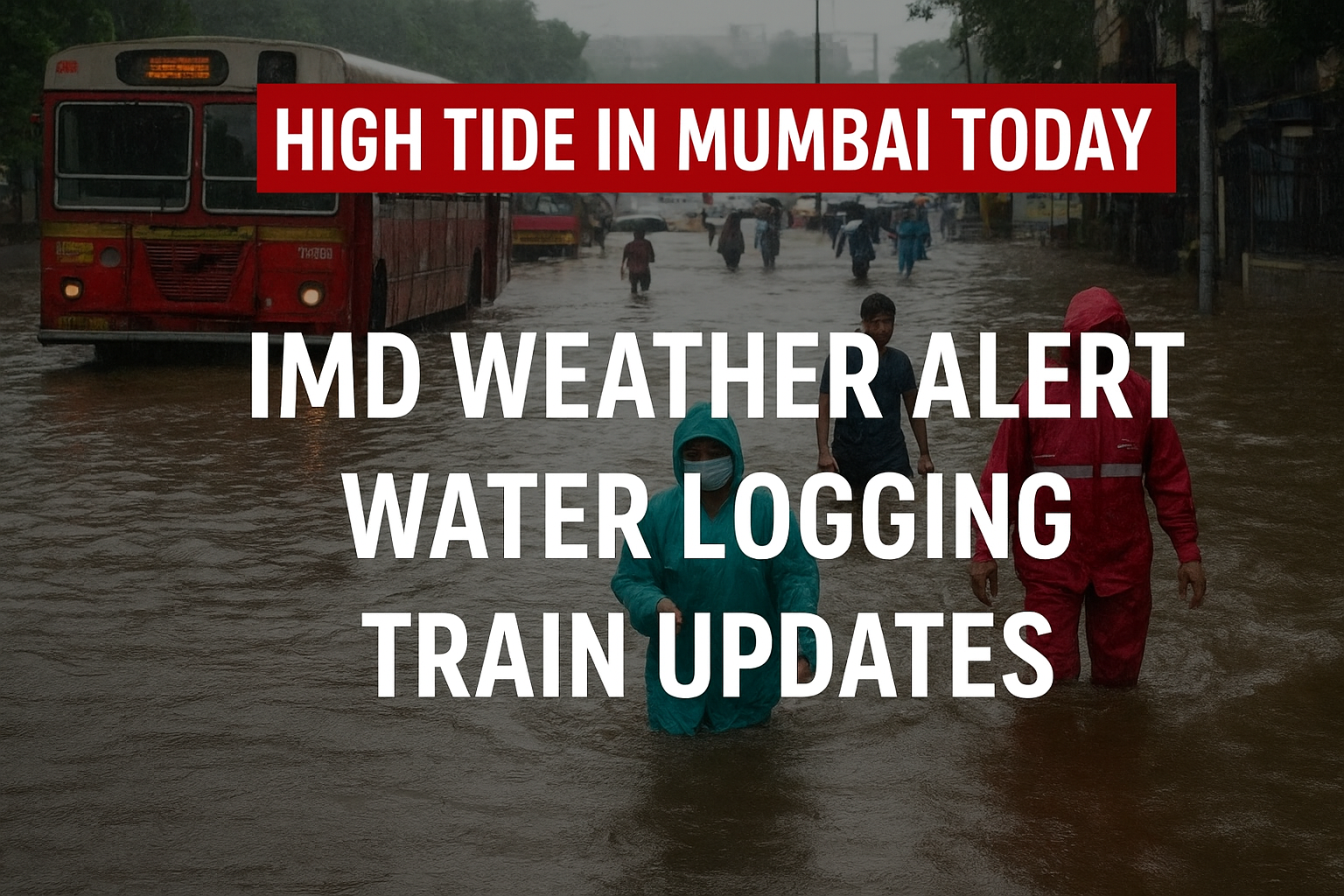
High tide in Mumbai today caused severe waterlogging, train delays, and flight disruptions. IMD has issued a red alert, urging caution as heavy rainfall continues.
Table of Contents
Comprehensive Analysis of Current Weather Patterns and Water Security
The India Meteorological Department (IMD) has issued an orange alert for Mumbai and surrounding districts as the city experiences significant rainfall patterns in September 2025. This weather advisory affects multiple districts including Palghar, Pune, Ahilyanagar, and Beed, with warnings of heavy to very heavy rainfall at isolated locations. The alert indicates sustained weather activity that requires careful monitoring by residents and authorities alike.
Mumbai is currently witnessing generally cloudy conditions with moderate rainfall throughout the day. Temperature readings show a comfortable range between 24°C minimum and 29°C maximum, with humidity levels fluctuating between 85-95%. Wind speeds range from 15-25 km/h, creating moderate to strong gusts across the metropolitan area. Visibility during heavy showers reduces to approximately 2-4 kilometers, affecting both road and air traffic operations.
The current weather pattern represents a continuation of monsoon activity extending into late September. According to IMD data, heavy to very heavy rainfall is likely to continue over northeast India and Maharashtra for the next 2-3 days. This extended precipitation period has significant implications for urban infrastructure, transportation networks, and daily activities across the Mumbai metropolitan region.
Mumbai Lake Levels Reach Near-Capacity Status
Mumbai’s seven major reservoirs have achieved exceptional water stock levels, providing substantial relief for the city’s long-term water security. As of 6 AM on September 17, 2025, the collective water stock stands at 1,430,969 million liters (ML), representing 98.9% of the total capacity of 1,447,363 ML. This achievement marks one of the highest water storage levels recorded in recent years for this time of the season.
Individual Reservoir Status Analysis
The performance of individual lakes demonstrates robust water collection across the supply system:
Modak Sagar, Tulsi Lake, and Vihar Lake have reached 100% capacity, achieving full overflow status. These three reservoirs contribute significantly to Mumbai’s daily water supply needs.
Bhatsa Lake stands at 99.5% capacity, maintaining excellent performance levels. As the largest reservoir in Mumbai’s water supply network, Bhatsa’s high capacity ensures stable supply for the densely populated areas it serves.
Upper Vaitarna has achieved 99.2% capacity with slight increases in water levels, while Tansa Lake maintains 98.8% capacity with steady holdings. Middle Vaitarna shows 97.9% capacity, representing strong water reserves despite a minor drop in recent readings.
The cumulative water stock of 224,636 million liters at 99.02% capacity eliminates immediate concerns about water rationing or supply restrictions. Historical data from previous September periods shows the 2025 levels significantly exceed those from 2022-2024, when capacity ranged between 77-85%. The Brihanmumbai Municipal Corporation (BMC) has confirmed uninterrupted water supply capability based on current reservoir levels.
High Tide Patterns and Coastal Impact Assessment
Mumbai’s coastal geography makes high tide monitoring essential during periods of heavy rainfall. The combination of elevated tide levels and sustained precipitation creates potential flooding scenarios in low-lying and coastal areas. Understanding tide timing helps residents and authorities coordinate emergency response measures effectively.
September 2025 High Tide Schedule
Current high tide patterns show multiple peak periods throughout each day:
Morning high tides occur around 6:45 AM, reaching approximately 4.2 meters. This timing coincides with morning commute hours, potentially affecting coastal road networks and low-lying transportation routes.
Evening high tides peak near 7:30 PM at approximately 4.1 meters. The evening surge affects return commute patterns and can impact coastal residential areas during dinner hours.
Secondary tide peaks appear at 12:15 PM (3.8 meters) and 12:45 AM (3.9 meters), creating additional vulnerability windows throughout the 24-hour cycle.
Vulnerable Coastal Areas
Several Mumbai neighborhoods face elevated risk when high tides coincide with heavy rainfall:
Marine Drive and Nariman Point represent the commercial heart of South Mumbai. The seafront promenade and adjacent business district experience water intrusion during extreme high tide events, particularly when combined with intense rainfall exceeding 20mm per hour.
Worli Sea Face hosts numerous residential complexes along the coastline. Ground-floor properties within 200-500 meters of the shoreline face potential flooding during peak tide events.
Bandra Bandstand and Juhu Beach areas include popular waterfront zones mixing residential, commercial, and recreational spaces. Beach submersion during high tide periods requires temporary access restrictions.
Versova coastal belt, Mahim Bay region, and Colaba Causeway complete the list of areas requiring enhanced monitoring during combined high tide and heavy rainfall events. Local authorities have implemented real-time water level monitoring systems that provide advance warnings to residents in these zones.
Current Weather Impact on Transportation Networks
Transportation infrastructure across Mumbai faces operational challenges during sustained rainfall periods. Multiple transit systems have implemented adaptive measures to maintain service continuity while prioritizing passenger safety.
Railway Network Adjustments
Mumbai’s suburban railway system serves millions of daily commuters across Western, Central, and Harbour line networks. During heavy rainfall periods, railway authorities implement several operational modifications:
Western Railway services between Churchgate and Virar may experience 15-20% frequency reductions during peak weather events. Extended travel times become necessary when track-side water accumulation requires reduced train speeds. Stations prone to waterlogging receive enhanced pump deployment to maintain platform accessibility.
Central Railway operations from Chhatrapati Shivaji Maharaj Terminus (CST) to Kasara implement proactive speed restrictions during heavy downpours. The Harbour Line incorporates tide-coordinated scheduling to avoid service disruptions when high tides coincide with intense rainfall. Trans-Harbour routes adjust timetables based on weather forecasts.
Road Network Conditions
Major highway corridors face varying degrees of disruption potential:
Western Express Highway connects northern suburbs to the city center. The Andheri-Bandra stretch experiences 45-60 minute delays during peak rainfall, while the Mahim-Worli section requires active monitoring for waterlogging. Traffic management systems provide alternative route recommendations when needed.
Eastern Express Highway serves Mumbai’s industrial areas. The Ghatkopar-Vikhroli zone receives enhanced drainage support, while the Mulund-Thane connection activates traffic diversion protocols during severe weather. The Mankhurd-Govandi area maintains flood prevention measures.
Specific locations require particular attention: Andheri Subway typically experiences rapid water accumulation requiring 30+ minute avoidance during heavy rainfall. The Kurla-Ghatkopar belt faces challenges from industrial runoff. Dadar TT Circle affects six major traffic routes when waterlogging occurs. Sion-Matunga East experiences flooding that can disrupt railway services. Worli Sea Face faces dual threats from both rainfall and tidal influences.
Aviation Operations
Chhatrapati Shivaji Maharaj International Airport has activated enhanced weather management protocols. Runway visibility reduces to 2-3 kilometers during heavy showers, requiring Instrument Landing System (ILS) protocol implementation for safe aircraft approaches. Ground operations experience approximately 25% extended turnaround times due to weather conditions. Passengers receive recommendations to arrive two hours before scheduled departure during active weather advisories.
Business Continuity Planning During Extended Rainfall
Commercial operations across Mumbai adapt to weather challenges through multiple strategies addressing technology, operations, and employee welfare.
Technology Infrastructure Requirements
Modern businesses require robust digital infrastructure to maintain operations during weather disruptions. Cloud-based systems should handle 90% of critical functions with 99.9% uptime guarantees. Dual internet service provider (ISP) arrangements with 4G/5G failover systems ensure connectivity continuity. Virtual private network (VPN) infrastructure must support full workforce remote access with secure document management and video conferencing capabilities.
Real-time data backup systems with geographically distributed storage protect against localized power failures or equipment damage. Organizations implement automated backup protocols ensuring no critical data loss occurs during infrastructure disruptions.
Operational Adaptations
Flexible working arrangements help reduce commuter exposure to challenging weather. Staggered timing systems distribute travel demand across broader time windows rather than concentrating movement during peak weather periods. Multi-channel communication networks including SMS, email, WhatsApp groups, and mobile apps ensure message delivery through redundant pathways.
Supply chain strategies incorporate multiple vendor relationships preventing single-point failures when specific suppliers face weather-related disruptions. Customer service teams implement weather-responsive schedules with proactive communication about potential delays or modified service availability.
Employee Support Measures
Organizations provide transportation assistance through company-arranged shuttle services during severe weather, offering safe waiting areas for employees who cannot immediately travel home. Office facilities maintain emergency supplies including food, water, first-aid equipment, and communication devices. Mental health support resources including stress management programs and counseling services address extended weather-related challenges.
District-Specific Weather Impacts
Different Mumbai regions experience varying weather effects based on topography, infrastructure, and proximity to coastal areas.
South Mumbai Considerations
The Fort-Colaba business district forms India’s financial epicenter. Stock exchanges and banking institutions maintain weather-resilient trading protocols ensuring market continuity. Corporate offices encourage flexible arrangements during peak weather periods. The tourism sector modifies sightseeing schedules prioritizing visitor safety while maintaining service availability.
The Worli-Lower Parel corporate zone hosts major IT companies, media houses, and hospitality providers. Technology firms leverage cloud infrastructure enabling seamless remote work transitions. Broadcasting facilities maintain weather-proof operations. Hotels implement enhanced guest safety protocols while preserving service quality.
Western Suburbs Impact
Bandra-Khar represents an upscale residential and commercial corridor. Linking Road shopping areas maximize covered walkway utilization during rainfall. Residential complexes enhance basement parking security preventing flood damage. Restaurants deploy weather-adaptive service models balancing dine-in and delivery operations.
Andheri functions as Mumbai’s secondary commercial center. The Santacruz Electronic Export Processing Zone (SEEPZ) maintains industrial continuity protocols. Film City operations adjust shooting schedules around weather conditions. Areas near the airport coordinate traffic management with weather monitoring systems.
Central Mumbai Dynamics
Dadar-Matunga represents a heritage-rich cultural zone. Flower markets utilize enhanced covered areas protecting inventory and customers. Educational institutions implement weather-adaptive academic schedules including online learning options when needed. Cultural centers modify event programming based on weather forecasts.
Eastern Suburbs Conditions
Vikhroli-Bhandup forms Mumbai’s industrial manufacturing belt. Chemical industries activate enhanced safety protocols during weather events. Pharmaceutical facilities maintain climate-controlled production environments ensuring product quality. Logistics operations adjust delivery schedules accounting for weather-related delays.
Safety Recommendations for Vulnerable Populations
Families with children, elderly members, or differently-abled individuals require specialized planning for weather safety.
Child Safety Protocols
Parents establish direct communication channels with schools for early dismissal decisions and safe pickup coordination. Emergency contact systems include multiple verified adults with location tracking capabilities. Home environments designate safe areas with emergency supplies, entertainment options, and communication equipment. Age-appropriate weather education helps children understand danger signs and appropriate responses.
Elderly Care Strategies
Daily check-in systems monitor health parameters including blood pressure, diabetes management, and heart condition oversight during stressful weather periods. Waterproof medication storage with backup supplies and pharmacy emergency contacts ensure continuous access to necessary treatments. Pre-arranged transportation addresses medical appointment needs and emergency evacuation scenarios considering physical limitations. Regular communication schedules prevent isolation and provide emotional support during extended indoor periods.
Differently-Abled Support Systems
Mobility aid protection through waterproofing wheelchairs and assistive technology with backup equipment availability ensures continued independence. Communication adaptations provide visual, auditory, and tactile alert systems making weather information accessible across disability types. Customized evacuation routes and procedures account for individual mobility requirements and assistance needs. Expanded caregiver networks with multiple trained support persons enhance safety during emergencies.
Community Integration Programs
Building-level assistance programs train volunteers for shopping, medical errands, and emergency support. Resource sharing systems pool emergency supplies including mobility equipment, medical provisions, and communication devices. Daily wellness checks ensure no vulnerable individual remains isolated during challenging weather. Pre-arranged vehicle access supports medical emergencies and evacuation scenarios.
Long-Term Infrastructure Development Initiatives
Mumbai pursues comprehensive infrastructure improvements addressing future weather challenges through multi-billion rupee investments.
Advanced Drainage Systems
The Smart Storm Water Drainage System represents a ₹12,000 crore investment incorporating next-generation technology. AI-powered pumping stations total 150 installations with weather-predictive activation capabilities. Underground tunnel networks span 45 kilometers connecting major waterlogging zones to the sea. Real-time monitoring through IoT sensors provides 15-second update cycles on water accumulation. Automated gate systems prevent seawater backflow during high tide periods.
Transportation Enhancement Projects
Weather-resilient railway improvements total ₹8,500 crores. Critical waterlogging zones receive elevated track infrastructure. Advanced railway-specific pumping systems maintain service continuity during rainfall exceeding 50mm per hour. Climate-controlled station designs enhance passenger safety and comfort. Solar plus battery backup systems ensure operations during grid failures.
Metro and monorail expansion represents ₹25,000 crores investment. Plans include 120 kilometers of additional underground metro reducing surface transport dependency. Completely enclosed systems remain unaffected by surface weather conditions. Multi-modal integration hubs provide weather-protected passenger transfers between different transit systems.
Digital Infrastructure Revolution
Smart city weather management platforms incorporate predictive analytics through machine learning systems forecasting hyperlocal impacts 72 hours ahead. Automated citizen alert systems use SMS, app notifications, and public address warnings about dangerous conditions. AI-powered emergency response coordination optimizes ambulance, fire service, and disaster response deployment. Weather-responsive traffic signal systems automatically adjust timing to optimize flow during challenging conditions.
Reliable Information Sources and Emergency Contacts
Accessing accurate weather information supports safe decision-making during dynamic conditions.
Official Government Sources
The India Meteorological Department (IMD) Mumbai office provides official government weather forecasting with six-hour update cycles and emergency alerts. Contact: 022-22157621.
The Brihanmumbai Municipal Corporation (BMC) issues local government advisories on traffic conditions, drainage updates, and emergency response. Emergency Control Room: 1916. The BMC Citizen Services App provides real-time updates through mobile devices.
Mumbai Traffic Police maintain real-time road condition monitoring via Twitter handle @MTPHereToHelp. Contact helpline: 022-22621855.
Emergency Services
Fire Brigade Emergency: 101 Medical Emergency Services: 108 Disaster Management Cell: 022-22025678
Technology Platforms
Numerical weather models offer AI-powered predictions with hyperlocal forecasting accuracy. Satellite-based monitoring provides real-time precipitation tracking with 15-minute update intervals. Community-driven platforms enable crowd-sourced weather reporting from local residents and commuters.
Mobile applications including the official IMD Weather App, BMC Citizen App, and Google Maps with weather layers provide integrated information combining traffic and weather data for route planning. Neighborhood WhatsApp groups facilitate community-based weather information sharing and mutual support networks.
Frequently Asked Questions About Mumbai Weather September 2025
What makes the September 2025 weather pattern different from previous years?
The September 2025 weather pattern shows unprecedented consistency and intensity compared to recent years. Rainfall maintains daily precipitation levels of 25-40mm with remarkable persistence rather than the sporadic patterns observed in 2023-2024. Atmospheric pressure systems create sustained low-pressure zones over the Arabian Sea resulting in continuous moisture influx. Extended rainfall duration beyond traditional monsoon timelines and more uniform geographic coverage across Greater Mumbai characterize this season. Enhanced forecasting technology now provides 72-hour advance planning capabilities improving preparedness compared to earlier years.
How do current Mumbai lake levels compare with historical data?
The current lake level of 1,430,969 ML (98.9% capacity) represents the highest September levels recorded in the past decade. Historical comparison shows September 2024 at 85.2%, September 2023 at 78.9%, September 2022 at 82.1%, and September 2021 at 77.4%. The 2025 achievement is particularly remarkable because September typically shows declining water levels as monsoon intensity reduces. This exceptional water security eliminates any possibility of water rationing or supply restrictions through 2026. The BMC has officially confirmed uninterrupted supply capacity representing the longest assured supply period in Mumbai’s modern history.
Which Mumbai areas face the highest flooding risk currently?
Scientific flood risk assessment identifies several critically vulnerable zones. The Andheri Subway area requires avoidance for 30+ minutes during heavy rainfall due to rapid water accumulation. The Kurla-Ghatkopar belt experiences challenges from industrial runoff combined with inadequate drainage. Dadar TT Circle affects six major traffic routes when waterlogging occurs. Sion-Matunga East faces flooding that disrupts railway services due to track proximity. Worli Sea Face encounters dual flooding sources from both rainfall and tidal influences. Moderate risk zones include Bandra-Khar connecting roads, Malad-Goregaon Link Road highway depressions, and Chembur-Mankhurd industrial areas. The BMC has deployed real-time water level monitoring with SMS alerts sent to high-risk area residents 45 minutes before critical levels.
When do high tides create the most dangerous conditions?
High tides create maximum danger when 4.0+ meter tides coincide with rainfall exceeding 20mm per hour. Morning peak danger occurs between 6:15 AM and 8:45 AM during maximum commuter exposure. Evening peak vulnerability spans 7:00 PM to 9:30 PM affecting return commutes. Midnight surge periods from 12:00 AM to 2:00 AM present challenges due to reduced emergency response availability. Coastal areas including Marine Drive, Nariman Point, Worli Sea Face, Bandra Bandstand, and Juhu Beach experience water intrusion up to 200 meters inland during extreme events. Underground parking facilities and ground-floor commercial spaces in these areas face particular flooding risk.
What resources are available for real-time weather updates?
The India Meteorological Department (IMD) provides official forecasts with six-hour update cycles through their website and mobile app with push notifications. The BMC Citizen Services App offers municipal information including waterlogging reports and emergency contacts. Mumbai Traffic Police maintain Twitter updates via @MTPHereToHelp for road conditions and route diversions. Satellite-based monitoring systems track precipitation with 15-minute intervals. Community-driven platforms enable crowd-sourced reporting from residents and commuters. Google Maps integrates traffic and weather data for route planning. Neighborhood WhatsApp groups facilitate local information sharing and community support coordination.
How should businesses prepare for extended rainfall periods?
Business continuity requires comprehensive technology, operational, and employee support strategies. Technology infrastructure should include cloud-based operations handling 90% of critical functions with dual ISP connectivity and 4G/5G failover systems. VPN infrastructure must support full remote workforce access. Real-time data backup with geographically distributed storage protects against localized failures. Operational planning incorporates flexible working hours reducing peak commute pressures, multi-channel communication systems, supply chain diversification, and weather-responsive customer service schedules. Employee support includes company-arranged transportation during severe weather, office emergency supplies, and mental health resources. Organizations stockpile essential supplies and establish clear emergency protocols for various weather scenarios.
What long-term infrastructure improvements is Mumbai implementing?
Mumbai pursues major infrastructure investments exceeding ₹45,000 crores addressing future weather challenges. The Smart Storm Water Drainage System (₹12,000 crores) includes 150 AI-powered pumping stations, 45 kilometers of underground tunnels, and automated tide-responsive gates. Weather-resilient railway enhancements (₹8,500 crores) feature elevated track sections, advanced pumping systems, and backup power infrastructure. Metro and monorail expansion (₹25,000 crores) adds 120 kilometers of underground transit reducing surface transport dependency. Smart city weather management platforms incorporate machine learning forecasting, automated citizen alerts, AI-powered emergency response coordination, and weather-responsive traffic management. These investments position Mumbai as a model for urban climate adaptation.
How can vulnerable populations ensure safety during heavy rainfall?
Families with children establish school communication channels, emergency contact systems with location tracking, designated home safety zones, and age-appropriate weather education. Elderly care includes daily health monitoring, waterproof medication storage, pre-arranged medical transportation, and regular communication preventing isolation. Differently-abled support encompasses mobility aid protection, communication adaptations across disability types, customized evacuation planning, and expanded caregiver networks. Community integration programs feature building-level volunteer assistance, resource sharing systems, daily wellness checks, and pre-arranged emergency transportation. Technology solutions include GPS family tracking, wearable medical alerts, smart home monitoring, and backup communication systems ensuring safety across all vulnerable populations.
Key Takeaways and Forward Outlook
Mumbai’s September 2025 weather experience demonstrates the city’s evolving capacity to manage challenging atmospheric conditions through technology, infrastructure, and community preparedness. The record 98.9% lake capacity ensures long-term water security eliminating supply concerns through 2026. Enhanced meteorological forecasting provides actionable 72-hour advance information supporting safe navigation during weather events. Infrastructure investments exceeding ₹45,000 crores position Mumbai as India’s most weather-prepared metropolitan area.
The integration of smart drainage systems, transportation upgrades, digital monitoring platforms, and community engagement creates comprehensive urban resilience. Official sources including IMD, BMC, and Mumbai Traffic Police provide reliable real-time information through multiple channels. Emergency services maintain coordinated response capabilities supported by technology-enhanced resource allocation.
Looking forward, Mumbai’s weather management approach establishes standards for cities worldwide facing increasing climate variability. The combination of physical infrastructure improvements, digital technology integration, and community-based preparedness represents a replicable model for urban climate adaptation. Residents benefit from enhanced safety, maintained economic activity, and preserved social connectivity despite challenging weather conditions.
Continued monitoring through official channels, adherence to safety recommendations, and community cooperation ensure Mumbai successfully navigates current and future weather challenges while maintaining its position as India’s financial and commercial capital.
About the Author
Nueplanet
Nueplanet is a dedicated news content platform committed to delivering accurate, verified, and timely information on weather patterns, urban development, and environmental issues affecting Indian cities. Our editorial team sources information exclusively from official government agencies, meteorological departments, and verified institutional sources to ensure content accuracy and reliability.
We prioritize transparency in reporting, providing readers with factual analysis supported by official data and expert commentary. Our commitment to verified information ensures readers receive dependable content for making informed decisions about weather-related safety and planning.
For the latest updates on Mumbai weather, infrastructure development, and urban resilience initiatives, visit Nueplanet regularly. We maintain strict editorial standards ensuring all content undergoes verification against official sources before publication.
Published: August 19, 2025
Last Updated: August 19, 2025
Category: Weather & Environment
Location Coverage: Mumbai, Maharashtra, India
Note: This article is based on official data from the India Meteorological Department (IMD), Brihanmumbai Municipal Corporation (BMC), and other verified government sources as of September 2025. Weather conditions change rapidly; readers should consult official sources for the most current information.
Helpful Resources
Latest Posts
- Airtel Network Issue: Widespread Outage Reported Across India
- ICAI CA Admit Card 2025 Released for Final and Inter Exams
- Trump-Zelensky Meeting: A Defining Moment for Ukraine and Global Security
- Miss Universe India 2025: Manika Vishwakarma Crowned Winner with a Powerful Finale Answer
- Apple Music Airtel Prepaid: A New Entertainment Perk for Subscribers
Tag
Mumbai Today
Related Posts







Post Comment