







Trump-Zelensky Meeting: A Defining Moment for Ukraine and Global Security
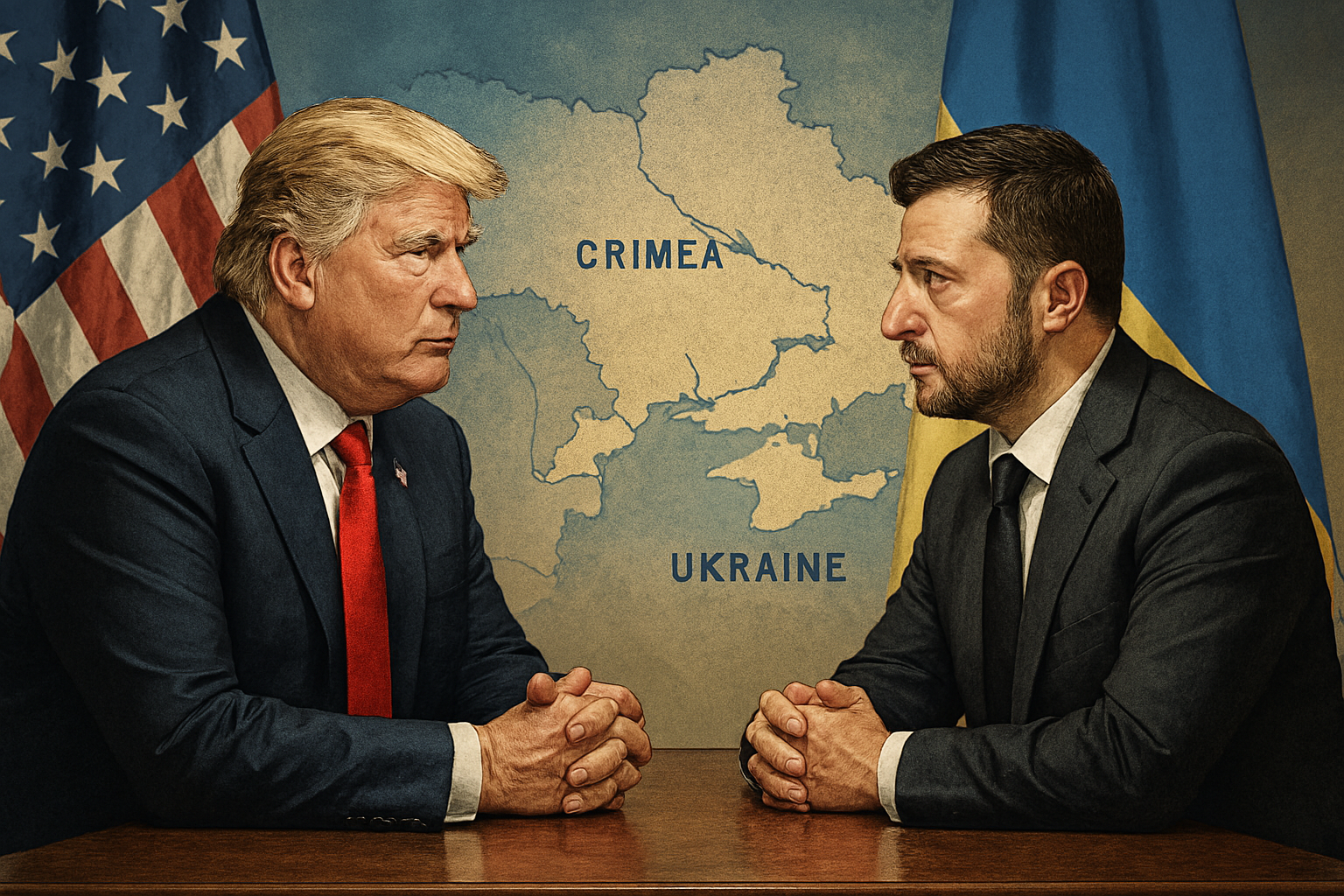
The Trump-Zelensky meeting has drawn global attention as both leaders addressed Ukraine’s sovereignty, Crimea, and security issues amid rising geopolitical tensions. This development could redefine regional diplomacy and global alliances.
Table of Contents
Published: August 19, 2025
Last Updated: August 19, 2025
Reading Time: 18 minutes
On August 18, 2025, President Donald Trump hosted Ukrainian President Volodymyr Zelensky at the White House in what became one of the most significant diplomatic gatherings focused on the ongoing conflict in Eastern Europe. The meeting brought together seven European leaders alongside the two presidents, marking an unusual display of coordinated international diplomacy. This summit represented efforts to establish frameworks for ending hostilities and securing Ukraine’s future stability.
The approximately one-hour meeting between Trump and Zelensky preceded broader discussions with European allies in the Oval Office. According to official statements, participants focused on security guarantees, territorial integrity questions, and pathways toward conflict resolution. The gathering occurred against the backdrop of ongoing tensions that have persisted since 2014, when regional disputes first escalated into armed conflict.
This article examines the context, proceedings, and potential implications of the August 18 summit. We analyze the diplomatic developments, international responses, and outstanding questions that remain following these high-level discussions. All information presented draws from verified news sources, official statements, and established diplomatic records.
Background: The Diplomatic Context Leading to August 2025
The conflict in Eastern Europe has shaped international relations since 2014, when territorial disputes emerged following political upheaval in Ukraine. Russia’s annexation of Crimea that year created a contested situation that the international community largely declined to recognize. The United Nations General Assembly passed resolutions affirming Ukraine’s territorial integrity, though enforcement mechanisms remained limited.
Between 2014 and 2025, Ukraine received substantial international assistance from Western nations. The United States, European Union members, and other allies provided military equipment, financial aid, and diplomatic support. Under the Biden administration, U.S. assistance to Ukraine totaled billions of dollars across multiple aid packages approved by Congress. This support helped Ukraine maintain its defense capabilities throughout the extended conflict period.
The situation intensified in subsequent years, leading to broader hostilities that engaged international attention. Multiple ceasefire attempts occurred through various diplomatic channels, including the Minsk agreements and Normandy Format talks. However, sustainable peace remained elusive as fundamental disagreements over territorial questions and security arrangements persisted. The conflict’s continuation raised concerns about regional stability and potential escalation scenarios.
President Trump’s return to office in January 2025 brought renewed focus on resolving the situation. During his campaign, Trump indicated intentions to pursue negotiations aimed at ending hostilities. His administration’s approach emphasized direct engagement with both Ukrainian and Russian leadership, alongside coordination with European allies. This diplomatic strategy set the stage for the August summit.
Details of the August 18, 2025 White House Summit
Meeting Structure and Participants
The August 18 meeting followed a structured format designed to address multiple diplomatic objectives. President Trump and President Zelensky met privately for approximately one hour before transitioning to expanded discussions. Seven European heads of state joined the subsequent talks, representing nations with significant stakes in European security architecture.
The European participation level was noteworthy according to diplomatic observers. White House officials characterized it as the broadest gathering of European leaders at the executive mansion in several decades. The participating nations reportedly included key NATO members and countries with direct geographical proximity to the conflict zone. This configuration allowed for coordinated discussion of security commitments and implementation mechanisms.
After initial sessions, the talks resumed in a “leaders only” format within the Oval Office. This arrangement facilitated frank exchanges on sensitive topics while maintaining appropriate diplomatic protocols. The structured approach reflected careful planning to balance bilateral U.S.-Ukraine discussions with broader multilateral coordination needs. Official statements indicated that all parties approached the meeting with serious intent to advance resolution efforts.
Core Discussion Topics
Territorial integrity questions dominated the agenda according to post-meeting briefings. The status of Crimea, annexed by Russia in 2014, remained a central point of discussion. Ukrainian officials have consistently maintained that any sustainable peace framework must address territorial sovereignty comprehensively. The international legal perspective generally recognizes Ukrainian sovereignty over Crimea, though the practical reality on the ground differs from this legal position.
Security guarantees formed another major discussion area. The concept of a “Coalition of the Willing” comprising 30 countries emerged as a potential framework for providing Ukraine with long-term security assurances. This approach would involve coordinated commitments from multiple nations rather than relying on any single bilateral security relationship. The details of such arrangements require further development and formal agreement among participating countries.
Economic reconstruction and stabilization also received attention during the summit. Ukraine’s infrastructure has sustained significant damage throughout the conflict period, requiring substantial international investment for rebuilding. Discussion covered both immediate humanitarian needs and longer-term development planning. Agricultural production, energy infrastructure, and transportation networks were identified as priority areas needing coordinated international support.
Diplomatic pathways toward conflict resolution represented the overarching theme connecting these specific topics. Participants explored potential negotiation frameworks that might prove acceptable to all relevant parties. The challenge involves balancing Ukraine’s sovereignty requirements with practical arrangements that could gain broader international acceptance and implementation. No final agreements emerged from this single meeting, but participants characterized the discussions as constructive steps toward eventual resolution.
The Crimea Question: Central to Territorial Negotiations
Crimea’s status presents one of the most complex aspects of any potential peace framework. The peninsula’s strategic location on the Black Sea provides control over important maritime routes and naval access. Historical, cultural, and demographic factors add layers of complexity to the territorial question. Russia has maintained effective control since 2014, while Ukraine and most international actors have not recognized the legitimacy of this arrangement.
President Zelensky has consistently stated that Ukraine will not accept any agreement that permanently concedes Ukrainian territory. This position reflects both legal principles regarding territorial integrity and domestic political considerations within Ukraine. Ukrainian public opinion surveys indicate strong support for maintaining sovereignty claims over all internationally recognized Ukrainian territory, including Crimea. Any Ukrainian leadership accepting permanent territorial losses would face significant internal opposition.
The international legal framework regarding territorial acquisition through force provides relevant context. The United Nations Charter prohibits territorial acquisition through military means. Multiple UN General Assembly resolutions have affirmed this principle in the specific context of Crimea. However, international law’s enforcement depends on collective political will, which has proven inconsistent in various historical cases. The gap between legal principles and practical enforcement mechanisms creates ongoing tension.
Potential resolution approaches might involve intermediate arrangements that address practical concerns while maintaining ultimate sovereignty claims. Historical precedents exist for situations where sovereignty questions remain formally unresolved while practical arrangements allow for reduced tensions. Such approaches typically require creative diplomatic frameworks and commitments from guarantor nations. The August 18 discussions explored whether similar frameworks might apply to current circumstances, though no specific proposals received public confirmation.
International Reactions and Diplomatic Responses
European Alliance Perspectives
European nations responded to the summit with measured statements reflecting both hope and caution. Leaders emphasized the importance of maintaining strong security commitments to Ukraine while pursuing diplomatic solutions. NATO member states particularly focused on alliance cohesion and collective defense principles. The summit’s multilateral format received positive commentary as demonstrating continued transatlantic coordination on security matters.
Germany, France, and the United Kingdom issued statements supporting continued diplomatic engagement while stressing that any agreements must respect international law and Ukrainian sovereignty. These nations have provided substantial assistance to Ukraine and maintain significant economic and political stakes in the outcome. Their participation in the summit signaled ongoing commitment to resolution efforts, though officials noted that complex negotiations would require sustained effort beyond any single meeting.
Eastern European nations, particularly Poland and the Baltic states, emphasized the importance of robust security guarantees for Ukraine. These countries maintain direct interest in regional security dynamics given their geographical positions and historical experiences. Their governments have consistently advocated for strong Western support for Ukraine, viewing the conflict as having implications beyond Ukraine’s borders. The summit’s outcomes will likely influence their own security planning and defense postures.
Russian Government Position
Russia’s response to the August 18 summit involved both cautious openness and continued assertions of its own security interests. According to diplomatic sources, earlier discussions between U.S. and Russian officials had established preliminary willingness to engage in negotiations. President Trump’s reported success in securing Russian agreement to meet with President Zelensky represented a potential diplomatic opening, though significant substantive disagreements remained unresolved.
Russian officials have consistently framed their position in terms of security concerns about NATO expansion and protection of Russian-speaking populations. These stated justifications for Russian actions have not gained widespread international acceptance, with most Western governments characterizing Russian behavior as violating international law. However, any negotiated resolution will likely need to address security architecture questions in some form that all parties can accept.
The practical challenges of moving from initial diplomatic contacts to substantive agreements remain substantial. Trust deficits accumulated over years of conflict cannot be quickly overcome. Verification mechanisms, implementation timelines, and enforcement provisions would all require careful negotiation. The August summit represented potential progress in opening channels, but converting this into concrete agreements would require additional intensive diplomatic work.
Security Guarantees: The Coalition Framework
The concept of a 30-nation “Coalition of the Willing” to provide security guarantees to Ukraine emerged as a significant element of summit discussions. This framework would represent an alternative to traditional alliance structures like NATO membership, which faces political obstacles and procedural requirements. A coalition approach could potentially offer security assurances more quickly while maintaining flexibility in implementation.
Security guarantees might include several components based on historical precedents and current proposals. Military assistance commitments could involve weapons provisions, training programs, and intelligence sharing. Economic support might encompass financial aid packages, reconstruction funding, and trade arrangements. Diplomatic backing could include coordinated international positions in multilateral forums and sanctions maintenance against aggressor nations. The specific combination would require negotiation among potential guarantor nations.
Implementation challenges for such a framework are considerable. Legal binding mechanisms differ from traditional treaty obligations, raising questions about reliability and enforceability. Domestic political processes in guarantor nations might limit executive branch commitments. Coordination among 30 countries presents logistical and decision-making complexities. Past examples of security guarantee frameworks provide mixed precedents regarding their effectiveness in deterring aggression or responding to violations.
The relationship between such a coalition framework and existing security organizations like NATO requires clarification. Some analysts suggest that coalition guarantees could serve as a pathway toward eventual NATO membership if political conditions change. Others view it as a separate track that acknowledges current obstacles to NATO expansion. The framework’s design would significantly influence its perceived credibility and deterrent effect. Summit participants reportedly discussed these questions without reaching final determinations.
Economic Dimensions: Reconstruction and Development
Ukraine’s economic situation presents both immediate challenges and longer-term opportunities. The conflict has caused extensive damage to infrastructure, displaced populations, and disrupted economic activity. International financial institutions estimate that reconstruction costs will reach hundreds of billions of dollars. Meeting these needs will require coordinated international investment and sustained commitment over many years.
Agricultural production represents a critical economic dimension with global implications. Ukraine has historically served as a major grain exporter, contributing significantly to global food security. Conflict disruptions to agricultural production and export capabilities have affected food prices and availability worldwide. Restoring Ukraine’s agricultural capacity would benefit both Ukrainian economic recovery and international food security. This creates potential alignment between Ukraine’s national interests and broader international concerns.
Energy sector reconstruction presents another major area requiring international attention. Ukraine’s energy infrastructure includes both conventional and renewable energy facilities, along with transmission networks connecting to European energy markets. Modernizing this infrastructure could advance both Ukrainian energy independence and European energy security objectives. Some proposals envision Ukraine as a future green energy exporter to European markets, potentially transforming regional energy dynamics.
International financial mechanisms for reconstruction require careful design to ensure effective use of resources and accountability. Potential models include bilateral aid packages, multilateral development bank lending, private sector investment facilitation, and international trust funds. Each approach has advantages and limitations regarding speed of deployment, governance structures, and sustainability. Summit discussions touched on these economic questions, though detailed frameworks remain under development.
Historical Context: Precedents in International Diplomacy
Historical examples of conflict resolution in similar circumstances provide relevant context for current diplomatic efforts. The Dayton Accords ending the Bosnian War in 1995 demonstrated how sustained international engagement could produce negotiated settlements in complex ethnic and territorial conflicts. However, that example also illustrated the long-term commitment required for implementation and peacekeeping. The Bosnian precedent suggests both possibilities and limitations for current negotiations.
The Korean Armistice Agreement of 1953 established a ceasefire without fully resolving underlying political conflicts. That arrangement has maintained relative stability for decades despite the absence of a formal peace treaty. However, the Korean example also shows how unresolved tensions can persist indefinitely, requiring ongoing management and occasional crisis navigation. Whether similar arrangements might apply to current circumstances remains a subject of diplomatic debate.
Post-Cold War European security architecture provides additional relevant context. The expansion of NATO and European Union integration transformed security dynamics across much of Eastern Europe. However, disagreements over these processes contributed to tensions that eventually manifested in current conflicts. Understanding this historical trajectory helps explain current positions while suggesting the importance of addressing broader security architecture questions in any sustainable resolution framework.
The principle of territorial integrity established in international law after World War II faces practical challenges in enforcement. Multiple instances exist where territorial changes occurred through force despite international legal prohibitions. The international community’s inconsistent responses to these situations have created ambiguity about effective deterrence and consequences. Current diplomatic efforts must navigate this gap between established legal principles and historical enforcement patterns.
Challenges and Obstacles to Resolution
Several fundamental obstacles complicate efforts to achieve lasting conflict resolution. Trust deficits between parties represent a primary challenge after years of hostilities. Each side harbors grievances and maintains suspicions about the other’s intentions. Building sufficient trust to enable negotiated compromises and implementation confidence requires time and demonstrated commitments. Single summit meetings, however significant, cannot overcome these accumulated trust problems.
Domestic political constraints in all relevant countries limit leadership flexibility in making concessions. Ukrainian public opinion strongly supports sovereignty claims and resists territorial concessions. Russian political dynamics involve nationalist sentiments and leadership credibility tied to demonstrated strength. Western governments face domestic constituencies with varying views about appropriate levels of commitment and risk. These internal political pressures constrain negotiating positions and complicate compromise formation.
Military realities on the ground influence negotiating dynamics and possible outcomes. Control of territory provides parties with different leverage in negotiations. Military capabilities and sustainability affect assessments of alternatives to negotiated agreements. The relationship between battlefield situations and diplomatic processes creates complex interactions where developments in one sphere affect prospects in the other. Achieving the stable conditions necessary for productive negotiations while active hostilities continue presents inherent challenges.
Implementation and verification mechanisms for any agreement require careful design. Past ceasefire agreements have foundered on violations and disputes about compliance. Effective monitoring, clear violation definitions, and credible response mechanisms are essential for sustainability. International peacekeeping forces, monitoring missions, or other oversight arrangements need adequate resources and political support. The technical complexity of designing effective implementation frameworks should not be underestimated.
Media Coverage and Public Information
International media outlets provided extensive coverage of the August 18 summit, reflecting global interest in potential resolution pathways. Major news organizations dispatched correspondents to Washington and analyzed the meeting’s significance from multiple perspectives. Coverage emphasized both the diplomatic significance of bringing together such a broad coalition and the substantial obstacles remaining before concrete agreements might emerge.
Analytical commentary from foreign policy experts and former diplomats offered varied assessments. Some observers characterized the summit as a positive step demonstrating renewed diplomatic momentum. Others expressed skepticism about prospects for bridging fundamental gaps between parties’ positions. Many analysts noted that converting initial diplomatic contacts into substantive agreements would require sustained effort and potentially numerous additional negotiating rounds.
Public information about specific proposals and commitments remained limited following the summit. Diplomatic practice typically involves discretion about ongoing negotiations to preserve flexibility and avoid constraining negotiators through public commitments. Official statements emphasized general themes while avoiding detailed specifics. This approach reflects standard diplomatic practice but can create challenges for public understanding and accountability regarding progress toward stated objectives.
The information environment surrounding conflict and diplomatic efforts includes challenges from disinformation and propaganda. Multiple parties have engaged in information operations aimed at shaping international perceptions. Distinguishing verified information from speculation or deliberate misinformation requires careful attention to source credibility and evidence standards. Responsible reporting and public information consumption are essential for informed democratic debate about appropriate policies.
Implications for Regional Security Architecture
The summit’s outcomes will influence broader questions about European security architecture extending beyond the immediate conflict. The relationship between NATO, European Union security initiatives, and potential alternative frameworks like the proposed coalition remains under discussion. How these different security mechanisms interact or potentially compete affects not only Ukraine but also other nations in the region and NATO’s future evolution.
Deterrence of future conflicts depends partly on perceived consequences and international responses to aggression. The resolution of current conflicts will influence calculations by potential aggressors in other contexts. If territorial acquisition through force appears to succeed or faces only limited consequences, this might encourage similar actions elsewhere. Conversely, strong international responses and effective guarantee mechanisms could strengthen deterrence. The precedent established carries implications beyond the immediate situation.
Relations between Russia and Western nations will be shaped by conflict resolution processes and outcomes. Whether diplomatic engagement leads to improved relations or continued confrontation affects trade relationships, arms control prospects, and collaboration on global challenges. Some analysts hope that successful conflict resolution might enable broader rapprochement, while others anticipate continued competition regardless of specific outcomes. These different scenarios have significant implications for international relations.
The role of international law and multilateral institutions faces tests through these developments. Whether territorial integrity principles receive effective support or appear hollow affects the credibility of the international legal order. The United Nations and other multilateral forums may gain or lose relevance depending on their effectiveness in facilitating resolution and upholding principles. Strengthening or weakening these institutions carries long-term consequences for global governance.
Timeline of Key Diplomatic Developments
Understanding the sequence of diplomatic events provides context for the August 18 summit:
2014: Territorial disputes emerged in Eastern Europe following political upheaval. Russia annexed Crimea, prompting international condemnation and sanctions. Initial ceasefire attempts began.
2014-2015: Minsk Protocol and Minsk II agreements established ceasefire frameworks that proved difficult to implement effectively. Violations continued despite monitoring efforts.
2022: Hostilities intensified significantly, leading to expanded international involvement and assistance to Ukraine. Western nations imposed extensive economic sanctions.
2022-2024: Multiple rounds of negotiations occurred through various channels with limited success. International assistance to Ukraine continued from Western allies.
January 2025: President Trump inaugurated, bringing renewed focus on diplomatic resolution. Administration indicated intentions to pursue negotiations.
March 2025: Earlier Trump-Zelensky meeting occurred but reportedly involved tensions. A scheduled press conference was canceled, suggesting difficulties in initial engagement.
August 2025: Summit brought together Trump, Zelensky, and seven European leaders. Discussions focused on security guarantees, territorial questions, and resolution pathways.
This timeline illustrates the extended nature of diplomatic efforts and the challenges in achieving breakthrough agreements. The August summit represented one moment in ongoing processes rather than a definitive endpoint.
Expert Analysis and Perspectives
Foreign policy analysts offer diverse perspectives on the summit’s significance and prospects for progress. Realist international relations scholars tend to emphasize power dynamics and security interests as driving factors in outcomes. From this perspective, resolution depends on shifts in relative capabilities or interests rather than primarily diplomatic processes. These analysts often express skepticism about rapid breakthroughs absent fundamental changes in underlying conditions.
Liberal internationalist scholars focus more on the role of institutions, norms, and international cooperation. This perspective views diplomatic processes as potentially transformative and emphasizes the importance of building sustainable frameworks. These analysts may be more optimistic about coalition security guarantees and multilateral approaches. They stress the importance of sustained engagement and institutional development to support conflict resolution.
Regional specialists with expertise in Eastern European history and politics emphasize the importance of understanding local contexts and historical grievances. These experts note that external powers must appreciate internal political dynamics within affected countries. Sustainable solutions require addressing not only interstate relations but also internal political and social factors. Regional specialists often caution against oversimplified approaches that neglect local complexities.
Former diplomats and negotiators with practical experience in conflict resolution offer insights about process and tactics. These practitioners emphasize the importance of patience, relationship-building, and careful attention to implementation details. They note that successful negotiations typically require numerous rounds and sustained commitment. Former negotiators often stress gap between announcing intentions and achieving concrete agreements with effective verification mechanisms.
Future Scenarios and Possibilities
Several potential trajectories might emerge from current diplomatic processes:
Comprehensive Peace Agreement Scenario: Intensive negotiations lead to broad agreement addressing territorial questions, security guarantees, and reconstruction. Implementation occurs over multiple years with international monitoring. This optimistic scenario requires significant compromises from all parties and sustained international commitment.
Frozen Conflict Scenario: Hostilities decrease through ceasefire arrangements but fundamental political questions remain unresolved. Situation stabilizes at lower intensity levels while negotiations continue indefinitely. This outcome resembles other protracted conflicts and may be more feasible than comprehensive resolution but leaves underlying tensions unaddressed.
Continued Hostilities Scenario: Diplomatic efforts fail to produce agreements and conflict continues at current or escalated levels. International assistance continues while parties pursue military objectives. This pessimistic scenario involves continued humanitarian costs and risk of escalation.
Partial Agreements Scenario: Progress occurs on some issues like security guarantees or reconstruction while territorial questions remain disputed. Arrangements enable reduced tensions and increased cooperation despite unresolved disagreements. This pragmatic scenario might represent realistic near-term possibilities.
The actual trajectory will depend on numerous factors including political developments in relevant countries, military dynamics, international commitment levels, and unforeseen events. Diplomatic processes rarely follow perfectly predictable paths.
Stakeholder Perspectives and Interests
Different parties to the conflict and diplomatic processes maintain distinct interests and perspectives:
Ukraine: Maintains commitment to sovereignty and territorial integrity while needing security guarantees and reconstruction assistance. Ukrainian leadership faces domestic political constraints limiting flexibility on territorial concessions. The nation requires sustained international support to maintain defense capabilities and pursue recovery.
Russia: Asserts security interests regarding NATO expansion and protection of Russian-speaking populations. Russian leadership faces domestic political considerations regarding demonstrated strength. Economic sanctions create pressures while energy exports provide leverage.
United States: Balances commitment to international principles and allies with domestic political considerations about resources and risks. American leadership seeks outcomes that demonstrate effective diplomacy while managing costs. Relations with European allies and China influence U.S. approaches.
European Nations: Face direct security implications from regional instability while maintaining economic relationships with various parties. European countries seek security architecture that provides stability while managing energy and trade interests. Internal EU coordination presents both opportunities and challenges.
International Organizations: The United Nations, OSCE, and other bodies seek to uphold international law and facilitate peaceful resolution. These organizations depend on member state support for effectiveness. Their roles involve monitoring, mediation, and maintaining principled positions while navigating political realities.
Understanding these varied perspectives helps explain negotiating dynamics and potential areas for agreement or continued dispute.
Monitoring and Verification Considerations
Any eventual agreement will require robust monitoring and verification mechanisms to ensure implementation and build confidence between parties. Historical examples demonstrate that commitments without effective verification often lead to disputes and breakdown. Several types of monitoring might be necessary:
Ceasefire Monitoring: Requires presence on the ground to observe military activities and investigate alleged violations. International observers need clear mandates, adequate resources, and safety guarantees. Technology including satellites and sensors can supplement human monitors but cannot entirely replace ground presence.
Withdrawal Verification: If agreements include military withdrawals or demilitarization, verification teams must confirm compliance. This involves inspections, documentation, and reporting mechanisms. Parties must grant access and cooperate with monitors for effective verification.
Security Guarantee Implementation: Coalition security guarantees require mechanisms to coordinate among guarantor nations and respond to potential violations. Clear protocols about consultation, decision-making, and response capabilities are essential. Ambiguity about implementation could undermine deterrent effects.
Reconstruction Oversight: International assistance for reconstruction should include transparency mechanisms and oversight to ensure effective use of resources. Accountability frameworks help maintain donor support while preventing corruption or waste. Coordination among multiple funding sources requires administrative capacity.
The technical and political challenges of establishing effective monitoring and verification should not be underestimated. Adequate resources, political support, and cooperation from all parties are prerequisites for success.
Lessons from August 18 Summit
The August 18 meeting offers several lessons about diplomatic approaches to complex conflicts:
Multilateral Coordination Benefits: The broad participation of European leaders alongside bilateral U.S.-Ukraine discussions demonstrated value of coordinated approaches. Coalition frameworks may offer advantages over purely bilateral arrangements in providing security guarantees and maintaining commitment.
Sustained Engagement Necessity: Single summit meetings, however significant, cannot resolve deeply rooted conflicts. The August gathering represented one step in ongoing processes requiring sustained diplomatic attention. Managing expectations about timeline and complexity helps maintain realistic perspectives.
Flexibility in Frameworks: Traditional approaches like NATO membership face obstacles that alternative frameworks like coalition guarantees might navigate differently. Diplomatic creativity in designing arrangements that meet parties’ core interests while acknowledging constraints can open new possibilities.
Implementation Focus Importance: Agreements require careful attention to implementation mechanisms, verification, and enforcement provisions. The gap between stated intentions and effective implementation often determines whether diplomatic achievements produce lasting results. Technical details matter significantly for success.
These lessons apply both to current diplomatic efforts and broader foreign policy approaches to international conflicts.
Ongoing Developments and Next Steps
Diplomatic processes following the August 18 summit will likely involve several tracks:
Bilateral U.S.-Ukraine Discussions: Continued engagement between American and Ukrainian officials to refine security guarantee proposals and coordinate positions. These discussions will address both immediate needs and longer-term frameworks.
Coalition Coordination: Work among the proposed 30-nation coalition to develop specific commitments and implementation mechanisms. This requires consensus-building among countries with varying capabilities and interests.
Engagement with Russia: Efforts to establish negotiation frameworks that might lead to substantive agreements. This track faces significant challenges given fundamental disagreements but remains necessary for any comprehensive resolution.
European Coordination: Continued discussions among European nations regarding their security contributions and positions on resolution frameworks. European cohesion and commitment levels significantly affect prospect for sustainable arrangements.
International Organization Involvement: Roles for United Nations, OSCE, and other bodies in facilitating dialogue and potentially providing monitoring or peacekeeping capabilities. Multilateral organizations can provide legitimacy and technical capabilities.
Progress along these various tracks will unfold over coming months and potentially years. Public information about specific developments may be limited as diplomatic discretion often serves negotiating effectiveness.
Recommendations for Informed Engagement
Citizens interested in these issues can engage constructively through several approaches:
Reliable Information Sources: Following coverage from established news organizations with international reporting capabilities provides balanced information. Cross-referencing multiple sources helps distinguish verified facts from speculation. Official statements from governments and international organizations offer primary source material.
Expert Analysis: Reading analysis from foreign policy research organizations and academic specialists provides deeper context and varied perspectives. Think tanks across the political spectrum offer publicly available reports and commentary. Academic journals publish detailed research on relevant topics.
Supporting Humanitarian Assistance: Various international organizations provide humanitarian aid to affected populations. Contributions to established relief organizations help address immediate needs. Volunteer efforts with refugee assistance programs support displaced populations.
Advocacy for Principled Policies: Communicating with elected representatives about foreign policy priorities influences governmental decision-making in democratic systems. Advocacy groups focused on human rights, international law, and peace building welcome participation and support.
Educational Engagement: Universities and community organizations often host discussions about international affairs. Participating in informed dialogue helps build public understanding of complex issues. Educational engagement creates more informed citizenry capable of democratic foreign policy debate.
Constructive engagement requires both staying informed and maintaining realistic expectations about individual influence on complex international processes.
Conclusion: Assessing the August 18 Summit’s Significance
The August 18, 2025 Trump-Zelensky summit represented a significant moment in ongoing diplomatic efforts to address the conflict in Eastern Europe. The meeting brought together key international actors in an unprecedented format aimed at coordinating approaches to security guarantees, territorial questions, and pathways toward resolution. The participation of seven European heads of state alongside the U.S. and Ukrainian presidents demonstrated the multilateral nature of effective engagement on these issues.
Several elements of the summit merit attention. The approximately one-hour bilateral meeting provided direct engagement between Trump and Zelensky following earlier tensions in their diplomatic relationship. The subsequent expanded discussions allowed for coalition coordination on security frameworks and implementation mechanisms. The focus on concrete issues like the 30-nation coalition concept moved beyond general statements toward potentially actionable frameworks.
However, significant challenges remain before diplomatic processes might yield sustainable agreements. Fundamental disagreements about territorial sovereignty, security arrangements, and political processes require resolution. Trust deficits accumulated over years of conflict cannot be quickly overcome. Implementation of any agreements demands sustained international commitment and effective verification mechanisms. The technical and political complexity of these challenges should not be underestimated.
The summit’s ultimate significance will depend on subsequent developments rather than the meeting itself. Whether diplomatic momentum continues, specific proposals advance toward concrete agreements, and implementation frameworks prove effective will determine historical assessments. Single events rarely transform complex conflicts, but they can represent important steps in longer processes. The August 18 gathering created possibilities that require sustained effort to realize.
For observers and stakeholders, maintaining informed engagement while avoiding both excessive optimism and premature pessimism serves constructive purposes. Complex international conflicts require patience, sustained commitment, and realistic expectations. The coming months will reveal whether the diplomatic opening created by the August summit leads to substantive progress toward the peace and stability that populations throughout the region deserve.
Frequently Asked Questions
Q1: When did the Trump-Zelensky meeting occur and who participated?
The summit took place on August 18, 2025 at the White House in Washington, D.C. The meeting included President Donald Trump, Ukrainian President Volodymyr Zelensky, and seven European heads of state. The gathering lasted approximately one hour for bilateral discussions between Trump and Zelensky, followed by expanded talks with European leaders in the Oval Office. This configuration represented one of the broadest assemblies of European leaders at the White House in recent decades according to official characterizations.
Q2: What were the main topics discussed at the August 18 summit?
The primary discussion areas included security guarantees for Ukraine, territorial integrity questions including the status of Crimea, pathways toward conflict resolution, and reconstruction planning. Participants explored the concept of a 30-nation “Coalition of the Willing” to provide coordinated security assurances to Ukraine. Economic dimensions including reconstruction financing and agricultural production also received attention. The talks addressed both immediate ceasefire possibilities and longer-term frameworks for sustainable peace and stability in the region.
Q3: What is the proposed Coalition of the Willing and how would it function?
The Coalition of the Willing refers to a proposed framework involving 30 countries providing security guarantees to Ukraine. This arrangement would represent an alternative to traditional alliance structures like NATO membership, which faces political obstacles. The coalition would coordinate security commitments including potentially military assistance, economic support, and diplomatic backing. Specific implementation mechanisms remain under development, requiring consensus-building among participating nations. The framework aims to provide credible deterrence and reassurance while acknowledging current constraints on other security arrangements.
Q4: How was the Crimea issue addressed during the summit?
Crimea remained central to discussions given its contested status since Russia’s 2014 annexation. President Zelensky maintained Ukraine’s position demanding full sovereignty over all internationally recognized Ukrainian territory including Crimea. Discussions explored whether diplomatic frameworks might address the practical situation while respecting sovereignty principles. No specific agreements emerged regarding Crimea’s status, but talks included exploration of potential negotiation approaches. The territorial question remains among the most complex obstacles to comprehensive conflict resolution.
Q5: What security guarantees were discussed for Ukraine?
Security guarantee discussions encompassed multiple dimensions including military partnerships, intelligence sharing, weapons provisions, and training programs. The coalition framework would involve coordinated commitments from participating nations rather than relying on single bilateral relationships. Implementation would require clear protocols for consultation, decision-making, and response to potential violations. Verification mechanisms and enforcement provisions need further development to ensure credibility and effectiveness. Historical precedents for security guarantee frameworks provide relevant but mixed lessons regarding their deterrent effects.
Q6: How did international actors respond to the summit?
European leaders expressed measured support for continued diplomatic engagement while emphasizing importance of respecting international law and Ukrainian sovereignty. NATO members stressed alliance cohesion and collective defense principles. Russia reportedly showed cautious willingness to engage in negotiations while maintaining its stated security interests. International media provided extensive coverage highlighting both the diplomatic significance and remaining obstacles. Foreign policy analysts offered varied assessments ranging from cautious optimism to skepticism about prospects for bridging fundamental disagreements.
Q7: What economic issues were addressed at the meeting?
Economic discussions covered reconstruction financing needs, agricultural production restoration, energy infrastructure development, and humanitarian assistance. International estimates suggest reconstruction costs reaching hundreds of billions of dollars over multiple years. Participants explored potential funding mechanisms including bilateral aid, multilateral development bank lending, and private sector investment facilitation. Ukraine’s role as a major grain exporter means agricultural recovery has implications for global food security. Energy sector modernization could advance both Ukrainian energy independence and European energy security objectives.
Q8: What are the next steps following the August 18 summit?
Several diplomatic tracks will proceed including continued bilateral U.S.-Ukraine discussions, coalition coordination among the proposed 30 nations, engagement with Russia on negotiation frameworks, and European coordination on security contributions. Implementation planning for proposed security guarantees requires technical development and political consensus-building. Specific timelines remain uncertain given the complexity of issues requiring resolution. Progress will likely unfold over extended periods rather than through rapid breakthroughs. Public information about ongoing negotiations may be limited as diplomatic discretion often serves negotiating effectiveness.
About the Author
Nueplanet is a dedicated news content platform committed to delivering accurate, well-researched, and balanced reporting on international affairs and diplomatic developments. Our editorial approach emphasizes verification of information through multiple authoritative sources, including official government statements, established news organizations, and expert analysis from recognized institutions.
Our coverage prioritizes transparency and factual accuracy while acknowledging the complexity and uncertainty inherent in evolving diplomatic situations. We draw from official press releases, statements from government officials, reporting by international news agencies, and analysis from foreign policy research organizations to provide comprehensive context for significant international developments.
Nueplanet maintains editorial independence and does not advocate for particular policy positions. Our goal is to provide readers with factual information and diverse analytical perspectives that enable informed understanding of international affairs. We clearly distinguish between verified facts, official statements, and analytical interpretation throughout our coverage.
We update articles as new verified information becomes available and clearly indicate publication and update dates. Our commitment to accurate, contextualized reporting serves readers seeking reliable information about complex international developments that affect global security and stability.
For questions, corrections, or additional information, readers can engage with our content through provided channels. We welcome feedback that helps improve the accuracy and usefulness of our coverage.
Sources Referenced:
- Official White House statements and press releases
- Ukrainian government official statements
- Major international news agencies (BBC, CNN, NBC)
- Foreign policy research organizations and analysis
- United Nations documentation and resolutions
- Historical diplomatic precedents and academic research
Helpful Resources
Latest Posts
- Gem Aromatics IPO 2025: GMP, Key Dates, and What Investors Need to Know
- TN Medical Selection 2025: DME MP NEET UG Round 1 Allotment Result
- TAIT Result 2025: Delays Continue Three Months After Exams
- Airtel Network Issue: Widespread Outage Reported Across India
- ICAI CA Admit Card 2025 Released for Final and Inter Exams
Tag
Trump-Zelensky
Related Posts








Post Comment