








IRCTC Booking: New Railway Scheme to Save Passengers Money This Festive Season
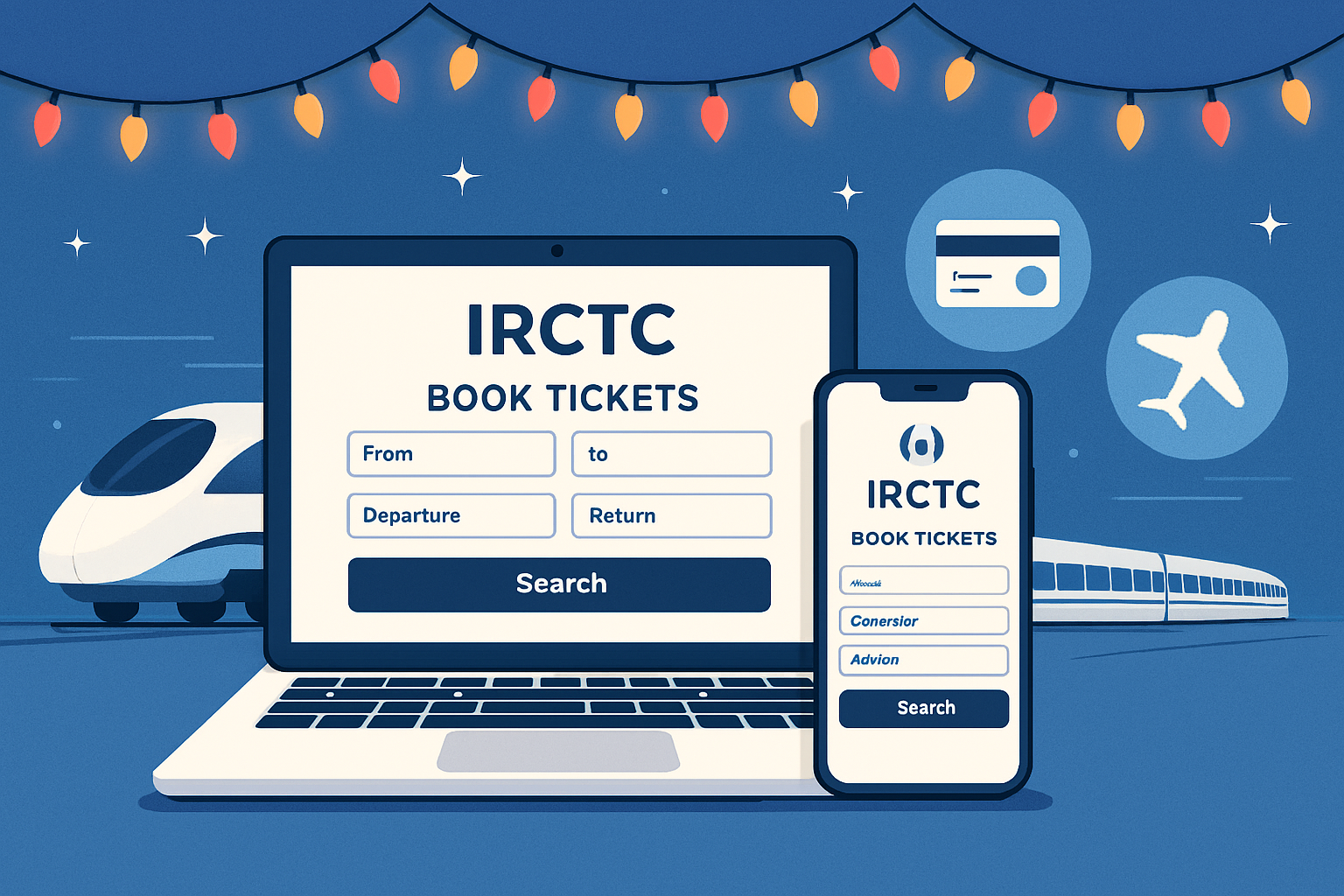
The latest IRCTC booking update introduces a new Indian Railways scheme aimed at reducing travel expenses during the festive season. Here’s a detailed look at how it works and how passengers can benefit.
Table of Contents
Published: August 16, 2025 | Last Updated: August 16, 2025
Indian Railways has introduced a significant pricing reform through its IRCTC booking platform, implementing dynamic fare adjustments for premium trains during the 2025 festive season. The scheme, which became operational on October 1, 2025, represents a shift toward market-responsive pricing while maintaining the railway’s commitment to accessible public transportation.
This initiative targets unutilized capacity in air-conditioned classes across select premium train services. As millions of passengers prepare for major festivals including Dussehra, Diwali, and Chhath Puja, understanding the mechanics and limitations of this pricing structure becomes essential for effective travel planning.
Understanding the IRCTC Platform Infrastructure
The Indian Railway Catering and Tourism Corporation serves as the digital booking interface for Indian Railways operations. Current operational data indicates that approximately 23 million passengers utilize railway services daily, making it among the largest transportation networks globally.
During fiscal year 2024-25, the IRCTC platform processed over 800 million booking transactions. The system generated revenue exceeding ₹6,500 crore through ticketing services alone. Platform infrastructure manages peak concurrent users exceeding one million during high-demand periods, though system capacity constraints occasionally emerge during festival booking windows.
The centralized digital booking system has addressed several historical challenges. Previous issues including counter-based bribery, unauthorized ticket reselling, and regional access disparities have diminished significantly. However, new challenges have emerged around dynamic pricing implementation and rapid ticket depletion during festival periods.
Festive Season Travel Demand Patterns
India’s festival calendar creates predictable demand surges that test railway capacity limits. The September through November period encompasses multiple major celebrations including Ganesh Chaturthi, Navratri, Dussehra (October 12, 2025), Diwali (November 1, 2025), and Chhath Puja (November 7-8, 2025).
Urban-to-rural migration patterns reverse dramatically during these periods. Millions of workers, students, and professionals in metropolitan centers travel to native towns and villages simultaneously. Major corridors including Mumbai-Bihar, Delhi-Eastern Uttar Pradesh, Bangalore-Coastal Karnataka, and Chennai-Interior Tamil Nadu experience concentrated booking pressure.
Traditional booking windows open 120 days in advance for most services. During festival periods, advance reservations typically fill within hours of availability. This creates challenges for travelers unable to book far in advance, often forcing them toward premium-priced Tatkal quotas or uncertain waitlist positions.
Dynamic Pricing Scheme Operational Mechanics
The October 2025 initiative introduces progressive fare reductions for unsold premium class seats as departure dates approach. The system operates through automated algorithms analyzing real-time occupancy data, historical booking patterns, and competitive transportation alternatives.
Discount Timeline Structure
The fare adjustment mechanism operates on a defined schedule based on departure proximity. Between 30-45 days before departure, base fares remain at standard levels with no adjustments applied. This maintains predictable pricing for advance planners.
From 15-29 days before departure, discounts of 10-15% activate automatically when occupancy rates in AC First, AC 2-Tier, or AC 3-Tier classes fall below 70%. The system recalculates eligible trains every six hours based on updated booking data.
During the 7-14 day window before departure, discounts increase to 20-30% for trains showing occupancy below 60%. This mid-range discount level targets travelers with moderate flexibility in booking timing.
The 3-6 day pre-departure window represents the maximum benefit period. Significant discounts of 30-40% apply to trains with less than 50% occupancy in premium classes. Historical data suggests this window offers optimal balance between discount magnitude and seat availability.
Within the final 48 hours before departure, discounts up to 50% may activate for severely underutilized services. However, seat availability at this stage remains highly uncertain and route-dependent.
Eligible Train Categories
The scheme covers approximately 150 premium trains across five distinct service categories. Rajdhani Express services, comprising 22 routes, connect state capitals to New Delhi in all-AC configurations. Major corridors include Mumbai-New Delhi, Howrah-New Delhi, Bangalore-New Delhi, and Chennai-New Delhi.
Shatabdi Express trains provide air-conditioned day service connecting major cities within 500-750 kilometer ranges. Sixteen routes participate, focusing on business travel corridors including New Delhi-Chandigarh, Mumbai-Ahmedabad, Chennai-Bangalore, and Howrah-Ranchi.
Duronto Express services offer non-stop long-distance travel on 24 participating routes. These include Mumbai-Kolkata, Delhi-Bangalore, and Chennai-Delhi connections designed to minimize journey times.
Select Tejas Express routes participate, including Mumbai-Goa and Delhi-Lucknow services. These semi-high-speed trains offer premium amenities alongside dynamic pricing. Additionally, 12 Vande Bharat Express routes receive inclusion, representing India’s fastest indigenous train services.
Regular mail and express trains remain excluded from the scheme. Local and suburban services continue under separate pricing frameworks. The initiative deliberately targets premium services where price elasticity exists among passenger demographics.
Implementation Through Digital Booking Channels
Passengers access adjusted fares through standard IRCTC booking interfaces without special registration requirements. The system displays dynamic pricing automatically during train searches on both web and mobile platforms.
Discounted tickets appear with clear visual indicators. Green “Discounted Fare” tags highlight reduced prices. Percentage savings calculations show differences from base fares. Real-time availability updates ensure transparency about remaining seat counts.
The IRCTC technical infrastructure analyzes multiple variables continuously. Historical booking patterns for specific routes and dates inform pricing decisions. Current occupancy rates across all classes factor into calculations. Competing transportation options and their pricing influence adjustments. Holiday calendars and festival timing affect demand projections.
This algorithmic approach aims to optimize both passenger affordability and railway revenue generation. The system seeks to fill otherwise empty seats while maintaining commercial viability for railway operations.
Quantifiable Passenger Benefits
The pricing structure delivers several measurable advantages for different passenger segments. Financial benefits vary based on route, timing, and booking behavior.
Cost Reduction Analysis
A typical family of four traveling Mumbai to Delhi during Diwali weekend faces substantial base costs. Traditional pricing for four AC 3-Tier Rajdhani Express tickets totals approximately ₹12,000-14,000. Dynamic discounts of 30-40% reduce this to ₹7,200-9,800, generating savings of ₹2,800-5,600.
For individual travelers, particularly students and young professionals, the scheme enables class upgrades. A sleeper class ticket priced at ₹800 compared to a dynamically discounted AC 3-Tier ticket at ₹1,100 represents just ₹300 additional cost for significantly enhanced comfort and amenities.
Operational Efficiency Improvements
From the railway operations perspective, the scheme addresses capacity underutilization. AC First class compartments frequently operate at 40-50% occupancy on various routes where passengers would accept discounted rates.
Improved capacity utilization generates revenue even with reduced per-seat pricing. Revenue from discounted seats exceeds zero revenue from empty berths. Operating costs remain largely fixed regardless of occupancy levels, with fuel, crew salaries, track charges, and maintenance continuing whether coaches are full or empty.
Alternative to Premium Tatkal Pricing
The traditional Tatkal booking system opens 24 hours before departure at premium charges, typically 1.5-2 times standard fares. This creates intense competition and requires precise timing for successful bookings.
The dynamic pricing scheme provides alternatives to expensive Tatkal tickets. Travelers can monitor pricing in the days preceding departure, potentially securing better deals with reduced stress. This approach offers confirmed bookings without the uncertainty and competition inherent in Tatkal reservations.
Practical Implementation Limitations
While the scheme offers potential benefits, several structural limitations affect real-world applicability for various passenger segments.
Limited Network Coverage
The approximately 150 participating premium trains represent a small fraction of Indian Railways’ daily operations. With over 13,000 trains operating daily, the vast majority remain under traditional pricing structures.
Regular mail and express trains serving smaller towns and rural areas do not participate. These services typically cater to more price-sensitive demographics, yet receive no direct scheme benefits. Geographic coverage varies significantly, with well-connected metro routes offering multiple participating trains while smaller cities may have minimal qualifying services.
Demand-Dependent Discount Activation
Discounts activate only when occupancy falls below specified thresholds. During peak festival periods on popular routes, trains often sell out completely at standard fares before dynamic pricing triggers.
High-demand corridors like Mumbai-Patna during Chhath Puja experience overwhelming demand filling all available seats weeks in advance. Such routes rarely show unsold premium class inventory close to departure, negating potential discounts.
Last-Minute Booking Uncertainties
The deepest discounts appear closest to departure dates, but waiting for better prices carries availability risks. Unexpected demand surges due to flight cancellations, weather events, or competing train delays can eliminate available seats rapidly.
Travelers with inflexible schedules due to workplace commitments, event participation, or family obligations cannot afford these uncertainties. For these passengers, advance booking at standard fares provides certainty that outweighs potential monetary savings.
Digital Access Requirements
Effective scheme utilization requires digital literacy, smartphone or computer access, reliable internet connectivity, and active price monitoring. These resources are not uniformly distributed across India’s passenger demographics.
Rural travelers, elderly passengers, and digitally disadvantaged populations may struggle accessing discounted fares despite theoretical eligibility. While railway service centers and assisted booking facilities exist, these often lack real-time price tracking capabilities necessary to maximize scheme benefits.
Expert Analysis and Industry Perspectives
Transportation analysts and policy experts have provided varied assessments of the pricing initiative’s implications and effectiveness.
Academic Economic Perspectives
Dr. Anita Sharma, Professor of Transport Economics at the Indian Institute of Management Ahmedabad, characterizes the scheme as representing significant policy evolution. The approach parallels successful implementations in European and Japanese railway systems that balance commercial optimization with public service obligations.
The model attempts to extract maximum revenue from peak demand while filling unutilized capacity at reduced rates. This revenue management principle has proven effective in aviation contexts over several decades.
Revenue Management Analysis
Rajesh Malhotra, a revenue management consultant advising airline carriers, notes direct applicability of aviation yield management principles to railway operations. Airlines have refined dynamic pricing over 40 years, selling identical seats at varying prices based on booking timing, demand patterns, and competitive dynamics.
Projected revenue increases of 8-12% for participating trains appear feasible despite lower average fares. Occupancy improvements compensate for per-seat price reductions. Empty seats generate zero revenue, while discounted seats contribute to fixed cost coverage and generate marginal profit.
Consumer Advocacy Concerns
Bejon Misra, consumer rights activist and founder of Consumer Voice, offers qualified support while highlighting equity considerations. Urban, digitally connected passengers with flexible schedules benefit substantially. Rural passengers with limited smartphone access and fixed travel dates realize minimal advantages.
Advocacy groups recommend parallel measures ensuring scheme benefits reach disadvantaged demographics. Suggestions include reserved discount quotas bookable through railway counters and proactive communication through local governance structures about upcoming discounted availability.
Fiscal Policy Implications
Fiscal analysts note that improved railway finances reduce government subsidy requirements. The Railway Budget for FY 2025-26 allocated ₹2.4 lakh crore, with substantial portions covering operational subsidies.
If dynamic pricing and better capacity utilization improve operational efficiency by 3-5%, savings could exceed ₹5,000-7,000 crore annually. These funds could potentially redirect toward safety upgrades, electrification projects, or passenger amenity improvements.
Strategic Booking Approaches for Passengers
Travelers can employ specific tactics to optimize potential savings under the dynamic pricing framework.
Maintain Schedule Flexibility
Whenever circumstances permit, maintaining 2-3 day flexibility around desired travel dates improves discount probability. Festival celebrations typically span multiple days, and traveling immediately before or after peak days often reveals better availability.
For Diwali 2025 (November 1), departing October 29-30 or November 2-3 rather than October 31 may offer better discount opportunities while still enabling festival participation. Similar flexibility on return journeys can capture deals when demand disperses over several days.
Active Price Monitoring
Regular IRCTC platform checking starting approximately 30 days before intended travel reveals pricing evolution patterns. Tracking how discounts develop as departure approaches enables informed booking timing decisions.
Creating a simple tracking record noting dates checked, available trains, current prices, and discount percentages helps identify patterns. Some routes may consistently show optimal discounts 7-10 days before departure, indicating preferred booking windows.
Compare Multiple Service Options
Avoid fixating on a single preferred train. Comparing 3-4 trains operating on desired routes reveals varying discount availability based on each service’s specific occupancy patterns.
Sometimes a slightly slower train with better availability offers 40% discount while a preferred faster service shows no reduction. If journey time difference is minimal, substantial savings may justify minor inconvenience.
Strategic Class Selection
Monitor all AC class pricing rather than focusing on one default preference. Occasionally, AC 2-Tier with 35% discount costs less than undiscounted AC 3-Tier, providing superior comfort at lower absolute price.
The scheme enables aspirational upgrades previously unaffordable. When AC 3-Tier tickets show 40% discount bringing costs close to sleeper class standard fares, the upgrade delivers significant value for marginal additional expense.
Payment Platform Optimization
Many banks and payment platforms offer periodic cashback on IRCTC bookings, typically 2-5% of transaction values. Checking current offers from major banks and UPI platforms before booking can stack additional savings.
Credit cards offering travel rewards points maximize transaction value. Premium travel cards might provide 5-10 reward points per ₹100 spent, redeemable for future benefits.
Regional Route Analysis
Understanding corridor-specific patterns helps set realistic expectations based on travel requirements.
Northern Corridor Dynamics
Routes connecting Delhi to Lucknow, Chandigarh, Amritsar, and Dehradun typically show moderate discount availability, particularly on evening and night services. Business travelers often prefer daytime Shatabdi services, leaving other departures with better discount potential.
However, Delhi-Punjab routes during Dussehra and Delhi-Bihar/UP routes during Diwali and Chhath Puja face overwhelming demand. These high-demand corridors frequently eliminate discount possibilities on prime travel dates, requiring advance booking or date flexibility.
Western Route Patterns
Mumbai-Ahmedabad, Mumbai-Goa, and Mumbai-Pune routes serve both business and leisure travelers, creating mixed demand patterns. Weekday business travel concentrates on specific departures, while weekend leisure travel distributes more evenly.
The Mumbai-Goa route via Tejas Express demonstrates scheme potential effectively. This premium service targeting affluent leisure travelers often operates below capacity on weekdays, triggering substantial discounts that expand accessibility.
Southern Corridor Opportunities
Bangalore-Chennai, Bangalore-Hyderabad, Chennai-Coimbatore, and Kerala routes generally show better discount availability than northern corridors during festival season. Southern states celebrate different festival calendars, reducing coincident peak demand.
Bangalore-Delhi overnight Rajdhani services sometimes display significant discounts during October despite route length. Tech professionals in Bangalore often maintain flexible travel schedules, driving lower demand during north-focused festivals.
Eastern Circuit Characteristics
Kolkata-Delhi, Kolkata-Mumbai, and Kolkata-Bangalore long-distance trains experience complex demand patterns. Post-Durga Puja return travel to other metros sometimes creates reverse flows offering unique discount opportunities.
Kolkata-Patna and Kolkata-Ranchi routes face challenges during Chhath Puja when migrant workers return to Bihar and Jharkhand. This often eliminates discount availability during peak dates while creating possibilities on adjacent days.
Broader Railway Modernization Context
The dynamic pricing scheme represents one component of comprehensive railway modernization efforts spanning infrastructure, technology, and service diversification.
Infrastructure Development
The FY 2025-26 Railway Budget allocated ₹2.4 lakh crore toward multiple initiatives. These include completing electrification on remaining diesel routes, developing high-speed rail corridors including Mumbai-Ahmedabad, modernizing 1,300+ stations, and creating dedicated freight corridors.
Safety enhancements across signaling, track quality, and rolling stock maintenance receive significant investment. These improvements create foundation for superior passenger experiences supporting premium pricing strategies.
Technology Integration Efforts
Beyond dynamic pricing, Indian Railways pursues multiple technology initiatives. Real-time train tracking enables passengers to monitor exact locations and delays. Automated ticketing machines deploy at major stations. Biometric authentication systems pilot for reserved passengers.
AI-powered customer service systems handle routine inquiries. Predictive maintenance systems identify equipment failures before causing service disruptions. These technologies collectively modernize operations toward global standards while maintaining India’s unique scale and complexity.
Service Diversification
Indian Railways increasingly diversifies beyond traditional passenger transport. Premium tourist trains target luxury travelers. Integrated logistics services combine rail freight with first and last-mile road delivery. Station area development transforms major facilities into commercial complexes.
Privatization initiatives allow private operators to run select passenger trains with innovative service models. This diversification generates revenue supporting core public service missions while providing passengers expanded choices.
Future Enhancement Possibilities
As implementation proceeds and operational data accumulates, several potential enhancements may emerge.
Extended Network Coverage
Success with premium trains could encourage broader rollout encompassing regular mail and express services on high-volume routes. While these serve more price-sensitive demographics, modified discount structures appropriate to lower base fares might improve occupancy and affordability.
Predictive Pricing Features
Future platform enhancements might provide passengers with predictive pricing guidance. Algorithms forecasting likely discount trajectories based on historical patterns would help travelers make informed timing decisions.
Viewing not just current prices but projected ranges based on historical patterns empowers calculated decisions balancing savings against availability risks.
Personalization Capabilities
Machine learning algorithms analyzing individual booking histories, route preferences, and price sensitivities could enable personalized discount offers. Frequent travelers or price-sensitive passengers might receive targeted promotions for underutilized trains matching typical patterns.
Multi-Modal Integration
Future development might integrate railway dynamic pricing with broader transportation ecosystems. Showing combined rail and bus options, train and cab connectivity, or comparative flight pricing would enable holistic transportation decisions.
Frequently Asked Questions
When did the IRCTC discount scheme become operational and what is its duration?
The dynamic discount pricing scheme officially commenced on October 1, 2025, specifically timed for the festive season encompassing Dussehra (October 12), Diwali (November 1), and Chhath Puja (November 7-8, 2025). While announced as a festive season initiative, Indian Railways officials have indicated potential permanent implementation if results prove positive. Formal evaluation will occur in December 2025 following festival travel season completion, with extension decisions expected by January 2026.
Which specific trains and routes qualify for discounted fares?
The scheme covers approximately 150 premium trains across five categories: 22 Rajdhani Express routes connecting state capitals to Delhi, 16 Shatabdi Express trains providing air-conditioned day service between major cities, 24 Duronto Express non-stop long-distance routes, select Tejas Express semi-high-speed services, and 12 Vande Bharat Express trains. The scheme applies only to air-conditioned classes (AC First, AC 2-Tier, AC 3-Tier) on these trains. Regular mail and express trains, sleeper class accommodations, local services, and special tourist trains remain excluded.
What discount percentages can passengers realistically expect?
Discount magnitude varies significantly based on booking timing, route demand, and train occupancy. The structure operates on a sliding scale: 10-15% discounts typically appear 15-29 days before departure when occupancy falls below 70%, 20-30% discounts activate 7-14 days out with occupancy under 60%, 30-40% discounts apply 3-6 days before departure with less than 50% occupancy, and maximum discounts up to 50% might appear within final 48 hours on severely underutilized trains. For a typical Mumbai-Delhi AC 3-Tier Rajdhani ticket normally costing ₹3,500, discounts could reduce prices to ₹2,800 (20%), ₹2,450 (30%), or ₹2,100 (40%) depending on timing and availability.
Does the discount scheme apply to Tatkal tickets or waitlisted bookings?
No, the dynamic discount scheme operates entirely separately from Tatkal quotas and does not apply to waitlisted tickets. Tatkal bookings opening 24 hours before departure follow existing premium pricing rules (typically 1.5-2x standard fares) without modification. The discount initiative specifically targets advance reservations where seats remain unsold as departure approaches. Waitlisted tickets do not qualify for discounts, as waitlists indicate high demand precluding price reductions. However, the scheme provides strategic alternatives—rather than paying premium Tatkal rates, travelers might find alternative trains offering confirmed seats at discounted prices.
Can passengers cancel or modify discounted tickets and receive refunds?
As of late October 2025, Indian Railways has not published comprehensive cancellation and modification policies specific to dynamically discounted tickets. Standard IRCTC cancellation rules appear to apply, though some restrictions might exist. Under normal policies, cancellations 48+ hours before departure receive approximately 75-80% refund after deducting charges, cancellations 12-48 hours before departure receive 50% refund, and cancellations within 12 hours typically forfeit entire ticket value. For modifications, standard rules normally permit alterations subject to availability and price differences. Given uncertainty, passengers should verify through IRCTC customer service before relying on modification flexibility.
How can digitally disadvantaged passengers access these discounts?
The scheme currently operates exclusively through digital IRCTC channels—website and mobile application. Railway reservation counters can technically access discounted fares if they appear during booking, but counter staff typically do not proactively monitor pricing changes. For passengers uncomfortable with digital platforms, several alternatives exist: requesting assistance from family members familiar with smartphone applications, visiting common service centers where operators perform IRCTC bookings for nominal fees, contacting railway inquiry numbers for guidance, or monitoring official communications for potential policy updates addressing offline access to discounted quotas.
Do senior citizens and concessional category passengers receive compounded benefits?
Senior citizens (60+ years for men, 58+ years for women) receive standard concessions of 40% on base fares, while differently-abled passengers receive 50-75% concessions depending on classification. The dynamic discount scheme technically applies before concessional calculations, meaning eligible passengers should theoretically receive both benefits. However, operational implementation details remain somewhat unclear. Theoretically, a senior citizen booking a ₹3,000 ticket showing 30% dynamic discount (reducing to ₹2,100) would then receive additional 40% senior concession on that amount, paying approximately ₹1,260. Passengers should verify actual calculations during the booking process and contact IRCTC customer service if concessions do not apply properly.
How can passengers predict discount availability on specific routes?
No advance guarantee exists for discount availability on specific trains and dates, as discounts activate dynamically based on real-time occupancy data. However, educated predictions are possible using several indicators: checking IRCTC regularly starting 30 days before travel to assess availability status and seat counts, considering route popularity and timing since moderately traveled routes show higher discount probability, avoiding absolute peak festival dates when overwhelming demand typically fills trains at standard prices, and monitoring multiple trains on desired routes as discount availability varies by each service’s specific occupancy patterns. Dates 2-3 days before or after major festivals generally offer better discount prospects than peak celebration days.
About the Author
Nueplanet is a dedicated news and information content writer committed to delivering accurate, well-researched, and unbiased reporting on government schemes, policy updates, and public interest topics. With a focus on fact-based journalism and transparent sourcing, Nueplanet aims to help readers make informed decisions through comprehensive analysis of official announcements and verified data.
All content published by Nueplanet is sourced from official government releases, authoritative institutions, and verified news agencies. The goal is to provide readers with reliable information that serves their practical needs while maintaining strict adherence to journalistic integrity and factual accuracy.
For corrections, clarifications, or additional information, readers may refer to official IRCTC communications at www.irctc.co.in or contact Indian Railways customer service at 139.
Disclaimer: This article provides educational information about the IRCTC discount booking scheme based on publicly available information as of November 6, 2025. Policies, discount percentages, covered trains, and implementation details may change without notice. Passengers should verify current scheme status, eligibility, and terms through official IRCTC channels before making booking decisions. The author and publisher assume no responsibility for booking outcomes, financial decisions, or travel experiences resulting from information provided herein.
Helpful Resources
Latest Posts
- LIC AAO Recruitment 2025: Complete Details of Notification, Vacancies, and Application Process
- IB Security Assistant Recruitment 2025: Complete Details on Notification, Eligibility, and Selection Process
- Mahindra Vision S SUV Unveiled in India: Redefining the Future of Mobility
- EPFO Aadhaar UAN Linking: A Step-by-Step Guide to the Latest Update
- Ahmedabad Weather: Heavy Rains Predicted, IMD Issues Alert
Tag
IRCTC Booking
Related Posts










Post Comment