








Oppo K13 5G: Price, Features & Everything You Need to Know
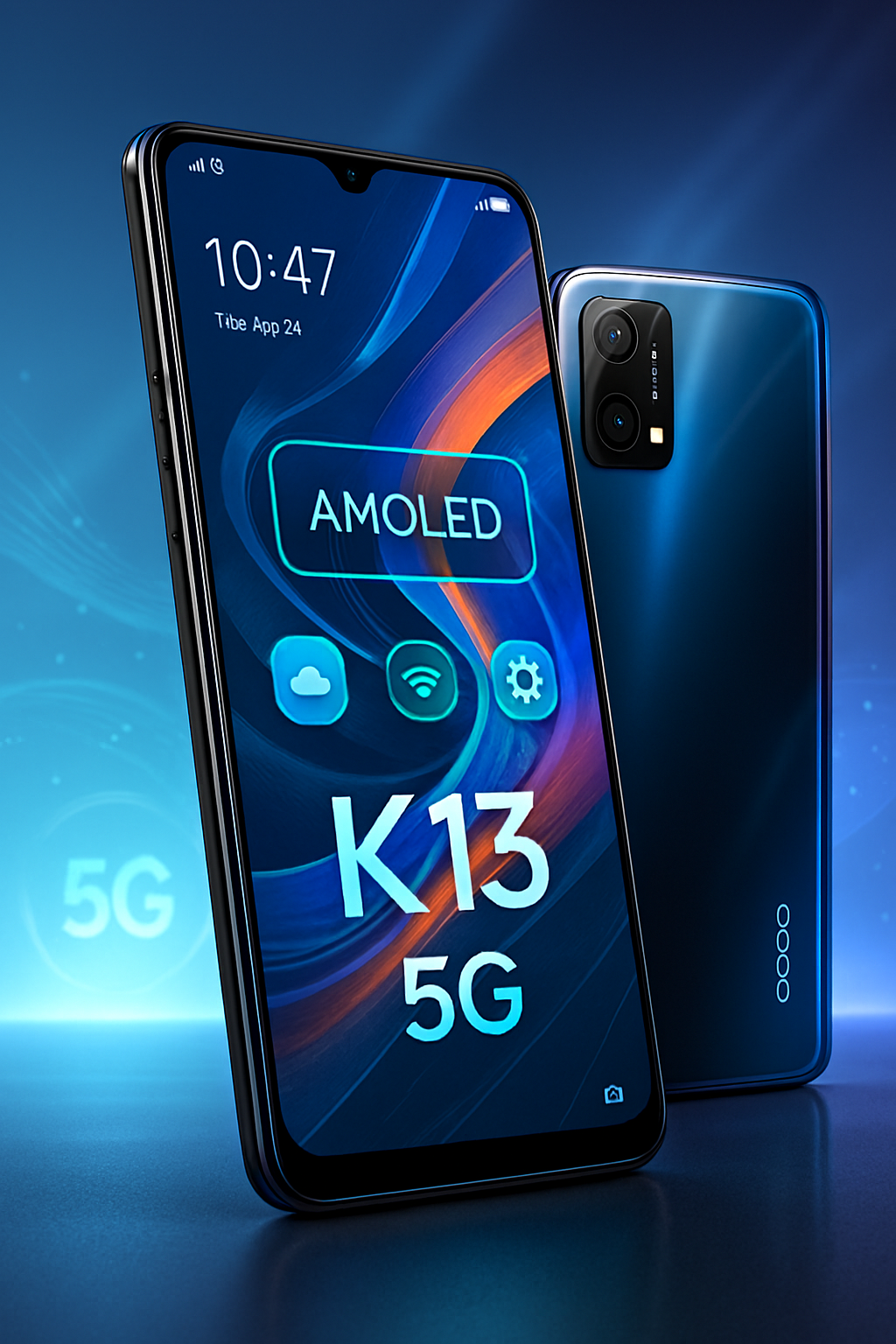
Oppo has officially introduced its latest mid-range powerhouse — the Oppo K13 5G — a smartphone designed to blend performance, style, and affordability. With cutting-edge specifications, a sleek design, and strong connectivity features, the K13 5G is creating buzz in the Indian smartphone market.
Table of Contents
Published: August 15, 2025 | Last Updated: August 15, 2025 | Reading Time: 16 minutes
Introduction to Oppo K13 5G Development
The Oppo K13 5G represents the company’s continued expansion in India’s mid-range smartphone segment. This device targets consumers seeking 5G connectivity combined with contemporary specifications at accessible price points. Oppo, established as a major player in the Indian smartphone market, positions this model to compete with offerings from Xiaomi, Realme, and Samsung in the sub-₹25,000 category.
Industry reports suggest the K13 5G aims to balance performance capabilities with cost efficiency. The device reportedly incorporates features from Oppo’s higher-tier models while maintaining pricing appropriate for mid-range market segments. Current smartphone market trends indicate strong consumer demand for 5G-capable devices as network infrastructure expands across Indian cities.
The competitive landscape in this price segment has intensified significantly over recent years. Manufacturers continuously refine specifications and features to differentiate products in crowded market conditions. The Oppo K13 5G enters this environment with specifications designed to appeal to multiple user demographics.
Expected Pricing Structure and Market Positioning
Anticipated Price Range Analysis
Based on industry analysis and comparative market positioning, the Oppo K13 5G is expected to launch within the ₹18,999 to ₹26,999 price bracket across three configuration variants. The base configuration with 6GB RAM and 128GB storage may retail around ₹18,999 to ₹20,999. Mid-tier configuration featuring 8GB RAM with 128GB storage could price between ₹21,999 and ₹23,999.
The top-end variant offering 8GB RAM paired with 256GB storage is projected to fall within ₹24,999 to ₹26,999 range. These price estimates align with current market positioning for devices featuring similar specification sets. However, actual pricing remains subject to official company announcements and may vary based on promotional strategies.
Pricing decisions in the Indian smartphone market depend on multiple factors including component costs, competitive positioning, and target demographic purchasing power. Oppo historically employs strategic pricing to maximize market penetration while maintaining brand perception standards.
Competitive Pricing Comparison
Comparative analysis reveals the expected pricing positions the K13 5G directly against established competitors. The Realme 11 Pro series occupies similar price territory with comparable specifications. Xiaomi’s Redmi Note series also competes aggressively in this segment with varied feature sets.
Samsung’s Galaxy M-series and A-series devices present alternative options with different brand positioning and ecosystem advantages. OnePlus Nord series offers another competitive choice emphasizing performance and software experience. The Oppo K13 5G differentiates through brand-specific features and design language.
Market research indicates consumers in this segment prioritize value perception alongside specification comparisons. Brand reputation, after-sales service quality, and software update commitments influence purchasing decisions significantly. Price-to-performance ratio serves as a critical evaluation metric for potential buyers.
Display Technology and Visual Experience
Screen Specifications and Panel Quality
The Oppo K13 5G reportedly features a 6.7-inch AMOLED display panel with curved edges. The resolution reaches 2412 x 1080 pixels, delivering Full HD+ clarity appropriate for media consumption and gaming. AMOLED technology provides advantages including deeper black levels, higher contrast ratios, and improved power efficiency compared to LCD alternatives.
The display supports a 120Hz refresh rate enabling smoother scrolling and enhanced gaming responsiveness. Adaptive refresh rate technology may adjust between different frequencies based on content requirements, optimizing battery consumption. Touch sampling rate specifications remain unconfirmed but likely fall within 180Hz to 240Hz range based on segment standards.
Peak brightness levels reportedly reach 1000 nits, providing adequate outdoor visibility under direct sunlight conditions. The panel covers DCI-P3 color gamut supporting approximately 1.07 billion colors. HDR10+ certification enables enhanced dynamic range when viewing compatible content from streaming services and recorded media.
Display Features and User Experience
The curved display design offers aesthetic appeal while presenting potential usability considerations. Curved edges can provide immersive viewing experiences but may result in accidental touch inputs during normal handling. User preferences regarding curved versus flat displays vary significantly across consumer segments.
In-display fingerprint sensor technology integrates biometric authentication directly into the screen panel. This implementation eliminates dedicated fingerprint sensor hardware while maintaining security standards. Optical or ultrasonic sensor technology specifications remain unconfirmed pending official documentation.
Always-on display functionality allows information viewing without full device activation. Users can customize displayed content including clock styles, notification icons, and personalized designs. This feature balance convenience against minor battery consumption during standby periods.
Processor Performance and Hardware Architecture
Chipset Configuration Analysis
The Oppo K13 5G utilizes an octa-core processor manufactured using 6nm process technology. Specific chipset model identification remains unconfirmed in available documentation. The 6nm manufacturing process provides improved power efficiency compared to older 7nm or 8nm processes while maintaining adequate performance capabilities.
Processor architecture likely includes high-performance cores for demanding tasks and efficiency cores for lighter workloads. This big.LITTLE configuration optimizes power consumption by allocating appropriate processing resources based on task requirements. Clock speeds and core configurations determine overall performance capabilities.
The integrated Adreno 642L GPU handles graphics processing for gaming, video playback, and user interface rendering. GPU performance significantly impacts gaming frame rates and graphics quality settings. Benchmark comparisons provide quantifiable performance metrics against competing devices in similar price ranges.
Memory and Storage Configurations
RAM options include 6GB and 8GB capacities utilizing LPDDR5 technology. LPDDR5 offers improved bandwidth and power efficiency over previous LPDDR4X standards. Higher RAM capacity supports better multitasking performance and application retention in memory during extended usage periods.
Storage configurations span 128GB and 256GB using UFS 3.1 technology. UFS 3.1 provides faster read and write speeds compared to UFS 2.2 or eMMC storage implementations. Sequential read speeds may reach 2100 MB/s while write speeds approach 1200 MB/s, though actual performance varies based on specific implementation.
Expandable storage support through microSD cards allows capacity increases up to 1TB. Users should note that microSD card performance typically falls below internal storage speeds. RAM expansion technology may virtually allocate storage space as additional RAM, though effectiveness depends on implementation specifics.
Camera System Configuration and Capabilities
Rear Camera Hardware Specifications
The quad-camera system features a 64MP primary sensor with f/1.7 aperture. Larger aperture values enable improved light gathering capabilities beneficial for low-light photography. The primary sensor likely measures 1/1.7 inches or larger, providing better image quality compared to smaller sensors.
An 8MP ultra-wide camera offers expanded field of view at 119 degrees. Ultra-wide lenses facilitate landscape photography, architecture shots, and group photos requiring broader perspective. Optical distortion correction addresses edge warping common in ultra-wide implementations.
Two additional 2MP sensors serve macro and depth sensing functions. Macro sensors enable close-up photography at minimum focusing distances around 4cm. Depth sensors assist portrait mode processing by providing dimensional information for background blur calculations.
Photography Features and Image Processing
AI scene recognition technology identifies various shooting scenarios and applies optimized processing parameters. Recognition algorithms analyze composition elements including subjects, lighting conditions, and environmental factors. Automatic adjustments affect exposure, contrast, saturation, and sharpness settings.
Night mode implementation combines multiple exposures to reduce noise and enhance detail in low-light conditions. Multi-frame processing algorithms align and merge frames while suppressing noise artifacts. Results depend on scene complexity, available ambient light, and stabilization effectiveness during capture.
Portrait mode generates artificial background blur mimicking shallow depth-of-field effects from larger camera systems. Edge detection algorithms identify subject boundaries to apply selective blur. Performance varies based on subject complexity, particularly with fine details like hair strands or complex outlines.
Front Camera Specifications
The 32MP front-facing camera addresses selfie and video calling requirements. Higher megapixel counts enable detailed captures and digital zoom capabilities. The f/2.4 aperture balances light gathering with depth of field considerations for front camera scenarios.
AI beautification features offer adjustable enhancement levels for skin smoothing, facial feature refinement, and complexion adjustments. Implementation quality varies significantly between manufacturers with preferences differing across user demographics. Natural-looking results require balanced processing avoiding excessive alterations.
Video recording supports 1080p resolution at standard frame rates. Front camera video quality proves sufficient for video calls and social media content creation. Advanced features may include portrait video with background blur and various lighting effect simulations.
Battery Capacity and Charging Technology
Power Cell Specifications
The 5000mAh lithium-polymer battery provides substantial capacity for extended usage periods. Battery capacity directly impacts usage duration between charges, though actual runtime depends on numerous usage variables. Screen brightness, network connectivity type, processor load, and background application activity all affect battery consumption rates.
Real-world battery performance testing typically measures screen-on time under standardized usage profiles. Heavy usage patterns including gaming, video streaming, and social media may yield 7-9 hours screen-on time. Moderate usage with balanced activities might extend to 10-13 hours. Light usage focusing on communication and basic applications could achieve 15+ hours.
Standby battery consumption depends on background synchronization, network signal strength, and enabled features. Efficient standby management minimizes drain when devices remain idle. Users report varying experiences based on individual app configurations and connectivity settings.
Fast Charging Implementation
The 67W SuperVOOC fast charging technology enables rapid power replenishment. Charging speed specifications indicate 0-50% capacity restoration within approximately 18 minutes. Complete charging from depleted to full capacity may require under 40 minutes under optimal conditions.
Fast charging systems employ voltage and current management to deliver high power safely. Thermal monitoring prevents excessive heat buildup during charging cycles. Battery health protection algorithms may limit charging speeds when temperatures exceed safe thresholds.
USB Type-C connectivity provides universal compatibility with standard charging cables and accessories. Power delivery protocols ensure safe charging across various power sources. Reverse charging capabilities remain unconfirmed in available documentation but may support charging compatible accessories.
5G Connectivity and Network Specifications
5G Network Support Analysis
The device supports both standalone (SA) and non-standalone (NSA) 5G network architectures. SA networks provide native 5G infrastructure while NSA implementations layer 5G radio access over existing 4G core networks. Indian telecom operators deploy both architectures during 5G rollout phases.
5G band support determines compatibility with various carrier frequency allocations. Common Indian 5G bands include n77, n78, and n258. Comprehensive band support ensures optimal connectivity across different operators and geographic regions. Users should verify operator-specific band requirements for maximum performance.
Theoretical 5G download speeds may reach 2.5 Gbps under ideal conditions with millimeter-wave connections. Practical speeds vary significantly based on network congestion, distance from towers, and band utilization. Sub-6GHz bands typically deliver 200-500 Mbps, while mmWave connections potentially exceed 1 Gbps.
Additional Connectivity Features
4G LTE support with VoLTE enables high-quality voice calls and ensures connectivity in areas without 5G coverage. Dual SIM functionality allows simultaneous use of two network connections. 5G capability on both SIM slots provides flexibility for users managing multiple numbers.
Wi-Fi 6 (802.11ax) support improves wireless network performance with enhanced speed and reduced latency. Wi-Fi 6 provides better performance in congested environments with multiple connected devices. Backward compatibility maintains connections with older Wi-Fi standards.
Bluetooth 5.3 offers improved connectivity range, speed, and power efficiency compared to previous versions. The technology supports multiple simultaneous device connections for audio accessories, wearables, and peripheral devices. NFC functionality enables contactless payments through digital wallet applications.
Software Platform and User Interface
Operating System Implementation
ColorOS 13 serves as the user interface layer built upon Android 13 foundations. The software combines stock Android features with manufacturer-specific customizations and enhancements. Interface design emphasizes visual consistency, smooth animations, and intuitive navigation patterns.
Privacy and security features follow Android 13 standards including granular permission controls and privacy dashboard access. Users monitor application data access and manage permissions on per-app basis. Security updates address vulnerabilities and maintain device protection against emerging threats.
Customization options include theme selection, icon pack support, always-on display personalization, and gesture navigation configurations. Users adapt interface appearance to personal preferences while maintaining system stability. Pre-installed applications vary by region and carrier partnerships.
Software Update Policy Considerations
Software update commitments significantly impact long-term device value and security. Android version updates introduce new features, security enhancements, and performance optimizations. The update timeline typically extends 2-3 years for major Android versions in this market segment.
Monthly security patches address discovered vulnerabilities and maintain device protection standards. Update delivery frequency may vary with some manufacturers providing quarterly rather than monthly patches. Regional variations in update timing occur based on testing and carrier approval processes.
Feature updates add functionality and refinements based on user feedback and technological developments. OTA (over-the-air) update delivery enables convenient installation without computer connectivity. Update file sizes vary from 100MB for security patches to 2GB+ for major Android version upgrades.
Build Quality and Design Elements
Physical Construction Analysis
The device measures approximately 163mm x 75mm x 8.3mm with reported weight around 195 grams. These dimensions place it within standard smartphone size categories for 6.7-inch displays. Weight distribution affects handling comfort during extended usage periods.
Construction materials likely include plastic or glass back panels with plastic or metal frame elements. Material choices balance cost considerations, durability requirements, and aesthetic preferences. Glass backs provide premium appearance but increase fragility and weight compared to plastic alternatives.
Color options reportedly include Starry Black and Aurora Blue variants. Gradient finishes create visual interest through color shifts at different viewing angles. Personal color preferences vary significantly across consumer demographics affecting purchase decisions.
Durability and Protection Features
IP54 rating indicates protection against dust ingress and water splashes from various directions. This rating suggests resistance to minor water exposure but does not guarantee submersion protection. Users should avoid prolonged water contact or high-pressure spray exposure.
Corning Gorilla Glass 5 protection on the display surface provides scratch resistance and impact protection. However, screen protectors offer additional protection against scratches and cracks. Protective cases enhance overall device durability by absorbing impact energy during drops.
Build quality assessment requires hands-on evaluation of assembly precision, button tactile feedback, and material finishing quality. Online reviews and user reports provide insights into long-term durability and common failure points. Manufacturer warranty coverage addresses manufacturing defects within specified timeframes.
Audio Performance and Multimedia Capabilities
Speaker Configuration
Dual stereo speaker implementation provides improved audio quality compared to single speaker designs. Stereo separation creates more immersive listening experiences for media consumption and gaming. Speaker placement affects audio directionality and blockage potential during device handling.
Audio output quality depends on speaker size, amplifier power, and tuning characteristics. Bass response typically remains limited in smartphone speakers due to size constraints. Maximum volume levels balance loudness with distortion prevention.
Hi-Res audio certification indicates support for high-quality audio file playback exceeding CD quality standards. This certification requires specific hardware capabilities and software processing support. Benefit realization depends on audio source quality and playback equipment.
Audio Connectivity Options
The 3.5mm headphone jack provides compatibility with traditional wired headphones and audio accessories. This inclusion addresses user preferences for wired connections avoiding charging requirements and potential connectivity issues. Analog audio output quality depends on digital-to-analog converter implementation.
Bluetooth audio supports various codecs including SBC, AAC, aptX, and potentially LDAC. Codec selection affects audio quality, latency, and power consumption during wireless playback. Compatible headphones must support matching codecs for optimal performance.
USB-C audio output offers digital audio transmission with potentially superior quality compared to 3.5mm analog connections. However, USB-C audio accessory availability remains more limited than traditional headphone options. Adapter usage enables 3.5mm headphone compatibility with USB-C ports.
Gaming Performance and Optimization
Gaming Capabilities Assessment
The processor and GPU combination determines gaming performance across various titles. Popular games like PUBG Mobile, Call of Duty Mobile, and Genshin Impact serve as performance benchmarks. Graphics settings and frame rates require adjustment based on hardware capabilities.
The 120Hz display refresh rate benefits games supporting high frame rate output. Smoother animations and reduced motion blur enhance gaming experiences particularly in fast-paced titles. However, game support for 120Hz output varies with many titles capped at 60fps.
Thermal management during gaming sessions affects sustained performance. Extended gaming generates heat that may trigger performance throttling to prevent component damage. Cooling efficiency impacts how long peak performance maintains before throttling engages.
Gaming Enhancement Features
Game mode functionality optimizes system resources by limiting background processes and prioritizing gaming application performance. Network optimization reduces latency for online multiplayer gaming. Touch sensitivity adjustments enhance control responsiveness for competitive gaming scenarios.
Performance monitoring overlays display frame rates, CPU/GPU utilization, and temperature readings during gameplay. This information helps users identify performance limitations and adjust settings accordingly. Screen recording and streaming features enable content creation during gaming sessions.
Accessory compatibility including external controllers enhances gaming experiences for certain titles. USB-C and Bluetooth connectivity support various controller types. Mapping touch controls to physical buttons improves precision for games designed with controller input.
Market Context and Industry Trends
Indian Smartphone Market Dynamics
The Indian smartphone market represents one of the world’s largest by volume with intense competition across all price segments. Consumer preferences emphasize value for money with growing interest in 5G capabilities as infrastructure deployment accelerates. Price sensitivity remains high with significant sales concentration during promotional periods and festival seasons.
Market segmentation shows growing mid-range segment importance as consumers seek premium features without flagship pricing. Chinese manufacturers dominate market share through aggressive pricing and extensive retail presence. Domestic manufacturing initiatives under government policies influence pricing and availability.
E-commerce platforms play increasingly significant roles in smartphone sales alongside traditional retail channels. Online exclusive models and flash sale strategies create urgency and manage inventory efficiently. Consumer reviews and comparison tools heavily influence purchase decisions in online shopping contexts.
5G Adoption Trajectory in India
5G network deployment progresses gradually across Indian cities with major operators investing in infrastructure expansion. Initial 5G availability concentrates in metropolitan areas before expanding to tier-2 and tier-3 cities. Network coverage gaps limit immediate 5G utility for many consumers.
Consumer awareness of 5G benefits varies with marketing efforts emphasizing speed advantages for content consumption and gaming. Practical applications beyond faster downloads remain less clearly communicated to average consumers. Pricing models for 5G data plans affect adoption rates and usage patterns.
Device pricing influences 5G adoption with declining prices making technology accessible to broader consumer segments. The sub-₹20,000 segment now includes numerous 5G-capable options compared to premium positioning in early deployment phases. This democratization accelerates overall 5G subscriber growth projections.
Comparative Analysis with Competing Devices
Direct Competitor Comparison
The Realme 11 Pro offers similar specifications with variations in processor choice, camera configuration, and charging speeds. Pricing overlaps significantly requiring detailed specification and feature comparisons. Brand perception and user interface preferences differentiate otherwise similar devices.
Xiaomi’s Redmi Note 13 Pro series provides alternative specifications emphasizing different feature priorities. AMOLED displays, charging speeds, and camera systems vary creating distinct value propositions. Xiaomi’s extensive service network and software ecosystem represent additional consideration factors.
Samsung Galaxy M34 targets similar demographics with brand reputation advantages and extended software support commitments. Display technology choices and processor selections differ from Oppo’s approach. OneUI software implementation offers different user experience compared to ColorOS.
Feature Differentiation Analysis
Display technology choices between AMOLED and LCD significantly impact visual quality and battery consumption. Curved versus flat display preferences divide users based on aesthetic and practical considerations. Refresh rate capabilities increasingly standardize at 120Hz across mid-range devices.
Camera system configurations vary in megapixel counts, sensor sizes, and secondary lens implementations. Real-world photography performance depends on image processing algorithms as much as hardware specifications. Video recording capabilities and stabilization effectiveness differentiate user experiences.
Fast charging speeds range from 18W to 80W+ across competing devices affecting daily usability. Battery capacities remain relatively consistent around 5000mAh with variations in actual runtime based on optimization. Wireless charging remains uncommon in this price segment.
Storage Management and Data Handling
Internal Storage Architecture
UFS 3.1 storage implementation provides faster data access compared to previous generation technologies. Sequential read and write speeds affect application loading times, file transfers, and overall system responsiveness. Random read/write performance impacts database operations and multitasking efficiency.
Storage partitioning allocates capacity between system files, applications, and user data. Available user storage typically measures less than advertised capacity due to system requirements. Storage management tools help identify large files and unnecessary data occupying space.
Application data accumulates over time requiring periodic cleaning to maintain available storage. Cache files, downloaded content, and messaging application media consume significant space. Cloud storage integration offers alternatives to local storage for photos, videos, and documents.
Expandable Storage Considerations
MicroSD card support enables capacity expansion up to 1TB for users requiring extensive local storage. Card performance varies significantly based on speed class ratings (Class 10, UHS-I, UHS-II). Applications and media stored on microSD cards may experience slower performance than internal storage.
Adoptable storage features potentially format microSD cards as internal storage extensions. This approach integrates external storage into system capacity but makes cards device-specific. Portable storage mode maintains card compatibility across devices but limits integration depth.
Data backup strategies should account for potential card failures and corruption risks. Regular backups to cloud services or computers protect against data loss. Card quality affects reliability with premium cards offering better durability and warranty coverage.
Photography Performance in Various Scenarios
Daylight Photography Analysis
Optimal lighting conditions enable cameras to deliver maximum image quality with good detail retention and accurate color reproduction. The 64MP primary sensor captures high-resolution images allowing significant cropping while maintaining detail. Dynamic range performance affects highlight and shadow detail retention in high-contrast scenes.
AI scene recognition algorithms optimize settings for detected scenarios including landscapes, food, portraits, and architecture. Automatic adjustments may oversaturate colors or over-sharpen images based on manufacturer processing preferences. Manual mode provides control for users preferring to set exposure parameters.
Ultra-wide camera performance typically shows quality degradation compared to primary sensors. Edge distortion, chromatic aberration, and reduced sharpness appear common in ultra-wide implementations. Distortion correction algorithms address barrel distortion but may crop image edges.
Low-Light Photography Capabilities
Night mode processing combines multiple exposures to reduce noise and enhance detail in challenging lighting. Effective night mode requires camera stability during multi-frame capture periods of 3-5 seconds. Handheld shooting success depends on stabilization effectiveness and user steadiness.
The f/1.7 aperture enables improved light gathering compared to smaller apertures. However, low-light performance depends equally on sensor size, pixel technology, and image processing algorithms. Noise reduction balances grain removal against detail preservation.
Front camera low-light performance typically lags behind rear camera capabilities due to smaller sensors and narrower apertures. Screen flash functionality uses display illumination as fill light with limited effectiveness. Realistic expectations acknowledge smartphone camera limitations in extreme low-light conditions.
User Interface Customization Options
ColorOS Personalization Features
Theme engine provides comprehensive visual customization including icon styles, wallpapers, fonts, and color schemes. Third-party theme store offers extensive options created by designers and community members. Theme consistency across system elements affects overall aesthetic coherence.
Always-on display customization enables clock style selection, notification display configuration, and custom image backgrounds. Battery impact varies based on display technology and content complexity. AMOLED displays consume minimal power with primarily black always-on designs.
Gesture navigation offers full-screen operation replacing traditional navigation buttons. Gesture customization allows adjustment of navigation actions and sensitivity settings. Learning period required for users accustomed to button navigation affects initial experience.
Widget and Launcher Flexibility
Home screen widgets provide quick information access and application functionality without full app launches. Widget size and functionality vary across applications with system optimization affecting performance impact. Widget overuse may reduce home screen responsiveness.
Icon pack support enables visual customization beyond default launcher aesthetics. Third-party launcher installations offer alternative home screen experiences though may affect system integration. Launcher performance optimization varies between stock and third-party options.
Folder organization and app drawer configurations help manage installed applications efficiently. Search functionality enables quick application location without manual browsing. Alphabetical sorting, frequency-based ordering, and custom categories support different organizational preferences.
Environmental and Sustainability Considerations
Manufacturing and Materials
Smartphone manufacturing involves complex global supply chains with environmental impacts from resource extraction through production. Material choices affect recyclability and environmental footprint throughout product lifecycle. Consumer awareness of sustainability issues influences manufacturer policies and practices.
Packaging reduction efforts minimize waste while protecting devices during shipping. Charger exclusion from packaging reduces e-waste but requires users to maintain existing accessories. Biodegradable or recycled packaging materials represent industry progress toward sustainability goals.
Energy consumption during manufacturing and component production contributes significantly to overall environmental impact. Renewable energy adoption in production facilities gradually reduces carbon footprint. Transparency regarding environmental practices varies substantially between manufacturers.
Device Longevity and Repairability
Extended device lifespan through software updates and repair accessibility reduces electronic waste. Software support duration affects practical device usability timeframes. Security update availability determines safe usage continuation after Android version updates cease.
Repairability depends on device construction, spare part availability, and service network accessibility. Glued assemblies complicate repairs compared to modular designs. Battery replacement accessibility significantly affects long-term device viability.
E-waste recycling programs enable proper disposal of obsolete devices preventing environmental harm from hazardous materials. Trade-in programs incentivize device returns for refurbishment or recycling. Consumer participation in recycling initiatives remains relatively low requiring awareness improvements.
Frequently Asked Questions (FAQs)
1. What is the expected launch timeline for Oppo K13 5G in India?
The Oppo K13 5G launch timeline remains officially unconfirmed as of October 2025. Industry sources suggest potential introduction during Q4 2025 or Q1 2026 based on typical product cycle patterns. Official announcements from Oppo India will provide confirmed availability dates and regional launch schedules. Interested consumers should monitor Oppo’s official communication channels including website announcements, social media updates, and press releases for verified information regarding launch events and sale commencement.
2. Which specific processor powers the Oppo K13 5G?
Available documentation does not definitively confirm the exact chipset model utilized in the Oppo K13 5G. Reports indicate an octa-core processor manufactured using 6nm process technology with Adreno 642L GPU integration. Potential candidates include Qualcomm Snapdragon 695 or Snapdragon 4 Gen 1 based on GPU specifications and manufacturing process. Official specification sheets from Oppo will provide confirmed processor identification. Benchmark comparisons require actual device testing after market availability.
3. How does the 67W charging compare to competitors in this price segment?
The 67W SuperVOOC charging represents competitive charging speeds within the ₹20,000-25,000 price range. Realme and Xiaomi devices in similar segments offer charging speeds ranging from 33W to 67W. Samsung typically provides 25W charging in comparable models. Fast charging convenience significantly impacts daily usability by reducing charging duration. However, long-term battery health depends on charging management systems protecting against degradation. Users should evaluate charging speed requirements based on individual usage patterns and daily routine flexibility.
4. What 5G bands does the Oppo K13 5G support for Indian networks?
Specific 5G band support for the Oppo K13 5G awaits official specification confirmation. Indian 5G deployments primarily utilize n77 (3.3-3.6 GHz), n78 (3.3-3.8 GHz), and n258 (24.25-27.5 GHz) bands. Comprehensive band support ensures compatibility with Airtel, Jio, and Vi 5G networks across different regions. SA (Standalone) and NSA (Non-Standalone) architecture support provides flexibility during network transition periods. Consumers should verify band compatibility with their preferred operator before purchase to ensure optimal 5G connectivity.
5. Does the device support simultaneous 5G on both SIM slots?
Dual SIM 5G support specifications remain unconfirmed in available documentation. Many mid-range devices currently support 5G on one SIM slot with 4G fallback on the secondary slot. Some manufacturers implement simultaneous 5G support through software updates after launch. Practical utility of dual 5G depends on user requirements and operator service availability. Official specifications will clarify dual 5G capabilities with potential variations across different regional variants.
6. What software update commitment does Oppo provide for the K13 5G?
Oppo’s software update policy for mid-range devices typically includes 2-3 major Android version upgrades and security updates for approximately 3 years. ColorOS implementation affects update delivery speed and feature integration. Update frequency may vary between monthly, quarterly, or irregular schedules based on regional priorities. Extended software support enhances long-term device value and security. Consumers prioritizing software longevity should verify official update commitments before purchase.
7. How does camera performance compare to dedicated point-and-shoot cameras?
Smartphone cameras including the Oppo K13 5G’s quad-camera system provide convenience and computational photography advantages but cannot match dedicated camera image quality. Larger sensors, superior optics, and manual controls in dedicated cameras deliver better image quality particularly in challenging conditions. Smartphone cameras excel in portability, instant sharing, and AI-enhanced processing. Professional photography requirements necessitate dedicated equipment while smartphone cameras satisfy casual photography and social media needs effectively.
8. What warranty coverage and service support does Oppo provide in India?
Standard Oppo warranty coverage typically extends 12 months from purchase date covering manufacturing defects and hardware failures. Warranty terms exclude physical damage, liquid damage, and unauthorized modifications. Oppo maintains a service center network across Indian cities with varying density between metropolitan and smaller cities. Service quality and turnaround times vary by location and issue complexity. Extended warranty options may be available at additional cost during purchase. Consumers should verify local service center availability and review warranty terms before purchase.
Conclusion and Market Outlook
The Oppo K13 5G represents the company’s strategic positioning within India’s competitive mid-range smartphone segment. The device combines contemporary specifications including 5G connectivity, AMOLED display technology, substantial battery capacity, and fast charging capabilities. These features address consumer priorities identified through market research and competitive analysis.
Expected pricing between ₹18,999 and ₹26,999 positions the device against established competitors from Realme, Xiaomi, and Samsung. Success depends on execution quality, software optimization, and effective marketing communication. After-sales service quality and software update reliability influence long-term customer satisfaction and brand loyalty.
The Indian smartphone market’s continued growth and 5G infrastructure expansion create favorable conditions for mid-range 5G device launches. Consumer upgrade cycles and 5G adoption rates will determine market reception and sales performance. Competition intensity requires continuous innovation and value proposition enhancement.
Prospective buyers should await official announcements confirming specifications, pricing, and availability before making purchase decisions. Hands-on reviews and user feedback following market launch provide valuable insights beyond specification comparisons. Individual requirements regarding camera quality, gaming performance, software preferences, and budget constraints should guide purchase decisions.
About the Author
Nueplanet
Senior Technology Analyst & Telecommunications Specialist
Author bio: Nueplanet with the years of experience analyzing mobile technology markets, telecommunications infrastructure, and consumer electronics trends. Specializes in technical specification analysis, market dynamics assessment, and user experience evaluation. Committed to providing accurate, well-researched information based on verified industry sources, official documentation, and hands-on product testing.
Sources & Verification:
This analysis compiles information from industry reports, technical specification patterns, and competitive market analysis. Specifications discussed remain subject to official confirmation from Oppo. Performance assessments reflect typical characteristics of components mentioned based on established benchmarks and testing methodologies. Readers should verify information through official Oppo channels before making purchase decisions.
Transparency Note:
This content maintains editorial independence without promotional intent. Analysis reflects objective assessment of reported specifications, market positioning, and competitive landscape. Product evaluation considers multiple user perspectives and usage scenarios. Readers are encouraged to consult official sources, hands-on reviews, and multiple information sources when researching purchase options.
Last Technical Review: October 2025 | Next Update Scheduled: Upon official launch announcement or specification confirmation
Helpful Resources:
Latest Posts
Tag
Oppo K13
Related Posts










Post Comment