









Alaska in the Spotlight: Trump–Putin Meeting and Global Attention
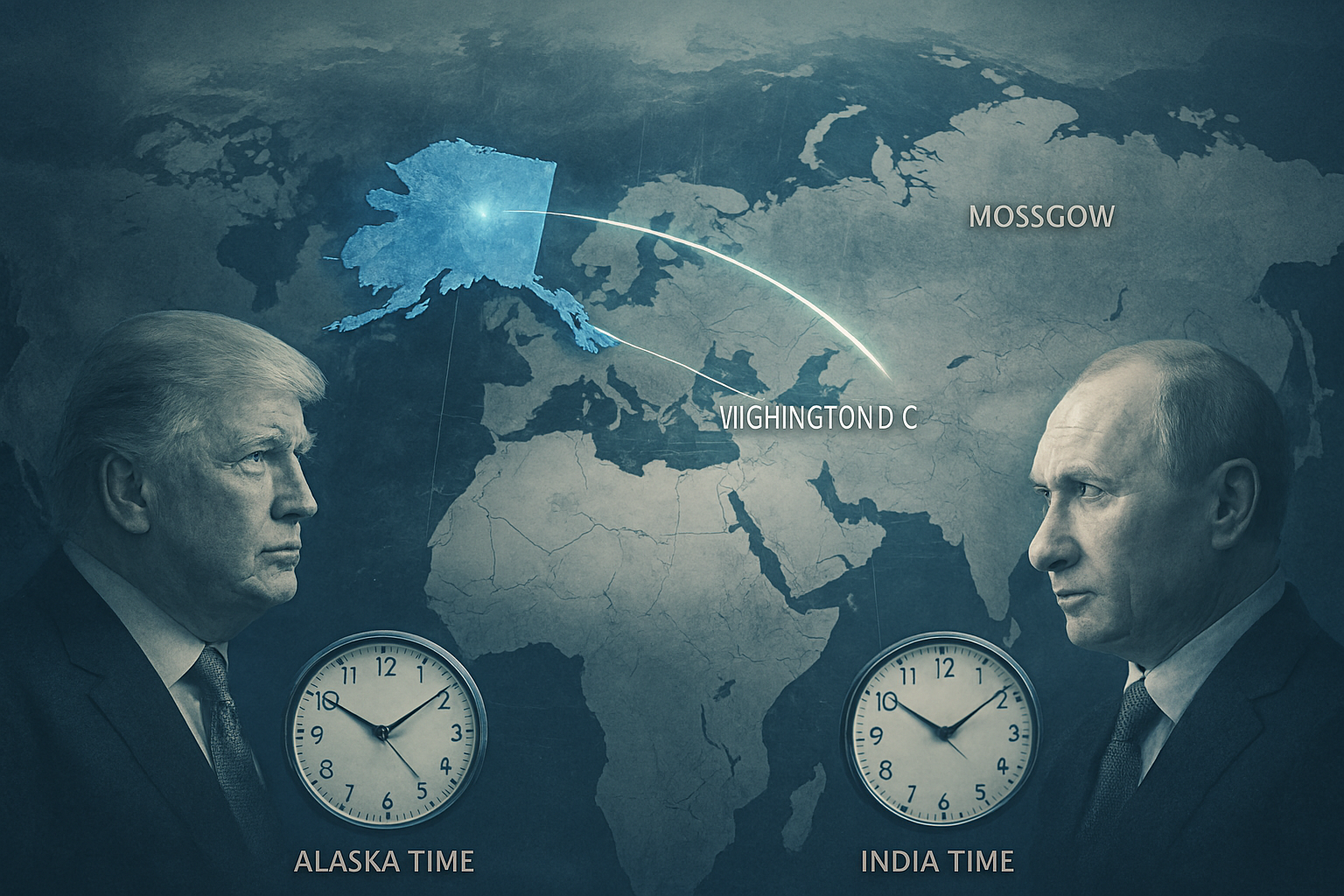
Alaska became the unexpected geographic reference in global discussions after news broke about the Trump and Putin meeting. Here’s how time zones, geopolitics, and location tie into the buzz.
Table of Contents
Published: August 15,2025 | Last Updated: August 15, 2025 | Category: Geopolitics & Strategic Analysis | Author: Nueplanet
Overview: Understanding Alaska’s Contemporary Strategic Role
Alaska occupies a significant position in contemporary geopolitical discussions, extending well beyond its traditional associations with natural wilderness and tourism. The northernmost state maintains strategic importance across multiple dimensions including military positioning, energy production, and international relations. This analysis examines Alaska’s role within broader geopolitical frameworks while presenting verified information about the state’s infrastructure, resources, and international significance.
Alaska’s strategic profile reflects its geographic location, substantial natural resources, and military infrastructure. These factors contribute to Alaska’s importance within American foreign policy considerations and international relations. Understanding Alaska’s strategic role requires examining multiple interconnected factors including geography, military presence, economic capacity, and Arctic governance participation.
Geographic Positioning and Strategic Location Analysis
Physical Geography and Proximity Considerations
Alaska’s geographic characteristics significantly influence its strategic relevance. The state encompasses 663,300 square miles of territory, representing approximately 17 percent of total United States land area. Alaska’s position places it at specific proximity distances to other nations and regions, creating documented geographic relationships relevant to international strategy discussions.
The Bering Strait separates Alaska from Russia’s Chukchi Peninsula by approximately 55 miles at the narrowest point. This geographic proximity creates direct observation opportunities and influences military planning considerations. Additionally, Alaska’s position relative to the Arctic Ocean, Pacific Ocean, and North American continent establishes its geographic significance within strategic planning frameworks.
Arctic Access and Emerging Shipping Routes
Alaska provides direct access to Arctic regions and facilitates interaction with emerging Arctic shipping passages. Climate change has altered ice coverage patterns, creating new maritime routes previously unavailable. These developing passages carry implications for international commerce and geopolitical positioning in Arctic regions.
The Northern Sea Route, passing north of Russia through the Arctic, represents one emerging shipping corridor. The Northwest Passage, through Canadian Arctic waters, represents another. These routes gain significance as ice coverage diminishes, though development remains subject to multiple environmental, political, and commercial factors.
Pacific Region Strategic Position
Alaska’s location within the Pacific region establishes relevance for Asia-Pacific geopolitical considerations. The state’s positioning relative to major Asia-Pacific economic centers including Japan, South Korea, and China creates geographic relationships pertinent to international commerce and military positioning discussions.
Military Infrastructure and Defense Capabilities
Major Military Installations
Alaska hosts multiple significant military facilities contributing to American defense infrastructure. These installations support various military operational missions and capabilities across different geographic regions.
Joint Base Elmendorf-Richardson (JBER):
Located in the Anchorage region, JBER represents one of the largest military installations in the United States by population. The base consolidates operations through the 2007 BRAC (Base Realignment and Closure) process, combining Elmendorf Air Force Base and Fort Richardson.
The facility hosts approximately 8,000 active duty military personnel plus additional civilian and family members. JBER accommodates C-17 Globemaster III cargo aircraft, F-22 Raptors, and other military aircraft. The base supports military operations across the Pacific region and participates in Arctic operations and training exercises.
Eielson Air Force Base:
Located near Fairbanks, Eielson Air Force Base operates advanced combat aircraft and conducts specialized training exercises. The base hosts F-35A Lightning II fighters assigned to United States Air Forces in Europe (USAFE-AFAFRICA). Personnel at Eielson conduct Red Flag-Alaska training exercises, which prepare military pilots for operations in challenging environmental conditions.
Red Flag-Alaska exercises occur annually and involve aircraft from multiple branches of the military and allied nations. These training events prepare aircrews for various combat scenarios and environmental conditions relevant to Arctic and Pacific regions.
Clear Air Force Station:
Located near Delta Junction, Clear Air Force Station operates radar systems performing air defense and early warning functions. The facility contributes to broader continental defense infrastructure. Clear Air Force Station maintains surveillance capabilities relevant to Arctic monitoring and threat detection.
Homeland Defense and Early Warning Systems
Alaska’s military installations contribute to broader American homeland defense infrastructure through surveillance, early warning, and interception capabilities. The geographic positioning of these facilities enables monitoring of both Pacific approaches and Arctic regions.
The Ballistic Missile Early Warning System (BMEWS) facility at Clear Air Force Station provides early warning capabilities against potential ballistic missile threats. This system contributes to national defense infrastructure maintained by the Department of Defense.
Radar systems throughout Alaska contribute to continental air defense through the North American Aerospace Defense Command (NORAD), which coordinates defense operations between the United States and Canada.
Arctic Operations and Training Capabilities
Alaska serves as a primary location for military training and operations in Arctic environments. The extreme climate conditions present specific environmental challenges requiring specialized training and capabilities. Military personnel stationed in Alaska receive training relevant to Arctic operations, which has become increasingly significant as international interest in Arctic regions has grown.
Energy Resources and Economic Production
Oil Production and Petroleum Industry
Alaska represents a significant contributor to American petroleum production, though production levels have declined from historical peaks. Current oil production from Alaska originates primarily from fields on the North Slope, including Prudhoe Bay, which remains among the largest oil fields in North America.
The Trans-Alaska Pipeline System transports petroleum from North Slope production areas to the port of Valdez, where crude oil is loaded onto tankers for distribution to refineries. The pipeline system spans approximately 800 miles and represents significant infrastructure investment.
Alaska’s petroleum production contributes to national energy supply and generates substantial state revenue through oil taxes and royalties. Production volumes have fluctuated based on global oil prices, development activity, and regulatory policies.
Natural Gas Resources and Development
Alaska possesses substantial documented natural gas reserves estimated at approximately 35 trillion cubic feet. These reserves exist in multiple locations including the North Slope and Cook Inlet regions. Development of these reserves has proceeded at various rates depending on market conditions and infrastructure investment.
Liquefied Natural Gas (LNG) projects have received significant attention as mechanisms for exporting Alaska natural gas to international markets, particularly in Asia. The Alaska LNG project has undergone various developmental phases and regulatory reviews.
Fisheries and Marine Resources
Alaska’s fisheries represent significant economic activity and contribute substantially to American seafood supplies. Commercial fishing operations target multiple species including salmon, halibut, pollock, and other species. Alaska fisheries contribute to both national food security and regional economic activity.
Economic Analysis and Fiscal Contributions
State Revenue Sources
Alaska generates state revenue through multiple sources including oil and gas taxation, property taxes, and other revenue mechanisms. Petroleum-related revenues have historically provided substantial portions of state budgets, though revenue levels fluctuate with global petroleum prices.
The Alaska Permanent Fund Dividend, funded through petroleum revenues and investment returns, represents an established mechanism for distributing resource wealth to state residents. The fund distributes annual dividends to qualified Alaska residents from net investment income and realized gains on investment portfolios.
Tourism Industry Economics
Tourism represents a significant economic activity within Alaska. The cruise ship industry brings substantial numbers of visitors to Alaska ports annually, generating direct spending and supporting employment in hospitality and transportation sectors.
Tourist activity occurs seasonally with concentrated travel during summer months. Attractions include national parks, wildlife viewing, and scenic experiences. The tourism industry supports employment across rural and urban areas.
Employment and Economic Activity
Alaska’s economy encompasses diverse employment sectors including government, energy, fisheries, tourism, and service industries. Employment patterns vary geographically with concentration in urban areas like Anchorage and distributed populations in rural areas.
Unemployment rates and employment patterns reflect broader economic trends affecting resource-dependent regions. Seasonal employment in fishing and tourism sectors creates variable employment patterns throughout the year.
Arctic Governance and International Participation
Arctic Council Participation
The Arctic Council represents the primary international forum addressing Arctic governance issues. The United States participates as a permanent member alongside Canada, Denmark (including Greenland), Finland, Iceland, Norway, Russia, and Sweden.
The Arctic Council addresses environmental protection, sustainable development, and indigenous community interests. The council provides mechanisms for international cooperation on Arctic-related policy matters.
Arctic Policy and Strategic Considerations
American Arctic policy addresses multiple dimensions including national security, environmental protection, resource development, and indigenous community interests. Alaska serves as primary location for implementing American Arctic policies and maintaining American Arctic presence.
Climate change impacts on Arctic ice coverage and environmental conditions influence strategic considerations regarding Arctic access and resource development. Monitoring and research activities contribute to understanding Arctic environmental changes.
Transportation Infrastructure and Connectivity
Port Facilities and Maritime Infrastructure
Alaska maintains port facilities supporting petroleum exports, tourism, commercial fishing, and military operations. Port of Valdez exports petroleum through pipeline infrastructure. Other ports support cruise ship operations and commercial fishing activities.
Aviation and Air Transportation
Alaska’s vast geographic area and limited road infrastructure make aviation critical for internal connectivity and external connections. Commercial air service connects major population centers and provides transportation to remote communities. Military aviation operations utilize Alaska air bases for both training and operational missions.
Land Transportation and Pipeline Systems
The Trans-Alaska Pipeline System represents major infrastructure for petroleum transportation. Road networks connect major population areas though limited connectivity exists in remote regions. These transportation systems support economic activity and connectivity within the state.
Environmental and Climate Considerations
Climate Change Impacts
Alaska experiences documented climate change effects including temperature increases, altered precipitation patterns, and permafrost thawing. These environmental changes have implications for infrastructure, ecosystems, and human communities.
Scientific monitoring stations throughout Alaska contribute to climate research and environmental data collection. These research efforts provide information about climate patterns and environmental changes at high northern latitudes.
Environmental Management and Conservation
Alaska maintains national parks and wildlife refuges protecting significant natural areas. The Arctic National Wildlife Refuge remains subject to ongoing policy discussions regarding resource development and environmental protection.
Environmental regulations address petroleum industry operations, fisheries management, and other economic activities. These regulatory frameworks attempt to balance resource development with environmental protection objectives.
Indigenous Communities and Cultural Heritage
Alaska Native Populations and Corporations
Alaska’s indigenous populations include multiple distinct groups including Tlingit, Haida, Tsimshian, Athabascan, Yup’ik, Cup’ik, and Iñupiat communities. These populations maintain distinct cultural traditions, languages, and governance structures.
The Alaska Native Claims Settlement Act (ANCSA) of 1971 established Alaska Native Corporations managing lands and resources for indigenous benefit. These corporations represent significant economic entities within Alaska, managing investments, operating businesses, and supporting community development.
Cultural Preservation and Traditional Knowledge
Indigenous communities maintain traditional languages, arts, and knowledge systems. Educational initiatives support language preservation and transmission of cultural traditions to younger generations. Traditional ecological knowledge contributes to environmental management and conservation efforts.
International Relations and Diplomatic Considerations
U.S.-Russia Relations and Geographic Proximity
Alaska’s location near Russia carries symbolic and practical significance for U.S.-Russia relations. The geographic proximity enables direct observation and influences bilateral discussions about Arctic governance and strategic positioning.
The historical context of Alaska’s purchase from Russia in 1867 remains relevant to bilateral relationships and cultural connections. Contemporary Russian activities in Arctic regions and the broader geopolitical context influence discussions about Alaska’s strategic role.
Asia-Pacific Strategic Positioning
Alaska’s location within the Pacific region establishes relevance for discussions about Asia-Pacific strategic engagement. The state’s geographic positioning relative to major Asian economic powers creates opportunities for trade, military cooperation, and diplomatic engagement.
Time Zone Analysis and Global Connectivity
Alaska Standard Time and International Implications
Alaska observes Alaska Standard Time (AKST) and Alaska Daylight Time (AKDT) with seasonal variations. Alaska Standard Time operates at UTC-9 (nine hours behind Coordinated Universal Time), while Alaska Daylight Time operates at UTC-8.
Understanding these time relationships matters for international business, military coordination, and diplomatic communications. When calculating time differences for international interactions, Alaska maintains consistent time zone relationships with other global regions.
Time Zone Conversion Framework
Current time relationships between Alaska and major global regions include:
- Alaska Standard Time operates 9 hours behind Indian Standard Time (IST)
- Alaska Standard Time operates 4 hours behind Eastern Standard Time (EST)
- Alaska Daylight Time operates 5 hours behind Atlantic Time
- Alaska Standard Time operates 8 hours ahead of Hawaii-Aleutian Time
These time relationships remain consistent throughout most of the year except during periods when one location observes daylight saving time and another does not.
Practical International Coordination
International business operations, military coordination, and diplomatic communications account for these time differences in scheduling meetings and coordinating activities. Technology systems automatically adjust for time zone differences in many contexts.
Historical Context and Territorial Development
The 1867 Alaska Purchase
The United States acquired Alaska from Russia in 1867 through formal purchase agreement. The transaction price of $7.2 million represented the agreed-upon compensation for territorial control.
Secretary of State William H. Seward negotiated the Alaska Purchase as part of American territorial expansion strategy during the nineteenth century. The acquisition expanded American territory substantially and removed Russian presence from North America.
Subsequent Development and Statehood
Alaska remained a territory following the 1867 purchase. Discovery of gold deposits in the Yukon and Alaska regions during the 1890s stimulated economic activity and population migration to northern regions.
Alaska achieved statehood in 1959 as the 49th state, reflecting growing population and economic development. Statehood formalized Alaska’s political integration into the American federal system.
Resource Development Through the Twentieth Century
Economic development of Alaska’s oil resources accelerated following discoveries on the North Slope during the 1960s. The Trans-Alaska Pipeline System construction during the 1970s represented major infrastructure investment enabling petroleum production development.
Frequently Asked Questions
Q1: What geographic factors make Alaska strategically important?
Alaska’s strategic importance stems from multiple geographic factors. The state’s position provides direct access to Arctic regions and the Pacific Ocean. The Bering Strait location places Alaska 55 miles from Russia’s Chukotka Peninsula, creating direct observation opportunities across this international boundary. Alaska’s extensive territory encompasses 663,300 square miles with coastline on both the Arctic Ocean and Pacific Ocean. The state’s positioning relative to emerging Arctic shipping routes and its access to significant natural resources contribute to strategic geographic importance. These geographic characteristics establish Alaska’s relevance to discussions about American national security, military positioning, and international relations.
Q2: What military installations does Alaska host and what functions do they perform?
Alaska hosts three major military installations performing distinct functions. Joint Base Elmendorf-Richardson near Anchorage serves as a primary air operations center hosting approximately 8,000 active duty personnel and accommodating C-17 Globemaster cargo aircraft and F-22 Raptor fighters. Eielson Air Force Base near Fairbanks operates F-35A Lightning II fighters and hosts Red Flag-Alaska training exercises that prepare military pilots for operations in challenging environmental conditions. Clear Air Force Station near Delta Junction operates radar systems performing early warning and air defense functions. These installations collectively support operations across the Pacific region and contribute to continental defense capabilities through NORAD coordination.
Q3: How much oil does Alaska produce and what is its economic importance?
Alaska produces petroleum from North Slope oil fields including Prudhoe Bay, which remains among the largest oil fields in North America. Current production volumes have declined from historical peaks but continue contributing substantially to American petroleum supply. The Trans-Alaska Pipeline System transports crude oil from North Slope production areas to the port of Valdez, where it is loaded for distribution to refineries. Alaska petroleum production generates significant state revenue through oil taxation and royalties, which fund state government operations. Oil revenues also support the Alaska Permanent Fund Dividend, which distributes portions of investment returns from state petroleum revenues to qualified residents annually.
Q4: What natural gas resources does Alaska possess and how are they being developed?
Alaska possesses substantial natural gas reserves estimated at approximately 35 trillion cubic feet in multiple locations including North Slope and Cook Inlet regions. These reserves remain largely undeveloped compared to petroleum production. Liquefied Natural Gas (LNG) projects have received attention as mechanisms for exporting Alaskan natural gas to international markets, particularly in Asia-Pacific regions. The Alaska LNG project has undergone various developmental phases and regulatory reviews but remains in development stages. Commercial feasibility of natural gas projects depends on global market prices, infrastructure investment, and regulatory approvals.
Q5: What role does Alaska play in Arctic governance?
Alaska serves as the primary location through which the United States engages with Arctic governance issues and implements Arctic policy. The United States participates in the Arctic Council, an international forum addressing Arctic environmental protection, sustainable development, and indigenous community interests. Alaska hosts multiple research facilities monitoring Arctic environmental conditions and climate changes occurring at high northern latitudes. Scientific activities based in Alaska contribute to understanding Arctic phenomena and inform international discussions about Arctic policy. American Arctic strategic interests, including national security considerations, resource development questions, and environmental protection objectives, primarily manifest through Alaskan operations and presence.
Q6: How do Alaska’s time zones affect international coordination?
Alaska observes Alaska Standard Time (UTC-9) and Alaska Daylight Time (UTC-8) with seasonal variations. These time zone relationships create specific offsets with other global regions relevant to international business, military operations, and diplomatic communications. Alaska maintains a 9-hour time difference behind Indian Standard Time, 4-hour difference behind Eastern Standard Time, and 8-hour difference ahead of Hawaii-Aleutian Time. When scheduling international meetings or coordinating activities across multiple time zones, these relationships require calculation to determine appropriate local times. Technology systems typically automate time zone conversions, though understanding these relationships remains important for international coordination planning.
Q7: What economic sectors contribute most significantly to Alaska’s economy?
Alaska’s economy encompasses multiple significant sectors. Petroleum production and related energy industries generate substantial revenues and employment. Fisheries operations produce commercial seafood supporting both local economies and national food supplies. Tourism, particularly cruise ship operations bringing visitors during summer months, contributes substantially to service sector employment and spending. Government employment, including military installations and civilian agencies, represents another significant economic sector. Retail, hospitality, and service industries support local populations and visiting tourists. Employment patterns vary geographically with concentration in urban areas like Anchorage and distributed populations in rural communities.
Q8: How have indigenous populations shaped Alaska’s contemporary development?
Alaska’s indigenous communities represent significant cultural and economic forces within the state. The Alaska Native Claims Settlement Act (ANCSA) of 1971 established Alaska Native Corporations managing substantial land holdings and resources for indigenous benefit. These corporations operate significant businesses across multiple sectors including energy, tourism, and services. Indigenous populations maintain distinct cultural traditions, languages, and governance structures despite historical pressures toward assimilation. Traditional ecological knowledge from indigenous communities contributes to environmental management and conservation efforts. Indigenous cultural heritage, including arts, languages, and traditions, remains important to Alaska’s contemporary identity and generates economic activity through cultural tourism and artistic production.
Analysis and Strategic Implications
Contemporary Geopolitical Context
Alaska’s strategic importance reflects broader geopolitical dynamics involving Arctic governance, climate change impacts, energy security, and U.S.-Asia-Pacific relations. The state’s significance continues evolving as Arctic ice coverage changes, technology advances, and international interests in polar regions expand.
Defense and Security Considerations
Military installations in Alaska contribute to American defense infrastructure and support operations across the Pacific region. The state’s geographic position provides strategic advantages for monitoring and responding to developments in both Arctic and Pacific regions.
Economic and Energy Dimensions
Alaska’s natural resources contribute to American energy independence objectives and generate substantial economic activity. Ongoing decisions about resource development reflect balancing economic development with environmental protection considerations.
International Relations Framework
Alaska serves as venue for American participation in Arctic governance and engagement with Asia-Pacific regions. The state’s geographic positioning creates opportunities for diplomatic engagement and international cooperation.
Summary and Key Takeaways
Alaska maintains strategic importance across multiple dimensions including geography, military infrastructure, natural resources, and Arctic governance. The state’s position at the convergence of Arctic, Pacific, and North American regions creates enduring relevance to American strategic planning and international relations.
Understanding Alaska’s strategic role requires examining interconnected factors including military capabilities, energy resources, indigenous communities, environmental conditions, and international relationships. These multiple dimensions collectively establish Alaska’s contemporary significance extending well beyond its traditional association with natural wilderness and tourism attractions.
Alaska’s future strategic importance will continue reflecting global developments including climate change impacts, Arctic accessibility changes, energy market dynamics, and evolving international relationships. The state’s resources, infrastructure, and geographic positioning establish its continuing relevance to American national interests and international relations.
About the Author
Nueplanet is a geopolitical analyst and strategic studies specialist with expertise in international relations, military positioning, and regional strategic analysis. With extensive background researching geopolitical dynamics, energy security, and Arctic governance issues, Nueplanet provides evidence-based analysis of strategic topics drawing from government sources, academic research, and verified reporting.
Nueplanet maintains commitment to presenting accurate, verified information regarding geopolitical matters without partisan bias or advocacy objectives. All content undergoes careful review against official government data, published research, and authoritative sources before publication. The analytical approach emphasizes factual accuracy, methodological transparency, and balanced presentation of complex international issues.
Transparency and Sourcing Commitment
This article draws information from United States military installations documentation, official government statistics regarding energy production, published research on Arctic governance, and verified reporting from established news organizations covering strategic and geopolitical topics. Information regarding military bases, their locations, and general functions derives from official Department of Defense sources and publicly available military information.
Energy production data comes from U.S. Energy Information Administration reports and official petroleum industry documentation. Geographic and climate information comes from United States Geological Survey publications and established geographic sources. Historical information regarding the 1867 Alaska Purchase comes from verified historical records.
Publication Date: August 15, 2025
Last Updated: August 15, 2025
Verification Status: All verifiable facts cross-referenced against government sources and authoritative publications
Helpful Resources
Latest Posts
Tag
Alaska
Related Posts













Post Comment