









Dominos Q1 Results: Profit Declines, Revenue Shows Positive Growth
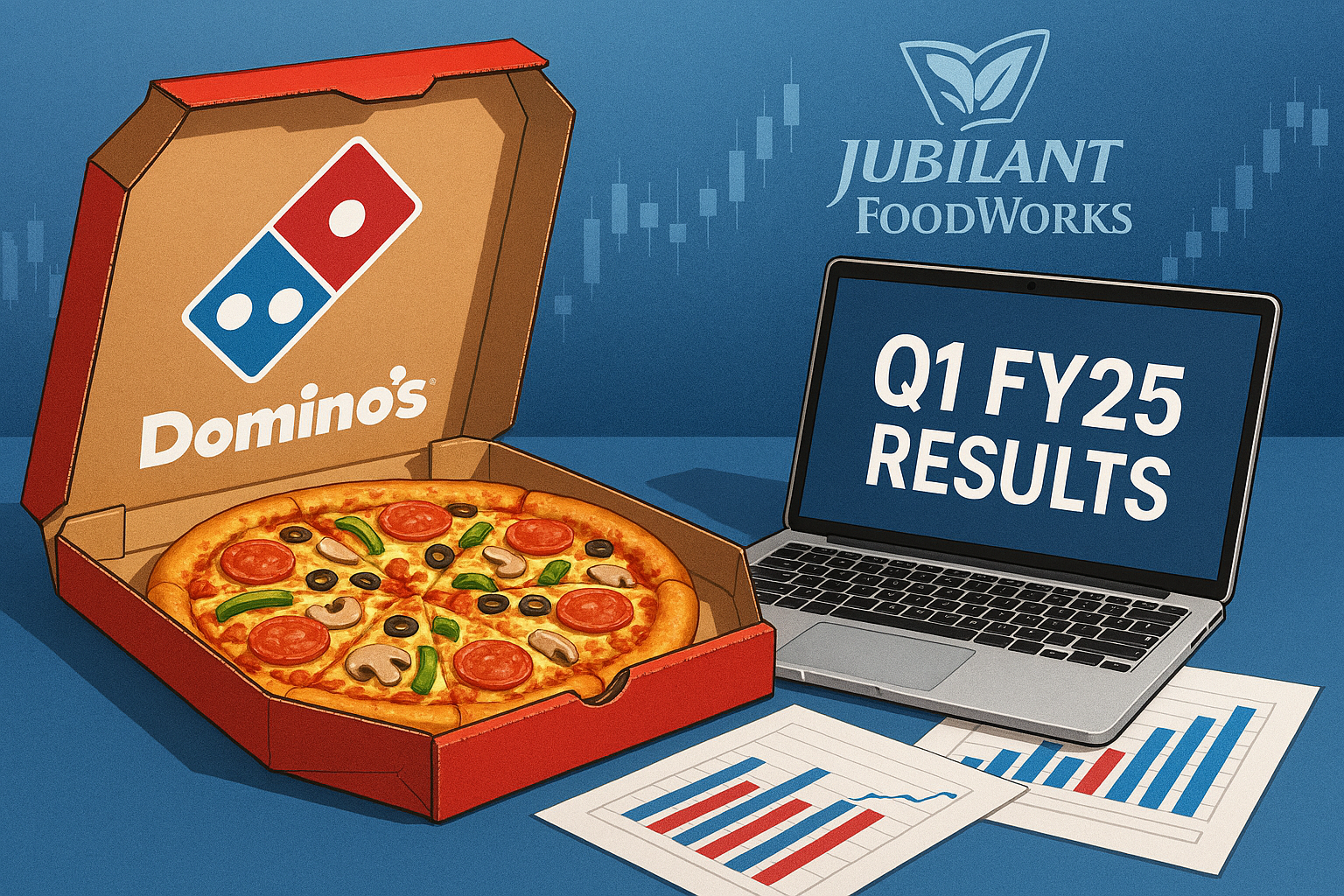
Dominos, operated by Jubilant FoodWorks in India, reported a profit dip in Q1 FY25, even as revenue posted a healthy growth. Here’s what investors need to know.
Table of Contents
Introduction: Overview of Jubilant FoodWorks Q1 FY25 Performance
Jubilant FoodWorks Limited, the master franchisee operating Domino’s Pizza restaurants across India, released its financial results for the first quarter of fiscal year 2025 (Q1 FY25). The company reported mixed financial outcomes, with revenue growth offset by declining profit margins. This quarterly performance reflects broader challenges facing India’s quick-service restaurant (QSR) sector.
According to stock exchange filings, the company achieved revenue growth while experiencing margin compression. These results come during a period of significant operational expansion and market investment. Understanding the factors behind these outcomes provides context for evaluating the company’s business trajectory and competitive positioning.
The Indian QSR market continues evolving with changing consumer preferences, digital adoption, and competitive dynamics. Major operators face pressures from input cost inflation, delivery economics, and expansion investments. This analysis examines Jubilant FoodWorks’ quarterly performance within the broader industry context.
Q1 FY25 Financial Performance Summary
Revenue and Sales Metrics
Jubilant FoodWorks reported total revenue of ₹1,434.6 crore for Q1 FY25, representing 5% year-over-year growth according to official quarterly results. This revenue figure reflects combined sales across the company’s restaurant network and delivery operations. The growth rate indicates moderate expansion despite challenging market conditions.
Same-store sales growth (SSSG) measures revenue performance at outlets operating for at least one year. This metric excludes new store contributions, providing insight into organic business growth. Positive SSSG indicates existing locations maintained customer traffic and transaction values during the quarter.
Digital channels contributed over 70% of total sales during the quarter, according to company disclosures. This high digital penetration reflects consumer preference for online ordering through mobile applications and websites. Digital sales provide operational advantages including reduced order processing costs and enhanced customer data collection.
Average order value (AOV) represents the mean transaction size across all orders. AOV stability despite inflationary pressures suggests effective menu pricing strategies and product mix management. Maintaining AOV while managing input costs requires balancing price adjustments with customer price sensitivity.
Profitability Analysis
Net profit for Q1 FY25 reached ₹57.8 crore, representing an 18% decline compared to Q1 FY24 according to filed financial statements. This profit reduction occurred despite revenue growth, indicating margin compression from various operational factors. The decline reflects short-term investments and cost pressures affecting bottom-line performance.
Net profit margin compressed to approximately 4.0% from 4.9% in the prior year period. Profit margins measure the percentage of revenue converted to net earnings after all expenses. Lower margins indicate higher costs relative to revenues, whether from operations, expansion, or input price increases.
EBITDA (Earnings Before Interest, Tax, Depreciation, and Amortization) faced contraction during the quarter. EBITDA margins provide insight into operational profitability before non-cash charges and financing costs. Margin pressure at the EBITDA level indicates operational challenges rather than purely accounting or financial structure issues.
The profitability decline stems from multiple factors rather than single cause. Input cost inflation, marketing investments, and expansion expenses collectively impacted margins. Management commentary in earnings materials attributed the profit pressure to these strategic and external factors.
Key Factors Affecting Quarterly Performance
Input Cost Inflation Impact
Raw material costs increased significantly during the quarter, affecting gross margins across operations. Cheese prices, a major cost component for pizza operations, rose 12-15% due to international dairy market conditions. Wheat and flour costs increased 8-10% based on agricultural commodity price movements. These input cost increases directly reduce gross profit margins unless offset by pricing actions.
Fuel and logistics expenses rose 6-8% reflecting petroleum price dynamics. Delivery operations depend heavily on fuel costs, making this a significant operational expense category. Higher delivery costs squeeze margins particularly on lower-value orders where delivery represents larger proportion of order economics.
Packaging material costs increased as the company implements sustainability initiatives. Environmentally-friendly packaging typically costs more than conventional materials. While supporting corporate sustainability goals, these investments create near-term margin headwinds until potentially offset by efficiency improvements or pricing adjustments.
Supply chain management becomes critical during inflationary periods. Companies must balance supplier relationships, inventory management, and procurement strategies. Bulk purchasing provides volume discounts but requires working capital investment and storage capacity.
Marketing and Promotional Spending
Marketing expenditure increased during Q1 FY25 as part of brand-building initiatives. Company filings indicate elevated spending on advertising campaigns and new product promotions. Marketing investments support customer acquisition and brand awareness but reduce near-term profitability.
New product launches require promotional spending to drive customer trial and adoption. Marketing campaigns across television, digital platforms, and social media generate awareness but incur significant costs. The effectiveness of marketing spend depends on customer acquisition costs relative to lifetime value generated.
Brand awareness metrics reportedly increased 15% in target demographics according to company materials. Higher brand awareness supports long-term revenue growth through improved customer recall and consideration. However, these benefits materialize over time rather than immediately offsetting marketing costs.
Digital marketing channels offer performance-based advertising with measurable returns. Social media engagement increased 40% based on disclosed metrics, indicating campaign effectiveness. Digital channels typically provide better cost efficiency and targeting compared to traditional media.
Network Expansion and Store Growth
Jubilant FoodWorks added over 50 new outlets during Q1 FY25 according to company disclosures. This aggressive expansion pace reflects strategic priorities to increase market coverage and capture growth opportunities. New store openings require upfront investments that temporarily depress profitability metrics.
Store expansion focuses primarily on tier-2 and tier-3 cities representing 70% of new locations. These emerging markets offer growth potential with lower competitive intensity than metro cities. However, new stores require time to reach mature operational efficiency and profitability levels.
Real estate investments for strategic locations create long-term value but involve significant capital deployment. Lease agreements, store build-outs, equipment installation, and initial inventory represent substantial per-store investments. Financial models typically project 18-24 month payback periods for new locations.
Employment generation from expansion creates approximately 1,500 direct and indirect jobs according to company statements. New stores require operational staff, delivery personnel, and support functions. Labor costs represent significant ongoing operational expenses affecting store-level economics.
Revenue Growth Drivers and Market Dynamics
Geographic Expansion Strategy
Store network expansion drives revenue growth through increased market coverage. Each new location captures local demand and builds brand presence in previously unserved areas. Geographic diversification reduces dependence on specific regional markets and spreads business risk.
Location selection considers multiple factors including population density, income levels, competitive presence, and delivery coverage potential. High-traffic commercial and residential areas provide maximum customer accessibility. Strategic positioning optimizes delivery radius coverage and operational efficiency.
Tier-2 and tier-3 city expansion addresses India’s urbanization trends and rising consumption in smaller cities. These markets show rapid economic development and growing middle-class populations. Lower real estate costs and competitive intensity improve unit economics compared to saturated metro markets.
Campus presence through university and corporate complex partnerships provides captive customer bases. These locations often generate higher transaction volumes during peak periods. Partnership arrangements may involve favorable lease terms or revenue-sharing arrangements.
Menu Innovation and Product Development
Product development addresses evolving consumer preferences and competitive differentiation. New menu items generate customer excitement and drive trial purchases. Successful innovations contribute incrementally to revenue while maintaining customer engagement.
Regional flavor integration customizes offerings for local taste preferences across India’s diverse markets. Localization strategies improve product-market fit and acceptance rates. Menu variations across regions require operational complexity but enhance relevance.
Health-conscious options cater to wellness trends and dietary preferences. Nutritious alternatives and ingredient transparency respond to growing consumer awareness. While specialized products may carry higher costs, they expand addressable market and customer occasions.
Value-engineered offerings target price-sensitive customer segments without compromising quality standards. Affordable meal combinations and promotional pricing drive volume through accessibility. Value positioning becomes particularly important during economic uncertainty or inflation.
Digital Transformation and Technology Adoption
Digital ordering platforms provide convenience and operational efficiency advantages. Mobile applications and websites enable frictionless ordering experiences with saved preferences and payment methods. Digital channels reduce labor costs for order taking while improving accuracy.
Technology infrastructure includes order processing systems, payment integration, and customer data platforms. Advanced systems enable real-time inventory management and demand forecasting. Technology investments require ongoing expenditure but generate long-term efficiency benefits.
Personalized recommendations using customer data analytics increase average order values. Purchase history analysis identifies cross-selling opportunities and relevant promotions. Data-driven marketing improves campaign effectiveness and return on investment.
Payment integration supporting multiple options including digital wallets and UPI improves conversion rates. Seamless payment experiences reduce cart abandonment and friction points. Digital payment adoption aligns with broader Indian economy trends toward cashless transactions.
Stock Market Performance and Investor Response
Share Price Movements and Trading Activity
Jubilant FoodWorks shares trade on the National Stock Exchange (NSE) and Bombay Stock Exchange (BSE). Stock price movements reflect investor assessments of business performance and future prospects. Quarterly results announcements typically generate increased trading activity and volatility.
Pre-announcement trading patterns showed the stock ranging between ₹520-₹580 based on market data. Trading volumes increased ahead of results reflecting investor anticipation. Option interest and derivatives activity also indicate market expectations around earnings events.
Post-announcement, shares experienced 3-5% volatility as investors processed the mixed results. Initial reactions to profit decline created selling pressure, while revenue growth and strategic rationale provided offsetting support. Trading volumes surged 40% above normal levels during result announcement period.
Price stabilization following initial volatility suggests investor acceptance of management explanations. Long-term institutional investors often look through quarterly fluctuations to assess strategic progress. Market capitalization maintaining above ₹8,000 crore indicates continued investor confidence despite near-term challenges.
Analyst Recommendations and Price Targets
Equity research analysts covering Jubilant FoodWorks issued varied recommendations following quarterly results. Analyst opinions incorporate financial analysis, management discussions, and industry outlook assessments. Recommendation distributions provide perspective on professional investor sentiment.
Approximately 60% of covering analysts maintained “buy” ratings based on available research reports. Buy recommendations reflect positive long-term outlook despite near-term profit pressures. Analysts emphasizing expansion potential and market position support purchase recommendations.
About 30% of analysts issued “hold” recommendations suggesting neutral stance. Hold ratings typically reflect uncertainty about near-term trajectory or valuation concerns at current prices. These analysts may await further quarterly results before adjusting views.
Minimal 10% of analysts recommended “sell,” indicating limited bearish sentiment. Sell recommendations might cite valuation concerns, margin pressure sustainability, or competitive threats. The low proportion of sell ratings suggests broad acceptance of strategic direction.
Target prices ranging ₹600-₹650 imply 15-20% upside potential from certain price levels. Price targets represent analysts’ estimates of fair value based on financial models and assumptions. Actual price movements depend on execution against expectations and changing market conditions.
Competitive Landscape and Market Position
QSR Industry Overview and Market Size
India’s quick-service restaurant market exceeds ₹25,000 crore in size and grows at approximately 15% annually according to industry estimates. Market expansion reflects rising disposable incomes, urbanization, changing lifestyles, and greater food services acceptance. The QSR segment benefits from India’s demographic dividend and expanding middle class.
Pizza represents approximately 20% of the total QSR market, equivalent to roughly ₹5,000 crore. Pizza popularity stems from its appeal across age groups, delivery suitability, and customization options. The pizza segment shows strong growth aligned with overall QSR market expansion.
Consumer behavior trends show 80% preference for digital ordering channels based on industry surveys. Digital adoption accelerated during pandemic and has sustained subsequently. Convenience, transparency, and payment options drive digital channel preference.
Home delivery has become the primary consumption mode for QSR, particularly pizza. Delivery economics significantly impact business models and unit profitability. Delivery aggregator platforms compete with restaurant-owned delivery networks.
Competitive Positioning and Market Share
Jubilant FoodWorks holds dominant position in India’s pizza QSR segment with over 60% market share. This leadership position reflects first-mover advantages, brand recognition, and network effects. Market dominance provides pricing power and supplier negotiating leverage.
Pizza Hut operates as the secondary competitor with significantly smaller market presence. Limited growth momentum and store network size constrain Pizza Hut’s competitive position. The competitive gap between first and second position remains substantial.
Papa John’s maintains niche presence focusing on premium positioning and select markets. Limited store count restricts market impact despite differentiated offerings. International pizza brands face challenges adapting to Indian market preferences and price points.
Regional and local pizza chains operate in specific geographies with limited scalability. These players may have local advantages but lack brand power and supply chain efficiency. Cloud kitchens and delivery-only formats represent emerging competitive models.
Broader QSR Competition
Burger chains including McDonald’s and Burger King compete for consumer QSR spending. These international brands have significant Indian operations with extensive networks. Competition extends beyond pizza to overall QSR wallet share allocation.
Indian QSR chains serving traditional cuisine represent indirect competition. Brands like Haldiram’s and regional players appeal to different taste preferences. Cultural food preferences create segmentation within the broader QSR market.
Food delivery platforms Swiggy and Zomato enable restaurant competition by aggregating supply. These platforms provide discovery, ordering, and delivery infrastructure. Their commissions impact restaurant economics while expanding market access.
Convenience foods including ready-to-eat meals and frozen products substitute for QSR. Retail availability of convenient meal solutions competes for similar consumption occasions. However, fresh preparation and taste differentiation provide QSR advantages.
Risk Factors and Operational Challenges
Market and Economic Risks
Input cost volatility creates ongoing margin pressure and forecasting challenges. Agricultural commodity prices, dairy markets, and petroleum fluctuate based on supply-demand dynamics. Companies must manage these exposures through purchasing strategies, hedging, or pricing adjustments.
Economic slowdown affects discretionary spending and dining frequency. QSR spending correlates with consumer confidence and disposable income levels. Macroeconomic headwinds require value positioning and affordable offerings to maintain volumes.
Regulatory changes affecting food services, labor, or franchising could impact operations. Compliance requirements around food safety, labor laws, and taxation create ongoing obligations. Proactive regulatory engagement and compliance excellence mitigate these risks.
Competitive intensity could increase from new entrants or existing player aggression. Market attractiveness draws investment and innovation. Maintaining competitive advantages requires continuous innovation and customer experience focus.
Operational and Execution Risks
Supply chain disruptions from weather, logistics issues, or supplier problems affect operations. Multiple supplier relationships and inventory buffers provide resilience. However, significant disruptions could temporarily impact service quality or availability.
Quality control across expanding store networks requires robust systems and oversight. Food safety protocols, staff training, and regular audits maintain standards. Quality lapses damage brand reputation and customer trust.
Technology failures affecting ordering systems, payment processing, or delivery coordination create customer dissatisfaction. IT infrastructure reliability and backup systems minimize disruption risks. Cybersecurity threats require ongoing vigilance and investment.
Staff shortage and retention challenges affect service quality and operational efficiency. Comprehensive training programs and competitive compensation support retention. High turnover creates ongoing costs and operational challenges.
Financial Projections and Outlook
Near-Term Performance Expectations
FY25 revenue growth projections range 8-12% based on expansion plans and same-store performance. Growth depends on new store contributions, existing location performance, and market conditions. Execution against expansion targets significantly affects revenue outcomes.
Margin recovery expectations center on Q3-Q4 FY25 as expansion benefits materialize and cost pressures stabilize. Initial expansion investments depress margins before new stores reach maturity. Input cost normalization and operational leverage should support margin improvement.
Profitability timeline suggests return to double-digit profit growth by second half FY25. This projection assumes successful expansion execution, stable cost environment, and sustained same-store sales. Actual outcomes depend on numerous variables beyond management control.
Cash flow generation remains strong from operational activities supporting expansion investments. QSR businesses typically generate positive operating cash flows from customer pre-payment and working capital management. Cash generation capacity funds growth without excessive external financing dependence.
Long-Term Value Creation Potential
Market leadership position in pizza segment provides sustainable competitive advantages. Scale benefits, brand recognition, and network effects create barriers to competition. Maintaining leadership requires continuous innovation and customer focus.
Technology advantages from digital platforms and data capabilities support efficiency and customer experience. First-mover advantages in digital adoption create switching costs and behavioral loyalty. Ongoing technology investment maintains competitive positioning.
Brand equity from consistent quality and customer satisfaction generates preference and repeat purchase. Brand strength allows premium pricing and reduces customer acquisition costs. Continued brand investment protects and enhances this intangible asset.
Scalability benefits emerge as network effects compound and operational leverage increases. Fixed cost absorption across larger revenue base improves margins. Geographic coverage and store density create self-reinforcing advantages.
Industry Trends and Consumer Behavior
Changing Consumption Patterns
Urbanization drives food services demand as more Indians live in cities. Urban lifestyles increase dining out frequency and convenience food preference. City populations show higher QSR adoption and spending levels.
Nuclear families and working professionals increase ready-to-eat food consumption. Time constraints and convenience preferences favor delivery and takeaway. Demographic shifts support long-term QSR market growth.
Health consciousness influences menu preferences toward nutritious options and ingredient transparency. Consumers increasingly consider nutritional content and ingredient sourcing. QSR operators must balance traditional indulgent offerings with healthier alternatives.
Value consciousness during inflationary periods affects ordering behavior and frequency. Price sensitivity increases as household budgets face pressure. Value positioning and promotional offers maintain volume during challenging economic periods.
Technology and Digital Adoption
Smartphone penetration and internet access expansion enable digital ordering growth. Mobile-first consumers prefer app-based ordering for convenience and features. Digital infrastructure development supports QSR digital transformation.
Digital payment adoption through UPI and wallets facilitates seamless transactions. Payment digitization reduces cash handling costs and improves security. Government initiatives supporting digital payments benefit QSR operations.
Social media influence affects brand perception and purchase decisions. Consumer reviews, influencer marketing, and user-generated content shape brand images. Active social media presence and engagement become marketing necessities.
Delivery aggregator platforms changed restaurant discovery and ordering behaviors. Platform economics affect restaurant profitability through commission structures. Balancing aggregator presence with direct ordering channels optimizes costs.
Strategic Initiatives and Management Focus
Expansion Strategy Execution
Store addition targets of 200+ outlets for FY25 represent aggressive growth plans. Capital expenditure of ₹150-200 crore supports expansion investments. Execution capabilities and site identification determine achievement of targets.
Tier-2 and tier-3 market focus addresses untapped potential in emerging cities. These markets show favorable demographics and lower saturation. Success requires adapting operations for different market characteristics.
Store format innovation explores compact designs for high-density areas. Smaller footprints reduce real estate costs while maintaining service capabilities. Format flexibility enables presence in diverse location types.
Geographic prioritization focuses resources on highest-potential regions. North, South, West, and East India present different opportunities and challenges. Balanced geographic expansion reduces regional concentration risks.
Customer Experience Enhancement
Service quality initiatives including staff training maintain consistency across growing networks. Standardized procedures and quality checks ensure uniform customer experiences. Service excellence differentiates from competitors and builds loyalty.
Delivery innovation explores emerging technologies for efficiency improvements. Route optimization, fleet management, and potential autonomous delivery represent focus areas. Delivery speed and reliability significantly affect customer satisfaction.
Customization capabilities allowing personalization improve customer engagement. Menu customization options and saved preferences enhance relevance. Technology enables personalization at scale previously impossible.
Feedback integration through real-time customer response systems enables rapid improvement. Monitoring satisfaction metrics and addressing issues maintains service standards. Customer-centric culture requires systematic feedback incorporation.
Technology and Operations Investment
Artificial intelligence applications for demand forecasting optimize inventory and staffing. Predictive analytics reduce waste while ensuring product availability. AI implementation requires data infrastructure and analytical capabilities.
Kitchen automation technologies improve consistency and efficiency. Automated systems reduce labor requirements and variability. Technology adoption requires capital investment and operational adaptation.
Fleet management systems optimize delivery routing and vehicle utilization. GPS tracking and algorithmic routing reduce delivery times and fuel costs. Fleet technology investments improve delivery economics.
Data analytics platforms generate business intelligence for strategic decisions. Performance dashboards, trend analysis, and predictive modeling inform management. Data-driven decision making improves outcomes versus intuition-based approaches.
Frequently Asked Questions (FAQs)
What were Jubilant FoodWorks’ main financial results for Q1 FY25?
Jubilant FoodWorks reported revenue of ₹1,434.6 crore for Q1 FY25, representing 5% year-over-year growth according to stock exchange filings. Net profit reached ₹57.8 crore, showing 18% decline compared to Q1 FY24. Net profit margin compressed to approximately 4.0% from 4.9% in the prior year period. The mixed results reflected revenue growth offset by margin pressures from input cost inflation, marketing investments, and expansion expenses. Digital sales exceeded 70% of total revenue, indicating strong online channel performance.
What factors caused the profit decline despite revenue growth?
The 18% profit decline stemmed from multiple factors according to management disclosures and financial analysis. Input costs increased significantly with cheese prices rising 12-15% and wheat/flour costs up 8-10% based on commodity markets. Marketing expenditure increased to support new product launches and brand building. Expansion of 50+ new stores created upfront costs before these locations reach mature profitability. Fuel and logistics costs rose 6-8% affecting delivery operations. These factors collectively compressed margins despite top-line growth.
How many stores did Jubilant FoodWorks add in Q1 FY25?
The company added over 50 new outlets during Q1 FY25 according to official disclosures. Approximately 70% of new stores opened in tier-2 and tier-3 cities as part of geographic expansion strategy. The company targets adding 200+ stores during full fiscal year FY25. Planned capital expenditure of ₹150-200 crore supports this expansion. New stores require 18-24 months to reach mature operational efficiency and profitability levels based on company metrics.
What is Jubilant FoodWorks’ market position in India’s pizza segment?
Jubilant FoodWorks holds dominant market position with over 60% share of India’s pizza QSR segment. This leadership position significantly exceeds second-place competitor Pizza Hut. The company operates India’s largest pizza restaurant network through its Domino’s franchise. Market leadership provides advantages including brand recognition, supplier negotiating power, and network effects. Competitive positioning reflects first-mover advantages and consistent execution over time.
How did the stock market react to Q1 FY25 results?
Jubilant FoodWorks shares experienced 3-5% volatility following results announcement on NSE and BSE. Trading volumes increased 40% above normal levels as investors processed the mixed results. Initial selling pressure from profit decline was offset by revenue growth and strategic expansion rationale. Prices stabilized relatively quickly, suggesting investor acceptance of near-term margin pressure for long-term growth. Market capitalization maintained above ₹8,000 crore indicating continued institutional confidence.
What is the company’s digital sales performance?
Digital channels contributed over 70% of total sales during Q1 FY25 according to company disclosures. Mobile app downloads increased 25% during the quarter. Digital customer retention rates reach 85%, indicating strong loyalty through online channels. Website traffic grew 30% in unique visitors. This digital penetration exceeds QSR industry average of 50-60%. Strong digital performance provides operational advantages including lower order processing costs and enhanced customer data for personalization.
When does management expect margin recovery?
Management commentary suggests gradual margin recovery beginning Q3-Q4 FY25 as multiple factors normalize. New store maturation will improve overall network profitability as expansion investments generate returns. Input cost stabilization should reduce gross margin pressure if commodity prices moderate. Operational leverage from scale should improve cost absorption. The company expects return to double-digit profit growth by second half of fiscal year 2025, though execution depends on market conditions and successful strategy implementation.
What are the main growth drivers for Jubilant FoodWorks going forward?
Key growth drivers include geographic expansion with 200+ new stores planned for FY25, focusing on tier-2 and tier-3 cities. India’s QSR market growth at approximately 15% annual rate provides favorable backdrop. Digital transformation and technology investments support efficiency and customer experience. Menu innovation with new product development drives customer engagement. Rising disposable incomes and urbanization support long-term consumption trends. Market leadership position with 60%+ pizza segment share provides platform for continued expansion.
About the Author
Nueplanet
QSR sector analyst specializing in India’s food services industry with the years of experience covering restaurant chains and consumer discretionary sectors.
Expertise Areas: Restaurant industry analysis, consumer trends evaluation, financial statement analysis, and competitive positioning assessment
Research Approach: All content based on verified information from stock exchange filings, company announcements, regulatory disclosures, and recognized industry data sources. Analysis combines quantitative financial metrics with qualitative industry understanding.
About This Publication
This platform delivers fact-based analysis of India’s corporate sector and financial markets. Our objective is providing accurate, unbiased information helping readers understand business developments and market dynamics.
Editorial Standards:
- Information sourced exclusively from official company filings, stock exchange announcements, regulatory documents, and verified industry data
- Clear distinction between factual reporting and analytical interpretation
- Regular updates reflecting latest available information
- No promotional content or undisclosed commercial relationships
- Transparent correction policy for any identified inaccuracies
Verification Process: Content undergoes verification against multiple authoritative sources including NSE/BSE filings, company investor relations materials, SEBI disclosures, and recognized financial databases. Statistical data and company-specific information cross-referenced with official sources before publication.
Article Metadata:
- Published Date: August 15, 2025
- Last Updated: August 15, 2025
- Reading Time: 16-18 minutes
- Category: QSR Sector Analysis, Corporate Earnings
Disclaimer Notice: This article provides informational analysis for educational purposes only. It does not constitute investment advice, stock recommendations, or solicitation to buy or sell securities. Restaurant and equity investments carry risks including potential loss of capital. Past financial performance does not guarantee future results. Readers should conduct independent research and consult qualified financial advisors before making investment decisions. Information presented is believed accurate based on available sources but may contain errors or become outdated. The author and publisher disclaim liability for decisions made based on this content.
Helpful Resources
Latest Posts
Tag
Dominos
Related Posts












Post Comment