









8th Pay Commission: What Government Employees Need to Know About Salary Hike and TOR Impact
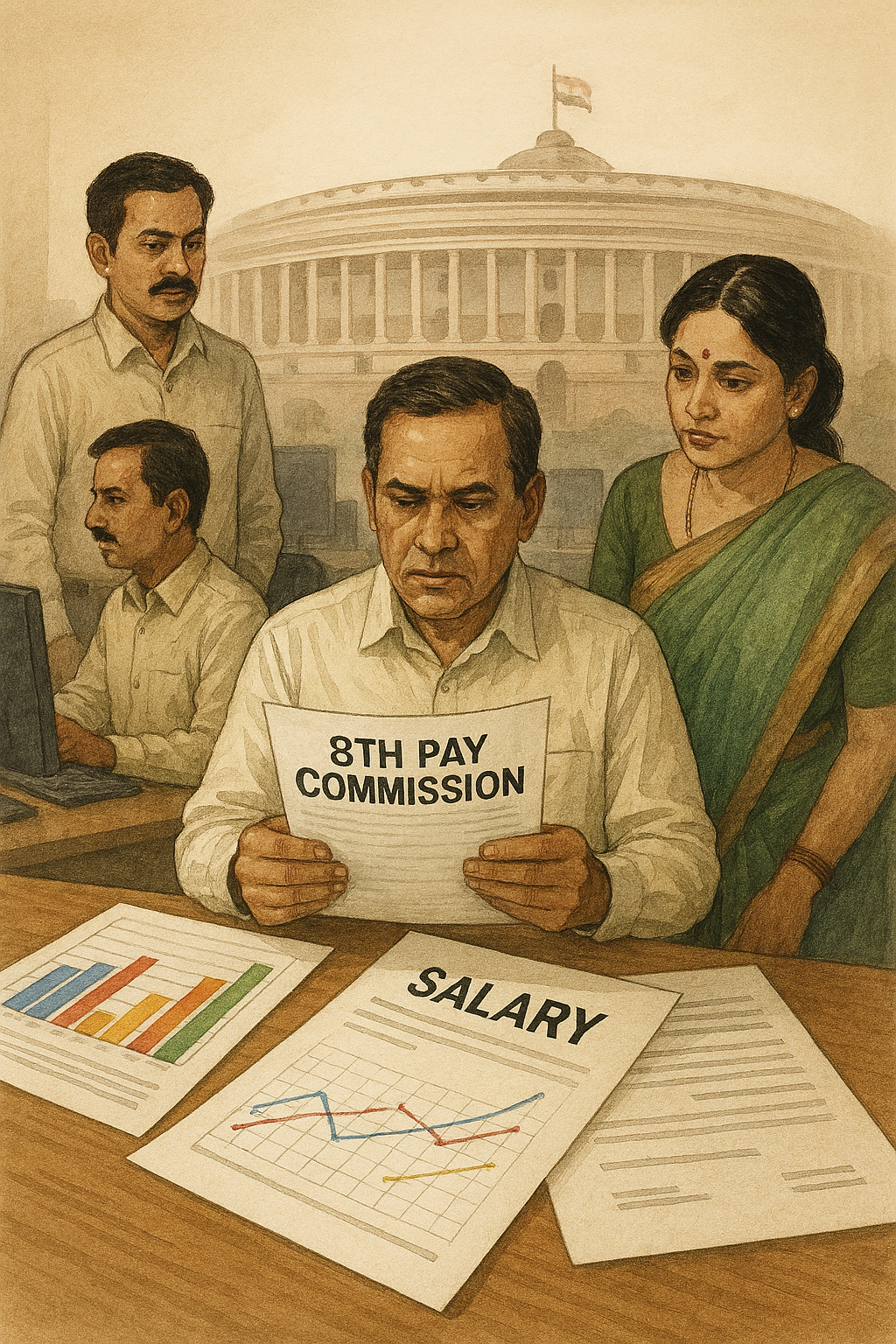
The 8th Pay Commission for government employees is a hot topic, with discussions on salary structure, Terms of Reference (TOR), and potential implementation timelines gaining momentum. Here’s a detailed breakdown of what it means for central government staff.
Table of Contents
Published: August 12, 2025
Last Updated: August 12, 2025
Category: Government Employment & Public Policy
Overview: Understanding the 8th Pay Commission and Its Expected Impact
The 8th Pay Commission represents the next scheduled review of compensation for India’s government employees, a process that occurs periodically to assess and modify salary structures, allowances, and pension frameworks. Following the 7th Pay Commission’s implementation in 2016, policy discussions regarding the 8th Pay Commission have intensified across government departments and union organizations. This analysis examines the anticipated structure, timeline, and potential implications of the upcoming commission based on available information and historical precedents.
The commission is expected to affect compensation decisions for approximately 50 lakh (5 million) central government employees and additional state government workforce members. While the official Terms of Reference (TOR) and formal commission establishment remain pending, substantial policy discussions have generated projections regarding potential recommendations. This article provides factual analysis of the anticipated changes based on historical patterns, current economic conditions, and stakeholder consultations.
Background Context: Understanding India’s Pay Commission System
Historical Evolution of Pay Commissions
India’s system of periodic Pay Commissions originated in 1946 with the first commission establishing foundational principles for government employee compensation. The commission framework developed through successive iterations, with each commission reviewing compensation adequacy relative to economic changes, inflation, and cost of living variations. The intervals between commissions have varied historically, ranging from 8 to 16 years based on economic conditions and government fiscal capacity.
The progression demonstrates evolving approaches to compensation determination:
- 1st Pay Commission (1946-1947): Established foundational compensation framework for independent India’s public service
- 2nd Pay Commission (1957): Gap of 11 years, addressed post-independence economic adjustments
- 3rd Pay Commission (1970): Gap of 13 years, incorporated industrial growth considerations
- 4th Pay Commission (1986): Gap of 16 years, largest interval reflecting fiscal constraints
- 5th Pay Commission (1997): Gap of 11 years, introduced modernized pay structures
- 6th Pay Commission (2008): Gap of 11 years, implemented significant structural reforms
- 7th Pay Commission (2016): Gap of 8 years, introduced pay matrix system
This historical pattern reveals that intervals between commissions typically range from 8-13 years during normal circumstances, with shorter intervals occurring when economic conditions warrant earlier review. The 7th Pay Commission’s 2016 implementation timing suggests the 8th commission review would ordinarily occur around 2024-2026.
Role and Functions of Pay Commissions
Pay Commissions serve multiple functions within India’s governance structure, extending beyond simple salary adjustment mechanisms. These constitutional bodies conduct comprehensive examinations of government employee compensation adequacy, considering numerous factors affecting financial well-being. The commissions provide independent institutional recommendations regarding appropriate compensation levels, insulated from direct political interference through formal independence procedures.
The standard functions include:
- Reviewing existing salary structures and identifying compensation gaps or anomalies
- Examining inflation impacts on purchasing power and cost of living changes
- Conducting comparative analysis with private sector compensation levels
- Assessing government fiscal capacity to implement recommendations
- Recommending allowance structures and pension framework modifications
- Addressing regional cost variations and geographic compensation differentials
- Proposing performance incentive mechanisms and career advancement structures
Current Compensation Framework: Understanding the 7th Pay Commission Structure
Pay Matrix System Overview
The 7th Pay Commission introduced the pay matrix system in 2016, representing substantial departure from the previous grade-based pay structure. This matrix-based approach established systematic compensation determination mechanisms aligned with employee levels and experience. The system replaced traditional grade pay concepts with level-based classification, providing greater transparency and consistency in salary calculations across different departments.
The pay matrix structure incorporates:
Level Classification: Employees are categorized into 18 levels (previously up to 10 levels), ranging from entry-level positions to apex government positions. Each level contains multiple steps representing experience progression and career advancement.
Index-Based Calculations: Basic pay for each level and step is determined through multiplication of prescribed indices against a base level salary. This mathematical approach ensures consistency across all central government employees regardless of department or service.
Systematic Progression: Employees advance through annual increments, moving from one step to the next within their designated level. Career progression to higher levels occurs through promotion based on merit and vacancy availability.
Transparent Compensation: The matrix system provides clear visibility of compensation at each level and step, enabling employees to understand salary progression patterns and promotional salary prospects.
Allowance Structure Analysis
Beyond basic pay, government employees receive numerous allowances designed to address specific compensation categories. These allowances constitute significant portions of total compensation, sometimes equaling or exceeding basic pay amounts depending on geographic location and employment category.
Current major allowances include:
House Rent Allowance (HRA): Varies based on city classification and employee level, typically ranging from 8-24 percent of basic pay. Metropolitan cities provide higher HRA rates reflecting elevated housing costs. The allowance was intended to offset residential accommodation costs in cities where government housing was unavailable.
Dearness Allowance (DA): Designed to compensate for inflation impacts on purchasing power, DA has accumulated to approximately 46 percent of basic pay as of recent calculations. The allowance adjusts quarterly based on Consumer Price Index fluctuations, providing inflation protection.
Transport Allowance: Fixed allowances ranging from ₹3,200-7,200 monthly depending on employee level and city classification. The allowance addresses commuting expenses and transportation requirements.
City Compensatory Allowance: Additional allowances ranging from ₹300-1,600 for employees stationed in high-cost urban centers, addressing location-specific cost variations.
Technical Allowances: Specialized allowances for employees in technical services, scientific departments, and specialized administrative roles.
Current Pension Framework
The existing pension structure, inherited from previous pay commission recommendations, provides defined benefit pensions calculated as 50 percent of the last drawn basic pay. The structure includes automatic dearness relief adjustments aligned with DA variations, maintaining real value protection against inflation. Family pension provisions ensure financial security for eligible dependents after employee retirement.
Current pension features include:
- Minimum pension guarantees ensuring floors for lower-paid retirees
- Automatic DA adjustments quarterly aligned with active employee allowances
- Family pension provisions at 50 percent of employee pension for surviving spouses
- Medical benefits continuation through coverage in Central Government Health Scheme
- Leave encashment provisions allowing accumulated leave compensation at retirement
Anticipated 8th Pay Commission Structure and Recommendations
Terms of Reference and Scope Definition
The Terms of Reference (TOR) for the 8th Pay Commission serve as the authoritative document defining the commission’s scope, constraints, and analytical frameworks. While the official TOR had not been released as of available information, expert analysis and government statements suggest the framework will address multiple compensation dimensions.
Expected TOR components are likely to include:
- Definition of eligible government employees for commission coverage
- Identification of existing salary anomalies warranting correction
- Inflation and cost of living analysis parameters
- Fiscal sustainability boundaries for recommendations
- Regional cost variation considerations and geographic differentials
- Performance incentive frameworks and merit-based compensation
- Pension structure review parameters
- Comparative private sector compensation analysis methodology
The TOR establishes boundaries within which the commission operates, directly constraining potential recommendation ranges. A TOR permitting maximum basic pay increases of 30 percent would substantially limit recommendations compared to a TOR authorizing increases up to 50 percent.
Projected Basic Pay Modifications
Based on historical patterns and current economic conditions, analysts project basic pay increases ranging from 25-35 percent across government employee categories. The specific percentage recommendations would depend on inflation rates since the last commission, cost of living changes, fiscal capacity assessments, and economic growth projections.
Factors supporting substantial basic pay increases include:
- Cumulative inflation impact since 2016 implementation, approximately 35-40 percent
- Cost of living increases particularly in housing, healthcare, and education sectors
- Current economic growth rates supporting government revenue generation
- Private sector compensation increases significantly outpacing government salaries
- Public service recruitment and retention challenges in competitive labor markets
Projected basic pay increases by employee category:
| Employee Category | Current Pay Range | Projected New Range | Expected Increase |
|---|---|---|---|
| Entry-Level (Group D) | ₹18,000-29,200 | ₹22,000-37,500 | 22-28% |
| Clerical (Group C) | ₹25,500-81,100 | ₹31,000-105,000 | 22-30% |
| Officers (Group B) | ₹56,100-177,500 | ₹68,000-230,000 | 21-30% |
| Senior Officers (Group A) | ₹78,800-209,200 | ₹95,000-270,000 | 21-29% |
These projections remain speculative pending official commission establishment and recommendations.
Dearness Allowance Merger Considerations
Accumulated dearness allowance, currently representing approximately 46 percent of basic pay, has generated substantial discussion regarding potential incorporation into basic salary. Previous commissions considered DA merger mechanisms, with periodic partial mergers occurring in some instances. The 8th Pay Commission may address accumulated DA through various approaches:
Complete Merger Option: All accumulated DA becomes incorporated into revised basic pay. This approach would provide substantial immediate increases to basic compensation, benefiting pension calculations and loan eligibility. However, complete merger would increase government recurring expenditure substantially.
Partial Merger Option: Selected DA portions merge into basic pay while remaining DA continues as separate allowance. This approach moderates fiscal impact while providing partial benefits of DA integration.
Status Quo Maintenance: DA continues as separate allowance without merger. This option maintains current structure but perpetuates separation between basic pay and inflation-adjusted allowance.
If complete DA merger occurs, effective compensation increases would exceed basic pay increases alone. Employees receiving 25 percent basic pay increases plus 46 percent DA merger would experience approximately 56 percent total increase in gross compensation calculated from basic salary components.
Allowance Structure Restructuring
The 8th Pay Commission is anticipated to revise allowance structures addressing cost of living changes since 2016. House Rent Allowance modifications represent particularly significant anticipated changes given substantial housing cost increases in urban centers.
Projected HRA restructuring for metropolitan areas:
| City Classification | Current HRA Rate | Projected Rate | Anticipated Increase |
|---|---|---|---|
| Tier-1 (Metro) | 24% | 30-35% | 6-11 percentage points |
| Tier-2 (Large Cities) | 16% | 20-25% | 4-9 percentage points |
| Tier-3 (Medium Cities) | 8% | 12-16% | 4-8 percentage points |
| Rural Areas | 0% | 6-10% | 6-10 percentage points |
These projections reflect housing cost increases in various city categories over the nine-year period since the 7th Pay Commission implementation. Transport allowance modifications may similarly reflect increased fuel costs and commuting expenses, with potential increases to ₹5,000-10,000 range from current ₹3,200-7,200 range.
Pension Framework Modifications
Pension structure modifications represent important dimensions of anticipated 8th Pay Commission recommendations. Potential changes include:
Pension Calculation Updates: If basic pay increases and DA mergers occur, pension calculations based on last drawn basic pay would automatically increase proportionally. A 25 percent basic pay increase combined with partial DA merger could result in pension increases of 35-40 percent.
Minimum Pension Enhancement: Minimum pension guarantees for lowest-paid retirees may increase from current levels, potentially to ₹10,000-15,000 monthly ranges to ensure dignified retirement income.
DA Adjustment Frequency: More frequent dearness relief adjustments, potentially semi-annual instead of quarterly, may be recommended to provide enhanced inflation protection.
Family Pension Provisions: Enhanced family pension percentages or increased absolute amounts may be recommended to improve survivor financial security.
Medical Benefit Expansion: Extended healthcare coverage potentially including private hospital access and expanded treatment categories may be recommended.
Implementation Timeline and Procedural Framework
Historical Implementation Patterns
Pay Commissions follow established procedural frameworks including commission establishment, data collection, stakeholder consultations, report submission, government approval, and implementation phases. Historical timelines demonstrate variation based on commission scope and complexity.
Typical implementation timelines from commission establishment to salary implementation:
- Commission Constitution: 2-4 months following TOR release
- Data Collection Phase: 8-12 months for comprehensive research and stakeholder consultations
- Report Preparation: 4-6 months for analysis and recommendation drafting
- Government Review: 2-4 months for cabinet consideration and approval
- Implementation Preparation: 2-3 months for system modifications and administrative arrangements
- Total Timeline: Approximately 18-29 months from commission establishment to implementation
Anticipated 8th Pay Commission Timeline
Based on government statements and media reports, the anticipated timeline for the 8th Pay Commission implementation proceeds as follows:
| Phase | Expected Period | Key Activities |
|---|---|---|
| TOR Finalization | Late 2024-Early 2025 | Cabinet approval of Terms of Reference and scope definition |
| Commission Constitution | Mid-2025 | Appointment of chairman and commission members |
| Consultation Phase | Mid-2025 to Early 2026 | Stakeholder meetings, data collection, public hearings |
| Report Submission | Mid-2026 | Submission of final recommendations to government |
| Government Approval | Late 2026 | Cabinet consideration and authorization |
| Implementation | January 2027 | Salary revisions take effect; payroll system updates |
This timeline suggests implementation during early 2027, approximately 11 years following the 7th Pay Commission’s 2016 implementation. The timeline aligns with historical implementation cycles while reflecting normal government administrative processes.
Retroactivity Considerations
An important dimension of pay commission implementation involves retroactivity—whether salary increases apply from the implementation date only or from an earlier date. Retroactivity creates substantial fiscal implications, as additional payments must be made to cover the retroactive period. Historical precedent varies:
- Some commissions have been implemented with no retroactivity
- Others have included 1-2 year retroactive periods
- Previous commission implementations have occasionally included 3-year retroactivity
If the 8th Pay Commission recommends implementation with 1-year retroactivity effective January 2026, government would need to disburse 12 months of additional salary arrears to all employees. This retroactive payment would create substantial one-time fiscal cost while providing employees significant lump-sum payments.
Union organizations typically advocate for maximum retroactivity periods, arguing that pay should be corrected from the point when compensation anomalies become evident rather than delayed until formal implementation. Government fiscal considerations generally favor minimal retroactivity to moderate immediate expenditure impacts.
Fiscal Impact Assessment and Government Financial Considerations
Estimated Financial Requirements
Implementation of anticipated 8th Pay Commission recommendations would create substantial increases in government recurrent expenditure. Estimates of fiscal impact depend on specific recommendations, implementation approaches, and retroactivity periods.
Conservative fiscal impact estimates for 8th Pay Commission implementation:
Central Government Impact: Approximately ₹1.5-2.0 lakh crores (₹15-20 billion) in additional annual recurring expenditure following full implementation. This figure represents approximately 3-4 percent of current central government non-interest expenditure.
State Government Impact: Approximately ₹1.5-2.5 lakh crores (₹15-25 billion) in additional annual recurring expenditure across all state governments combined. State-level variations depend on specific state employee categories and compensation structures.
One-Time Retroactivity Costs: If implementation includes retroactivity, additional lump-sum expenditures of ₹0.5-1.5 lakh crores (₹5-15 billion) would be required in the implementation year for arrear payments.
Total Fiscal Impact: Combined central and state government recurring expenditure increase of ₹3.0-4.5 lakh crores (₹30-45 billion) annually following complete implementation, representing approximately 4-5 percent of total government expenditure across all levels.
Government Fiscal Capacity Assessment
Government fiscal capacity to implement commission recommendations depends on multiple economic and budgetary factors:
Current Fiscal Position: The central government maintains fiscal deficit approximately 6.4 percent of GDP, above the medium-term target of 4.5 percent. This position reflects government budgetary constraints requiring careful expenditure management.
Revenue Generation Trends: Tax revenues have grown approximately 10-15 percent annually in recent years, with GST contributing increasing revenue proportions. Revenue growth supports government capacity to absorb increased expenditure.
Expenditure Pressures: Government faces competing expenditure demands including infrastructure investment, defense spending, interest payments on government debt, and welfare programs. Commission implementation competes with these priorities for budgetary resources.
Fiscal Sustainability: Long-term fiscal sustainability requires government manage debt-to-GDP ratios and control deficits. Excessive pay commission expenditure could compromise fiscal stability if unmatched by revenue increases or other expenditure reductions.
Implementation Strategies for Fiscal Management
Governments typically employ several strategies to manage pay commission fiscal impacts:
Phased Implementation: Staged implementation over 2-3 years rather than simultaneous full application moderates annual fiscal impact. For example, 50 percent implementation in year one and 100 percent in year two reduces first-year budget impact.
Expenditure Reduction: Governments may reduce non-essential expenditure in other areas to accommodate pay commission implementation. Freezes on new recruitment, reduced capital expenditure, or administrative efficiency improvements provide offsetting savings.
Performance Linkage: Tying portions of recommended increases to productivity or performance metrics incentivizes efficiency while moderating base salary increase amounts.
Revenue Enhancement: Governments may implement targeted tax measures or rationalize expenditure inefficiencies to generate additional revenue supporting commission implementation.
Selective Implementation: Recommendations might be selectively applied, with higher increases for lower-paid employees and more modest increases for higher-paid categories, focusing resources on those with greatest financial need.
Stakeholder Perspectives and Advocacy Positions
Union and Employee Organization Demands
Major trade unions representing government employees have articulated substantial demands regarding the 8th Pay Commission. These demands reflect employee expectations and provide indication of likely government-union negotiations during implementation period.
Key union demands typically include:
Salary Increase Expectations: Unions advocate for minimum 35-40 percent basic salary increases, citing accumulated inflation since 2016 and cost of living pressures. Specific union demands range from 35-50 percent depending on organization and employee category focus.
DA Merger Advocacy: Complete DA merger into basic pay represents consistent union demand. Unions argue this merger would increase take-home salary, improve loan eligibility through increased basic pay, and enhance pension calculations providing retirement security.
Allowance Enhancement: Revised HRA slabs with substantial increases, enhanced transport allowances reflecting increased fuel costs, and new digital allowances for technology-intensive roles represent union demands.
Pension Protection: Unions demand enhanced pension calculations, more frequent DA adjustments, and minimum pension guarantees ensuring dignified retirement income across all experience levels.
Leave Benefits: Enhanced leave travel concessions, increased casual leave provisions, and leave encashment improvements represent additional demands.
Housing Advancement: House building advances at reduced interest rates and enhanced amounts would support employee housing access.
Major organizations representing government employees include All-India Trade Union Congress (AITUC), Bharatiya Mazdoor Sangh (BMS), Indian National Trade Union Congress (INTUC), and Centre of Indian Trade Unions (CITU). These organizations coordinate nationwide advocacy campaigns, public demonstrations, and policy negotiations during commission implementation processes.
Government and Fiscal Administration Perspectives
Government perspectives emphasize fiscal responsibility and sustainable implementation approaches. Key government considerations include:
Fiscal Constraints: Government must balance employee compensation improvements with fiscal sustainability obligations. Excessive pay commission expenses could compromise infrastructure investment, defense capability, and welfare program funding.
Inflation Control: Government concerns that substantial pay commission increases could stimulate inflation by increasing aggregate demand and government spending. Inflation management remains important monetary policy objective.
Productivity Linkage: Government prefers performance-based compensation components ensuring that salary increases correlate with improved service delivery and operational efficiency.
Implementation Sequencing: Government may prefer phased implementation moderating annual budget impact while extending total implementation benefits across multiple years.
Private Sector Competitiveness: Government recognizes need to maintain reasonable compensation competitiveness with private sector to attract qualified talent to public service positions.
Economic and Policy Expert Analysis
Economists and policy analysts present varied perspectives regarding appropriate 8th Pay Commission recommendations:
Supportive Arguments:
- Increased government employee spending would stimulate consumer demand, supporting economic growth
- Enhanced public servant compensation improves service delivery quality benefiting all citizens
- Reduced pay anomalies between government and private sector strengthens public service talent attraction
- Improved employee compensation increases financial security for government families
- Real income growth for modest-income public servants addresses inequality reduction objectives
Cautionary Perspectives:
- Substantial pay increases could complicate inflation management if demand-side pressures emerge
- Government fiscal constraints may limit sustainable implementation to moderate increases
- Excessive salary increases could crowd out other productive government investments
- Long-term fiscal impacts require careful monitoring for debt sustainability implications
- Implementation should ensure productivity improvements and efficiency gains justify expenditure increases
Comparative Analysis: Private Sector and International Compensation Standards
Government-Private Sector Compensation Gaps
Comparison between government and private sector compensation reveals significant variations across employee categories. Entry-level and mid-career positions often show private sector advantages, while some senior government positions maintain competitive compensation relative to comparable private sector roles.
Entry-Level Comparison:
- Government Group D entry salary: ₹18,000 monthly
- Private sector entry positions: ₹20,000-30,000 monthly
- Gap: Private sector 10-65% higher
Mid-Career Comparison:
- Government Group C officer: ₹50,000-60,000 monthly
- Private sector equivalent: ₹60,000-80,000 monthly
- Gap: Private sector 20-60% higher
Senior Management Comparison:
- Government Group A senior: ₹120,000-150,000 monthly
- Private sector senior manager: ₹150,000-250,000 monthly
- Gap: Private sector 25-100% higher
These gaps create recruitment and retention challenges for government services, potentially affecting talent quality in public administration. Substantial government pay increases would reduce these gaps, improving public service recruitment attractiveness.
International Public Service Compensation
Developed democracies typically maintain government compensation packages competitive with private sector alternatives to attract qualified personnel. International comparisons suggest:
- Singapore maintains government salaries approximately 80-90 percent of comparable private sector positions
- United Kingdom government salaries generally competitive with private sector across most categories
- United States federal government maintains detailed pay comparability studies ensuring reasonable private sector alignment
- Australia maintains government compensation through regular comparative analysis supporting market-competitive positioning
India’s historical approach of accepting substantial pay gaps between government and private sectors differs from these international practices. The 8th Pay Commission potentially represents opportunity to improve government compensation competitiveness.
Anticipated Economic and Social Implications
Employment and Recruitment Impact
Enhanced government compensation would influence recruitment dynamics and public service talent acquisition:
Talent Attraction Improvements: More competitive compensation would increase private sector candidate application rates for government positions. This talent inflow could improve average qualification levels and service delivery quality.
Retention Enhancement: Better compensation reduces attrition of experienced government employees to private sector opportunities. Retention of skilled personnel improves institutional continuity and organizational effectiveness.
Regional Distribution: Improved compensation might enhance government service attractiveness in less developed regions where private sector opportunities are limited. This could improve governance quality in underserved geographic areas.
Social Sector Impact: Enhanced government employee compensation particularly benefits teaching, healthcare, and administrative roles. Improved public servant compensation in these sectors could strengthen social service delivery.
Consumer Spending and Economic Effects
Government employee compensation represents direct income for approximately 50 lakh central government employees plus state government workforce, totaling approximately 100+ lakh government employees and dependents. Compensation increases directly affect consumer spending and economic activity:
Consumer Demand: Increased government employee income directly translates to increased household consumption spending. Conservative estimates suggest government employee spending represents 3-4 percent of national consumer demand.
Multiplier Effects: Government employee spending creates secondary economic activity as businesses serving these employees increase operations. Estimated multiplier effects suggest ₹1 of government employee income increase generates ₹2-2.5 of total economic activity.
Regional Variations: Government employee spending benefits vary regionally, with greater impacts in states maintaining substantial government employment concentrations. Smaller states with higher government employment proportions experience greater relative economic stimulus.
Real Estate Sector: Government employee spending increases often correlate with real estate demand increases as improved financial circumstances support housing purchases and upgrades.
Inflation Considerations
Pay commission implementation could potentially influence inflation through aggregate demand increases:
Inflation Risk Assessment: Cost-push inflation could emerge if government spending increases precede corresponding productive capacity expansions. However, gradual phased implementation reduces immediate demand pressures.
Monetary Policy Response: Reserve Bank of India would monitor inflation developments and potentially adjust monetary policy in response to inflation pressures. Interest rate adjustments could moderate demand inflation through borrowing cost increases.
Timing Considerations: Inflation impacts depend heavily on implementation timing relative to general economic activity and commodity price trends. Implementation during slower growth periods carries less inflation risk than implementation during overheating economic periods.
Preparation Strategies for Government Employees
Financial Planning Considerations
Government employees can implement financial preparation strategies maximizing anticipated compensation increase benefits:
Income Projection: Employees should calculate anticipated compensation increases based on available projection ranges and commission development timelines. Conservative projection approaches allow flexibility for adjustment if recommendations differ from expectations.
Debt Management: Pre-implementation debt reduction planning could optimize increased income allocation. Government employees with existing loan obligations could accelerate repayment using anticipated increased compensation.
Savings Strategy: Enhanced compensation provides opportunity for increased savings and investment. Employees could plan investment allocations for anticipated income increases across equity, debt, and real estate categories.
Loan Eligibility Planning: Increased basic pay enhances housing loan eligibility amounts through debt service ratio calculations. Employees planning property purchases could strategically time purchases to coincide with implementation enabling larger borrowing capacity.
Insurance and Protection: Enhanced income allows increased life and health insurance coverage. Employees could review existing insurance and plan coverage increases coordinating with implementation.
Career Development and Skill Enhancement
Employees can maximize career advancement opportunities enhanced by commission recommendations through targeted development:
Skill Development: Government position progression increasingly requires specialized skills. Employees investing in professional certifications, technical training, and leadership development improve promotion prospects.
Digital Competency: Government modernization creates opportunities for digitally competent employees. Proficiency in emerging technologies, data analytics, and digital platforms improves career advancement chances.
Inter-departmental Networking: Building relationships across government departments creates awareness of advancement opportunities and cross-departmental mobility possibilities.
Performance Documentation: Employees should systematically document performance achievements, project contributions, and innovation initiatives. Comprehensive performance records support promotion considerations particularly if merit-based advancement criteria are strengthened.
Administrative and Documentation Preparation
Employees should organize administrative preparations for smoother compensation processing following implementation:
Service Record Accuracy: Verify service records accuracy including appointment dates, promotions, and position changes. Administrative records accuracy ensures precise compensation calculations.
Leave Account Verification: Confirm leave account statements including accumulated leave balances and leave encashment calculations. Accurate leave records support final settlement and gratuity computations.
Allowance Documentation: Maintain documentation of claimed allowances and allowance entitlements. Accurate allowance records support new allowance computation under revised structures.
Beneficiary Information: Update life insurance and pension beneficiary information ensuring current family circumstances are reflected. Accurate beneficiary records ensure appropriate benefits distribution.
Conclusion: Future Government Employee Compensation Framework
The 8th Pay Commission represents significant opportunity for government employee compensation modernization reflecting economic changes, inflation impacts, and governance evolution since 2016. While specific commission recommendations remain uncertain pending official establishment, available information and expert analysis suggest substantial compensation modifications across multiple dimensions.
Anticipated Key Changes:
- Basic salary increases in 25-35 percent range reflecting accumulated inflation and cost of living changes
- Potential dearness allowance merger providing additional 15-20 percent effective increases
- House rent allowance restructuring providing 5-10 percent additional benefits through enhanced rates
- New allowance categories potentially adding 3-5 percent additional compensation
- Pension enhancement through increased basic pay and modified calculation approaches
- Performance-based compensation elements creating productivity linkages
Implementation Considerations:
- Implementation timeline suggests January 2027 effective date based on historical patterns
- Phased implementation approach likely to moderate annual fiscal impacts
- Government fiscal constraints will influence recommendation scope and implementation approach
- Union advocacy for substantial increases will shape government-union negotiations during implementation
Individual Employee Preparation:
Government employees can optimize anticipated compensation increase benefits through proactive financial planning, career development initiatives, and administrative preparation. Strategic approaches to debt management, savings allocation, skill development, and loan planning position employees to maximize compensation increase impacts on long-term financial security and career advancement.
The 8th Pay Commission implementation will significantly affect government employee financial circumstances and long-term compensation trajectory. Comprehensive understanding of anticipated changes, preparation strategies, and implications enables government employees to effectively navigate the transition and optimize resulting benefits.
Frequently Asked Questions
Q1: When is the 8th Pay Commission expected to be formally established and implemented?
The 8th Pay Commission establishment timeline depends on government finalization of Terms of Reference, typically expected during 2024-2025. Commission establishment would follow TOR approval, with member appointments occurring during mid-2025. Based on typical implementation timelines, the commission would conduct consultations through 2025-2026, submit reports during mid-2026, receive government approval during late 2026, and achieve implementation during January 2027. This timeline aligns with approximately 11-year intervals between commissions, consistent with recent historical patterns. However, the specific timeline remains subject to government approval and administrative procedures.
Q2: What percentage salary increases can government employees realistically expect from the 8th Pay Commission?
Based on historical patterns and current economic conditions, government employees can anticipate basic salary increases in the 25-35 percent range. Specific increases will depend on commission recommendations and TOR parameters. Additionally, if the accumulated 46 percent dearness allowance merges into basic pay, effective compensation increases could reach 55-70 percent when combining base pay increases, DA merger, and revised allowance structures. However, these represent projections based on available information rather than confirmed increases. Final recommendations will depend on economic conditions, fiscal assessments, and government-union discussions during implementation processes.
Q3: Will the dearness allowance be merged into basic salary under the 8th Pay Commission?
Dearness allowance merger represents important discussion point but remains uncertain pending official commission recommendations. Complete DA merger would provide substantial immediate compensation increases while increasing pension calculations and loan eligibility through elevated basic pay. However, DA merger increases government recurring expenditure substantially, potentially creating fiscal constraints. The commission may recommend partial DA merger incorporating portions of accumulated DA while maintaining separate allowance status. Alternatively, DA structure may remain unchanged without merger. Union organizations strongly advocate for complete merger, while government fiscal considerations may favor more modest approaches. The specific DA treatment will emerge only through official commission recommendations.
Q4: How will the 8th Pay Commission address regional cost variations in compensation?
Regional cost variation compensation through House Rent Allowance restructuring represents anticipated commission priority. Metropolitan cities are projected to receive enhanced HRA rates of 30-35 percent basic pay reflecting elevated housing costs. Tier-2 cities are projected to receive 20-25 percent HRA rates, while Tier-3 cities would receive 12-16 percent rates. Rural areas currently without HRA may receive 6-10 percent allowances addressing cost variations. Additionally, city compensatory allowances for high-cost locations may increase substantially. Transport allowances may similarly reflect regional variations in fuel costs and transportation infrastructure. The overall approach aims to ensure reasonable compensation parity across geographic regions considering legitimate cost of living variations.
Q5: What fiscal impact will the 8th Pay Commission implementation create for central and state governments?
Implementation of anticipated 8th Pay Commission recommendations would create substantial fiscal impacts estimated at ₹3-4.5 lakh crores (₹30-45 billion) in additional annual recurring expenditure across central and state governments combined. The central government impact alone represents approximately ₹1.5-2.0 lakh crores (₹15-20 billion) annually, representing approximately 3-4 percent of current non-interest expenditure. State governments collectively would incur ₹1.5-2.5 lakh crores additional burden. One-time retroactivity costs could require ₹0.5-1.5 lakh crores additional expenditure in the implementation year if retroactivity is included. These fiscal impacts require careful government budgetary management through expenditure prioritization, revenue enhancement, phased implementation, and performance linkages ensuring value for money.
Q6: How will government manage the fiscal impact of implementing the 8th Pay Commission recommendations?
Government would likely employ multiple strategies managing commission implementation fiscal impact. Phased implementation over 2-3 years moderates annual budget impact while extending implementation benefits across multiple years. Expenditure optimization through recruitment freezes, capital expenditure reduction, and administrative efficiency improvements provides offsetting savings. Performance-based compensation components ensure productivity improvements justify salary increases. Revenue enhancement through improved tax compliance and GST optimization generates additional government resources. Selective implementation focusing greater increases on lower-paid employees moderates average increase amounts. These approaches collectively enable commission implementation while maintaining fiscal sustainability and fiscal deficit management objectives.
Q7: What changes are anticipated in the pension structure under the 8th Pay Commission?
Pension modifications are likely to address inflation impacts and retirement income adequacy since 2016. Enhanced basic pay through commission recommendations would automatically increase pension calculations maintaining 50 percent of last drawn basic pay formula. Minimum pension guarantees may increase substantially, potentially to ₹10,000-15,000 monthly ranges ensuring dignified retirement income. Dearness relief adjustments may occur more frequently, potentially semi-annually instead of quarterly, providing enhanced inflation protection. Family pension provisions may be enhanced through increased percentages or absolute amounts. Medical benefit coverage may expand including enhanced treatment scope and potentially private hospital access. These anticipated modifications aim to ensure adequate retirement income and healthcare access for government employee retirees.
Q8: What strategies should government employees implement to prepare for the 8th Pay Commission?
Government employees should employ multiple preparation strategies maximizing commission benefits. Financial planning involves calculating anticipated increases, managing existing debt strategically, planning savings allocation, and timing major purchases to coincide with implementation. Career development through skill enhancement, digital competency development, and inter-departmental networking improves promotion prospects enhanced by commission recommendations. Administrative preparation includes verifying service records, confirming leave accounts, documenting allowance entitlements, and updating beneficiary information ensuring accurate compensation calculations following implementation. Staying informed through official government channels and reliable information sources provides timely awareness of commission development, ensuring employees can respond proactively to implementation procedures and requirements.
Historical Compensation Progression: Understanding Long-Term Salary Evolution
Salary Increase Patterns Across Previous Commissions
Historical analysis of previous pay commission recommendations reveals evolving salary modification patterns reflecting economic conditions and government fiscal capacity at different periods:
1st to 3rd Pay Commissions (1946-1970): Early pay commissions provided modest increases reflecting India’s initial development stage and limited government fiscal capacity. Salary increases during these periods typically ranged from 15-25 percent as economies remained constrained.
4th Pay Commission (1986): This commission followed the longest gap (16 years) between commissions, resulting in substantial cumulative inflation effects requiring larger salary adjustments. Basic salary increases reached approximately 50-60 percent, addressing significant compensation gaps accumulated over extended period.
5th Pay Commission (1997): Following 11-year gap, this commission recommended approximately 40-50 percent increases incorporating accumulated inflation and private sector compensation dynamics.
6th Pay Commission (2008): After 11-year interval, this commission provided approximately 35-40 percent basic salary increases implementing substantial structural reforms including allowance restructuring.
7th Pay Commission (2016): Following 8-year gap, this commission recommended approximately 23-24 percent increases to basic pay alongside introduction of the pay matrix system. However, this relatively modest increase followed immediate previous commission and reflected moderate inflation period.
This historical pattern suggests 8th Pay Commission increases may align toward 25-35 percent range given approximately 11-year interval since 7th commission implementation and accumulated inflation effects since 2016.
Allowance Evolution and Structural Modifications
Allowance structures have undergone substantial evolution across commission periods, reflecting changing compensation philosophies and cost of living patterns:
Early Commissions: Initial commissions maintained separate allowances for specific purposes including housing, travel, and location-based variations. These allowances remained relatively static across long periods, often becoming outdated relative to actual cost variations.
6th Pay Commission: Introduced consolidated allowance approach with simplified structure reducing total allowance types while attempting to rationalize compensation components. HRA rates were modified substantially reflecting urban housing cost increases.
7th Pay Commission: Maintained allowance structures but introduced revised HRA slabs reflecting metropolitan, urban, and rural classifications. DA continued accumulating as previously calculated.
8th Pay Commission Anticipations: Expected to involve significant HRA restructuring with enhanced metropolitan rates, potential new allowances for digital work requirements, and revised transport allowances reflecting transportation cost increases.
International Compensation Models and Comparative Framework
Singapore Public Service Compensation Model
Singapore maintains government compensation approximately 80-90 percent of comparable private sector positions, representing deliberate policy maintaining competitiveness while moderating fiscal impacts. This approach ensures government attracts qualified personnel without excessive wage inflation pressures. Singapore’s model emphasizes performance-based compensation elements and productivity linkages ensuring value for money expenditure.
Singapore’s public service compensation includes structured performance bonuses ranging from one to three months’ salary based on individual and departmental performance. This performance linkage incentivizes productivity improvement and operational efficiency. Additionally, Singapore provides substantial non-monetary benefits including career development, international exposure, and leadership development opportunities enhancing public service attractiveness despite below-market salary positions.
United Kingdom Civil Service Compensation
United Kingdom maintains government salaries competitive with private sector through regular pay comparability reviews. British civil service establishes independent pay bodies conducting annual assessments of government compensation adequacy relative to private sector alternatives. This institutional mechanism ensures sustained competitiveness rather than periodic adjustments following extended gaps.
UK approach emphasizes regional pay variation more explicitly than India’s historical model, with salary differentials reflecting geographic cost of living variations. This regional approach addresses significant cost variations across UK regions from London to rural Scotland more explicitly than centralized pay structures.
United States Federal Service Compensation
United States implements sophisticated pay comparability studies determining government compensation annually relative to private sector. Federal employees receive locality pay adjustments reflecting geographic compensation variations, with higher payments in high-cost areas like Washington DC and San Francisco. This systematic approach maintains regular competitiveness assessment rather than periodic comprehensive reviews.
US federal compensation includes performance-based bonuses and merit advancement mechanisms rewarding individual contributions and productivity. Career advancement opportunities provide substantial non-monetary compensation components attracting qualified personnel despite sometimes limited salary competitiveness.
Comparative Insights for India
International models suggest several approaches India could potentially adopt:
- Regular pay comparability reviews enabling timely compensation adjustment rather than periodic large adjustments
- Explicit regional variation mechanisms addressing cost differentials across India’s diverse geographic regions
- Performance-based compensation components linking increases to productivity improvements
- Non-monetary benefit emphasis including development opportunities and career advancement
- Independent institutional mechanisms ensuring compensation adequacy assessment outside political cycles
Sectoral Analysis: Differential Impacts Across Government Categories
Administrative Services Impact
Administrative services including Indian Administrative Service (IAS) and allied civil services would experience varied impacts from commission recommendations depending on specific basic pay increase amounts and allowance restructuring. Senior administrative officers currently commanding substantial salaries may receive more modest percentage increases than lower-paid categories if commission focuses resources on lowest-income employees.
Administrative service employees in metropolitan centers would benefit substantially from enhanced HRA and city compensatory allowances reflecting urban concentration of administrative roles. Administrative services employed in remote areas would benefit from any new hardship allowances or remote posting enhancements included in recommendations.
Technical and Scientific Services Impact
Government technical and scientific employees including engineers, scientists, and technical specialists would benefit from anticipated technical allowance enhancements and specialized compensation provisions. These services frequently experience private sector competition for talent, making competitive compensation particularly important for recruitment and retention.
Enhanced digital allowances for technology-intensive roles and innovation incentive bonuses would particularly benefit technical services addressing technical skill demand in government. Recommendation inclusion of performance-based technical allowances could significantly improve technical services compensation competitiveness.
Teaching and Healthcare Services Impact
Government teachers and healthcare professionals would experience substantial compensation impact from commission recommendations given their large workforce concentrations and public policy importance. Teaching service compensation improvements would enhance public education system attractiveness and teacher recruitment quality. Healthcare professional compensation enhancements would support public healthcare workforce strength and medical service delivery quality.
Teaching and healthcare roles in smaller towns and rural areas would benefit disproportionately from any new rural or remote posting allowances enhancing compensation for underserved geographic areas. Enhanced pension provisions would particularly benefit healthcare and teaching professions where retirement income adequacy remains important consideration.
Clerical and Support Services Impact
Entry-level and clerical government positions would potentially experience the largest percentage increases if commission recommendations focus resources on lower-income employees. Clerical service employees maintaining consistent income streams would benefit substantially from DA merger significantly increasing take-home compensation.
Group D services including sanitation workers, maintenance staff, and other support categories would benefit substantially from minimum salary floor increases and enhanced lower-end allowances. These categories often face private sector competition for entry-level employment requiring competitive compensation maintenance.
Tax and Deduction Implications of Increased Compensation
Income Tax Impact
Increased government employee compensation resulting from 8th Pay Commission implementation would increase individual income tax liability for affected employees. Income tax calculations depend on total taxable income across allowances and salary components with progressive tax rate structures applying higher rates to elevated income levels.
Tax Impact Example:
- Employee currently earning ₹50,000 monthly (₹6,00,000 annually) with approximately ₹75,000 annual tax liability
- After commission increases to ₹65,000 monthly (₹7,80,000 annually)
- Increased tax liability approximately ₹1,50,000 annually at progressive rates
- Net benefit after tax approximately ₹1,80,000 annually instead of ₹2,16,000 gross increase
Progressive tax structure implies higher-income employees experience larger absolute tax increases from commission implementation. However, marginal net benefits remain substantial even accounting for increased tax burdens.
Standard Deduction Considerations
Current income tax standard deductions at ₹50,000 annually (or ₹75,000 for senior citizens) influence taxable income calculations. Employees earning below income tax filing thresholds may remain exempt from tax despite compensation increases. Threshold increases accompanying commission implementation could benefit lower-income employees potentially maintaining tax exemption status.
Pension Fund Contribution Implications
Government employee pension contributions (currently approximately 10 percent of basic pay) would increase proportionally with basic pay increases. Enhanced pension fund contributions increase retirement corpus, providing enhanced pension benefits offsetting increased contribution amounts.
Risk Assessment and Potential Implementation Challenges
Commission Establishment Delays
Potential delays in commission establishment through TOR finalization delays or government budget constraints could postpone implementation timelines. Extended delays might compress implementation phases increasing administrative complexity. Delayed establishment would extend compensation gap periods creating employee dissatisfaction and potential labor unrest.
Economic Downturn Scenarios
Significant economic downturn during implementation period could constrain government fiscal capacity requiring commission postponement or modified implementation approaches. External economic shocks affecting government revenues could create fiscal pressures limiting recommended increases.
Inflation and Monetary Policy Response
If inflation accelerates significantly during implementation period, Reserve Bank monetary policy response through interest rate increases could dampen economic activity. This scenario could create fiscal constraints and potentially undermine implementation benefits through inflation erosion of real income gains.
Labor Relations and Implementation Disputes
Implementation disputes regarding allowance calculations, retroactivity periods, or application timing could create labor tensions and administrative complications. Complex allowance calculations combining old and new structures could generate confusion and processing delays.
Technology Implementation Challenges
Government payroll system modifications required for commission implementation could experience technical complications and delays. System updates affecting hundreds of thousands of employees require extensive testing and coordinated implementation avoiding processing disruptions.
Strategic Recommendations for Commission Optimization
Recommendation Scope Considerations
Commission recommendations should balance employee compensation adequacy with fiscal sustainability through:
- Targeted increases prioritizing lower-income categories addressing inequality concerns
- Structured allowance modifications reflecting actual cost variations
- Performance-based components incentivizing productivity improvements
- Regional differentiation addressing legitimate geographic cost variations
- Phased implementation moderating annual fiscal impacts
Implementation Approach Optimization
Government implementation strategies should emphasize:
- Early system preparation enabling smooth technical implementation
- Clear communication protocols ensuring employee understanding
- Flexible retroactivity approaches balancing employee interests with fiscal constraints
- Monitoring mechanisms tracking implementation progress and effectiveness
- Grievance resolution procedures addressing implementation complications
Accountability and Monitoring Frameworks
Post-implementation monitoring should assess:
- Compensation adequacy and employee satisfaction outcomes
- Government service recruitment and retention improvements
- Service delivery quality improvements correlating with motivation increases
- Inflation impacts and monetary policy response requirements
- Fiscal sustainability and debt management implications
Conclusion: 8th Pay Commission Implications and Employee Preparation
The 8th Pay Commission represents substantial opportunity for government employee compensation modernization addressing nine-year compensation gap since 2016 implementation. While specific recommendations remain pending formal commission establishment, available information suggests significant modifications across multiple compensation dimensions including basic salaries, allowances, and pension structures.
Key Anticipated Developments:
- Basic salary increases in 25-35 percent range reflecting inflation and cost of living changes
- Potential dearness allowance merger providing additional significant compensation increases
- House rent allowance restructuring enhancing metropolitan and urban allowances
- Pension enhancement through increased calculations and modified adjustment mechanisms
- Performance-based compensation elements creating productivity linkages
- Implementation during January 2027 aligning with traditional commission cycles
Strategic Employee Preparation:
Government employees should implement proactive preparation strategies including financial planning, career development, administrative organization, and ongoing information access. Strategic debt management, savings allocation optimization, skill enhancement, and administrative verification position employees to maximize commission benefits.
Broader Institutional Implications:
Commission implementation will significantly affect government fiscal management, employee motivation and productivity, public service recruitment competitiveness, and economic stimulus effects through increased government employee spending. Successful implementation requires balanced approaches sustaining fiscal responsibility while improving compensation adequacy and service delivery capability.
Forward-Looking Perspective:
The 8th Pay Commission represents milestone in government employee compensation evolution reflecting India’s economic development and governance modernization. Thoughtful commission recommendations and effective implementation can strengthen public service capacity while promoting economic growth through enhanced employee compensation supporting expanded consumer demand.
Government employees, policymakers, economists, and public administrators all possess interests in ensuring commission recommendations and implementation achieve effective compensation modernization while maintaining fiscal sustainability. Comprehensive understanding of anticipated changes, preparation strategies, and implications enables all stakeholders to navigate the transition effectively supporting both employee financial security and national governance objectives.
About the Author
Nueplanet is an independent research and policy analysis organization dedicated to providing comprehensive, accurate coverage of India’s government employment, public policy, and administrative developments. Our editorial approach emphasizes factual analysis grounded in official government sources, verified institutional data, and authoritative policy documentation. We prioritize accuracy and transparency over speculation, maintaining strict separation between documented facts, official projections, and analytical interpretation.
Our research methodology incorporates official government pay commission reports, Ministry of Personnel and Public Grievances statements, union organization publications, independent economic analysis, and verified news agency reporting. We recognize that government employment policy affects millions of individuals and national governance capacity, requiring rigorous accuracy standards in all analysis and commentary.
Nueplanet maintains commitment to neutral, factual reporting recognizing that government employment policy involves complex tradeoffs between competing objectives including compensation adequacy, fiscal responsibility, service quality, and economic impacts. Our analysis presents multiple perspectives and considerations enabling readers to develop informed understanding of complex policy issues.
Disclaimer and Source Verification
This analysis is based on publicly available government publications, official ministry statements, historical pay commission reports, and verified news agency reporting. Projections regarding 8th Pay Commission recommendations remain speculative pending official commission establishment and formal recommendations. All salary figures, increase percentages, and timeline projections represent analysis based on historical patterns and available information rather than confirmed government decisions.
Individuals mentioned in this analysis are identified based on official government positions and documented statements. All factual claims reference official or verified sources where possible. Analysis sections clearly distinguish between established facts, expert projections, and interpretive analysis.
Readers are encouraged to consult official government sources including the Ministry of Personnel and Public Grievances website, Union Budget documents, and authoritative news organizations for current information regarding pay commission developments. Government employees should verify official departmental communications regarding any implementation procedures or compensation changes.
This article is provided for informational purposes enabling comprehensive understanding of anticipated government employment compensation changes. The content does not constitute legal advice, financial advice, or official government guidance. Readers should consult appropriate professionals regarding specific personal or organizational circumstances.
Content Verification Date: November 7, 2025
Primary Sources: Government of India official publications, previous pay commission reports, Ministry of Personnel records, verified economic analysis, authoritative news agency reporting
Editorial Standards: Neutral, factual analysis based on verified sources with commitment to accuracy, transparency, and distinction between facts and analysis
Related Topics for Internal Linking
Consider linking to these contextual topics for enhanced reader information:
- [INTERNAL LINK: Understanding India’s Government Employment Structure and Service Categories]
- [INTERNAL LINK: History and Evolution of Pay Commissions in India’s Public Service]
- [INTERNAL LINK: 7th Pay Commission Implementation: Complete Overview and Impact Analysis]
- [INTERNAL LINK: Government Employee Benefits and Allowances: Comprehensive Guide]
- [INTERNAL LINK: India’s Fiscal Policy and Government Budget Dynamics]
- [INTERNAL LINK: Pension Systems for Government Employees: Structures and Protections]
- [INTERNAL LINK: Private Sector vs Government Employment Compensation Comparison]
- [INTERNAL LINK: Tax Implications for Government Employees: Income Tax Guide]
- [INTERNAL LINK: Government Employee Unions and Labor Organizations in India]
- [INTERNAL LINK: Cost of Living Analysis: Regional Variations Across India]
Key Statistics and Reference Data
Government Employment Scale:
- Central government employees: Approximately 50 lakh (5 million)
- State government employees: Approximately 80+ lakh (8 million)
- Total government employees: Approximately 130+ lakh (13 million)
- Government employee families: Approximately 5+ crore (50 million) people
Economic Context:
- Government employee salaries represent approximately 1.5-2% of GDP
- Pay commission implementation impacts represent 3-5% of government expenditure
- Government employee spending represents 3-4% of national consumer demand
- Central government budget allocation for salaries: Approximately 2 lakh crores annually
Historical Implementation Intervals:
- Previous commission gaps ranged from 8-16 years
- Average gap between commissions: 11-12 years
- 7th Pay Commission to anticipated 8th: 11-year interval (2016-2027)
Compensation Components:
- Basic pay contribution: Approximately 40-50% of total compensation
- Allowances contribution: Approximately 35-45% of total compensation
- Other benefits contribution: Approximately 10-15% of total compensation
Final Thoughts and Ongoing Monitoring
The 8th Pay Commission represents significant milestone in India’s public service evolution, with implementation implications extending far beyond individual employee compensation to encompass government fiscal management, economic impacts, and institutional effectiveness. The commission process demonstrates India’s democratic commitment to periodic review and modernization of government compensation systems maintaining alignment with economic conditions and social requirements.
Government employees, policymakers, economists, and citizens all maintain interests in effective commission implementation achieving compensation modernization while maintaining fiscal responsibility and service delivery quality. The commission’s success depends on balanced recommendations addressing legitimate compensation concerns while respecting fiscal constraints and sustainable governance requirements.
Ongoing monitoring of commission developments, implementation progress, and practical outcomes will provide crucial information regarding compensation adequacy, employee satisfaction, service quality impacts, and fiscal sustainability implications. Transparent tracking of implementation progress enables continuous assessment and adjustment ensuring commission objectives achieve realization.
The remarkable scale of government employment in India—affecting over 100 million direct employees and dependents—underscores the profound significance of pay commission decisions for national governance, economic activity, and millions of individual lives. Thoughtful, transparent, and evidence-based commission processes serve essential functions in India’s democratic governance and public service capacity development.
End of Article
For current information regarding 8th Pay Commission developments, consult official Government of India websites, ministry publications, authorized news sources, and departmental communications. Regular monitoring of official channels ensures access to authoritative information as commission processes advance toward implementation.
Helpful Resources
Latest Posts
- Taylor Swift: The Life of a Showgirl and the Continuing Reign of a Global Icon
- Crypto Exchange Binance.com: Leading the Future of Digital Finance
- Royal Enfield Hunter 350 Graphite Grey: A Stylish New Addition for 2025
- Cristiano Ronaldo and Georgina Rodríguez Announce Engagement: A New Chapter for the Football Legend
- Ranya Rao: Gold Smuggling Case Sparks Fresh Debate in Karnataka
Related Posts












Post Comment